
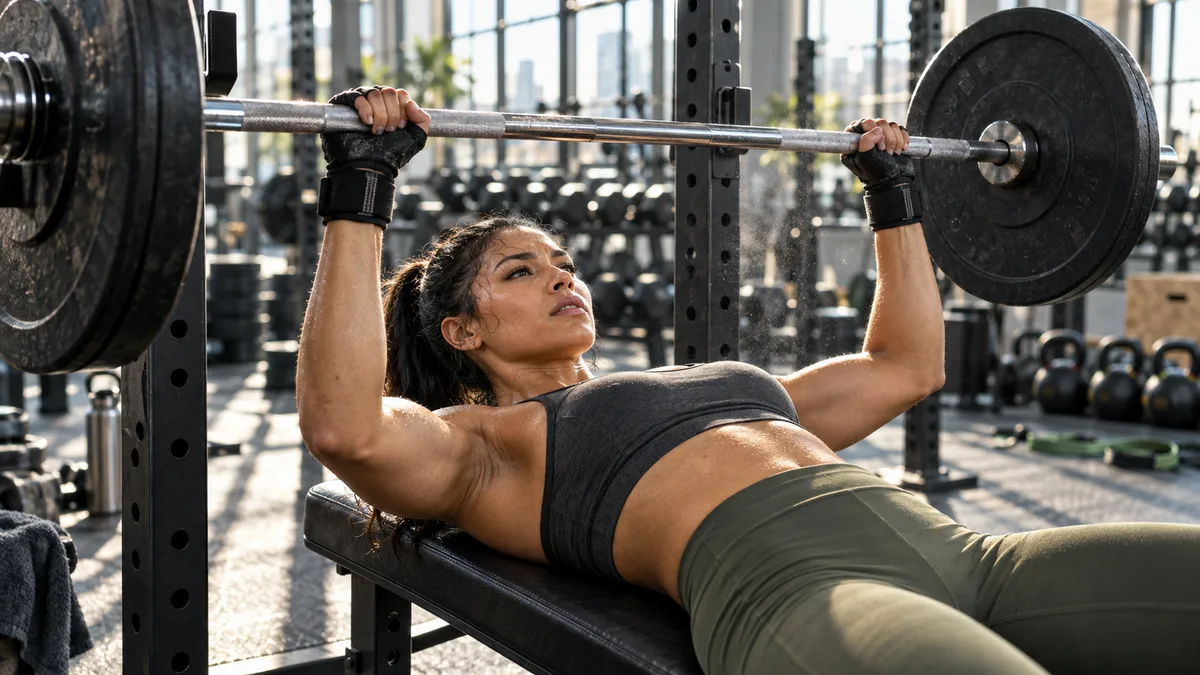
Here’s something nobody told you when you first walked into the gym: you need a dedicated push day. Not a “tone my arms” day. Not a “do some random machines” day. A real, structured chest, shoulder, and tricep workout that builds the kind of strength you can actually feel in everyday life. Think pushing open a heavy door without breaking stride, or hoisting a suitcase into an overhead bin like it weighs nothing.
If your current upper body routine involves picking up 5-pound dumbbells, doing a few half-hearted presses, and calling it done… we need to talk. This guide lays out a complete push-day routine designed specifically for women who train at the gym and want results they can see AND feel.
Why push day deserves a permanent spot in your weekly split
Push day groups together all the muscles that fire when you push something away from your body: your chest (pectorals), shoulders (deltoids), and triceps. Training them together on the same day makes biomechanical sense because these muscles already assist each other during compound movements. When you bench press, your triceps and front delts help. When you overhead press, your chest and triceps kick in. They’re a team. Train them like one.
A lot of women skip dedicated chest work entirely. The fear? “I don’t want to look bulky.” Can we retire that myth already? Training your chest builds posture, supports your shoulders, and creates a balanced upper body. You won’t wake up looking like a linebacker. You’ll wake up standing taller with shoulders that sit where they’re supposed to.
If you’re running a 5-day workout split, push day slots in perfectly alongside pull day, leg day, and your other training sessions. It’s one of the most efficient ways to organize your week.
The muscles you’re actually training (quick anatomy check)
Before you grab a barbell, it helps to know what you’re working. Understanding the target muscles helps you feel them contract, which directly improves your results. Here’s the breakdown:
- Chest (Pectoralis Major and Minor): The large fan-shaped muscles across your upper chest. They handle horizontal pushing and arm adduction (bringing your arms toward your midline).
- Shoulders (Deltoids, front, lateral, rear): Three distinct heads that cap your shoulders. Push day primarily hits the anterior (front) and lateral (side) delts.
- Triceps (Triceps Brachii): The three-headed muscle on the back of your upper arm. It straightens your elbow and assists in every pressing movement. This is where that “arm definition” actually comes from, not biceps curls.
According to the American Council on Exercise (ACE), compound pressing movements rank among the most effective exercises for activating the triceps and chest simultaneously. So every push-day exercise pulls double or triple duty.
The complete chest shoulder tricep workout for women at the gym

This routine takes about 50-65 minutes including warm-up. You’ll need access to dumbbells, a barbell (optional), a flat/incline bench, cables, and a few basic machines. Every exercise listed here works in a standard commercial gym.
Warm-up (5-7 minutes, don’t skip this)
Ever wonder why your shoulders feel crunchy on the first set? Because you didn’t warm up. Spend 5-7 minutes activating the rotator cuff and getting blood flowing to the chest and delts. Your joints will thank you.
- Band pull-aparts: 2 sets of 15 reps
- Arm circles (small to large): 30 seconds each direction
- Light dumbbell shoulder press: 1 set of 12-15 reps (use about 40% of your working weight)
- Push-ups: 1 set of 8-10 reps (knee push-ups work great here)
Chest exercises
Start with chest while you’re freshest. These are your heaviest compound lifts, and they demand the most energy and focus.
1. Flat dumbbell bench press, 4 sets of 8-10 reps
Lie on a flat bench, plant your feet firmly on the floor, and press dumbbells up from chest level. Keep a slight arch in your lower back and squeeze your shoulder blades together. Lower the dumbbells until your elbows hit roughly 90 degrees, then drive them back up. This is your bread-and-butter chest builder.
2. Incline dumbbell press, 3 sets of 10-12 reps
Set the bench to a 30-45 degree incline. Same pressing motion, but now you’re targeting the upper chest and front delts. This angle builds that defined “shelf” across your upper chest that looks incredible in tank tops. Don’t go too heavy here. Control the weight on the way down.
3. Cable chest fly, 3 sets of 12-15 reps
Set the cable pulleys to about shoulder height. Step forward, keep a slight bend in your elbows, and bring your hands together in front of your chest. This isolation movement targets your chest through a full range of motion and creates an insane mind-muscle connection. Slow and controlled wins here, no swinging.
Shoulder exercises
Now we move to shoulders. Your front delts already got some love during chest presses, so we’ll focus on building round, capped shoulders with a mix of pressing and lateral work.
4. Seated dumbbell overhead press, 4 sets of 8-10 reps
Sit on an upright bench (back support at 90 degrees). Press dumbbells overhead without locking your elbows at the top. This is YOUR primary shoulder mass builder. Keep your core tight and resist the urge to lean back excessively, because that turns it into a chest exercise, and we’re past that section 🙂
5. Lateral raises, 3 sets of 12-15 reps
Stand with dumbbells at your sides. Raise them out to the sides until your arms reach roughly shoulder height, then lower with control. The thing everyone messes up: lead with your elbows, not your hands. Think about pouring water out of a pitcher. Use lighter weight than your ego wants. Seriously, lateral raises with 8-pound dumbbells done properly will burn more than sloppy 20-pounders.
6. Front plate raise, 3 sets of 12 reps
Grab a weight plate (10-25 lbs) with both hands. Raise it to eye level, pause for one second, and lower it back down. This hammers the anterior delts and adds a stability challenge your core has to manage. Simple, effective, brutally humbling.
Tricep exercises
By now your triceps already took a beating from all that pressing. These isolation exercises finish them off and carve out the definition on the back of your arms that no amount of bicep curls will ever give you.
7. Cable tricep pushdowns (rope attachment), 3 sets of 12-15 reps
Attach a rope to the high cable pulley. Keep your elbows pinned to your sides and push the rope down until your arms fully extend. At the bottom, split the rope apart slightly and squeeze the triceps hard for one second. This exercise activates all three heads of the tricep, according to research published by the National Strength and Conditioning Association (NSCA).
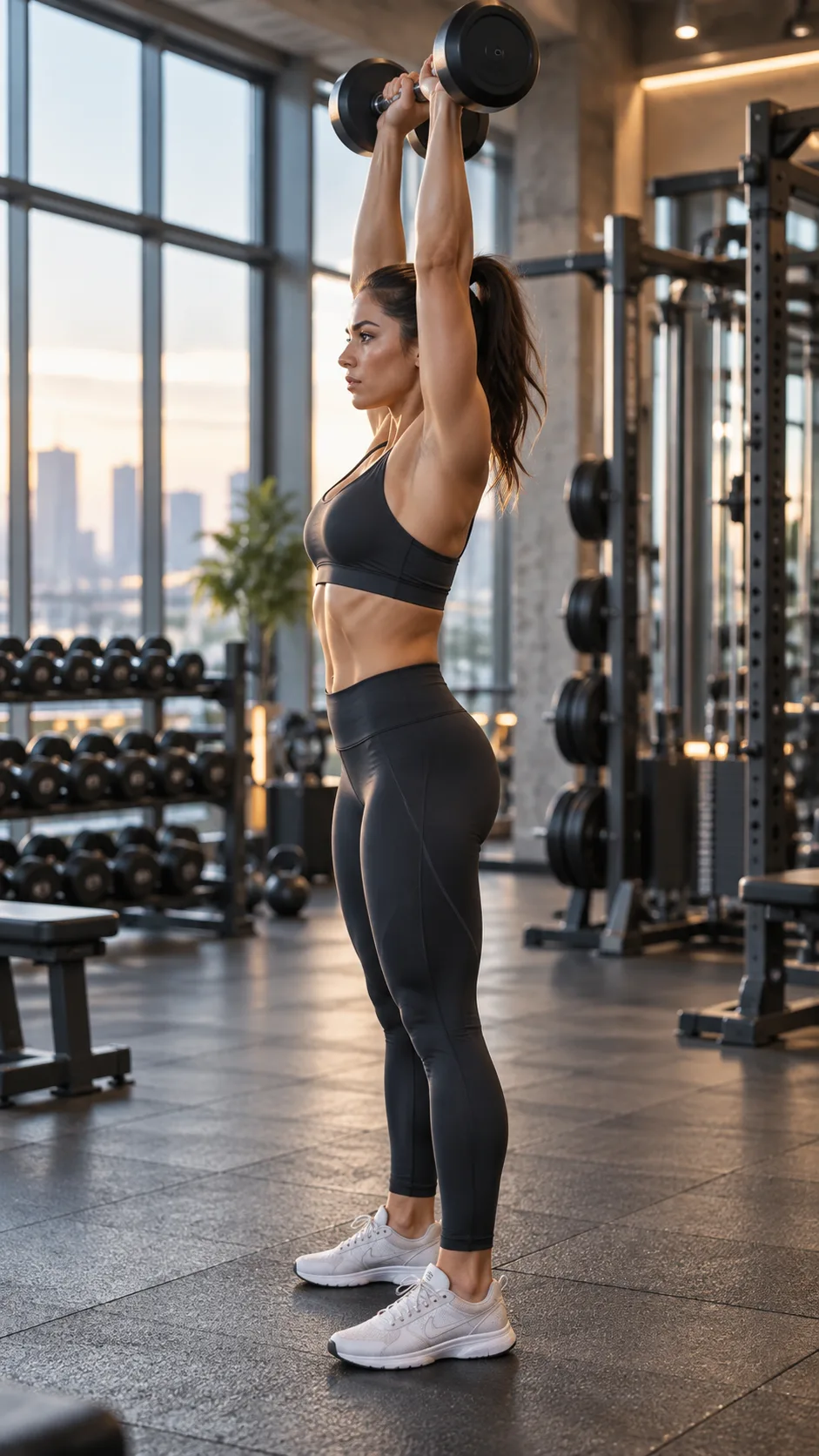
8. Overhead dumbbell tricep extension, 3 sets of 10-12 reps
Hold one dumbbell with both hands behind your head. Extend your arms overhead, keeping your elbows pointing forward and close to your ears. Lower the dumbbell behind your head, then press it back up. This targets the long head of the tricep, the part that gives your arms shape when viewed from the side.
9. Bench dips or machine dips, 3 sets of 10-12 reps
Place your hands on a bench behind you, feet on the floor (or elevated on another bench for more challenge). Lower your body by bending your elbows to about 90 degrees, then press back up. If your gym has an assisted dip machine, even better. You can load this progressively over time. This is the ultimate push-day finisher.
Sets, reps, and rest: how to structure it all
Getting the programming variables right makes the difference between “I worked out” and “I’m actually getting stronger.” Here’s the framework:
- Compound lifts (bench press, overhead press): 4 sets of 8-10 reps, rest 90-120 seconds between sets
- Accessory movements (flyes, lateral raises): 3 sets of 12-15 reps, rest 60-90 seconds between sets
- Isolation exercises (tricep pushdowns, extensions): 3 sets of 12-15 reps, rest 60 seconds between sets
Progressive overload is non-negotiable. Every week or two, add a small amount of weight, an extra rep, or an extra set. Your body adapts fast, and you need to give it a reason to keep building muscle. Track your weights in a notebook or phone app. IMO, this single habit separates people who see results from people who spin their wheels for months.
Common push-day mistakes women make (and how to fix them)
I’ve watched a LOT of push days go sideways. Here are the most frequent mistakes I see women make in the gym, and I’ve made most of them myself at some point.
Going too light for too long. Lifting challenging weight doesn’t make you bulky. It makes you strong. If you can hit 15 reps without breaking a sweat, the weight needs to go up. Your last 2-3 reps of each set should feel genuinely difficult.
Neglecting chest entirely. Skipping chest exercises creates a muscle imbalance between your front and back body. That imbalance leads to rounded shoulders, poor posture, and eventually shoulder pain. Train your chest. Your posture and your rotator cuffs depend on it.
Flaring elbows on presses. When your elbows flare out to 90 degrees during bench press, your shoulder joint absorbs force it shouldn’t. Tuck your elbows to about a 45-degree angle relative to your torso. This protects your shoulders and actually improves your pressing power.
Rushing through reps. Speed kills gains. A 2-second lowering phase and a 1-second pressing phase keeps the muscle under tension longer. That time under tension drives muscle growth, as outlined by Healthline’s guide on time under tension.
How often should you train push day?
For most women following a structured gym program, one to two push days per week hits the sweet spot. If you’re running a push/pull/legs split, you’ll naturally cycle through push day twice within a 6-day rotation. If you train 4 days a week, one dedicated push day plus one full body session that includes pressing movements covers all your bases.
What matters more than frequency? Recovery. Your muscles grow during rest, not during the workout itself. Give your chest, shoulders, and triceps at least 48 hours before hitting them directly again. Sleep 7-9 hours. Eat enough protein. That’s the unsexy part nobody posts about on social media, but it’s where the real progress happens.
Fueling your push day: what to eat for strength gains
You can follow the perfect chest shoulder tricep workout, but if your nutrition falls flat, your results will too. Building muscle requires adequate protein. Aim for roughly 0.7-1 gram of protein per pound of bodyweight daily. That’s not as scary as it sounds once you plan it out.
A pre-workout meal about 60-90 minutes before training should include carbs and protein. Think oatmeal with protein powder, toast with eggs, or a banana with Greek yogurt. Post-workout, prioritize a protein-rich meal within a couple of hours. If you need a structured approach, check out this 150 grams of protein meal plan for ideas that actually taste good.
Don’t fear carbs on push day. Carbohydrates fuel intense pressing movements and help replenish glycogen stores afterward. Sweet potatoes, rice, fruit, and whole grains all deserve a spot on your plate.
A sample push day at a glance
Here’s the full workout condensed into one quick-reference list. Screenshot this, save it, bring it to the gym:
- Warm-Up: Band pull-aparts, arm circles, light press, push-ups (5-7 min)
- Flat Dumbbell Bench Press: 4 x 8-10
- Incline Dumbbell Press: 3 x 10-12
- Cable Chest Fly: 3 x 12-15
- Seated Dumbbell Overhead Press: 4 x 8-10
- Lateral Raises: 3 x 12-15
- Front Plate Raise: 3 x 12
- Cable Tricep Pushdowns: 3 x 12-15
- Overhead Dumbbell Tricep Extension: 3 x 10-12
- Bench Dips or Machine Dips: 3 x 10-12
Total working sets: 30. Total time: approximately 50-65 minutes. That’s a serious amount of volume packed into a manageable session. You’ll walk out of the gym feeling like you actually accomplished something, because you did.
Progression: what happens after week one?
The workout above is your foundation. But what separates a good program from a great one is how you progress it over time. Here’s a simple 4-week progression model:
- Week 1: Learn the movements. Focus on form. Use moderate weight.
- Week 2: Add 1-2 reps per set OR increase weight by 2.5-5 lbs on compound lifts.
- Week 3: Push intensity. Aim for the top end of your rep range with good form.
- Week 4 (Deload): Reduce weight by 20-30% and focus on recovery. Your body consolidates gains during deload weeks.
Then restart the cycle with slightly heavier weights than Week 1. This approach, called linear periodization, keeps you progressing without burning out. The Journal of Strength and Conditioning Research consistently shows that periodized training produces superior strength gains compared to random programming.
Final thoughts: push day builds more than muscle
A solid chest, shoulder, and tricep workout does more than sculpt your upper body. It builds confidence. There’s something deeply satisfying about pressing a weight overhead that you couldn’t budge six weeks ago. That feeling bleeds into the rest of your life, and no, that’s not cheesy motivational fluff. It’s just what happens when you prove to yourself, rep by rep, that you’re stronger than you thought.
Stop treating upper body day like an afterthought. Stop defaulting to the lightest dumbbells on the rack. Walk into the gym with a plan, execute this push-day routine with intention, fuel your body properly, and watch what happens over the next 8-12 weeks.
You showed up to read over 2,000 words about push day. That already puts you ahead of most people. Now go put it into practice. Your chest, shoulders, and triceps are waiting, and they’re ready for a challenge.
