
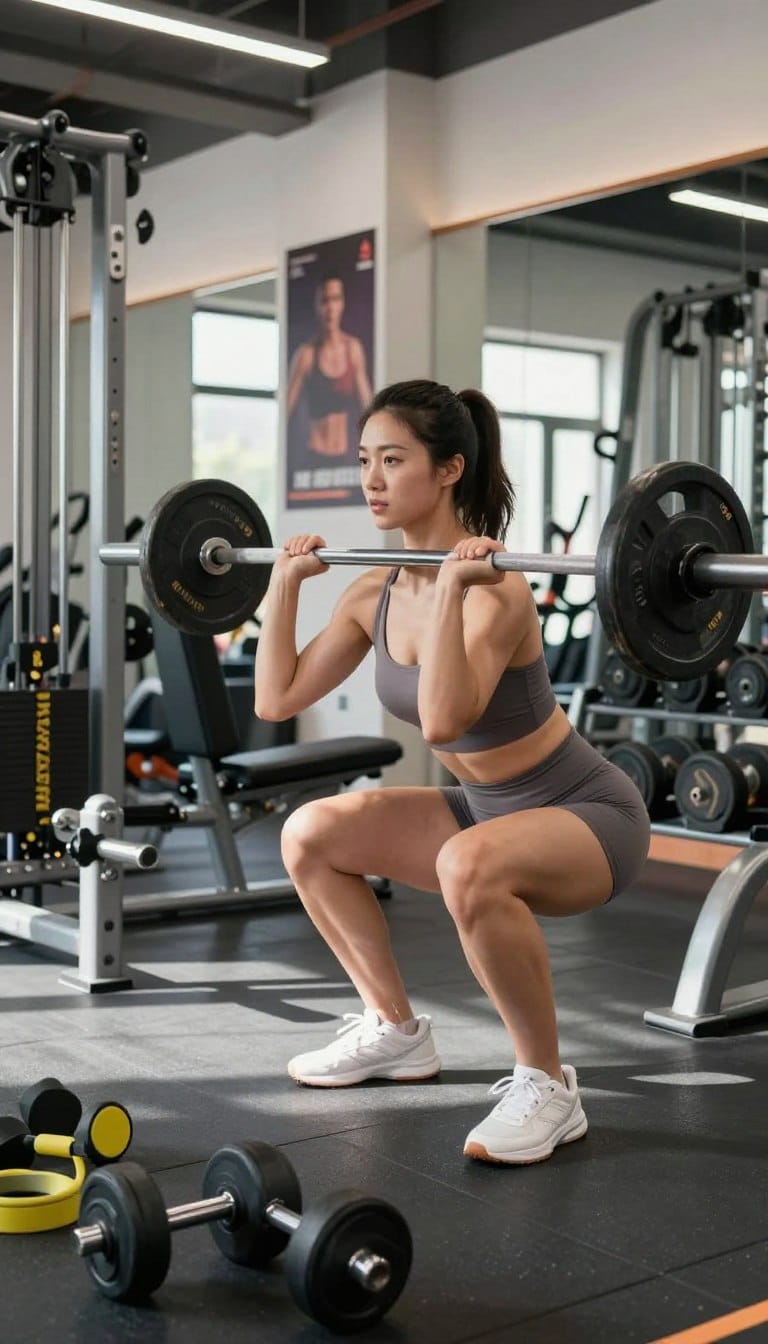
Want to know why training your legs can transform your whole body? A well-planned routine not only builds powerful quads, hamstrings, and glutes, it also boosts hormones like testosterone and cortisol to help muscle growth.
You’ll learn the best leg exercises to target every major muscle and the ideal sets and reps to follow. This guide breaks down safe movement patterns, proper form, and how to use weight and position to protect your knees and hips.
Whether you’re new to training or an experienced lifter, consistent leg day sessions improve balance, coordination, and flexibility. That reduces injury risk and speeds up progress toward a sculpted, strong lower body.
Key Takeaways
- Training legs raises hormones that support muscle growth and strength.
- Follow proven sets and reps to master squats, deadlifts, and targeted exercises.
- Good form protects knees, hips, and the lower back during heavy lifts.
- Consistent sessions improve balance, flexibility, and daily function.
- This plan fits beginners and advanced lifters aiming for stronger, sculpted legs.
Understanding Your Leg Muscle Anatomy
Understanding the anatomy below your waist lets you target each muscle with better precision. That makes your sets and effort more effective and lowers injury risk.
Quadriceps
The quads include the vastus medialis, vastus intermedius, vastus lateralis, and rectus femoris. These four heads are the largest muscle group in your body and extend the knee during squats and presses.
Hamstrings
The hamstrings sit on the back of your thighs. They include the biceps femoris, semitendinosus, and semimembranosus and handle hip extension and knee flexion during hip hinges and sprinting.
Glutes and Adductors
Your gluteus maximus is the largest single muscle in your body and drives powerful hip extension on compound lifts. Adductors on the inside of the thighs help with rotation, flexion, and stability in many movements.
- Quad strength supports knee tracking and powerful squats.
- Hamstring balance protects the back and hips during heavy lifts.
- Glutes produce force for jumps, thrusts, and hip-dominant moves.
- Adductors add stability and control during single-leg exercises.
Why You Should Prioritize Leg Day
Prioritizing leg day gives you a stronger base for every movement you do, from lifting to sprinting. That base supports daily tasks and athletic performance alike.
Your legs are the main support for the rest of your body. When you focus on lower body sessions, you build stability that protects your back and core.
Training key muscle groups in your thighs and glutes also boosts metabolism. Intense sessions promote hormone release that helps muscle growth and recovery.
A consistent day of leg exercises improves speed, agility, and explosivity. Athletes notice clearer gains in sprinting and jumping when they respect this practice.
- Support: Strong legs help protect knees and maintain good position under load.
- Balance: Targeted exercises prevent imbalances that cause injury.
- Function: Well-trained legs make everyday movement easier.
Make your sessions intentional. Focus on quality reps for squats, hinges, and targeted movements to get the most from your training.
Essential Equipment for Your Training
Gear choices matter — the right kit lets you lift safer and push past plateaus. Pick tools that support good position and let you focus on the muscles you want to target.
Lifting Accessories
Lifting belts increase intra-abdominal pressure and give your spine extra support when you handle heavy barbell sets. That support helps protect your back during squats and hip-dominant moves.
Lifting straps free your grip so you can keep tension on target muscles. Use them for pulling variations when grip limits your progress on deadlifts or similar exercises.
A pair of flat-soled training shoes provides a stable base on the floor and improves force transfer through your feet. Add resistance bands to warm up and prime the glutes for better activation on each day of training.
- Belts — spinal support for heavier lifts.
- Straps — preserve grip to target muscles.
- Shoes — stable base for squats and presses.
- Bands — improve glute activation and stability.
Proper equipment helps you maintain form, protect your knees and back, and perform every exercise with confidence. Choose quality gear and use it to support safer, smarter sessions.
The Best Full Leg Workout Routine
Start with big compound lifts to recruit the most muscle fibers and set the tone for the session.
This routine hits every major muscles plane for balanced development. You will move from heavy barbell squats into hinging work, then finish with single-leg and isolation exercises.
- Barbell squat: 4 sets of 6–8 reps to build strength in quads, glutes, and core.
- Romanian deadlift: 3 sets of 8–10 reps to target hamstrings and glutes with a deep stretch.
- Bulgarian split squat: 3 sets of 8–10 reps per side for unilateral stability and balance.
- Seated leg curl: 3 sets of 10–12 reps to isolate hamstrings.
- Leg extension: 3 sets of 10–12 reps for quad development.
- Standing calf raise: 4 sets of 12–15 reps to complete lower-body strength.
Follow the prescribed sets reps to give your muscles the right stimulus for growth. Check your starting position on every exercise—foot placement, bar position, and spine alignment matter for safe, effective lifts.
Keep rest between sets controlled, use progressive weight increases, and focus on clean movement quality to get the best results from this plan.
Mastering the Barbell Back Squat
Mastering the barbell back squat starts with a solid setup and a clear idea of how your body should move under the bar.
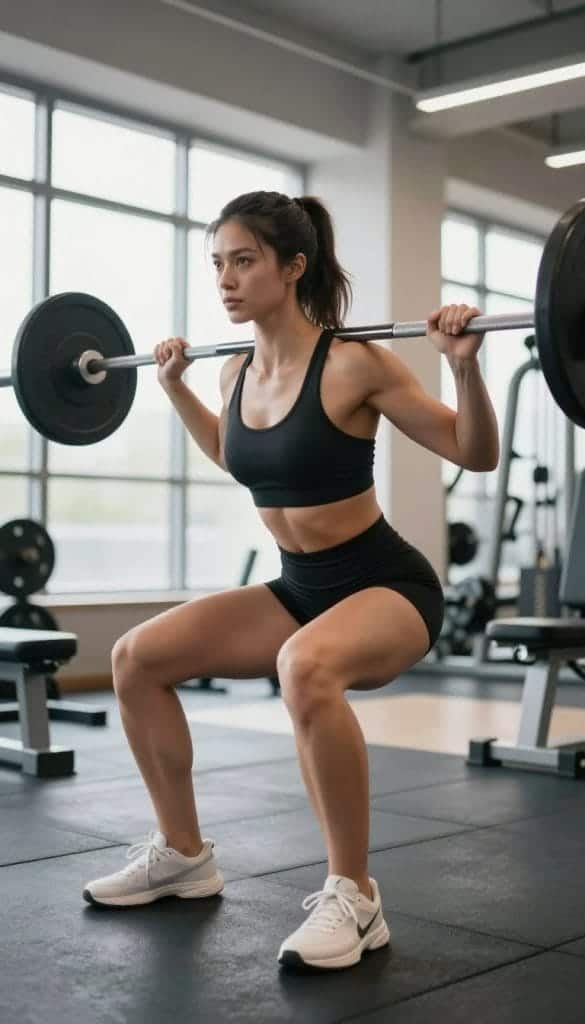
Place the bar on your upper traps, not on your neck, and keep your chest proud. Maintain a neutral spine while you bend your knees and lower your body with control.
Starting position: stand with feet shoulder-width apart and toes slightly pointed out. Keep heels flat on the floor and drive through them to return upright.
- The back squat builds strength in quads, hamstrings, and glutes at once.
- Focus on good form: bar placement, knee tracking, and steady core bracing.
- If you are new, use a light bar to learn depth, breathing, and movement before adding more weight.
| Cue | Starting Detail | Purpose |
|---|---|---|
| Bar position | Upper traps, thumbs under bar | Comfort and stable load |
| Foot placement | Shoulder-width, toes out | Stable base on the floor |
| Drive | Heels to standing | Force the hips and protect knees |
Perfecting the Romanian Deadlift
Perfecting hip hinge mechanics with the Romanian deadlift improves strength and reduces injury risk. This exercise targets the posterior chain — the hamstrings, glutes, and lower back — and ranks among the best leg exercises for balanced development.
Start in the correct starting position: stand tall with the barbell held in front of your thighs using an overhand grip. Keep your feet hip-width and your core braced.
Hinge at the hips while keeping your back flat and knees nearly straight. Lower the bar slowly until you feel a deep stretch in your hamstrings, usually at mid-shin, without letting your back round.
Maintain a controlled tempo on both descent and ascent. Use deliberate movement to target the muscles, not momentum. Aim for consistent sets and clean reps rather than chasing heavy weight every session.
- Key cues: hinge from the hips, chest up, soft knees.
- Range: lower until hamstrings feel stretched; stop before the back rounds.
- Benefit: builds a thicker, stronger backside and improves posterior chain strength for squats and other lifts.
Benefits of Bulgarian Split Squats
Bulgarian split squats are a powerful unilateral exercise that corrects side-to-side imbalances and builds real-world power. They transfer well to jumping, sprinting, and increasing maximum lower-body strength.
Place your rear foot on a bench and set your front foot far enough forward so your front knee stays over the ankle. Keep your chest tall and your core braced.
This movement targets quads, glutes, and hamstrings while demanding hip stability and balance. You can load the exercise with dumbbells or a barbell to add weight as you progress.
Before each rep, check your starting position. Make sure your feet are stable on the floor and your back stays neutral to protect the knees and lower back.
| Benefit | How to Cue It | Result |
|---|---|---|
| Corrects imbalances | Even reps per side, controlled tempo | More balanced strength and fewer compensations |
| Builds quad and glute strength | Front knee over ankle, chest tall | Stronger squats and sprint power |
| Improves stability | Light pause at bottom, brace core | Better hip control and safer lifts |
Incorporating Hack Squats for Quad Growth
The hack squat machine is a smart tool to zero in on your quads while keeping your spine supported.
Incorporating hack squats into your leg workout is an excellent way to isolate the front thighs without adding undue stress to your back. The fixed sled path helps you focus on the movement and muscle contract.
Set your starting position with feet hip-width on the platform and your back firmly against the pad. Lower the sled until your thighs are parallel to the floor, then drive through your heels to return upright.
This exercise suits beginners and advanced lifters alike. You can safely handle heavier weight because the machine removes balance demands that would otherwise tax your core or hips.
- Targets quads for focused growth.
- Supports the spine, protecting the lower back and knees.
- Allows consistent sets and reps with a stable path for progressive overload.
Utilizing Hip Thrusts for Glute Strength
Hip thrusts extend your range of motion and let you move serious weight for glute growth. They load the hips more than glute bridges, which helps you get stronger faster.
Start seated on the floor with your upper back against a bench and a barbell resting on your hips. Plant your feet flat and set them so your shins are vertical at the top of the lift.
Drive your hips toward the ceiling by pressing through your heels. Squeeze the glutes hard at the top and hold for a brief pause to maximize tension.
Keep your chin tucked and ribs down to protect your lower back. Good form means the hips do the work, not an arched spine.
- Why include them: they directly target the gluteus maximus with high intensity.
- Starting position: bench support, bar on hips, feet stable on the floor.
- Execution tip: press through heels, control the descent, and keep core braced.
Use moderate to heavy weight for 3–4 sets of 6–12 reps depending on your goals. This movement is a staple for any effective leg day or leg workout because it builds powerful hips, improves squat performance, and strengthens hamstrings and core over time.
Improving Stability with Single Leg Exercises
Single-leg moves build balance and power by forcing each side to carry its own load.
These leg exercises are vital for a balanced lower body. The single-leg Romanian deadlift challenges your hamstrings and glutes while testing balance and core control.
Why include them: they reveal strength imbalances between your left and right legs. Fixing those imbalances reduces injury risk and improves how you squat or hinge with a barbell.
- Train one side at a time to improve stability and muscle coordination.
- Focus on slow, controlled movement over heavy weight and fast reps.
- Use 2–4 sets per side and choose rep ranges that keep form pristine.
Make single-leg work part of your training day to force better hip position, stronger feet contact with the floor, and improved movement patterns across squats, Romanian deadlift variations, and other workouts.
Targeting Calves for Complete Development
Calf development completes your lower-body look and boosts ankle strength for better lifts.
To build balanced calves you must train both the gastrocnemius (outer) and the soleus (inner). Each responds best to different positions and ranges of motion.
Standing calf raises emphasize the gastrocnemius with a deep stretch and strong contraction. Use a slow tempo and full range for every rep.
Seated variations bias the soleus because the knee is bent. Aim for higher reps and extra time under tension to spark growth.
- Combine standing and seated movements to hit both muscles.
- Use moderate weight with 12–20 reps per set for calves.
- Keep consistent training—small muscles need frequent, focused work over time.
Also remember the bigger picture: hamstrings growth (the seated leg curl research showed larger gains) complements your calf work and produces more athletic-looking legs.
Train calves regularly, focus on range and tempo, and they will add strength and polish to your lower body.
Strategies for Training with Knee Pain
Training around knee pain requires simple shifts in position and tempo that reduce stress and keep gains. Jeff, a physical therapist and athlete, trashed his knees in 1993 and rebuilt his approach to protect them while still progressing.
Isometric Holds
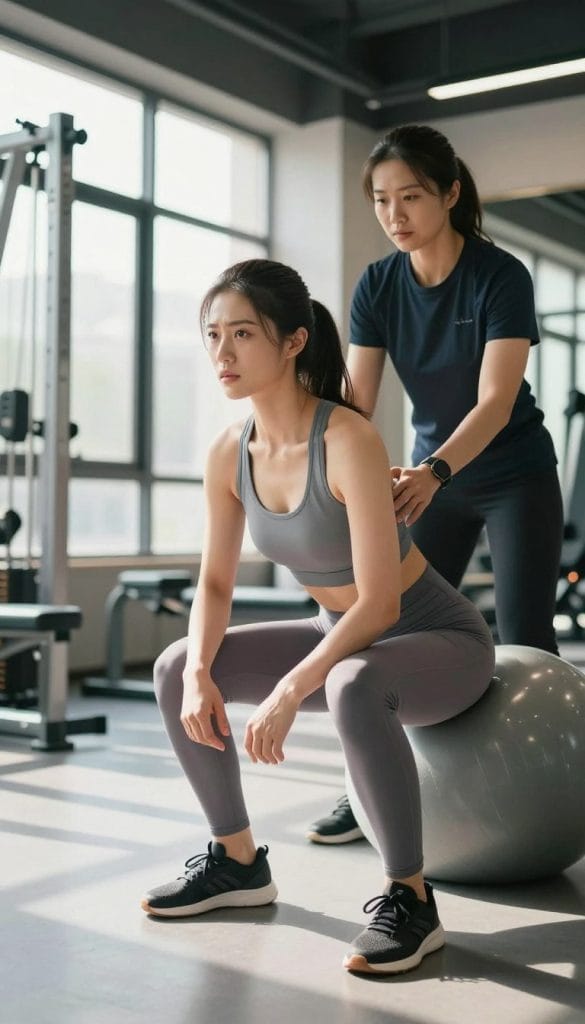
Isometric squat holds are a low-risk test and builder for your knees. Hold a shallow squat for about 20 seconds to check how the joint responds before adding weight to the bar.
Start with bodyweight and focus on a neutral spine and even foot pressure. If pain stays low or absent, you can add light loads and short sets.
Pause Squat Variations
Pause squats force control through the bottom of the movement. A brief pause removes momentum and reduces forward knee shear by keeping force down and back into the hips.
Use light weight, crisp form, and slow reps. These variations strengthen the muscles and improve position so heavier squats become safer over time.
- Favor closed-chain movements that shift force back into the hips and floor.
- Begin sessions with stability tests (isometrics) before heavy sets.
- Use pauses and reduced range to maintain control and protect the joint.
| Exercise | Starting Load | Purpose |
|---|---|---|
| Isometric squat hold | Bodyweight | Test stability; build joint tolerance |
| Pause back squat | Light barbell or dumbbells | Control bottom position; reduce knee stress |
| Closed-chain hip drive | Minimal weight | Shift force to hips and glutes, protect knees |
Planning Your Sets and Reps
Deciding how many sets and reps to do is the most reliable way to force steady strength and size gains.
For heavy compound moves like the barbell squat, aim for lower reps and more sets to build strength. Use 4–6 sets of 4–8 reps with controlled tempo and good form.
Isolations should use higher reps to encourage hypertrophy. Try 3–4 sets of 10–15 reps for exercises that target single muscles like the hamstrings or glutes.
- Rest: 2–3 minutes between heavy sets balances recovery and time efficiency.
- Track progress: Log weight, sets, and reps so you can increase weight when reps become easy.
- Balance: Include enough sets to challenge your legs without causing chronic fatigue.
| Exercise Type | Reps | Sets | Rest |
|---|---|---|---|
| Compound (squat, barbell) | 4–8 | 3–5 | 2–3 min |
| Hinge (RDL, deadlift) | 6–10 | 3–4 | 2–3 min |
| Isolation (leg curl, extension) | 10–15 | 3–4 | 60–90 sec |
Always prioritize form over extra weight. That keeps your knees and back safe and maximizes results on every training day.
The Importance of Progressive Overload
Small, planned increases in stress drive long-term improvements in strength and size. Progressive overload means you either do more reps with the same weight or keep reps steady and add weight over time.
The rule of thumb: try adding 2.5 kg (5 lb) per set or aim for one extra rep per set. Track these changes so you can measure real progress.
- Why it matters: without increasing stress, your muscles stop adapting and progress stalls.
- How to do it: increase weight in small steps or add reps across your exercises.
- Keep a log: record sets, reps, and weight every session to stay consistent.
| Method | Example | Goal |
|---|---|---|
| Add weight | +2.5 kg (5 lb) per set | Progressive strength gains |
| Add reps | 1 extra rep per set | More volume without heavier loads |
| Track | Workout log with sets reps | Prevent plateaus and guide changes |
Be systematic, patient, and consistent. Small steps compound into major gains for your squats, glutes, and overall body strength without risking form or knee position.
Nutrition and Recovery for Muscle Gains
Proper nutrition and rest are the invisible sets that let your muscles rebuild and get stronger between sessions.

Food provides the building blocks for recovery. Aim for a protein source each meal to support repair and growth of your muscle groups.
Timing matters. After a set of heavy squats or other intense exercises, eat a meal with protein and carbs within two hours to refill energy and start repair.
Sleep is non-negotiable. Most adults need seven to nine hours of quality sleep per night to recover from hard training and reduce fatigue in your back, knees, and glutes.
If you want to lose fat while keeping muscle, use a moderate calorie deficit and prioritize protein. That helps you keep strength while reducing weight.
- Eat enough protein to support repair — roughly 0.7–1.0 g per pound of bodyweight.
- Keep carbohydrates around training to fuel hard sets and reps.
- Stay consistent: recovery habits compound into better workouts and faster gains.
Be consistent with food, sleep, and planned rest days. That combo makes your training more productive and keeps your body ready for the next workout.
Conclusion
Commit to small, measurable progress each session and your lower-body strength will compound fast. A focused full leg workout done with good form, steady overload, and proper recovery delivers real change.
Master the best leg exercises and track your sets reps to see steady gains. Protect your knees and back by keeping technique crisp and by using sensible loading.
Make leg day consistent. Fuel your muscle with proper food and sleep, then return and repeat. Over weeks, squats, hip drives, and targeted exercises build stronger glutes, better balance, and more athletic workouts.