
You don’t need to spend six days a week in the gym to build real, noticeable strength. Shocking, right? If you’ve been grinding through split routines that leave you exhausted, sore, and frankly a little resentful of your alarm clock, this plan will feel like a relief.
A well-designed full body workout for women hits every major muscle group in a single session, lets you train just three days a week, and gives your body the recovery time it actually needs to grow stronger. No burnout. No six-day “bro splits.” Just smart, efficient training that delivers results.
I’ve spent years experimenting with different training styles, and nothing has matched the consistency and progress I’ve gotten from full body programming. Here’s exactly how to set this up.
Why full body workouts work so well for women
Most people get this wrong: more gym time does not equal better results. Your muscles don’t grow while you’re lifting. They grow while you’re recovering. A full body workout for women respects that biological reality instead of fighting against it.
When you train your entire body in one session, you stimulate muscle protein synthesis across all major muscle groups. Research published in the Journal of Strength and Conditioning Research found that training a muscle group two to three times per week produces superior hypertrophy compared to hitting it just once. Full body plans make this frequency effortless.
The benefits stack up fast
- Higher training frequency per muscle group, so each muscle gets stimulated multiple times per week
- More calories burned per session because compound movements recruit massive amounts of muscle tissue
- Better hormonal response, since full body sessions trigger a stronger growth hormone and testosterone release (yes, women produce testosterone too, and it matters)
- Schedule-friendly: three days in the gym leaves four days for life, recovery, cardio, or literally anything else
- Lower injury risk because you spread the training volume across the week instead of crushing one body part into oblivion
If you’re also interested in how full body training fits into a weight loss protocol, check out our GLP-1 strength training guide for some seriously useful overlap.
The overtraining problem nobody talks about
Overtraining isn’t reserved for elite athletes. It happens to regular gym-goers ALL the time, especially women who follow high-volume programs designed for people using performance-enhancing drugs. Harsh truth? Most influencer workout plans assume a recovery capacity that the average natural lifter simply doesn’t have.
Signs you might already be overtraining:
- You feel weaker over time instead of stronger
- Your sleep quality has tanked
- You’re constantly sore (not the “good” sore, the “I can’t sit down” sore)
- Your motivation has completely flatlined
- You’re getting sick more often
- Your menstrual cycle has become irregular
That last point matters enormously. The American College of Obstetricians and Gynecologists recognizes that excessive exercise combined with inadequate recovery can disrupt the menstrual cycle, a red flag that your body is under too much stress. A smart full body workout plan for women prevents this by building in mandatory rest days.

Your weekly full body gym plan: 3 days, zero fluff
This plan runs on a Monday-Wednesday-Friday schedule (or any three non-consecutive days). Each workout takes roughly 45-60 minutes. You’ll alternate between two workouts, Workout A and Workout B, across the week.
Week 1: A, B, A
Week 2: B, A, B
Then repeat.
This alternating structure ensures balanced volume and prevents any single movement pattern from getting overloaded. It’s simple, and that simplicity is exactly what makes it work.
Workout A: Squat focus
- Barbell Back Squat, 3 sets x 6-8 reps
- Dumbbell Romanian Deadlift, 3 sets x 8-10 reps
- Incline Dumbbell Bench Press, 3 sets x 8-10 reps
- Seated Cable Row, 3 sets x 10-12 reps
- Dumbbell Lateral Raise, 3 sets x 12-15 reps
- Plank Hold, 3 sets x 30-45 seconds
Workout B: Hinge focus
- Conventional Deadlift, 3 sets x 5-6 reps
- Bulgarian Split Squat, 3 sets x 8-10 reps per leg
- Overhead Press (Barbell or Dumbbell), 3 sets x 8-10 reps
- Lat Pulldown, 3 sets x 10-12 reps
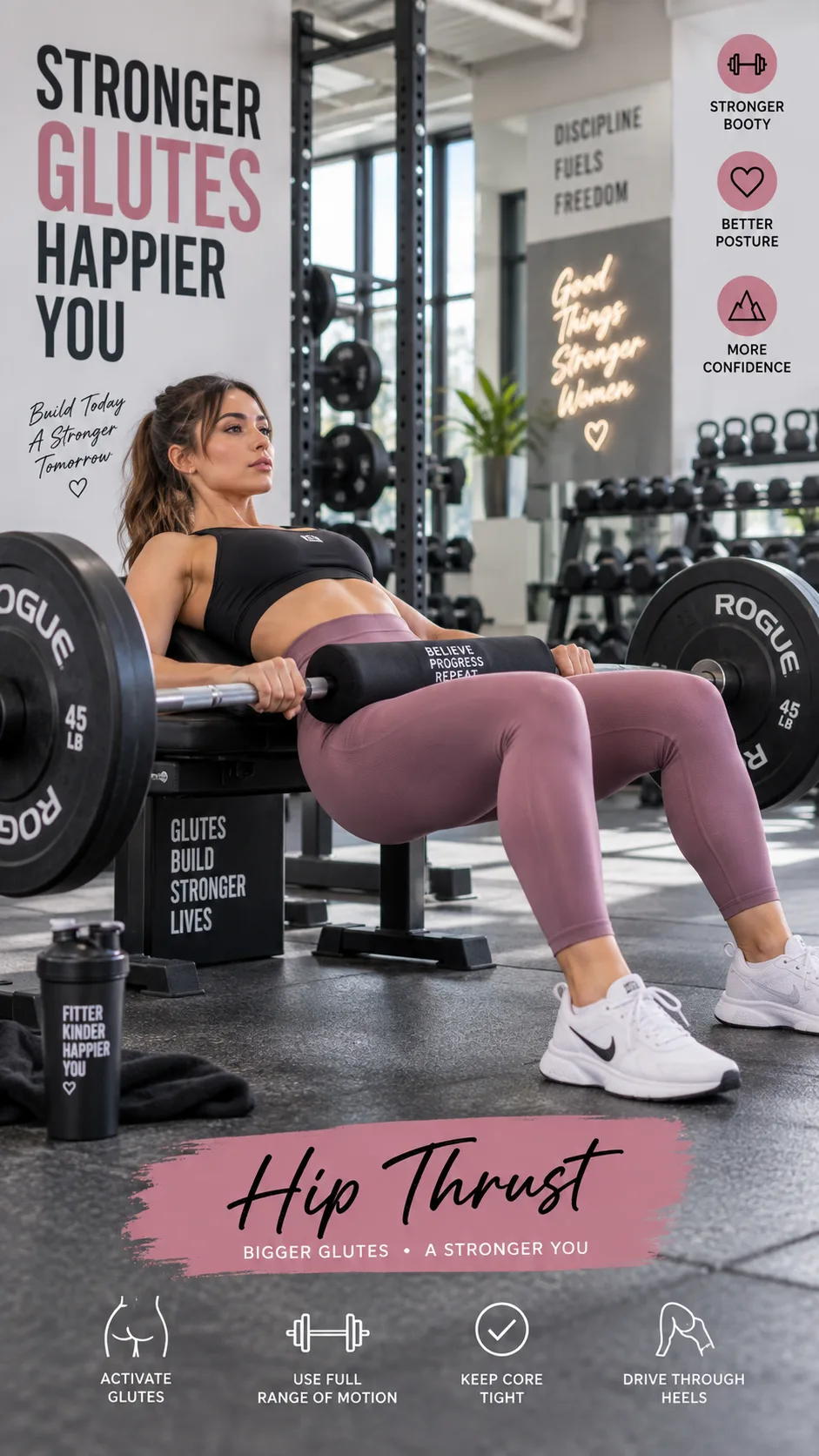
- Hip Thrust, 3 sets x 10-12 reps
- Pallof Press, 3 sets x 10 reps per side
Rest between sets: 90-120 seconds for compound lifts (squats, deadlifts, presses), 60-90 seconds for isolation movements. Don’t rush your rest periods. They’re part of the program, not wasted time.
How to progress without burning out
This is where most women (and most people, really) go wrong. They either never increase the weight, or they try to add weight every single session until something breaks. Neither approach works long-term.
Instead, use double progression. It works like this:
- Pick a rep range (e.g., 8-10 reps)
- Use the same weight until you can hit the TOP of that range for all sets
- Once you hit 10 reps across all 3 sets, increase the weight by the smallest increment available (usually 2.5-5 lbs)
- You’ll drop back toward the bottom of the range. That’s normal and expected.
- Build back up to the top again, then increase
This method keeps you progressing steadily without those ego-driven jumps that lead straight to injury. Patience is the most underrated training tool you own.
If you want a deeper breakdown of how to structure progressive overload within a full body framework, our full body strength training workout guide covers it thoroughly.
Exercise form tips that actually matter
I’m not going to lecture you on every exercise. You can find a million form videos online. But here are the cues that make the BIGGEST difference for the lifts in this program.
Barbell back squat
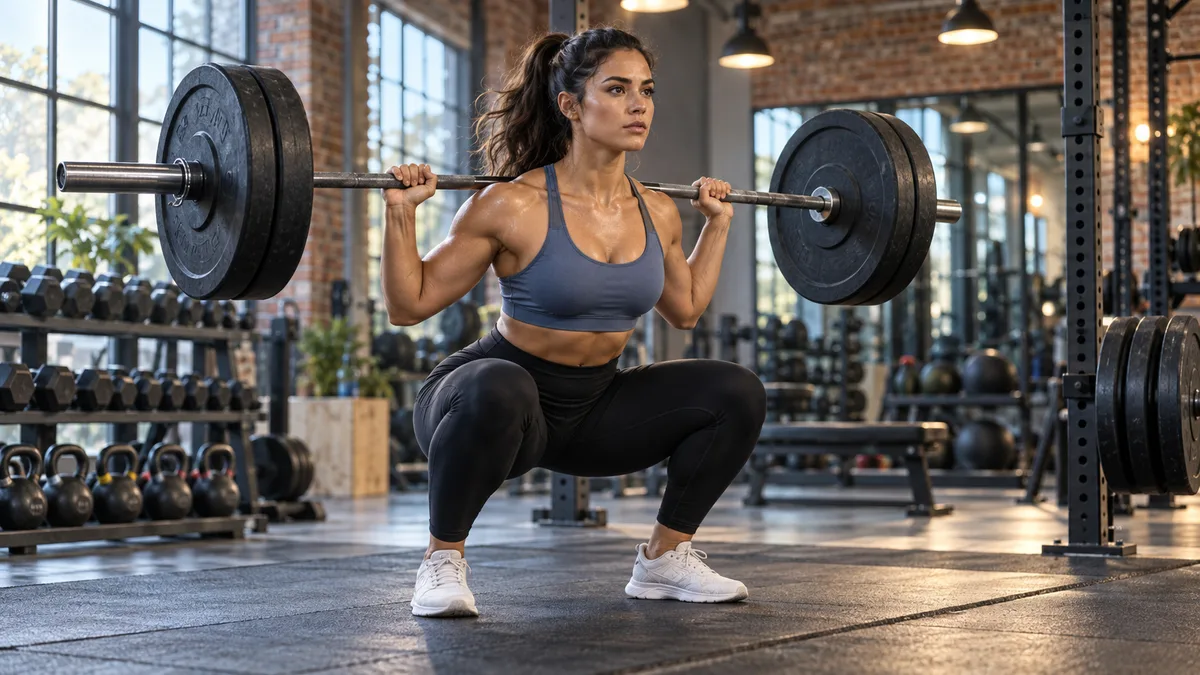
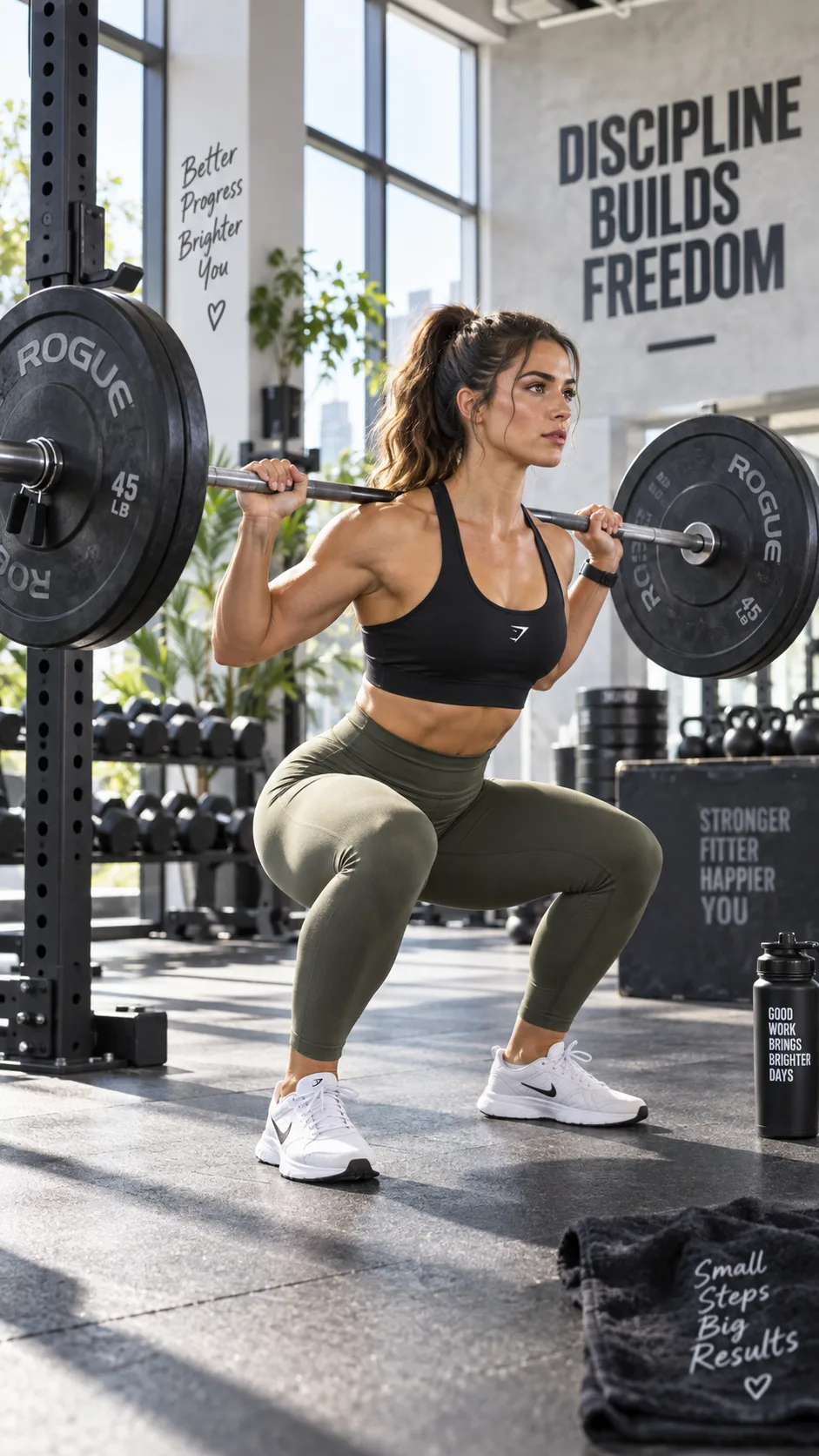
Push the floor away from you rather than thinking about standing up. Keep your chest proud and your knees tracking over your toes. Ever notice how your squat feels completely different on “good” days versus bad ones? Nine times out of ten, that difference comes down to bracing. Take a deep belly breath, brace your core like someone’s about to punch you, then descend.
Conventional deadlift
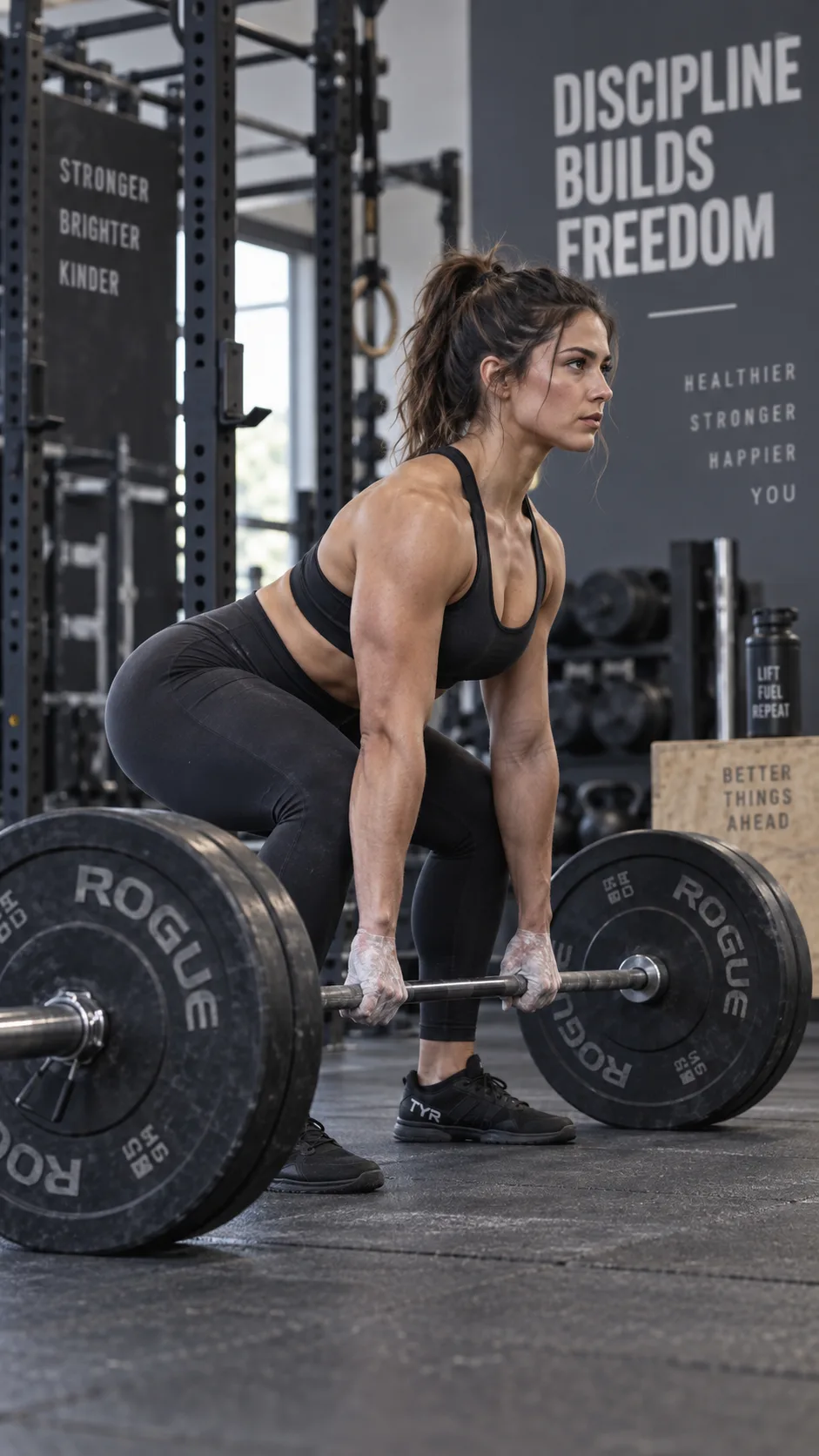
The deadlift is not a squat with the bar on the ground. Your hips should sit higher than a squat position, and the movement starts with pushing the floor away while your chest rises. Think “wedge yourself between the bar and the floor.” If your lower back rounds, the weight is too heavy. No exceptions.
Hip thrust
This one looks awkward. Everyone knows it, nobody cares. Do them anyway. Drive through your heels, squeeze your glutes HARD at the top, and avoid hyperextending your lower back. A slight posterior pelvic tilt at lockout maximizes glute activation. Your upper back rests on the bench, not your neck.
Bulgarian split squat
The exercise everyone loves to hate. Keep your front shin relatively vertical, lean your torso slightly forward, and lower until your back knee nearly touches the ground. If balance is an issue, hold onto a rack with one hand until you build stability. No shame in that.
Recovery: the other half of your results
Training is the stimulus. Recovery is where the actual building happens. Skip recovery, and you’re just tearing your muscles down without ever building them back up. That’s not strength training. That’s just damage.
Sleep is non-negotiable
Aim for 7-9 hours per night. Growth hormone peaks during deep sleep, and that’s when your body performs the majority of its muscle repair. If you’re sleeping five hours and wondering why your squat hasn’t budged in three months, well, there’s your answer.
Nutrition fundamentals
You don’t need a complicated meal plan. You need enough protein, enough total calories, and enough micronutrients from whole foods. Here’s the short version:
- Protein: Aim for 0.7-1.0 grams per pound of bodyweight daily. This is the single most important nutritional factor for muscle growth.
- Calories: Eat at maintenance or a slight surplus if building muscle is your primary goal. A slight deficit works if fat loss is the priority, but don’t starve yourself.
- Hydration: Half your bodyweight in ounces of water per day, minimum. Dehydrated muscles perform terribly.
- Whole foods first: Supplements are supplements. Get your foundation from real food: vegetables, lean proteins, complex carbs, healthy fats.
The USDA’s Nutrition.gov offers solid, science-backed dietary guidelines if you want to geek out on the details without falling into influencer nonsense.
Active recovery days
Your four off-days don’t mean “lie on the couch and do nothing” (although one couch day per week has my full endorsement). Light activity like walking, yoga, swimming, or easy cycling increases blood flow to your muscles, reduces soreness, and genuinely speeds up recovery. A 20-30 minute walk on off-days can work wonders.
Common mistakes women make with full body training
I’ve watched these mistakes play out over and over, in myself and in the women I’ve trained with. Avoiding them will save you months of wasted effort.
Mistake #1: Going too light forever. Progressive overload requires you to actually challenge yourself. If the last two reps of every set don’t feel hard, the weight is too light. You should finish your working sets feeling like you had 1-2 reps left in the tank, not 6.
Mistake #2: Skipping compound movements for isolation work. Glute kickbacks and bicep curls have their place, but they should never replace squats, deadlifts, presses, and rows. Compound lifts build the most strength per minute of gym time. They should make up about 80% of your training.
Mistake #3: Changing the program every two weeks. Program hopping is the enemy of progress. Stick with this plan for a minimum of 8-12 weeks before even considering changes. Consistency beats novelty every single time.
Mistake #4: Ignoring deload weeks. Every 4-6 weeks, reduce your training volume or intensity by about 40-50% for one full week. This isn’t laziness. It’s strategic recovery. Your body will come back stronger on the other side.
Mistake #5: Comparing your progress to social media. The woman deadlifting 300 lbs on Instagram has probably been training for a decade. Your Week 3 doesn’t need to look like her Year 10. Stay in your lane and celebrate YOUR progress.
Who should (and shouldn’t) use this program
This program works well for:
- Beginner and intermediate lifters who want to build a solid strength foundation
- Women returning to the gym after a break
- Anyone who can only commit to three gym days per week
- Women who’ve been overtraining on high-volume splits and need a sustainable alternative
This might not be the right fit for:
- Advanced lifters who need highly specialized programming
- Competitive athletes with sport-specific demands
- Anyone with injuries that prevent compound lifting (consult a physiotherapist first)
If you don’t have access to a gym at all, don’t worry. You can still build real strength. Our full body workout at home with no equipment guide covers exactly how to make that work.
How long before you see results?
Let’s set honest expectations. You’ll notice strength gains within the first 2-4 weeks. The weights will start feeling easier, and you’ll hit the top of your rep ranges more consistently. Most of these early gains come from your nervous system learning to recruit muscle fibers more efficiently.
Visible muscle definition typically shows up around the 8-12 week mark, depending on your nutrition, body fat percentage, and genetics. And real, head-turning physique changes? Give it 6-12 months of consistent training. That sounds like a long time, but those months will pass regardless. You might as well spend them getting stronger.
The American College of Sports Medicine confirms that resistance training two to three times per week produces significant improvements in muscular strength, endurance, and body composition in women of all ages. You’re not guessing here. The science backs this approach.
Putting it all together
A full body workout for women doesn’t need to be complicated to be effective. Three sessions per week, compound movements as your foundation, progressive overload through double progression, and genuine recovery between sessions. That’s the entire formula.
Stop overcomplicating your training. Stop spending two hours in the gym six days a week wondering why you’re exhausted and not making progress. This plan gives your body exactly what it needs to build strength, and nothing it doesn’t.
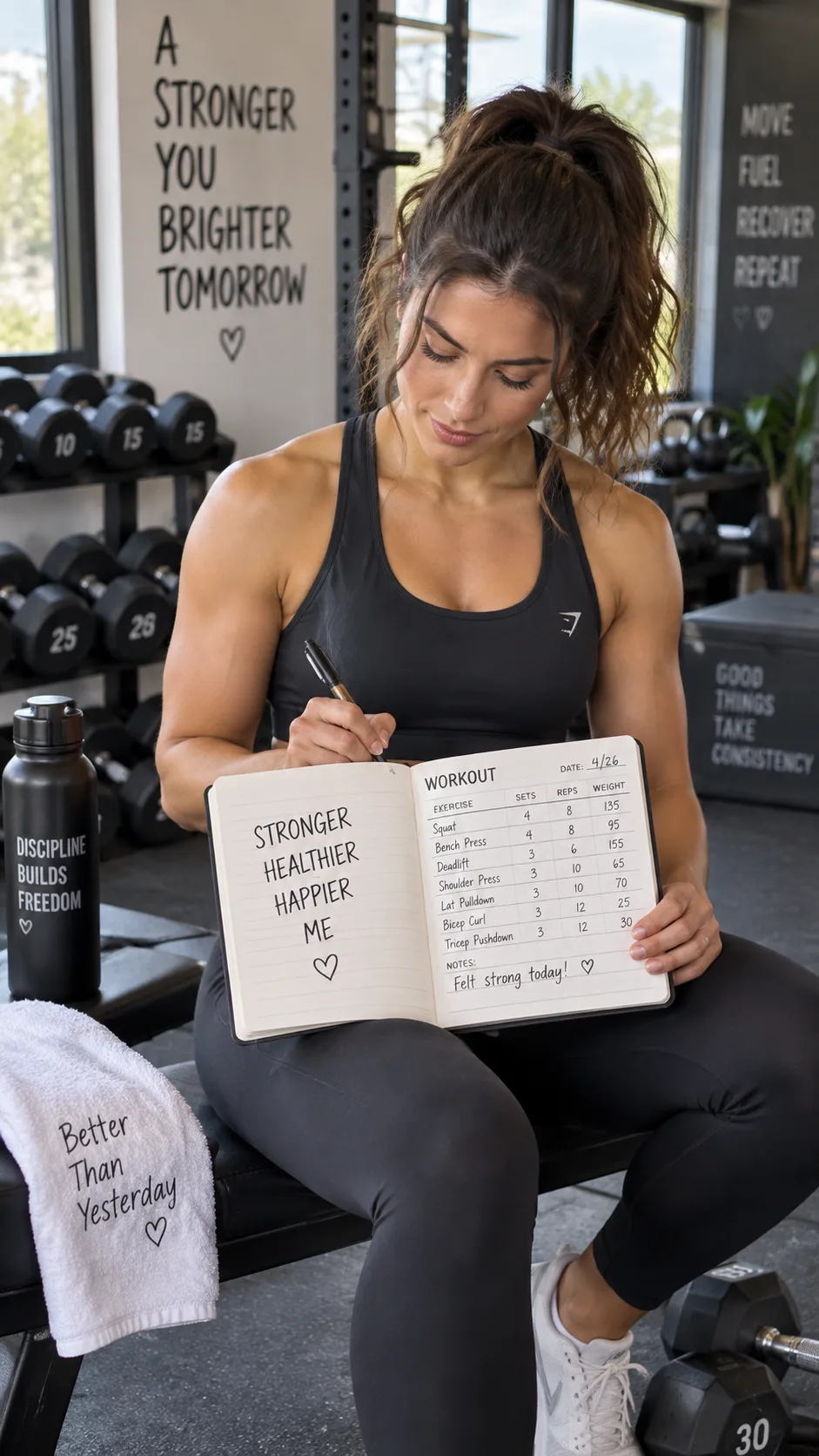
Your action plan starts now: Pick your three training days, set up Workout A and Workout B in your phone or a training journal, and commit to 8 weeks minimum. Track your weights and reps religiously. Eat enough protein. Sleep like it’s your job. And watch what happens when you finally give your body permission to recover.
You’ve got this. Now go lift something heavy, and then go home and rest. That’s literally the whole plan.
