

You’re growing a whole human being. Your body is doing extraordinary things right now. And yet, someone just told you that you also need to worry about your pelvic floor. Cool. No pressure at all, right?
The good news: pelvic floor exercises during pregnancy don’t require a gym membership, special equipment, or even breaking a sweat. They’re subtle, surprisingly effective, and you can literally do them while binge-watching your favorite show. The trick is knowing how to do them correctly, and knowing when to ease off.
Because yes, overdoing it is a real thing. And nobody wants to create MORE problems while trying to prevent them. So here’s a gentle, evidence-based routine that actually works without turning your pregnancy into a boot camp.

Why your pelvic floor deserves attention during pregnancy
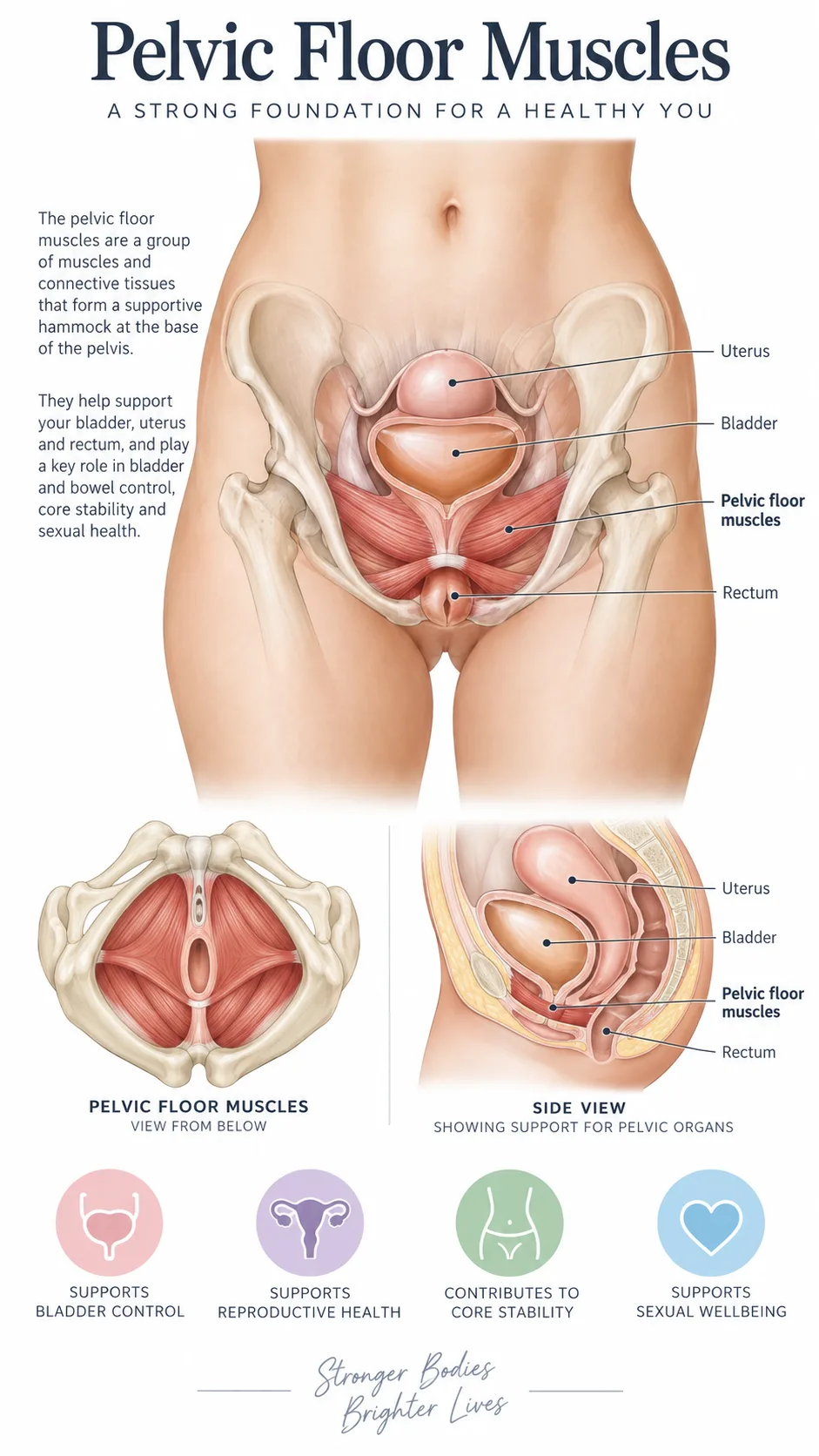
Your pelvic floor is basically a hammock of muscles stretching from your pubic bone to your tailbone. It supports your bladder, uterus, and bowel. During pregnancy, this muscular sling bears an increasing load from the weight of your growing baby, amniotic fluid, and placenta, all pressing down on it.
According to the NHS, weakened pelvic floor muscles during pregnancy can lead to urinary incontinence (that lovely sneeze-and-leak situation), reduced support for your pelvic organs, and a tougher recovery postpartum. Not exactly the outcome anyone wants.
Strengthening these muscles before and during pregnancy can reduce the risk of incontinence by up to 50%, according to research published in the Cochrane Library. That’s a pretty compelling number.
What happens if you ignore your pelvic floor?
Nothing dramatic, at first. But as your pregnancy progresses, you might notice little leaks when you cough, laugh, or stand up too fast. Some women experience pelvic heaviness or pressure. Postpartum, weakened muscles can mean a longer, more frustrating recovery.
Think of it this way: you wouldn’t run a marathon without training your legs. Why would you go through labor without preparing the muscles that play a starring role in delivery?
Finding your pelvic floor muscles (it’s trickier than you think)
Ever tried to squeeze muscles you can’t actually see? Welcome to pelvic floor training. The first step, and honestly the hardest, is identifying the right muscles.
Here’s a reliable way to find them: next time you’re on the toilet, try stopping the flow of urine midstream. Those muscles you just engaged? That’s your pelvic floor. Important note: don’t make this a regular habit. Repeatedly stopping your urine flow can cause bladder issues. This is purely a one-time identification exercise.
Another cue that works well: imagine you’re trying to hold in gas in a crowded elevator. Classy? No. Effective? Absolutely. You should feel a gentle lift and squeeze around your vagina and anus without clenching your buttocks, thighs, or abs.
The gentle pelvic floor exercise routine for pregnancy
Alright, here’s where we get practical. This routine builds genuine strength without overdoing it. You don’t need to squeeze until your face turns red. Gentle, consistent effort beats aggressive once-a-week sessions every single time.
Step 1: Slow contractions (the foundation)
- Sit comfortably, stand, or lie on your side, whatever feels best right now.
- Slowly squeeze your pelvic floor muscles and lift them upward. Imagine you’re drawing them up like an elevator rising floor by floor.
- Hold the squeeze for 5 to 10 seconds. Breathe normally. Don’t hold your breath!
- Release slowly and rest for 5 to 10 seconds.
- Repeat 10 times. That’s one set.
If you can only hold for 3 seconds at first, that’s completely fine. You’ll build endurance over time. The goal is gradual progress, not perfection on day one.
Step 2: Quick flicks (for reactive strength)
- Squeeze your pelvic floor muscles as quickly as you can.
- Release immediately.
- Repeat 10 times in rapid succession.
These fast-twitch contractions train your muscles to react quickly, like when you sneeze unexpectedly or pick up a toddler. They complement the slow holds perfectly.
Step 3: The breathing bridge
- Lie on your back with knees bent and feet flat on the floor (in early pregnancy) or on your side later on.
- Inhale deeply, letting your belly expand.
- As you exhale, gently engage your pelvic floor and lift your hips slightly off the ground into a small bridge.
- Hold for 3 to 5 seconds, then lower down as you inhale.
- Repeat 8 times.
After 16 weeks, avoid lying flat on your back for extended periods. Modify by propping yourself up at an angle or switching to side-lying exercises. Always listen to your body and your healthcare provider’s guidance.
The daily schedule
Aim for 3 sets of pelvic floor exercises per day: one set of slow contractions, one set of quick flicks, and the breathing bridge if it feels comfortable. The whole routine takes about 5 to 10 minutes. That’s it.
Consistency beats intensity here. Doing a little every day produces far better results than one marathon session per week. If you’re planning your pregnancy timeline, our pregnancy due date calculator can help you map out when to start ramping up your routine.
How to know if you’re overdoing it
Here’s something that doesn’t get talked about enough: you CAN overwork your pelvic floor. And an overly tight pelvic floor brings its own set of problems, including pain during intercourse, difficulty emptying your bladder, and increased tension that actually makes labor harder.
Watch for these warning signs:
- Pain or discomfort in your pelvis, lower back, or hips during or after exercises
- A feeling of increased pressure or heaviness in your pelvic region
- Difficulty relaxing the muscles after contracting them
- Urinary urgency or pain when peeing
- You’re holding your breath or clenching your jaw, abs, or glutes while squeezing
If any of these sound familiar, scale back immediately. More is not always more. The “no pain no gain” mentality has zero place in pelvic floor training, especially during pregnancy.

Common mistakes that sabotage your progress
Even with the best intentions, a lot of women unknowingly make mistakes that reduce the effectiveness of their pelvic floor exercises during pregnancy. Here are the big ones.
Mistake #1: Bearing down instead of lifting up
This one is sneaky. Some women push down when they think they’re squeezing up. If you feel pressure moving downward toward your perineum, you’re going in the wrong direction. The correct movement feels like a gentle internal lift.
Mistake #2: Holding your breath
Your pelvic floor and diaphragm work together. When you hold your breath, you create downward pressure that fights against the contraction. Always breathe normally throughout each squeeze.
Mistake #3: Recruiting other muscles
Clenching your butt cheeks, squeezing your thighs together, or tightening your abs means other muscles are doing the work instead. Place a hand on your belly. It should stay relatively relaxed during pelvic floor contractions.
Mistake #4: Only doing Kegels
Kegels are fantastic, but they’re just one piece of the puzzle. A well-rounded pelvic floor program includes both strengthening AND relaxation. Your muscles need to know how to let go, too, especially for labor and delivery. Check out our complete guide to pelvic floor exercises for women for a broader routine.
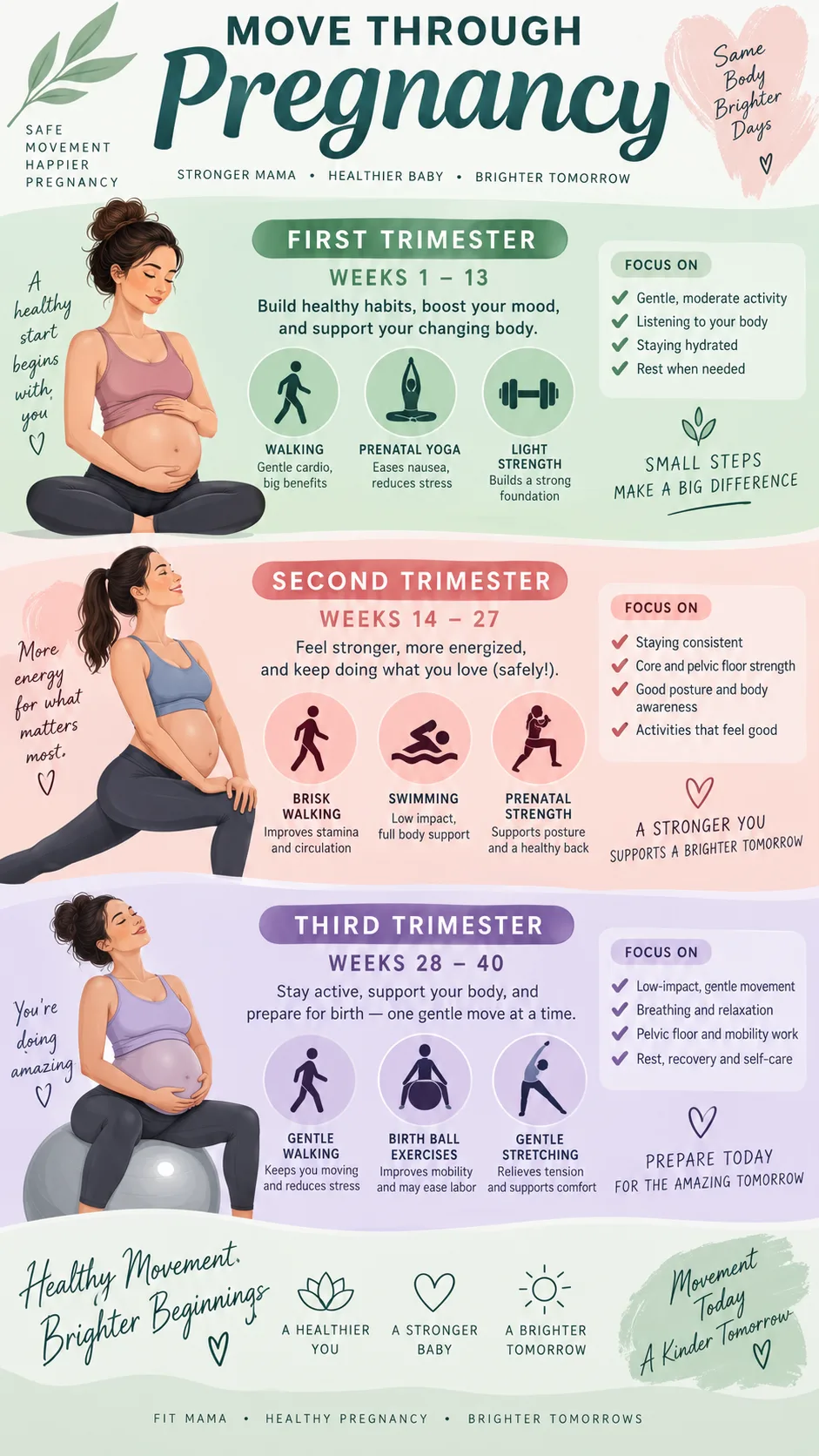
Trimester-by-trimester guide
Your body changes dramatically across 40 weeks. Your pelvic floor routine should adapt accordingly.
First trimester (weeks 1 to 12)
If you weren’t doing pelvic floor exercises before pregnancy, now is the perfect time to start. Focus on finding the muscles and building basic awareness. Start with shorter holds (3 to 5 seconds) and fewer reps. Nausea and fatigue might make some days a wash, and that’s okay.
Second trimester (weeks 13 to 27)
This is often the “sweet spot” trimester where energy returns and nausea fades. Build up to the full routine: 10 slow contractions held for 8 to 10 seconds, 10 quick flicks, and the breathing bridge. You can also add supported squats and gentle hip openers to complement your pelvic floor work.
Third trimester (weeks 28 to 40)
Shift your focus toward relaxation and release. Your pelvic floor needs to stretch during delivery, so spend equal time practicing letting go as you do squeezing. Perineal massage (starting around week 34) can also support tissue flexibility. The American College of Obstetricians and Gynecologists recommends discussing perineal preparation with your provider.
Deep belly breathing and visualization exercises (imagining your pelvic floor opening like a flower, cheesy but effective!) become especially helpful in these final weeks.
Positions that make pelvic floor exercises easier
Where you park your body matters. Different positions change how gravity affects your pelvic floor, and some feel MUCH better than others depending on your stage of pregnancy.
- Sitting upright on a firm chair: Great for early pregnancy. Keeps your pelvis neutral and your spine aligned.
- Side-lying: Takes pressure off your pelvic floor entirely. Perfect for the third trimester or when you’re feeling heavy.
- Hands and knees (all fours): Gravity works in your favor here, relieving pelvic pressure while you exercise. Many women find this position the most comfortable from mid-pregnancy onward.
- Supported standing: Lean against a wall or counter. Functional and practical. You can do this while making dinner.
Experiment with all four and pick what feels right for YOU that day. There’s no single “best” position. It changes as your body changes.
When to see a pelvic floor physiotherapist
Can you handle pelvic floor exercises on your own? Most of the time, absolutely. But certain situations call for professional guidance.
Consider seeing a pelvic floor physiotherapist if:
- You can’t identify or feel your pelvic floor muscles despite trying multiple techniques
- You experience pain during exercises
- You have existing incontinence that isn’t improving
- You’ve had previous pelvic surgery or trauma
- You notice symptoms of pelvic organ prolapse (heaviness, bulging sensation)
A specialist can assess your muscle function with real-time feedback, something no app or YouTube video can replicate. According to the Chartered Society of Physiotherapy, one-on-one pelvic floor training produces significantly better outcomes than self-guided programs alone.
Many health insurance plans cover pelvic floor physiotherapy during pregnancy. It’s worth checking, because the investment pays for itself tenfold.
The mental game: building a habit that sticks
Pelvic floor exercises aren’t exactly thrilling. Nobody has ever said “I can’t WAIT to do my Kegels today!” The challenge isn’t the exercises themselves. It’s remembering to actually do them.
A few habit-stacking strategies that work:
- Link them to an existing habit. Every time you brush your teeth, do a set. Every time you sit down to eat, do a set.
- Set three phone alarms spread throughout the day: morning, afternoon, evening.
- Use a tracking app. Several free pelvic floor exercise apps send reminders and guide you through sessions.
- Pair them with relaxation. Do your exercises during the first five minutes of a TV show or podcast.
The best routine is one you actually follow. A “perfect” program you skip every other day loses to an “okay” routine you do consistently. Every. Single. Time.
What about other exercises during pregnancy?
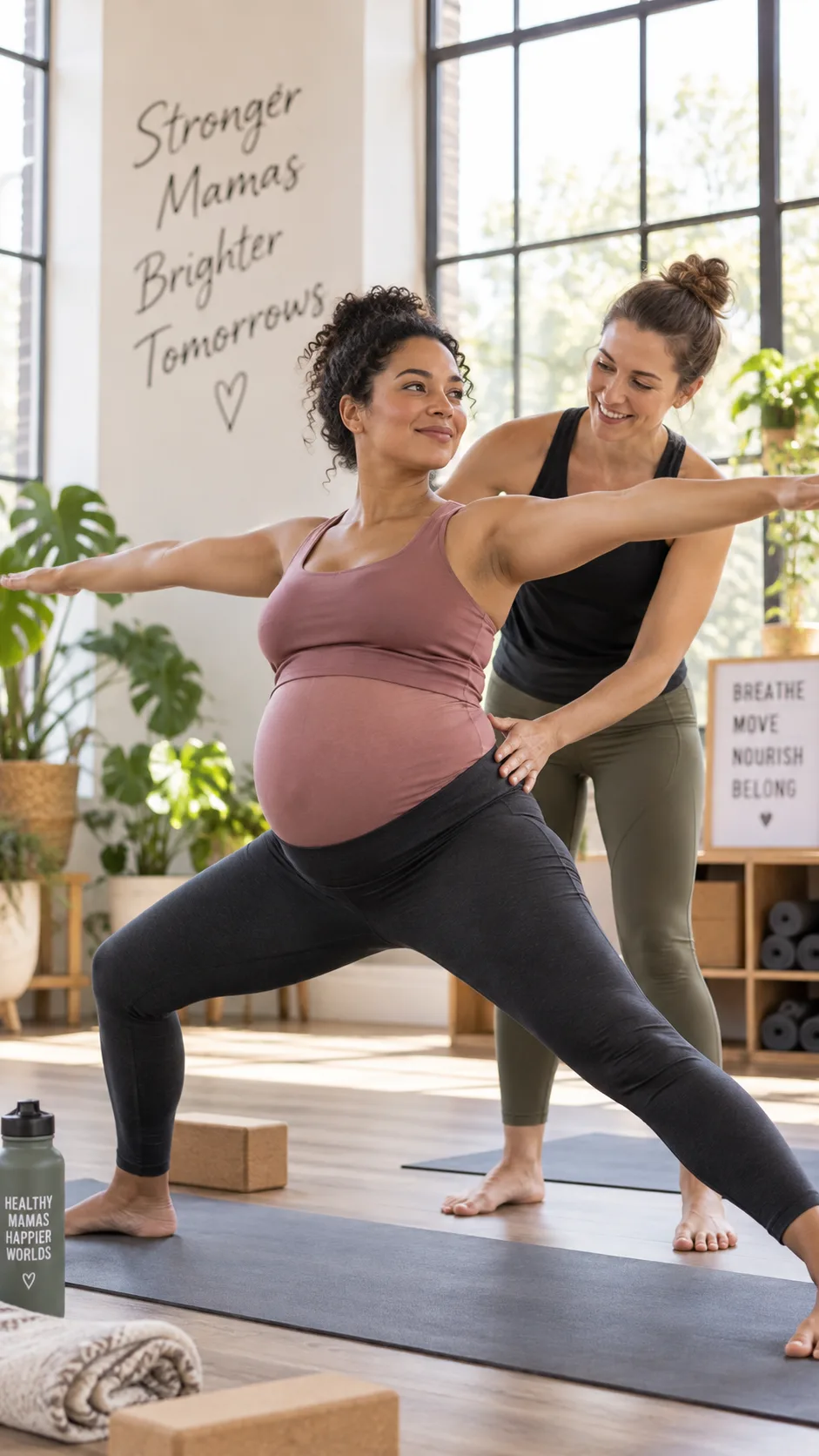
Pelvic floor exercises work even better when combined with gentle overall fitness. Walking, prenatal yoga, swimming, and modified strength training all support pelvic health. The word to remember? Modified.
Avoid heavy lifting, high-impact activities, and any exercise that causes bearing down or visible abdominal bulging (a sign of excessive intra-abdominal pressure). Activities like double-unders, box jumps, and heavy deadlifts can stress an already-loaded pelvic floor.
Ever wondered why some fitness-loving moms struggle more postpartum than less active ones? Sometimes it’s because intense exercise without proper pelvic floor awareness does more harm than good. Smart training beats hard training during pregnancy.
Quick recap: your pregnancy pelvic floor cheat sheet
Here’s everything distilled into a quick-reference list you can screenshot and keep on your phone:
- Do 3 sets daily: 10 slow holds + 10 quick flicks + breathing bridges
- Hold slow contractions for 5 to 10 seconds (build up gradually)
- Breathe normally throughout every exercise
- Don’t clench your glutes, thighs, or abs
- Practice relaxation as much as contraction, especially in the third trimester
- Stop if you feel pain and consult a pelvic floor physio if something feels off
- Adapt your position as pregnancy progresses (side-lying and all fours are your friends)
- Consistency over intensity, always
The bottom line
Pelvic floor exercises during pregnancy aren’t glamorous, and they definitely won’t make your Instagram story. But they’re quietly one of the most impactful things you can do for your body during these nine months, and for your recovery afterward.
The routine is simple. The time commitment is tiny. And the benefits last well beyond delivery day. You don’t need to become obsessive about it. You just need to show up for five minutes, three times a day, and let your body do what it does best: adapt and grow stronger.
Your future self, the one who sneezes without crossing her legs, will thank you.
