
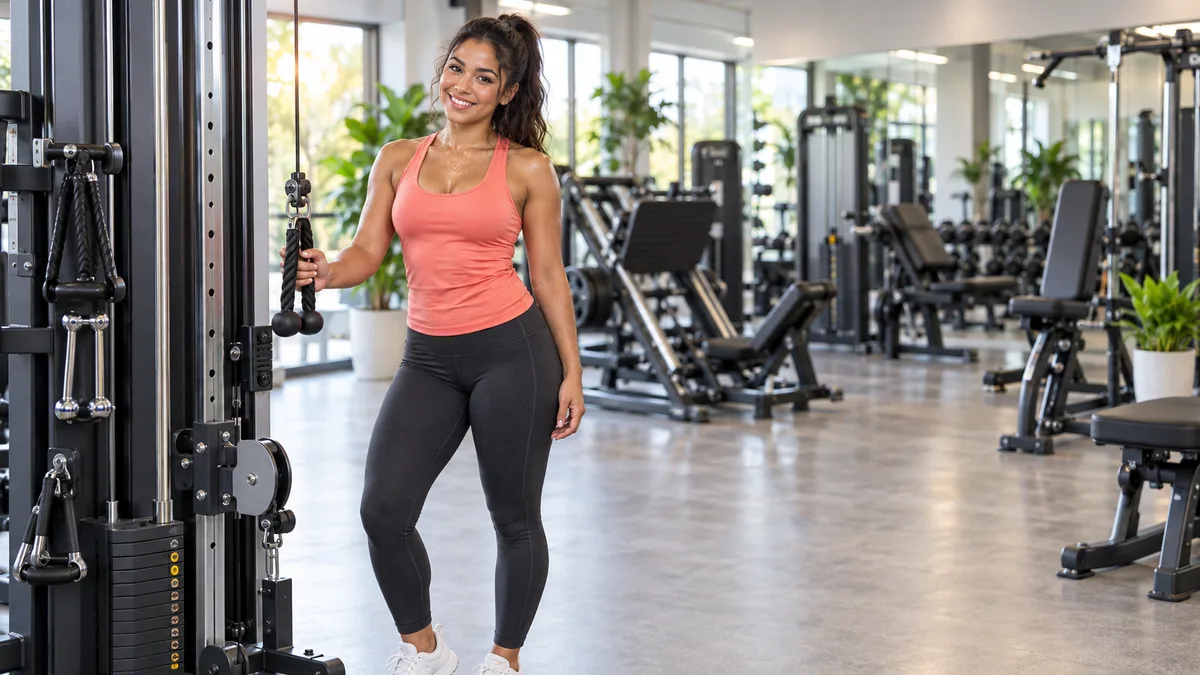
You walked into the gym, looked at a row of intimidating machines with cables and pulleys going every direction, and thought: “Nope.” Sound familiar? You’re not alone. Most women who start their fitness journey feel completely overwhelmed by gym equipment, and it’s not your fault. Nobody hands you a manual at the front desk.
Here’s the thing though: gym machines are your best friend as a beginner. They guide your movement, reduce your injury risk, and take the guesswork out of “am I doing this right?” So let’s break down which machines to use, how to use them, and how to string everything together into a workout that makes sense.
No confusing jargon. No assumptions that you already know what a “lat pulldown” is. Just real, actionable guidance you can screenshot and take with you to the gym today.
Why gym machines beat free weights for beginners
Before we get into the workout itself, let’s talk about WHY machines deserve your attention first. Free weights (dumbbells, barbells) are fantastic, but they require you to stabilize the weight yourself, control the path of motion, AND maintain proper form simultaneously. That’s a lot of multitasking for someone who’s still figuring out where the water fountain is.
Machines do the stabilizing for you. They lock you into a fixed range of motion, which means you can focus entirely on pushing or pulling the weight without worrying about it swinging sideways and taking out the person next to you. The American Council on Exercise consistently recommends machines as an excellent starting point for building foundational strength.
Does that mean machines are “easier”? Not at all. You can absolutely build serious muscle and strength on machines. They’re just more forgiving while you learn the ropes.
The machines every beginner woman should know
Walk into any commercial gym and you’ll find these staples. I’ve organized them by body part so you can mix and match based on your goals.
Upper body machines
- Chest Press Machine. Targets your chest, front shoulders, and triceps. Sit down, grab the handles at chest height, and push forward. That’s it. Think of it as a push-up without the floor.
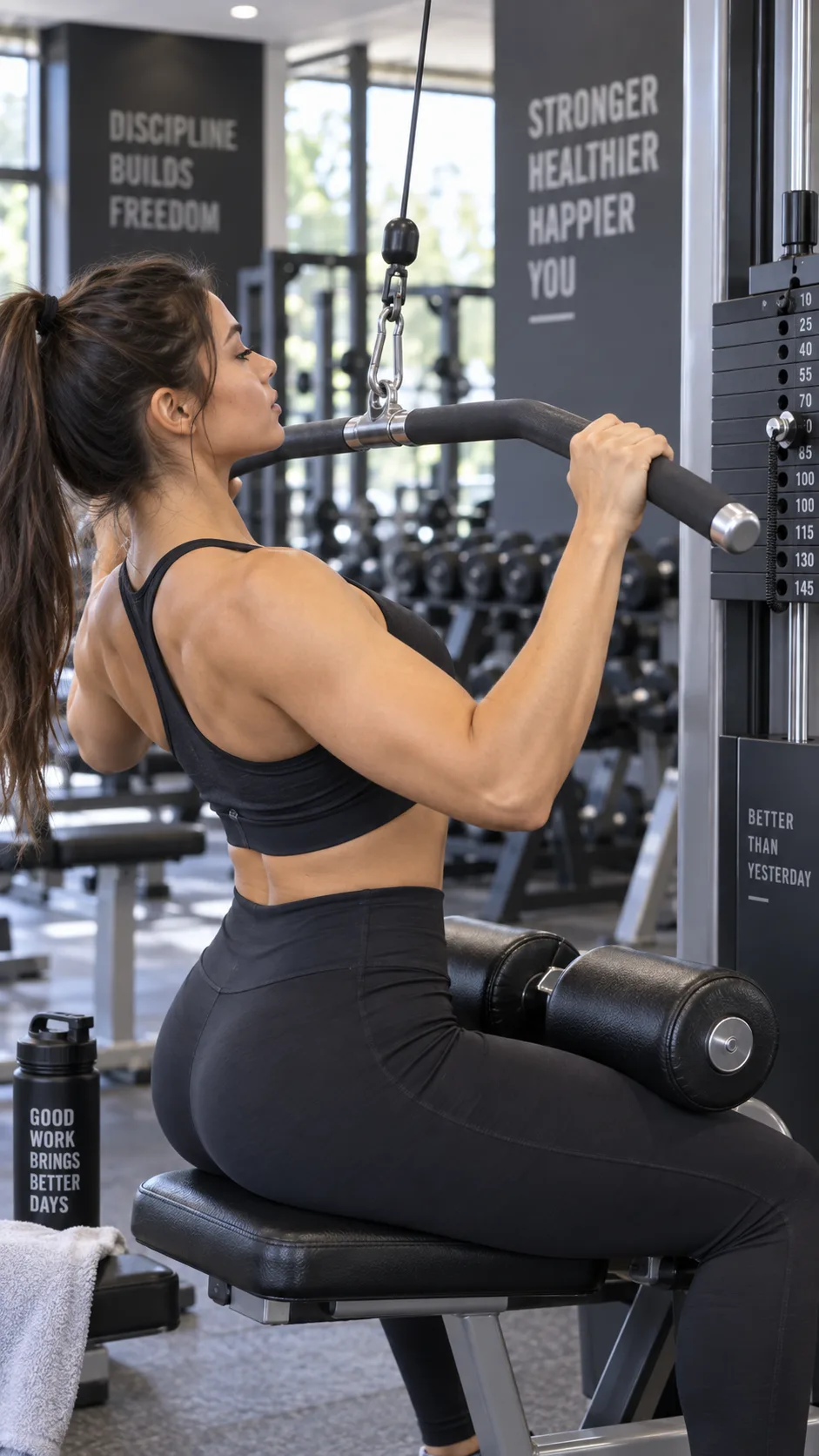
- Lat Pulldown Machine. Works your entire back and biceps. Grab the wide bar overhead, pull it down to your upper chest, and slowly release. This one builds that gorgeous back definition.
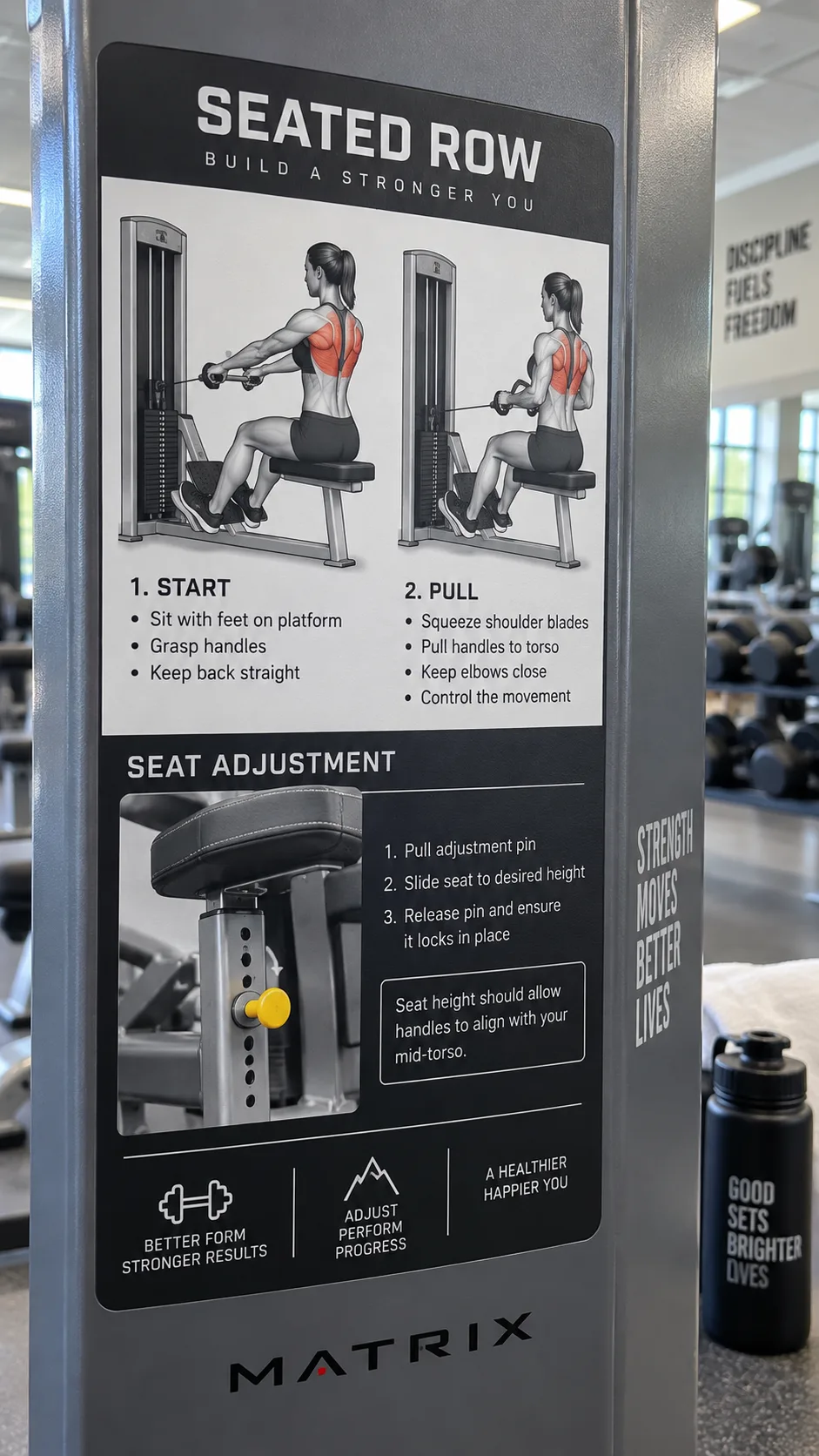
- Seated Row Machine. Another back builder, but from a horizontal pulling angle. Sit upright, pull the handles toward your torso, squeeze your shoulder blades together, and return slowly.
- Shoulder Press Machine. Targets your shoulders and triceps. Press the handles straight up overhead and lower with control. Keep your back against the pad the entire time.
If you want to go deeper on back-specific exercises, check out our guide on upper back workouts for women with dumbbells once you’ve built some confidence on the machines.
Lower body machines
- Leg Press Machine. The queen of beginner leg exercises. Place your feet shoulder-width apart on the platform, push the weight away by extending your legs, then slowly bend your knees to return. Pro tip: don’t lock your knees at the top.
- Leg Extension Machine. Isolates your quadriceps (front of your thighs). Sit down, hook your ankles behind the pad, and extend your legs straight out. You’ll feel the burn fast.
- Leg Curl Machine. The opposite movement, targeting your hamstrings (back of your thighs). Lie face down or sit upright (depends on the machine), curl the pad toward your glutes, and lower slowly.
- Hip Abductor/Adductor Machine. Yes, the one that looks slightly awkward. Push your knees outward on the abductor setting to target your outer glutes, or squeeze inward on the adductor setting for your inner thighs. Zero shame. This machine delivers results.
- Smith Machine for Squats. A barbell on guided rails. It lets you practice squat form with built-in safety. Place the bar on your upper traps, step your feet slightly forward, and squat down until your thighs are parallel to the floor.
For a complete lower body day, our best leg exercises for women at the gym guide goes into even more detail on building strong, defined legs.
Core machines
- Cable Machine (for Woodchops). Set the pulley high, grab the handle with both hands, and pull it diagonally across your body from high to low. This rotational movement torches your obliques.
- Ab Crunch Machine. Sit down, grab the handles, and crunch forward against resistance. Straightforward and effective. Just don’t yank with your arms. Let your abs do the work.
Your first gym equipment workout: the full routine
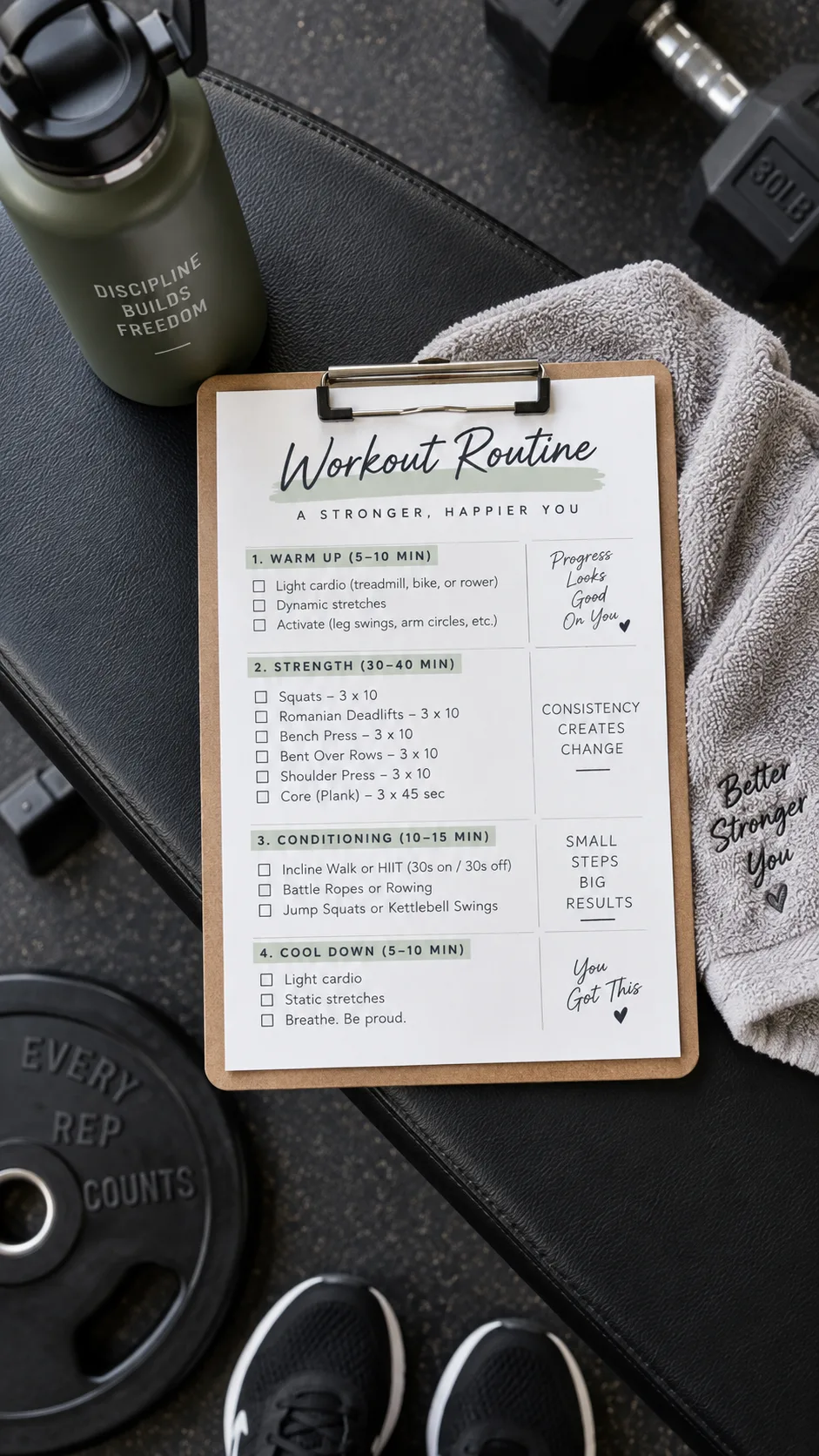
Okay, here’s where everything comes together. This is a full-body gym equipment workout designed specifically for women beginners. You can do this 2-3 times per week with at least one rest day between sessions.
Warm-up (5-10 minutes)
Never skip the warm-up. I know, I know. It feels like wasted time. But walking into a chest press cold is a one-way ticket to a pulled muscle. Hop on the treadmill for 5 minutes at a brisk walk, or use the elliptical at a comfortable pace. Get your heart rate up slightly and your joints moving.
The workout
Perform each exercise for 3 sets of 10-12 repetitions. Rest 60-90 seconds between sets. Choose a weight where the last 2-3 reps feel challenging but you can still maintain good form.
- Leg Press — 3 sets × 12 reps
- Lat Pulldown — 3 sets × 10 reps
- Leg Extension — 3 sets × 12 reps
- Chest Press — 3 sets × 10 reps
- Leg Curl — 3 sets × 12 reps
- Seated Row — 3 sets × 10 reps
- Hip Abductor — 3 sets × 15 reps
- Ab Crunch Machine — 3 sets × 15 reps
Notice how I alternated upper and lower body exercises? That’s intentional. This approach gives each muscle group a mini-rest while you work something else, keeping your workout efficient and your heart rate elevated. You’ll burn more calories this way too, which is a nice bonus.
The entire workout should take about 40-50 minutes, warm-up included. That’s manageable even on a busy day, right?
How to set up gym machines properly (without asking for help every time)
Here’s a secret most gym veterans won’t tell you: almost every machine has a diagram printed directly on it. Look for the small instructional sticker, usually on the side or front panel. It shows you the muscles targeted, the seat position, and the basic movement pattern. Use it. That’s literally what it’s there for.
Adjustments to get right
- Seat height: Your joints should align with the machine’s pivot point. On a leg extension, your knees should line up with the machine’s hinge. On a chest press, the handles should sit at mid-chest level.
- Back pad position: Your back should sit flush against the pad with no gap. If you’re arching away from it, something needs adjusting.
- Weight selection: Start lighter than you think you need. Seriously. You can always go heavier on set two. Starting too heavy and struggling through ugly reps helps nobody.
- Range of motion: Move through the FULL range that the machine allows. Partial reps cheat your muscles out of the stimulus they need to grow and strengthen.
According to the National Strength and Conditioning Association (NSCA), proper machine setup reduces injury risk significantly and maximizes muscle activation. Take the extra 30 seconds to adjust. Your body will thank you.
How to choose the right weight as a beginner
This trips up almost everyone. How heavy should you go? Here’s my rule of thumb that’s never failed me or anyone I’ve helped:
Pick a weight where you can complete 10 reps with good form, but reps 11 and 12 feel genuinely tough. If you cruise through all 12 reps like it’s nothing, go up one notch on the weight stack. If you can barely grind out 8 reps with your face turning red, drop it down.
The sweet spot is what trainers call “controlled difficulty.” You should feel like you’re working, not like you’re fighting for survival. And FYI, you won’t accidentally get bulky. Women don’t produce enough testosterone to pack on massive muscle from a few sets of leg press. That myth needs to retire permanently.
Progressive overload: the growth secret
Your muscles adapt quickly. The weight that challenged you in week one will feel easier by week three. When that happens, increase the weight by the smallest increment available, usually 5 pounds or one plate on the stack. This gradual increase is called progressive overload, and it’s the fundamental principle behind getting stronger.
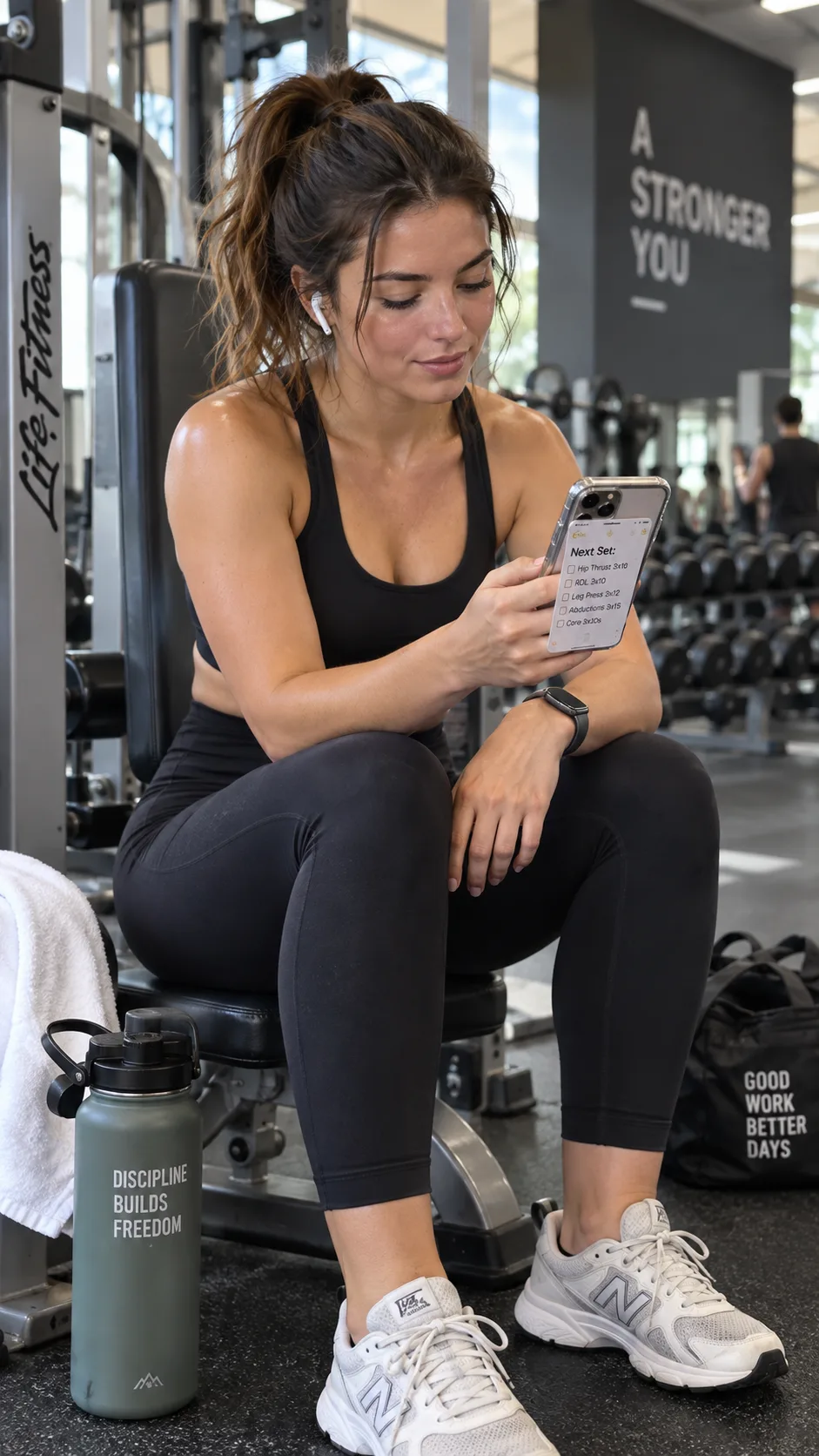
Track your weights in your phone’s notes app. Write down what you lifted each session. When you look back after a month and see how far you’ve come, that data becomes incredibly motivating.
Common mistakes beginner women make on gym equipment
I’ve seen these hundreds of times, and I’ve made most of them myself when I started. Save yourself the trouble:
- Going too fast. Momentum is NOT your friend. If you’re swinging the weight stack up and letting it crash down, you’re using gravity instead of muscle. Aim for a 2-second lift and a 3-second lower on every rep.
- Holding your breath. Breathe OUT during the hard part (the push or pull) and breathe IN during the return. Holding your breath spikes your blood pressure and makes you dizzy. Nobody wants to be the person who passes out on the shoulder press.
- Only doing cardio. The treadmill is comfortable and familiar, I get it. But strength training on machines builds lean muscle, boosts your metabolism, strengthens your bones, and reshapes your body in ways cardio alone simply cannot. The CDC recommends at least two days of strength training per week for all adults.
- Skipping lower body. Ever seen someone with a strong upper body and toothpick legs? Don’t be that person :/ Lower body exercises like the leg press and leg curl work your largest muscle groups, which burns the most calories and creates balanced, functional strength.
- Comparing yourself to experienced lifters. That woman squatting 200 pounds? She started exactly where you are right now. Everyone’s a beginner at some point. Focus on YOUR progress, YOUR form, YOUR consistency.
How to structure your weekly gym schedule
Once you’ve done the full-body routine above for 4-6 weeks and built some baseline strength, you might want to split your workouts into different focus days. This lets you train more frequently without overworking the same muscles.
A simple 3-day split for beginners
- Day 1, Lower Body: Leg press, leg extension, leg curl, hip abductor, calf raises on the Smith machine
- Day 2, Upper Body: Chest press, lat pulldown, seated row, shoulder press, cable tricep pushdown
- Day 3, Full Body + Core: Smith machine squats, chest press, seated row, cable woodchops, ab crunch machine
Space these out across the week. Monday, Wednesday, Friday works perfectly. Want a more detailed breakdown of scheduling? Our gym routine for beginners workout plans guide walks you through your entire first week, step by step.
Gym etiquette: the unwritten rules nobody tells you
Since we’re covering everything you need to feel confident, let’s handle the social stuff too. These “rules” aren’t posted anywhere, but everyone follows them:
- Wipe down machines after you use them. Every gym has spray bottles and paper towels. Use them. This is non-negotiable.
- Don’t sit on a machine scrolling your phone between sets. If you need a rest, step aside and let someone else work in.
- Put the weight pin back to a neutral position when you finish. The next person shouldn’t have to play detective to figure out the last weight used.
- It’s totally okay to ask someone how a machine works. Most gym-goers are genuinely happy to help. We’ve all been there.
- Wear headphones if you want to be left alone. Universal gym code for “I’m in the zone.” 🙂
When to move beyond machines
Machines are an incredible foundation, but they shouldn’t be your forever home. After 6-8 weeks of consistent machine training, consider adding free weight exercises like dumbbell goblet squats, dumbbell rows, and dumbbell lunges. Your stabilizer muscles need training too, and free weights deliver that.
The beauty of starting on machines is that you’ve already built the movement patterns, the mind-muscle connection, and the baseline strength that make free weights much less intimidating. You’ll know what a row feels like, what a press feels like, and what proper range of motion looks like, all before you ever pick up a dumbbell.
IMO, the best long-term approach combines machines AND free weights. Machines for isolation and safety, free weights for functional strength and variety. That combination keeps your workouts effective and never boring.
The bottom line: you belong in that weight room
Let me wrap this up with what matters most. Every single person in that gym started as a beginner. The machines exist to make your entry point smooth, safe, and effective. You don’t need a personal trainer to get started (though one session can be helpful). You don’t need fancy workout clothes. You don’t need to know everything on day one.
You need a plan, and now you have one. You need to know which machines to use, and now you do. You need to understand how to set them up, choose the right weight, and avoid common mistakes, and you’ve got all of that covered.
The hardest part of any gym equipment workout for beginners isn’t the exercises themselves. It’s walking through the door that first time. So walk through it. Grab a machine. Follow this routine. And watch what happens when you show up consistently for a month.
Your future self, the one who feels strong, confident, and completely at home in the weight room, is waiting for you to start. So what are you waiting for?
