

You’ve been doing rows and bicep curls for weeks, maybe months, and your upper back still looks exactly the same in every photo. Sound familiar? The problem isn’t your effort. It’s that most upper back routines weren’t built with women’s goals in mind, and half the exercises you’ve been grinding through are basically filler.
Here’s the thing: you don’t need 15 different exercises to sculpt your upper back and arms. You need five. Five moves with dumbbells that actually target the muscles responsible for that defined, confident look, the kind where you throw on a tank top and feel like you own the room.
I spent years overcomplicating my back workouts, cycling through random exercises I found on Pinterest, wondering why nothing changed. Then I stripped everything down to a handful of compound and isolation moves, got intentional about form, and saw more progress in eight weeks than I had in the previous year. So let me share exactly what worked.
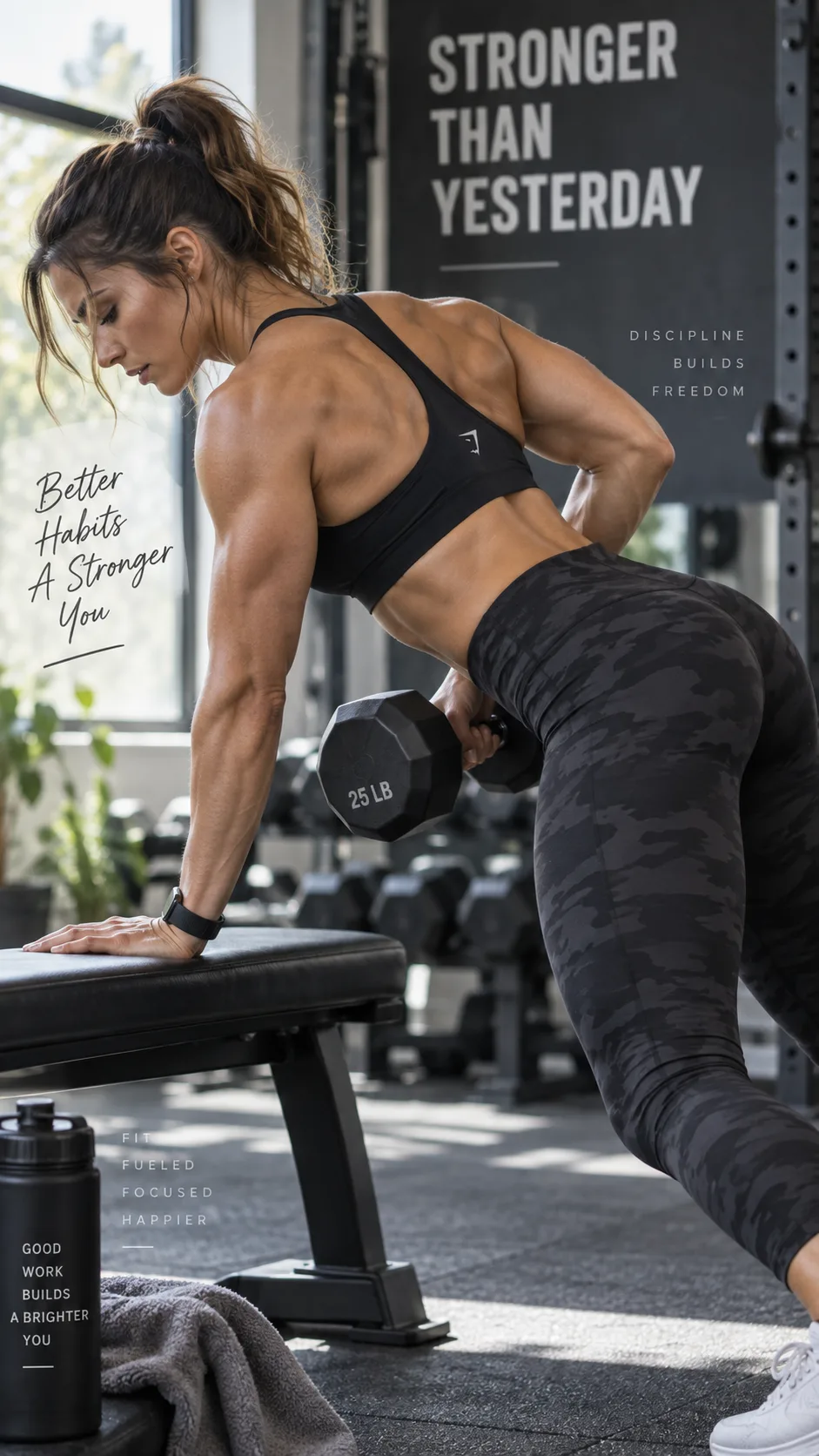
Why women should prioritize upper back training
Training your upper back isn’t going to make you “bulky.” That myth needs to retire permanently. Women produce roughly 15-20 times less testosterone than men, according to the American Council on Exercise, which means building massive muscle mass without very specific programming and nutrition is physiologically unlikely.
What upper back training WILL do is improve your posture (especially if you sit at a desk all day), create the visual illusion of a smaller waist, and build the kind of functional strength that makes everyday life easier. Carrying groceries, picking up kids, opening stubborn jars. Your back muscles drive all of it.
The posture connection nobody talks about enough
Ever notice how someone with great posture just looks more put-together? That’s not an accident. Your upper back muscles (the rhomboids, rear deltoids, and middle trapezius) are literally the muscles that pull your shoulders back and keep you upright. Weak upper back muscles equal rounded shoulders, forward head posture, and eventually neck pain that no amount of massage guns can fix.
Training your upper back also balances out all the pushing movements most people overdo. If you’ve been hammering push-ups and chest presses without equally training your back, you’re setting yourself up for shoulder problems down the road. Balance matters.
The equipment you actually need
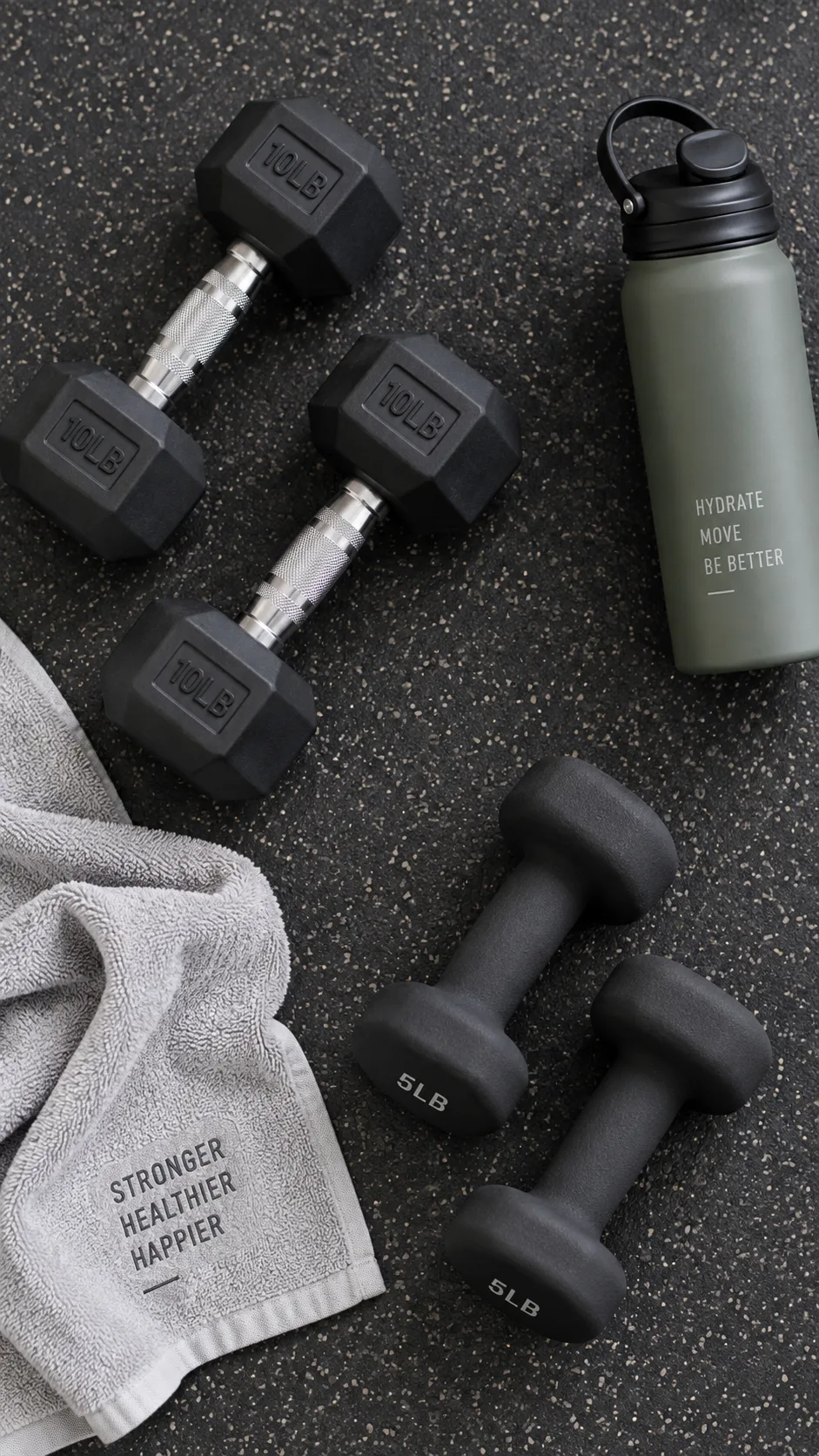
Good news: this entire upper back workout for women requires nothing more than two sets of dumbbells. I recommend having a lighter pair (8-12 lbs) and a moderate pair (15-25 lbs), depending on your current strength level. That’s it. No cable machine, no pull-up bar, no fancy equipment.
If you’re working out at home and want to pair this with a complete routine, check out this upper body workout plan that builds strength and definition at home or the gym. It complements these moves perfectly.
- Lighter dumbbells (8-12 lbs): For isolation moves like rear delt flyes and face pulls
- Moderate dumbbells (15-25 lbs): For compound moves like rows and pullovers
- A bench or sturdy chair: Optional but helpful for supported rows
The 5 dumbbell moves that actually deliver results
Alright, here’s the main event. Each of these exercises earned its spot because it targets multiple upper back and arm muscles simultaneously, meaning zero wasted reps. Every single repetition does real work.
Move #1: Bent-over dumbbell row
The bent-over row is the undisputed queen of upper back exercises, and if you could only do ONE move from this list, this would be my pick. It hammers your lats, rhomboids, rear delts, and biceps all at once. That’s a lot of muscle recruitment for a single movement.
How to perform it:
- Stand with feet hip-width apart, holding a dumbbell in each hand
- Hinge forward at the hips until your torso forms roughly a 45-degree angle with the floor
- Let the dumbbells hang straight down, palms facing each other
- Pull the dumbbells toward your lower ribs, squeezing your shoulder blades together at the top
- Lower with control. Don’t just drop them
Sets and reps: 4 sets of 10-12 reps with moderate weight dumbbells.
The biggest mistake I see? People turning this into a bicep curl by pulling with their arms instead of driving their elbows back. Think about it like starting a lawnmower. Your elbow leads, and your hand just comes along for the ride. The squeeze at the top between your shoulder blades is where the magic happens.
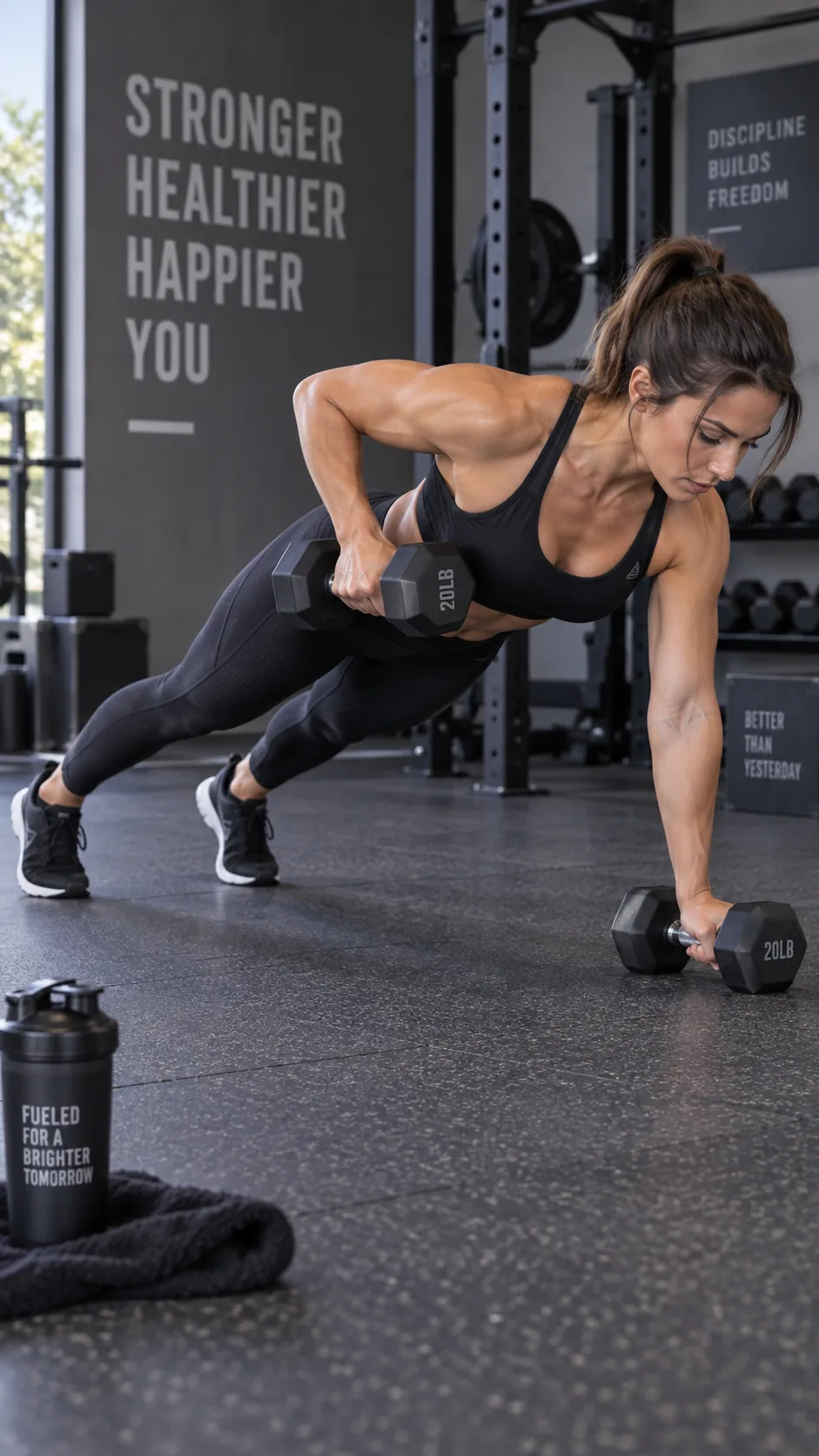
Move #2: Renegade row
Want to train your back AND core at the same time? The renegade row is absurdly efficient. It’s basically a plank that fights back. You’ll feel your entire midsection fire up just trying to stay stable while you row.
How to perform it:
- Start in a high plank position with hands gripping dumbbells on the floor, wrists stacked under shoulders
- Keep your feet slightly wider than hip-width for stability
- Row one dumbbell to your hip while pressing the opposite hand firmly into the floor
- Lower the dumbbell back down with control
- Alternate sides without letting your hips rotate or sag
Sets and reps: 3 sets of 8 reps per side with lighter dumbbells.
My honest take: renegade rows are humbling. Most people need to go lighter than they think. If your hips are swinging like a pendulum, the weight is too heavy. Stability IS the exercise. Nail the anti-rotation component, and your obliques will thank you too.
Move #3: Dumbbell rear delt fly
Your rear deltoids are sneaky-important muscles that most women completely neglect. They sit on the back of your shoulders and create that rounded, sculpted look from every angle. Ignore them, and your shoulders will always look flat from the side, no matter how many overhead presses you do.
How to perform it:
- Hinge forward at the hips (same starting position as the bent-over row)
- Hold lighter dumbbells with a slight bend in your elbows
- Raise both arms out to the sides in a wide arc until they’re roughly parallel with the floor
- Pause for a one-count squeeze at the top
- Lower slowly. Fight gravity on the way down
Sets and reps: 3 sets of 15 reps with light dumbbells.
This is NOT the exercise to ego-lift on. Seriously. I’ve watched people grab 20-pound dumbbells for rear delt flyes and essentially do some kind of full-body convulsion that works everything except the muscle they’re trying to target. Go light, go slow, feel the burn in the back of your shoulders. If you can’t feel it there, the weight is controlling you instead of the other way around.
Move #4: Dumbbell pullover
The dumbbell pullover is an old-school move that deserves a massive comeback. It stretches and contracts your lats through a huge range of motion while also engaging your triceps and chest. Think of it as the Swiss Army knife of upper body exercises.
How to perform it:
- Lie face-up on a bench (or position your upper back across a bench with feet flat on the floor)
- Hold one dumbbell with both hands above your chest, arms slightly bent
- Lower the dumbbell behind your head in a controlled arc until you feel a deep stretch in your lats
- Pull the dumbbell back over your chest by squeezing your lats, not by pressing with your arms
- Keep your core braced throughout to protect your lower back
Sets and reps: 3 sets of 12 reps with a moderate dumbbell.
Fun fact: Arnold Schwarzenegger credited the dumbbell pullover as one of his favorite exercises for building a wide, V-shaped back. We’re not chasing Arnold proportions here, but the principle holds. This move creates width and definition in your upper back like almost nothing else with just a dumbbell.
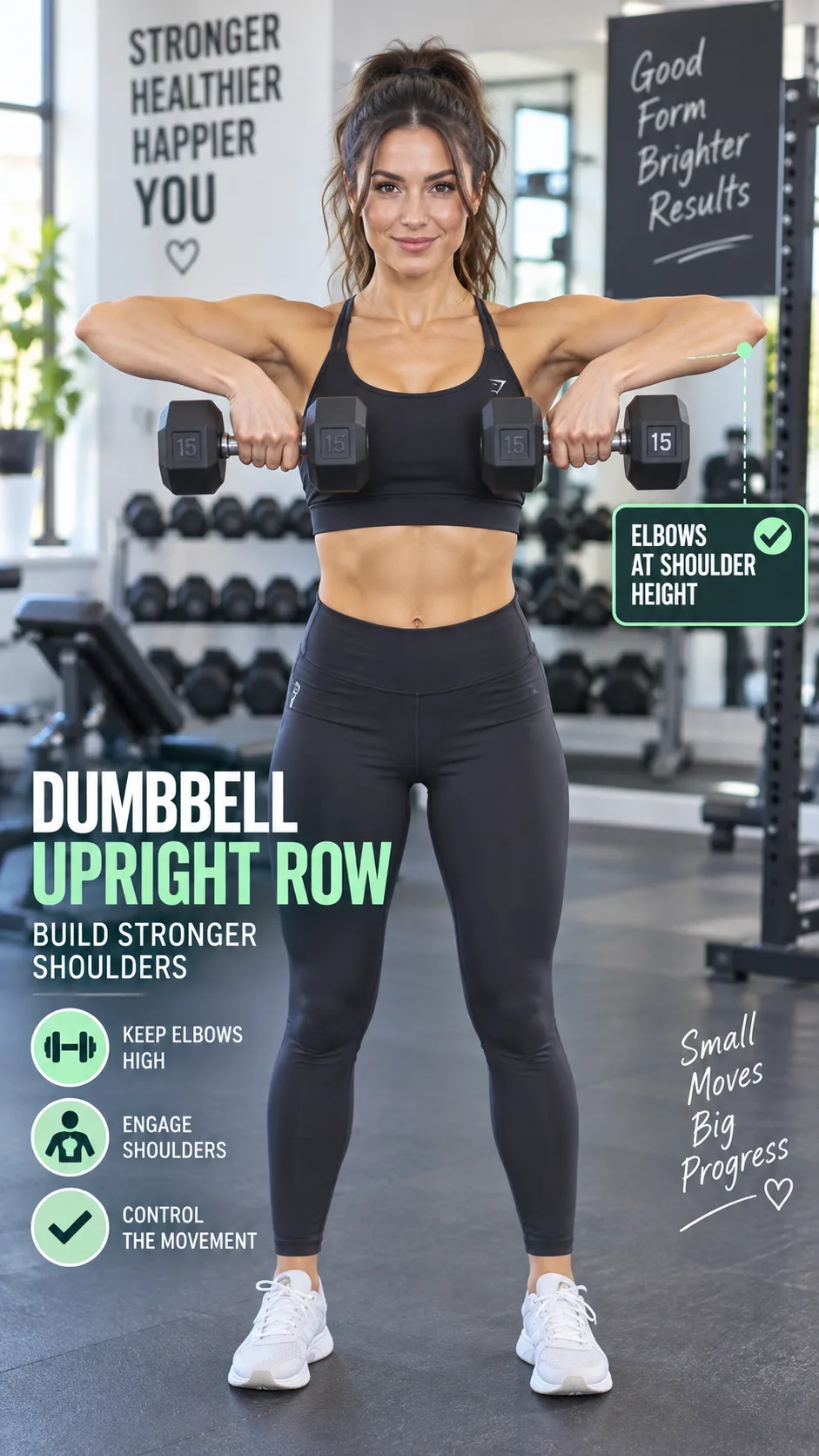
Move #5: Upright row to curl combo
This is my personal favorite because it’s a two-for-one deal that absolutely lights up your traps, shoulders, AND biceps in a single fluid movement. Why waste time doing separate exercises when you can combine them intelligently?
How to perform it:
- Stand tall, holding dumbbells in front of your thighs with palms facing your body
- Pull the dumbbells up along your torso until your elbows reach shoulder height (upright row)
- Lower back to the starting position
- Immediately perform a bicep curl, rotating your palms to face forward as you curl up
- That’s one rep. Keep alternating without rest between the two movements
Sets and reps: 3 sets of 10 reps (each rep includes one row AND one curl) with light to moderate dumbbells.
A quick note on upright rows: they’ve gotten some bad press because yanking heavy weight too high can irritate your shoulder joint. The fix is simple. Don’t pull higher than your collarbone, keep the movement controlled, and use a weight you can handle cleanly. According to the National Strength and Conditioning Association, moderate-load upright rows performed with proper form are safe and effective for most people.
How to structure this as a complete workout
Knowing the exercises is one thing. Putting them together into a workout that flows logically is another. Here’s exactly how I’d structure this upper back workout for women for maximum efficiency:
- Warm-up: 5 minutes of arm circles, band pull-aparts, or light cardio
- Bent-Over Dumbbell Row: 4 x 10-12 (heaviest compound move goes first)
- Renegade Row: 3 x 8 per side (compound + core challenge)
- Dumbbell Pullover: 3 x 12 (stretch-focused lat work)
- Rear Delt Fly: 3 x 15 (isolation finisher for shoulders)
- Upright Row to Curl Combo: 3 x 10 (metabolic burnout to close)
Total time: approximately 35-40 minutes including rest periods. Rest 60-90 seconds between sets of the heavier compound exercises and 45-60 seconds for the lighter isolation work.
Perform this workout 2-3 times per week with at least one rest day between sessions. Your muscles grow during recovery, not during the workout itself, so skipping rest days isn’t dedication. It’s sabotage 🙂
Progressive overload: the ingredient most people skip
Here’s a question: are you still using the same 10-pound dumbbells you started with six months ago? If so, that’s exactly why your results have stalled. Progressive overload, which means gradually increasing the challenge your muscles face, is the single most important principle for changing how your body looks.
You don’t have to add weight every single session. There are multiple ways to progressively overload:
- Add weight: Even 2.5 lbs matters over time
- Add reps: Go from 10 to 12 before increasing weight
- Slow the tempo: Take 3 seconds on the lowering phase instead of 1
- Reduce rest time: Cut rest periods by 10-15 seconds
- Improve form: Better mind-muscle connection = more effective reps
Track your weights and reps in a notebook or app. I know it sounds tedious, but the women who track their workouts get results, period. The ones who “just wing it” wonder why nothing changes. Don’t be the second group.
Nutrition: you can’t out-train a bad diet
I know, you’ve heard this a million times, but it bears repeating because it’s painfully true. You can do the most perfectly designed upper back workout on earth, and if your nutrition doesn’t support muscle recovery and growth, you’ll see minimal changes.
The basics for muscle definition:
- Eat enough protein. Aim for 0.7-1g per pound of bodyweight daily
- Don’t chronically undereat. Severe calorie restriction tanks your metabolism and kills muscle-building potential
- Stay hydrated. Dehydrated muscles perform terribly and recover slowly
- Prioritize whole foods but don’t obsess over perfection
If you’re struggling with meal planning, these easy meal plans for the week take the guesswork out of eating well without turning your kitchen into a full-time job. Pair smart nutrition with consistent training, and you’ll notice changes faster than you’d expect.
For anyone specifically trying to lose body fat to reveal the muscle definition you’re building, a moderate calorie deficit combined with adequate protein intake is the approach that actually works long-term.

Common mistakes that kill your upper back gains
After coaching friends and training partners through these exact movements for years, I’ve seen the same mistakes pop up over and over. Avoid these, and you’ll be ahead of 90% of people in the gym:
Mistake #1: Using momentum instead of muscle
Swinging the dumbbells using your entire body to get them moving defeats the whole purpose. If you have to use momentum, the weight is too heavy. Drop the ego, drop the weight, and actually feel the target muscles working. Controlled reps build muscle. Sloppy reps build injuries.
Mistake #2: Neglecting the eccentric (lowering) phase
Most people focus exclusively on lifting the weight and then basically let it free-fall on the way back down. Research published in the Journal of Medicine & Science in Sports & Exercise consistently shows that the eccentric (lowering) phase creates significant muscle damage, the good kind that triggers growth and adaptation. Take at least 2 seconds to lower every rep.
Mistake #3: Only training what you can see in the mirror
Chest, shoulders, and abs get all the attention because they’re the “mirror muscles.” But your upper back is what other people see when you walk away, when you wear a backless dress, or when you’re photographed from any angle that isn’t straight-on. Train the whole package.
Mistake #4: Skipping the squeeze
At the top of every row and fly, you should feel your shoulder blades pinch together. If you don’t feel that squeeze, you’re probably pulling with your arms instead of your back. The shoulder blade squeeze is your quality control checkpoint. No squeeze? The rep didn’t count.
How long before you see results?
Real talk: if you’re consistent with this upper back workout for women 2-3 times per week and eating enough protein, you should start noticing improvements in 4-6 weeks. Muscle definition typically becomes visible around the 8-12 week mark, depending on your starting body fat percentage and training history.
The first thing you’ll notice won’t even be visual. It’ll be how much stronger you feel during daily activities. Carrying heavy bags, maintaining better posture at your desk, feeling more confident in your upper body. The aesthetic changes follow the strength gains. Always.
If you want to complement this upper back work with lower body training, consider adding a toned leg workout gym plan to create a well-rounded routine that covers all your bases.
Final thoughts: stop overcomplicating it
The fitness industry loves to sell complexity. New exercises every week, 90-minute workouts, elaborate periodization schemes that require a PhD to understand. But the truth about building a sculpted upper back with dumbbells is almost boringly simple: pick a handful of effective exercises, do them consistently with good form, progressively increase the challenge, and eat to support your goals.
These five dumbbell moves (bent-over rows, renegade rows, pullovers, rear delt flyes, and the upright row-curl combo) cover every major muscle in your upper back and arms without a single wasted rep. No filler exercises. No “junk volume.” Just efficient, results-driven training that respects your time.
So grab those dumbbells, put in the work 2-3 times a week, and give it eight honest weeks. Your upper back, and every tank top you own, will thank you for it.
