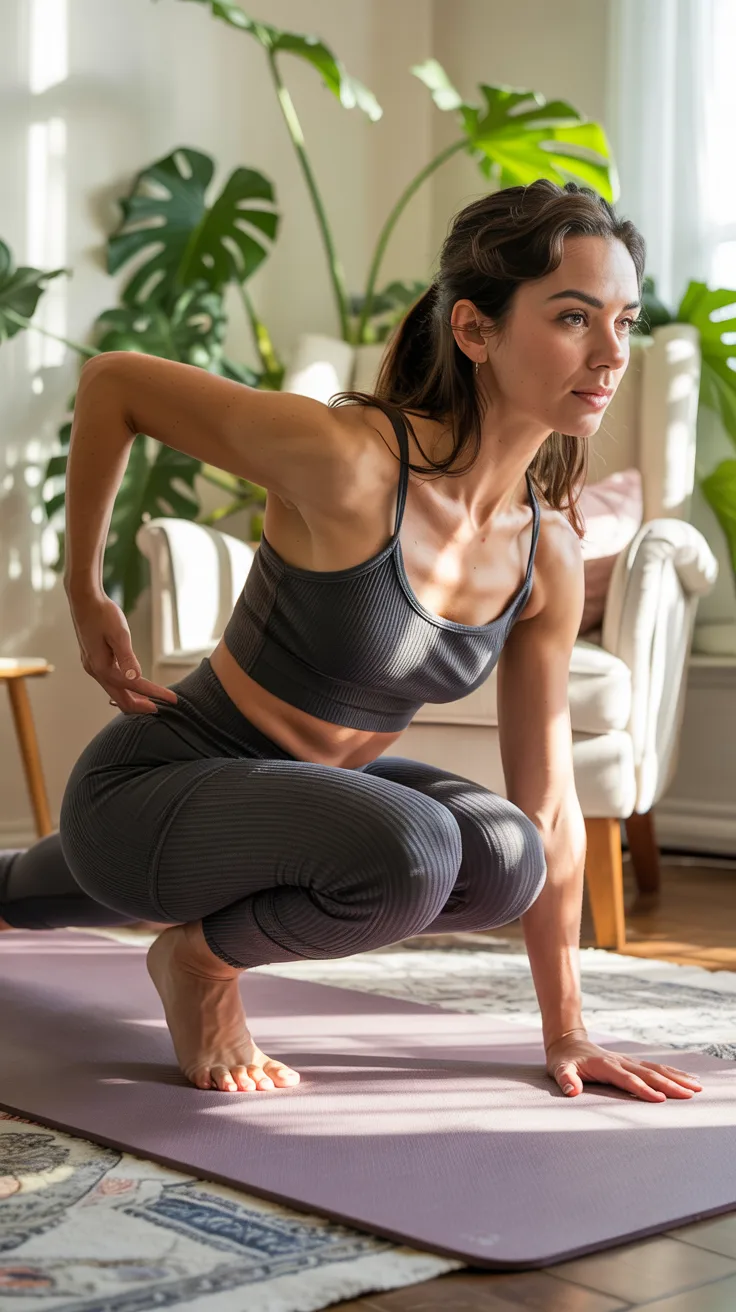
You probably think you need heavy metal plates and a pricey gym membership to build a strong physique. I thought the exact same thing a few years ago. I spent hours throwing dumbbells around, yet my lower back constantly ached and my posture resembled a boiled shrimp. Then I unrolled a cheap, sticky yoga mat on my living room floor and attempted a 20-minute mat Pilates workout.
That short session completely humbled me. I spent the next three days struggling to laugh, cough, or sit up without groaning in pain. Mat Pilates targets tiny stabilizing muscles you completely ignore during traditional workouts. Ready to transform your living room into an elite fitness studio?
This ultimate guide walks you through a comprehensive full body exercise routine. You will learn the foundational movements, understand the anatomy behind the burn, and discover how to progress your practice. Grab a towel and some water. You will definitely need both.
Why Mat Pilates Beats the Gym (IMO)
Fitness influencers constantly push complicated machines and risky heavy lifts. Mat Pilates strips all that noise away. Joseph Pilates created this discipline in the early 20th century to rehabilitate injured dancers and soldiers. He designed these movements to build incredible core strength, improve flexibility, and align the spine perfectly.
You rely entirely on your own body weight to create resistance. Gravity becomes your ultimate opponent. When you remove momentum from the equation, you force your muscles to work intensely through their full range of motion. Have you ever tried lifting your leg extremely slowly while keeping your pelvis perfectly still?
This method prevents injuries while building long, lean muscle mass. You develop a functional, athletic body that performs beautifully in real-life situations. Plus, you save hundreds of dollars a year on gym fees. You simply roll out your mat, hit play on a routine, and start sweating.
The Core Principles You Actually Need to Know
You cannot just flop around on the floor and call it Pilates. This method demands absolute precision. Instructors refer to these foundational rules as the “Big Six” principles. Master these concepts, and your results will skyrocket.
- Centering: Every single movement originates from your “powerhouse.” This area includes your abdominals, lower back, pelvic floor, and glutes. You must engage this center before you move your limbs.
- Concentration: You cannot zone out or watch television during this routine. You must mentally connect with the specific muscle you want to work.
- Control: Sloppy, fast movements invite injury. You must dictate exactly where your body goes at all times. Momentum destroys your results.
- Precision: Placement matters immensely. A slight shift in your hip angle completely changes the muscle activation. You must prioritize form over repetitions.
- Breath: Proper breathing oxygenates your blood and facilitates core engagement. You inhale through your nose to prepare, and you exhale forcefully through your mouth during the exertion phase.
- Flow: You should transition smoothly from one exercise to the next. The workout resembles a slow, controlled dance rather than a disjointed series of sets.
Essential Gear for Your Mat Pilates Routine
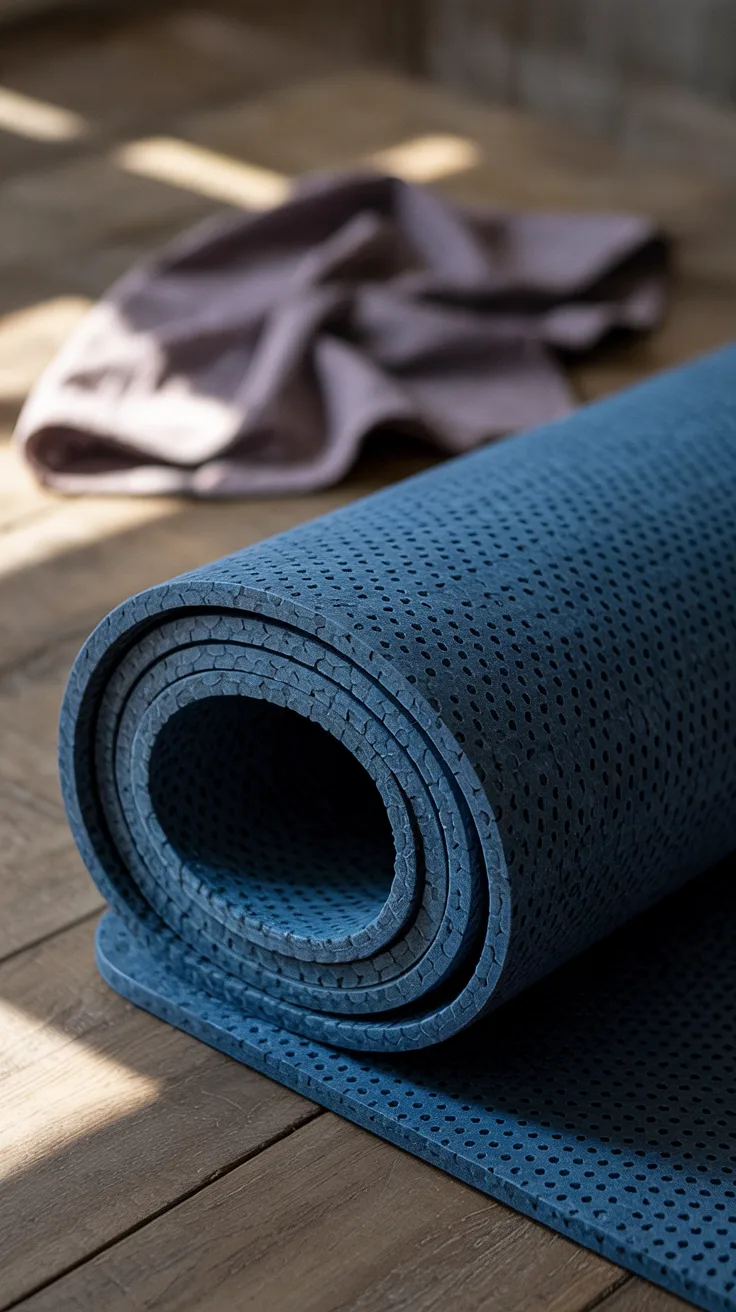
You actually need very little equipment to start this journey. However, the right tools make the experience much more comfortable and effective.
First, you need a high-quality mat. FYI, an ultra-thin yoga mat will torture your spine. Pilates movements require you to roll directly on your vertebrae. You must purchase a thick, high-density Pilates mat. Look for something at least half an inch thick to cushion your bones.
Second, wear form-fitting clothing. Baggy shirts and sweatpants hide your alignment. You need to see the exact position of your ribs, hips, and knees. Tight leggings and a fitted tank top work perfectly. Finally, you practice this method entirely barefoot. Grippy socks offer a great alternative if you have cold floors.
Need a quick visual demonstration before we begin? Watch this incredible beginner routine to understand the pacing and flow.
The Beginner Mat Pilates Workout Sequence
This beginner Pilates sequence serves as your ultimate full body exercise routine. Perform these exercises in the exact order listed. Joseph Pilates specifically designed this sequence to warm up the body, challenge the core, and cool down the nervous system.
1. The Hundred (The Warm-up)
This iconic exercise rapidly elevates your heart rate and pumps fresh oxygen through your body. The name comes from the exactly one hundred arm beats you perform.
- Lie flat on your back and imprint your spine firmly into the mat.
- Float your legs up to a “tabletop” position with your knees bent at 90-degree angles.
- Curl your head, neck, and shoulders off the floor while hovering your arms perfectly straight by your sides.
- Pump your arms vigorously up and down.
- Inhale sharply for five pumps, and exhale completely for five pumps. Repeat this cycle ten times.
Keep your gaze locked on your navel to protect your neck. If your lower back arches, raise your legs slightly higher toward the ceiling.
2. The Roll-Up
Forget standard crunches. The roll-up stretches the back of your body while intensely targeting your deep abdominal wall. This exercise requires severe articulation of the spine.
- Lie completely flat with your legs squeezed tightly together and your arms reaching overhead.
- Inhale, lift your arms toward the ceiling, and tuck your chin to your chest.
- Exhale and peel your spine off the mat bone by bone, reaching forward over your toes.
- Inhale as you begin to roll backward.
- Exhale and smoothly lower your spine back onto the mat, controlling the descent entirely with your core.
Avoid jerking your body upward. If your feet fly off the floor, you are using momentum. Try tucking your toes under a heavy sofa until you build enough core strength to anchor yourself.
3. Single Leg Circles
This movement lubricates the hip joint while challenging your pelvic stability. Your abdominals must work overtime to keep your torso absolutely still.
- Lie on your back with your left leg flat on the mat and your right leg extended straight toward the ceiling.
- Anchor your hips deeply into the floor.
- Draw a circle in the air with your right foot, crossing it over your body, sweeping it down, and bringing it back up.
- Complete five circles in one direction, then reverse the direction for five more circles.
- Switch legs and repeat the process.
Imagine balancing a hot cup of coffee on your pelvis. Do not let a single drop spill. Make the circles smaller if your hips wobble side to side.
4. Rolling Like a Ball
This fun exercise massages your spine while testing your balance and control. It exposes any flat spots in your spinal articulation.
- Sit near the front edge of your mat and pull your knees tightly to your chest.
- Wrap your hands around your shins and hover your feet just above the floor.
- Tuck your chin, round your spine into a “C” shape, and inhale as you roll back to your shoulder blades.
- Exhale and roll forward, using your deep core to brake before your feet touch the mat.
Never roll onto your neck or head. You must maintain the exact same ball shape throughout the entire movement. Do you feel yourself flopping like a dying fish? Squeeze your core tighter.
5. Single Straight Leg Stretch
You will feel a deep stretch in your hamstrings while your abdominals endure an intense isometric hold. This is where the real burn begins.
- Lie on your back, curl your head and shoulders up, and lift both legs straight toward the ceiling.
- Grab your right ankle with both hands and pull the leg gently toward your face twice.
- Hover your left leg a few inches above the floor simultaneously.
- Switch legs cleanly in the air and pull the left leg toward your face.
- Perform ten repetitions on each leg.
Keep your elbows wide and your chest lifted. Only lower your hovering leg as far as your lower back can stay glued to the mat.
6. Criss-Cross
Most people perform terrible bicycle crunches at the gym. The Pilates Criss-Cross fixes all those sloppy mechanics and sets your obliques on fire.
- Lie on your back with your knees in tabletop position and your hands interlaced behind your head.
- Curl your upper body off the mat.
- Extend your right leg straight out while twisting your right ribcage toward your left knee.
- Hold that twist for a full second.
- Switch sides smoothly, extending your left leg and twisting your left ribcage to your right knee.
Do not pull on your neck. You must twist from your waist, lifting your shoulder blade completely off the floor. Keep your elbows wide enough to stay out of your peripheral vision.
7. The Bridge
After torturing your anterior core, you must activate the posterior chain. The bridge tones the glutes, strengthens the hamstrings, and opens the front of the hips.
- Lie flat on your back with your knees bent and your feet flat on the floor, hip-width apart.
- Rest your arms completely straight by your sides.
- Exhale, press into your heels, and peel your spine off the mat until your body forms a straight line from knees to shoulders.
- Squeeze your glutes violently at the top of the movement.
- Inhale and melt your spine back down into the mat, bone by bone.
Do not over-arch your lower back at the top. You want a diagonal line, not a massive backbend. Drive your knees forward over your toes to engage your hamstrings further.
8. The Side Kick Series
This series sculpts the outer thighs and challenges lateral stability. You will realize very quickly which hip possesses more strength.
- Lie on your right side and align your back perfectly with the back edge of your mat.
- Bring both legs slightly forward to the front corner of the mat to create a stable base.
- Support your head with your right hand and place your left hand flat on the floor in front of your chest.
- Lift your top leg to hip height.
- Kick the leg forward twice, then sweep the leg backward past your hip without arching your spine.
- Complete eight repetitions before switching sides.
Your upper body must remain entirely motionless. Imagine your back pressed against a brick wall. Only the leg moves inside the hip socket.
9. Swimming
Modern humans spend entirely too much time hunched over keyboards. The swimming exercise reverses that terrible posture by strengthening the erector spinae muscles along the back.
- Lie strictly face down on your mat with your arms stretched forward and legs extended straight back.
- Lift your chest, arms, and legs a few inches off the floor.
- Raise your right arm and left leg slightly higher.
- Switch quickly, raising your left arm and right leg.
- Flutter your limbs rapidly while breathing deeply for thirty seconds.
Keep your neck long by staring directly down at the mat. Reach actively through your fingertips and toes to lengthen the body.
10. Forearm Plank
We finish the routine with the ultimate full body integrator. A proper plank forces every muscle group to communicate and stabilize together.
- Place your forearms on the mat with your elbows directly under your shoulders.
- Step your feet back and pull your body into a perfectly straight line from head to heels.
- Tuck your tailbone slightly, squeeze your glutes, and brace your abdominals fiercely.
- Push the floor away with your forearms to engage your upper back.
- Hold this position for thirty to sixty seconds.
Do not let your hips sag toward the floor. If you feel pressure in your lower back, instantly drop to your knees. Form always trumps duration.
Progressing Beyond Beginner Level
Once you conquer the beginner sequence without shaking uncontrollably, you need to turn up the heat. Your body adapts quickly to new stresses. You must introduce progressive overload to keep seeing results.
First, experiment with tempo. Slowing down the movement actually increases the difficulty exponentially. Try performing the Roll-Up to a painfully slow count of ten. You will discover exactly where your core weakness hides.
Second, incorporate props into your mat Pilates workout. A Pilates “magic circle” adds brutal inner thigh and upper body resistance. Light ankle weights (one to two pounds maximum) transform simple leg circles into agonizing endurance tests. Resistance bands mimic the heavy springs found on a Pilates reformer machine.
Finally, increase your range of motion. Lift your upper body higher during flexion exercises. Drop your legs lower during extension exercises. Small millimeter adjustments change the entire dynamic of a movement. My first intermediate class left me sore in places I did not know existed :/
Common Mistakes You Will Make (And How to Fix Them)
Everyone makes technical errors when learning a new fitness modality. Identifying these flaws early prevents chronic pain and terrible habits.
Mistake 1: Relying on momentum. Throwing your limbs around completely defeats the purpose of the exercise. You essentially cheat the muscle out of its necessary workload. Move with deliberate, heavy intention. Pretend you are moving through thick mud.
Mistake 2: Straining the neck. Beginners constantly complain about neck pain during core exercises. This happens because you pull with your head instead of lifting from your chest. Imagine holding a small peach between your chin and your chest. Gaze directly at your belly button to relieve cervical spine tension.
Mistake 3: Forgetting to breathe. Holding your breath raises your blood pressure and starves your muscles of fuel. You must force the air forcefully out of your lungs on the hardest part of the exercise. Make an audible “shhh” sound as you exhale.
Mistake 4: Arching the lower back. During leg extension exercises, your lower back often pops off the mat. This instantly dumps all the pressure into your delicate lumbar vertebrae. Only lower your legs as far as you can physically keep your lower back glued down. Modify the range until your core gets stronger.
The Final Stretch: Consistency Wins
A single mat Pilates workout feels amazing, but true transformation requires relentless consistency. You cannot practice once a month and expect a bulletproof core. Aim for three focused sessions a week. Thirty minutes of pristine form produces far better results than sixty minutes of sloppy, exhausted flailing.
Listen closely to your body. Modify the exercises when necessary, prioritize your spinal alignment, and never force a painful range of motion. The beauty of this discipline lies in its adaptability. You can literally perform these exercises in a hotel room, a park, or right next to your bed.
You now possess the exact blueprint to master the beginner Pilates method. Your living room awaits. Roll out your mat. Do the hard work. Enjoy the incredible results.