
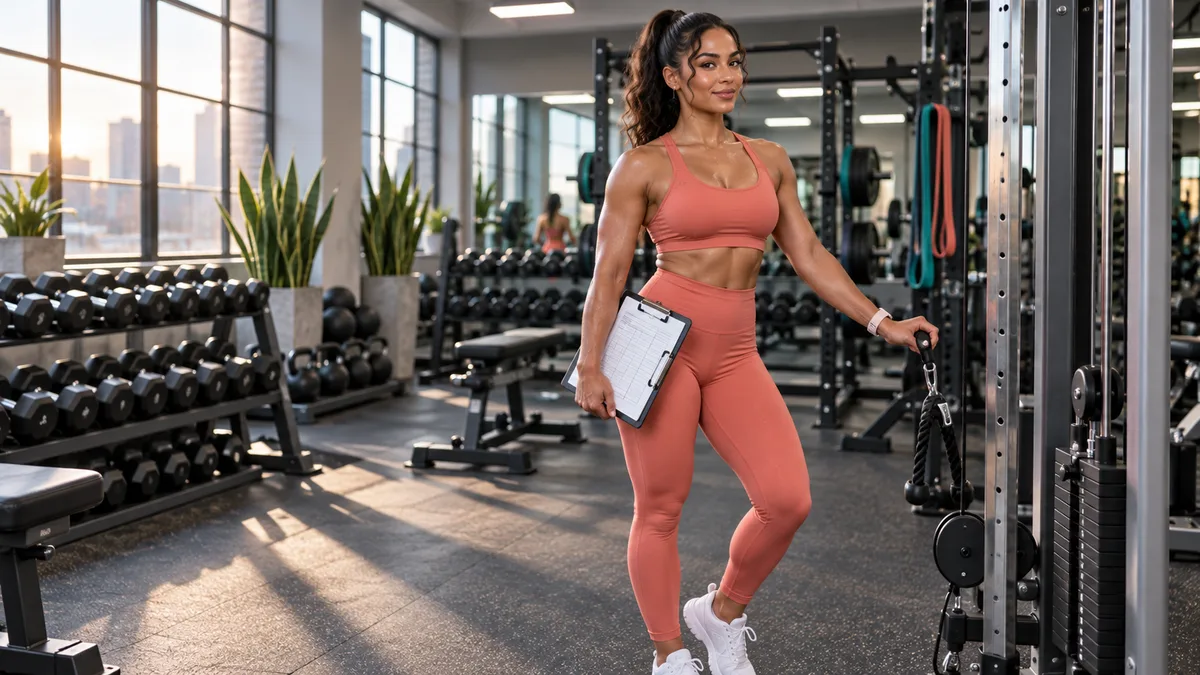
You walked into the gym, stared at the equipment, opened your Notes app, scrolled through three saved Instagram workouts, picked none of them, and ended up doing 20 minutes on the elliptical. Sound familiar? Yeah, you’re not alone. I’ve been that person more times than I’d like to admit.
The fix isn’t more motivation. It’s a weekly gym workout plan for women that tells you exactly what to do on each day so your brain can clock out and your body can clock in. A clear, printable schedule you can fold into your gym bag and follow without second-guessing yourself at the dumbbell rack.
This article gives you that plan, plus the reasoning behind it, so you actually understand why each day is structured the way it is. Because knowing the “why” is what keeps you consistent when the novelty wears off.
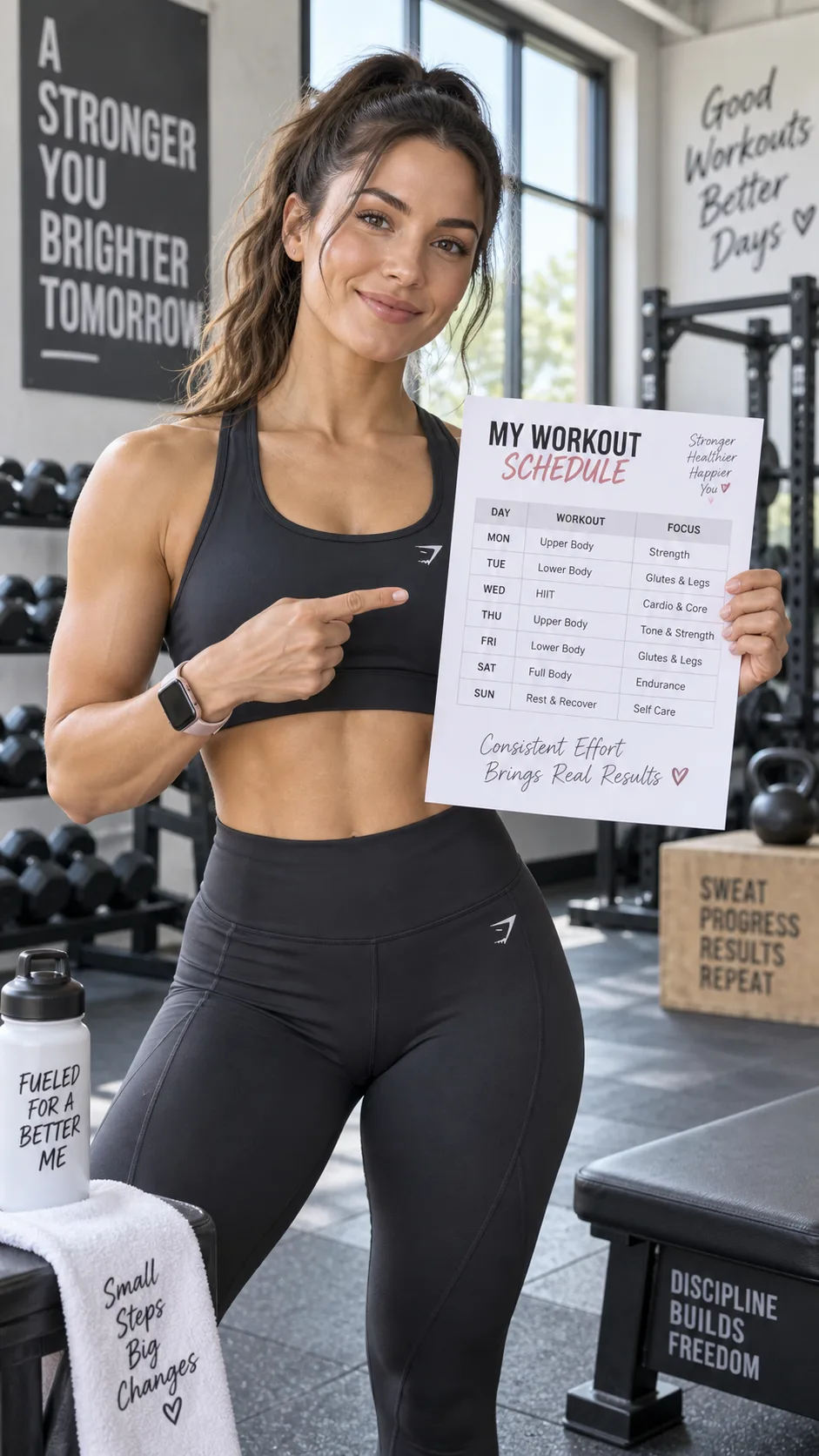
Why a weekly gym schedule changes everything
Here’s the thing most people get wrong: they think results come from finding the “perfect” exercises. They don’t. Results come from showing up consistently and following a structured plan. A weekly schedule removes the biggest barrier to consistency, which is not knowing what to do next.
A 2021 study published in the British Journal of Sports Medicine found that structured resistance training programs produced significantly better strength and body composition outcomes than unstructured approaches. Translation? Winging it doesn’t work as well as planning it.
When you follow a weekly gym workout plan, you also ensure balanced muscle development. No more accidentally training arms four days in a row because “arm day is fun” while your legs silently weep in the corner. You hit everything proportionally, you recover properly, and you progress faster.
Who is this plan for?
This schedule works best for women who can commit to 4-5 days at the gym per week and have at least a few months of training experience. If you’re a true beginner, I’d recommend starting with our gym routine for beginners workout plan first, then graduating to this one.
It’s designed around a combination of free weights, machines, and bodyweight movements, the kind of stuff you’ll find in virtually any commercial gym. No fancy cable attachments required. No TikTok-only equipment.
The weekly split: how your 5 days break down
I’ve structured this as a 5-day split with 2 rest days. Each training day focuses on specific muscle groups, giving everything enough stimulus to grow and enough rest to recover. Here’s the overview:
- Monday: Lower Body (Quad & Glute Focus)
- Tuesday: Upper Body Push (Chest, Shoulders, Triceps)
- Wednesday: Active Recovery or Rest
- Thursday: Lower Body (Hamstring & Glute Focus)
- Friday: Upper Body Pull (Back & Biceps)
- Saturday: Full Body + Core
- Sunday: Full Rest
Why this order? Because it spaces out your lower body days with an upper body day in between, giving your legs 48+ hours to recover. Your upper body gets the same treatment. Saturday’s full body session acts as a “clean-up” day where you hit anything that needs extra volume at moderate intensity.
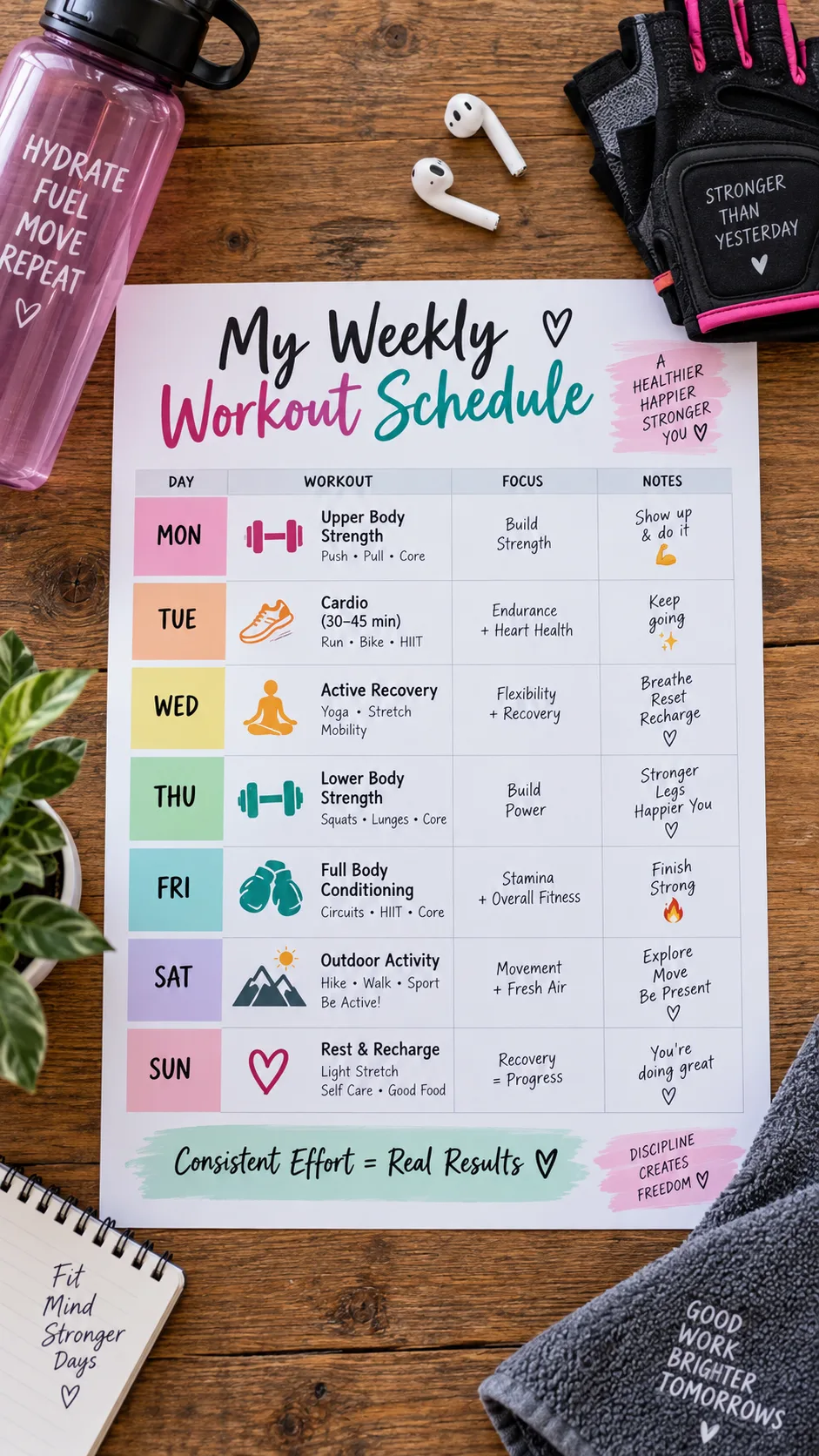
Day 1: Monday, Lower Body (Quad & Glute Focus)
Start the week strong with your heaviest compound movements. Your energy and willpower tend to be highest on Monday (debatable, I know, but research backs this one), so we front-load the most demanding exercises here.
- Barbell Back Squats — 4 sets x 8-10 reps
- Leg Press — 3 sets x 10-12 reps
- Walking Lunges (dumbbells) — 3 sets x 12 reps per leg
- Leg Extensions — 3 sets x 12-15 reps
- Hip Thrusts (barbell) — 4 sets x 10-12 reps
- Calf Raises (standing) — 3 sets x 15-20 reps
Rest between sets: 60-90 seconds for compound lifts, 45-60 seconds for isolation exercises. If you need more detail on lower body training, check out our complete leg workout for women.
Day 2: Tuesday, Upper Body Push
Push day hits your chest, front and side delts, and triceps. If you’ve been neglecting your chest because “women don’t need chest exercises,” please throw that myth directly into the trash. Training your chest improves posture, upper body strength, and overall muscle balance.
- Dumbbell Bench Press — 4 sets x 8-10 reps
- Incline Dumbbell Press — 3 sets x 10-12 reps
- Overhead Shoulder Press (dumbbell or barbell) — 3 sets x 10 reps
- Lateral Raises — 3 sets x 12-15 reps
- Tricep Rope Pushdowns — 3 sets x 12-15 reps
- Tricep Dips (assisted or bodyweight) — 3 sets x 10-12 reps
Pro tip: if you’re not feeling the bench press in your chest, slow down the lowering phase to a 3-second count. That mind-muscle connection makes a massive difference. For a deeper breakdown of chest training, check out our chest day workout guide for women.
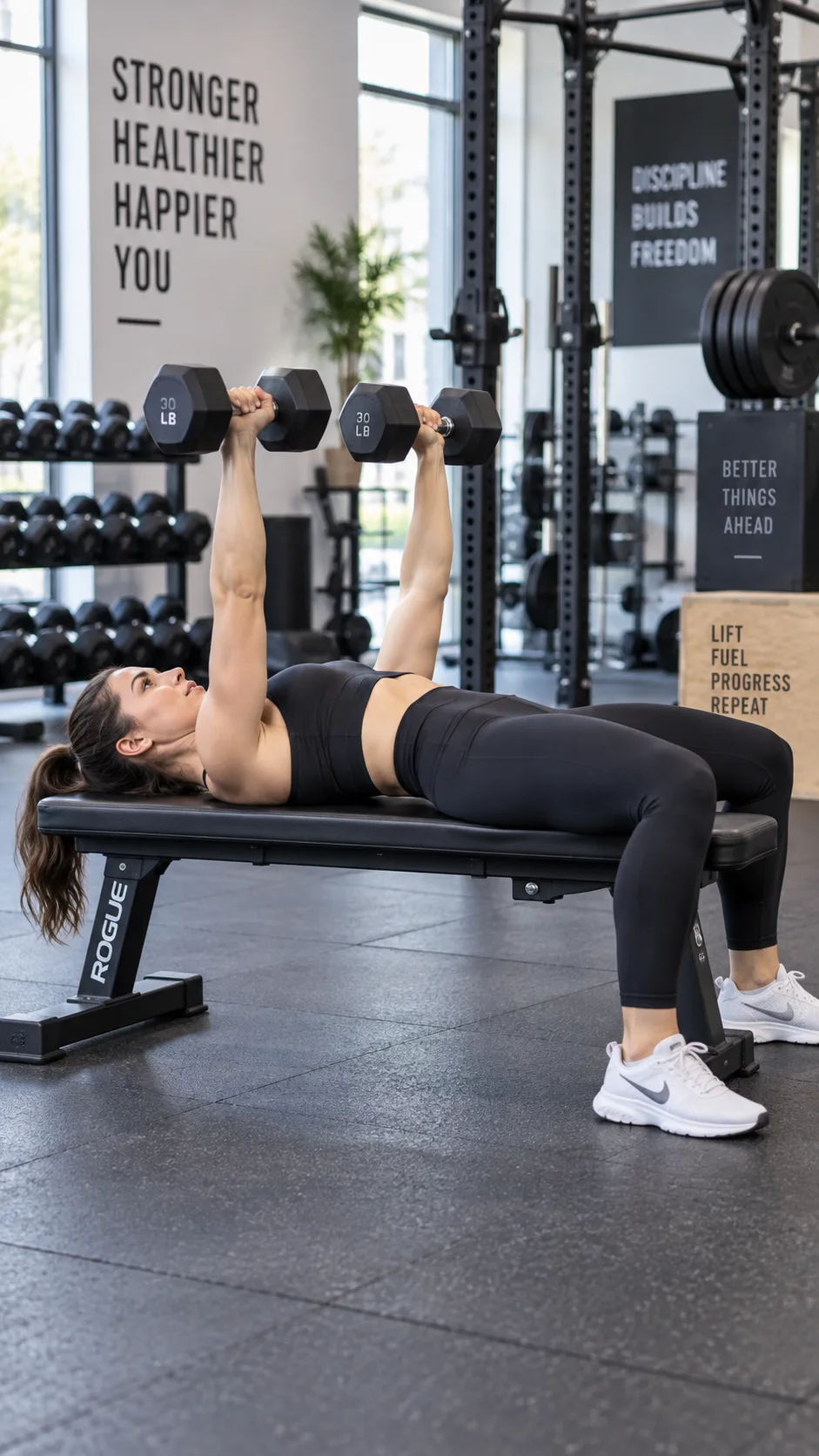
Day 3: Wednesday, Active Recovery
Wednesday is your mental and physical reset. This doesn’t mean you sit on the couch all day (though no judgment if you do). Active recovery means light movement that promotes blood flow without creating extra muscle damage.
Great options include:
- 20-30 minutes of walking (outside, treadmill, wherever)
- A yoga or mobility class
- Foam rolling and stretching for 20 minutes
- A light swim
- Pelvic floor and deep core work, these exercises are perfect for recovery days
Why not just rest completely? Because light activity on off days reduces muscle soreness and speeds recovery compared to total inactivity. Your future Thursday self will thank you.
Day 4: Thursday, Lower Body (Hamstring & Glute Focus)
This is your second lower body day, but with a completely different emphasis. Monday hammered your quads; Thursday targets your posterior chain (hamstrings, glutes, and lower back). This balance matters for injury prevention and building a proportional physique.
- Romanian Deadlifts (barbell or dumbbell) — 4 sets x 8-10 reps
- Bulgarian Split Squats — 3 sets x 10 reps per leg
- Lying Leg Curls — 3 sets x 12-15 reps
- Cable Pull-Throughs — 3 sets x 12 reps
- Glute Kickbacks (cable or machine) — 3 sets x 12-15 reps per leg
- Seated Calf Raises — 3 sets x 15-20 reps
Quick note on Romanian Deadlifts: hip hinge, don’t squat. Push your hips back like you’re closing a car door with your backside. Keep the bar or dumbbells close to your legs. If your lower back screams louder than your hamstrings, your form needs adjustment.
Day 5: Friday, Upper Body Pull
Pull day is lowkey the most satisfying training day. There’s something deeply gratifying about rowing heavy dumbbells and watching your back definition improve week after week. This day targets your lats, traps, rear delts, rhomboids, and biceps.
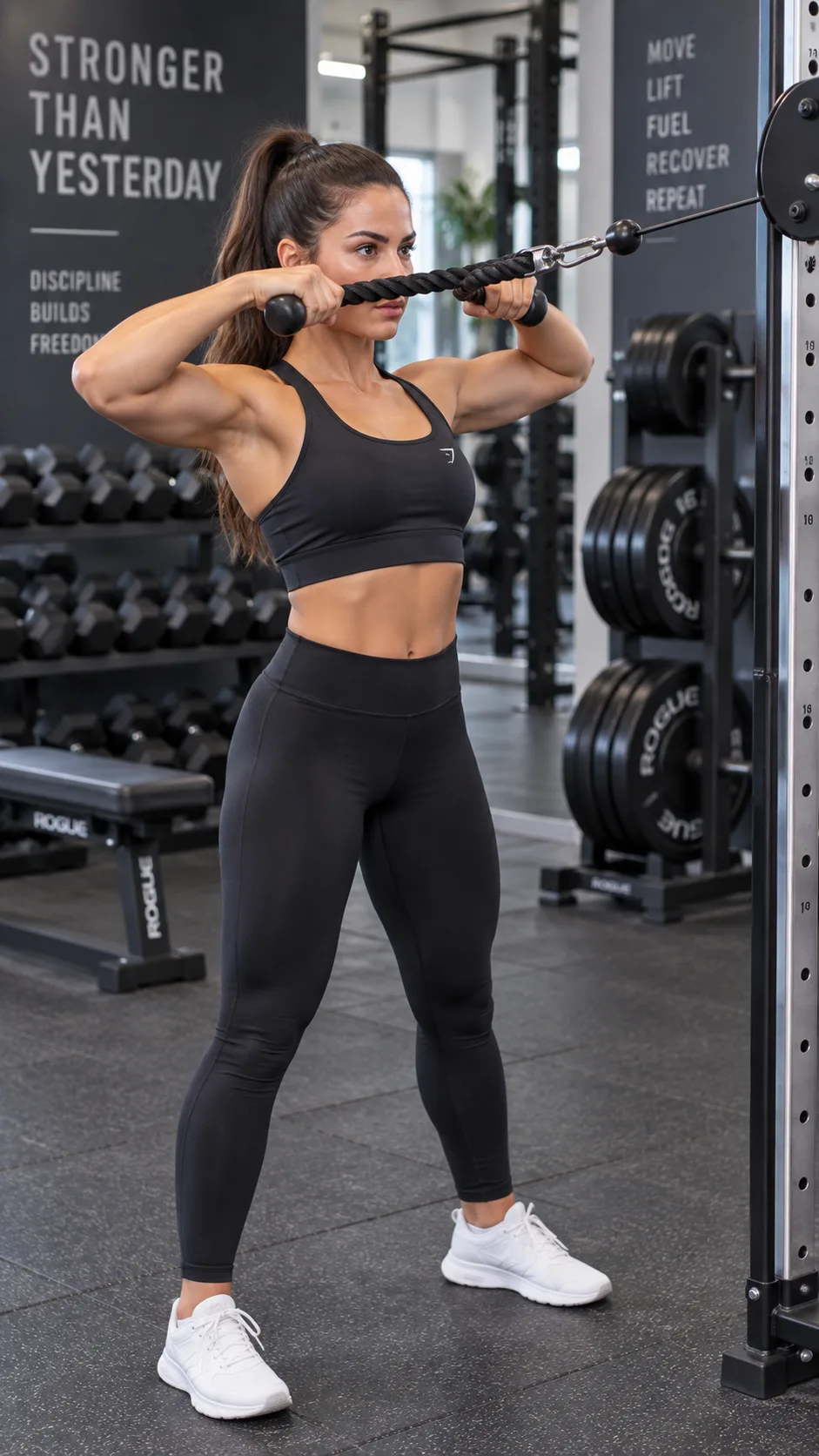
- Lat Pulldowns — 4 sets x 10-12 reps
- Seated Cable Row — 3 sets x 10-12 reps
- Single-Arm Dumbbell Row — 3 sets x 10 reps per arm
- Face Pulls — 3 sets x 15 reps
- Dumbbell Bicep Curls — 3 sets x 12 reps
- Hammer Curls — 3 sets x 12 reps
Face pulls deserve more respect than they get. They strengthen your rear delts and external rotators, the muscles that combat the forward-shoulder posture most of us develop from sitting at desks all day. Do them every pull day. Non-negotiable.
Day 6: Saturday, Full Body + Core
Saturday is your “greatest hits” day. You pick one compound movement for each major muscle group and work through them at moderate weight and moderate reps. Think of it as filling in any gaps from the week and giving your entire body one more stimulus before rest day.
- Goblet Squats — 3 sets x 12 reps
- Dumbbell Shoulder Press — 3 sets x 10 reps
- Cable Rows — 3 sets x 12 reps
- Dumbbell Step-Ups — 3 sets x 10 per leg
- Push-Ups — 3 sets x max reps
- Hanging Knee Raises — 3 sets x 12-15 reps
- Plank Hold — 3 sets x 30-45 seconds
Keep the intensity at about 70-75% of your max effort. This isn’t the day to chase personal records. It’s the day to move well, feel good, and finish strong for the week. In my experience, Saturday sessions are the ones that make you feel most accomplished. You walk out knowing you completed the full cycle.
Day 7: Sunday, Complete Rest
Rest. For real. Your muscles grow during recovery, not during training. The gym tears the fibers down; sleep, nutrition, and rest build them back stronger. Skipping rest days doesn’t make you tougher. It makes you overtrained.
Use Sunday to meal prep for the week ahead. If you’re looking for nutrition guidance that complements this training split, our 1900 calorie high protein meal plan pairs perfectly with this level of training volume.
How to progress week over week
A plan without progression is just maintenance. And while there’s nothing wrong with maintenance, most women following a structured weekly gym workout plan want to get stronger, more defined, or both. Here’s how to keep moving forward:
Progressive overload made simple
Every 1-2 weeks, apply ONE of these progression strategies to your main exercises:
- Add weight, even 2.5 lbs counts (microplates are your best friend)
- Add reps, if the plan says 8-10, work your way from 8 to 10 before increasing weight
- Add a set, go from 3 sets to 4 on one exercise per workout
- Slow the tempo, increase time under tension by controlling the lowering phase
You don’t need to progress on everything at once. Pick your 2-3 priority lifts (squats, deadlifts, bench press) and focus your progression efforts there. The accessory work will naturally improve as your compound lifts get stronger.
The National Strength and Conditioning Association is clear that progressive overload is THE fundamental principle behind all strength adaptation. It’s not optional. It’s the mechanism.

Your free printable weekly gym workout schedule
Here’s the full plan condensed into a printable format. Screenshot it, print it, save it to your phone, whatever keeps it accessible when you walk through those gym doors.
| Day | Focus | Duration | Exercises |
|---|---|---|---|
| Monday | Lower Body (Quad/Glute) | 50-60 min | 6 exercises |
| Tuesday | Upper Push (Chest/Shoulders/Tri) | 45-55 min | 6 exercises |
| Wednesday | Active Recovery | 20-30 min | Walking, yoga, mobility |
| Thursday | Lower Body (Hamstring/Glute) | 50-60 min | 6 exercises |
| Friday | Upper Pull (Back/Biceps) | 45-55 min | 6 exercises |
| Saturday | Full Body + Core | 45-55 min | 7 exercises |
| Sunday | Complete Rest | Rest & meal prep |
Worth noting: the exact day of the week doesn’t matter as much as maintaining the order and spacing. If your schedule starts on Wednesday instead of Monday, just shift everything forward. The pattern is what counts.
Common mistakes that sabotage your weekly plan
Having a plan is step one. Executing it properly is step two. Here are the mistakes I see most often, and the ones I’ve personally made along the way:
1. Skipping the warm-up
I get it, you’re busy, you want to maximize your training time. But 5-10 minutes of dynamic warm-up (leg swings, arm circles, bodyweight squats, light cardio) reduces your injury risk and improves performance. Skipping it to save time is like skipping the oil change to save money. It catches up with you.
2. Going too heavy too soon
Your ego is not your amigo in the gym. Start with weights you can control through a full range of motion with solid form. If you can’t complete the prescribed reps without your form breaking down, the weight is too heavy. Period.
3. Neglecting the split order
Ever tried doing heavy squats the day after heavy Romanian deadlifts? Your hamstrings will stage a full revolt. The split order exists for a reason. It spaces out muscle group demands so you train fresh and recover fully. Resist the urge to rearrange it randomly.
4. Never changing the plan
Follow this exact plan for 8-12 weeks. After that, swap in new exercises, adjust the rep ranges, or try a different split entirely. Your body adapts, and what worked in weeks 1-8 will deliver diminishing returns by week 16. Evolution isn’t just for biology class 🙂
What about cardio?
Great question, and one that causes way too much anxiety. Here’s my straightforward take: cardio supports your lifting, it doesn’t replace it. For women following this weekly gym workout plan, I recommend:
- 2-3 sessions of moderate cardio per week (20-30 minutes), done after your lifting sessions or on your active recovery day
- Walking daily. Aim for 7,000-10,000 steps. It’s the most underrated fat loss tool on the planet
- Skip excessive steady-state cardio if your primary goal is building muscle. An hour on the elliptical after heavy squats works against you
If you love running or cycling, absolutely keep doing it. Just don’t let it eat into your recovery from resistance training. That balance matters more than most people realize.
How long before you see results?
The honest answer? You’ll feel different within 2-3 weeks. You’ll notice changes in the mirror around weeks 6-8. Other people will start commenting around weeks 10-12. This timeline assumes you’re training consistently, eating enough protein (aim for 0.7-1g per pound of bodyweight), sleeping 7+ hours, and managing stress.
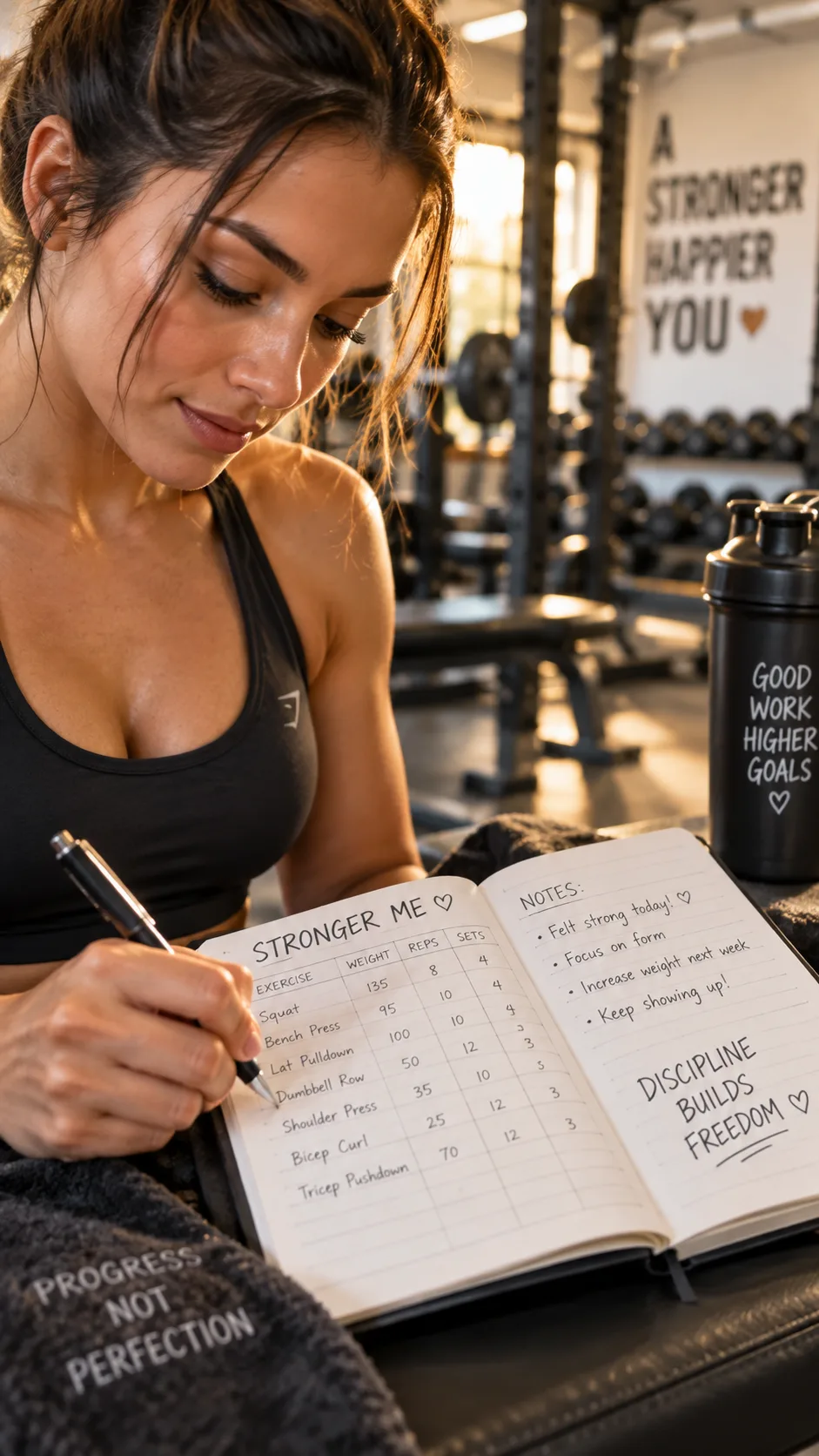
Strength gains often come faster than visible body composition changes. Don’t let the mirror be your only measuring tool. Track your weights, reps, and how you feel. The numbers on the barbell tell a story the scale never will.
Final thoughts: just start
You now have a complete weekly gym workout plan for women with every day mapped out, every exercise listed, and every common pitfall flagged. The schedule is structured, balanced, and designed to produce real results over 8-12 weeks.
But here’s the part nobody talks about enough: the best workout plan is the one you actually follow. Print this schedule. Put it in your gym bag tonight. Show up Monday and do Day 1. Don’t overthink sets, don’t spiral into YouTube form-check rabbit holes, and don’t wait for the “perfect” week to start. That week doesn’t exist.
You already know more than you think you do. Now go prove it to yourself, one gym day at a time.
