
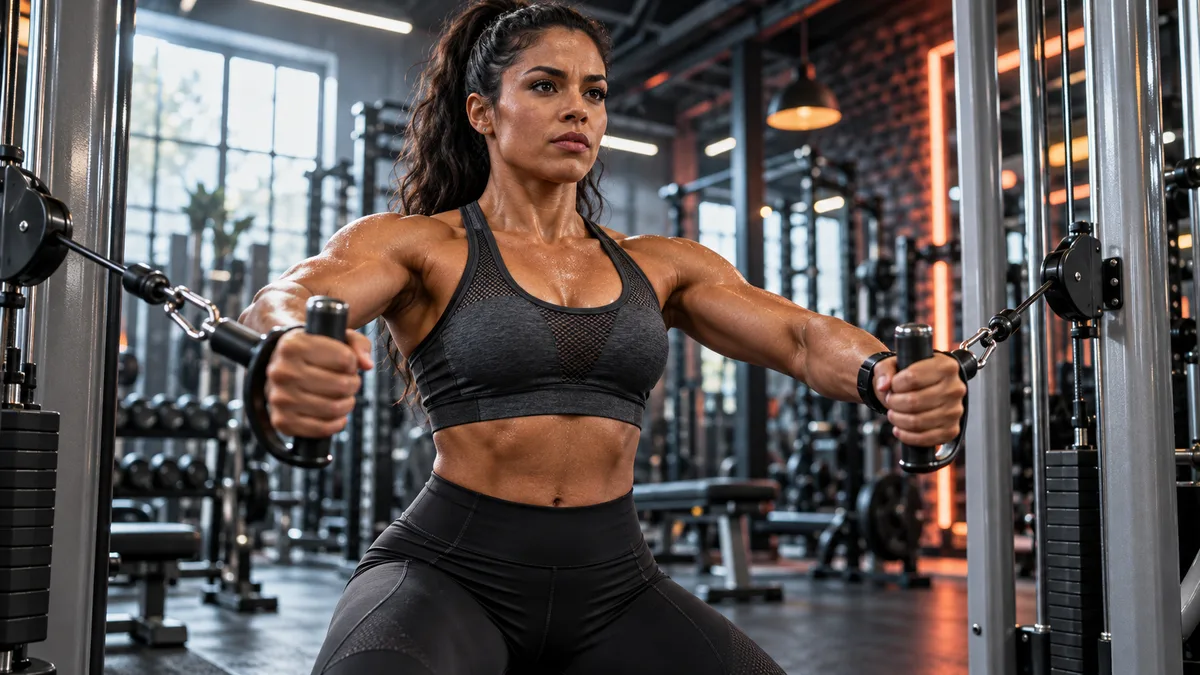
Chest day is not just for guys in tank tops grunting at the bench press. If you’ve been skipping chest exercises because you think they’re irrelevant to your goals, you’re leaving serious strength and confidence on the table.
A solid chest day workout at the gym gives women stronger pushing power, better posture, and that sculpted upper body definition that makes everything from tank tops to blazers look incredible. And no, training your chest won’t change your cup size. That myth needs to retire permanently.
This plan focuses specifically on machines and tricep work, a combination that works whether you’re brand new to chest training or you’ve been at it for a while and want a structured routine with zero guesswork.
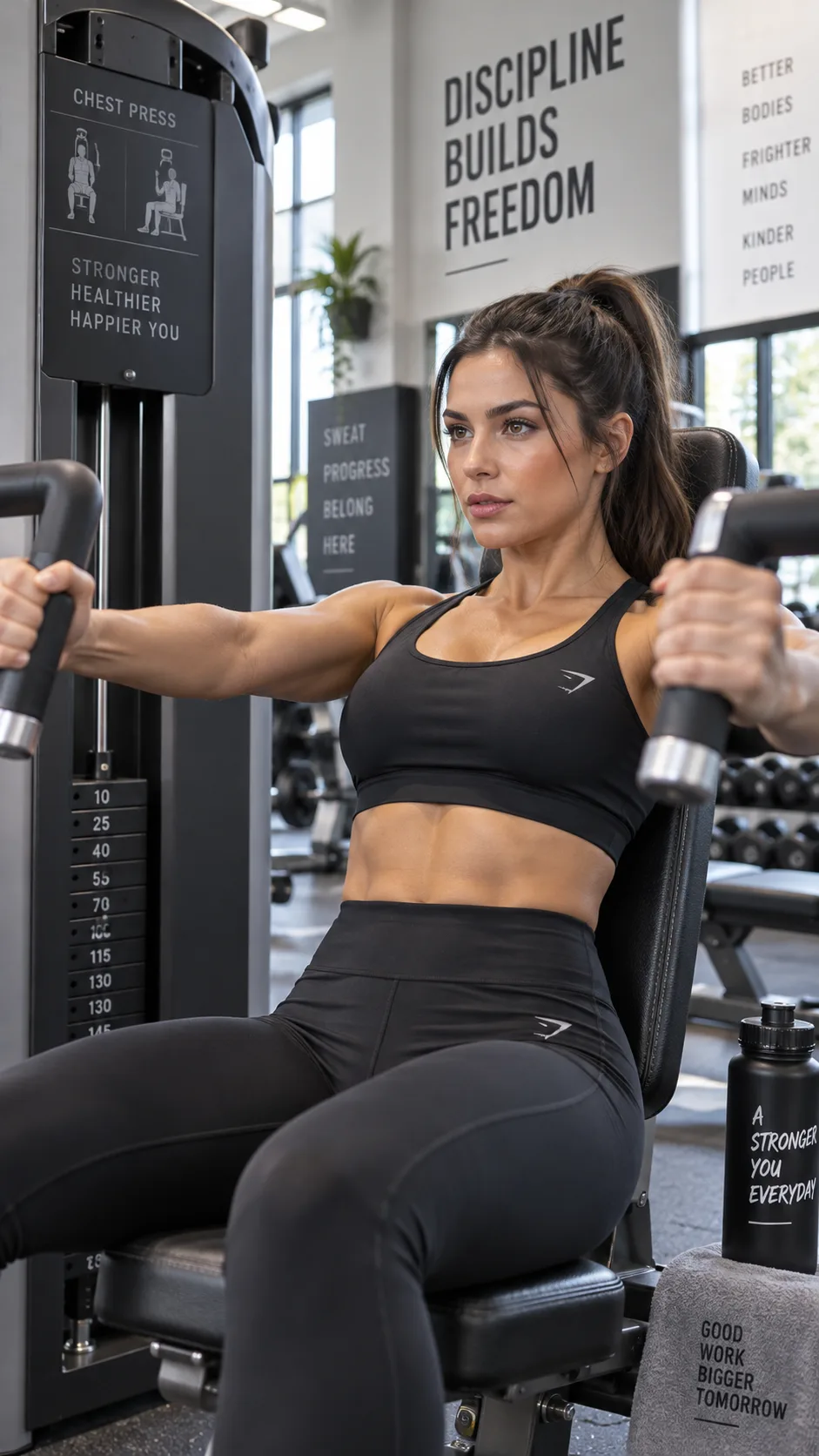
Why women should absolutely train chest (and stop feeling weird about it)
Your chest muscles (pectoralis major and minor) play a role in basically every upper body movement you do. Pushing a heavy door, carrying groceries, holding a plank, even hugging someone. Neglecting them creates muscle imbalances that can lead to rounded shoulders and upper back pain.
Ever notice how many women focus exclusively on back and arms but skip chest entirely? That imbalance pulls your shoulders forward and can make your posture worse over time. A well-developed chest supports your shoulders, complements your back training, and creates a balanced, functional upper body.
And here’s a personal opinion that might ruffle some feathers: machines get an unfair reputation. People love to act like free weights are the only “real” way to train. But machines isolate muscles beautifully, reduce injury risk, and let you push harder without worrying about stabilization. For chest day specifically, they’re absolute gold.
The real benefits of chest training for women
- Improved posture: Strong pecs counterbalance tight, overworked upper back muscles
- Functional pushing strength: Everything from push-ups to stroller-pushing gets easier
- Upper body definition: That toned look around your collarbone and shoulders? Thank your chest muscles
- Better bench press numbers: If you’re into tracking PRs, chest training is non-negotiable
- Injury prevention: Balanced muscle development protects your shoulder joints
Why machines are your secret weapon for chest day
I know, I know. Someone at your gym has probably told you that free weights are “superior.” And sure, barbells and dumbbells are fantastic. But machines offer something free weights can’t: a fixed path of motion that lets you focus purely on squeezing the target muscle.
When you’re learning chest exercises or training without a spotter, machines eliminate the fear factor. You won’t get pinned under a barbell. You won’t struggle with balancing uneven dumbbells. You just sit down, adjust the seat height, and push.
According to the American Council on Exercise, machine-based exercises can be equally effective for building muscle when you train with adequate intensity and progressive overload. The tool doesn’t matter nearly as much as how hard you work with it.
The complete chest day + tricep workout plan
This routine takes approximately 45-55 minutes and targets your chest from multiple angles before finishing with tricep exercises that complement every pushing movement you just did. Why triceps? Because they assist in every single chest exercise, and training them together creates an efficient, logical workout split.
If you’re following a 5-day workout split, this fits perfectly as your dedicated chest and tricep day.
Warm-up (5-7 minutes)
Don’t skip this. Seriously. Cold chest muscles and cranky shoulders are a recipe for a bad time.
- Arm circles: 15 forward, 15 backward
- Band pull-aparts: 2 sets of 15 reps
- Incline push-ups on a bench: 2 sets of 8-10 reps (this primes your chest perfectly)
- Shoulder pass-throughs with a resistance band: 10 reps
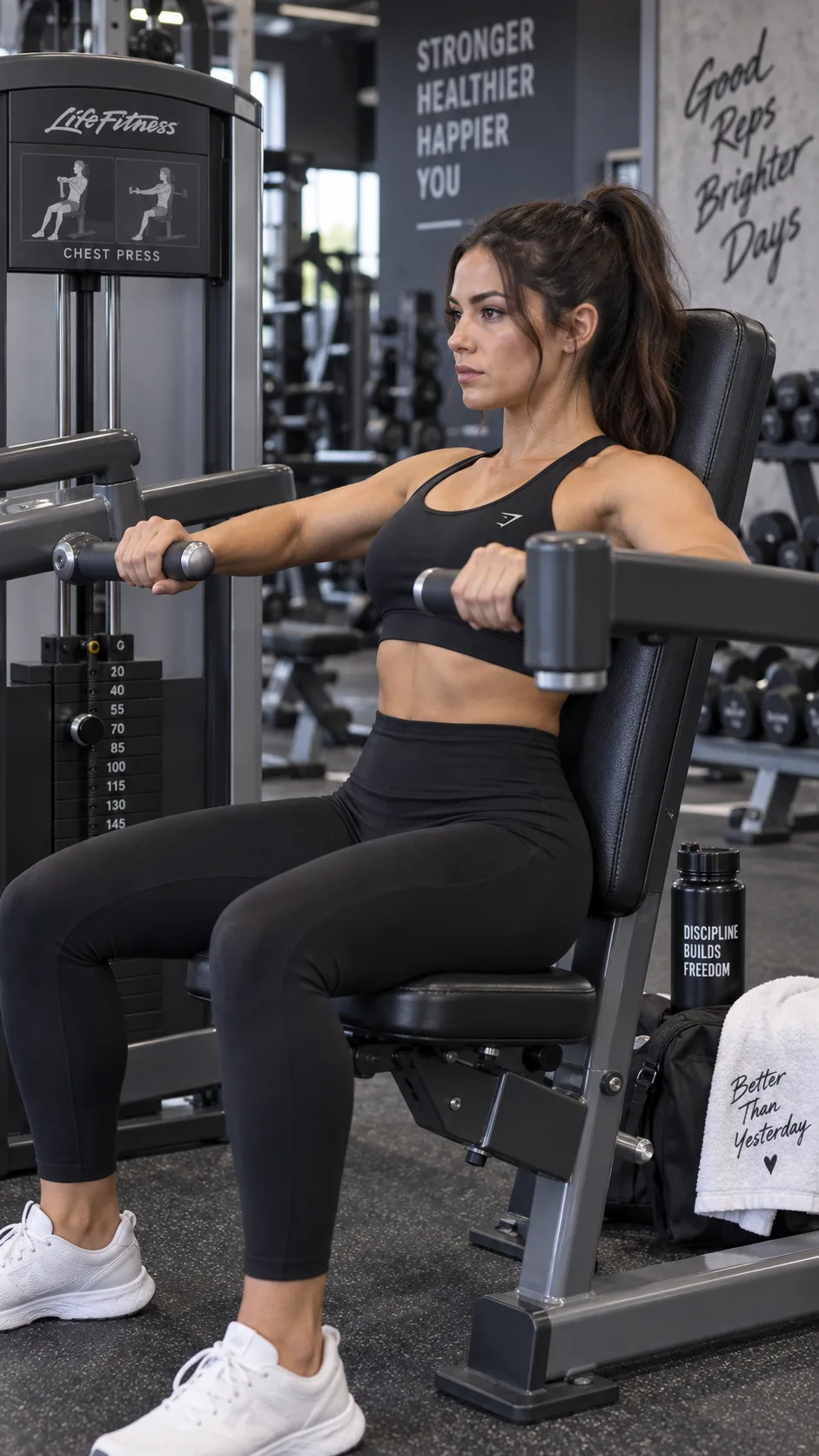
Exercise 1: Machine chest press (flat)
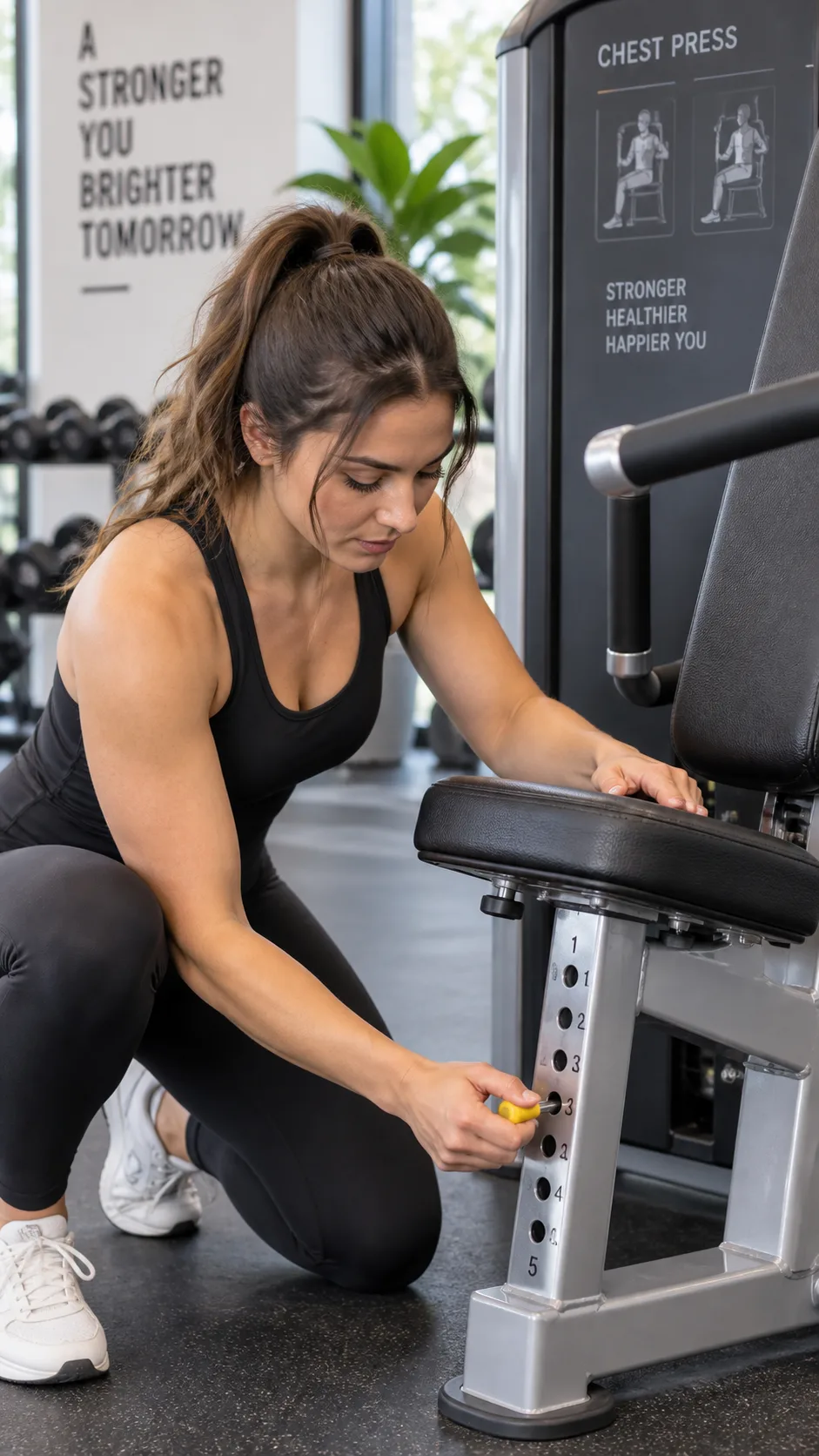
This is your bread and butter. The machine chest press targets the middle portion of your pectoralis major and lets you go heavy without a spotter. Adjust the seat so the handles align with the middle of your chest, not your shoulders, not your stomach.
- Sets: 4
- Reps: 10, 10, 8, 8 (increase weight on the last two sets)
- Rest: 60-90 seconds between sets
- Cue: Press forward, squeeze your chest at the top for a full second, then control the weight back slowly. Don’t just slam the handles back and forth.
Exercise 2: Incline machine chest press
Switching to an incline angle shifts the emphasis to your upper chest and front deltoids. This is the area that creates that beautiful definition along your collarbone. Most gyms have a dedicated incline press machine, but if yours doesn’t, adjust the seat lower on the flat machine to create a slight upward pressing angle.
- Sets: 3
- Reps: 12, 10, 10
- Rest: 60 seconds
- Cue: Keep your back pressed firmly against the pad. If your lower back arches off the seat, the weight is too heavy. Drop it down. Nobody is judging.
Exercise 3: Pec deck (machine fly)
If the chest press is your bread and butter, the pec deck is the jam. This isolation machine targets your chest through a horizontal adduction movement, basically squeezing your arms together in front of you. It creates an insane chest contraction that pressing movements alone can’t replicate.
- Sets: 3
- Reps: 12-15
- Rest: 45-60 seconds
- Cue: Think about squeezing a beach ball between your forearms. Hold that peak contraction for 2 seconds. You’ll feel every fiber of your chest working. IMO, this is the single most underrated chest exercise for women.
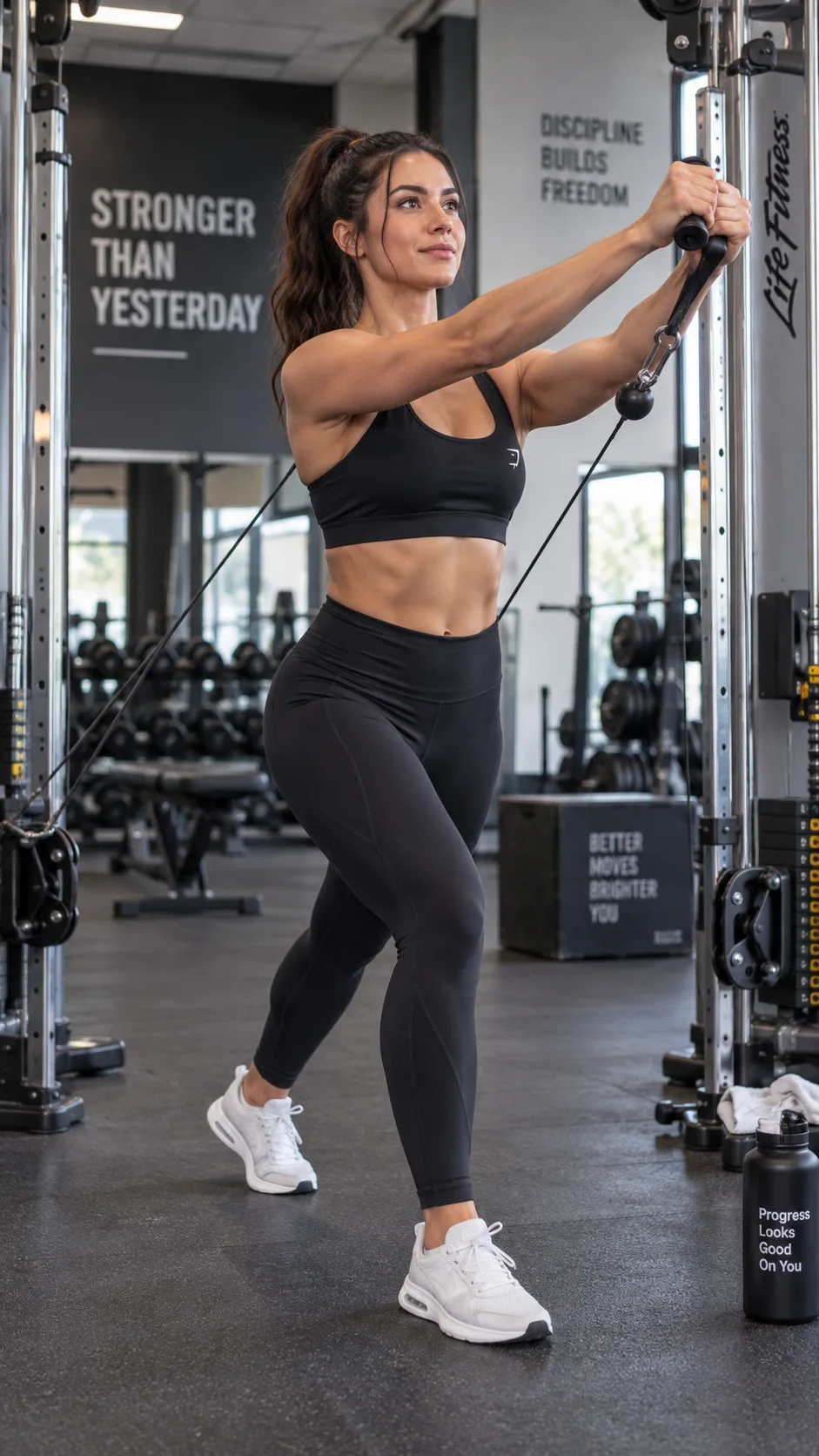
Exercise 4: Cable crossover (low to high)
Okay, technically cables aren’t a “machine” in the traditional sense, but they live in the same family, and this exercise is too good to leave out. Low-to-high cable crossovers target your upper chest and create constant tension throughout the entire range of motion, which dumbbells simply can’t do.
- Sets: 3
- Reps: 12-15
- Rest: 45 seconds
- Cue: Set the cables at the lowest position. Step slightly forward, then sweep your arms upward and together in front of your face. Control the return. Don’t let the cables yank your arms back.
The tricep finishers: why they belong on chest day
Your triceps have been working hard as secondary muscles during every chest press and fly you just performed. Now it’s time to give them direct, focused attention to maximize growth and strength. They’re already warm and pre-fatigued, so even moderate weight will feel incredibly effective.
Strong triceps also contribute to that toned arm look that so many women want. If you want more dedicated arm work on other days, check out this arm workout guide with weights for more exercises.
Exercise 5: Tricep pushdown (cable machine)
The classic. Use a straight bar or rope attachment. Both work, but the rope allows a slightly greater range of motion at the bottom. Stand tall, pin your elbows to your sides, and push straight down until your arms fully extend.
- Sets: 3
- Reps: 12-15
- Rest: 45 seconds
- Cue: If your elbows drift forward or your shoulders round, the weight is too heavy. Your upper arms should stay completely still. Only your forearms move.
Exercise 6: Overhead tricep extension (cable)
This one hits the long head of your triceps, the largest portion that creates shape on the back of your arm. Face away from the cable machine, hold the rope behind your head, and extend your arms upward and forward.
- Sets: 3
- Reps: 10-12
- Rest: 45 seconds
- Cue: Keep a slight forward lean and brace your core. You should feel a deep stretch in the back of your arms at the bottom of each rep.
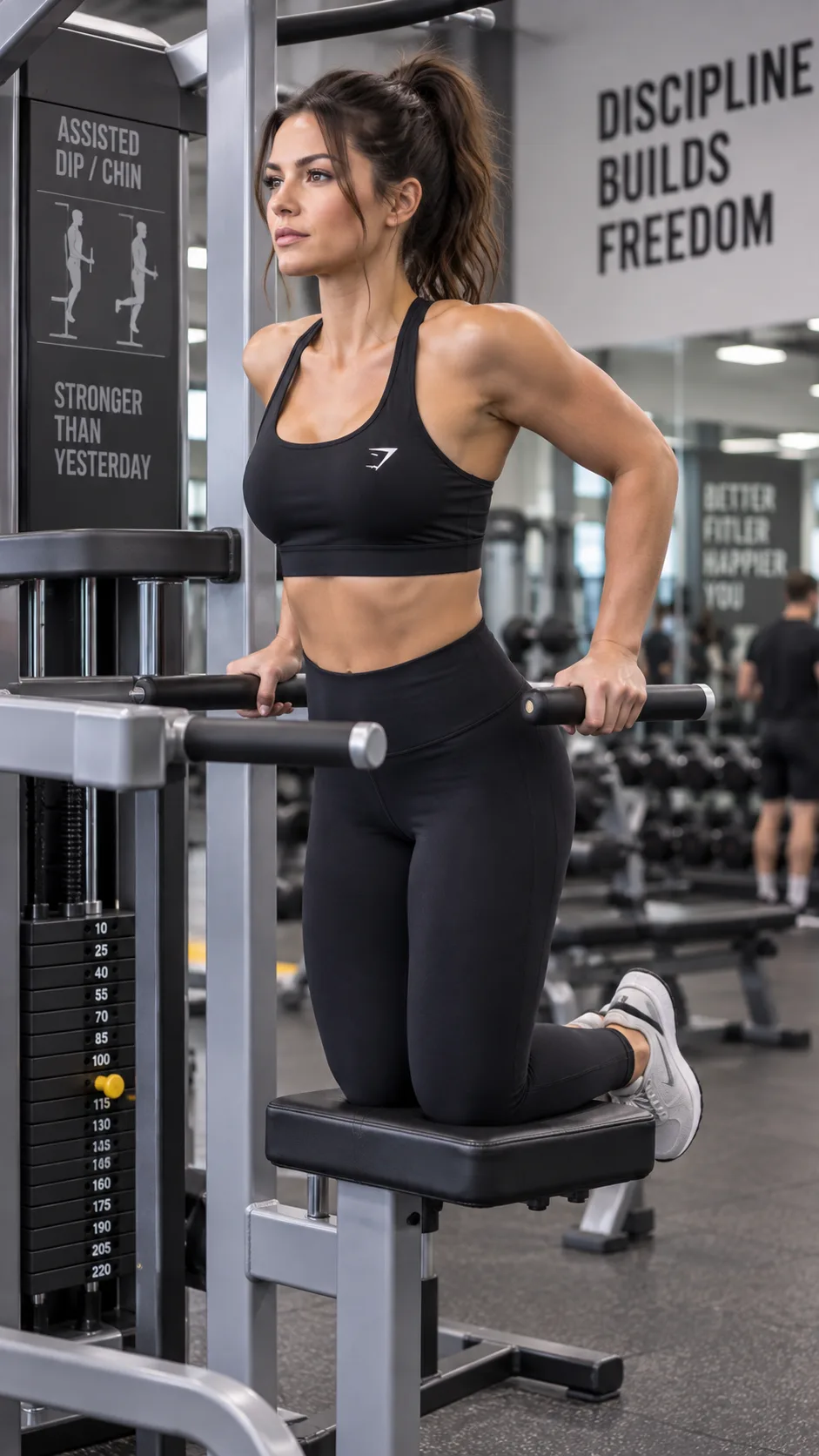
Exercise 7: Tricep dip machine (assisted or bodyweight)
Most gyms have an assisted dip machine, and it’s fantastic for building tricep and chest strength at the same time. If you can do bodyweight dips, amazing. If not, use the assistance pad and progressively reduce the assistance over time. Zero shame in using help. That’s literally what the machine exists for.
- Sets: 3
- Reps: 8-12
- Rest: 60 seconds
- Cue: Keep your torso upright to emphasize triceps. Leaning forward shifts more work to your chest, which isn’t bad, but your chest has already done its job today.
How heavy should you go? A quick guide to weight selection
This is where so many women sell themselves short. You need to lift heavy enough that the last 2-3 reps of each set genuinely challenge you. If you finish your set of 12 and feel like you could easily crank out 5 more, the weight is too light.
Research published in the Journal of Strength and Conditioning Research consistently shows that progressive overload (gradually increasing the weight or reps over time) is the primary driver of muscle growth and strength gains. This applies equally to women and men.
Here’s a practical approach:
- Week 1-2: Find a weight where you can complete all prescribed reps with good form, but the last 2 reps feel tough
- Week 3-4: Try to add one extra rep to each set OR increase weight by the smallest increment available
- Week 5+: Keep progressing. Write down your numbers. What gets tracked gets improved.
Common chest day mistakes women make (and how to fix them)
Mistake 1: Going too light forever
Those 5-pound increments on the machine? They exist for a reason. Use them. Your muscles adapt, and what challenged you three weeks ago won’t produce results today. Track your weights in a notebook or your phone’s notes app. Progress is the whole point.
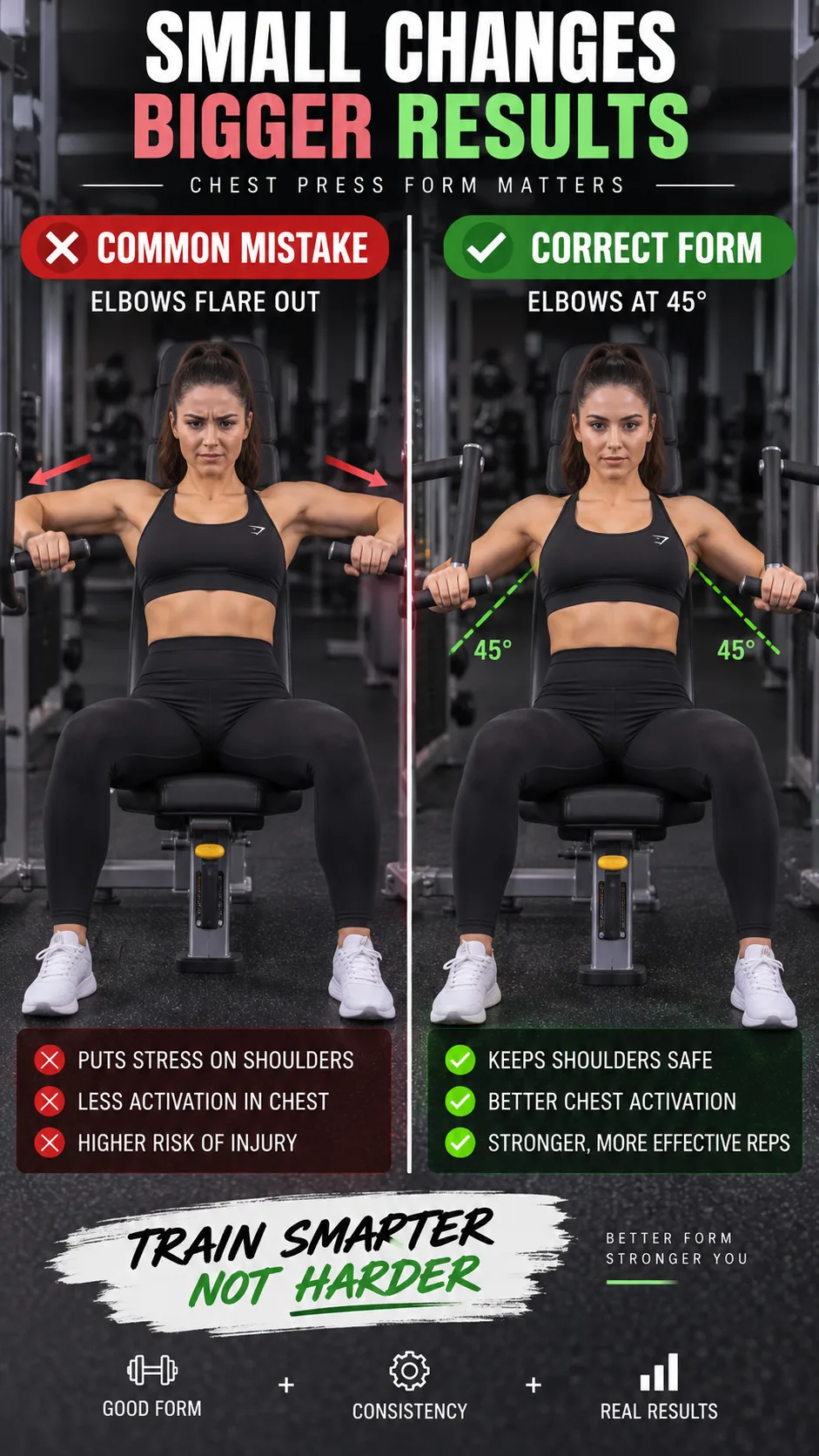
Mistake 2: Flaring elbows on presses
When your elbows point straight out to the sides at 90 degrees during a chest press, you put enormous stress on your shoulder joints. Instead, keep your elbows at roughly a 45-degree angle from your torso. Your shoulders will thank you, and you’ll get a better chest contraction too.
Mistake 3: Skipping the squeeze
Rushing through reps is tempting, especially when the burn kicks in. But that moment at the top of a press or the peak of a fly where you squeeze and hold? That’s where the magic happens. Mind-muscle connection isn’t just gym bro science. Studies have shown that focusing on the target muscle during exercise can increase muscle activation significantly.
Mistake 4: Only training chest once a month
Consistency beats intensity every single time. Aim to hit this workout at least once per week. Twice per week if chest strength is a specific goal. Doing one random chest workout every few weeks won’t build anything except frustration.
Sample weekly split: where chest day fits in
Wondering where to plug this workout into your week? Here’s a simple, effective split that balances everything:
- Monday: Chest + Triceps (this workout!)
- Tuesday: Back + Biceps
- Wednesday: Legs, quads and glutes focus
- Thursday: Rest or active recovery
- Friday: Shoulders + Arms
- Saturday: Legs, hamstrings and glutes focus
- Sunday: Rest
This gives your chest a full week to recover before you hit it again. If you prefer a different structure, a certified personal trainer from NASM can help you customize a split based on your specific goals and schedule.
Nutrition tips to support your chest day gains
You can have the most perfect chest day workout in the world, but if you’re not eating enough protein, your muscles won’t have the building blocks they need to grow and recover. Aim for 0.7 to 1 gram of protein per pound of body weight daily.
Within an hour or two of your workout, eat a meal that combines protein and carbs. Something like grilled chicken with rice, a protein shake with a banana, or Greek yogurt with berries and granola. The carbs replenish your energy stores while the protein kickstarts muscle repair.
If you need help structuring your meals, a high protein meal plan for women can take the guesswork out of what to eat around your training sessions.
How long before you see results?
Real talk on expectations. You’ll likely feel stronger within the first 2-3 weeks. The weights that challenged you initially will start feeling more manageable. That’s your nervous system getting more efficient at recruiting muscle fibers.
Visible changes typically show up around the 6-8 week mark if you’re training consistently, progressively overloading, and eating enough protein. You’ll notice more definition around your upper chest, a firmer feel when you flex, and a general confidence in your upper body that carries over into literally everything else you do at the gym.
That confidence boost is worth just as much as the physical changes. There’s something deeply empowering about walking up to a machine, loading it up, and CRUSHING a set that would have been impossible a few weeks ago.
Final thoughts: own your chest day
The bottom line: a chest day workout at the gym belongs in every woman’s training program. Machines make it accessible, safe, and incredibly effective. Pairing chest work with tricep exercises creates an efficient session that builds balanced, functional, visible strength.
Stop skipping chest day. Stop grabbing the lightest weight on the rack. Stop thinking that chest training is “not for women.” It absolutely is, and the results, both physical and mental, speak for themselves.
Start with this plan next time you hit the gym. Track your weights. Add a little more each week. A few months from now, you’ll wonder why you ever hesitated to claim your spot at the chest press machine in the first place.
Now go build some confident strength. You’ve got this.
