
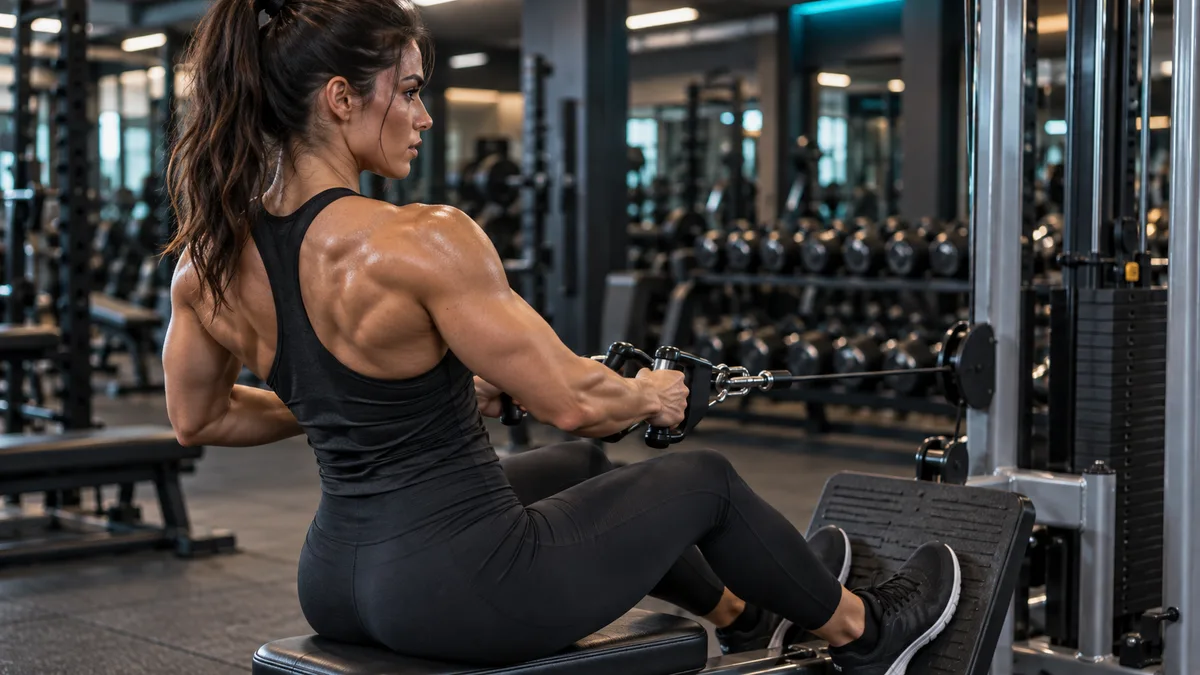
Your back muscles deserve just as much attention as your glutes, abs, and arms. Maybe even more. Yet so many women walk into the gym, park themselves at the hip abductor machine, and completely ignore the entire backside of their upper body. Sound familiar?
A strong back doesn’t just look incredible in a tank top or open-back dress. It transforms your posture, protects your spine, and makes literally every other exercise you do more effective. Whether you’re pulling, pushing, or just carrying groceries like a pack mule, your back muscles run the show behind the scenes.
So if you’ve been skipping back day (or worse, didn’t know back day was a thing), this one’s for you. Here are 8 gym-tested weight exercises that’ll build the kind of strong, sculpted back you actually want.
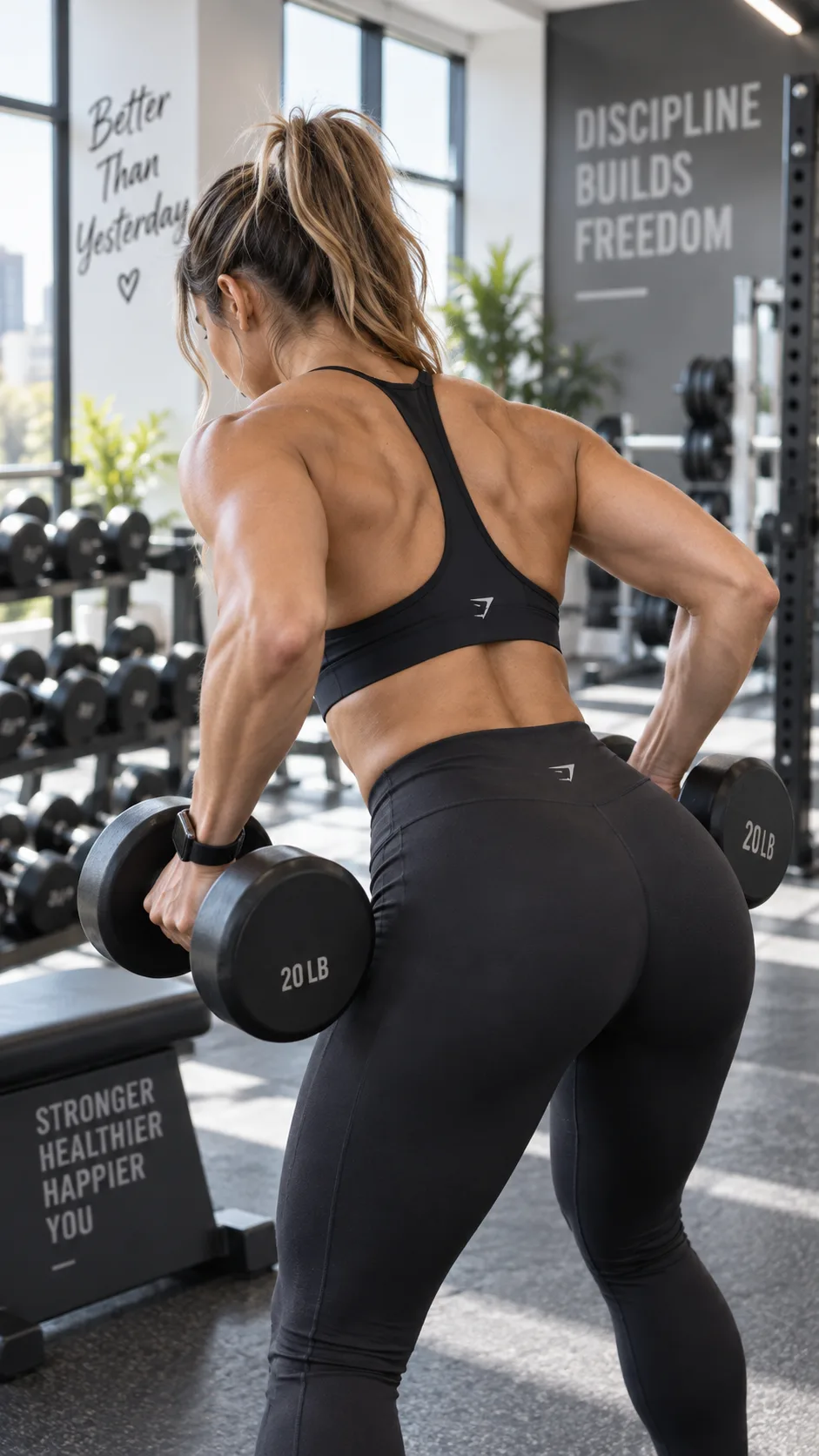
Why should women train their back? (Seriously, why?)
Before we get to the exercises, let’s talk about why this matters so much. Your back houses some of the largest and most powerful muscle groups in your entire body: the latissimus dorsi (lats), trapezius (traps), rhomboids, and erector spinae. These muscles do a LOT of heavy lifting, both literally and figuratively.
Here’s what consistent back training actually does for you:
- Fixes your posture, especially if you sit at a desk all day and your shoulders have started creeping toward your ears
- Reduces back pain: a study published in the Journal of Physical Therapy Science found that strengthening exercises significantly reduce chronic lower back pain
- Creates that coveted V-taper shape, where wider lats make your waist look smaller, no waist trainer needed
- Improves your performance in every other lift, from deadlifts to overhead presses
- Prevents injuries by balancing out all that chest and anterior shoulder work you’re probably already doing
Convinced yet? Good. On to the actual exercises.
The 8 best back exercises for women at the gym
Each of these exercises targets your back muscles from a different angle, giving you complete coverage from your upper traps all the way down to your lower back. I’ve included a mix of compound and isolation movements so you hit everything efficiently.
If you’re also looking for a routine you can do without equipment, check out our guide to arm and back workouts for women with no equipment. But when you have access to a gym? Weights are your best friend.
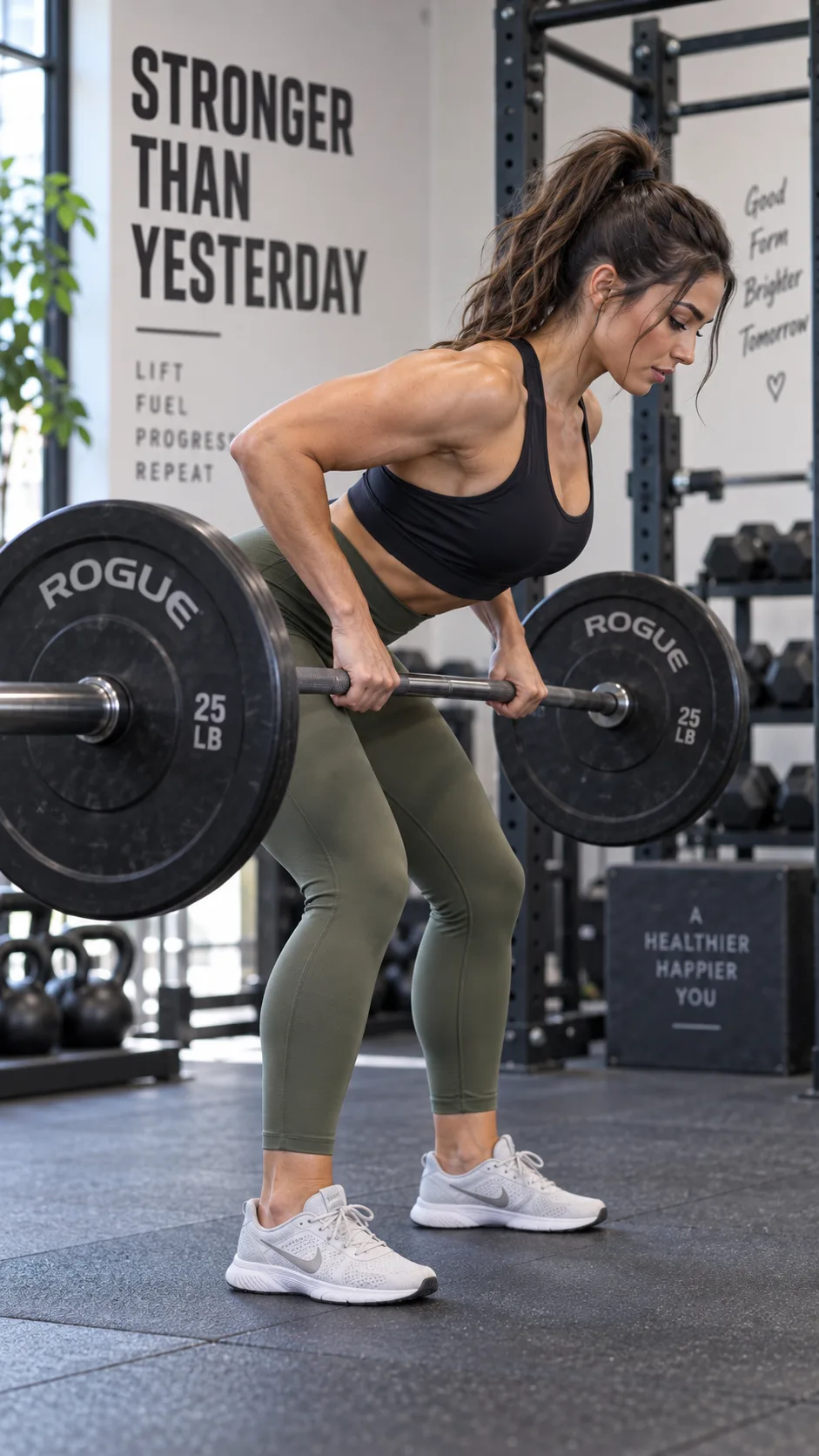
1. Barbell bent-over row
This is the queen of back exercises, and I will fight anyone who disagrees. The barbell bent-over row targets your lats, rhomboids, traps, and rear delts all at once. It’s a compound powerhouse that builds real, functional strength.
How to do it:
- Stand with feet hip-width apart, holding a barbell with an overhand grip
- Hinge at your hips until your torso reaches roughly a 45-degree angle. Keep your back flat and core tight
- Pull the barbell toward your lower ribcage, squeezing your shoulder blades together at the top
- Lower the bar with control. That’s one rep
Pro tip: Start with just the barbell (no added weight) until you nail the hip hinge. Your lower back will thank you later. Aim for 3 sets of 8 to 12 reps.
2. Seated cable row
Ever wondered why every gym-goer swears by the cable row? Because it keeps constant tension on your muscles throughout the entire movement, something free weights can’t always do. The seated cable row absolutely torches your mid-back and lats.
How to do it:
- Sit at the cable row station with your feet on the footpads, knees slightly bent
- Grab the V-bar handle (or straight bar for a wider grip) with both hands
- Pull the handle toward your belly button, driving your elbows straight back
- Squeeze your shoulder blades together for a full second, then slowly extend your arms back out
Mistake to avoid: Don’t lean way back and turn this into a momentum-fest. Keep your torso upright and let your back do the work. 3 sets of 10 to 12 reps hits the sweet spot.
3. Lat pulldown
The lat pulldown is basically a pull-up’s more approachable cousin. It targets your lats (obviously) and gives you that wide, sculpted look across your upper back. If you can’t do pull-ups yet, no shame, most people can’t. This exercise builds the exact strength you need to get there.
How to do it:
- Sit at the lat pulldown machine, thighs secured under the pads
- Grab the wide bar with an overhand grip, hands slightly wider than shoulder-width
- Pull the bar down to your upper chest, leading with your elbows
- Control the bar back up. Don’t let it yank your arms overhead
According to the American Council on Exercise (ACE), the lat pulldown ranks among the most effective exercises for lat activation. Stick with 3 sets of 10 to 12 reps.
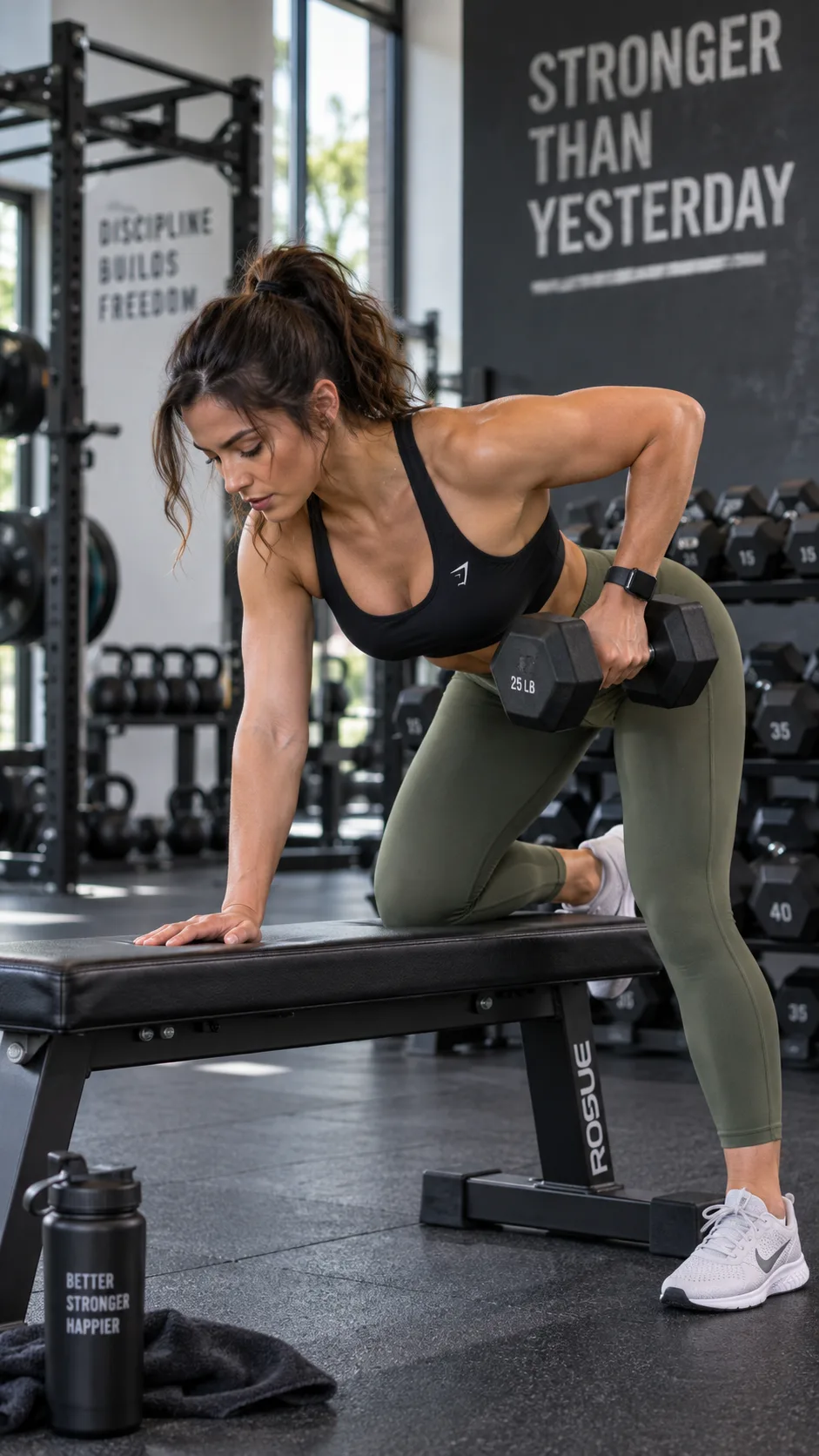
4. Single-arm dumbbell row
This one’s a personal favorite, partly because it’s incredibly effective, and partly because bracing yourself on a bench means you get a tiny rest between sides. (Hey, I’m honest.) The single-arm dumbbell row crushes each side of your back independently, which helps fix any muscle imbalances you might not even realize you have.
How to do it:
- Place your left knee and left hand on a flat bench for support
- Hold a dumbbell in your right hand, arm hanging straight down
- Row the dumbbell up toward your hip, keeping your elbow tight to your body
- Lower with control. Complete all reps, then switch sides
3 sets of 10 to 12 reps per arm. And please, pick a weight that actually challenges you. That cute little 5-pound dumbbell isn’t going to cut it here 🙂
5. Face pulls
If you only add ONE new exercise to your routine after reading this, make it face pulls. This underrated gem targets your rear delts, rhomboids, and rotator cuff muscles, the exact muscles that prevent the hunched-over “desk posture” that plagues so many of us.
How to do it:
- Set a cable machine to upper-chest height with a rope attachment
- Grab the rope with both hands, palms facing each other
- Pull the rope toward your face, splitting your hands apart at the end so they finish by your ears
- Squeeze your upper back hard, then return slowly
Go lighter than you think on these. Form is EVERYTHING. 3 sets of 12 to 15 reps. Your shoulders will feel like they’ve had a spa day.
6. T-bar row
The T-bar row hits your mid-back and lats with serious intensity, and the neutral grip position tends to feel more natural on your wrists and shoulders than a straight barbell. Most gyms have a dedicated T-bar row station, but you can also wedge a barbell into a corner and use a V-grip handle. Resourceful? Always.
How to do it:
- Straddle the bar with feet wider than hip-width
- Hinge at the hips, grab the handles, and brace your core
- Pull the weight toward your chest, squeezing your back at the top
- Lower under control. No dropping
3 sets of 8 to 10 reps. This one’s a builder, so don’t be afraid to go a bit heavier once your form is dialed in.
7. Dumbbell reverse fly
Want to carve out definition in your upper back and rear shoulders? The dumbbell reverse fly isolates those muscles beautifully. It’s also a sneaky good exercise for improving shoulder health, something every woman who lifts should care about.
How to do it:
- Stand with feet hip-width apart, holding a light dumbbell in each hand
- Hinge forward at the hips until your torso is nearly parallel to the floor
- With a slight bend in your elbows, raise both arms out to the sides like wings
- Squeeze at the top, then lower slowly
FYI, ego lifting on reverse flys is a one-way ticket to a shoulder injury. Keep it light and focus on the squeeze. 3 sets of 12 to 15 reps.
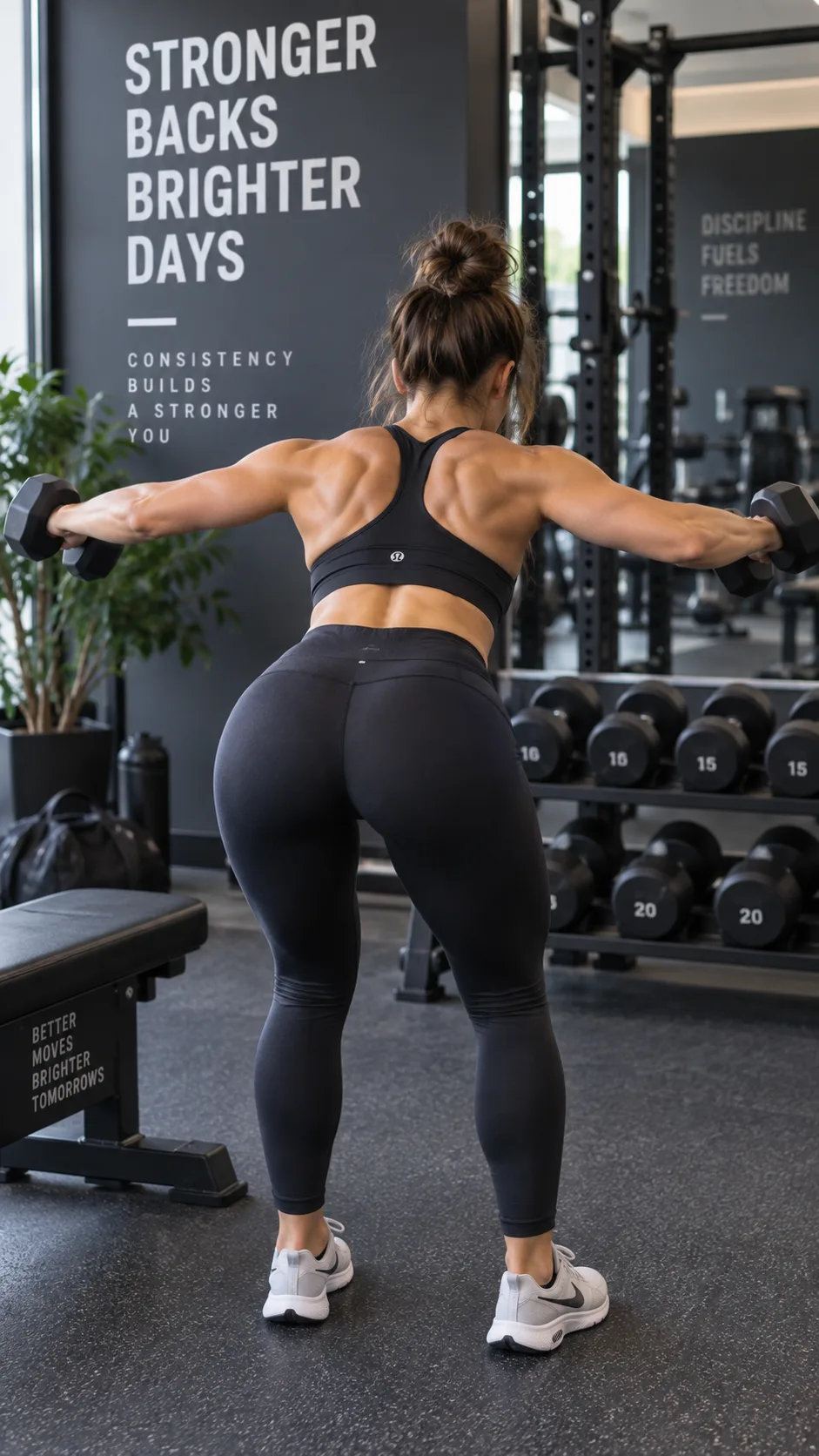
8. Deadlift (conventional or Romanian)
You knew this was coming. The deadlift is arguably the most complete back exercise you can do. It recruits your entire posterior chain, from your erector spinae and lats down through your glutes and hamstrings. Whether you choose conventional or Romanian style, you’re building serious back strength and thickness.
How to do it (conventional):
- Stand with feet hip-width apart, barbell over your mid-foot
- Hinge down and grip the bar just outside your knees
- Brace your core, flatten your back, and drive through your heels to stand up
- Lock out at the top by squeezing your glutes, then reverse the motion back down
3 sets of 6 to 8 reps for conventional deadlifts. If you prefer Romanian deadlifts (which place more emphasis on your hamstrings and lower back), bump it to 3 sets of 8 to 10 reps with slightly less weight. Either way, your back will grow.
If you enjoy compound movements like deadlifts, you’ll probably also love our recommendations for the best dumbbell exercises for women to tone up. They pair perfectly with back day.
Putting it all together: a sample back workout routine
You don’t need to cram all 8 exercises into a single session (please don’t). Pick 4 or 5 per workout and rotate them across your training week. Here’s a sample routine that balances everything nicely:
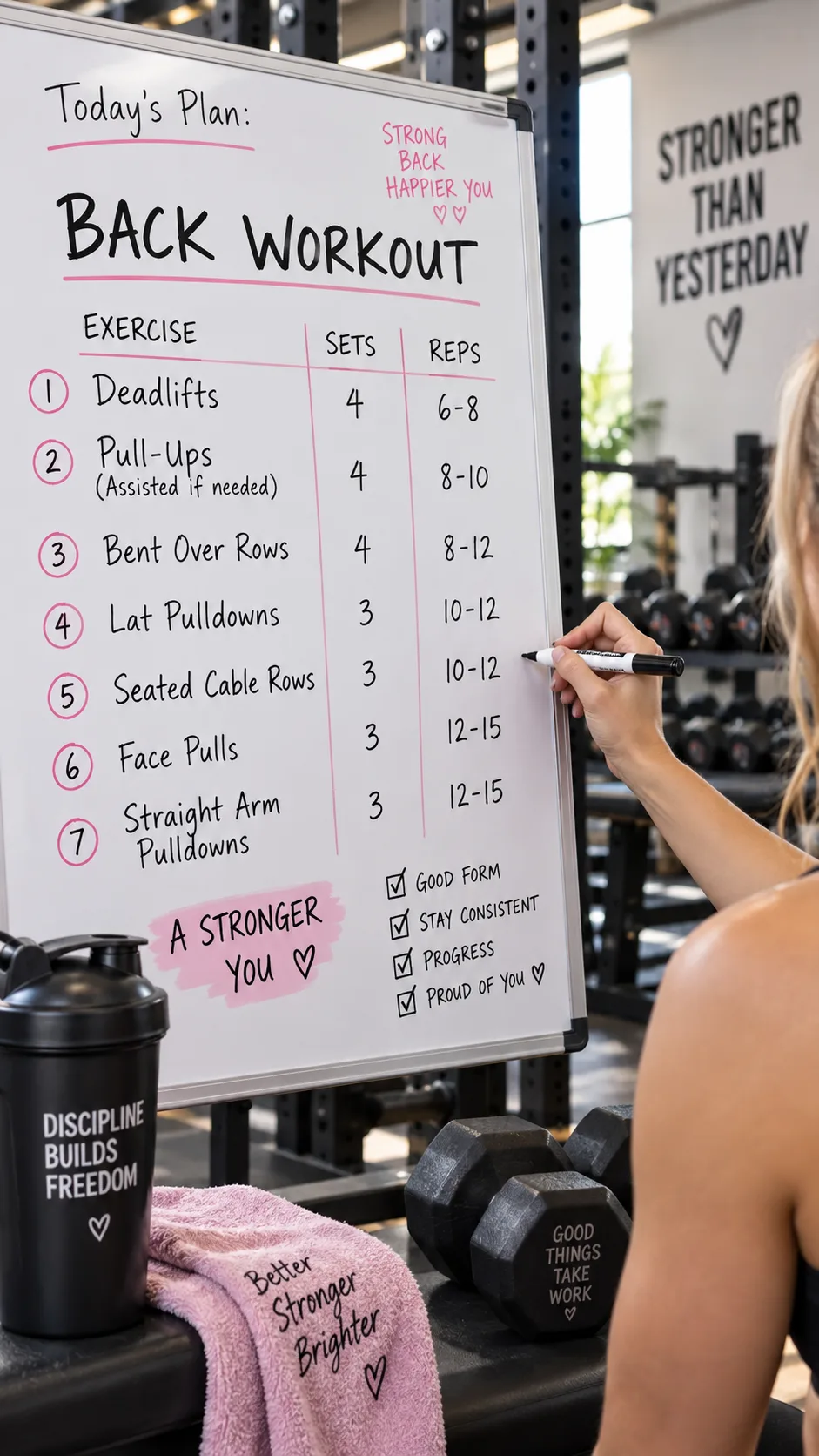
Back day sample (45 to 55 minutes):
- Barbell Bent-Over Row — 3 x 10
- Lat Pulldown — 3 x 12
- Single-Arm Dumbbell Row — 3 x 10 per arm
- Face Pulls — 3 x 15
- Dumbbell Reverse Fly — 3 x 12
Rest 60 to 90 seconds between sets. Start with the heavier compound movements (rows, pulldowns) when you’re freshest, and finish with the lighter isolation work (face pulls, reverse flys). This order maximizes your strength output and minimizes injury risk.
How often should you train your back?
Twice per week is the sweet spot for most women. Research from the Journal of Strength and Conditioning Research shows that training a muscle group twice weekly produces significantly better hypertrophy results than once-per-week training.
You could dedicate one full session to back, or split it up by pairing back exercises with other muscle groups. A popular approach: do a “pull day” (back + biceps) twice a week within a push/pull/legs split. Simple, effective, and it gives you plenty of recovery time.
If you’re already following a structured program, check out our full back workout guide for women for more ideas on how to organize your training week.
Common back training mistakes (and how to fix them)
I’ve spent enough time in gyms to see these errors on repeat. Don’t let them sabotage your gains.
Using too much momentum
Swinging the weight like you’re in a CrossFit fail compilation defeats the entire purpose. Slow down, control every rep, and actually feel your back muscles working. If you can’t control the weight, it’s too heavy. Period.
Gripping too hard
When you white-knuckle the bar or dumbbell, your forearms and biceps take over the movement. Try thinking about pulling with your elbows instead of your hands. This mental cue alone can completely transform your back activation.
Ignoring the mind-muscle connection
Your back muscles sit behind you. You can’t watch them work in a mirror the same way you watch your biceps curl. This makes the mind-muscle connection even more critical. Before every rep, mentally focus on the muscle you’re trying to target. It sounds woo-woo, but it genuinely works.
Skipping the squeeze
If you’re not pausing to squeeze your shoulder blades together at the peak of each rep, you’re leaving gains on the table. That one-second hold at the top of a row or pulldown makes a MASSIVE difference in muscle activation.
Nutrition matters too (obviously)
You can train your back five days a week, but if you’re not eating enough protein to support muscle repair and growth, you’ll plateau fast. Aim for 1.6 to 2.2 grams of protein per kilogram of bodyweight daily. That’s the range most sports nutrition research supports for women who strength train.
Need help planning meals that actually support your training? Our friends at Healthline have an excellent breakdown of protein needs based on activity level. Pair that knowledge with a solid training plan and you’ll see your back (and everything else) transform.
Your stronger back starts now
Here’s what matters most. A strong back improves your posture, prevents injuries, makes every other lift better, and yes, it looks absolutely fantastic. These 8 exercises cover every angle of your back, from the wide sweep of your lats to the fine detail work of your rhomboids and rear delts.
Your quick checklist:
- Train your back at least twice per week
- Pick 4 or 5 exercises per session from this list and rotate
- Prioritize compound movements first, isolation exercises last
- Control every rep: squeeze at the top, lower slowly
- Eat enough protein to support muscle growth
- Be patient. Visible definition takes consistent effort over weeks and months
Stop neglecting the muscles you can’t see in the mirror. Your back does so much for you every single day, and it’s time you returned the favor. Walk into the gym next time with this plan, grab that barbell, and show your back some serious love. You won’t regret it.
