

You don’t have five days a week to spend in the gym. Neither do I. You don’t need them, either. The idea that you must dedicate separate days to chest, back, shoulders, arms, and legs is fine for bodybuilders. For the rest of us who just want to look good, feel strong, and get out of the gym before the parking meter expires, a well-designed full body workout routine is the smarter play.
I spent years doing the classic “bro split”: chest on Monday, back on Tuesday, skip leg day entirely (I’m not proud of it). When I finally switched to full body training three times a week, I got stronger, leaner, and reclaimed about six hours of my week. If you’re ready to stop wasting time on overcomplicated programs, keep reading.
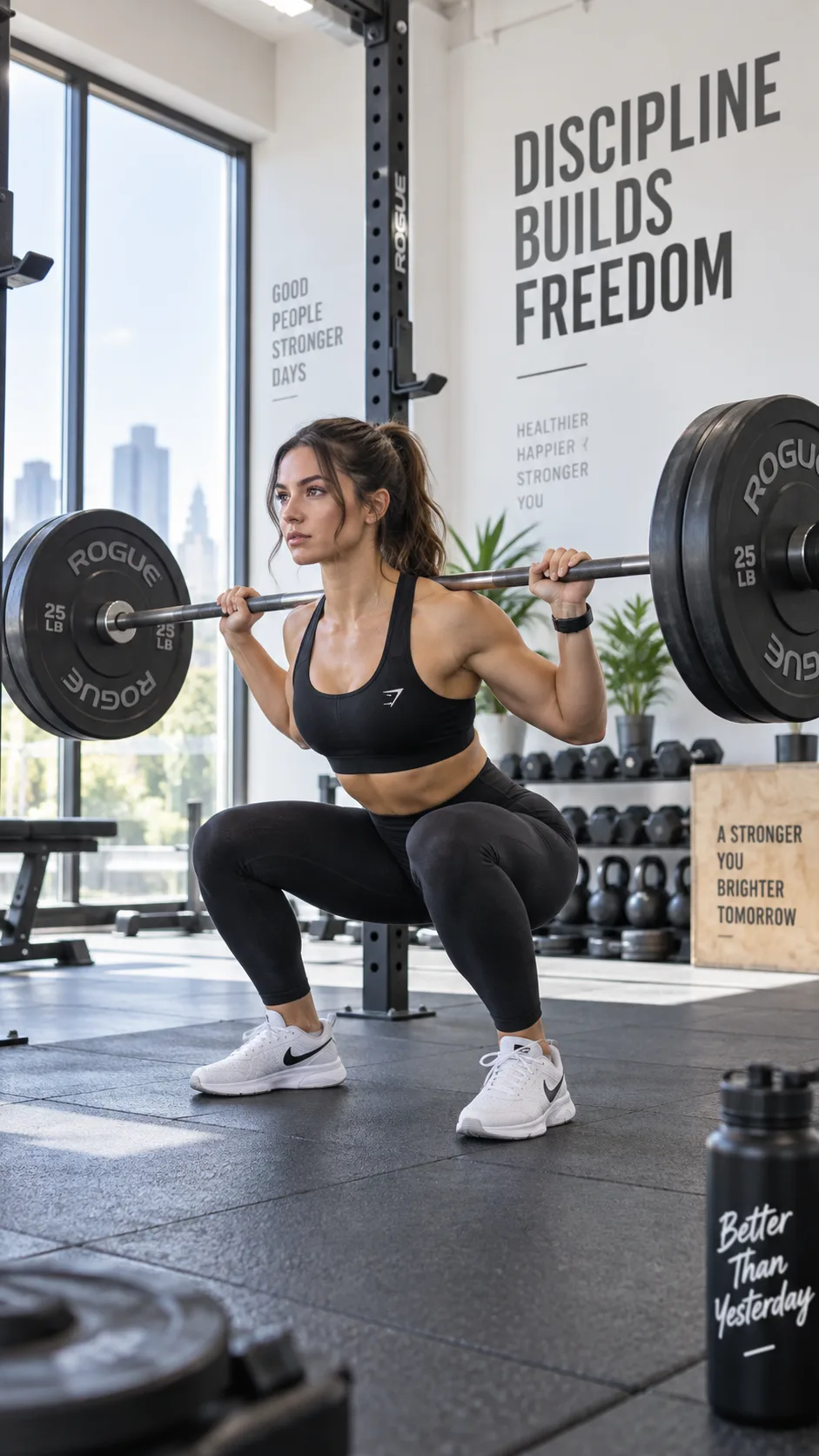
Why Full Body Workouts Work Better for Most People
Most fitness influencers skip this part: training frequency beats training volume for natural lifters. A study published in the Journal of Strength and Conditioning Research found that hitting each muscle group two to three times per week produced significantly better strength and hypertrophy gains than once-a-week training, even when total weekly volume was the same.
Think about it. Would you rather blast your chest with 20 sets on Monday and ignore it for six days, or spread that work across three sessions where your muscles get time to recover and grow between each one? The answer is pretty obvious.
The Science of Muscle Protein Synthesis
After you train a muscle, muscle protein synthesis (MPS) stays elevated for roughly 24 to 48 hours in trained individuals. After that window closes, your muscle is basically just sitting there waiting for the next stimulus. If you only train chest on Monday, you’re leaving five full days of potential growth on the table.
Full body workouts let you re-stimulate MPS across all major muscle groups multiple times per week. More growth signals = more results. It’s not complicated math.
Time Efficiency That Respects Your Schedule
A solid full body session takes 45 to 60 minutes. Do that three times a week and you’re looking at under three hours of total gym time. Compare that to a five-day split where you’re easily spending five to six hours weekly. For busy professionals, parents, or anyone who values their free time, full body training is a no-brainer.
The Full Body Workout Routine: Your Complete Program
This routine hits every major muscle group in each session. You’ll train three days per week. Monday, Wednesday, and Friday works great, but any schedule with at least one rest day between sessions will do. Each workout uses compound movements as the foundation, with targeted accessory work to fill in the gaps.
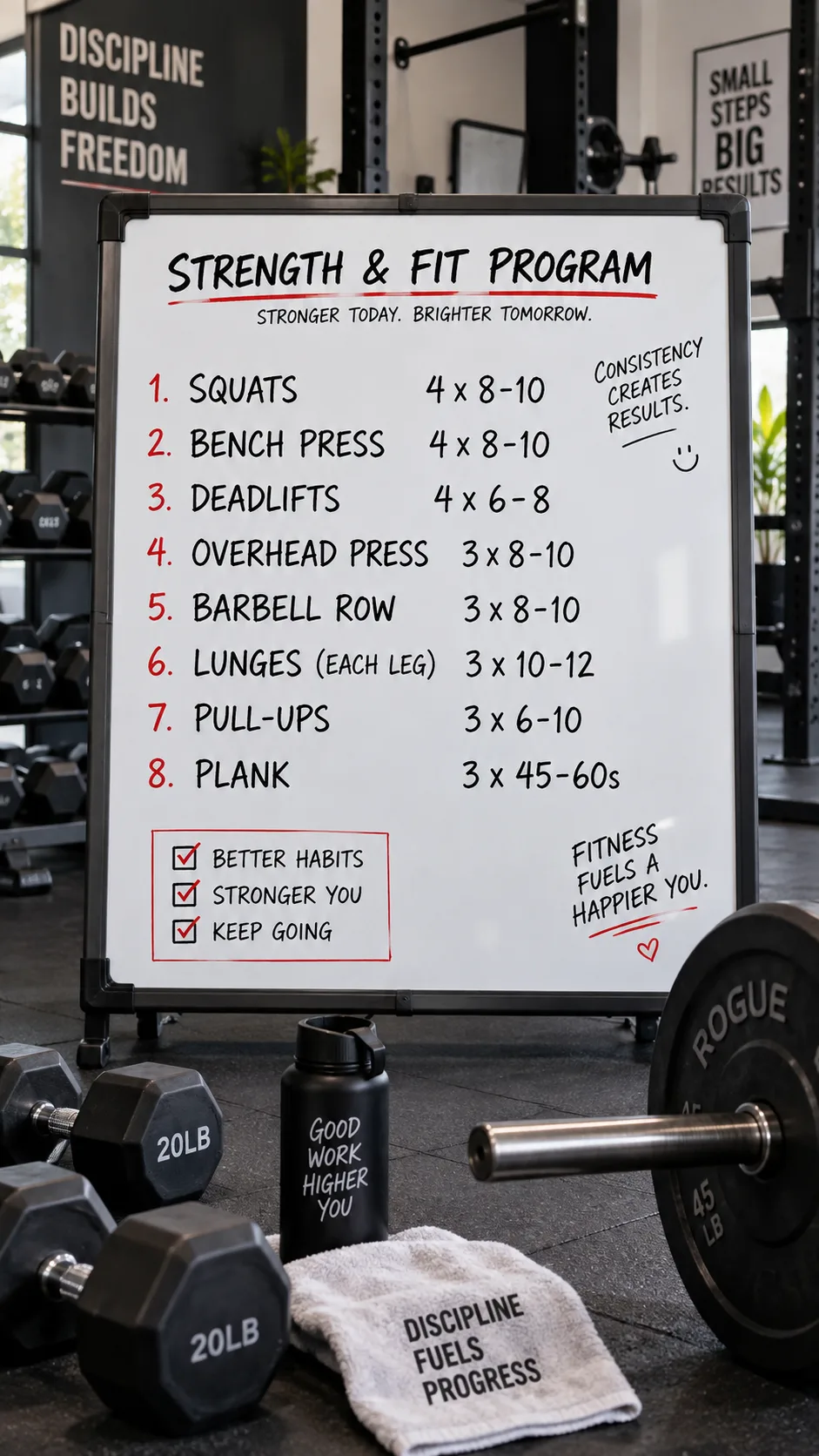
Workout A: Squat Focus
- Barbell Back Squat: 4 sets x 6-8 reps
- Dumbbell Bench Press: 3 sets x 8-10 reps
- Barbell Bent-Over Row: 3 sets x 8-10 reps
- Overhead Press (Barbell or Dumbbell): 3 sets x 8-10 reps
- Romanian Deadlift: 3 sets x 10-12 reps
- Plank Hold: 3 sets x 30-45 seconds
Workout B: Deadlift Focus
- Conventional Deadlift: 4 sets x 5-6 reps
- Incline Dumbbell Press: 3 sets x 8-10 reps
- Pull-Ups or Lat Pulldown: 3 sets x 8-12 reps
- Bulgarian Split Squat: 3 sets x 10-12 reps per leg
- Lateral Raises: 3 sets x 12-15 reps
- Cable Woodchops: 3 sets x 12 reps per side
Workout C: Upper Body Emphasis
- Front Squat or Goblet Squat: 3 sets x 8-10 reps
- Barbell Bench Press: 4 sets x 6-8 reps
- Cable Row or Chest-Supported Row: 3 sets x 10-12 reps
- Dumbbell Shoulder Press: 3 sets x 8-10 reps
- Hip Thrust: 3 sets x 10-12 reps
- Face Pulls: 3 sets x 15-20 reps
Alternate these workouts across the week: Week 1 is A-B-C, Week 2 is A-B-C, and so on. Simple. If you prefer a push pull legs workout plan instead, that’s another solid option, but this full body approach gets you more frequency with fewer sessions.
How to Progress Without Plateauing
A routine is only as good as your progression strategy. Without progressive overload, you’re essentially doing cardio with weights. Here’s how to keep the gains coming week after week.
The Double Progression Method
This is the simplest and most effective progression model for intermediate lifters. Pick a rep range (say, 8-10 reps). Start at the bottom of that range with a challenging weight. Each session, try to add one rep until you hit the top of the range across all sets. Once you can do that, bump the weight up by 2.5 to 5 pounds and start back at the bottom.
For example: if you bench press 135 pounds for 3 sets of 8, your goal next session is 3 sets of 9. Then 3 sets of 10. Once you nail 3 x 10, move to 140 pounds and go back to sets of 8. It sounds slow, but this approach builds SERIOUS strength over months.
Tracking Your Workouts
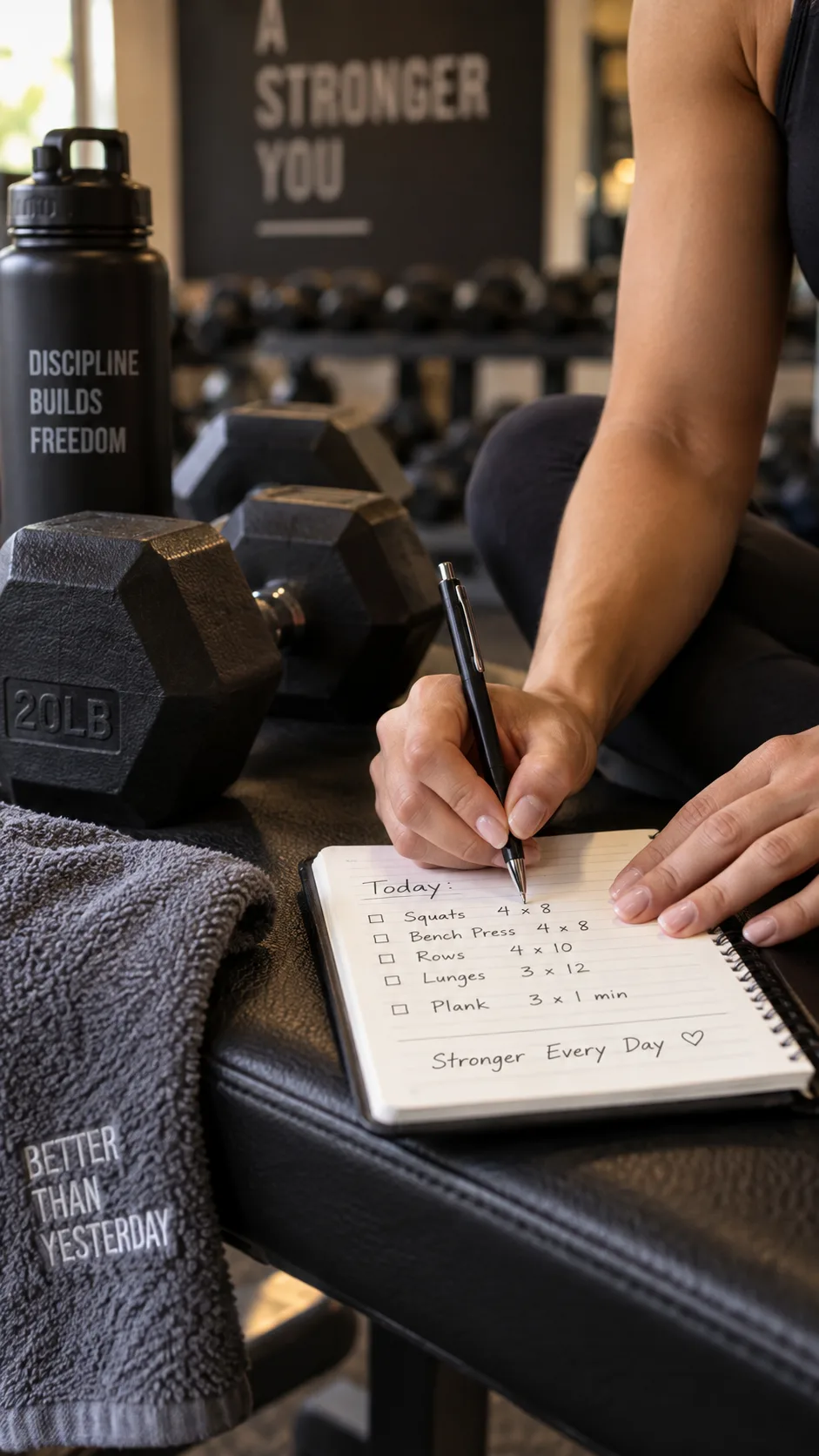
If you’re not writing down your weights and reps, you’re guessing. And guessing is how people end up doing the same weight for the same reps for months on end, wondering why nothing changes. Use a notebook, a spreadsheet, or an app (I personally like the Strong app for tracking), and just pick something you’ll use consistently.
Common Full Body Workout Mistakes (and How to Dodge Them)
I’ve made every single one of these mistakes. Learn from my wasted months so you don’t have to repeat them.
Mistake #1: Doing Too Much Volume Per Session
The biggest trap with full body training is thinking you need to do five exercises per muscle group. You don’t. Two to three exercises per major movement pattern is plenty. Remember, you’re hitting everything three times per week. The total weekly volume adds up fast, so each individual session should feel challenging but manageable, not like you’re crawling to your car afterward.
Mistake #2: Ignoring Recovery
Full body workouts demand more from your recovery systems than a body part split, because you’re training your entire body more frequently. That means sleep, nutrition, and rest days matter. Aim for 7-9 hours of quality sleep, eat enough protein (more on that below), and take your rest days seriously. A “light session” on your off day does not count as rest.
Mistake #3: Skipping the Warmup
You’re already pressed for time, and the warmup feels like wasted minutes. But five minutes of dynamic stretching and a couple of light warmup sets will protect your joints and improve your performance on working sets. Have you ever tried squatting heavy with cold hips? It’s about as fun as it sounds :/
Mistake #4: Only Training the “Mirror Muscles”
A real full body workout means training your ENTIRE body: your back, hamstrings, glutes, and posterior chain included. If your routine is bench press, curls, and abs with a token set of leg extensions, that’s not a full body workout. That’s an ego workout. Make sure you’re giving your legs and glutes equal attention.
Nutrition to Support Your Full Body Training
You can follow the perfect program and still make no progress if your nutrition is off. Here’s what matters most, and none of it requires overcomplicated meal plans.
Protein: The Non-Negotiable
Aim for 0.7 to 1 gram of protein per pound of body weight daily. Research from the International Society of Sports Nutrition consistently supports this range for maximizing muscle protein synthesis. Spread your protein across 3-5 meals throughout the day for optimal absorption.
Good sources include chicken breast, lean beef, fish, eggs, Greek yogurt, and whey protein. If you’re plant-based, combine legumes, tofu, tempeh, and a quality plant protein powder. IMO, hitting your protein target matters more than any supplement you could buy.
Calories: Eat for Your Goal
- Building muscle? Eat in a slight caloric surplus, roughly 200-300 calories above maintenance.
- Losing fat? Stay in a moderate deficit, about 300-500 calories below maintenance.
- Body recomposition? Eat around maintenance and let the training stimulus do the work. This is slower but effective, especially for beginners.
Don’t overthink carbs and fats. As long as protein is locked in and calories align with your goal, you have plenty of flexibility with the rest. Eat fruits, vegetables, whole grains, and foods you enjoy. Sustainability beats perfection every single time.

How to Modify This Routine for Different Goals
This full body workout routine works as a strong baseline, but you can adjust it based on what you’re specifically training for.
For Strength
Keep your compound lifts in the 3-6 rep range with heavier weights and longer rest periods (2-3 minutes between sets). Prioritize the squat, deadlift, bench press, and overhead press. Cut accessory work to the bare minimum and focus your energy on getting those big lifts stronger.
For Toning and Muscle Definition
Work in the 8-15 rep range with moderate weights and shorter rest periods (60-90 seconds). Add more isolation exercises like lateral raises, bicep curls, and tricep pushdowns at the end of each session. Pair this with a slight caloric deficit for that lean, defined look. If you want to add kettlebell exercises, they work well with this style of training.
For Beginners
Start with just Workout A, three times per week. Master the movement patterns with lighter weights before adding complexity. Form always comes before load. Once you can comfortably perform all exercises with good technique, transition into the full A-B-C rotation. There’s zero shame in starting simple. Everyone begins somewhere.
Sample Weekly Schedule
Here’s what a typical training week looks like in practice. Adjust the days to fit your life; the rest days between sessions matter more than which specific days you pick.
- Monday: Workout A (Squat Focus)
- Tuesday: Rest or light activity (walk, yoga, mobility work)
- Wednesday: Workout B (Deadlift Focus)
- Thursday: Rest or light activity
- Friday: Workout C (Upper Body Emphasis)
- Saturday & Sunday: Rest, active recovery, or recreational sports
On your off days, feel free to add some pelvic floor exercises or light stretching if you want to stay active without compromising recovery. Just don’t turn rest days into secret training days.
When to Expect Results (Realistic Timelines)
Let’s set honest expectations because the internet is full of “12-week transformation” fantasies that require either elite genetics, performance-enhancing drugs, or Photoshop.
- Weeks 1-4: You’ll feel stronger and more coordinated. Your nervous system adapts to the movements, and you’ll start adding weight to the bar. Visible changes? Minimal, but your clothes might fit a bit differently.
- Weeks 5-12: This is where noticeable changes start. Muscle definition begins to show, especially if your nutrition is dialed in. Strength gains become consistent and measurable.
- Months 3-6: Other people start noticing. Your physique changes significantly. You’ve built a solid strength base and established habits that stick.
- 6+ Months: You look and feel like a different person. Gains slow down (that’s normal, welcome to the intermediate phase), but the cumulative progress is unmistakable.
Consistency beats intensity. Three decent workouts per week for six months will always outperform six intense workouts per week for three weeks before burning out. Play the long game.
Frequently Asked Questions
Can I add arm work to this routine?
Absolutely. Throw in 2-3 sets of bicep curls and tricep extensions at the end of any session. Your arms already get significant work from the compound pressing and pulling movements, so a little direct work goes a long way. You don’t need a separate arm day when your full body sessions already include rows, presses, and pull-ups.
What if I can only train twice a week?
Two full body sessions per week still produces excellent results, especially for beginners and intermediates. Just alternate between Workout A and Workout B, and make sure you’re pushing the intensity. Two hard sessions beat four half-hearted ones.
Is full body training good for women?
Full body training works for everyone, regardless of gender. Women respond to resistance training the same way men do. The only difference is hormonal, which affects the rate of muscle gain, not the training principles. If you want additional upper body exercises for the gym, you can easily swap in movements that target your specific goals.
How long should each session take?
Plan for 45 to 60 minutes, including your warmup. If your sessions consistently run longer than 75 minutes, you’re probably resting too long between sets or doing too many exercises. Tighten it up.
The Bottom Line
A well-structured full body workout routine is one of the most efficient and effective ways to build strength, improve muscle tone, and stay consistent with your fitness goals. You don’t need to live at the gym. You don’t need a complicated split. You need a smart program, progressive overload, solid nutrition, and the patience to show up three times a week for months on end.
Start with the routine above, track your workouts, eat enough protein, and give yourself grace on the days it feels hard. The people who get results aren’t the ones with perfect genetics or the fanciest equipment. They’re the ones who keep showing up. So pick your three days, load the bar, and get to work. Your future self will thank you for starting today.
