
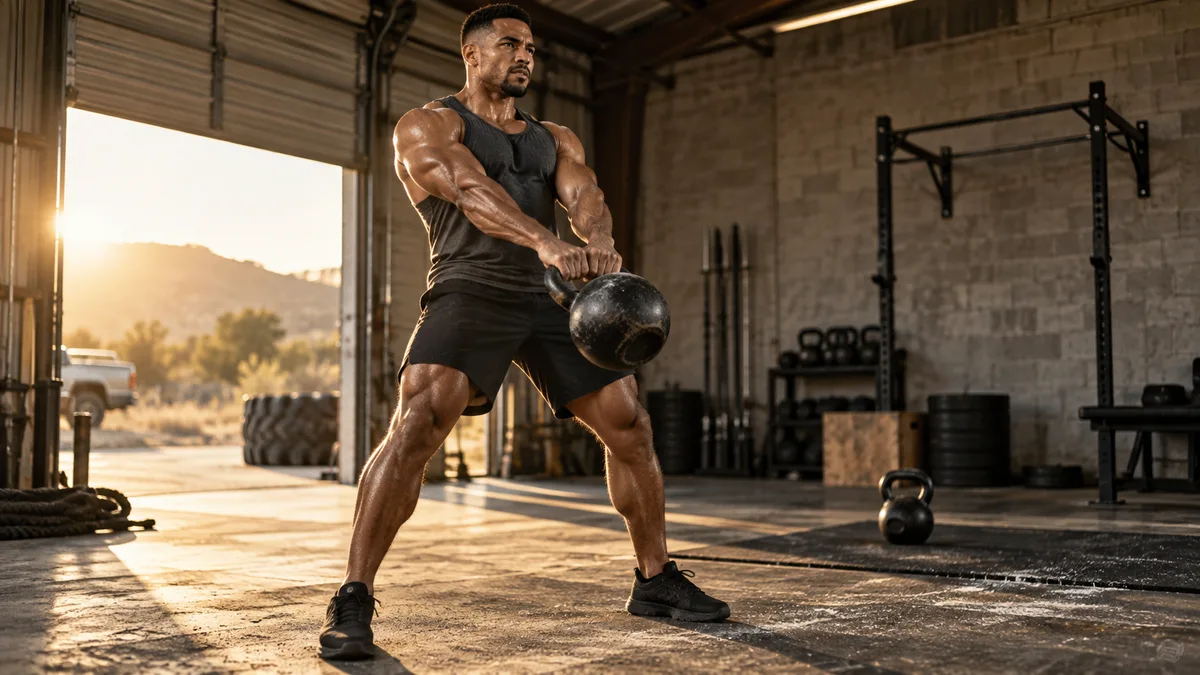
You own one kettlebell. Maybe two. And you’re wondering if that’s enough to build real, noticeable strength across your entire body. Short answer: yes. A single kettlebell and about 30 minutes of focused effort can hit every major muscle group, plus a bunch of the smaller stabilizers that machines completely ignore.
I spent years hoarding dumbbells, barbells, and cable attachments before realizing that a cast-iron ball with a handle could outperform half my garage gym. Sounds dramatic? Try a heavy Turkish get-up after leg day and get back to me.
This full body kettlebell workout includes 8 strength-building moves that collectively train your legs, glutes, back, shoulders, chest, arms, and core. No fluff exercises. No filler. Just efficient, compound movements that earn their spot on the list.
Why kettlebells build strength differently
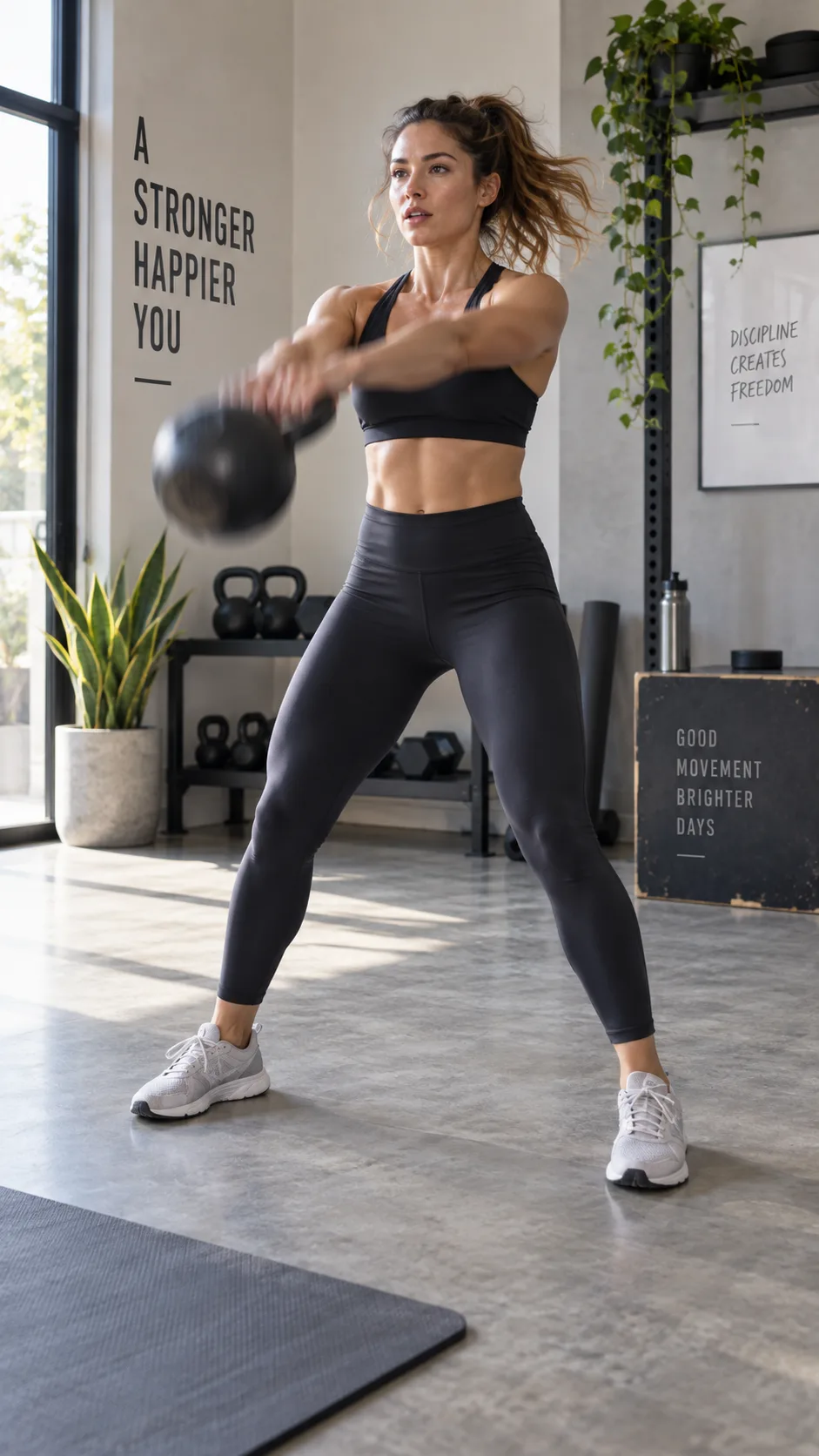
Kettlebells aren’t just oddly-shaped dumbbells. The offset center of gravity, where the mass sits below your grip instead of on either side, forces your stabilizer muscles to work overtime on every rep. Your core, grip, and shoulder stabilizers get trained whether you’re deliberately targeting them or not.
Research from the Journal of Strength and Conditioning Research consistently shows that kettlebell training improves both strength and cardiovascular fitness at the same time. You build muscle and conditioning in one session. That’s a time-efficiency win most people overlook.
The ballistic nature of movements like swings and cleans also trains your body to produce force quickly, something called power output. Barbells build max strength beautifully, but kettlebells teach your muscles to be fast and strong. For athletes, weekend warriors, and anyone who occasionally has to sprint after a bus, that matters.
What you need before starting
Choosing the right kettlebell weight
Go heavier than you think for lower body movements and lighter than your ego wants for overhead work. Here’s a general starting point:
- Women new to kettlebells: 8kg (18 lbs) for upper body, 12-16kg (26-35 lbs) for lower body
- Men new to kettlebells: 12kg (26 lbs) for upper body, 16-24kg (35-53 lbs) for lower body
- Intermediate lifters: Bump each range up by one kettlebell size
Ideally, you’d have two kettlebells, one moderate and one heavy. But you can make a single medium-weight bell work for this entire workout by adjusting tempo and reps.
Space and equipment
You need roughly a 6×6 foot area and a flat surface. That’s it. No bench, no rack, no excuses. A yoga mat helps for floor-based moves if you’re training on a hard surface.
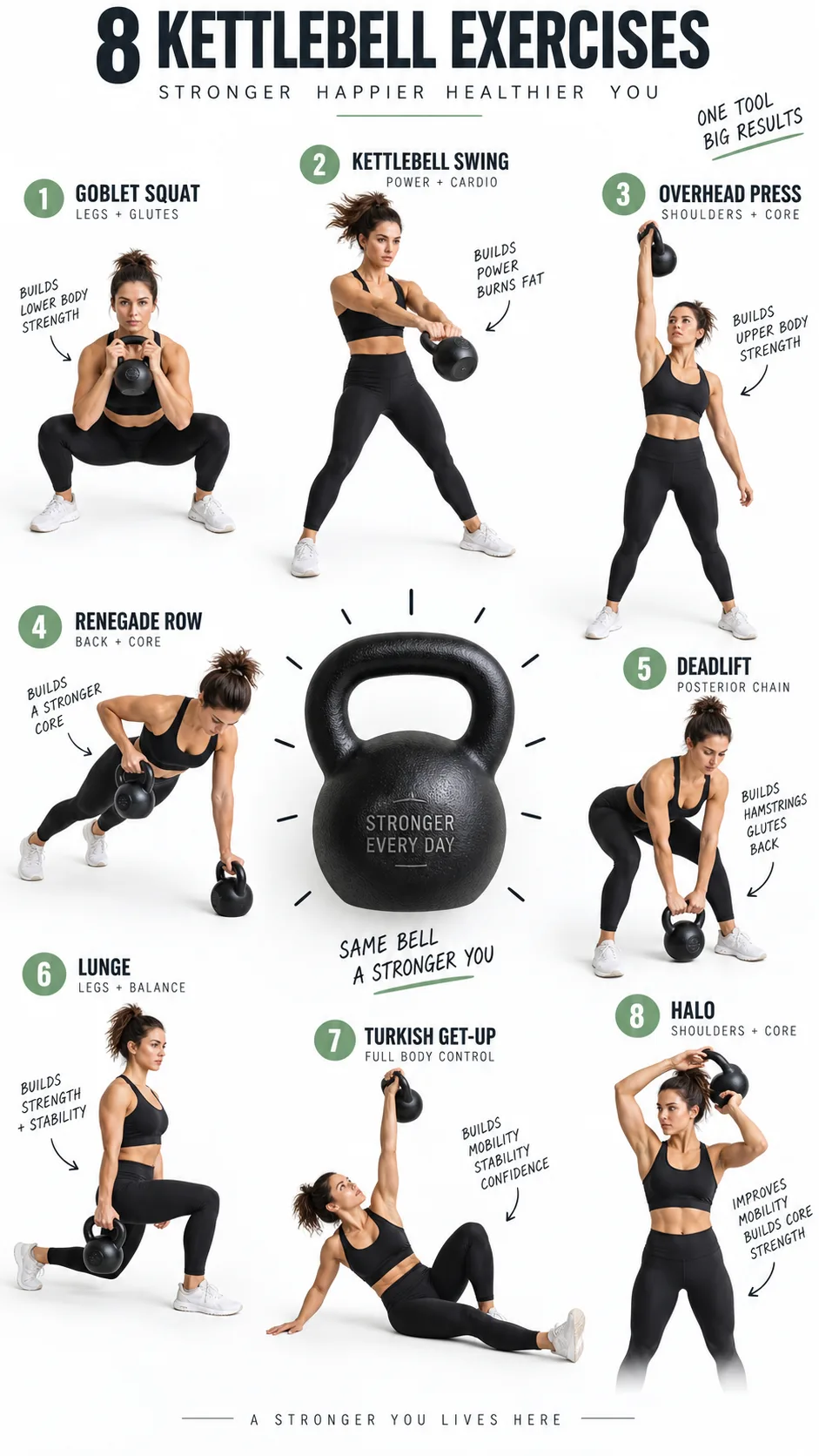
The 8 full body kettlebell exercises
Here’s the lineup. I’ve ordered these intentionally: explosive movements first (when you’re freshest), grinding strength work in the middle, and core-focused finishers at the end. Don’t rearrange the sequence unless you enjoy sloppy form and tweaked backs.
1. Kettlebell swing
Primary targets: Glutes, hamstrings, core, upper back
The kettlebell swing is the foundation of everything. It’s a hip hinge, NOT a squat, and the power comes entirely from your glutes snapping your hips forward. Think of your arms as ropes and the kettlebell as a pendulum. Your hands just hold on for the ride.
Hike the bell back between your legs like a football snap, then explosively drive your hips forward to float the bell to chest height. Your arms stay straight. Your core stays braced. Your back stays flat. Mess up any of those three things and you’ll feel it tomorrow, in all the wrong places.
Perform 15 reps for 3 sets. Rest 60 seconds between sets.
2. Goblet squat
Primary targets: Quads, glutes, core, upper back
Hold the kettlebell by the horns (the sides of the handle) at chest height and squat down between your knees. The front-loaded position automatically improves your squat mechanics. It forces you to stay upright and prevents that ugly forward lean that plagues barbell back squats.
Ever noticed how some people squat deep effortlessly while others tip forward like a drinking bird? The goblet squat is the great equalizer. It teaches depth and proper mechanics at the same time. Push your knees out over your toes, sink your hips below parallel, and drive back up through your heels.
Perform 12 reps for 3 sets. Rest 60 seconds between sets.
3. Turkish get-up
Primary targets: Shoulders, core, hips, literally everything else
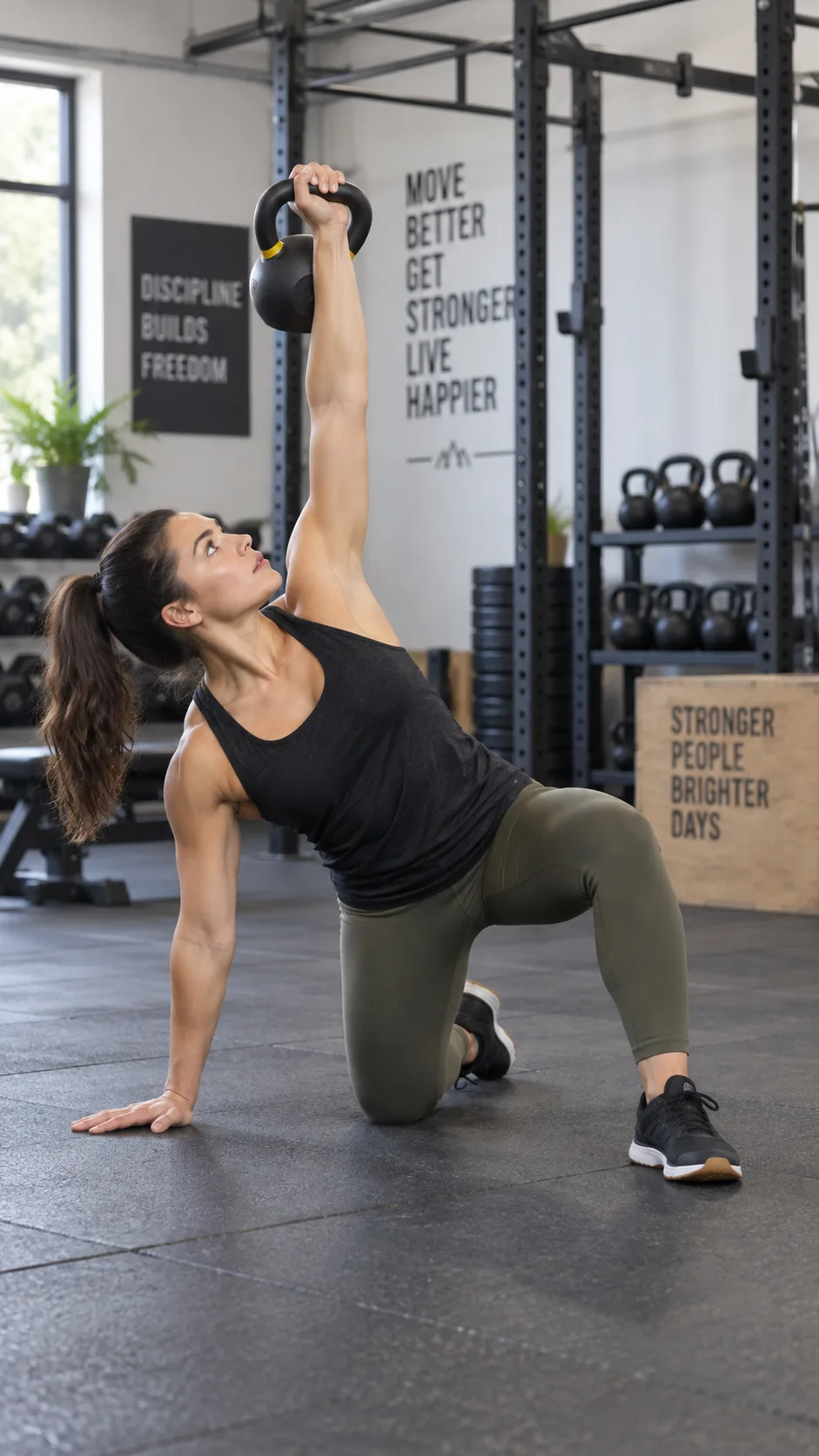
This is the exercise that humbles everyone. You start flat on your back holding a kettlebell straight up with one arm, then stand up, methodically, step by step, while keeping that bell locked out overhead. Then you reverse the entire sequence back down to the floor.
The Turkish get-up trains shoulder stability, hip mobility, core strength, and coordination in a single movement. It’s also incredibly revealing. If you have a weak link anywhere in your kinetic chain, this exercise will find it and expose it publicly. Use a light weight until the movement pattern feels automatic.
Perform 3 reps per side for 2 sets. Rest 90 seconds between sets. Quality over quantity here, always.
4. Single-arm kettlebell row
Primary targets: Lats, rhomboids, biceps, rear delts, core
Hinge forward at the hips, plant one hand on a bench or sturdy surface, and row the kettlebell to your hip with the other hand. The offset grip of the kettlebell makes this slightly harder than a dumbbell row. Your forearm has to work to control the rotation, which means extra grip and forearm development for free.
Squeeze your shoulder blade toward your spine at the top of each rep. Don’t just yank the weight up with momentum. If you’re twisting your torso to get the bell up, it’s too heavy. Drop your ego before you drop the kettlebell on your foot.
Perform 10 reps per side for 3 sets. Rest 60 seconds between sets.
5. Kettlebell clean and press
Primary targets: Shoulders, triceps, upper back, core, hips
This two-part movement combines an explosive clean (swinging the bell from between your legs to a racked position at your shoulder) with a strict overhead press. It’s a full body strength move disguised as a shoulder exercise.
The clean portion trains your hips and posterior chain. The press hammers your deltoids and triceps. The transition between the two demands serious core engagement. If you only had time for one kettlebell exercise (you always have time for more, but hypothetically), the clean and press would be my pick.
Perform 8 reps per side for 3 sets. Rest 75 seconds between sets.
6. Kettlebell deadlift
Primary targets: Hamstrings, glutes, lower back, core
Place the kettlebell between your feet, hinge at the hips, grab the handle with both hands, and stand up by driving through your heels. This is the same movement pattern as a barbell deadlift, just more accessible and joint-friendly for higher rep ranges.
Keep the bell close to your body throughout the lift. Your shins should stay nearly vertical. Lock your lats down (imagine squeezing oranges in your armpits) and brace your core like someone’s about to poke you in the stomach. Simple movement, massive strength returns.
If you’re also following a full body dumbbell workout plan, the kettlebell deadlift slots in perfectly as a variation to keep your training fresh and challenge your grip differently.
Perform 12 reps for 3 sets. Rest 60 seconds between sets.
7. Kettlebell floor press
Primary targets: Chest, triceps, anterior delts
No bench? No problem. Lie on your back, hold the kettlebell in one hand with the bell resting against your forearm, and press it straight up. The floor limits your range of motion, which reduces shoulder stress while maximizing tricep and chest engagement at the lockout.
The floor press also eliminates the bounce-and-heave technique that so many people use on a bench (you know who you are). Your upper arms touch the floor each rep, creating a dead stop that forces pure pressing strength with zero momentum. It’s one of the most underrated chest exercises out there, in my opinion.
Perform 10 reps per side for 3 sets. Rest 60 seconds between sets.
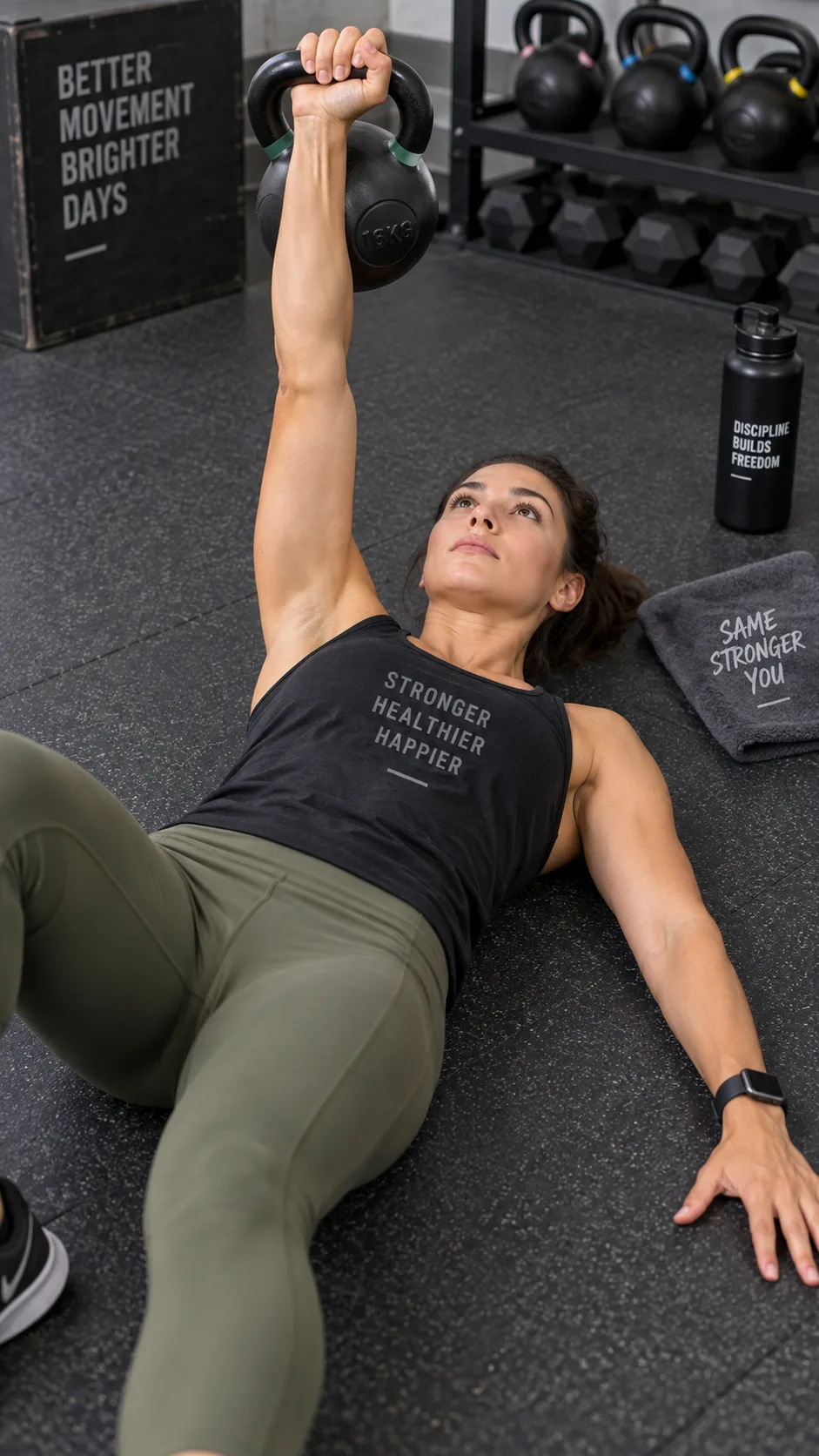
8. Kettlebell windmill
Primary targets: Obliques, shoulders, hamstrings, hip mobility
Press the kettlebell overhead with one arm, then slowly hinge sideways and forward, pushing your hip out toward the loaded side, until your free hand touches the floor (or as close as your mobility allows). Your eyes stay locked on the kettlebell the entire time.
This move looks deceptively easy. It’s not. The windmill develops deep core stability, shoulder endurance under load, and serious hamstring flexibility all at once. It also bulletproofs your lower back when you perform it correctly. Start light. Seriously, start embarrassingly light.
Perform 6 reps per side for 2 sets. Rest 60 seconds between sets.
The complete workout at a glance
Here’s your full session laid out cleanly. Print this, screenshot it, tattoo it on your forearm, whatever works for you:
- Kettlebell Swing : 3 x 15
- Goblet Squat : 3 x 12
- Turkish Get-Up : 2 x 3/side
- Single-Arm Row : 3 x 10/side
- Clean and Press : 3 x 8/side
- Kettlebell Deadlift : 3 x 12
- Floor Press : 3 x 10/side
- Windmill : 2 x 6/side
Total estimated time: 35-45 minutes depending on rest periods. Warm up with 5 minutes of light movement and joint circles before starting.
How to program this workout into your week
You can run this full body kettlebell workout 2-3 times per week with at least one rest day between sessions. That gives your muscles enough recovery time to rebuild stronger, which is, you know, the entire point of training.
A solid weekly structure looks like this:
- Monday: Full body kettlebell workout
- Tuesday: Active recovery or light cardio
- Wednesday: Full body kettlebell workout
- Thursday: Rest or mobility work
- Friday: Full body kettlebell workout
- Weekend: Rest, hike, live your life
If you prefer a split approach, alternate this with an upper body gym workout or a dedicated leg and glute session to add variety while maintaining balanced programming.
Progressive overload with kettlebells
Here’s the one thing most people get wrong with kettlebell training: they never progress. They grab the same 16kg bell every session for months and wonder why they stop seeing results. Your body adapts. You need to force it to keep adapting.
Since kettlebells jump in weight by 4kg increments (which feels enormous compared to slapping 2.5lb plates on a barbell), you need creative progression strategies:
- Add reps before adding weight. Go from 3×10 to 3×15 before sizing up.
- Slow down the eccentric. Take 3-4 seconds on the lowering phase to increase time under tension.
- Add pauses. Hold the bottom of a goblet squat for 2 seconds per rep.
- Reduce rest periods. Drop from 60 seconds to 45 seconds between sets.
- Switch to single-leg or single-arm variations. A single-leg deadlift with a 16kg bell feels heavier than a bilateral deadlift with a 24kg bell.
The American Council on Exercise recommends progressive overload as the fundamental principle for continued strength gains, and that applies equally whether you’re using kettlebells, dumbbells, or barbells.
Common kettlebell mistakes that kill your results
I’ve made every single one of these mistakes, so consider this a public service announcement 🙂
Squatting your swings. The swing is a HIP HINGE. Your knees bend slightly, but the movement comes from your hips pushing back and snapping forward. If your quads are burning more than your glutes after swings, you’re squatting the movement.
Death-gripping the handle. A relaxed grip during ballistic movements like swings and cleans lets the bell rotate naturally in your hand. A white-knuckle grip leads to torn calluses and wrist strain. Hook your fingers over the handle instead of crushing it.
Ignoring the rack position. During cleans and presses, the kettlebell should rest against your forearm with your elbow tucked tight to your ribcage. If the bell is flopping around or your wrist is bent backward, you’ll bruise your forearm and leak power on every press.
Going too light forever. Kettlebell training should feel challenging. If you can breeze through 15 swings without your heart rate climbing, the bell is too light. Strength requires actual resistance. Don’t be afraid to go heavy.
Who should (and shouldn’t) do this workout
This workout suits you if: you want an efficient full body strength session, you train at home or in a small space, you’re bored of traditional gym routines, or you travel frequently and need a portable training option. Kettlebell workouts also pair well with programs focused on general strength and conditioning.
Pump the brakes if: you have acute shoulder injuries (the overhead work will aggravate them), you’ve never learned basic hip hinge mechanics (learn the deadlift pattern first), or you’re recovering from spinal surgery. Get clearance from a qualified professional before loading a kettlebell overhead.
For complete beginners, spending 2-3 weeks practicing just the swing, goblet squat, and deadlift builds the foundation you need before tackling the full 8-exercise program.
The bottom line
A full body kettlebell workout doesn’t need to be complicated to be effective. These 8 strength-building moves cover every major movement pattern (hinge, squat, push, pull, carry, and rotation) with a single piece of equipment that costs less than one month of gym membership.
What matters most is consistency, progressive overload, and respecting the technique. Nail the form first, then gradually increase the challenge. You’ll build functional strength, improve your conditioning, and develop a physique that performs as good as it looks.
Grab a kettlebell. Run through this workout three times this week. And next time someone asks if you really need a full gym to get strong, just smile. You already know the answer.
