
Pelvic organ prolapse affects roughly 50% of women who’ve had children, and yet most people whisper about it like it’s a secret society nobody wants to join. If you’ve ever sneezed, laughed, or jumped on a trampoline and felt something shift down there, you already know why you’re reading this.
You don’t need to accept prolapse symptoms as your “new normal.” The right pelvic floor exercises can genuinely support your bladder, reduce that uncomfortable heaviness, and help you feel more like yourself again. Doing them wrong, though, can make things worse. That part matters.
This covers what works, what doesn’t, and how to build a gentle routine that supports your pelvic organs without sabotaging your own progress.

What exactly is pelvic organ prolapse? (The no-jargon version)
Pelvic organ prolapse happens when the muscles and tissues supporting your pelvic organs weaken, allowing the bladder, uterus, or rectum to drop down and press against (or bulge into) the vaginal wall. Think of your pelvic floor as a hammock. When it stretches out or loses tension, the things it’s holding up start to sag.
There are different types depending on which organ descends. Cystocele (bladder prolapse) is the most common, followed by uterine prolapse and rectocele. Symptoms range from a dragging sensation and lower back pain to urinary leakage and difficulty emptying your bladder completely.
The causes? Pregnancy, childbirth, menopause, chronic constipation, heavy lifting, obesity, and genetics. Your pelvic floor has been through a lot, and sometimes it needs targeted help to bounce back.
Grades of prolapse: where do you fall?
Doctors typically classify prolapse on a scale from Grade 1 to Grade 4:
- Grade 1: Mild. The organ has dropped only slightly. Often no symptoms at all.
- Grade 2: Moderate. The organ has descended to the vaginal opening. You’ll likely feel heaviness or pressure.
- Grade 3: The organ protrudes beyond the vaginal opening.
- Grade 4: Complete prolapse. The organ sits entirely outside the body.
Pelvic floor exercises work best for Grade 1 and Grade 2 prolapse and can still provide meaningful support for Grade 3. Grade 4 typically requires medical intervention. If you’re unsure where you stand, please see a pelvic floor physiotherapist before starting any routine. A proper assessment makes all the difference.
Why most people do pelvic floor exercises wrong (and don’t even know it)
Ever squeezed your pelvic floor muscles and thought, “Am I even doing this right?” You’re not alone. Research published in the British Journal of Sports Medicine found that up to 50% of women perform Kegels incorrectly when given only verbal or written instructions. That’s a coin flip, not great odds.
Here are the most common mistakes people make:
- Bearing down instead of lifting up. This is the big one. If you’re pushing your pelvic floor downward when you think you’re squeezing it, you’re making prolapse worse. The correct movement feels like you’re lifting and drawing inward, not straining outward.
- Holding your breath. Your pelvic floor and diaphragm work together. When you hold your breath and brace, you create downward pressure on already weakened tissues.
- Squeezing your glutes, inner thighs, or abs instead. These muscles love to jump in and steal the show. Your butt cheeks should stay relaxed during a Kegel. Seriously, let them chill.
- Going too hard, too fast. Overtraining your pelvic floor can create a hypertonic (overly tight) pelvic floor, which causes its own set of problems: pain, urgency, and difficulty relaxing to urinate.
- Only doing quick squeezes. Your pelvic floor has both fast-twitch and slow-twitch muscle fibers. You need endurance holds and quick contractions for complete strengthening.
The gentle bladder-support routine: step by step
This routine specifically targets bladder support for prolapse. It’s gentle enough for beginners and effective enough for anyone with mild to moderate symptoms. Consistency beats intensity here. Aim for 3 times daily, and you should notice improvements within 8 to 12 weeks.
Step 1: find the right position
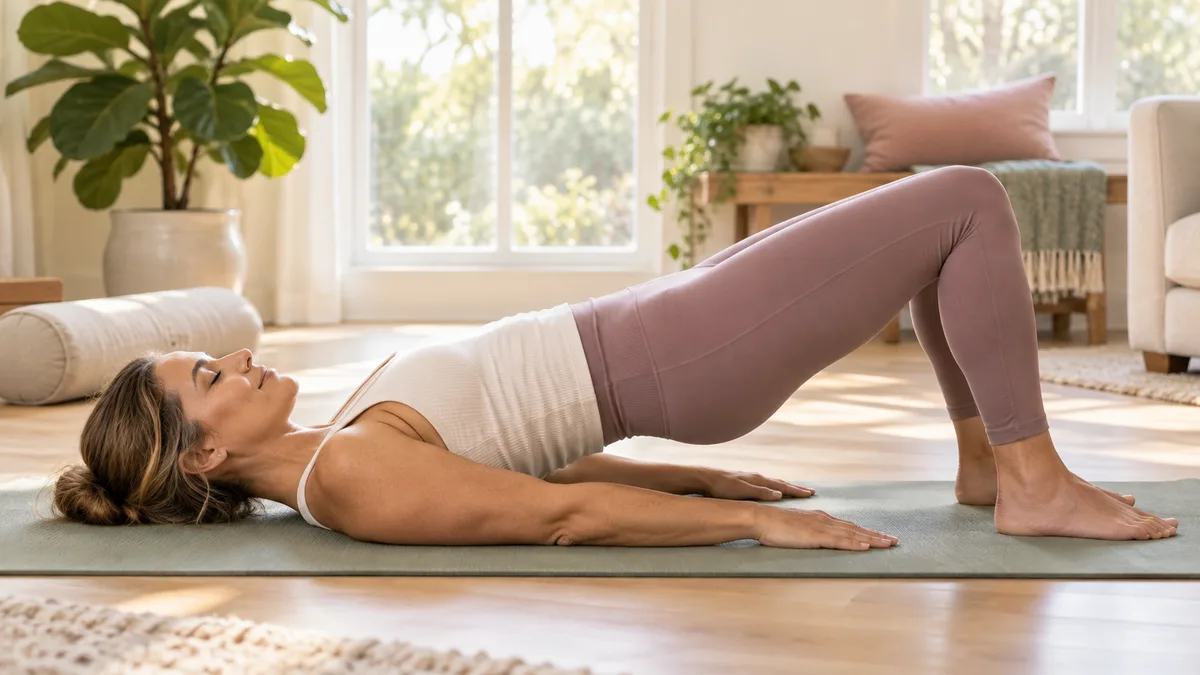
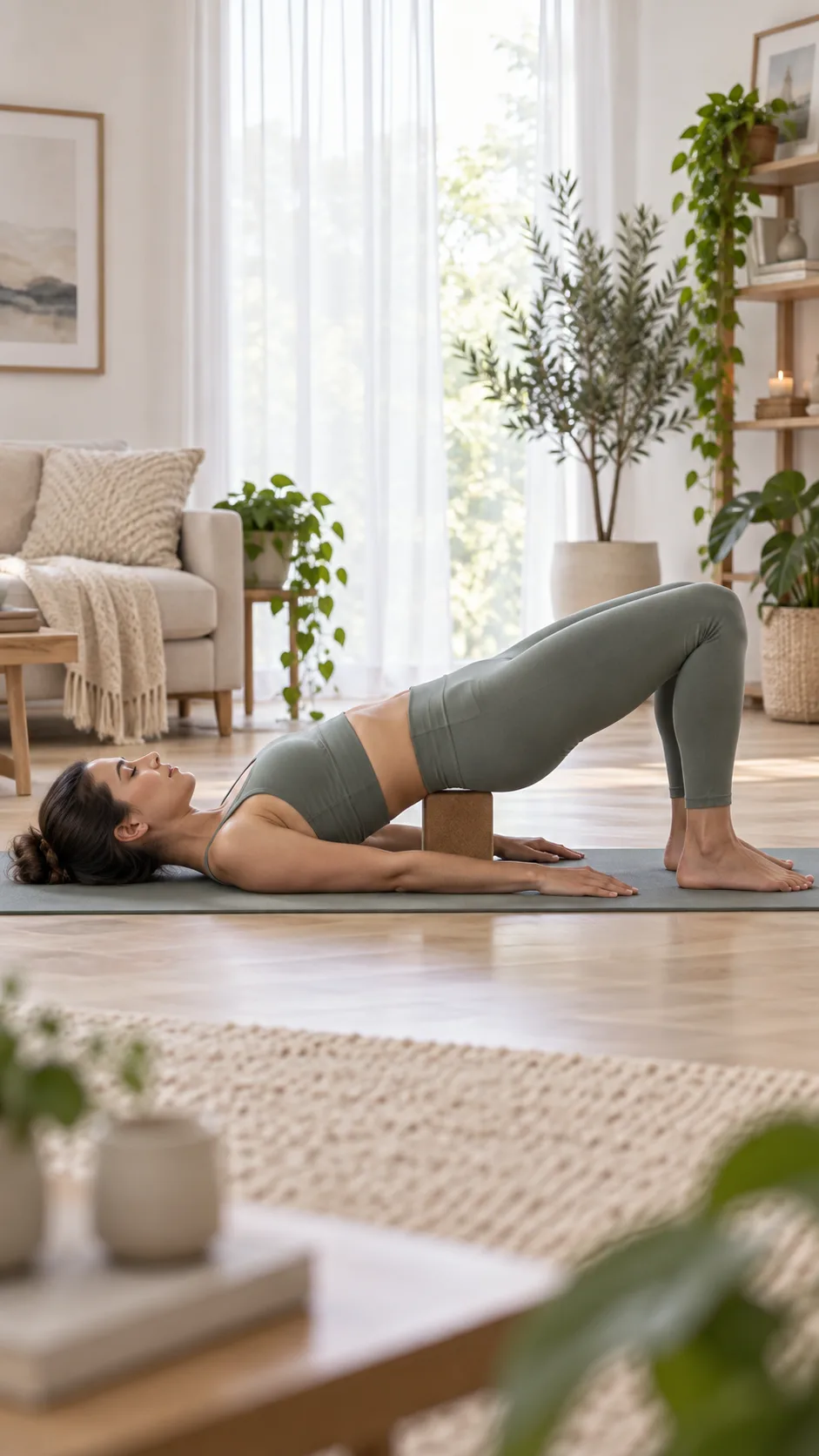
Start lying on your back with your knees bent and feet flat on the floor. This position takes gravity out of the equation and makes it easier to isolate your pelvic floor muscles. As you get stronger over the coming weeks, you’ll progress to sitting and then standing.
Why lying down first? When you have prolapse, gravity is working against you. Removing that downward pull lets you focus entirely on the muscle activation without your organs weighing down on already stretched tissues.
Step 2: the “lift and hold” (slow-twitch training)
- Take a normal breath in through your nose.
- As you exhale, gently draw your pelvic floor muscles up and inward. Imagine you’re picking up a blueberry with your vagina. (Weird visual? Yes. Effective cue? Absolutely.)
- Hold this contraction for 5 seconds while breathing normally. Don’t hold your breath.
- Release slowly and completely. Let everything relax for 10 seconds.
- Repeat 10 times.
