
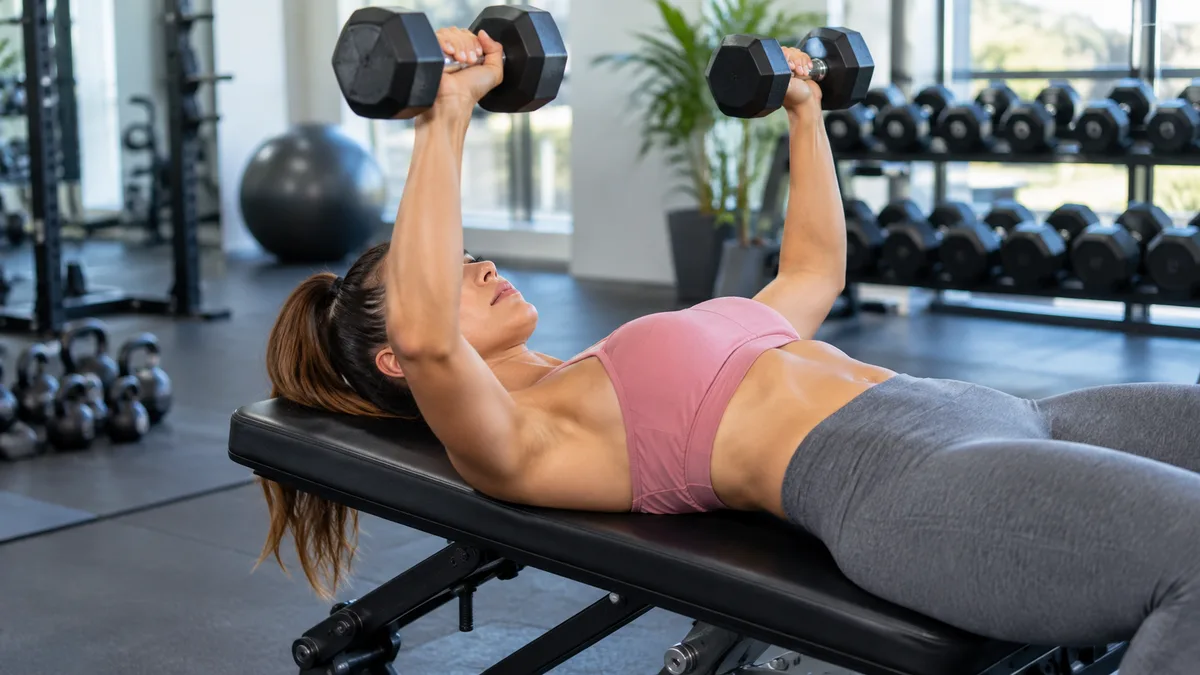
Let’s get one thing straight right away: training your chest won’t make your breasts smaller, harder, or masculine-looking. That myth has been floating around gyms and internet forums for decades, and it needs to retire. What a solid dumbbell chest workout WILL do? Give you stronger pecs, better posture, a more lifted appearance, and the kind of upper body confidence that makes you stand a little taller.
I spent years skipping chest day because I genuinely believed it “wasn’t important for women.” Spoiler: I was wrong. The moment I started incorporating chest exercises into my routine, everything changed. My push-ups got easier, my shoulders stopped aching, and my upper body finally looked balanced instead of all-arms-no-chest.
So if you’ve been neglecting your pecs, welcome. You’re about to meet five dumbbell chest exercises that are simple, effective, and designed to give you real results. No bench press intimidation required.
Why women should train their chest (seriously, why)
Your chest muscles, the pectoralis major and pectoralis minor, sit right beneath your breast tissue. They handle pushing movements, stabilize your shoulder joints, and support your upper body in basically every daily task you do. Opening a heavy door? Chest. Pushing a stroller uphill? Chest. Getting up off the floor after an intense ab session? You guessed it.
According to the American Council on Exercise (ACE), strength training the chest helps women improve functional fitness and reduce the risk of upper body injuries. That matters, especially as we age and bone density becomes a real concern.
Here’s what consistent chest training actually delivers:
- A more lifted, toned appearance, because stronger pecs provide a natural “shelf” for breast tissue
- Better posture, since balanced chest and back muscles pull your shoulders into alignment
- Stronger push movements for push-ups, carrying groceries, and moving furniture
- Reduced shoulder pain, as stronger chest muscles support the entire shoulder girdle
- More balanced aesthetics, because training arms and back while skipping chest creates an imbalance
And no, you won’t “bulk up.” Women produce roughly 15 to 20 times less testosterone than men, according to research published by the National Strength and Conditioning Association. Building massive pecs requires years of targeted hypertrophy training and caloric surplus that doesn’t happen by accident. So relax, grab your dumbbells, and let’s build some strength.
What you’ll need for this workout
One of the best things about a dumbbell chest workout is how little equipment you need. Here’s your checklist:
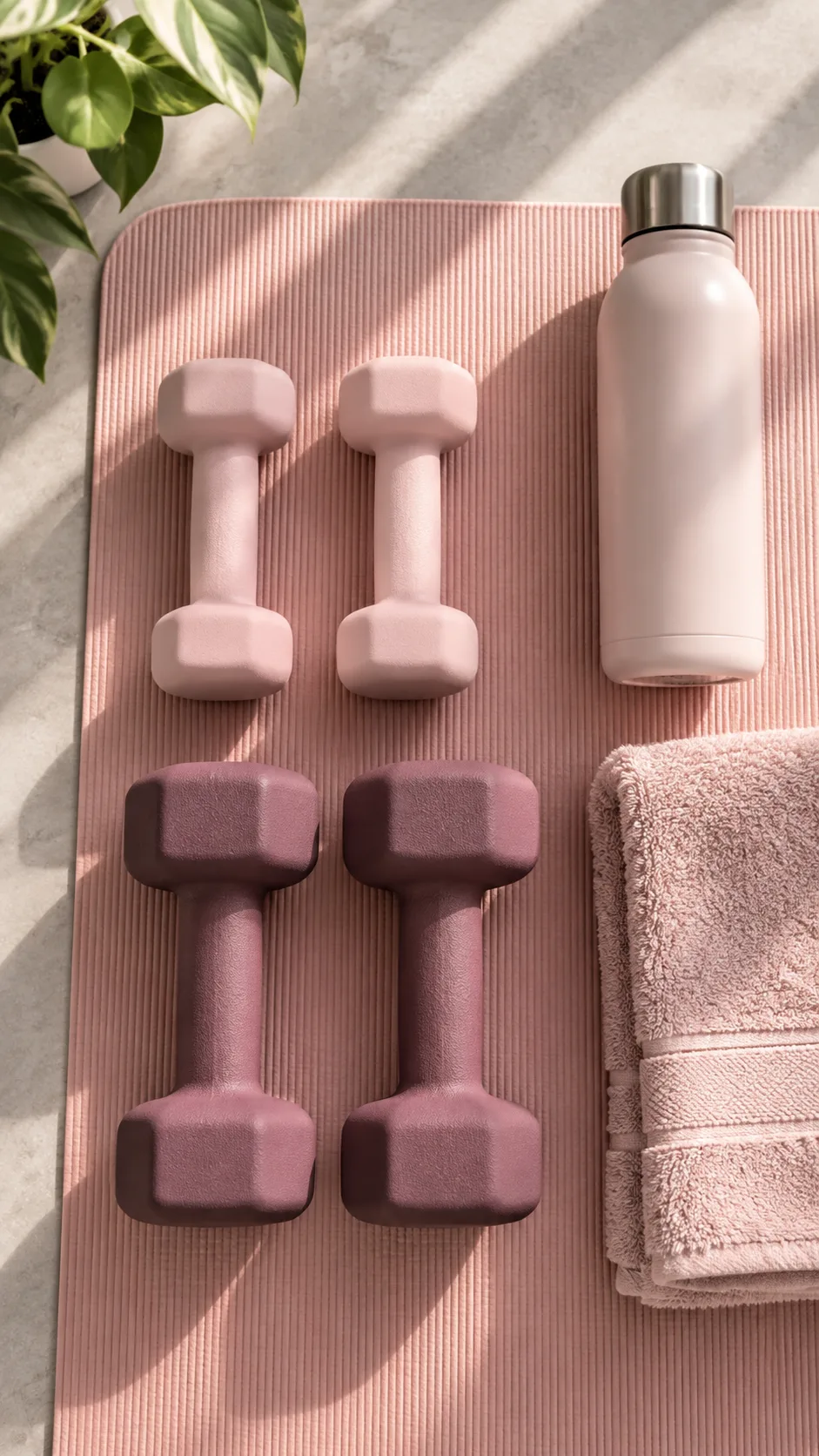
- Two sets of dumbbells, one lighter pair (5 to 10 lbs) and one moderate pair (12 to 20 lbs), depending on your current strength level
- A flat bench or sturdy surface, a weight bench works best, but a stability ball or even the floor works in a pinch
- A workout mat, optional but nice for floor-based moves
If you’re working out at home and want a complete setup, check out our guide to the upper body dumbbell routine beginners can actually stick with. It pairs perfectly with what you’re about to learn here.
How to choose the right weight
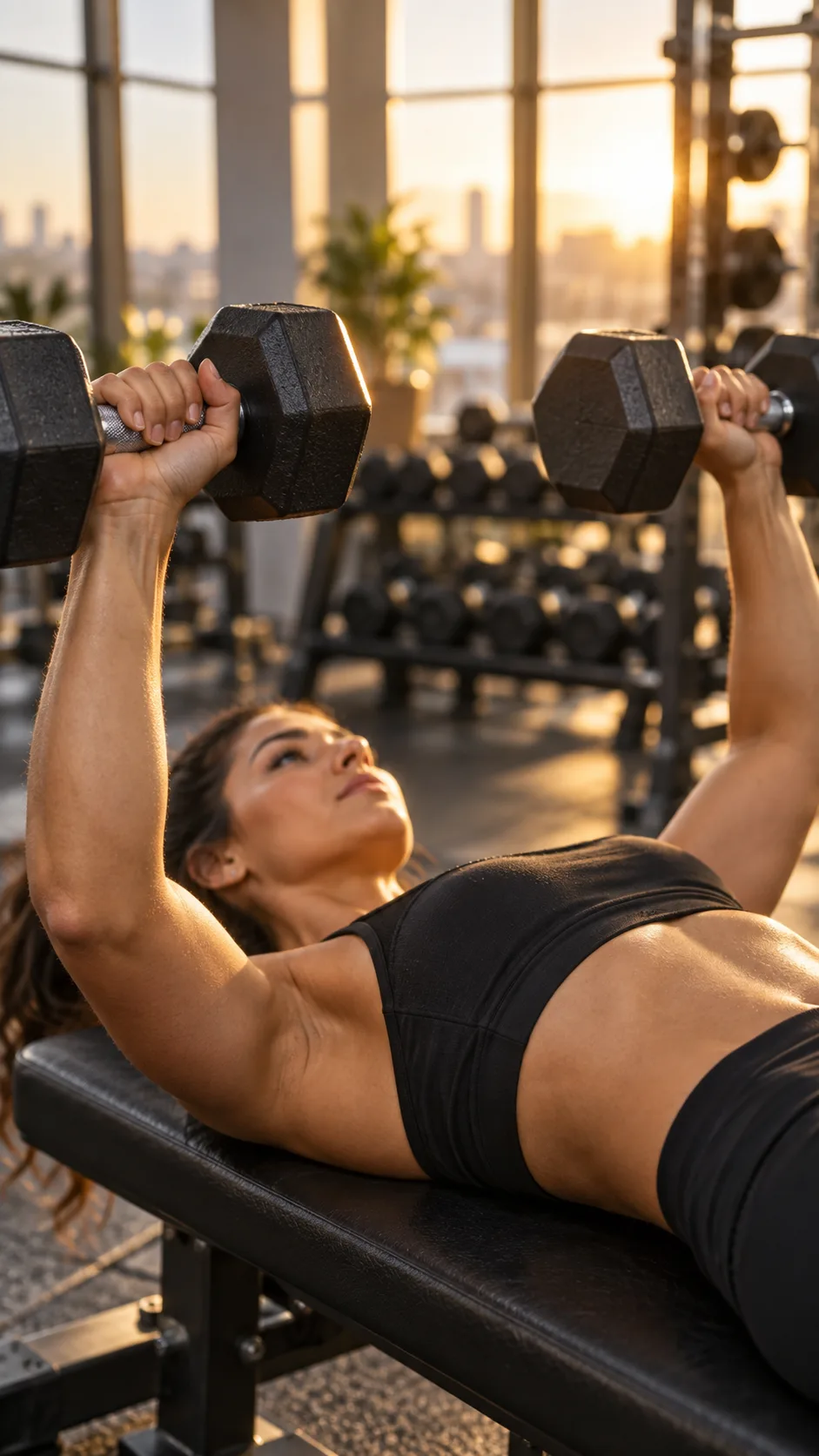
This trips people up more than it should. Pick a weight that challenges you by reps 8 to 10 but doesn’t force you to compromise your form. If you can breeze through 15 reps without any effort, go heavier. If you can’t complete 8 reps with good technique, go lighter.
Your muscles grow when they’re challenged, not when they’re comfortable. Remember that.
The 5 best dumbbell chest exercises for women
Alright, here they are. Five moves, zero fluff, maximum results. I’ve ordered them from most foundational to most targeted so you can perform them as a complete chest workout or cherry-pick your favorites for a broader upper body session.
1. Flat dumbbell chest press
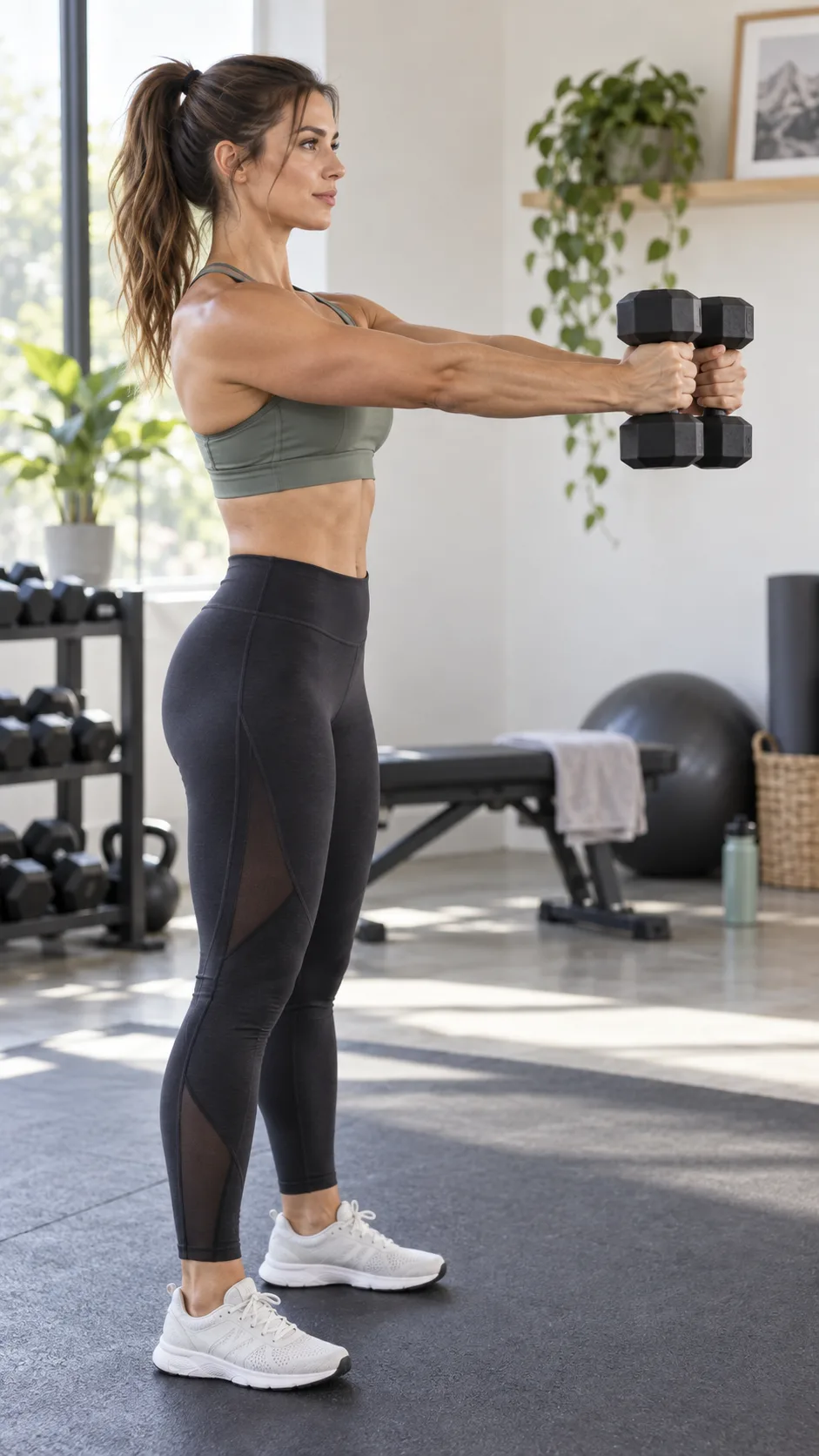
This is your bread and butter. The flat dumbbell chest press targets the entire pectoralis major while also recruiting your anterior deltoids and triceps. It’s the most effective compound chest exercise you can do with dumbbells. Period.
How to do it:
- Lie flat on a bench with a dumbbell in each hand, feet flat on the floor
- Hold the dumbbells at chest height with palms facing forward, elbows at roughly a 45-degree angle from your torso
- Press both dumbbells straight up until your arms fully extend (without locking your elbows)
- Lower slowly with control, taking about 2 to 3 seconds on the way down
- Repeat for 3 sets of 10 to 12 reps
Pro tip: Squeeze your shoulder blades together and press them into the bench before you start. This creates a stable base and protects your shoulders. Think about “bending the bar” outward. Even though you’re holding dumbbells, that mental cue keeps your shoulders in a safe position.
2. Incline dumbbell press
Want to target the upper chest specifically? The incline press is your move. By angling the bench to about 30 to 45 degrees, you shift the emphasis to the clavicular head of the pectoralis major, the upper portion that creates that defined, lifted look near the collarbone.
How to do it:
- Set your bench to a 30 to 45 degree incline
- Sit back with a dumbbell in each hand at shoulder height, palms facing forward
- Press the dumbbells upward and slightly inward until they almost touch at the top
- Lower with control back to the starting position
- Perform 3 sets of 10 to 12 reps
Common mistake: Setting the bench too steep. Once you pass 45 degrees, you’re basically doing a shoulder press, and your chest stops doing the heavy lifting (pun intended). Keep it moderate.
3. Dumbbell chest flyes
If the chest press is your bread and butter, dumbbell flyes are the jam. This isolation exercise stretches and contracts the pecs through a wide range of motion, creating that deep muscle engagement you just can’t replicate with pressing alone. Ever wondered why bodybuilders swear by flyes? This is why.
How to do it:
- Lie flat on a bench with a dumbbell in each hand, arms extended straight above your chest, palms facing each other
- With a slight bend in your elbows (keep it locked in that position), slowly lower the dumbbells out to the sides in a wide arc
- Lower until you feel a good stretch across your chest, with your arms reaching roughly shoulder level
- Squeeze your chest to bring the dumbbells back together at the top
- Complete 3 sets of 12 to 15 reps
Important: Go LIGHTER on flyes than you do on presses. This exercise puts your shoulder joint in a vulnerable position, so ego-lifting here is a recipe for injury. Focus on the stretch and the squeeze. That’s where the magic happens.
4. Dumbbell pullover
The dumbbell pullover is one of those sneaky-effective exercises that most women overlook entirely. It hits your chest AND your lats at the same time, making it a phenomenal bridge exercise between chest day and back day. FYI, Arnold Schwarzenegger credited this move for expanding his ribcage. While that claim is debatable, the chest engagement is very real.
How to do it:
- Lie flat on a bench and hold a single dumbbell with both hands above your chest, arms slightly bent
- Keeping that slight elbow bend, slowly lower the dumbbell backward over your head in an arc
- Go until you feel a deep stretch through your chest and lats, but don’t force it beyond your comfortable range
- Engage your chest and lats to pull the dumbbell back to the starting position
- Do 3 sets of 10 to 12 reps
Pro tip: Keep your core tight and your ribs down throughout the movement. If your back arches excessively, you’ve gone too far back or you’re using too heavy a weight. Scale it back.
5. Floor press
No bench? No problem. The dumbbell floor press is an underrated gem that limits your range of motion just enough to protect your shoulders while still hammering your chest and triceps. It’s also fantastic for beginners who feel unstable on a bench.
How to do it:
- Lie flat on the floor with your knees bent, feet flat, and a dumbbell in each hand
- Start with your upper arms resting on the floor at a 45-degree angle from your torso, elbows bent
- Press the dumbbells straight up until your arms extend fully
- Lower until your elbows gently touch the floor, then pause for one second
- Perform 3 sets of 10 to 12 reps
That pause at the bottom eliminates the stretch reflex, meaning your muscles have to generate force from a dead stop. This builds raw pressing strength like nothing else. It’s harder than it looks. Try it before you judge it.
The complete dumbbell chest workout routine
Want to put it all together? Here’s how to structure these five moves into one killer chest session that takes about 30 to 35 minutes:
- Flat Dumbbell Chest Press — 3 sets x 10 to 12 reps (60 sec rest)
- Incline Dumbbell Press — 3 sets x 10 to 12 reps (60 sec rest)
- Dumbbell Chest Flyes — 3 sets x 12 to 15 reps (45 sec rest)
- Dumbbell Pullover — 3 sets x 10 to 12 reps (60 sec rest)
- Floor Press — 3 sets x 10 to 12 reps (45 sec rest)
Warm up first! Spend 5 minutes doing arm circles, band pull-aparts, or light push-ups to get blood flowing into the chest and shoulders. Cold muscles and heavy weights are not friends.
How often should women train chest?
Here’s where people overthink it. Train your chest 1 to 2 times per week with at least 48 hours between sessions. Your muscles need time to recover and rebuild. That’s when the actual growth happens, not during the workout itself.
If you follow a push/pull/legs split, your chest gets hit naturally on push days. If you train full body, slot in 2 to 3 chest exercises per session. Either approach works well, and consistency matters more than the perfect program.
Looking for a complete training structure? Our full upper body dumbbell workout plan shows you exactly how to balance chest, back, shoulders, and arms in one cohesive program.
Progressive overload: the secret sauce
Doing the same weight for the same reps week after week will give you the same results week after week. Progressive overload, gradually increasing the demand on your muscles, is the non-negotiable principle behind getting stronger and seeing visible changes.
You don’t have to add weight every session. Here are several ways to progressively overload your chest workouts:
- Add 1 to 2 reps per set before increasing weight
- Increase dumbbell weight by 2 to 5 lbs when you can complete all sets at the top of your rep range
- Slow down the tempo by trying a 3-second lowering phase instead of 2
- Add a pause at the bottom of each rep for 1 to 2 seconds
- Reduce rest periods by 10 to 15 seconds between sets
In my experience, tracking your workouts in a simple notebook or phone app makes progressive overload 10x easier. You can’t improve what you don’t measure.
Common mistakes that kill your chest gains
I’ve made every single one of these mistakes, so learn from my suffering:
Flaring your elbows to 90 degrees
This is the fastest way to wreck your shoulder joints during pressing movements. Keep your elbows at a 45-degree angle from your torso, not straight out to the sides like a T. Your rotator cuffs will thank you.
Going too heavy too fast
Chest exercises require shoulder stability, and your stabilizer muscles develop slower than your prime movers. If you jump to heavy weights before your stabilizers catch up, you’ll end up injured and frustrated. Build a foundation first.
Ignoring the negative (eccentric) phase
Dropping the weights quickly and only focusing on the push? You’re literally throwing away half the exercise. The lowering phase creates more muscle damage (in the good way) than the lifting phase. Control it. Own every inch of the movement.
Forgetting to breathe
This sounds ridiculous, but so many people hold their breath during pressing movements. Exhale as you push, inhale as you lower. Proper breathing stabilizes your core and helps you generate more force. It’s free performance, so use it.
Nutrition tips to support your chest training
You can do the perfect dumbbell chest workout every week, but if your nutrition isn’t supporting your training, you’ll be spinning your wheels. Here’s the condensed version:
- Aim for 0.7 to 1.0 grams of protein per pound of body weight daily. This gives your muscles the amino acids they need to repair and grow. Chicken, fish, eggs, Greek yogurt, tofu, and protein powder all work.
- Eat at maintenance or a slight caloric surplus if your goal is building muscle. You can’t build something from nothing.
- Consuming protein within 2 hours of your workout supports recovery, though total daily intake matters more than exact timing, according to research from the Journal of the International Society of Sports Nutrition.
- Dehydrated muscles perform worse and recover slower. Drink water consistently throughout the day.
If you’re navigating nutrition changes alongside hormonal shifts, our ultimate meal plan for menopausal women offers practical guidance grounded in research.
Can you do this workout at home?
Absolutely. Every single exercise in this routine works at home with minimal equipment. The flat dumbbell press, flyes, and pullover can all be performed on the floor if you don’t have a bench. You just lose a bit of range of motion. The floor press already lives on the ground, so that one’s a no-brainer.
For the incline press, prop yourself against a sturdy couch armrest, stack some firm pillows, or invest in a budget-friendly adjustable bench. They run about $60 to $100 and open up a whole world of exercise variations.
Home workouts remove every excuse. No commute, no waiting for equipment, no awkward eye contact with the guy doing bicep curls in the squat rack. Just you, your dumbbells, and 30 minutes of focused effort.
What results can you expect?
Let’s set realistic expectations because social media won’t:
- Weeks 1 to 2: You’ll feel stronger during the movements and experience less soreness after sessions. This is your nervous system adapting, not muscle growth yet.
- Weeks 3 to 6: You’ll notice improved definition, especially around the collarbone and upper chest area. Push-ups get noticeably easier.
- Weeks 6 to 12: Visible muscle tone appears. Your chest looks fuller and more lifted. Other people start asking what you’ve been doing differently.
- 3+ months: Consistent strength gains, better posture, and a balanced upper body that you genuinely feel proud of.
Patience is everything. You won’t see dramatic changes in two weeks no matter what any influencer tells you. But if you stay consistent and progressively overload, the results will come, and they’ll last.
Putting it all together
A strong chest isn’t just about aesthetics (though looking great is a perfectly valid motivation). It’s about building a functional, balanced, resilient upper body that supports you in everything from daily tasks to athletic performance. These five dumbbell exercises, the flat press, incline press, flyes, pullover, and floor press, give you a complete toolkit for training your chest effectively at the gym or at home.
Start with weights that challenge you without compromising form. Focus on progressive overload. Eat enough protein. Rest between sessions. And most importantly, stop skipping chest day.
Your future self, the one who can bang out push-ups without a second thought, who stands taller in every outfit, and who never questions whether chest training is “for women,” will be very glad you started today. Now go pick up those dumbbells.
