
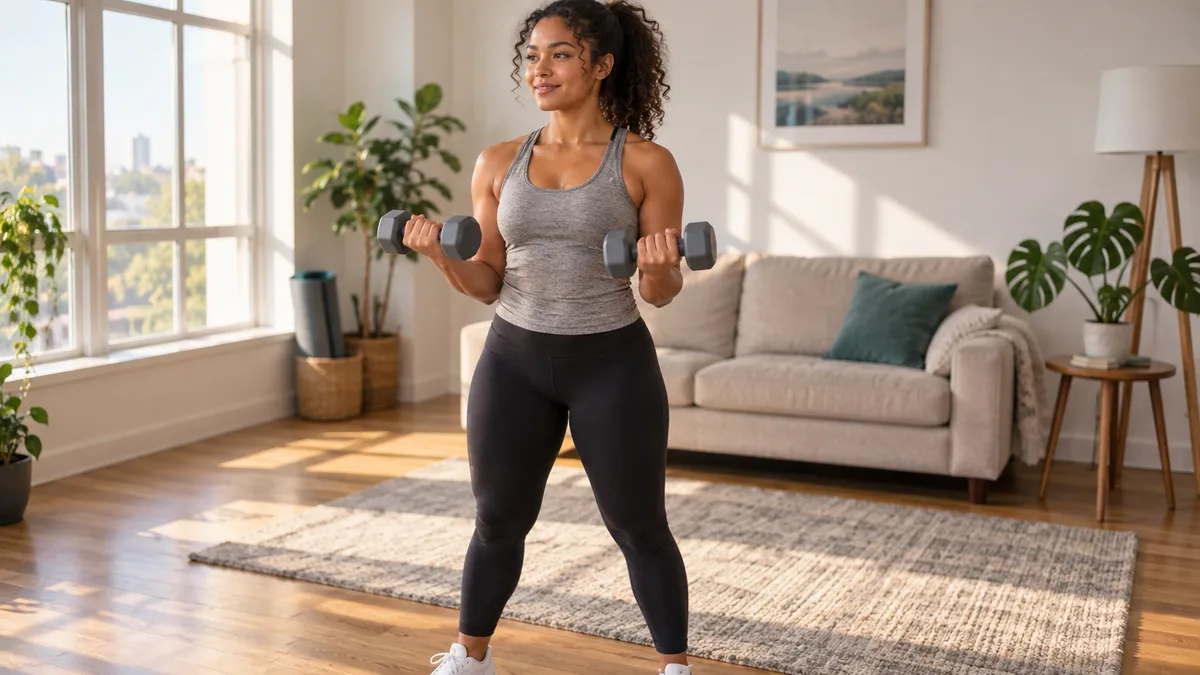
You bought the dumbbells. They sat in the corner for three weeks. Maybe you tried a random YouTube workout, felt completely wrecked the next day, and quietly decided “working out at home just isn’t for me.” Sound familiar?
Here’s the thing: the problem was never you. The problem was a routine designed by someone who already benches 225 and forgot what it feels like to start from scratch. You need a beginner upper body dumbbell workout that respects where you are right now, builds real strength, and doesn’t make you dread every session.
That’s what I’m laying out here. No ego. No impossible rep schemes. Just a straightforward, effective upper body workout at home with dumbbells that beginners can genuinely follow week after week.
Why most beginner upper body routines fall apart
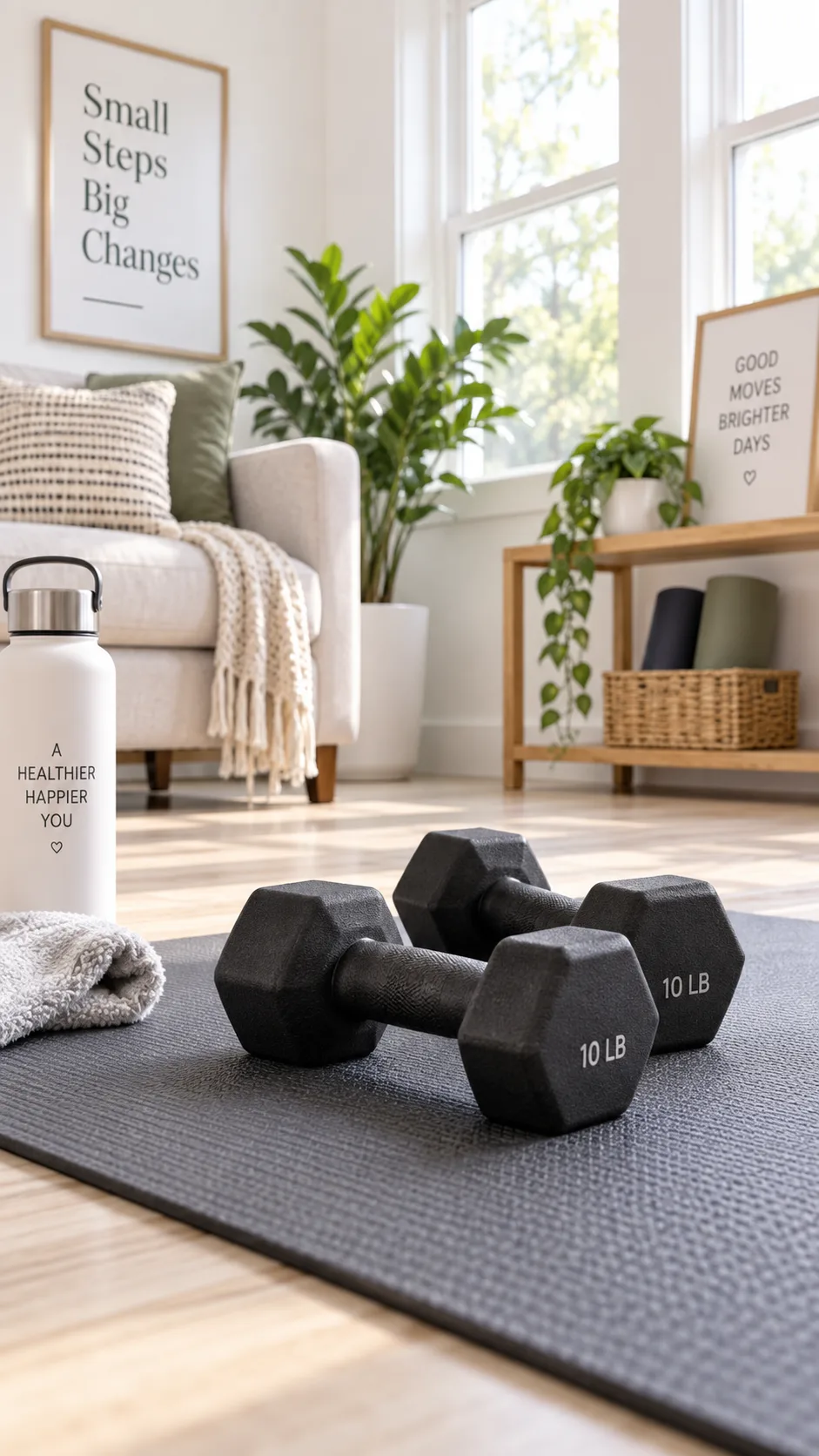
Most beginner routines fail because they aren’t beginner routines at all. They throw 8 to 10 exercises at you, demand perfect form on movements you’ve never tried, and expect you to carve out 60+ minutes from your day. Who has that kind of time and motivation on week one?
Complexity kills consistency. A study from the American College of Sports Medicine found that program adherence drops significantly when exercise routines feel overwhelming or overly time-consuming. The sweet spot for beginners? Shorter sessions with fewer exercises performed well.
The second killer? Soreness that makes you walk around like a T-Rex for four days. Beginners who go too hard in their first session rarely come back for a second one. Your muscles need a gentle introduction, not a full-blown ambush.
What you need to get started
Good news: your equipment list is refreshingly short.
- Two pairs of dumbbells: One lighter set (5 to 10 lbs) and one moderate set (10 to 20 lbs). Adjustable dumbbells work great if you want to save space.
- A flat surface: A bench helps but isn’t mandatory. Your floor works perfectly fine.
- A towel or yoga mat: For floor-based movements so your spine doesn’t hate you.
- About 25 to 30 minutes: That’s it. Seriously.
You don’t need a cable machine, a pull-up bar, or a $2,000 home gym setup. Two dumbbells and a little floor space will take you further than you think. If you’re also looking for structured guidance on getting started at the gym, check out this gym routine for beginners workout plan for a clear, step-by-step approach.
The complete upper body workout at home dumbbell routine
This routine targets your chest, back, shoulders, biceps, and triceps in one efficient session. Every exercise uses dumbbells only, and I’ve ordered them so that compound movements come first (which work multiple muscle groups), followed by isolation exercises (which target one specific area).
Why that order? Because compound lifts demand the most energy and coordination. You want fresh muscles for those. Save the bicep curls for when you’re already warmed up and slightly fatigued.
Quick warm-up (3 to 5 minutes)
Never skip this. Cold muscles don’t perform well, and cold joints complain loudly the next morning.
- Arm circles: 20 seconds forward, 20 seconds backward
- Band pull-aparts or towel pull-aparts: 15 reps (hold a towel shoulder-width and pull outward)
- Shoulder pass-throughs: 10 slow reps with a towel or broomstick
- Bodyweight push-ups or wall push-ups: 8 to 10 reps to activate your chest and triceps
This takes under five minutes and makes a massive difference in how your workout feels. The Mayo Clinic confirms that dynamic warm-ups increase blood flow to muscles and improve range of motion, reducing injury risk.
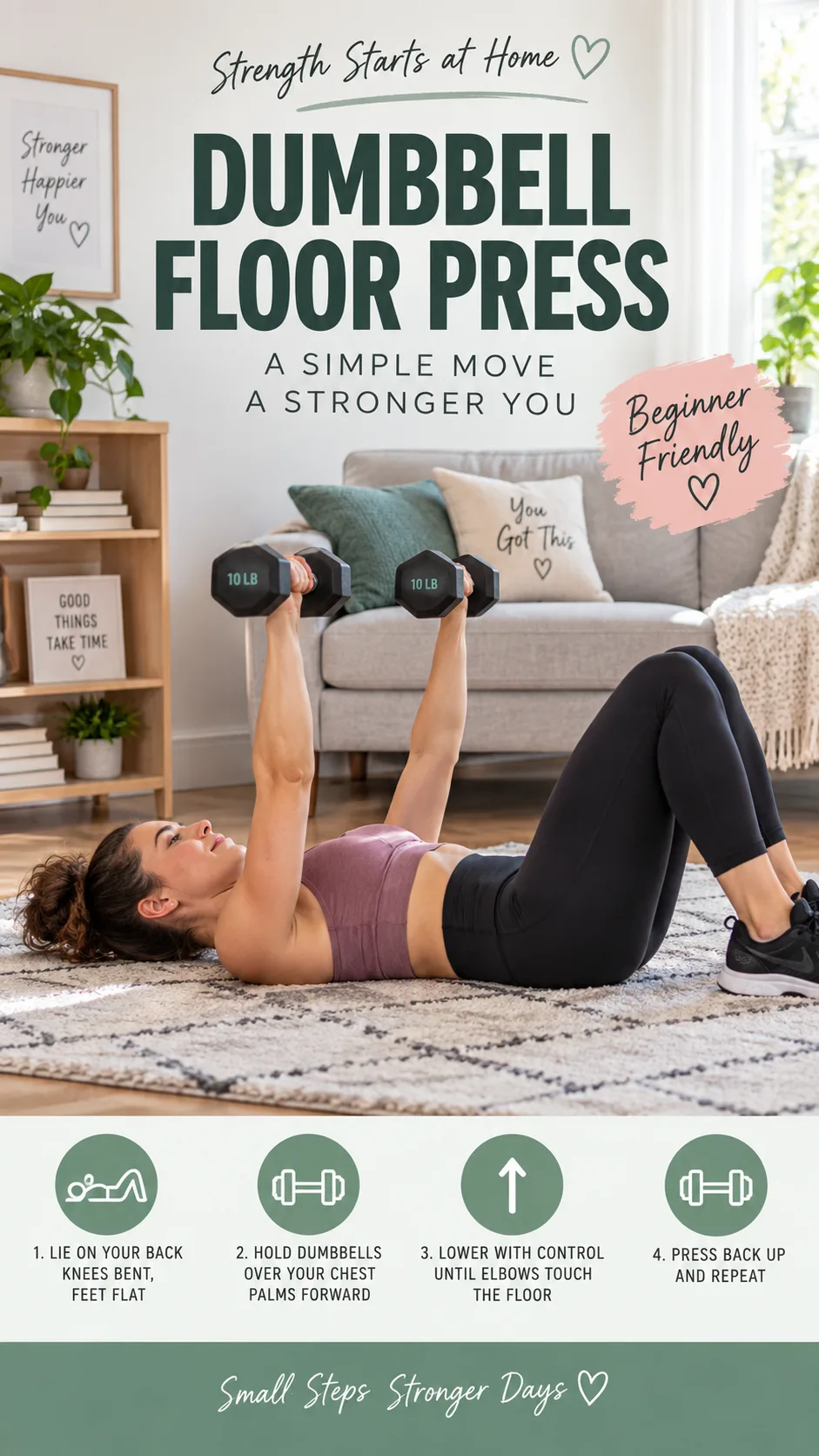
Exercise 1: Dumbbell floor press
Targets: Chest, triceps, front shoulders
Lie flat on your back with knees bent, feet flat on the floor. Hold a dumbbell in each hand with arms extended above your chest. Lower the weights until your upper arms gently touch the floor, then press back up. That’s one rep.
Sets: 3 | Reps: 10 to 12 | Rest: 60 seconds
The floor press is a beginner’s best friend because the floor acts as a natural safety net. Your elbows can’t drop below your body, which protects your shoulders. No bench? No problem.
Exercise 2: Single-arm dumbbell row
Targets: Upper back, lats, biceps
Place one hand and one knee on a sturdy chair or couch for support. With your free hand, hold a dumbbell and let it hang straight down. Pull the weight toward your hip, squeezing your shoulder blade at the top. Lower with control.
Sets: 3 per arm | Reps: 10 to 12 | Rest: 60 seconds
Ever notice how so many beginners focus exclusively on “mirror muscles” (chest and arms) while ignoring their back entirely? Don’t make that mistake. A strong back improves your posture, protects your shoulders, and makes every other upper body exercise easier.
Exercise 3: Dumbbell overhead press
Targets: Shoulders (all three heads), triceps, upper chest
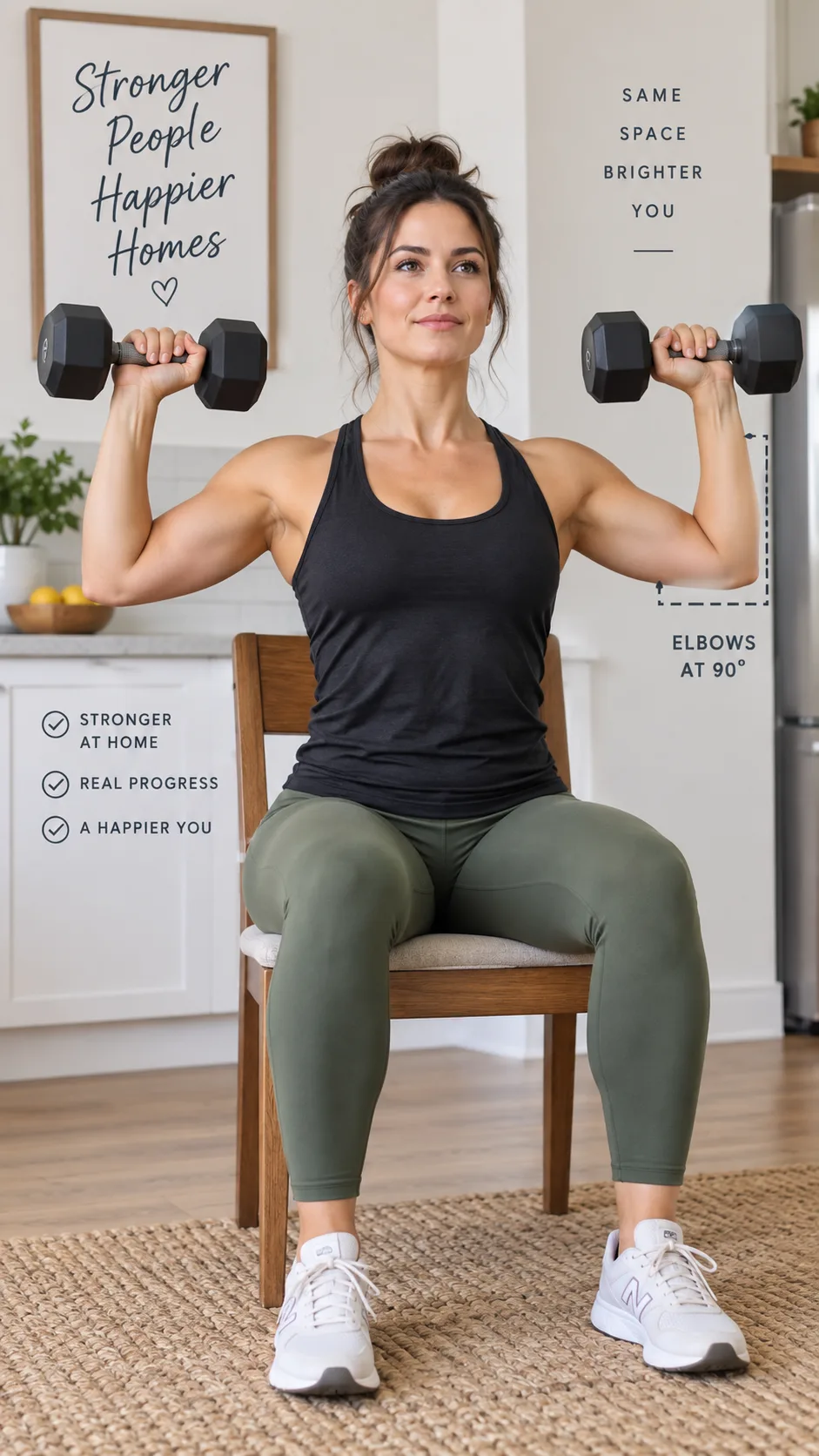
Sit or stand with a dumbbell in each hand at shoulder height, palms facing forward. Press both dumbbells straight overhead until your arms lock out. Lower them back to shoulder height under control.
Sets: 3 | Reps: 8 to 10 | Rest: 60 to 90 seconds
If you feel lower back strain while standing, sit on a chair with your back supported. There’s zero shame in the seated version. It isolates your shoulders better because you can’t use leg drive to cheat.
Exercise 4: Dumbbell reverse fly
Targets: Rear delts, upper back, rhomboids
Hinge forward at the hips with a slight bend in your knees, dumbbells hanging below your chest. Raise both arms out to the sides like you’re spreading wings, squeezing your shoulder blades together at the top. Lower slowly.
Sets: 3 | Reps: 12 to 15 | Rest: 45 seconds
Use your lighter dumbbells here. This exercise humbles everyone. Your rear delts are small muscles, and even 5-pound dumbbells will feel surprisingly challenging for 15 reps. IMO, the reverse fly is the single most underrated exercise for beginners who sit at desks all day.
Exercise 5: Dumbbell bicep curls
Targets: Biceps (obviously)
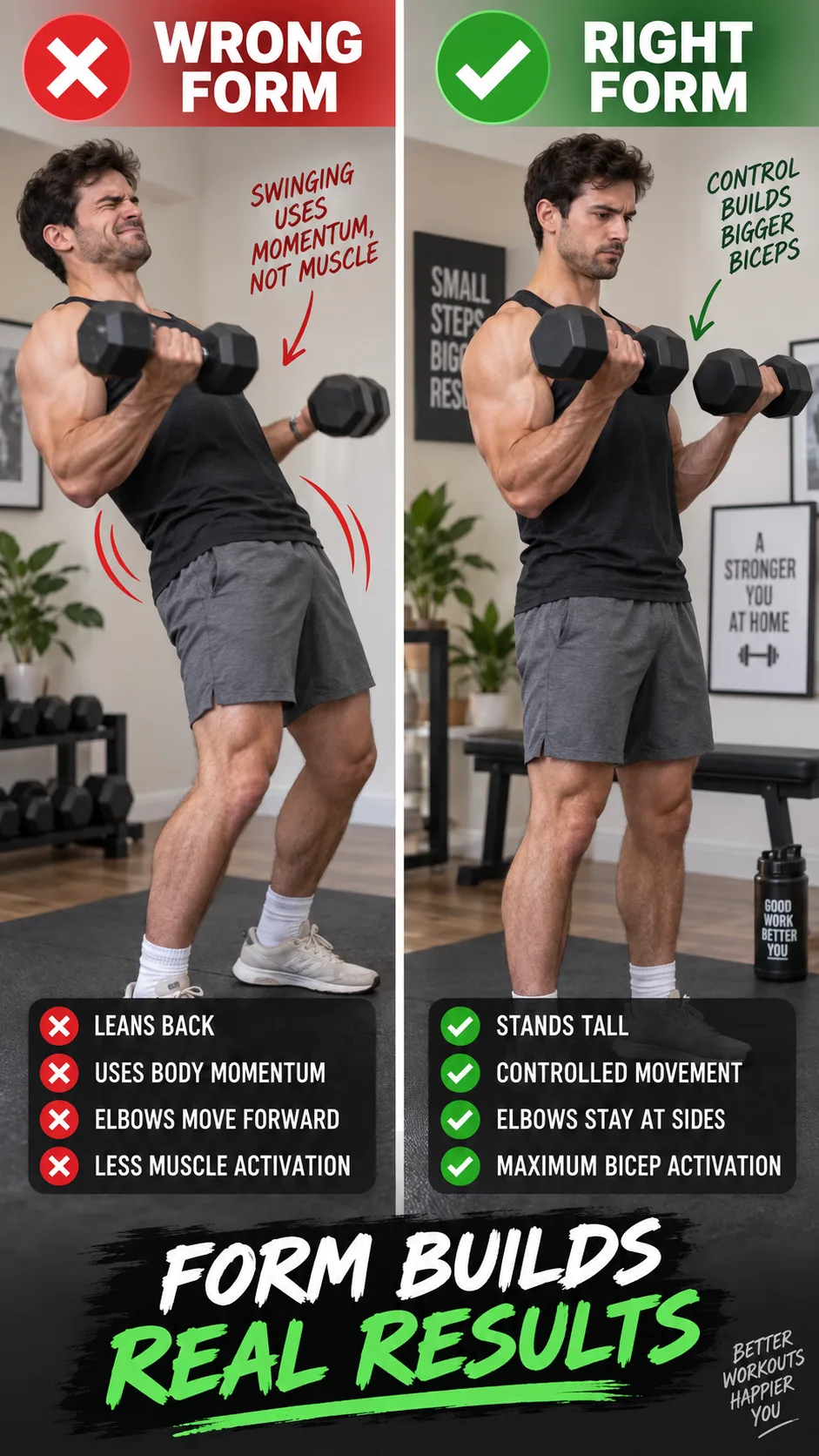
Stand tall with a dumbbell in each hand, palms facing forward. Curl both dumbbells up toward your shoulders without swinging your body. Squeeze at the top, then lower slowly. The lowering part builds just as much muscle as the lifting part.
Sets: 3 | Reps: 10 to 12 | Rest: 45 seconds
A quick form check: if your entire body rocks back and forth during curls, the weight is too heavy. Drop down. Your biceps should do the work, not momentum.
Exercise 6: Overhead dumbbell tricep extension
Targets: Triceps (all three heads)
Hold one dumbbell with both hands behind your head, elbows pointing toward the ceiling. Extend the weight straight up by straightening your arms, keeping your elbows close to your ears. Lower back down behind your head with control.
Sets: 3 | Reps: 10 to 12 | Rest: 45 seconds
Your triceps make up roughly two-thirds of your upper arm mass. So if you want arms that look toned, tricep work matters more than endless curls. Science says so, and your mirror will confirm it within a few weeks.
The full routine at a glance
- Dumbbell Floor Press: 3 x 10 to 12
- Single-Arm Dumbbell Row: 3 x 10 to 12 per arm
- Dumbbell Overhead Press: 3 x 8 to 10
- Dumbbell Reverse Fly: 3 x 12 to 15
- Dumbbell Bicep Curls: 3 x 10 to 12
- Overhead Tricep Extension: 3 x 10 to 12
Total time: 25 to 30 minutes including warm-up. That’s shorter than most Netflix episodes. You can absolutely find 30 minutes.
The weekly schedule that won’t burn you out
Here’s where most beginners go wrong: they do too much, too soon. Your muscles need 48 to 72 hours of recovery between sessions targeting the same body parts, according to the American Council on Exercise.
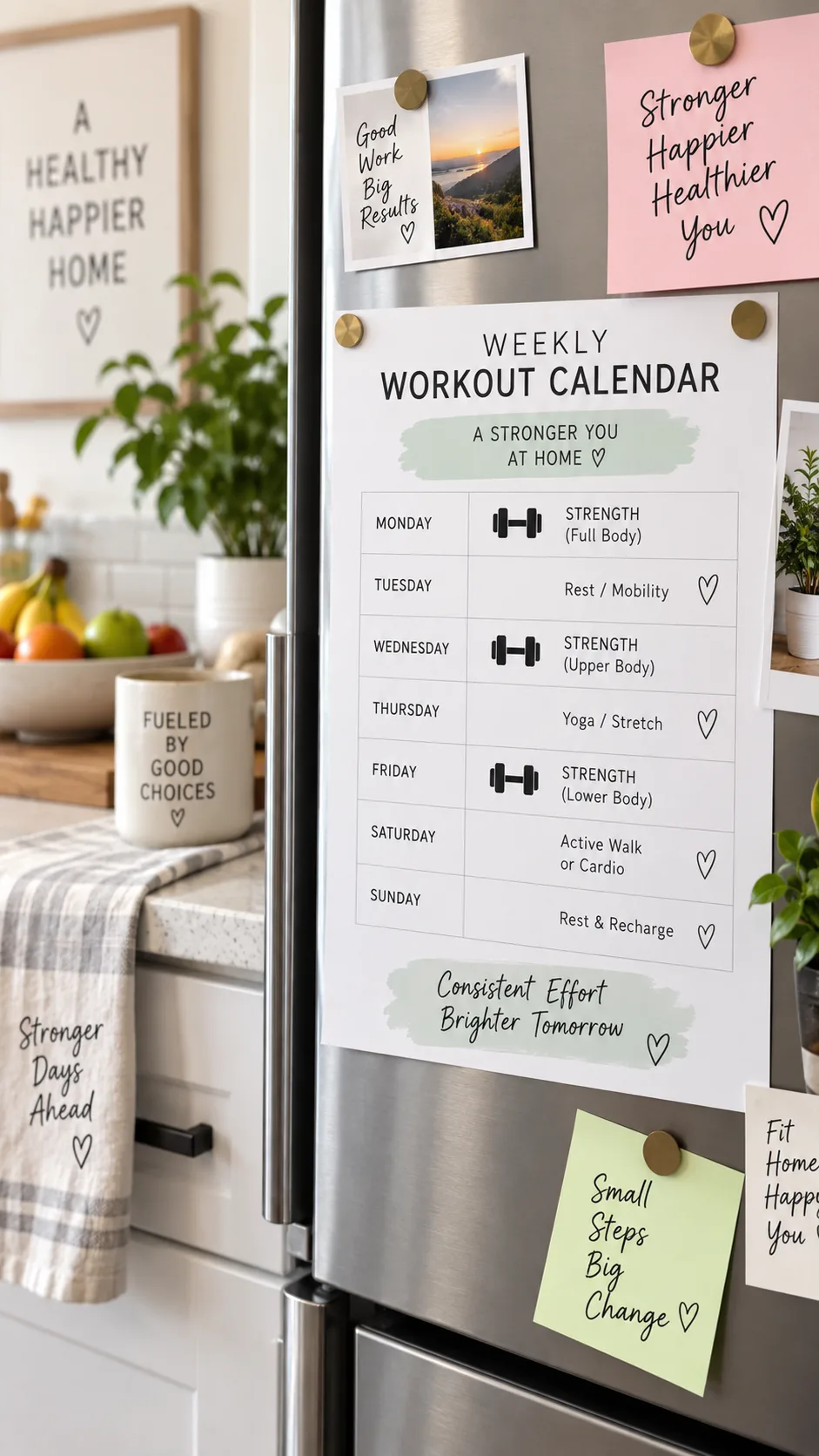
For your first month, follow this simple schedule:
- Monday: Upper body dumbbell workout (this routine)
- Wednesday: Upper body dumbbell workout (this routine)
- Friday: Upper body dumbbell workout (this routine)
- Tuesday/Thursday/Weekend: Rest, light walking, or a mat Pilates workout for active recovery
Three days per week. That’s the magic number for beginners. It provides enough stimulus to build strength and muscle without crushing your recovery capacity. Once you’ve been consistent for 6 to 8 weeks, you can consider adding a fourth day or splitting your routine into push/pull days.
Form tips that save your joints (and your pride)
Bad form doesn’t just look awkward. It redirects stress to joints and tendons that weren’t designed to handle it. Here are the non-negotiable form rules for every exercise in this routine:
- Control the lowering phase. Take 2 to 3 seconds to lower every rep. If you drop the weight like a hot potato, you’re robbing yourself of half the muscle-building benefit.
- Keep your core braced. Imagine someone is about to poke you in the stomach. That slight brace protects your lower back during overhead presses and rows.
- Don’t shrug your shoulders to your ears. During presses and flys, actively pull your shoulders down and back. This keeps the tension in the right muscles and off your neck.
- Breathe properly. Exhale during the hard part (pushing or pulling the weight). Inhale during the easy part (lowering it). Holding your breath during reps raises blood pressure unnecessarily.
- Stop before failure on every set. Leave 1 to 2 reps “in the tank.” You should finish each set thinking “I could’ve done two more.” Training to absolute failure as a beginner just creates excessive soreness and slows recovery.
FYI, filming yourself with your phone propped up is one of the fastest ways to spot form issues. You’ll catch things you’d never feel in the moment, like that sneaky lower back arch during overhead presses.
How to progress without overcomplicating things
Your muscles adapt. That’s literally their job. So the weights that challenge you in week one will feel easy by week four. Here’s your simple progression plan:
The “two for two” rule
If you can complete two extra reps beyond your target on the last set for two consecutive workouts, increase the weight by 2 to 5 pounds. For example, if your target is 10 reps on floor press and you hit 12 reps on your last set two sessions in a row, go heavier next time.
This method comes from respected strength coaches and prevents the common mistake of jumping weight too aggressively. Small, consistent increases add up to massive progress over months.
When heavier dumbbells aren’t available
Maybe you only own two pairs of dumbbells and buying more isn’t in the budget right now. No worries. You have options:
- Slow down your reps. A 4-second lowering phase turns a light weight into a serious challenge.
- Add a pause. Hold the bottom position of each rep for 2 seconds before pressing back up.
- Increase total reps. Push from 10 to 15 reps per set before considering heavier weights.
- Shorten rest periods. Cutting rest from 60 seconds to 30 or 40 seconds increases the metabolic demand significantly.
Every one of these strategies increases the difficulty without adding a single pound. Your muscles don’t count plates. They respond to tension, time under load, and effort.
Common mistakes beginners make (and how to dodge them)
I’ve watched friends, family members, and online coaching clients make the same errors repeatedly. Here’s the shortlist so you can skip the learning curve:
Mistake #1: Skipping back exercises. Your upper back muscles are essential for posture, shoulder health, and balanced aesthetics. The single-arm row and reverse fly in this routine exist for a reason. Don’t skip them because they’re “not exciting.” 🙂
Mistake #2: Using the same weight for everything. Your shoulders are significantly weaker than your chest. Your rear delts are weaker than your biceps. Match the weight to the exercise, not your ego.
Mistake #3: Working out every single day. Muscle grows during rest, not during the workout itself. The workout creates the stimulus; sleep and recovery create the results. Training upper body five days a week as a beginner doesn’t make you dedicated. It makes you overtrained.
Mistake #4: Neglecting nutrition entirely. You can’t out-train a terrible diet. If you’re eating mostly processed junk, your recovery will suffer and your results will stall quickly. You don’t need a strict diet, just a solid foundation. A clean eating meal plan for beginners pairs perfectly with this workout routine.
Mistake #5: Program hopping. Switching routines every two weeks because you saw something flashier on Instagram guarantees you’ll never progress. Stick with this routine for at least 8 weeks before changing anything. Consistency beats novelty every time.
What results can you realistically expect?
Let me set honest expectations because nothing derails motivation faster than unrealistic ones.
Weeks 1 to 2: You’ll feel slightly sore after each session (normal and temporary). Your coordination with the dumbbells will improve noticeably. Strength gains come primarily from your nervous system learning the movement patterns.
Weeks 3 to 4: Soreness decreases. Weights that felt heavy start feeling manageable. You’ll begin adding reps or weight. This is where habits start forming.
Weeks 5 to 8: Visible changes begin. Your arms look slightly more defined, your shoulders feel broader, and your posture improves. According to Harvard Health, beginners can expect noticeable strength increases of 25 to 100% within two to three months of consistent resistance training.
Beyond 8 weeks: You’ll likely need heavier dumbbells or more advanced programming. That’s a great problem to have, because it means the routine worked.
Scaling this routine up (when you’re ready)
After two solid months, you might want more volume or variety. Here are smart next steps:
- Split your training. Dedicate separate days to push muscles (chest, shoulders, triceps) and pull muscles (back, biceps). This lets you add more exercises per muscle group without marathon sessions.
- Add a lower body day. Your legs deserve attention too. A full-body approach builds a balanced physique and boosts overall metabolism.
- Introduce new exercises. Dumbbell pullovers, hammer curls, lateral raises, and close-grip floor presses keep things fresh without requiring new equipment.
- Consider a structured split. If you’re a woman looking for a well-organized gym program, this 3-day split workout for women offers a logical next step.
The same principle applies at every level: progressive overload. Do a little more over time. More weight, more reps, more sets, or better form. That’s the entire secret to getting stronger.
Why this routine works when others haven’t
This isn’t some revolutionary training method. There’s no trademarked name or overpriced PDF. What makes this upper body dumbbell workout for beginners effective comes down to a few simple things:
- It’s short enough to do. Thirty minutes, three times a week. Even on your busiest, most chaotic days, you can find half an hour.
- It covers every major upper body muscle group. Chest, back, shoulders, biceps, triceps. Nothing gets neglected, nothing gets overworked.
- It builds gradually. The progression system means you’re always moving forward without taking dangerous leaps that lead to injury or burnout.
The best workout program in the world is worthless if you quit after two weeks. The best program is the one you do. This one respects your time, your current fitness level, and your life outside the living room.
Your next move
You’ve got the routine. You’ve got the schedule. You know the form cues and the progression plan. The only thing left? Starting.
Pick up those dumbbells collecting dust in the corner. Set a timer. Do the warm-up. Knock out the six exercises. It will take you less time than scrolling through workout options online ever did.
Bookmark this page, screenshot the exercise list, or write it on a sticky note and slap it on your fridge. Whatever works for you, just make sure Monday becomes Day 1, not “someday.” Your future self, the one with better posture, stronger arms, and way more confidence, will thank you for starting today.
