
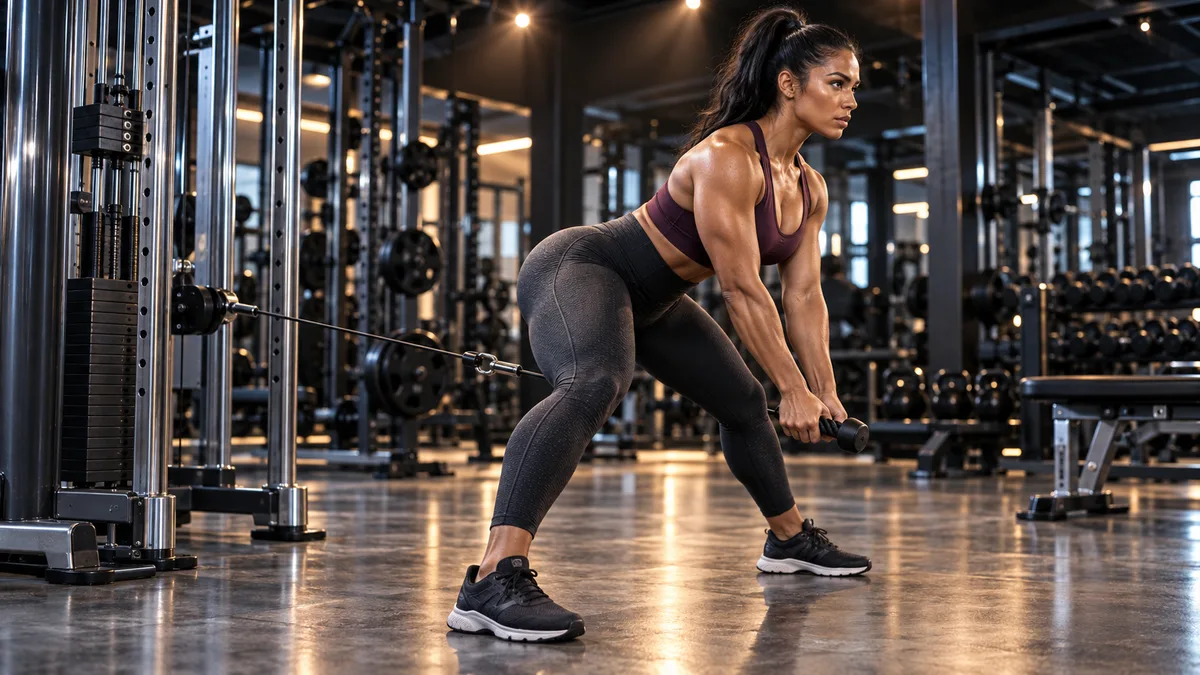
Your leg day is getting stale. You’ve squatted, lunged, and leg-pressed your way through every routine imaginable, and your muscles have noticed. They’re bored. The cable machine is the most underrated piece of equipment in your gym, and it’s about to completely change the way you train your lower body.
Unlike dumbbells and barbells that only fight gravity in one direction, cables provide constant tension through the entire range of motion. That means your glutes, quads, and hamstrings never get a break during a rep. Sound brutal? It is. In the best way possible.
I spent years ignoring the cable machine for leg work, treating it like it was only good for tricep pushdowns and face pulls. Huge mistake. Once I started incorporating cable leg exercises, I noticed muscle activation I’d never felt from free weights alone. So let me walk you through 10 exercises that’ll make your lower body stronger, more sculpted, and way more functional.
Why the cable machine deserves a spot in your leg day
Before we get to the exercises, let’s talk about WHY cables work so well for legs. Free weights are great, but they have a limitation: gravity only pulls straight down. Cables let you load muscles from angles that barbells and dumbbells simply can’t reach.
Ever tried to isolate your glute medius with a barbell? Good luck. A cable hip abduction does it effortlessly. That constant tension I mentioned earlier also means there’s no “dead zone” in the movement where the muscle gets to coast. The American Council on Exercise (ACE) has noted that maintaining tension throughout the full range of motion is one of the primary drivers of muscle hypertrophy.
Cables are also incredibly joint-friendly. The smooth, guided resistance puts far less stress on your knees and hips compared to heavy barbell movements. If you’ve ever felt tweaky doing heavy squats, cable work gives your joints a much-needed break while still challenging the muscles intensely.
What you’ll need
- A cable machine (single or dual pulley, both work)
- An ankle strap attachment (non-negotiable for most of these exercises)
- A straight bar or rope attachment for a few variations
- About 30 to 40 minutes of focused work
If your gym has a functional cable trainer with adjustable pulleys, you’ve hit the jackpot. But even a standard lat pulldown/low row station will work for most of these movements.
The 10 best cable machine leg exercises
Here’s the full lineup. I’ve organized them by primary muscle group so you can mix and match based on what you want to target. Feel free to pick 4 to 6 exercises for a single session rather than cramming all 10 in.
Glute-focused exercises
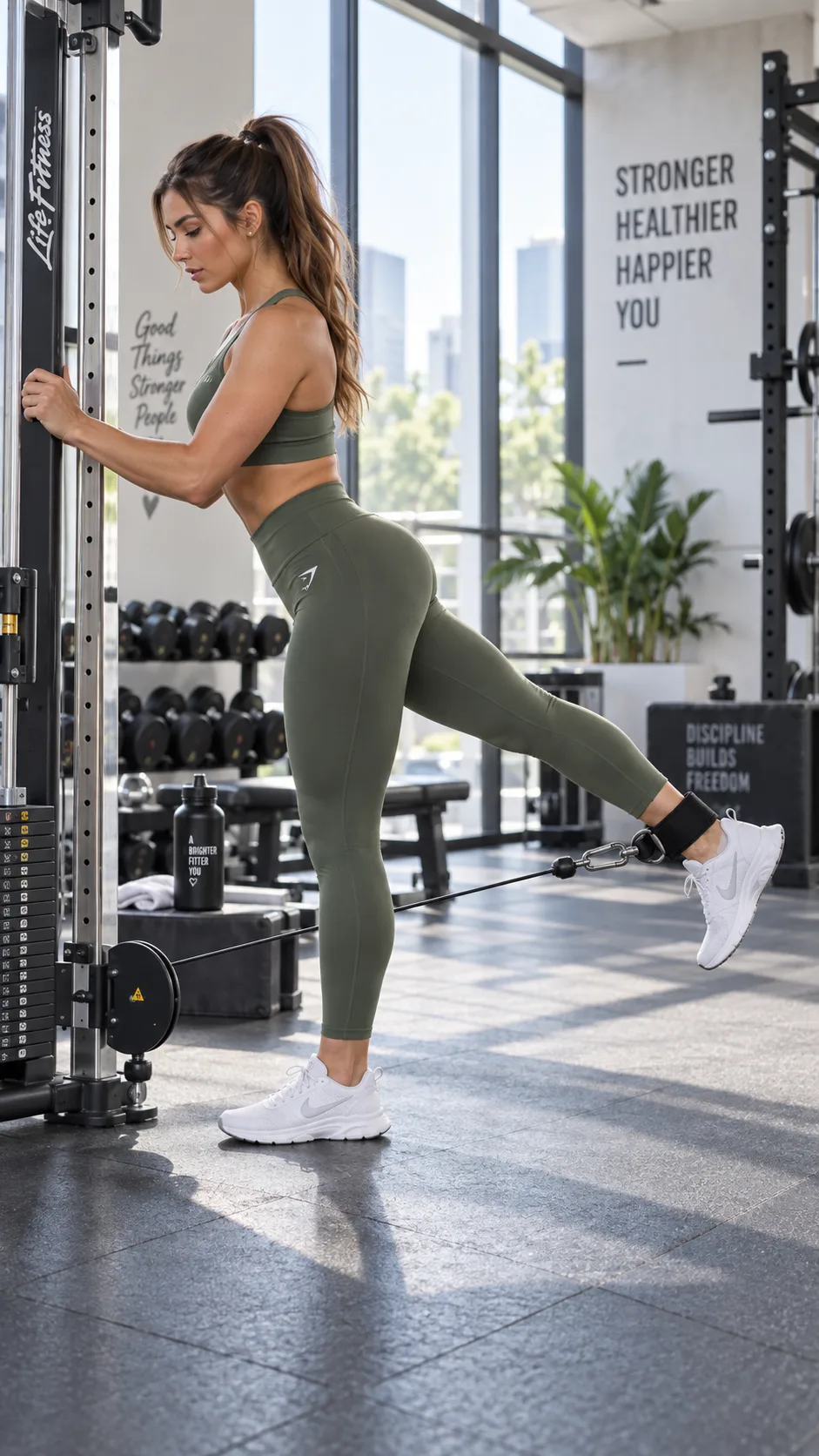
1. Cable kickbacks
The bread and butter of cable glute training. Attach the ankle strap to a low pulley, face the machine, and extend your leg straight back while keeping your core tight. Squeeze at the top for a full second. Don’t just swing the weight.
Keep your working leg slightly bent and focus on driving through the heel. If you’re arching your lower back to get the leg higher, the weight is too heavy. Drop the ego, drop the weight, and feel the glute do ALL the work. Aim for 3 sets of 12 to 15 reps per leg.
2. Cable pull-through
Think of this as a hip hinge that keeps your glutes under tension the entire time. Stand facing away from a low pulley with a rope attachment between your legs. Hinge at the hips, let the cable pull your hands back through your legs, then drive your hips forward to standing.
This exercise absolutely torches your glutes and hamstrings simultaneously. It’s also one of the best ways to learn proper hip hinge mechanics if you struggle with Romanian deadlifts. Start with 3 sets of 10 to 12 reps and really focus on that powerful hip snap at the top.
3. Cable hip abduction
Want to build that side-glute shelf? This is your move. Attach the ankle strap to the leg farthest from the machine and drive your leg out to the side against the resistance. Your glute medius, that often-neglected muscle on the outer hip, does all the heavy lifting here.
Stand tall, hold the machine for balance, and avoid leaning excessively to the side. Control the negative (the return) just as much as the lift. Your side glutes should be on fire by rep 10. Go for 3 sets of 15 reps per side.
Quad-focused exercises
4. Cable squats
Grab a rope or straight bar from a low pulley, step back to create tension, and squat. What makes this different from a regular squat? The cable pulls you slightly forward, which forces your quads to work overtime to keep you upright. It’s sneakily harder than it looks.
Keep your chest up and sit your hips back and down. Go as deep as your mobility allows, parallel or below. This variation is fantastic for people who tend to lean too far forward in traditional squats. Try 3 sets of 12 reps.
5. Cable leg extension (standing)
No leg extension machine available? No problem. Attach an ankle strap to a low pulley, face away from the machine, and extend your lower leg forward against the resistance. You’ll feel your quads light up immediately, especially that teardrop muscle (vastus medialis) near your knee.
Balance on one leg, keep your thigh stationary, and only move from the knee down. This isolation exercise is perfect as a finisher after your compound movements. Hit 3 sets of 15 reps per leg and prepare to wobble on the walk home.
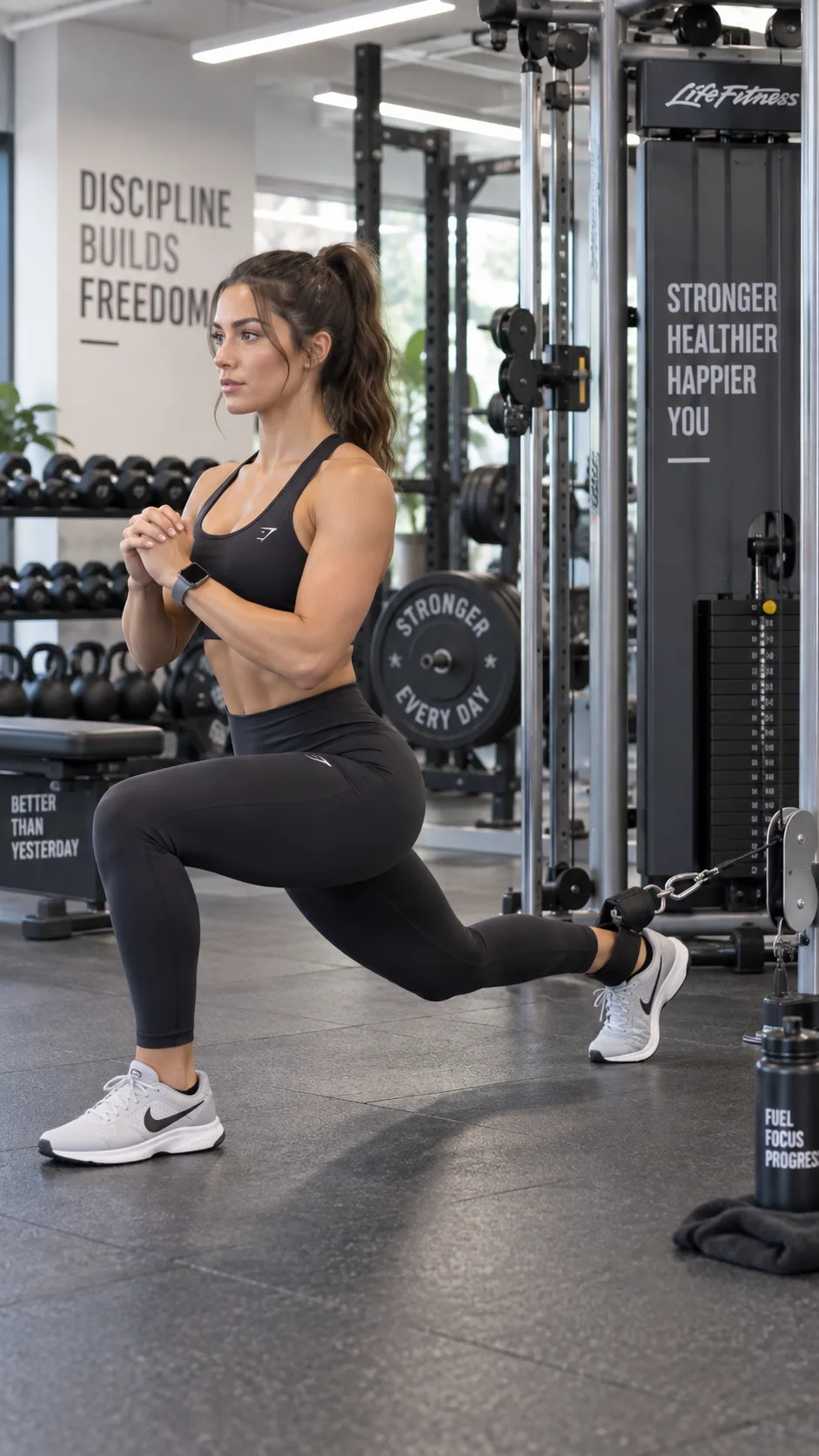
6. Cable reverse lunge
Hold a cable handle at chest height from a mid-level pulley and step backward into a lunge. The forward-pulling resistance creates an interesting challenge: your front quad has to work harder to decelerate and stabilize your body.
Reverse lunges are generally easier on your knees than forward lunges, and the cable adds a unique stability demand. Keep your front shin as vertical as possible and drive up through the heel. 3 sets of 10 reps per leg will do the trick. If you enjoy lunge variations, check out this full leg workout routine for even more ideas.
Hamstring-focused exercises
7. Cable Romanian deadlift
Stand facing a low pulley with a straight bar attachment. Keep a slight bend in your knees and hinge forward at the hips, letting the bar slide down your thighs. You should feel an intense stretch in your hamstrings before driving your hips forward to return to standing.
The cable version provides a different resistance curve than the barbell RDL. The tension stays constant at the bottom of the movement where your hamstrings are most stretched. That’s where muscle growth happens. Research from the Journal of Strength and Conditioning Research consistently shows that training muscles at longer lengths produces superior hypertrophy. Aim for 3 sets of 10 to 12 reps.
8. Cable hamstring curl (standing)
Attach the ankle strap, face the machine, and curl your heel toward your glute against the resistance. Simple, effective, and incredibly targeted. This isolates the hamstrings without involving the glutes much at all.
The most common mistake here? Going too fast. Use a 2-second concentric (curl up) and a 3-second eccentric (lower down) tempo. Your hamstrings will thank you. Eventually. Maybe not tomorrow morning, though. Go with 3 sets of 12 to 15 reps per leg.
Full lower body cable exercises
9. Cable lateral lunge
Hold a handle from a low pulley at your chest and step laterally into a side lunge. This hits your inner thighs (adductors), quads, AND glutes in one fluid movement. It also challenges your stability and mobility in the frontal plane, something most leg workouts completely ignore.
Push your hips back as you step out, keep the trailing leg straight, and drive back to center through the working heel. If you sit at a desk all day, this exercise will expose just how tight your hips have become. Hit 3 sets of 10 reps per side.
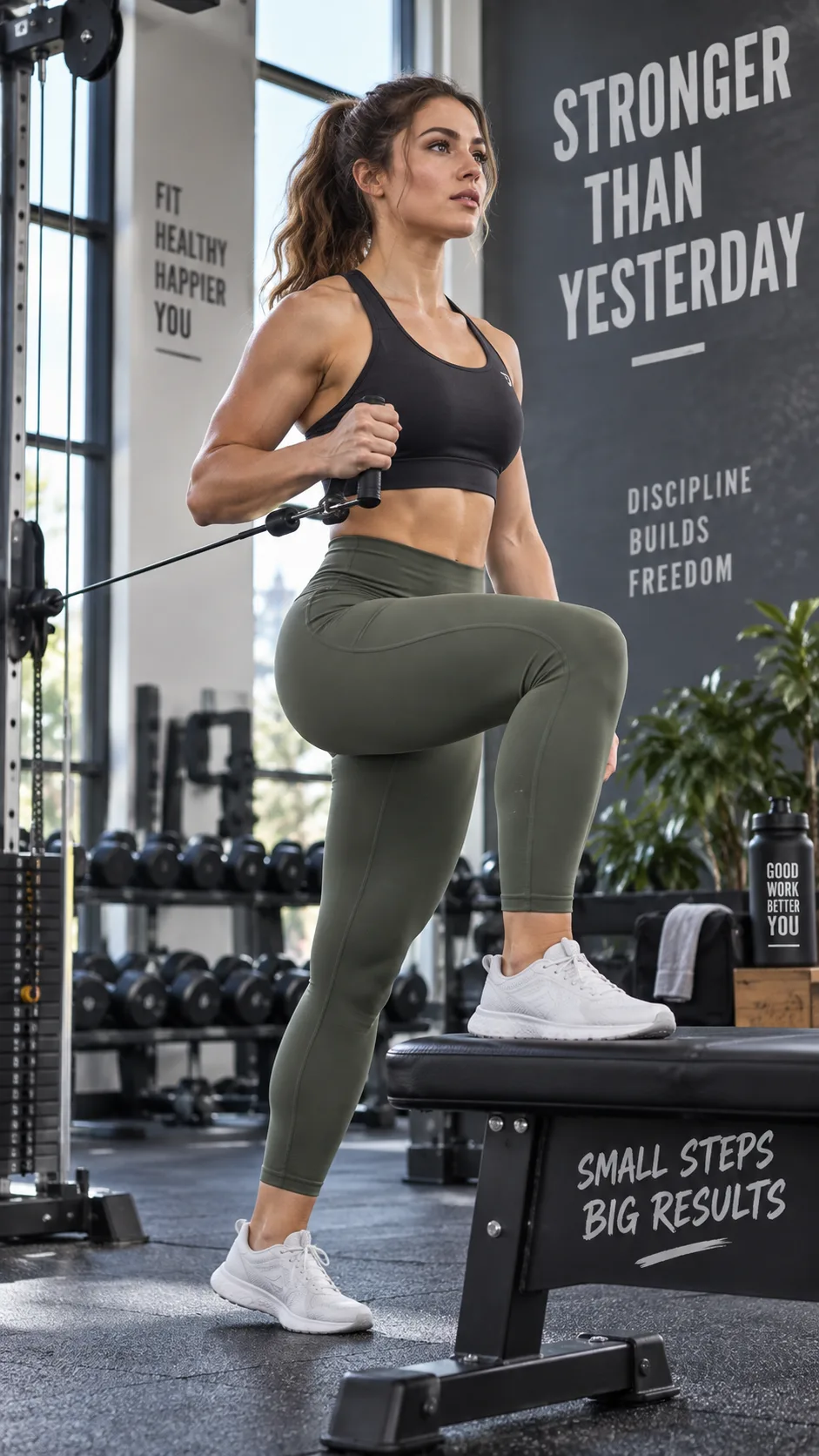
10. Cable step-up
Place a bench or step in front of a low pulley. Hold the cable handle at your sides or at chest height and step up onto the platform, driving through your front foot. This is one of the most functional lower body exercises you can do because it mimics real-life movement patterns like climbing stairs or hiking.
The cable adds posterior resistance that makes your quads and glutes fight harder at every point of the step. Use a platform height where your thigh reaches parallel. Too high and you’ll compensate with your lower back. 3 sets of 10 reps per leg at a controlled pace.
Sample cable machine leg workout routine
Want a ready-to-go session? Here’s a balanced routine that hits all three major muscle groups:
- Cable Squats — 3 x 12
- Cable Romanian Deadlift — 3 x 10
- Cable Reverse Lunge — 3 x 10 per leg
- Cable Kickbacks — 3 x 15 per leg
- Cable Hamstring Curl — 3 x 12 per leg
- Cable Hip Abduction — 3 x 15 per side
Rest 60 to 90 seconds between sets. The whole workout should take about 35 to 45 minutes. Start with a lighter weight than you think you need. Cables have a way of humbling you when constant tension enters the chat.
If you’re looking for a complementary routine to alternate with this one, a Smith machine leg workout pairs beautifully. Use the Smith machine for your heavy compound days and the cables for hypertrophy and isolation work.
Pro tips to maximize your cable leg workout
Mind-muscle connection matters MORE with cables than with free weights. Because the machine handles the stabilization, you need to consciously focus on squeezing the target muscle. Don’t just go through the motions. Own every rep.
Here are a few more tips I’ve learned the hard way:
- Adjust the pulley height for each exercise. Low for most leg work, mid for lunges and squats.
- Don’t stand too close to the machine. Step back enough to maintain tension even at the starting position.
- Use slow eccentrics (3 to 4 seconds on the lowering phase) to amplify time under tension.
- Superset opposing movements. Pair cable leg extensions with cable hamstring curls for an efficient and brutal combo.
- Progress by adding reps first, then weight. Cable movements reward volume over maximal load.
FYI, the ankle strap quality matters a LOT. Those thin, uncomfortable straps most gyms provide can dig into your ankle and completely kill your focus. Investing in a padded ankle strap (around $10 to $15) is one of the best gym purchases you’ll ever make.
Who should use cable machine leg exercises?
Almost everyone. Whether you’re a beginner learning movement patterns or an advanced lifter looking to add variety and isolation work, cables deliver. They’re especially useful for:
- Beginners who find free weight exercises intimidating or technically demanding
- People rehabbing injuries who need controlled, joint-friendly resistance
- Anyone with muscle imbalances (unilateral cable work exposes and corrects side-to-side differences fast)
- Experienced lifters who want to add training variety and hit muscles from new angles
If you’re just starting your gym journey, combining cable exercises with a solid beginner leg workout on gym machines gives you the best of both worlds: structure and variety.
Common mistakes to avoid
Using too much weight tops the list. I see it constantly. Someone loads up the cable stack for kickbacks and then uses their entire body to swing the weight. Your lower back isn’t supposed to do the work here. Drop the weight by 30%, slow down, and actually feel the muscle contract.
Other common mistakes include:
- Standing too close to the machine, which eliminates tension at the start of the movement
- Rushing through reps. Cables reward controlled, deliberate movement.
- Skipping the squeeze at peak contraction. That one-second hold at the top transforms a mediocre set into a muscle-building set.
- Only training in the sagittal plane. Make sure you include lateral movements like hip abductions and lateral lunges.
The National Strength and Conditioning Association (NSCA) emphasizes that exercise quality always trumps quantity. Ten perfect cable kickbacks beat 20 sloppy ones every single time.
How often should you do cable leg workouts?
You can comfortably include cable leg exercises 2 to 3 times per week, either as standalone sessions or woven into your existing leg day routine. Because cables are generally less taxing on the central nervous system than heavy barbell work, recovery tends to be quicker.
That said, don’t make cables your ONLY lower body training tool. They excel at isolation and moderate-load hypertrophy work, but you still want compound movements like squats, deadlifts, and hip thrusts as your foundation. Think of cable exercises as the detail work. They refine and sculpt what the big lifts build.
Wrapping it up
The cable machine is far more than a warm-up station or an afterthought. These 10 cable leg exercises target your glutes, quads, and hamstrings with constant tension, joint-friendly resistance, and angles you can’t replicate with free weights. That’s a winning combination for building stronger, more defined legs.
Start with the sample routine above, focus on form over weight, and give yourself 4 to 6 weeks to notice real changes. Your legs will look different and feel stronger. And here’s the part nobody talks about: your other lifts will improve too, because cables build the stabilizer muscles that free weights miss.
Next leg day, skip the squat rack line and head straight to the cables. Your glutes will have some very strong opinions about it the next morning, and that’s exactly the point.
