
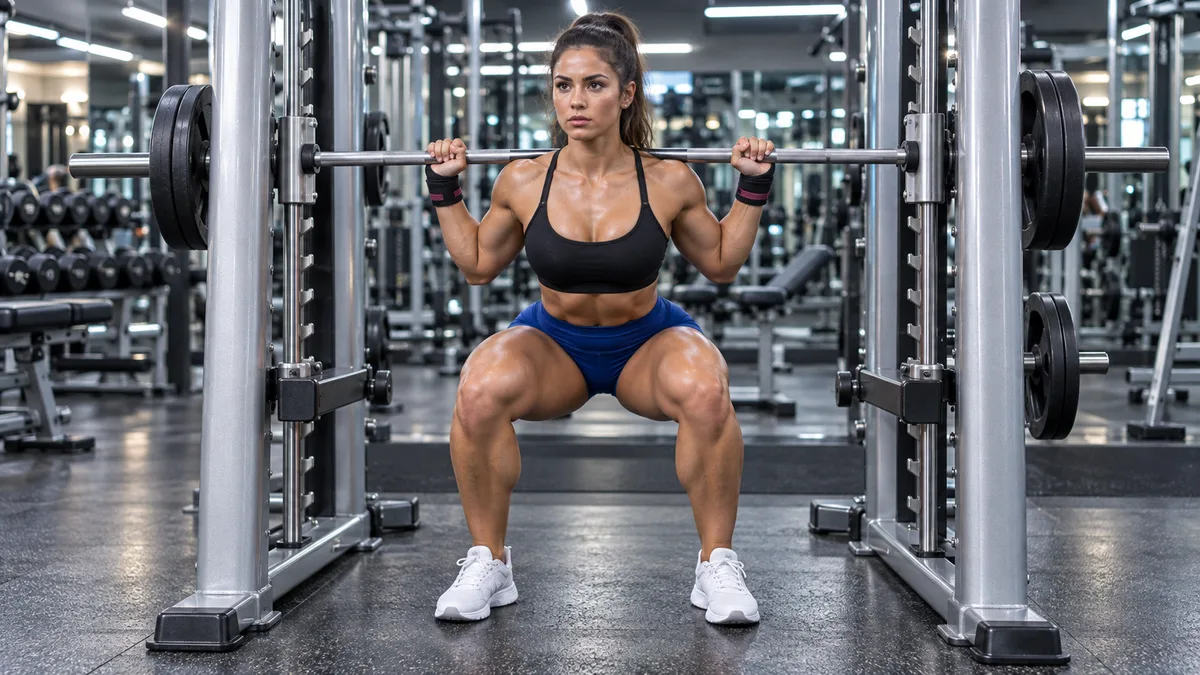
The Smith Machine is not the enemy of leg day. I know, I know. You’ve probably heard gym bros call it “the cheat machine” or say it doesn’t count as “real lifting.” But if you program it correctly, the Smith Machine can absolutely torch your quads, glutes, and hamstrings while keeping your joints happier than a free-weight-only approach ever could.
Whether you’re training solo without a spotter, rehabbing an injury, or just want to isolate specific muscles with laser-like precision, this guide breaks down seven Smith Machine leg exercises that earn their place in any serious lower body routine. Time to rethink everything you thought you knew about that guided barbell.
Why the Smith Machine deserves a spot in your leg workout
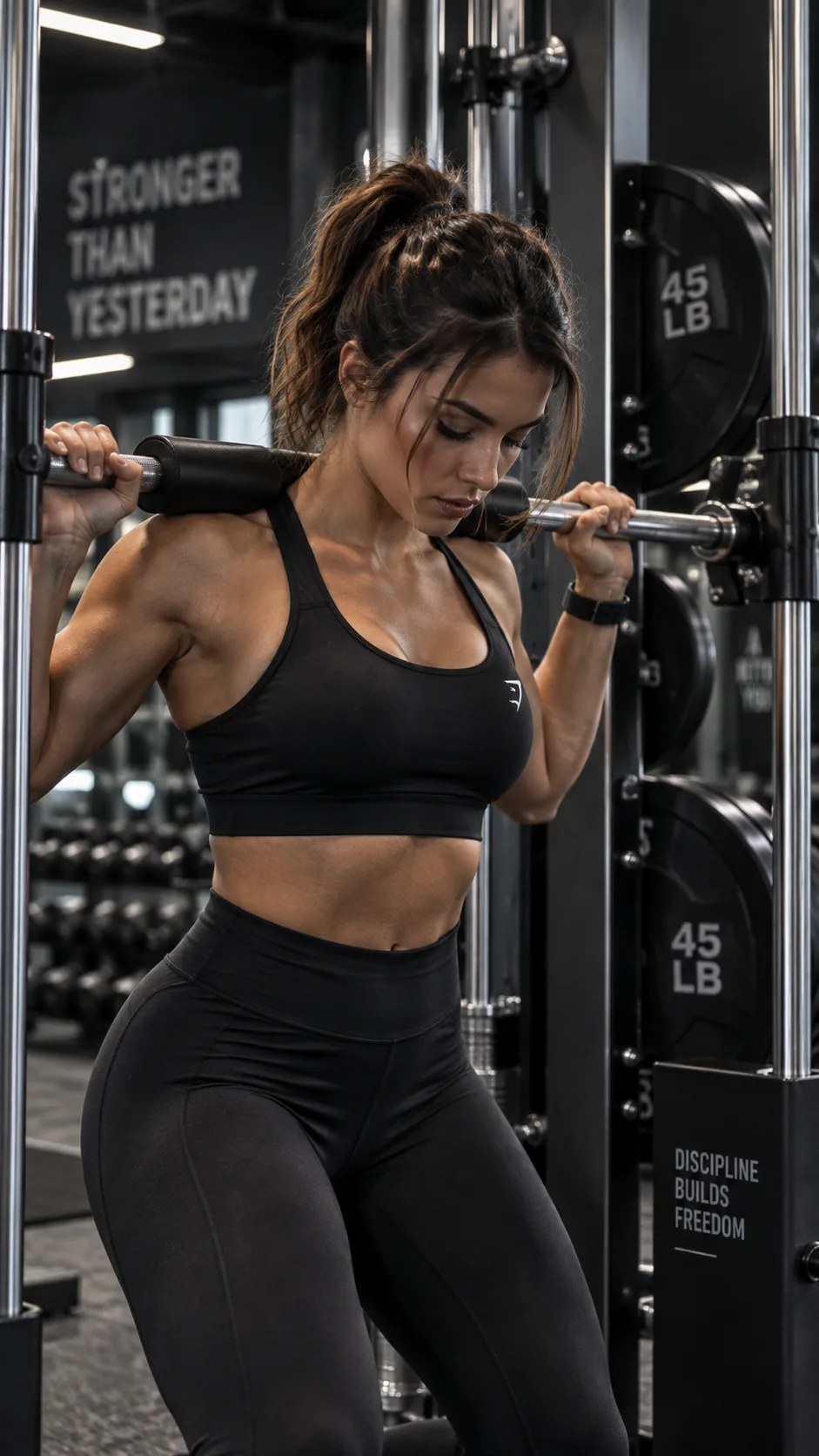
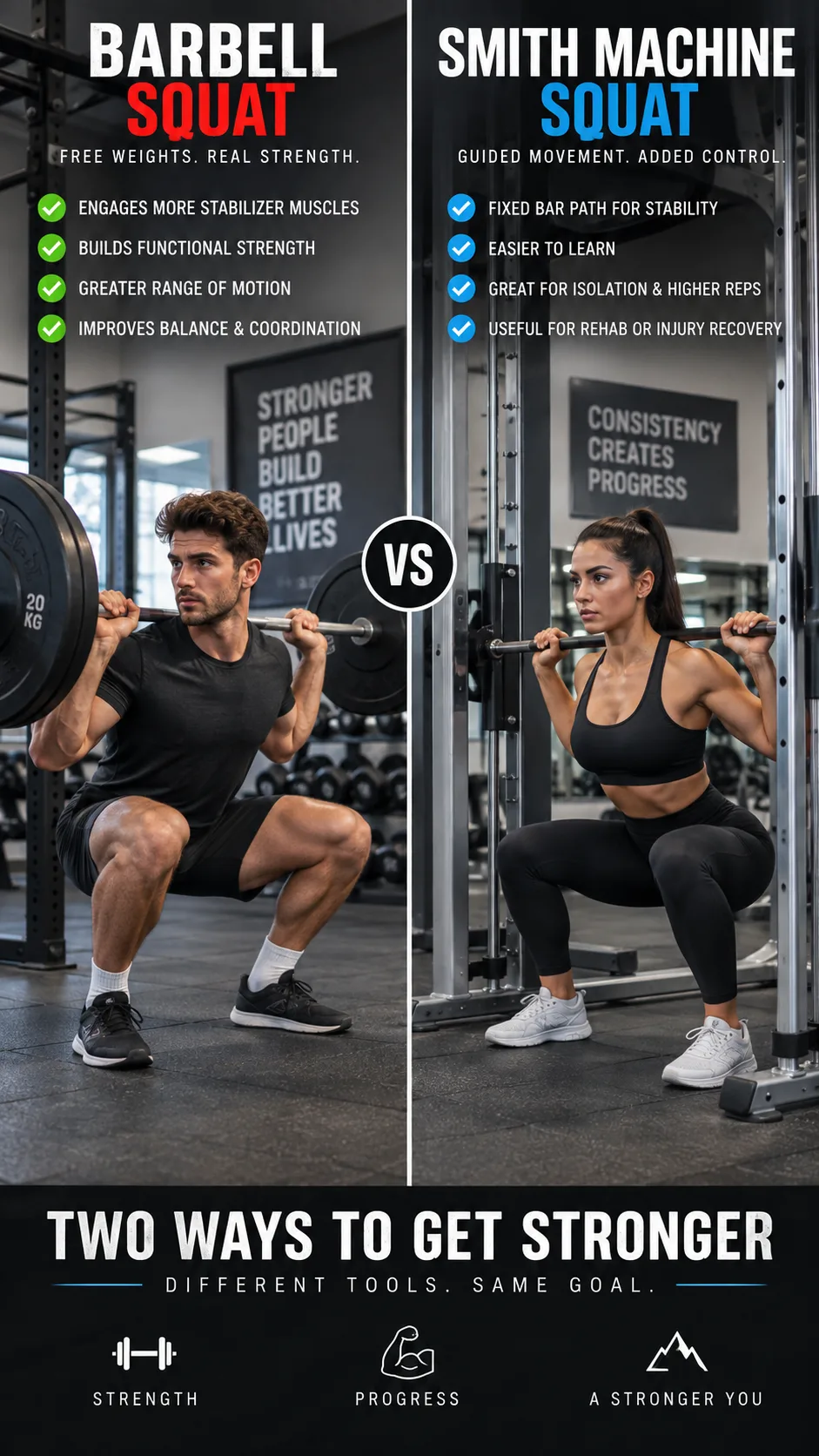
The biggest knock against the Smith Machine? That the fixed bar path removes stabilizer muscles from the equation. And yes, that’s partially true. But that’s also exactly the point in certain training scenarios. When you remove the need to balance the bar, you can focus 100% of your effort on the target muscle group. That’s a massive advantage for hypertrophy.
A study published in the Journal of Strength and Conditioning Research found that Smith Machine squats allow lifters to place the feet further forward, shifting more emphasis to the glutes and reducing knee shear forces. That’s not cheating. That’s smart programming.
Here’s when the Smith Machine works best for leg training:
- Training without a spotter: the built-in safety catches let you push to near-failure safely
- Targeting specific muscles: foot placement adjustments change the emphasis dramatically
- Working around injuries: the guided path reduces the balance demand on compromised joints
- Progressive overload tracking: a consistent bar path makes it easier to measure true strength gains
If you’re looking for a broader list of good leg workouts at the gym, the Smith Machine should absolutely make the cut. It’s a tool, and like any tool, the results depend on how you use it.
The 7 best Smith Machine leg exercises for glutes and quads
These seven exercises hit every major muscle in your lower body. I’ve arranged them in a logical order you could follow as a full workout, but feel free to cherry-pick the ones that fill gaps in your current routine.
1. Smith Machine back squat
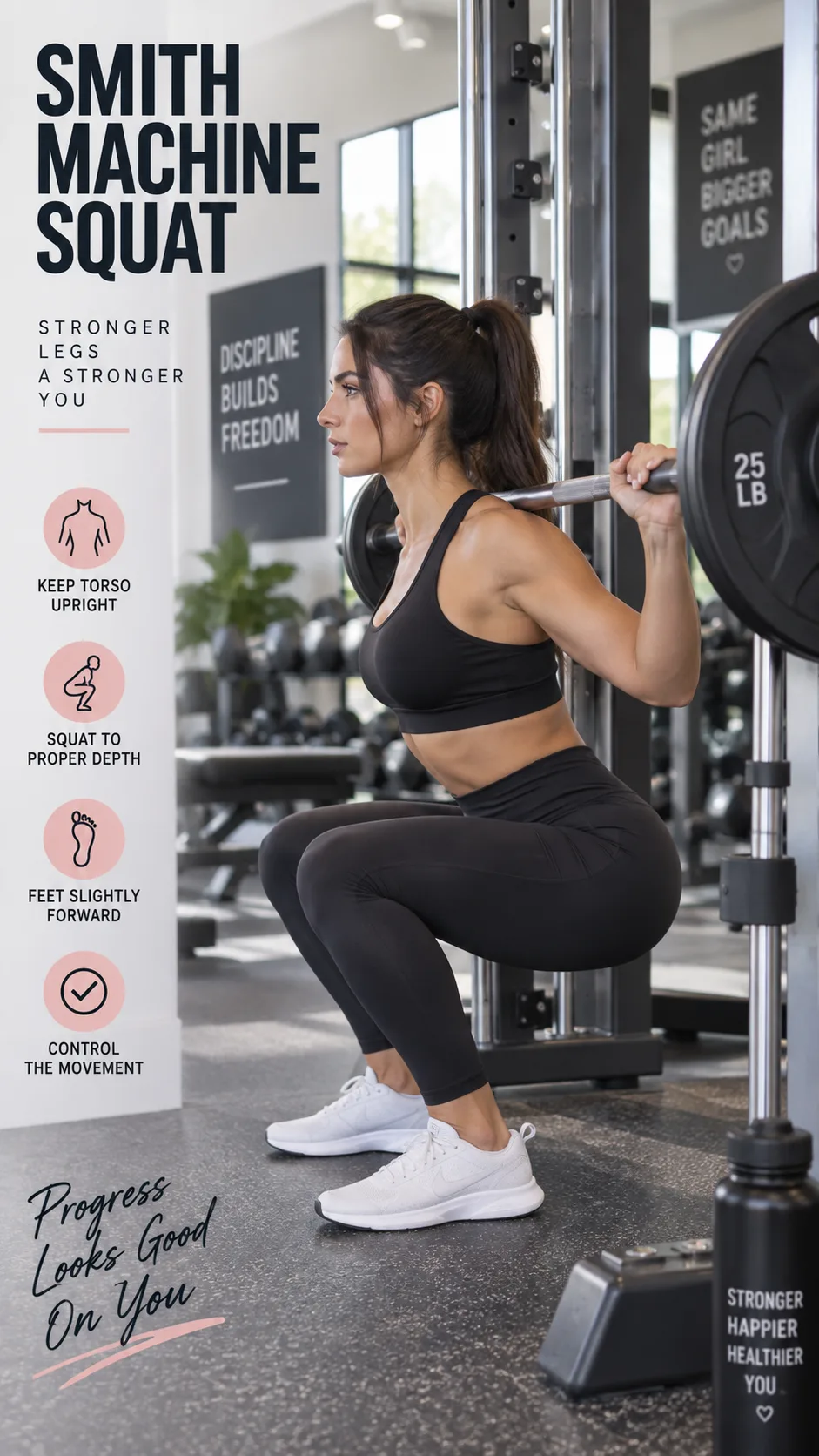
The king of leg exercises doesn’t lose its crown just because you’re using a guided bar. The Smith Machine back squat lets you experiment with foot placement in ways that would send you toppling over with a free barbell. Place your feet slightly forward and you’ll feel your glutes light up like never before.
How to do it:
- Set the bar at shoulder height and position it across your upper traps
- Place your feet shoulder-width apart, roughly 6 to 12 inches in front of the bar
- Unrack and lower yourself until your thighs reach parallel (or slightly below)
- Drive through your heels and squeeze your glutes at the top
- Aim for 3 to 4 sets of 8 to 12 reps
Pro tip: The further forward you place your feet, the more you recruit your glutes. Just don’t go so far that your lower back rounds. That’s a one-way ticket to snap city.
2. Smith Machine Romanian deadlift (RDL)
Ever wondered why your hamstrings never seem to grow? You’re probably not hinging enough. The Smith Machine RDL forces a consistent bar path that keeps tension on your hamstrings and glutes throughout the entire range of motion. It’s one of my favorite hamstring builders, period.
How to do it:
- Stand facing the machine with the bar at hip height
- Grab the bar with an overhand grip, shoulder-width apart
- Push your hips BACK while keeping a slight knee bend and flat back
- Lower the bar to mid-shin level, feeling the stretch in your hamstrings
- Drive your hips forward to return to standing, and squeeze those glutes hard
- Perform 3 to 4 sets of 10 to 12 reps
The guided bar path eliminates the lateral drift that plagues many people during free-weight RDLs. You’ll feel the difference in your hamstrings immediately.
3. Smith Machine Bulgarian split squat
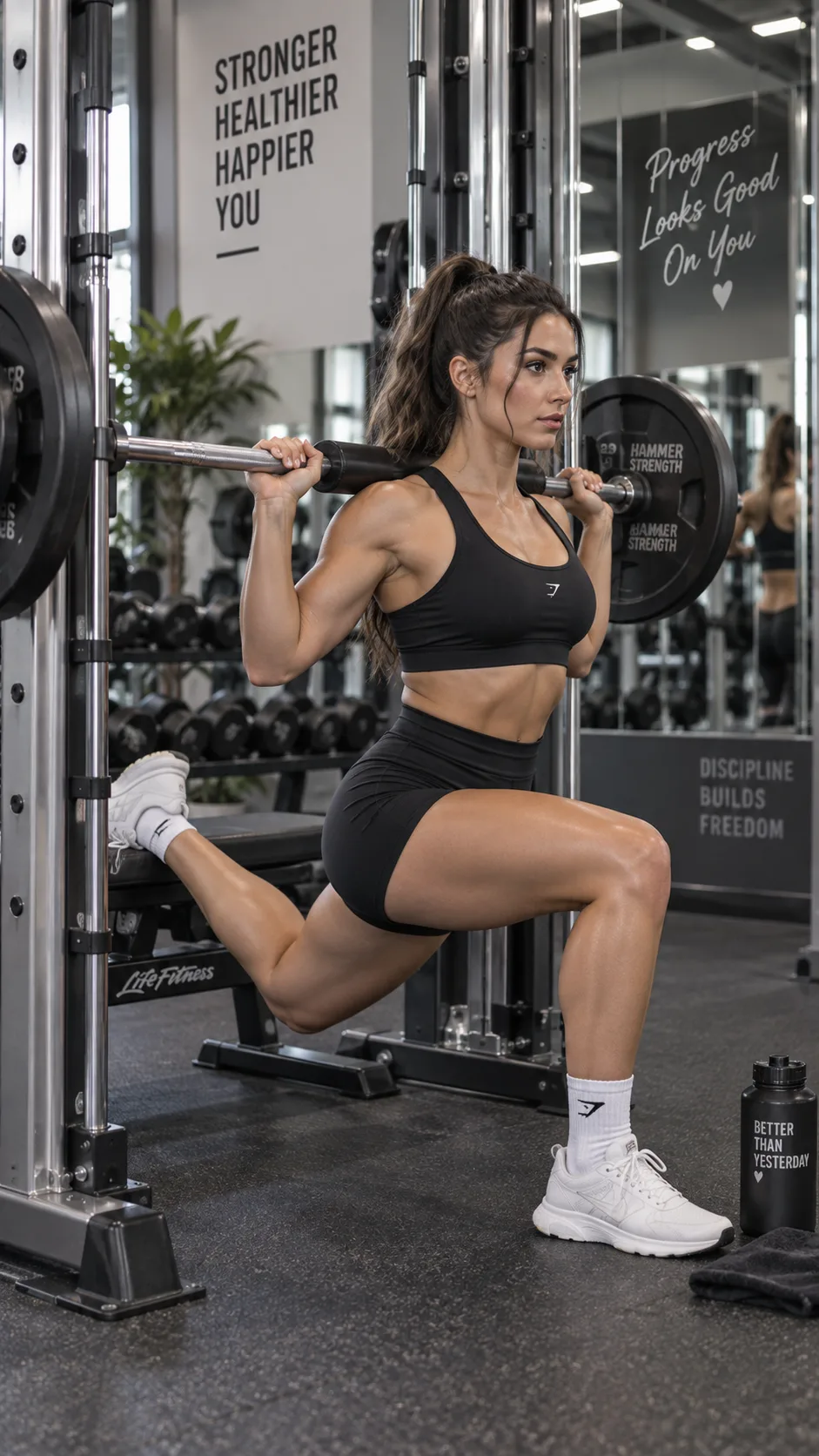
If regular Bulgarian split squats make you wobble like a baby deer on ice, the Smith Machine version will change your life. By removing the balance component, you can load heavier and focus purely on the working leg. Your quads and glutes will hate you, in the best possible way.
How to do it:
- Set a bench about two feet behind the Smith Machine bar
- Position the bar across your upper back and place one foot behind you on the bench
- Lower your body until your front thigh reaches parallel to the floor
- Push through your front heel to rise back up
- Complete 3 sets of 10 to 12 reps per leg
Worth noting: Keep your front shin as vertical as possible. If your knee shoots way past your toes, you’ve placed your front foot too close to the bar. Adjust and own that range of motion.
4. Smith Machine hip thrust
Want to build a stronger, rounder set of glutes? The hip thrust is your best friend, and the Smith Machine version makes setup a breeze. No more rolling a heavy barbell over your legs and bruising your hip bones. Just slide under, set up, and PUSH.
How to do it:
- Position a bench horizontally behind the Smith Machine
- Sit on the floor with your upper back against the bench and the bar over your hips
- Use a bar pad or folded towel for comfort (trust me on this one)
- Drive through your heels to thrust your hips upward until your body forms a straight line from knees to shoulders
- Pause and SQUEEZE at the top for 1 to 2 seconds
- Perform 3 to 4 sets of 10 to 15 reps
Research from the American Council on Exercise consistently ranks hip thrusts among the top glute-activating exercises. The Smith Machine variant lets you load this movement progressively without the logistical nightmare of a free barbell setup.
5. Smith Machine front squat
Want to demolish your quads? The front squat shifts the load to the front of your body, which forces your quads to do the lion’s share of the work. Many people avoid front squats because the wrist position feels awkward with a free bar, but the Smith Machine solves that problem entirely.
How to do it:
- Set the bar at collarbone height and cross your arms over the bar, keeping your elbows high
- Position your feet directly under the bar (or just slightly forward), shoulder-width apart
- Squat down while keeping your torso as upright as possible
- Drive up through your midfoot and quads
- Go for 3 to 4 sets of 8 to 10 reps
Your core will work overtime here to keep you upright, which makes this a sneaky two-for-one exercise. Quad growth AND core stability? Yes please.
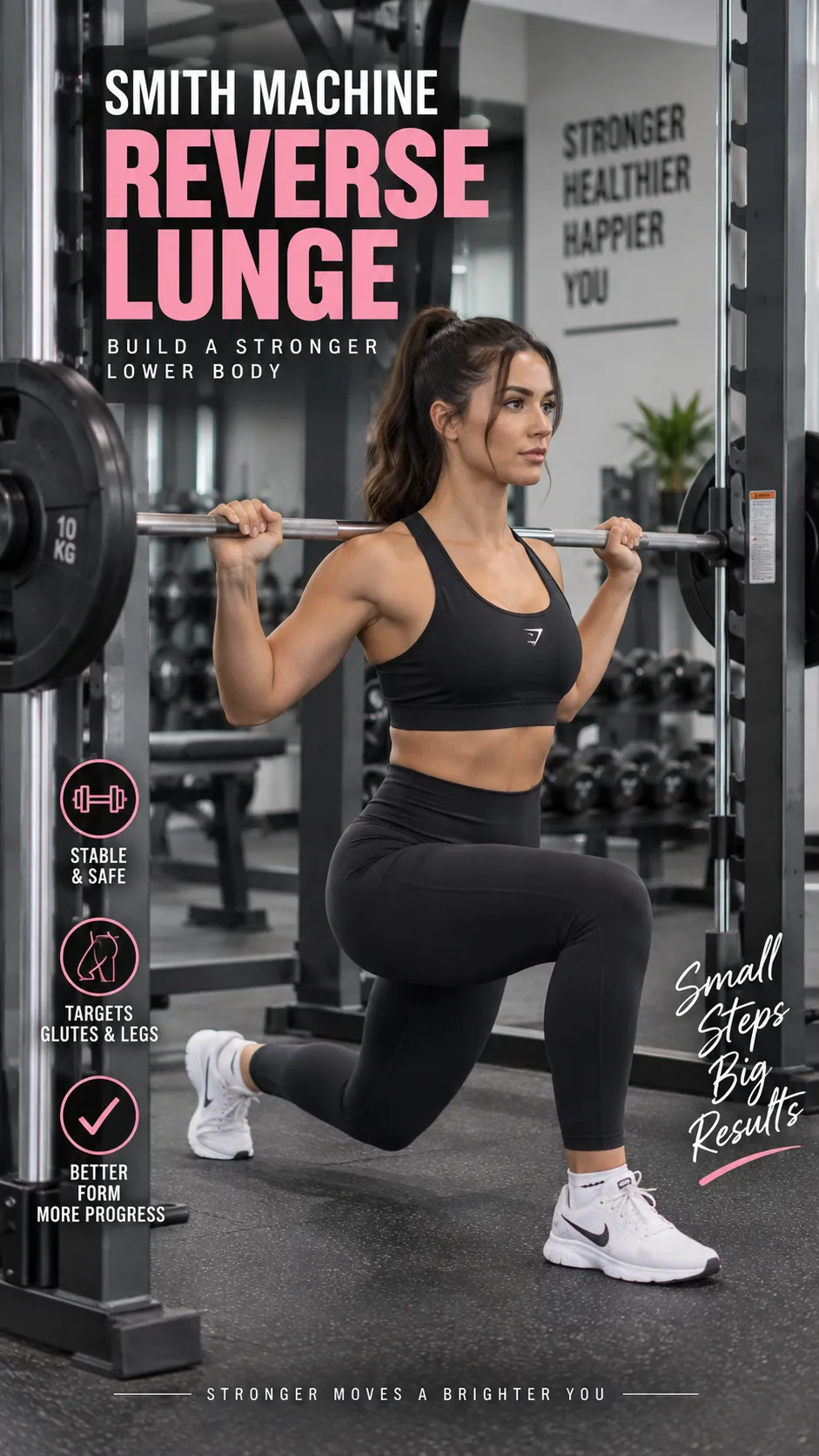
6. Smith Machine reverse lunge
Reverse lunges are criminally underrated for glute and quad development. Why reverse instead of forward? Because stepping backward keeps your front shin more vertical, reduces knee stress, and places a HUGE demand on your glutes to decelerate your body. The Smith Machine makes the movement buttery smooth.
How to do it:
- Set the bar across your upper back at shoulder height
- Stand with both feet under the bar
- Step one foot backward and lower your back knee toward the floor
- Push through the front foot to return to standing
- Alternate legs for 3 sets of 10 to 12 reps per side
In my experience, this exercise delivers the best bang-for-your-buck of any single-leg Smith Machine movement. The guided path lets you focus on depth and control rather than fighting for balance.
7. Smith Machine calf raise
We’re not leaving the gym with chicken calves. The Smith Machine standing calf raise might look simple, but with proper tempo and range of motion, it becomes one of the most effective calf builders you can do. And how many other calf exercises let you load up this much weight safely?
How to do it:
- Place a step platform or weight plate under the bar for extra range of motion
- Set the bar across your upper traps and stand on the edge of the platform with your heels hanging off
- Lower your heels as far as comfortable to get a deep stretch
- Push up onto your toes, squeezing your calves hard at the top
- Use a 2-second pause at the top and a 3-second negative for maximum effect
- Perform 4 sets of 15 to 20 reps
Calves respond best to higher rep ranges and controlled tempos. Rush through these and you’ll get nothing. Slow them down and watch the burn (and growth) follow.
The complete Smith Machine leg day workout
Want to put all seven exercises together into a structured session? Here’s a full Smith Machine leg workout you can follow start to finish. This takes roughly 45 to 60 minutes depending on your rest periods.
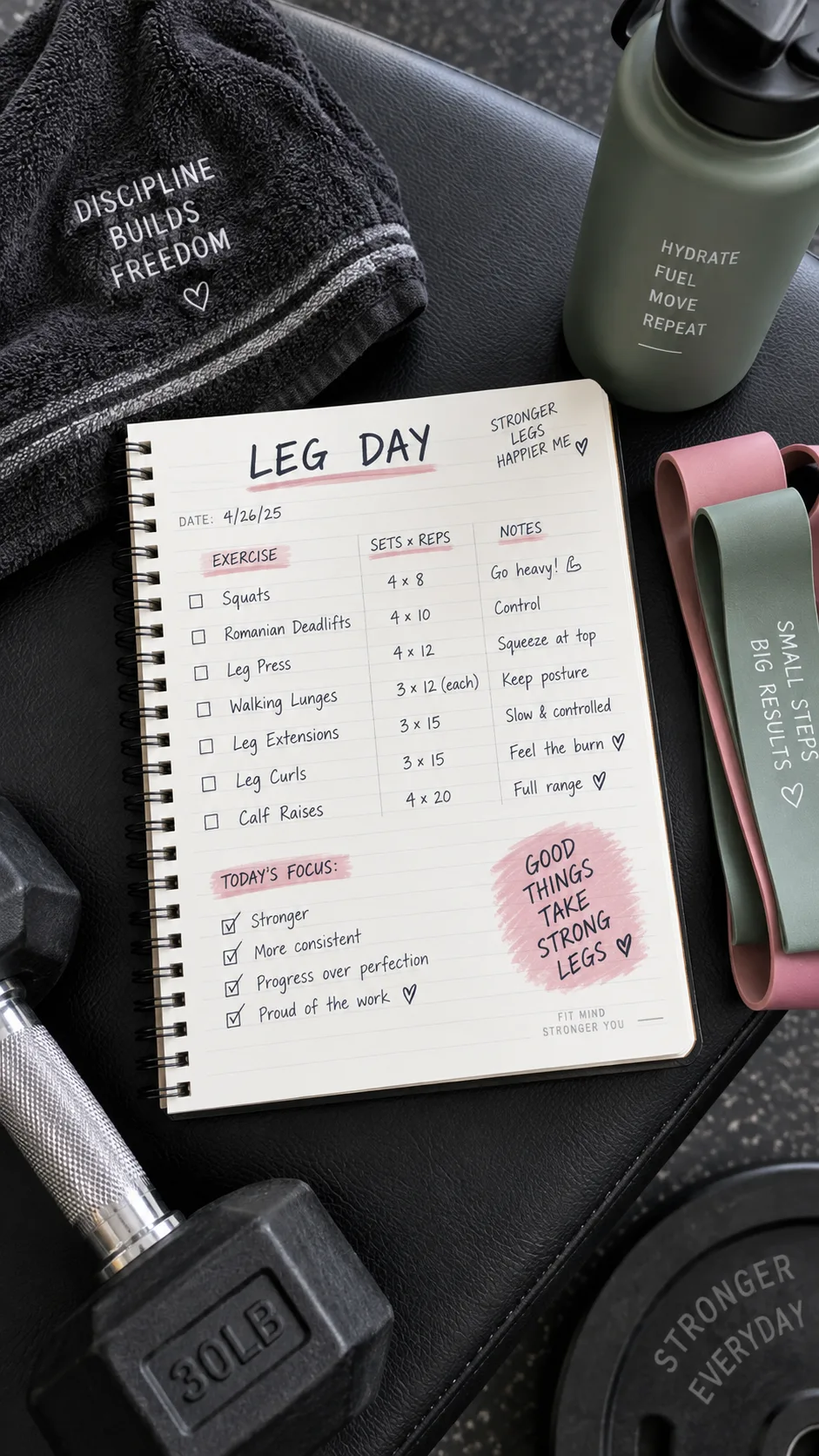
- Smith Machine Back Squat: 4 sets x 8 to 10 reps (2 min rest)
- Smith Machine Front Squat: 3 sets x 8 to 10 reps (90 sec rest)
- Smith Machine Bulgarian Split Squat: 3 sets x 10 to 12 reps per leg (60 sec rest)
- Smith Machine Hip Thrust: 4 sets x 12 to 15 reps (60 sec rest)
- Smith Machine Romanian Deadlift: 3 sets x 10 to 12 reps (90 sec rest)
- Smith Machine Reverse Lunge: 3 sets x 10 to 12 reps per leg (60 sec rest)
- Smith Machine Calf Raise: 4 sets x 15 to 20 reps (45 sec rest)
Start with compound movements (squats, front squats) when you’re freshest, then progress to single-leg work and isolation exercises as fatigue sets in. This structure maximizes both strength and hypertrophy across your entire lower body.
If you’re newer to the gym and prefer a more beginner-friendly approach, check out this beginner leg workout using gym machines to build your foundation first.
Smith Machine leg workout tips that make a real difference
Doing the right exercises is only half the battle. How you perform them determines whether you see real results or just go through the motions. Here are the tips that separate productive leg days from wasted ones.
Master your foot placement
The Smith Machine’s fixed bar path gives you a unique advantage: you can adjust your foot position to dramatically shift muscle emphasis. Feet directly under the bar targets quads. Feet 6 to 12 inches forward loads up the glutes. Play with positioning and find what activates the target muscle best for YOUR anatomy.
Control the eccentric (lowering) phase
Most people just drop into the bottom of a squat and bounce back up. Don’t do that. Take 2 to 3 seconds on the way down for every rep. This increases time under tension, which is one of the primary drivers of muscle growth according to the National Strength and Conditioning Association.
Use the safety catches (that’s what they’re for)
Set the safety stops at the bottom of your range of motion before you start your working sets. This lets you push closer to failure without worrying about getting pinned. It’s one of the Smith Machine’s biggest advantages, so use it.
Warm up properly
Don’t just jump straight into heavy Smith Machine squats cold. Spend 5 minutes on a bike or treadmill, then do 2 to 3 warm-up sets with lighter weight. Your knees and hips will thank you, and your working sets will feel stronger.
Common Smith Machine leg workout mistakes to avoid
Even with a guided bar path, people find creative ways to mess things up. Here are the most common errors I see, and how to fix them.
- Locking out your knees at the top of every rep: Keep a slight bend to maintain constant muscle tension and protect your joints
- Going too heavy too soon: The Smith Machine bar weighs less than a standard Olympic barbell (usually 15 to 25 lbs depending on the model). Don’t let ego dictate your loading
- Ignoring unilateral work: Single-leg exercises like Bulgarian split squats and reverse lunges fix imbalances that bilateral movements can mask
- Using the same foot position for every exercise: Different positions create different stimulus, so experiment deliberately
- Skipping the full range of motion: Half reps give you half results. Get to at least parallel on squats and full hip extension on hip thrusts
FYI, the Smith Machine bar on most commercial models runs on a counterbalanced system, so the resistance you’re pushing varies by manufacturer. Always test the unloaded bar first so you know your true starting weight.
Should you ONLY use the Smith Machine for legs?
Short answer: no. The Smith Machine should be one tool in your arsenal, not the entire toolbox. Free-weight squats, deadlifts, and lunges develop stabilizer muscles and coordination that the Smith Machine doesn’t fully train. The ideal approach? Use both.
A smart training week might include one free-weight leg session focused on compound strength and one Smith Machine leg workout focused on muscle isolation and higher volume. This combination gives you functional strength AND targeted hypertrophy in the same program.
For a complete approach to lower body training that blends multiple training styles, take a look at this full leg workout routine that covers all your bases.
Who benefits most from Smith Machine leg training?
Anyone can benefit from adding Smith Machine work to their leg day, but certain groups get an especially big payoff:
- Beginners learning movement patterns without the added challenge of balancing a free bar
- Solo lifters who train without a spotter and want to push intensity safely
- Anyone rehabbing an injury who needs a controlled, predictable movement path
- Bodybuilders and physique athletes looking to isolate specific muscles for maximum growth
- Older adults who want to build lower body strength with reduced fall risk
The American College of Sports Medicine recommends resistance training for all major muscle groups at least twice per week. The Smith Machine makes that recommendation accessible to virtually everyone, regardless of experience level.
Your Smith Machine leg day plan
The Smith Machine isn’t a shortcut or a compromise. It’s a legitimate training tool that belongs in your leg day rotation. These seven exercises cover your quads, hamstrings, glutes, and calves from multiple angles, giving you everything you need for a complete lower body session.
Here’s your quick-reference breakdown:
- Quad-dominant: Back Squat, Front Squat, Reverse Lunge
- Glute-dominant: Hip Thrust, Bulgarian Split Squat
- Hamstring-focused: Romanian Deadlift
- Calf builder: Standing Calf Raise
Stop listening to the gatekeepers who say the Smith Machine “doesn’t count.” Load it up, control every rep, track your progress, and watch your legs transform. Your glutes and quads don’t care which machine delivered the stimulus. They only care that you showed up and put in the work.
Now go crush your next leg day. Your future self (the one who can’t walk down stairs tomorrow) will thank you for it.
