
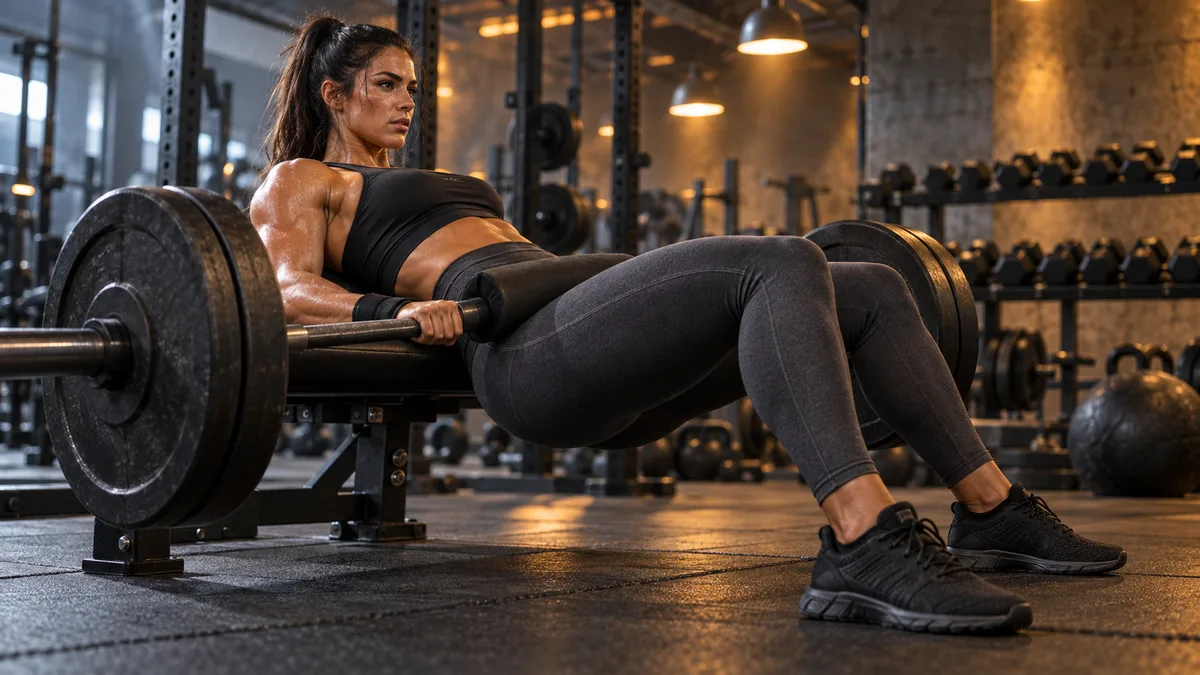
You’ve got 60 minutes. Maybe less. The last thing you need is a bloated workout plan with 14 exercises, three types of calf raises, and a partridge in a pear tree. What you need is a focused leg and glute workout that hits the right muscles, in the right order, with the right intensity, and then lets you get on with your life.
I’ve spent years testing routines, tweaking exercise selection, and wasting more time than I’d like to admit on workouts that looked impressive on paper but delivered meh results. What I’ve landed on is simpler than you’d think. And it works ridiculously well.
So if you want stronger legs, glutes that fire properly, and a routine you can finish without setting up camp in the squat rack for two hours, keep reading.
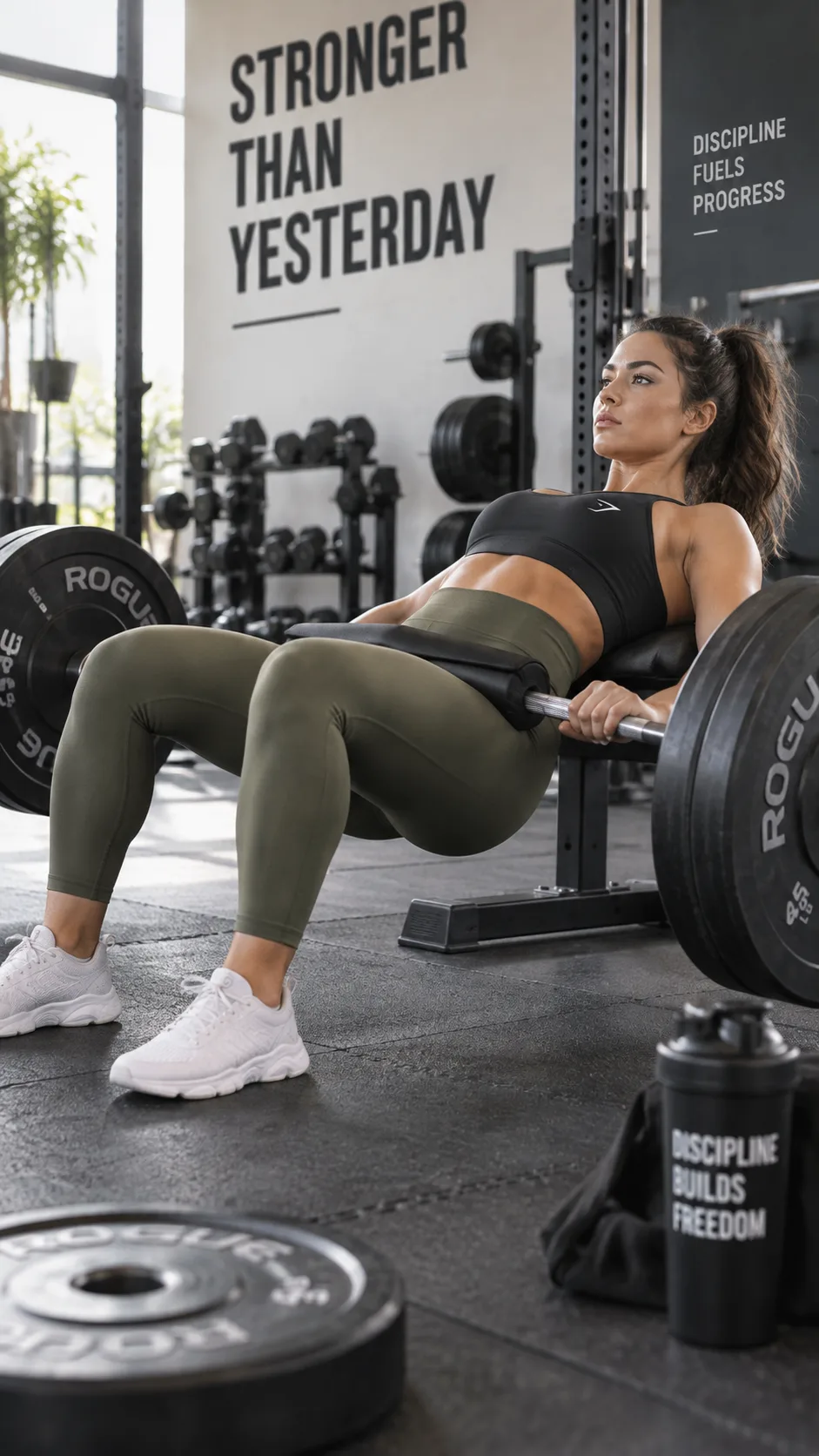
Why most leg and glute workouts waste your time
Here’s the uncomfortable truth: more exercises don’t equal more results. A lot of popular leg day routines throw everything at the wall and hope something sticks. You end up doing five quad-dominant movements, one token glute bridge, and calling it “glute focused.” Sound familiar?
The problem isn’t effort. It’s exercise selection and sequencing. Research published in the Journal of Strength and Conditioning Research consistently shows that compound movements paired with targeted isolation work produce superior hypertrophy and strength gains compared to doing a dozen random exercises at moderate intensity.
Your muscles don’t care about variety for variety’s sake. They care about progressive tension, adequate volume, and proper recovery. That’s it. Everything else is noise.
The “kitchen sink” trap
I used to fall into this trap HARD. Squats, leg press, lunges, leg extensions, leg curls, hip abductions, calf raises, step-ups, glute kickbacks… by exercise seven, I was basically going through the motions with the enthusiasm of someone filling out tax forms. The quality of each set tanked because I was saving energy for the marathon ahead.
A smarter approach? Pick 5-6 exercises that target your quads, hamstrings, and glutes with purpose, then push yourself on those movements. Intensity and intention beat volume every single time.
The complete leg and glute workout routine
This routine takes roughly 45-60 minutes depending on your rest periods. It’s designed for the gym, so you’ll need access to a barbell, dumbbells, a cable machine, and a leg curl machine. If you’re looking for more gym-specific lower body exercises, check out these good leg workouts at the gym for more ideas.
Here’s the full breakdown:
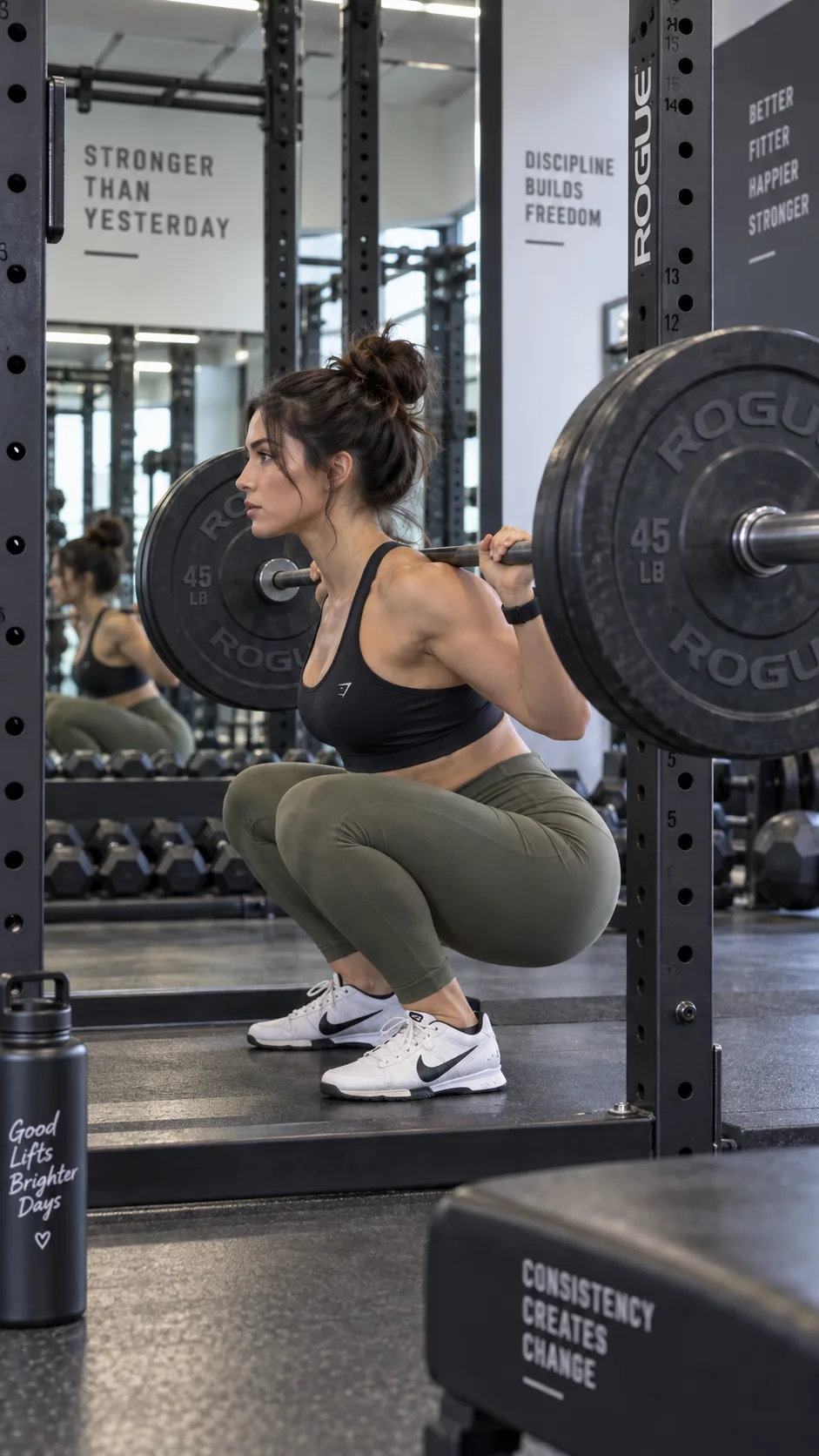
Exercise 1: Barbell back squat, 4 sets x 6-8 reps
You start with the king. There’s a reason the back squat has been the foundation of every serious leg program since gyms existed. It loads your quads, glutes, and core simultaneously, and it allows you to move serious weight through a full range of motion.
Go deep. Aim for at least parallel, ideally slightly below. A 2018 meta-analysis found that deep squats produce significantly greater glute activation compared to partial squats. So if glute growth is your goal, stop cutting your squats short.
Pro tip: Warm up with 2-3 progressively heavier sets before your working sets. Cold squatting is a fast track to injury and a bad mood.
Exercise 2: Romanian deadlift (RDL), 3 sets x 8-10 reps
The RDL is your hamstring and glute posterior chain builder. Nothing stretches and loads the hamstrings quite like this movement, and the glute engagement at the top of each rep is *chef’s kiss*.
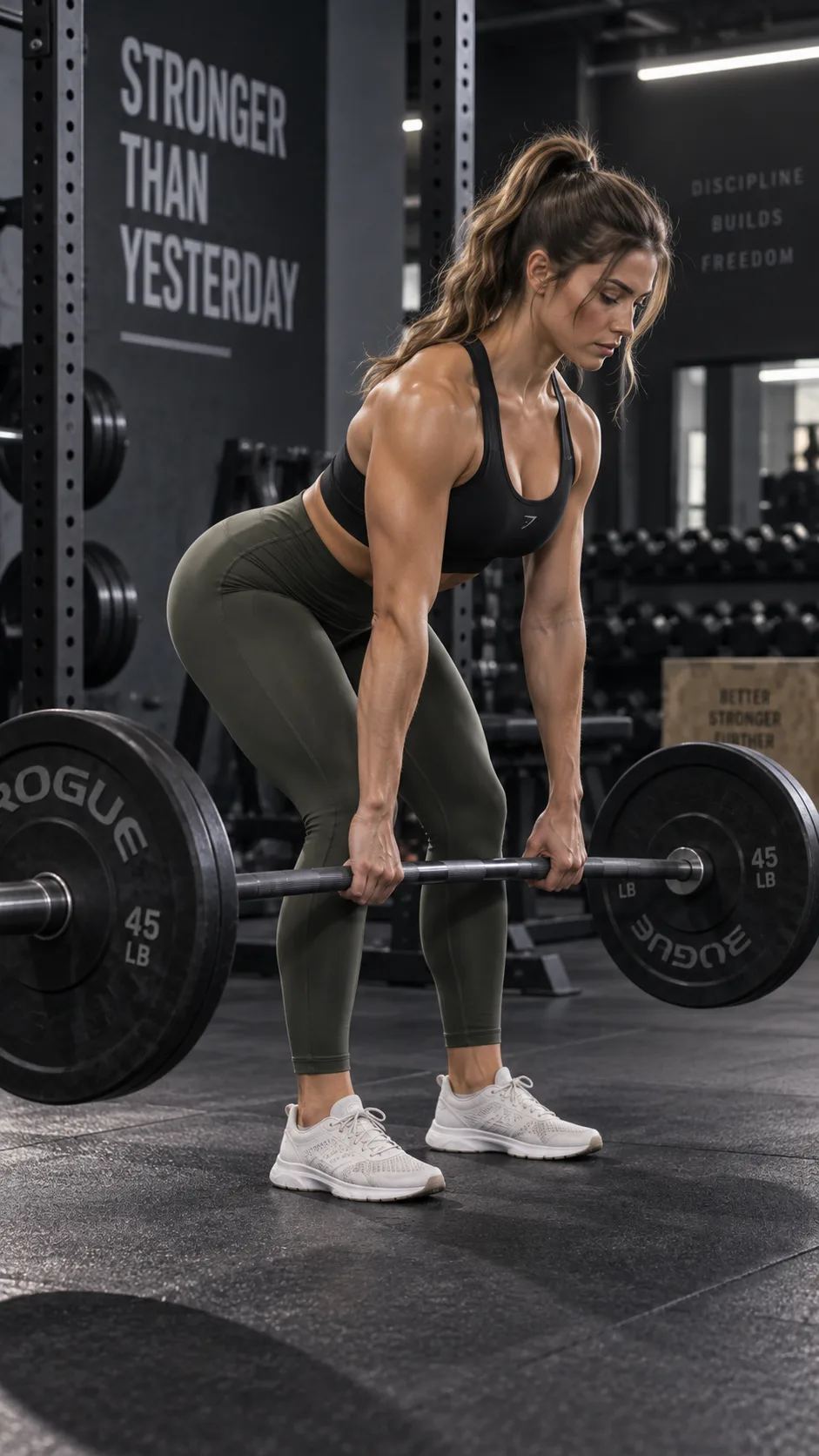
Keep the bar close to your legs, push your hips BACK (not down), and feel that deep stretch in your hamstrings before driving your hips forward to lockout. Your back stays neutral throughout. If it’s rounding, the weight is too heavy. Ego has no place here.
Cue worth remembering: Think about “closing a car door with your butt.” That hip hinge pattern is exactly what you want.
Exercise 3: Bulgarian split squat, 3 sets x 10-12 reps per leg
Yes, everyone hates these. Yes, you should still do them. Bulgarian split squats are arguably the single best exercise for unilateral leg and glute development. They expose and fix muscle imbalances, they torch your quads and glutes, and they challenge your balance in a way that transfers directly to real-world movement.
Hold a dumbbell in each hand, elevate your rear foot on a bench, and lower your back knee toward the floor. Keep your front shin relatively vertical and your torso upright. Each rep should feel controlled, not like you’re auditioning for a balance beam routine.
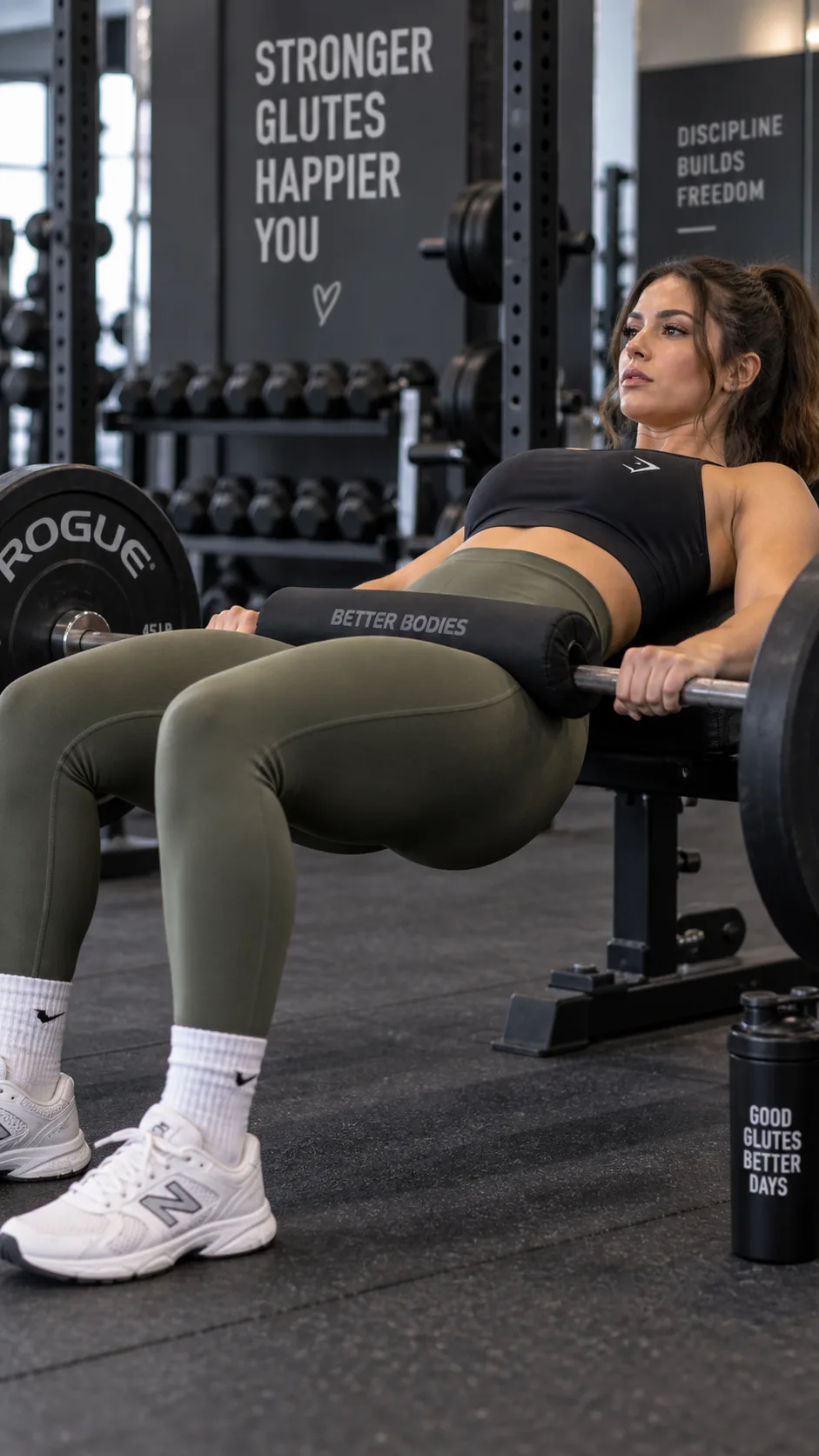
Exercise 4: Hip thrust, 3 sets x 10-12 reps
If the squat is the king of leg exercises, the hip thrust is the undisputed champion of glute isolation. EMG studies consistently rank the barbell hip thrust as one of the top glute activators, often surpassing squats and deadlifts in peak glute activation. Bret Contreras (a.k.a. “The Glute Guy”) built an entire career around proving this, and the science backs him up.
Set up with your upper back against a bench, roll the barbell over your hips (use a pad, please), and drive through your heels. Squeeze your glutes HARD at the top for a full second. Don’t hyperextend your lower back; your ribs should stay down and your chin slightly tucked.
This is the exercise where your glutes should feel like they’re on fire. If they don’t, you’re either going too light or you’re letting your quads take over. Slow down the tempo and focus on the squeeze.
Exercise 5: Lying leg curl, 3 sets x 12-15 reps
After all that compound work, your hamstrings deserve some direct attention. The lying leg curl isolates your hamstrings in knee flexion, a function that the RDL doesn’t fully cover since the RDL primarily works the hamstrings through hip extension.
Control the eccentric (lowering phase) for at least 2-3 seconds. This is where the muscle-building magic happens. Don’t just let the weight drop and bounce it back up. You’re better than that 🙂
Exercise 6: Cable kickback or glute-focused abduction, 3 sets x 15-20 reps per side
Your finisher. This is about accumulating metabolic stress in the glutes with lighter weight and higher reps. Cable kickbacks work great because they maintain constant tension throughout the movement, something free weights can’t always provide.
Keep the movement controlled. No swinging, no momentum, no turning this into a cardio exercise. Squeeze at the top, control the return. Your glutes should be screaming by set three.
The full routine at a glance
- Barbell Back Squat — 4 x 6-8 reps (2-3 min rest)
- Romanian Deadlift — 3 x 8-10 reps (2 min rest)
- Bulgarian Split Squat — 3 x 10-12 per leg (90 sec rest)
- Barbell Hip Thrust — 3 x 10-12 reps (90 sec rest)
- Lying Leg Curl — 3 x 12-15 reps (60 sec rest)
- Cable Kickback — 3 x 15-20 per side (60 sec rest)
Total working sets: 19. That’s the sweet spot. Enough volume to stimulate growth without burying yourself in junk volume. Research from Schoenfeld et al. suggests that 10-20 sets per muscle group per week is optimal for hypertrophy, and this routine slots right into that range when combined with one other lower body session during the week.
How to progress this workout over time
Here’s where most people go wrong. They find a workout they like, do it the exact same way for 12 weeks, wonder why they stopped seeing results, and then blame genetics. Progressive overload isn’t optional. It’s the entire point.
You don’t need to add weight every single session (that’s a fast track to plateau city). Instead, use a combination of these strategies:
- Add weight — even 2.5 lbs counts. Small jumps add up over months.
- Add reps — if you hit 8 reps on squats last week, aim for 9 this week before increasing weight.
- Slow the tempo — a 3-second eccentric turns a manageable weight into a brutal challenge.
- Reduce rest periods — going from 2-minute rests to 90 seconds increases training density.
- Improve range of motion — deeper squats, fuller hip extension, bigger stretch on RDLs.
Track your workouts. Seriously. Even a simple notes app on your phone works. If you can’t tell me what you lifted last Tuesday, you’re guessing, and guessing doesn’t build muscle.
Common mistakes that kill your leg and glute gains
Mistake 1: Quad dominance without realizing it
Ever finish a “glute workout” and only feel it in your thighs? That’s quad dominance, and it’s incredibly common. Your quads are naturally stronger and more neurally efficient, so they tend to take over during squats, lunges, and even hip thrusts if your setup is off.
The fix: Before your workout, spend 5 minutes on glute activation. Banded glute bridges, clamshells, and lateral band walks “wake up” your glutes and improve the mind-muscle connection. It sounds basic because it is, and it works. This single change transformed my own glute development more than any exercise swap ever did.
Mistake 2: Going too light on hip thrusts
Your glutes are the largest and strongest muscle group in your body. They can handle serious load. If you’re hip thrusting with 40 lbs and wondering why nothing is changing, that’s your answer. Most intermediate lifters should be hip thrusting well above their bodyweight.
Progressive overload applies here just like everywhere else. Don’t be afraid to load that bar up.
Mistake 3: Neglecting hamstrings
Hamstrings are the forgotten middle child of leg day. Everyone focuses on quads and glutes, but underdeveloped hamstrings create muscle imbalances that increase injury risk and limit your overall lower body strength. The RDL and leg curl combination in this routine addresses both primary functions of the hamstrings: hip extension and knee flexion.
Mistake 4: Skipping the warm-up
I get it. Warming up feels like a waste of precious gym time. But 5-10 minutes of targeted warm-up (hip circles, bodyweight squats, leg swings, banded glute activation) can seriously improve your performance in your working sets. Warmer muscles contract harder, joints move more freely, and you reduce your risk of the kind of injury that sidelines you for weeks.
Would you rather spend 8 minutes warming up or 8 weeks recovering from a pulled hamstring? Exactly.
How this workout fits into your weekly split
This leg and glute routine works best when performed 1-2 times per week as part of a structured training split. If you’re training legs twice, consider making your second session lighter or with different exercise variations to manage fatigue and hit muscles from different angles.
Here’s how it might look in a typical week:
- Monday: Upper body push
- Tuesday: Leg and Glute Workout (this routine)
- Wednesday: Rest or active recovery
- Thursday: Upper body pull
- Friday: Second lower body session (lighter, more glute-focused)
- Weekend: Rest
If you want a more detailed weekly structure, this gym routine workout plan lays everything out day by day. Having a full-week framework removes the guesswork and keeps you consistent. Consistency, IMO, is the most underrated factor in building a physique you’re proud of.
Nutrition: The part nobody wants to hear about
I could write a whole separate article about this (and probably should). But here’s the short version: you cannot out-train a bad diet. If you want your legs and glutes to grow, you need to eat enough protein and consume sufficient calories to support muscle growth.
The American College of Sports Medicine recommends 1.2-2.0 grams of protein per kilogram of bodyweight for individuals engaged in regular resistance training. For most people, that means somewhere between 100-160 grams per day. Chicken breast, eggs, Greek yogurt, protein shakes, whatever gets you there.
Building muscle also requires being in a caloric surplus or at maintenance (at minimum). Trying to grow your glutes while aggressively cutting calories is like trying to fill a bathtub with the drain open. Possible? Barely. Efficient? Not even close.
Who is this routine best for?
This leg and glute workout suits beginner-to-intermediate lifters who have basic familiarity with compound movements and want a structured, efficient routine. If you’re brand new to the gym, spend a few weeks learning proper form on squats and deadlifts before loading up heavy.
It’s also particularly effective for women who want to prioritize glute development without neglecting overall leg strength. If you want even more female-specific programming, this leg workout for women offers a complete lower body routine with that exact focus.
For advanced lifters, this routine works as a solid template. Just increase the intensity, play with techniques like pause reps and drop sets, and adjust the volume to match your recovery capacity.
Final thoughts: Build the routine, trust the process
Here’s what it comes down to. You don’t need a complicated, Instagram-worthy routine with resistance bands wrapped around every limb and balancing acts on a BOSU ball. You need the right exercises, performed consistently, with progressive overload and adequate nutrition.
This leg and glute workout gives you exactly that. A focused, efficient gym routine that builds real strength and shape without wasting a second of your time. Six exercises. Under an hour. Done.
The people who see the best results aren’t the ones with the “perfect” program. They’re the ones who show up, push hard, track their progress, and do it again next week. Be that person. Your legs and glutes will thank you, probably loudly, especially the day after leg day when stairs become your arch nemesis.
Now go load up that barbell. You’ve got work to do.
