
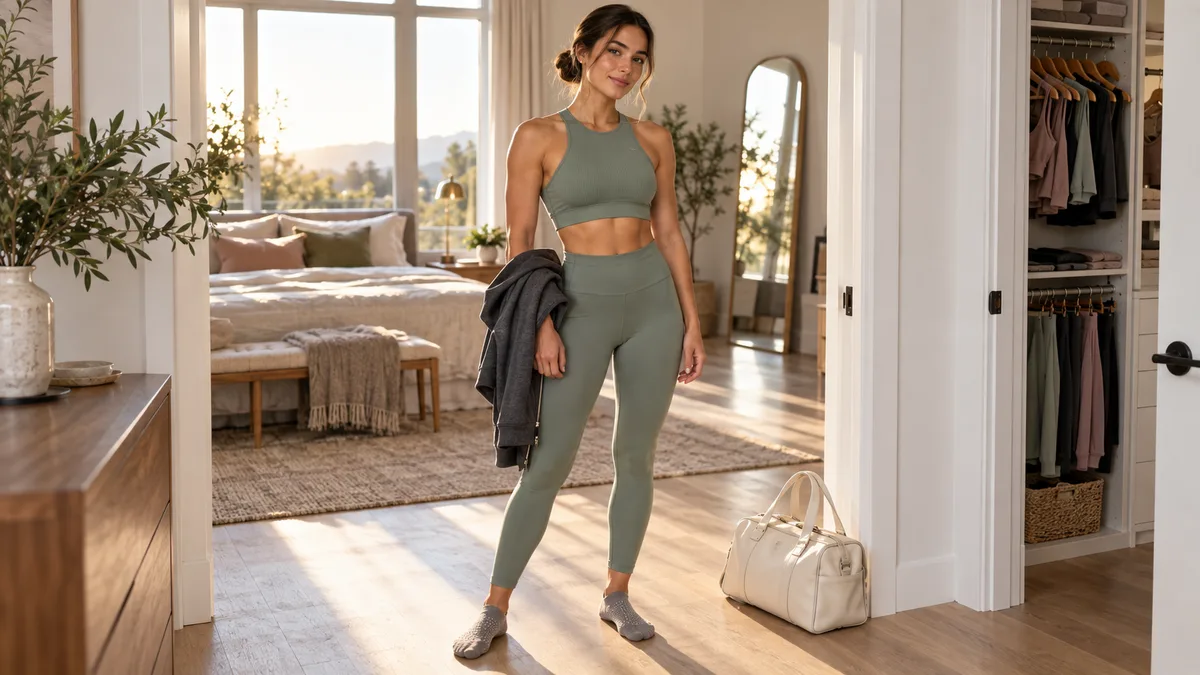
You’ve committed to the class. You’ve blocked the time. And now you’re standing in front of your closet at 6:47 AM, staring at a pile of activewear like it personally offended you. Sound familiar? Choosing a Pilates workout outfit should never be the hardest part of your practice, and after reading this, it won’t be.
I spent an embarrassing amount of my first year doing Pilates wearing the wrong things. Baggy basketball shorts that rode up during the Hundred. A loose tank top that turned into a face tent during roll-ups. A sports bra that felt like a medieval torture device by minute twenty. I learned every lesson the hard way so you don’t have to.
Whether you’re brand new to the reformer or you’ve been doing mat Pilates workouts for years, this guide covers exactly what to wear, what to avoid, and how to build a capsule Pilates wardrobe that works on autopilot.
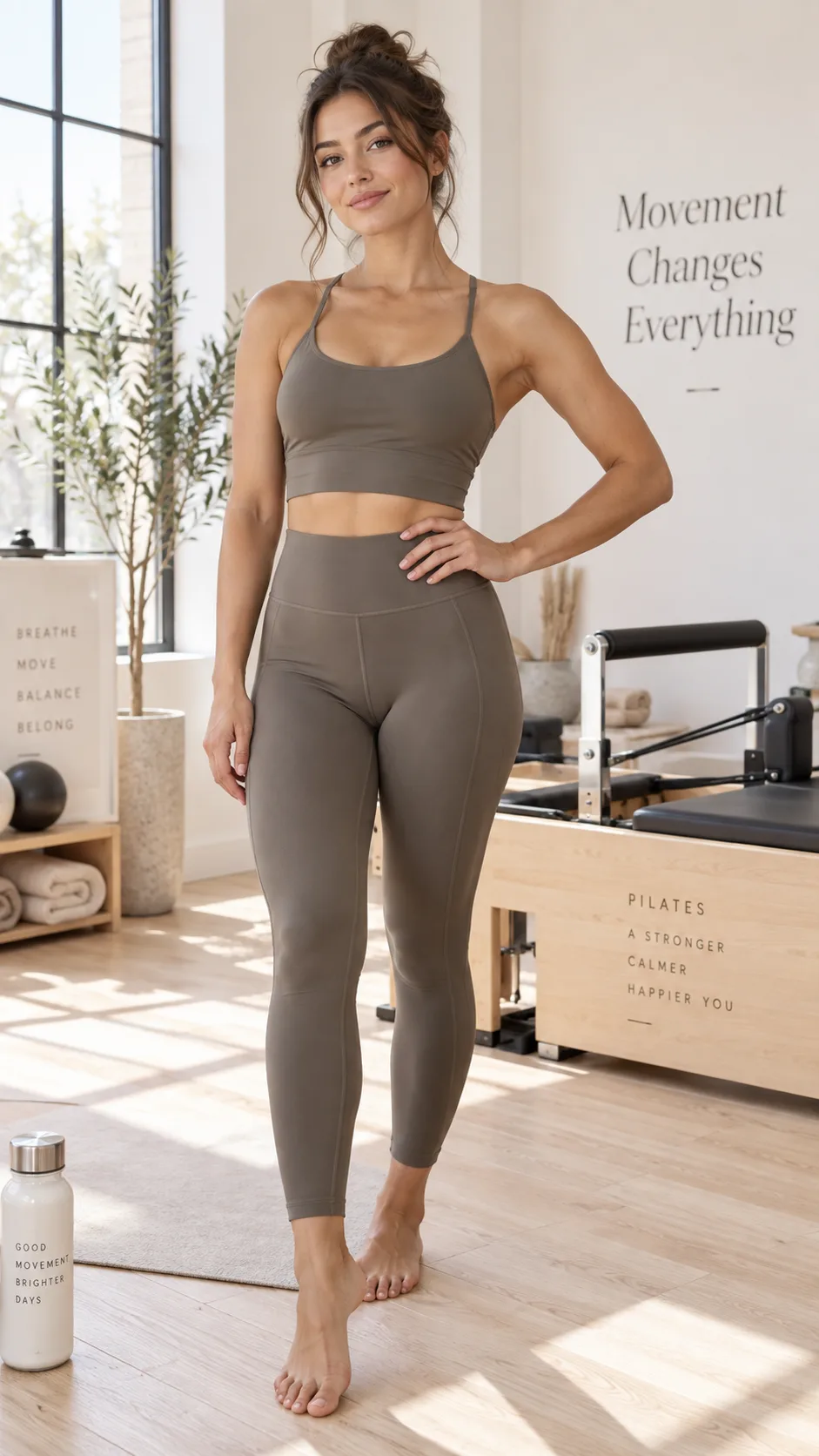
Why your Pilates outfit matters more than you think
Pilates isn’t running. It’s not CrossFit. And it’s definitely not yoga, even though the two get lumped together constantly. Pilates demands a specific kind of movement freedom that the wrong clothes will actively fight against. You’re inverting, bridging, rolling, and holding positions where fabric placement matters.
Baggy clothing creates two problems. First, your instructor literally cannot see your form, and form is EVERYTHING in Pilates. Second, loose fabric bunches, rides up, and shifts around in ways that pull your attention away from the mind-body connection that makes Pilates so effective.
The right Pilates workout outfit should feel like a second skin. You should forget you’re wearing it. That’s the gold standard. If you’re constantly adjusting, tugging, or pulling during class, your outfit is failing you.
The essential pieces: building your Pilates outfit from scratch
Leggings: the non-negotiable foundation
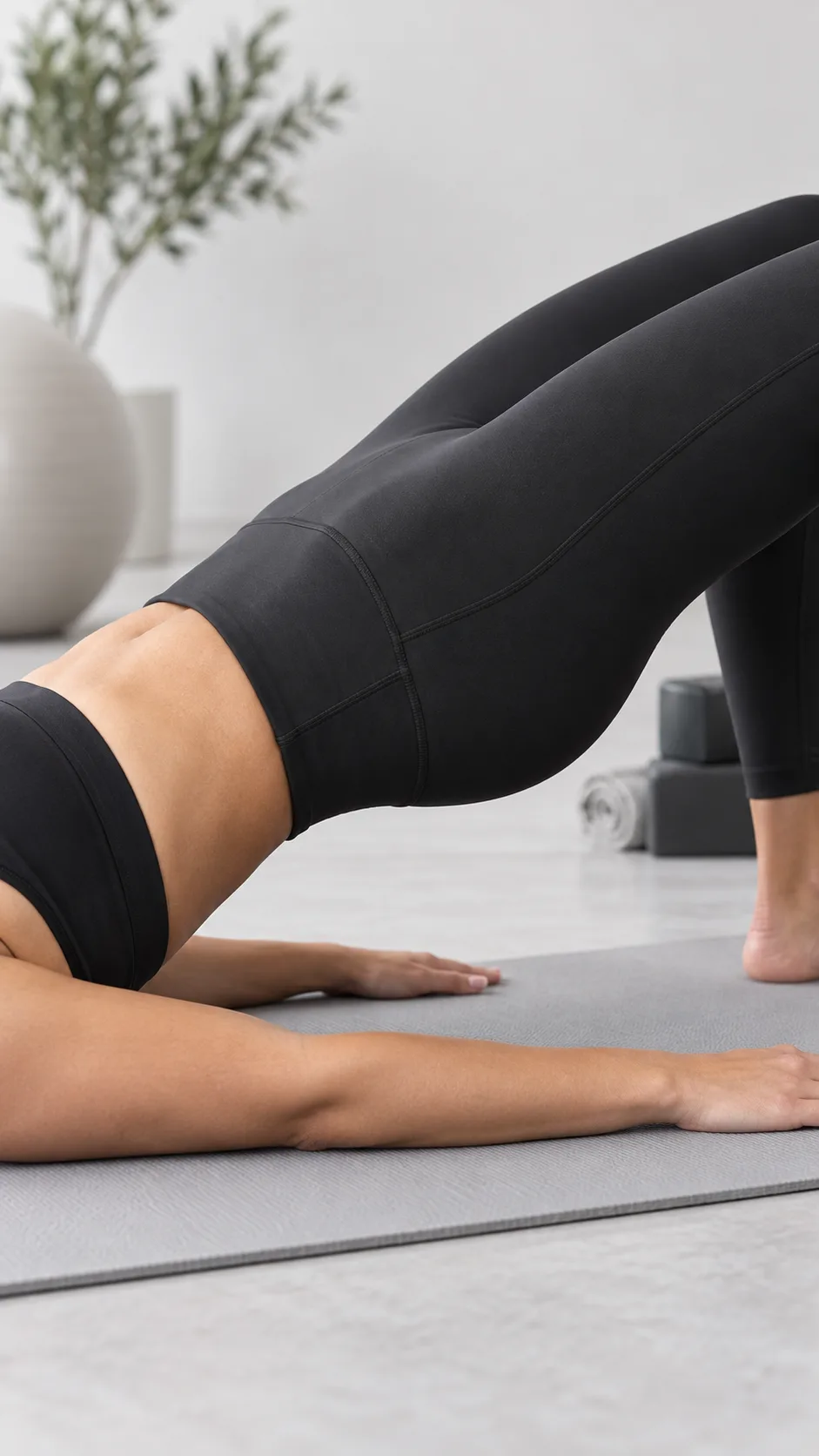
High-waisted, full-length leggings are the MVP of any Pilates wardrobe. I’m not even going to pretend there’s a debate here. They stay put during inversions, they don’t ride down during bridges, and they give your instructor a clear view of your leg alignment.
What should you look for specifically?
- High-rise waistband (at least 4 inches) keeps everything secure during deep flexion and extension. No muffin top, no sliding down.
- Compression fabric with 4-way stretch gives you support without restriction. Look for nylon-spandex blends in the 75/25 or 80/20 range.
- Squat-proof opacity matters because if you’re doing any reformer work, you’re going to be in positions where sheer leggings become a real problem. Always do the squat test before buying.
- Flat seams make a huge difference. Raised seams dig into your skin when you’re lying on a mat for 45 minutes. Flatlock stitching is your friend.
Brands like Lululemon (the Align collection is basically Pilates royalty), Girlfriend Collective, and Alo Yoga consistently deliver on all four of these criteria. But honestly? I’ve also found incredible $25 leggings on Amazon that check every box. Price doesn’t always equal performance.
Tops: fitted, functional, and not going to betray you during roll-ups
Here’s my golden rule for Pilates tops: if it would fall over your face while you’re upside down, leave it in the drawer. This eliminates about 80% of the oversized tanks and flowy crops that look amazing on Instagram but perform terribly in class.
The best Pilates tops are:
- Fitted tanks or crop tops that hug close to the body
- Longline sports bras that double as standalone tops (especially in hot studios)
- Slim-fit long-sleeve tops for cooler studios or reformer sessions where you want more coverage
Avoid anything with a hood, excessive zippers, or decorative hardware. You’ll be lying on your back frequently, and a zipper digging into your spine during the Hundred is not the kind of core activation you’re looking for. Trust me on this one.
Sports bras: support without the straightjacket
Pilates is a low-impact activity, which means you don’t need the maximum-lockdown bra you’d wear for running or HIIT. What you DO need is a bra that provides light-to-medium support while allowing your ribcage to expand freely. Pilates breathing involves deep lateral rib expansion, and a bra that’s too constrictive will literally limit your ability to breathe properly.
Racerback styles work great because they keep straps in place during shoulder work. Look for bras with removable padding (because those pads WILL shift after three washes, and we all know this). And if you’re on the fuller side, a mid-support bra with wider straps and an encapsulated design will keep you comfortable without the compression headache.
What about shorts? The great Pilates debate
Can you wear shorts to Pilates? Technically, yes. Should you? It depends.
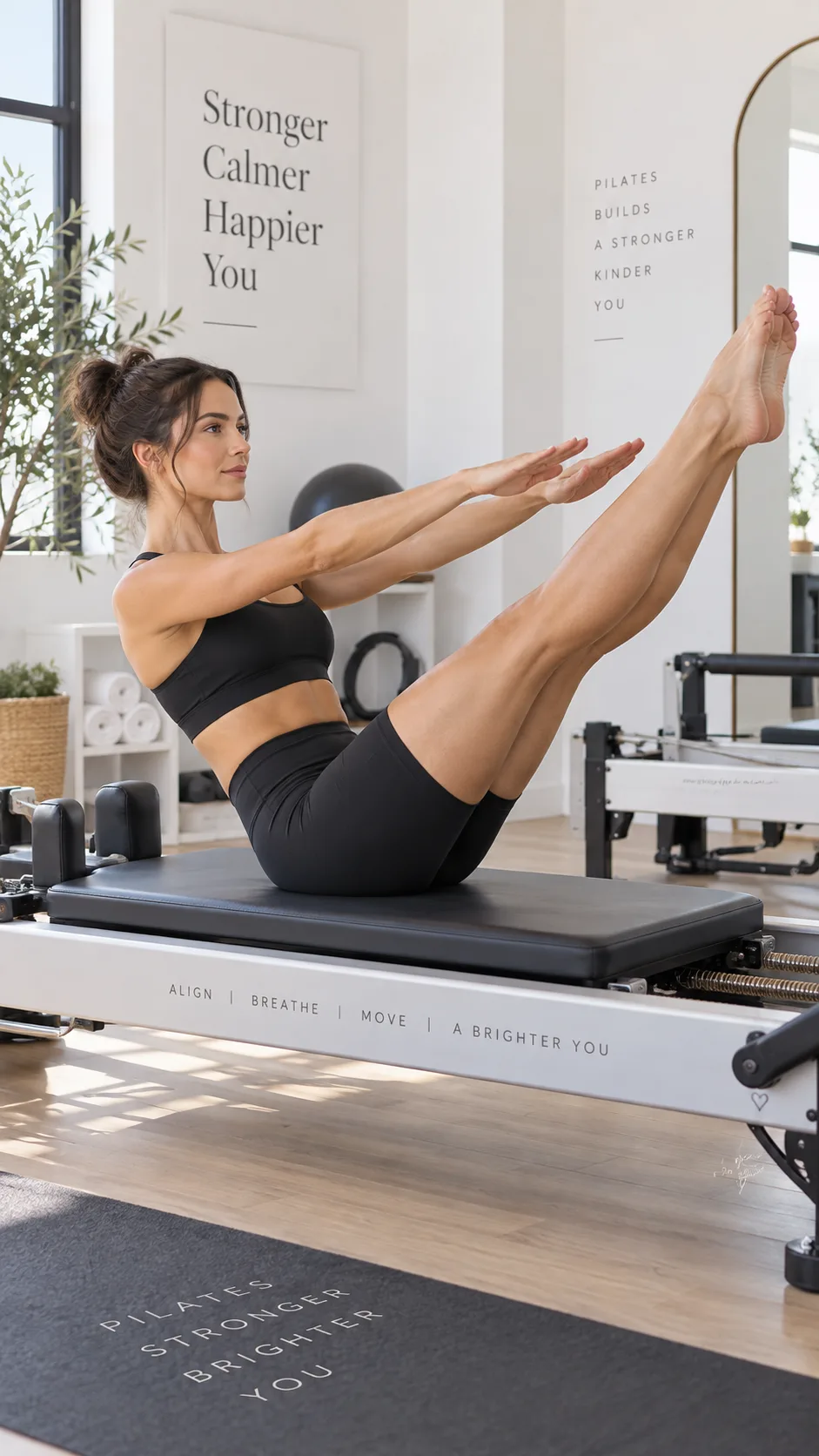
Bike shorts (5-7 inch inseam) work beautifully for Pilates. They stay put, they’re fitted, and they give you full range of motion. If you run hot or your studio feels like a sauna, bike shorts paired with a longline bra can be a total game-changer.
What you want to avoid is loose-fitting athletic shorts. During exercises like the open-leg rocker or any wide-leg stretch on the reformer, loose shorts create… exposure situations. Nobody wants that kind of distraction in class. Ever been mid-teaser and suddenly worried about what’s happening with your hemline? It completely destroys your concentration.
If you love the shorts look, stick with fitted options that have at least a 5-inch inseam. Your future reformer self will thank you.
The footwear question: socks, grip socks, or barefoot?
This trips up so many beginners. Walk into a mat class barefoot and you might be fine. Walk into a reformer class barefoot and you might literally slide off the carriage. Grip socks are the standard footwear for Pilates, and most studios either require or strongly recommend them.
Here’s what to know about Pilates grip socks:
- Non-slip rubber dots on the sole prevent sliding on the reformer, mat, and studio floor
- Toeless vs. full-toe designs come down to preference. Toeless gives you better tactile feedback, while full-toe keeps feet warmer and feels more “normal”
- Low-cut vs. ankle-height is purely aesthetic, though ankle socks can feel more secure
Brands like ToeSox and Tavi Noir have dominated this space for years, and for good reason. Their grip patterns hold up. I’ve tried cheaper alternatives that lost their grip after two washes. Spend the $15-20 on a quality pair. You’ll use them for years.
Pilates outfit ideas: 5 complete looks you can steal
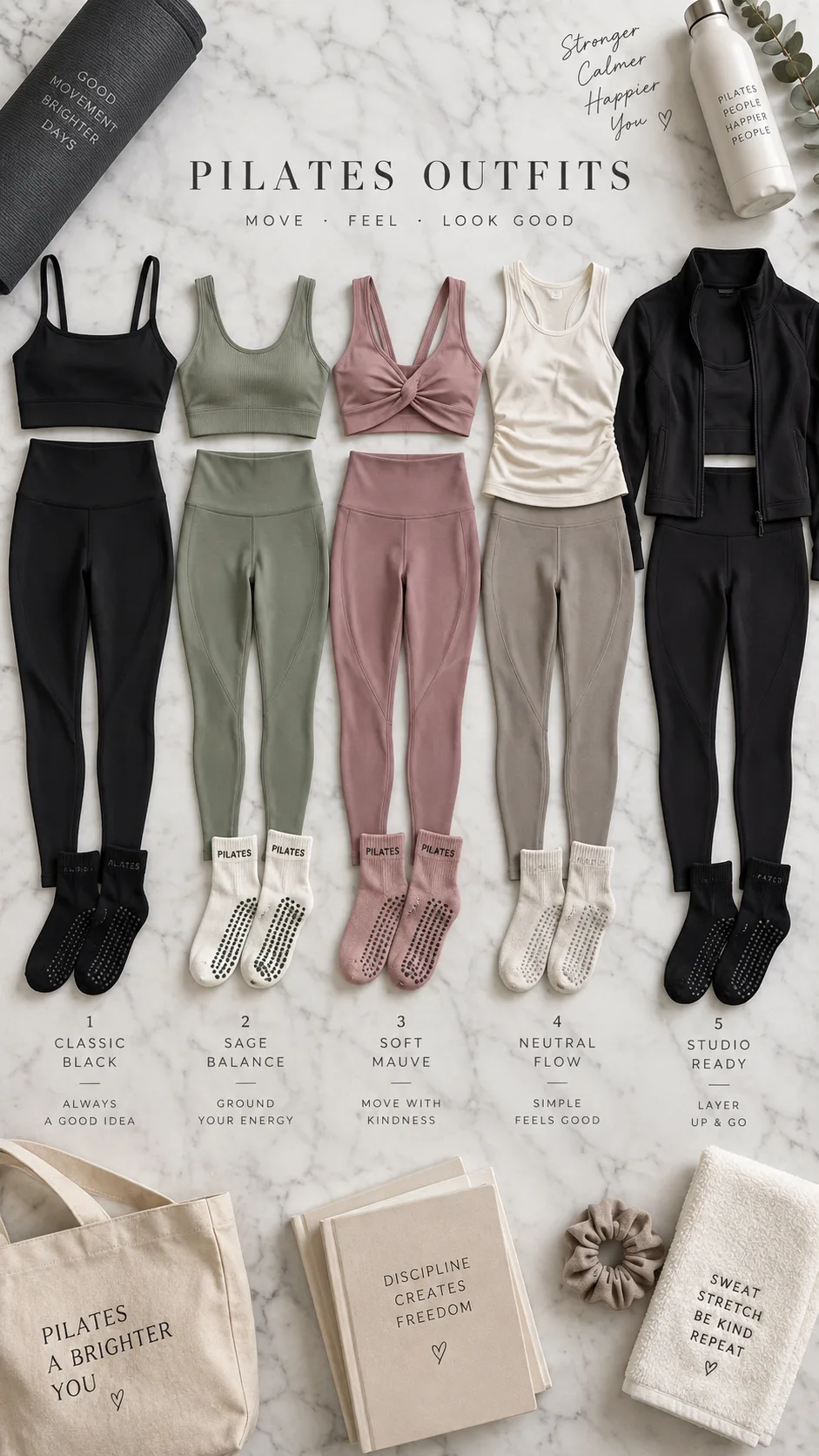
Sometimes you just want someone to hand you a complete outfit and say “wear this.” I respect that energy. Here are five foolproof Pilates outfit combinations that work for different vibes, body types, and class formats. All of these are reformer AND mat-friendly.
1. The classic minimalist
High-waisted black leggings + fitted black tank + black grip socks. This is the little black dress of Pilates outfits. It works everywhere, it matches everything, and you never have to think about it. Pair with a clean white zip-up for the commute and you look like you have your life together (even if your car is full of empty coffee cups).
2. The color pop
Solid dark leggings + bright-colored longline sports bra + coordinating grip socks. Keep the bottoms neutral and let one accent color do all the talking. Burnt orange, deep teal, or rich burgundy all look great without being overwhelming. This look says “I put in effort” with minimal actual effort.
3. The matching set
Coordinated two-piece set (leggings + bra or crop top) in a single color or pattern. Matching sets have that effortlessly polished look that makes you feel like a professional athlete even when you can barely hold a plank for thirty seconds. Many brands now sell sets specifically designed for low-impact workouts. Alo Yoga and Beyond Yoga do this particularly well.
4. The cozy studio look
High-waisted leggings + fitted long-sleeve top + toeless grip socks. Perfect for studios that keep the AC cranked or for early morning classes when your body hasn’t fully woken up yet. The long sleeves add warmth without restricting arm movement during exercises like the arm series on the reformer. Choose a breathable fabric like modal or bamboo blend so you don’t overheat once you’re warmed up.
5. The summer reformer
High-waisted bike shorts + racerback tank + full-toe grip socks. This is my personal go-to from June through September. The bike shorts keep everything covered and secure, the racerback stays put during every movement, and you stay significantly cooler than you would in full-length leggings. If you’re building a strong core through Pilates ab work, a cropped top also lets you visually connect with your abdominal engagement, which is surprisingly helpful for beginners.
Fabrics that work (and fabrics that don’t)
Not all activewear fabrics perform equally in a Pilates setting. You want moisture-wicking, breathable, stretchy materials that recover their shape after being pulled in every direction. Here’s a quick breakdown:
GO FOR:
- Nylon-spandex blends are the industry standard for performance leggings. Smooth, supportive, and durable.
- Modal or bamboo blends feel incredibly soft, wick moisture naturally, and work great for tops.
- Polyester-elastane blends cost less than nylon options and still perform well at Pilates intensity levels.
AVOID:
- 100% cotton absorbs sweat, stretches out, and doesn’t recover shape. You’ll end up with saggy knees by minute fifteen.
- Rubber-backed fabrics show up in some budget leggings marketed for “compression,” and they trap heat like nobody’s business.
- Rough or textured weaves create friction against reformer straps, springs, or your mat, which gets uncomfortable and distracting fast.
What to avoid wearing to Pilates class
Let’s talk about the outfit choices that will genuinely hinder your practice. I’ve seen all of these in real classes, and I’ve committed a few of these sins myself early on:
- Baggy T-shirts or hoodies fall over your face during inversions and hide your alignment from your instructor.
- Jewelry causes problems everywhere. Rings catch on reformer springs. Necklaces swing into your face. Bracelets clank against the carriage. Leave it all in your bag.
- Regular socks (without grip) will make you slide. On the reformer, this is genuinely a safety issue.
- Zippers on the back of tops or bras turn lying on your back for 50 minutes into a special kind of torture.
- Low-rise leggings slide down during literally every core exercise. And since Pilates is essentially one long core exercise, you’ll spend the entire class hiking them up.
IMO, the simplest test is this: put on your outfit at home and do a few roll-ups, a bridge, and hold a plank for 30 seconds. If anything moves, shifts, falls, rides up, or digs in, change before you leave the house.
Building a capsule Pilates wardrobe (without going broke)
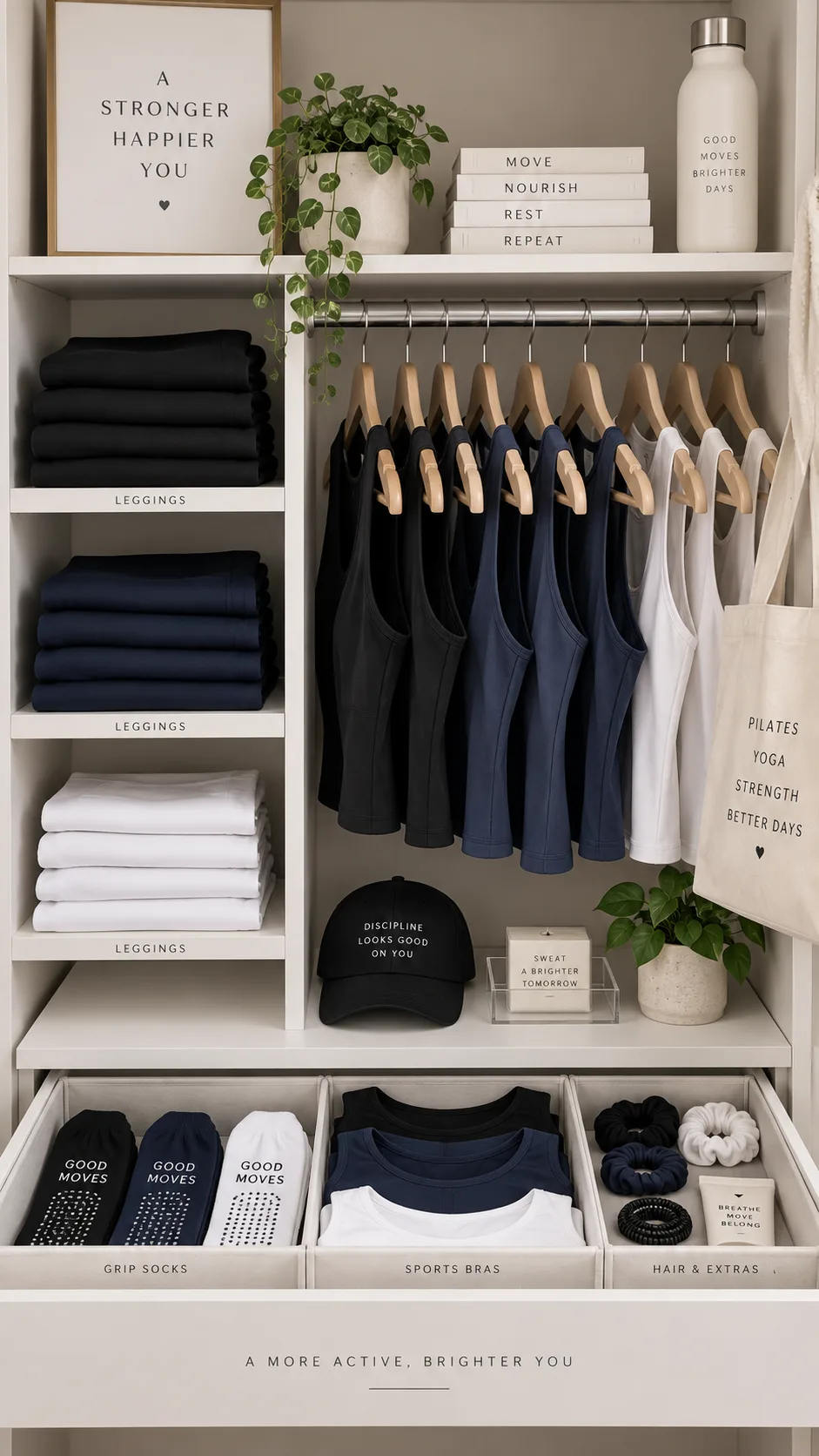
You don’t need fifteen outfits for three classes a week. A smart capsule Pilates wardrobe contains just 8-10 pieces that mix and match effortlessly. Here’s the formula:
- 3 pairs of high-waisted leggings (2 black, 1 color or pattern)
- 1 pair of bike shorts for warmer days
- 2-3 fitted tops (mix of tanks and long-sleeves)
- 2 sports bras (light-to-medium support)
- 2-3 pairs of grip socks
- 1 lightweight layer for commuting (zip-up jacket or wrap)
This gives you at least a week’s worth of unique combinations without doing laundry every other day. Invest in quality basics in neutral colors and you can add trendy pieces seasonally without rebuilding your entire collection.
Budget-conscious? Start with just two complete outfits and build from there. According to Consumer Reports, mid-range activewear ($40-80 per piece) often performs just as well as premium brands in stretch recovery and durability tests. You don’t need to spend $128 on a single pair of leggings to have a great Pilates experience.
Quick tips for keeping your Pilates clothes in great shape
Good activewear isn’t cheap, and even budget-friendly pieces deserve proper care if you want them to last. Here are some laundry habits that’ll extend the life of your Pilates wardrobe significantly:
- Wash in cold water on a gentle cycle. Heat breaks down spandex fibers faster than anything else.
- Skip the dryer. Air dry everything. Yes, everything. Your leggings’ compression and shape depend on it.
- Turn leggings inside out before washing to protect the outer surface and reduce pilling.
- Avoid fabric softener because it coats moisture-wicking fibers and renders them useless over time.
- Wash grip socks in a mesh laundry bag so the rubber dots don’t get shredded in the machine.
Follow these rules and your $30 leggings will outlast someone else’s $100 pair that gets thrown in the dryer every week. That’s not opinion, that’s textile science 🙂
A quick visual guide to Pilates outfit planning
Sometimes it helps to see how real people put Pilates outfits together. This video breaks down practical activewear styling for studio workouts and covers some of the same principles we’ve talked about here:
Final thoughts: get dressed and get moving
Here’s the real truth about Pilates workout outfits: the best outfit is the one that makes you forget about your clothes entirely so you can focus on your movement. You want fitted, functional pieces that stay put, let you breathe, and don’t create unnecessary distractions.
Start with the basics: a solid pair of high-waisted leggings, a fitted top, and grip socks. Build from there as you figure out what works for your body, your studio’s temperature, and your personal style. You really don’t need much to show up looking and feeling ready.
The biggest barrier to a great Pilates practice should be your shaking muscles during a plank series, never your wardrobe. Now close this tab, lay out tomorrow’s outfit tonight, and remove one more excuse between you and the studio. Your core is waiting.
