
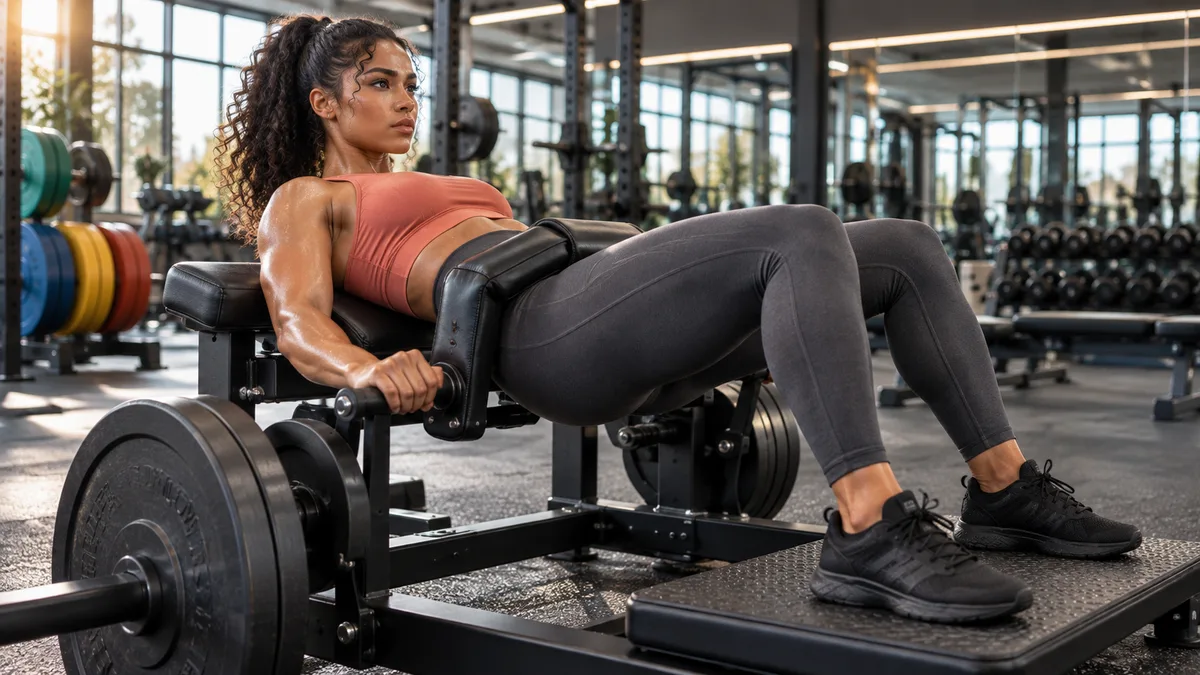
Your glutes are the biggest muscle group in your body, and yet most gym-goers barely scratch the surface of what they can do with them. If you’ve been doing the same old bodyweight squats at home and wondering why nothing’s changing back there, this one’s for you.
Here’s the truth: machines are massively underrated for building glutes. They lock you into proper form, let you overload the muscle safely, and remove a ton of the guesswork that comes with free weights. And no, using machines doesn’t make you “less serious.” It makes you strategic.
This guide breaks down a complete glute gym workout for women built entirely around machines. You’ll get the exercises, the structure, and the science-backed reasoning behind every move. Ready to stop winging it?
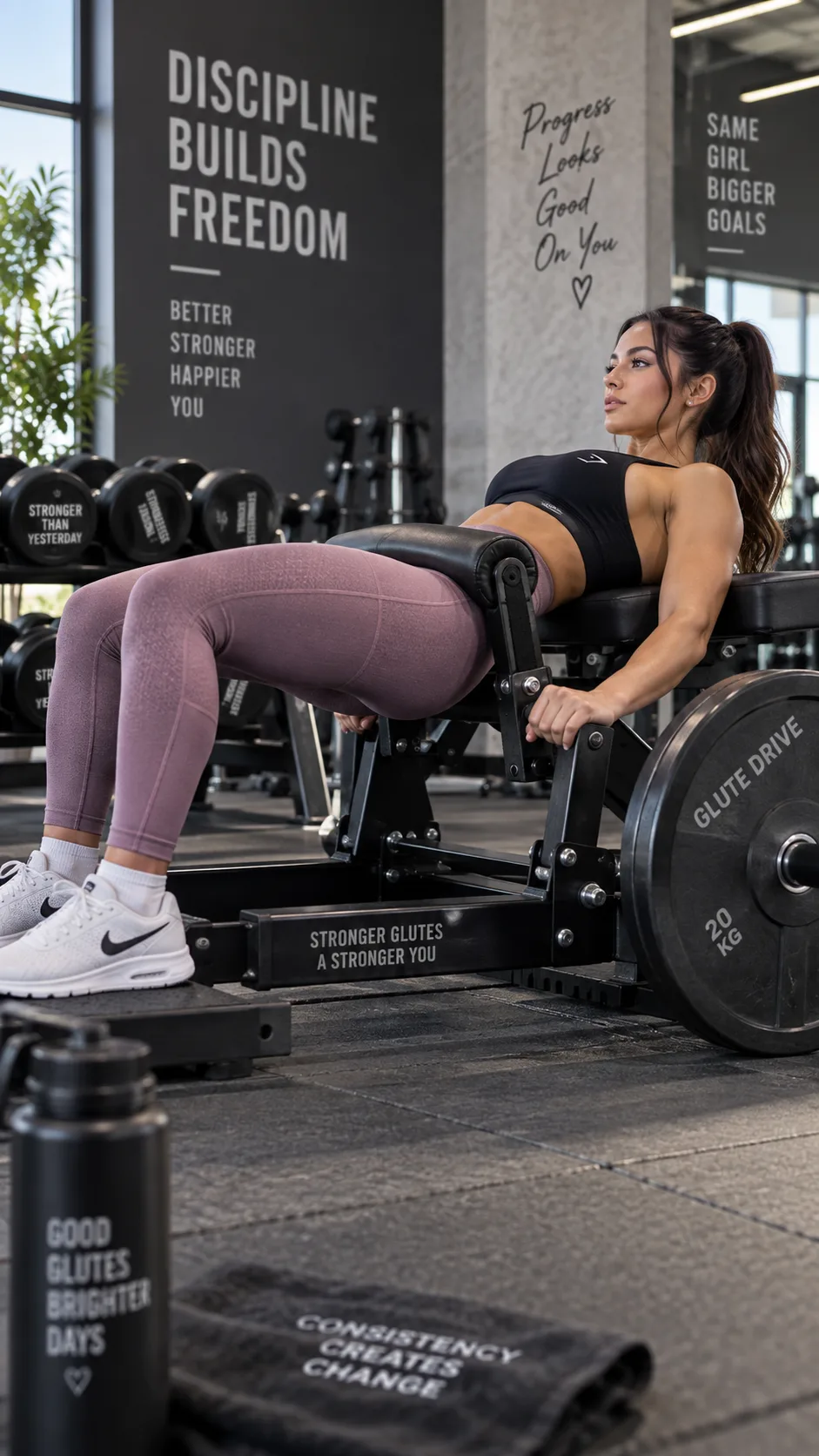
Why machines are secretly perfect for glute growth
Free weights get all the glory, but machines deserve way more credit, especially when you’re targeting a specific muscle group like the glutes. Here’s why they work so well for this particular goal.
Isolation without the instability
When you squat with a barbell, your quads, core, lower back, and stabilizer muscles all fight for attention. That’s great for overall strength, but it dilutes the tension on your glutes. Machines remove that competition. They guide the movement path so you can channel every ounce of effort into your glute muscles.
Think about a cable kickback versus a standing kickback with an ankle weight. The cable version provides constant tension through the entire range of motion. Your glutes never get a break, and that’s exactly what triggers growth.
Progressive overload made easy
Want to add 5 pounds next week? Just move the pin. No loading plates, no finding a spotter, no ego-lifting your way into a back injury. Progressive overload (gradually increasing the weight or reps over time) is THE number one driver of muscle growth, according to research published in the Journal of Strength and Conditioning Research. Machines make this process frictionless.
Confidence for every experience level
If you’re newer to the gym, machines give you guardrails (literally). You don’t need to worry about balancing a bar or perfecting a hip hinge pattern on day one. You sit down, adjust the seat, and push. If you’re already following a gym routine with workout plans built around machines, adding a dedicated glute day slots right in.
The best gym machines for glutes (and how to actually use them)
Not all machines hit the glutes equally. Some are absolute game-changers, and others are… well, they exist. Here are the ones that deserve a permanent spot in your glute gym workout.

1. Hip thrust machine
If your gym has a dedicated hip thrust machine, congratulations. You’ve hit the jackpot. This is arguably the single best exercise for glute activation. Research from Bret Contreras (widely known as “The Glute Guy”) has repeatedly shown that hip thrusts produce higher glute EMG activity than squats.
How to use it: Position your upper back against the pad, plant your feet flat on the platform about hip-width apart, and drive your hips upward. Squeeze HARD at the top for a full second. Lower with control. That’s one rep.
2. Cable machine (kickbacks and pull-throughs)
The cable machine is wildly versatile. For glutes specifically, you’ll want to focus on two movements: cable kickbacks and cable pull-throughs.
- Cable kickbacks: Attach an ankle strap, face the machine, hinge slightly forward, and drive your leg straight back. Keep your core tight and avoid arching your lower back.
- Cable pull-throughs: Stand facing away from a low pulley, grab the rope between your legs, and hinge at the hips. Drive forward by squeezing your glutes, NOT by pulling with your arms.
3. Leg press machine
Here’s the trick most people miss: foot placement changes everything on the leg press. Place your feet high and wide on the platform, and the emphasis shifts dramatically from your quads to your glutes and hamstrings. Push through your heels, not your toes.
4. Smith machine (for hip thrusts and split squats)
No hip thrust machine? The Smith machine is your next best friend. Set a bench perpendicular to the bar, pad the bar with a thick foam pad, and perform hip thrusts with the fixed bar path keeping you stable. You can also use it for Bulgarian split squats, which absolutely torch the glutes when you lean your torso slightly forward.
5. Seated hip abduction machine
You know the one. The “good girl/bad girl” machine that everyone awkwardly avoids eye contact on. It targets your gluteus medius, the side glute muscle responsible for that rounded, shelf-like shape. Don’t skip it. Lean slightly forward on the seat to increase glute engagement even further.
6. Pendulum/donkey kick machine
If your gym has one of these, USE IT. You stand on one leg and drive the other backward against a weighted pad. The movement pattern mimics a donkey kick but with serious resistance. It’s one of the most direct glute isolation machines out there.
The complete machine-only glute workout plan
Alright, enough theory. Here’s the actual workout. Perform this routine 1-2 times per week, allowing at least 48 hours of recovery between sessions. Your glutes grow during rest, not during the workout itself. Remember that.
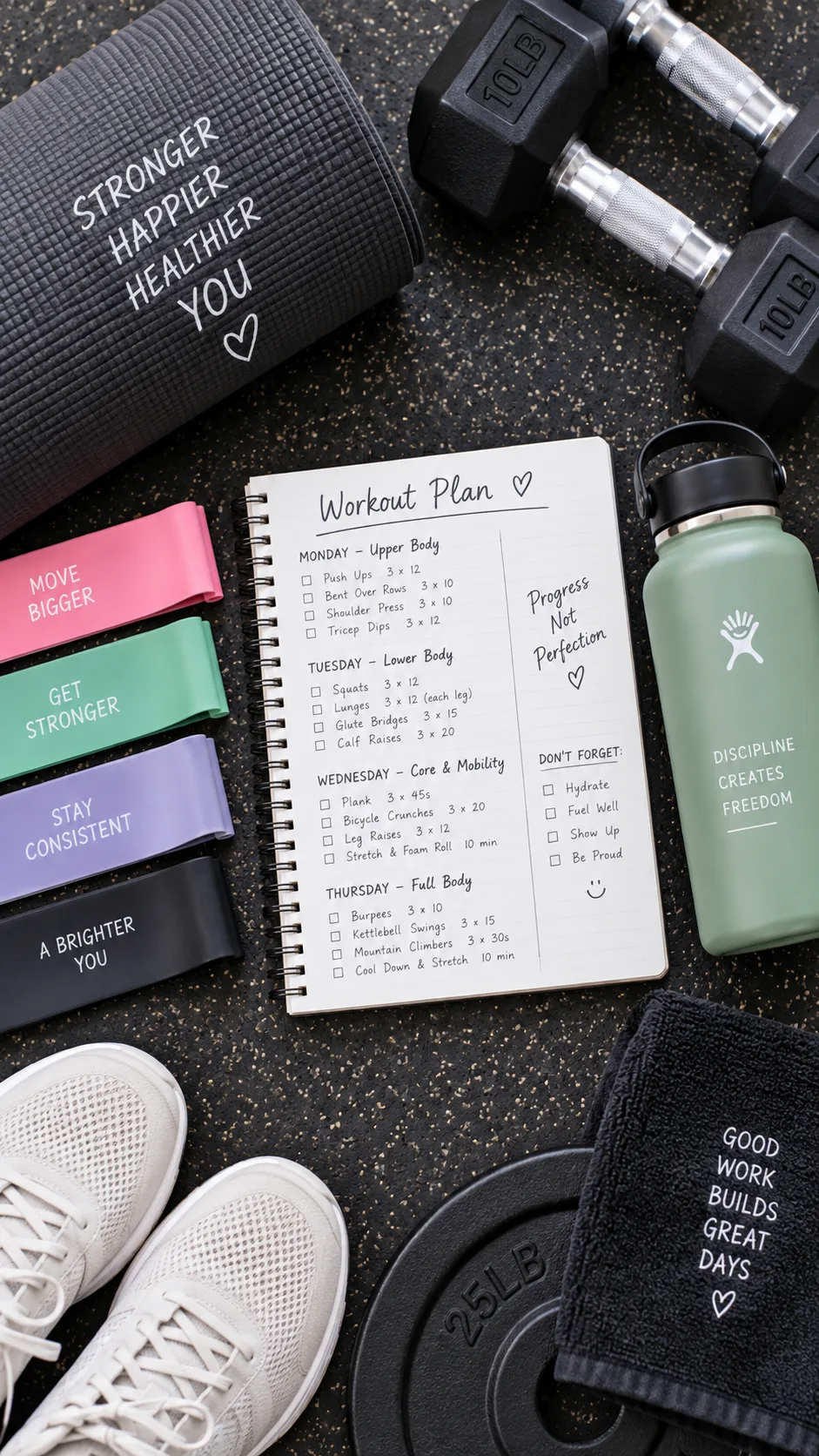
- Hip Thrust Machine, 4 sets x 10-12 reps (go heavy, this is your main lift)
- Leg Press (high and wide foot placement), 3 sets x 12 reps (slow and controlled on the way down)
- Smith Machine Bulgarian Split Squats, 3 sets x 10 reps per leg (lean forward slightly)
- Cable Kickbacks, 3 sets x 15 reps per leg (squeeze at the top for 1 second)
- Seated Hip Abduction, 3 sets x 20 reps (lean forward, use a 2-second pause at peak contraction)
- Cable Pull-Throughs, 3 sets x 15 reps (finisher, keep it lighter, focus on the squeeze)
Rest periods: 60-90 seconds between sets for the first three exercises. 45-60 seconds for the last three. You want to keep the intensity high without completely gassing yourself.
Total time? Roughly 45-55 minutes, depending on how chatty you get between sets. (No judgment. We’ve all been there.)
How to structure your week around this glute plan
A glute workout doesn’t exist in a vacuum. You need a smart weekly split that supports recovery and hits your other muscle groups too. Here’s how I’d personally structure it:
- Day 1: Glute-focused machine workout (this plan)
- Day 2: Upper body, chest, back, shoulders
- Day 3: Rest or light cardio
- Day 4: Full lower body (quads, hamstrings, calves + lighter glute work)
- Day 5: Arms and core
- Day 6: Optional second glute session OR active recovery
- Day 7: Full rest
If you want a more detailed breakdown of weekly scheduling, check out this guide on gym workout day schedules that build muscle without burnout. It pairs perfectly with a dedicated glute day.
Common mistakes that sabotage your glute gains
Ever feel like you’re doing everything right but your glutes STILL won’t grow? You’re probably making at least one of these mistakes. Don’t worry. They’re incredibly common and totally fixable.
Mistake #1: Letting your quads take over
This is the big one. On exercises like the leg press and Smith machine squats, your quads love to steal the show. The fix? Push through your heels, not your toes. Widen your stance. And genuinely think about your glutes contracting on every single rep. That mind-muscle connection isn’t woo-woo. A 2016 study in the European Journal of Applied Physiology confirmed that focusing on a target muscle increases its activation.
Mistake #2: Going too light, too fast
Your glutes respond to HEAVY loads. They’re powerful muscles designed to move serious weight. If you’re breezing through 20 reps on the hip thrust machine without breaking a sweat, you need to increase the resistance. The last 2-3 reps of each set should feel genuinely challenging.
Mistake #3: Skipping the squeeze
Rushing through reps is a glute-growth killer. At the top of every hip thrust, kickback, and pull-through, pause and squeeze your glutes for a full second. That peak contraction is where the magic happens. In my experience, this single adjustment makes more difference than adding any new exercise to your routine.
Mistake #4: Neglecting the gluteus medius
Most people obsess over the gluteus maximus (the big, main glute muscle) and completely ignore the medius. The medius sits on the upper-outer portion of your glute and creates that coveted rounded, 3D look. Hip abductions and banded lateral walks target it directly. Don’t skip them.
Nutrition: You can’t out-train a bad diet
Sorry, but this needs to be said. You can follow the most perfect glute workout in the world, and it won’t do much if your nutrition doesn’t support muscle growth. Building muscle requires fuel, specifically adequate protein and a slight caloric surplus (or at minimum, maintenance calories).
Aim for 0.7-1 gram of protein per pound of body weight daily. That’s the range the International Society of Sports Nutrition recommends for active individuals looking to build muscle. Chicken, fish, eggs, Greek yogurt, tofu, legumes: pick your protein sources and hit that number consistently.
And please, please don’t starve yourself while trying to grow your glutes. Muscle needs energy to build. If you’re eating at a massive caloric deficit, your body simply won’t have the resources to add tissue, no matter how hard you train. For more on fueling your body properly, this guide on heart-healthy eating for women covers solid nutritional foundations.
How long before you see results?
Real talk: glute growth takes time. Anyone promising you a “bigger booty in 2 weeks” is selling you something. Here’s a realistic timeline based on consistent training and proper nutrition:
- Weeks 1-4: You’ll feel stronger. Your mind-muscle connection improves noticeably. Visible changes? Minimal.
- Weeks 4-8: Your clothes start fitting differently. Your glutes feel firmer to the touch. Other people might not notice yet, but YOU will.
- Weeks 8-16: This is where visible growth typically kicks in. Photos taken from the side will show a noticeable difference. Stay the course.
- Months 4-12+: Significant, undeniable changes. This is where consistency pays off big time.
The women who get the best results aren’t the ones who train the hardest for three weeks and then quit. They’re the ones who show up week after week, progressively add weight, eat enough protein, and sleep 7-8 hours a night. Boring? Maybe. Effective? Absolutely.
Quick warm-up routine (don’t skip this)
Walking into the gym and immediately loading up the hip thrust machine is a recipe for a pulled hamstring. Spend 5-7 minutes warming up your glutes before touching a single machine. Here’s what works:
- Glute bridges (bodyweight), 2 sets x 15 reps with a 3-second hold at the top
- Banded lateral walks, 2 sets x 12 steps each direction
- Banded clamshells, 2 sets x 15 reps per side
- Bodyweight squats, 1 set x 15 reps, slow tempo
This activation sequence “wakes up” your glutes so they actually fire properly during your working sets. According to the American Council on Exercise, glute activation exercises before training significantly improve muscle recruitment during compound movements.
Build the plan, trust the process
A strong, well-developed set of glutes isn’t just about aesthetics (although, let’s be honest, that’s a nice perk). Strong glutes improve your posture, protect your lower back, boost athletic performance, and make everyday movements easier. They’re foundational muscles that deserve dedicated training.
This machine-based glute gym workout for women gives you everything you need: the right exercises, the right order, and the right rep ranges. Pair it with proper nutrition, adequate sleep, and a consistent weekly schedule, and you WILL see results.
Now close this tab and go book that gym session. Your glutes are waiting.
