

You’ve been going to the gym for three weeks, doing a little bit of everything, and you look… exactly the same. Sound familiar? That’s because random workouts produce random results. If you don’t match your training to your goal, you’re spinning your wheels in expensive sneakers.
The truth nobody posts on Instagram: the fastest path to results isn’t working harder. It’s working smarter from day one. Whether you want to lose fat, build muscle, boost endurance, or just feel less winded climbing stairs, your workout plan needs to reflect that specific target.
I spent my first two years in the gym doing whatever the biggest guy in the room was doing. Spoiler: I wanted to run a faster 5K. Yeah, that didn’t work out so well. Let me save you from making the same mistake.
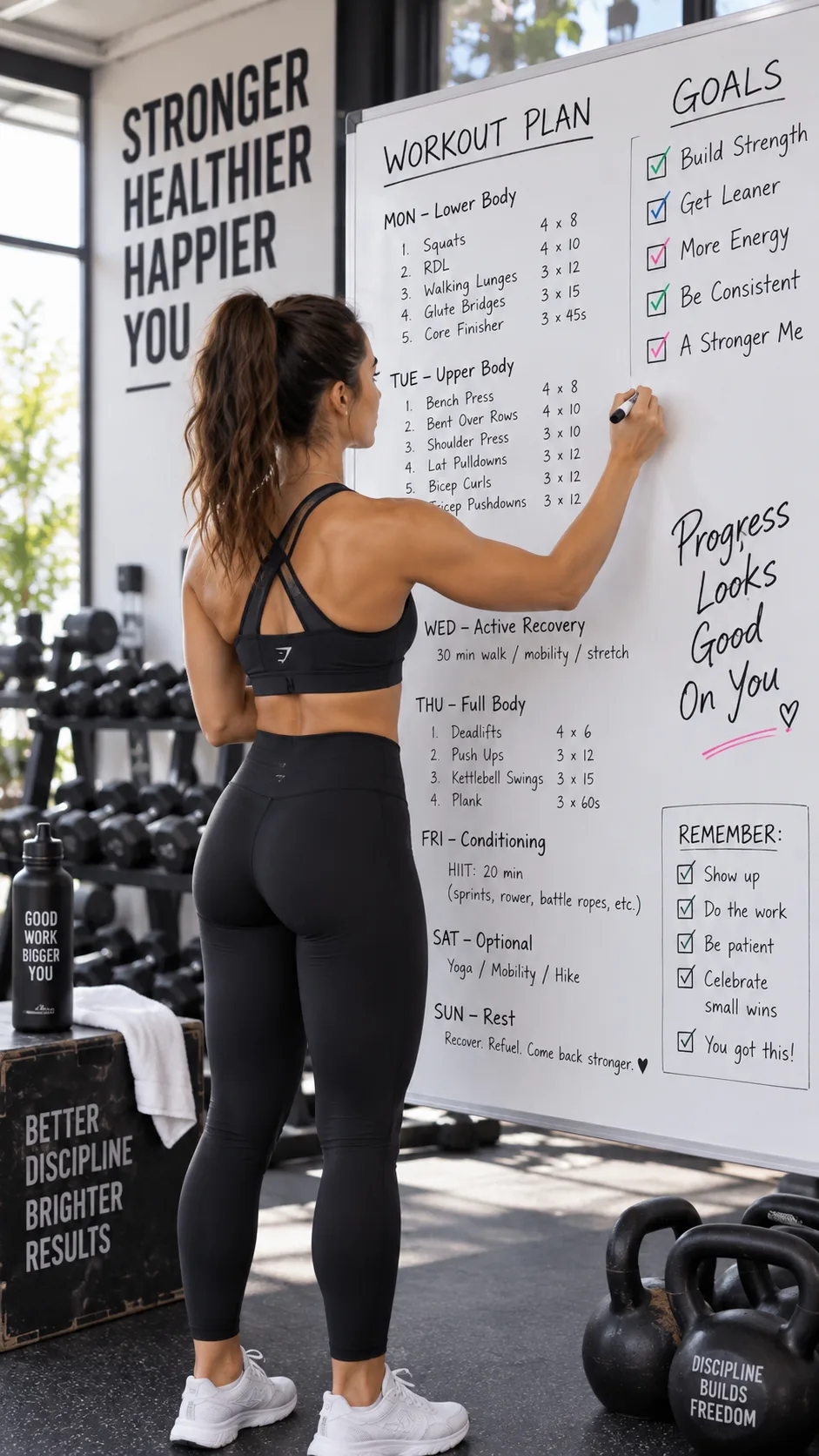
Why most people waste their first month (or more)
The biggest reason people stall isn’t laziness or bad genetics. It’s goal-program mismatch. You say you want to build muscle, but you’re running five days a week. You say you want to lose weight, but you’re doing a powerlifting program with five-minute rest periods and zero cardio.
According to the American College of Sports Medicine, exercise programming should follow the principle of specificity: your body adapts to the exact demands you place on it. Train for strength, and you get stronger. Train for endurance, and you last longer. Train for nothing in particular, and you get nothing in particular.
Ever noticed how some people look the same year after year despite showing up consistently? That’s the cost of skipping this step. Consistency matters, but consistent misdirection just gets you further from where you want to be.
Step 1: Get brutally honest about your goal
Before picking a single exercise, you need to lock in ONE primary goal. Not three. Not “I want to lose fat AND gain muscle AND train for a marathon.” Pick the thing that matters most right now.
The big four fitness goals
- Fat loss: You want to drop body fat percentage and look leaner
- Muscle building (hypertrophy): You want visible size and definition
- Strength: You want to lift heavier weight, period
- Cardiovascular endurance: You want better stamina, faster times, or improved heart health
Yes, there’s overlap between these. Yes, a beginner can chase two at once for a while. But if you’ve been training for more than a few months, trying to optimize everything simultaneously optimizes nothing. Pick your lane, crush it for 8-12 weeks, then reassess.
If you’re unsure where you stand physically, tools like a lean body mass calculator can give you a clearer picture of your starting point so you’re not guessing.
Workout recommendations for fat loss
This is the goal roughly 60% of gym-goers share. You want to shed fat without losing the muscle you already have. So what works, and what doesn’t?
What your training week should look like
- Resistance training: 3-4 days per week (full body or upper/lower split)
- Cardio: 2-3 sessions of moderate-intensity steady state (MISS) OR 1-2 HIIT sessions
- Daily movement: Target 7,000-10,000 steps outside of workouts
Most people get this wrong: cardio alone is a terrible fat loss strategy. Resistance training preserves muscle mass during a caloric deficit, which keeps your metabolism from tanking. A 2021 review in the British Journal of Sports Medicine confirmed that combining resistance training with a calorie deficit produces significantly better body composition results than diet alone.
Training variables that matter for fat loss
- Use moderate rep ranges (8-15 reps) with challenging weight
- Keep rest periods shorter, around 60 to 90 seconds between sets
- Prioritize compound movements: squats, deadlifts, rows, presses
- Add supersets or circuits to increase calorie burn per session
- Don’t neglect protein intake. Aim for 0.7-1g per pound of bodyweight daily
FYI, if you’re also managing your diet through a structured approach (say, while on a GLP-1 medication), pairing your workout with a solid semaglutide meal plan can speed up your progress significantly.
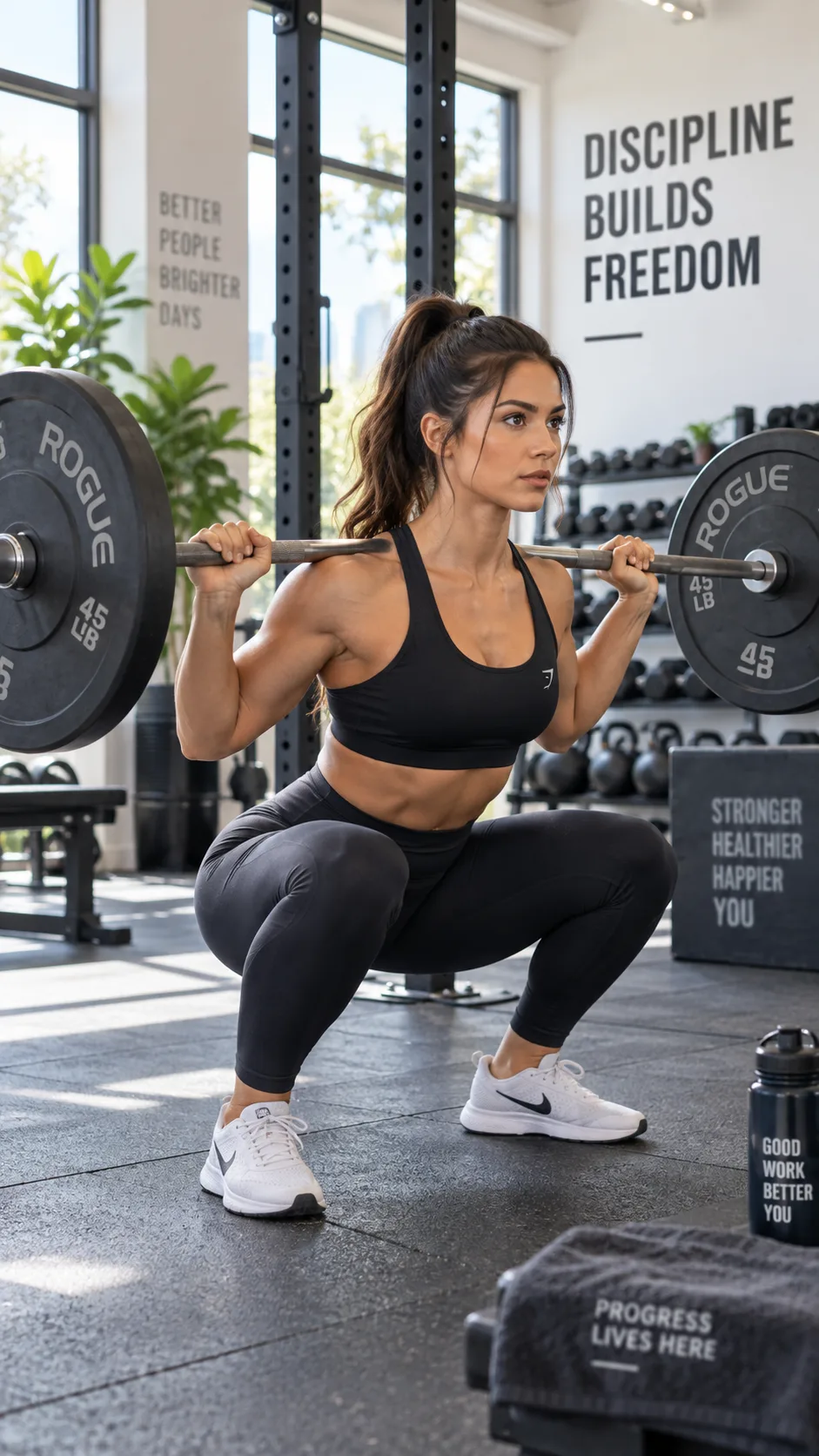
Workout recommendations for muscle building
Want to look like you lift? Hypertrophy training is your ticket. This is where you chase the pump, accumulate volume, and give your muscles a reason to grow.
The ideal hypertrophy setup
- Training frequency: 4-5 days per week
- Split options: Push/Pull/Legs, Upper/Lower, or a body-part split
- Volume: 10-20 hard sets per muscle group per week
- Progressive overload: Add weight, reps, or sets over time. This is NON-NEGOTIABLE
Rep ranges matter here. Research consistently shows that 6-12 reps per set with moderate to heavy loads drives the most hypertrophy. But don’t sleep on higher rep work (15-20) for accessory movements. It contributes more than people think.
Common hypertrophy mistakes that waste weeks
- Ego lifting: Using momentum instead of controlling the muscle through a full range of motion
- Skipping tracking: If you don’t log your weights and reps, you can’t progressively overload
- Neglecting recovery: Muscles grow during rest, not during the workout itself
- Program hopping: Switching routines every two weeks because you saw a new one on TikTok
That last one? Probably the single biggest time-waster in fitness. Stick with a program for at least 6-8 weeks before making changes. Adaptation takes time, and you need to give your body a consistent stimulus.
If you’re a woman specifically looking for a structured muscle-building approach, check out this bodybuilding women workout plan that makes every gym session count.
Workout recommendations for pure strength
Strength training and hypertrophy training look similar on the surface, but the details are wildly different. Strength is about your nervous system learning to recruit more muscle fibers and produce more force. Size is a bonus, not the primary goal.
How to structure a strength program
- Training frequency: 3-4 days per week
- Rep range: 1-5 reps for main lifts
- Rest periods: 3-5 minutes between heavy sets (yes, really)
- Focus lifts: Squat, bench press, deadlift, overhead press
- Intensity: Working at 80-95% of your one-rep max regularly
Programs like Starting Strength, 5/3/1, and GZCL have held up for a reason. They prioritize progressive overload on the big compound lifts and manage fatigue intelligently. If you’re chasing strength, pick one of these proven frameworks instead of inventing your own.
One thing I learned the hard way: strength gains aren’t linear forever. You’ll add weight to the bar quickly for the first few months, then progress slows. That’s normal. Intermediate lifters need periodization (cycling through heavier and lighter phases) to keep improving without burning out or getting hurt.
Workout recommendations for cardiovascular endurance
Want to run farther, cycle longer, or just stop gasping for air during a pickup basketball game? Endurance training requires a different playbook entirely.
Building your cardio base
- Start with Zone 2 training. This means working at a pace where you can hold a conversation. It builds your aerobic base and teaches your body to burn fat efficiently.
- Add 1-2 higher-intensity sessions per week. Tempo runs, interval work, or hill repeats push your VO2 max higher.
- Follow the 80/20 rule. About 80% of your training should feel easy. The remaining 20% should feel challenging.
- Increase volume gradually. The classic guideline: no more than a 10% increase in weekly volume per week.
The American Heart Association recommends at least 150 minutes of moderate aerobic activity per week for general heart health. If you’re training for a specific event, you’ll likely need more, but that baseline is a great starting point.
Should you still lift weights if endurance is your goal? Absolutely. Two days of resistance training per week protects your joints, prevents muscle loss, and improves running economy. Don’t skip it.
The “I want everything” approach: hybrid training
Okay, I hear you. Some of you don’t want to pick just one goal. You want to look decent, feel strong, AND not die running a mile. Welcome to hybrid training, and it’s more legitimate than you might think 🙂
How to balance multiple goals
- Prioritize one goal slightly. Give it 60% of your training focus
- Complement with the secondary goal. Dedicate 40% of sessions to this
- Accept slower progress. You’ll improve at both, just not as fast as a specialist
- Manage recovery aggressively. Sleep 7-9 hours, eat enough protein, and take rest days seriously
A practical hybrid week might look like this: 3 days of resistance training + 2 days of running + 1 active recovery day + 1 full rest day. That gives you enough stimulus for both without frying your central nervous system.
IMO, hybrid training works best for people who value general fitness and longevity over peak performance in any single area. And honestly? For most of us, that’s the smarter play long-term.
How to know if your program is working
You’ve picked a goal, matched your workouts, and showed up consistently. Great. But how do you know it’s working before you waste weeks on a dud program?
Track these metrics based on your goal
- Fat loss: Waist measurements, progress photos every 2 weeks, how your clothes fit
- Muscle building: Are your lifts increasing? Do you look fuller in the mirror?
- Strength: Are your main lift numbers going up week to week or month to month?
- Endurance: Can you maintain the same pace at a lower heart rate? Are your times improving?
Give any new program at least 3-4 weeks before judging it. Your body needs time to adapt. But if you see ZERO improvement after a full month of consistent effort, something needs to change: the program, your nutrition, your recovery, or all three.
The scale, by the way, is one of the worst tools for measuring fat loss progress. You can lose fat, gain a bit of muscle, and weigh the same. Trust measurements and the mirror over the number on the scale.
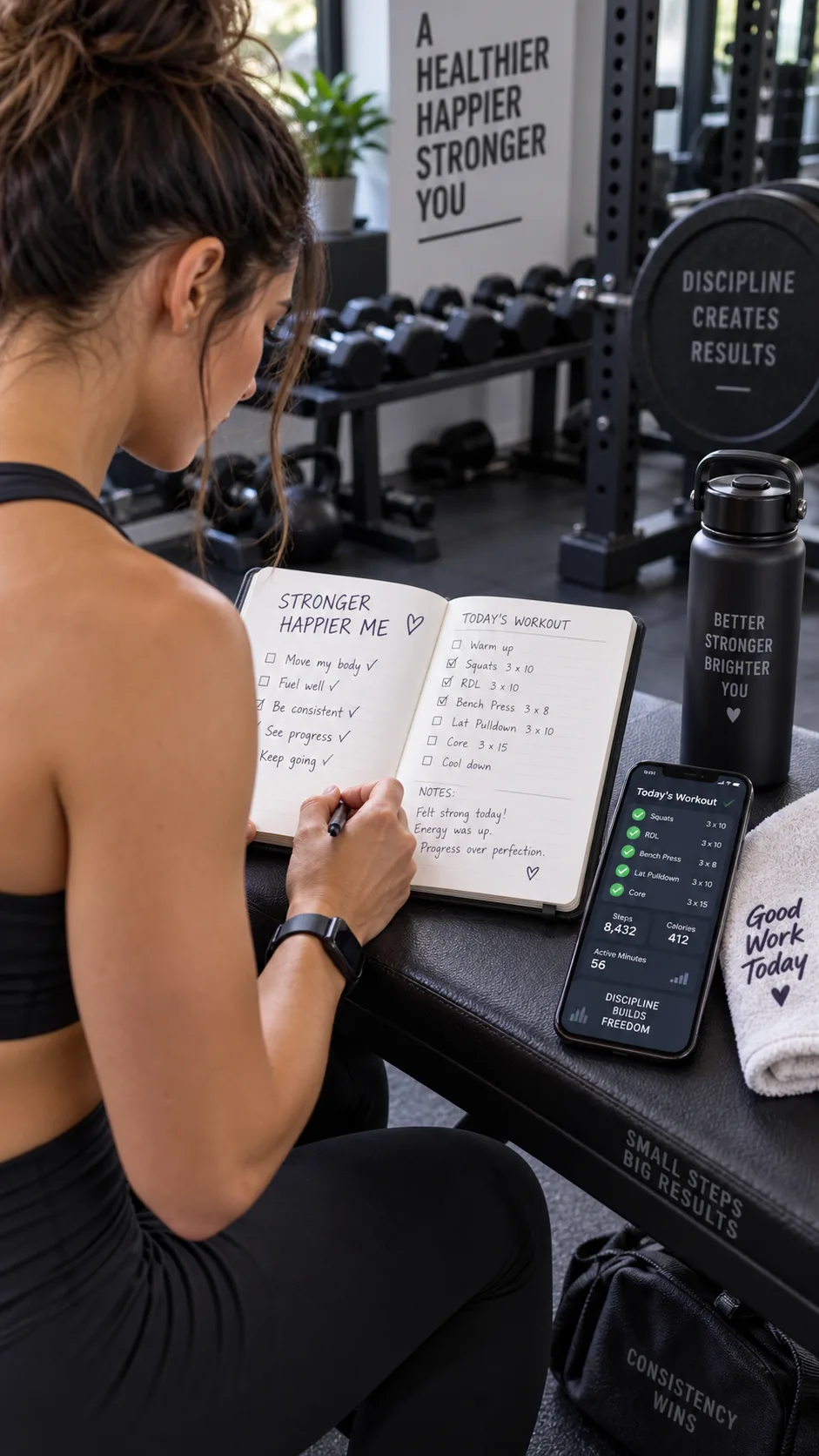
Nutrition: the part nobody wants to hear about
You can’t out-train a bad diet. I know, I know. You’ve heard it a thousand times. But it keeps getting repeated because people keep ignoring it.
Your workout gives your body the signal to change. Your nutrition provides the raw materials to make that change happen. Without adequate protein, sufficient calories (or an appropriate deficit), and proper hydration, even the best program will underperform.
Quick nutrition guidelines by goal
- Fat loss: Caloric deficit of 300-500 calories per day, high protein (at least 0.8g per pound of bodyweight)
- Muscle building: Caloric surplus of 200-400 calories per day, high protein, adequate carbs for energy
- Strength: Eat at or slightly above maintenance, prioritize protein and carbs around workouts
- Endurance: Adequate carbohydrates are CRITICAL. Don’t fear carbs if you’re running or cycling regularly
If your diet supports a balanced nutritional foundation, your workouts become exponentially more effective. It’s not glamorous advice, but it’s the truth.
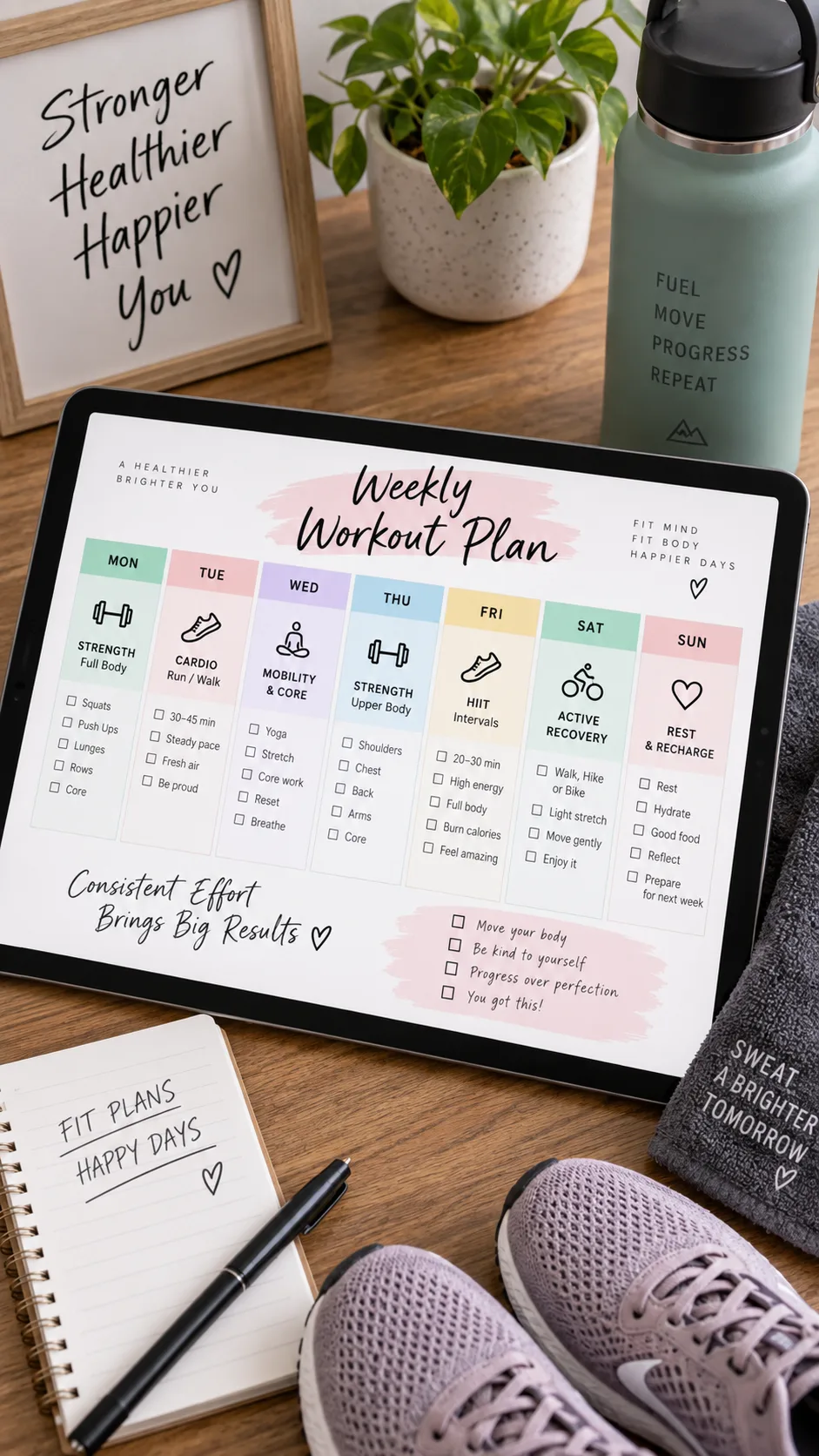
Sample weekly schedules for each goal
Let me lay out what a real week looks like for each goal. No fluff, just the framework you can start using tomorrow.
Fat loss week
- Monday: Full body resistance training
- Tuesday: 30-40 min steady-state cardio
- Wednesday: Full body resistance training
- Thursday: HIIT session (20 minutes)
- Friday: Full body resistance training
- Saturday: Long walk or active recovery
- Sunday: Rest
Muscle building week
- Monday: Push (chest, shoulders, triceps)
- Tuesday: Pull (back, biceps)
- Wednesday: Legs
- Thursday: Rest or light cardio
- Friday: Upper body
- Saturday: Lower body
- Sunday: Rest
Strength week
- Monday: Squat focus + accessories
- Tuesday: Bench press focus + accessories
- Wednesday: Rest or light mobility work
- Thursday: Deadlift focus + accessories
- Friday: Overhead press focus + accessories
- Saturday: Rest
- Sunday: Rest
Endurance week
- Monday: Easy run (Zone 2)
- Tuesday: Resistance training (full body)
- Wednesday: Tempo run or intervals
- Thursday: Easy run (Zone 2)
- Friday: Resistance training (full body)
- Saturday: Long slow run
- Sunday: Rest
Stop overthinking, start matching
The bottom line: the best workout program is the one that directly serves your current goal and that you’ll do consistently. Not the one your favorite influencer follows. Not the one your coworker swears by. The one that matches YOUR target.
Define your goal clearly. Choose the training style that aligns with it. Track your progress with the right metrics. Eat to support your training. And give it enough time to work before you panic and switch everything up.
You don’t need another three weeks of wandering around the gym doing random exercises. You need a plan that makes every session count, starting today. Now stop reading and go train. Your future self will thank you.
