

You don’t need six gym days a week to build serious strength. You don’t need a “chest day,” a “back day,” and a mysterious “accessory day” that somehow eats your entire Saturday. What you need is a smart full body strength training workout that hits every major muscle group in one efficient session.
Full body training has decades of research and real-world results behind it, and it’s the approach that busy, results-driven people keep coming back to. Let me show you how to set one up, and why it works so well.
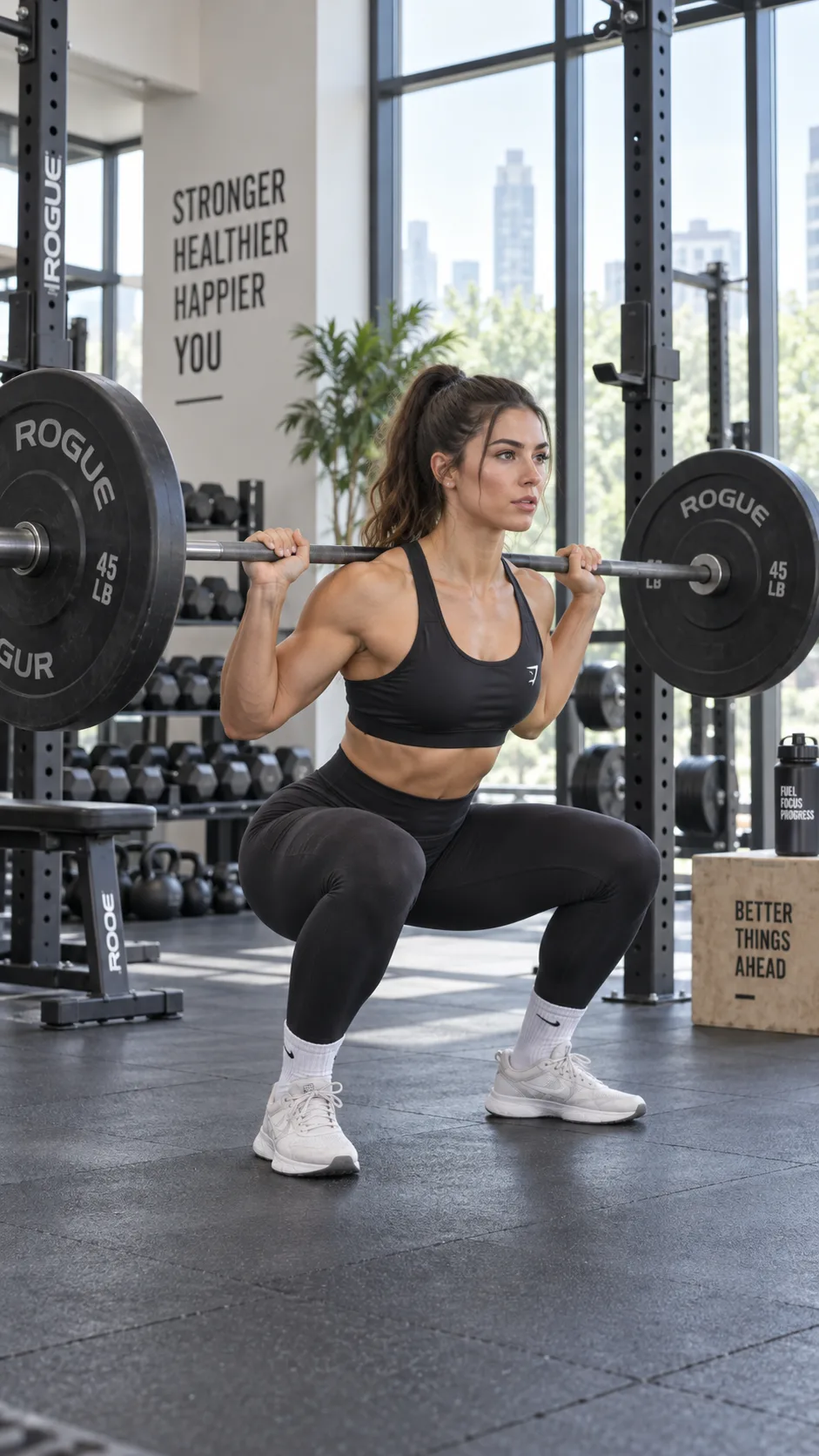
Why full body strength training beats the bro split
The traditional “one body part per day” split was designed by bodybuilders who train as their literal profession. They have the time, the recovery protocols, and often the pharmaceutical support to make that approach work. For the rest of us, it’s overkill and not very efficient.
Full body strength training lets you train each muscle group 2-3 times per week instead of once. A 2016 meta-analysis published in Sports Medicine found that training a muscle group at least twice per week produces significantly greater hypertrophy compared to once-weekly training. That’s peer-reviewed science, not just an opinion.
The frequency advantage
Every time you train a muscle, you trigger a protein synthesis response that lasts roughly 24-72 hours. After that window closes, your muscle sits idle until the next session. With a bro split, your chest might wait a full week between growth signals. With a full body approach, you send those signals every 48 hours.
More frequent stimulation means more total growth over time. Simple as that.
Time efficiency that fits your schedule
You commit to three sessions per week, roughly 45-60 minutes each. Compare that to five or six days chained to a squat rack, and the choice becomes obvious for anyone with a job, kids, hobbies, or just values their free time.
If you want even more flexibility, you can check out a full body dumbbell workout plan that works whether you’re at the gym or training from a home setup.
The full body strength training workout program
This program runs three days per week (e.g., Monday, Wednesday, Friday) with at least one rest day between sessions. Each workout follows a specific structure to ensure balanced development from head to toe.
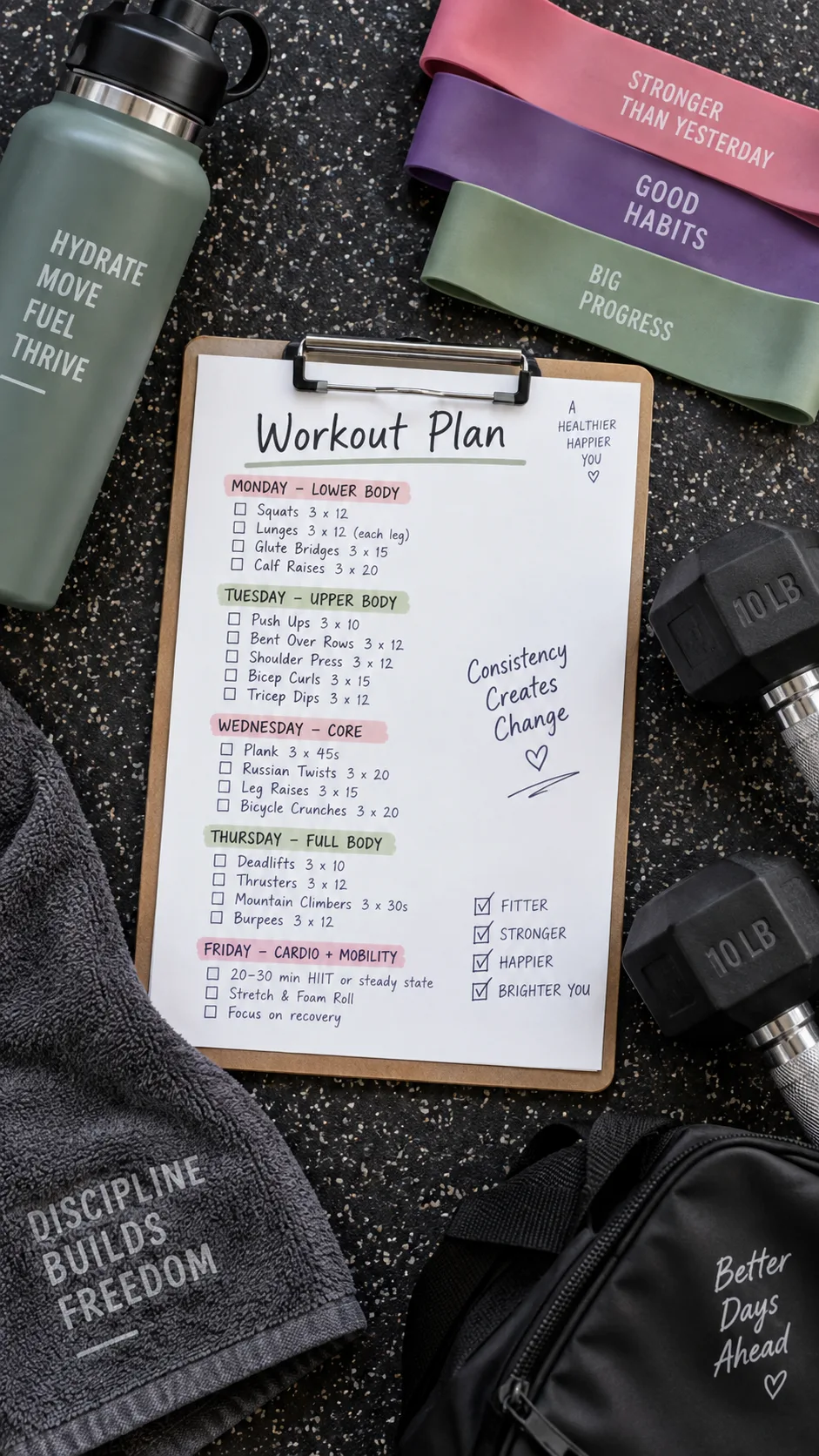
Workout structure overview
Every session includes one exercise from each of these movement patterns:
- Squat pattern (quads, glutes, core)
- Hip hinge pattern (hamstrings, glutes, lower back)
- Horizontal push (chest, shoulders, triceps)
- Horizontal pull (upper back, biceps)
- Vertical push (shoulders, triceps)
- Vertical pull (lats, biceps)
- Core/carry (abdominals, obliques, stabilizers)
This structure means you never neglect a muscle group. Ever skipped training your back for weeks because “nobody sees it anyway”? Your posture noticed. This program won’t let that happen.
Day A: Strength focus
- Barbell Back Squat: 4 sets x 5 reps
- Barbell Bench Press: 4 sets x 5 reps
- Barbell Bent-Over Row: 4 sets x 6 reps
- Overhead Press: 3 sets x 6 reps
- Romanian Deadlift: 3 sets x 8 reps
- Chin-Ups: 3 sets x 6-8 reps
- Farmer’s Walk: 3 sets x 40 meters
Day B: Hypertrophy focus
- Front Squat or Goblet Squat: 3 sets x 10 reps
- Dumbbell Incline Press: 3 sets x 10 reps
- Cable Row: 3 sets x 12 reps
- Dumbbell Lateral Raise: 3 sets x 15 reps
- Hip Thrust: 3 sets x 10 reps
- Lat Pulldown: 3 sets x 12 reps
- Pallof Press: 3 sets x 10 reps per side
Day C: Power and volume mix
- Trap Bar Deadlift: 4 sets x 5 reps
- Push-Ups (weighted if possible): 3 sets x 12-15 reps
- Single-Arm Dumbbell Row: 3 sets x 10 reps per arm
- Arnold Press: 3 sets x 8 reps
- Bulgarian Split Squat: 3 sets x 8 reps per leg
- Pull-Ups: 3 sets to near failure
- Ab Wheel Rollout: 3 sets x 8-10 reps
You alternate A-B-C across your training week. Week one goes A-B-C; week two starts with A again. Same rotation every time.
How to progress without plateauing
Progressive overload is non-negotiable. If you lift the same weight for the same reps every single week, your body has zero reason to adapt. You’ll stay exactly where you are, which defeats the entire purpose of showing up.
The double progression method
This is IMO the most practical progression system for full body strength training:
- Pick a rep range for each exercise (e.g., 3 sets of 6-8 reps).
- Start at the bottom of the range with a challenging weight.
- When you hit the top of the range across ALL sets, increase the weight by 2.5-5 lbs next session.
- This drops you back to the bottom of the rep range. Repeat the cycle.
It’s self-regulating. You push hard, you earn the weight increase, and you always know exactly what to do next session.
Track everything
Write your numbers down. Use an app, a notebook, a napkin, whatever works. But track your sets, reps, and weights religiously. The people who make the best progress in the gym are almost always the ones who actually know what they lifted last week.

Rest periods: the variable most people overlook
How long you rest between sets matters WAY more than most people realize. Rush through your rest periods and your strength drops off a cliff. Scroll Instagram for five minutes between sets and your workout takes three hours.
The National Strength and Conditioning Association (NSCA) recommends these rest windows, and they line up well with what works in practice:
- Heavy compound lifts (squats, deadlifts, bench): 2-3 minutes rest
- Moderate compound lifts (rows, presses): 90 seconds to 2 minutes
- Isolation/accessory work: 60-90 seconds
- Core work: 30-60 seconds
Stick to these windows and you’ll finish each session in roughly 50-60 minutes. That’s a complete full body strength workout that respects both your muscles and your calendar.
Warm-up: don’t skip it
I know, I know. Warming up feels like the vegetables of the gym world: everyone knows they should do it, but most people just don’t. A proper warm-up directly improves your performance in the working sets and cuts injury risk. Two real benefits for five minutes of effort.
A quick pre-workout warm-up
- 3-5 minutes of light cardio (rowing machine, bike, brisk walk)
- Dynamic stretches: leg swings, arm circles, hip circles (1 minute each)
- Activation drills: band pull-aparts, glute bridges, bodyweight squats (2 sets of 10)
- Ramp-up sets: before your first heavy exercise, do 2-3 progressively heavier warm-up sets
This entire sequence takes about 8-10 minutes. Your joints will thank you, your performance will improve, and the version of you that still wants functional knees at 60 will really appreciate the effort.
Nutrition basics to support full body training
You can run the perfect full body strength training workout three times a week, but if your nutrition doesn’t support recovery, you’re building a house without a foundation. Strength training breaks muscle tissue down. Food and sleep build it back up stronger.
Protein: the non-negotiable
Aim for 0.7-1 gram of protein per pound of bodyweight each day. A 170-pound person should target roughly 120-170 grams daily. Spread that across 3-4 meals for optimal muscle protein synthesis. This aligns with guidelines from the American College of Sports Medicine.
Chicken, fish, eggs, Greek yogurt, tofu, legumes: pick your sources and eat consistently. Fancy supplements won’t fix a diet that’s fundamentally short on real food.
Calories and carbs matter too
Strength training demands energy. If you’re eating in a severe calorie deficit, your lifts will stall, your recovery will suffer, and your mood will nosedive. Eat enough carbohydrates to fuel your sessions, especially in the meal before and after training. Rice, potatoes, oats, and fruit are your friends here.
For those managing weight while building strength, our GLP-1 strength training guide covers how to balance muscle building with weight loss in a practical way.

Common mistakes that sabotage your results
I’ve watched people make these errors for years, and I’ve made most of them myself. Save yourself the wasted effort and avoid these pitfalls from the start.
1. Going too heavy, too soon
Your ego wants to load the bar. Your tendons, ligaments, and connective tissue need TIME to adapt. Start lighter than you think you should and build up over 2-3 weeks. The weights will get heavy soon enough. Patience pays compound interest in the gym.
2. Skipping the “boring” exercises
Nobody posts their Pallof press on social media. But core stability, hip hinge patterns, and single-leg work are what keep you healthy and performing well long-term. Do the boring stuff. Your body doesn’t care what looks cool on camera.
3. Ignoring recovery days
Rest days exist for a reason. Your muscles grow BETWEEN sessions, not during them. If you feel the urge to do something on off days, take a walk, do some light stretching, or try a mat Pilates workout for active recovery. Just don’t hammer heavy weights four days in a row and wonder why you feel wrecked.
4. Program hopping
Switching programs every two weeks because you saw something flashier on TikTok is the fastest route to going nowhere. Stick with a program for at least 8-12 weeks before evaluating whether it’s working. Consistency beats novelty every single time.
Who should use a full body strength training program?
Short answer: almost everyone. But some groups benefit more than others.
- Beginners: Full body training provides the practice frequency needed to learn movement patterns quickly and build a solid base of strength.
- Busy professionals: Three days per week is sustainable. Miss a session? You’ve still trained each muscle group twice that week.
- Intermediate lifters returning from a break: Full body workouts help you rebuild strength evenly without overloading any single muscle group.
- Athletes: Sports require total-body coordination. Training your body as a unit carries over directly to performance on the field or court.
Advanced lifters can use full body training too, though they may need to manage volume more carefully and periodize intelligently. The approach scales; it just requires smarter programming as you get stronger.
How to know if your workout is working
Results don’t always show up in the mirror first. These are the real indicators of progress in a full body strength program:
- Your weights are going up — even small increases (2.5 lbs) count as genuine progress.
- Your reps are increasing at the same weight before you add load.
- Movements feel smoother — better bar path, more control, less grinding.
- You recover faster between sessions — what once wrecked you for three days now feels manageable.
- Daily tasks get easier — carrying groceries, climbing stairs, playing with your kids without getting winded.
If you’re checking at least 2-3 of those boxes over an 8-week period, your program is working. Trust the process and keep showing up.
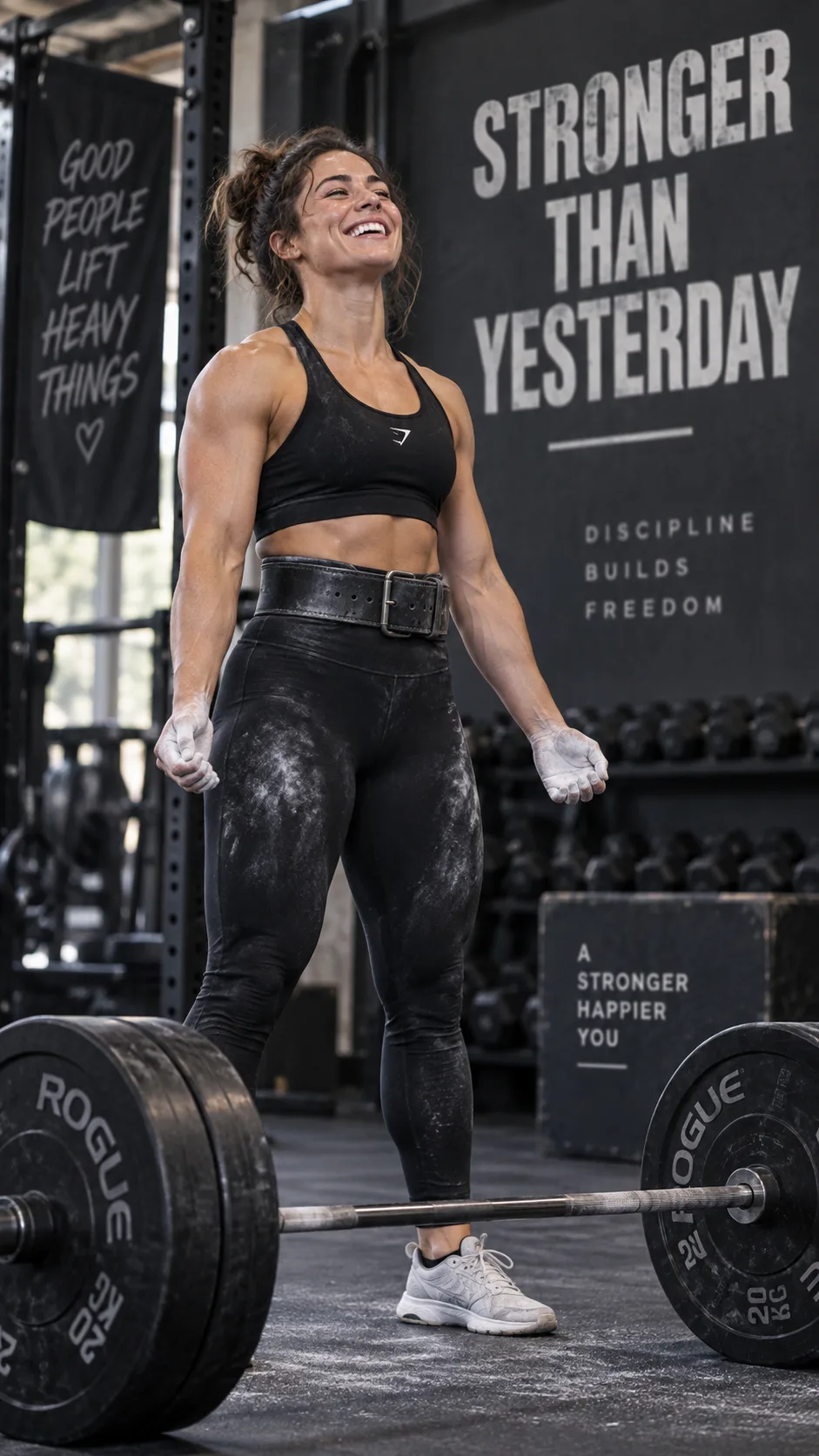
Equipment you’ll need
This program assumes access to a reasonably equipped gym. Here’s the minimum gear list:
- Barbell and weight plates
- Squat rack or power cage
- Adjustable bench
- Dumbbells (a range of weights)
- Pull-up bar
- Cable machine (helpful but not strictly essential)
- Ab wheel (cheap, effective, worth owning)
Don’t have access to all of this? No problem. You can modify the program using kettlebells — our full body kettlebell workout covers eight strength-building moves that train your entire body with just one piece of equipment.
Sample weekly schedule
A typical training week looks like this:
- Monday: Workout A (Strength Focus)
- Tuesday: Rest or light activity (walking, mobility work)
- Wednesday: Workout B (Hypertrophy Focus)
- Thursday: Rest or active recovery
- Friday: Workout C (Power & Volume Mix)
- Saturday & Sunday: Rest, outdoor activity, or light cardio
This schedule gives you 48+ hours between sessions, plenty of time for your muscles and central nervous system to recover. FYI, that rest window becomes even more important as you start lifting heavier weights over time.
Final thoughts: strength is the foundation of everything
A well-designed full body strength training workout isn’t just about looking better (though that happens too). It’s about building a body that performs well, recovers fast, and stays resilient for years to come. You protect your joints, improve your bone density, boost your metabolism, and gain confidence that extends far beyond the gym walls.
You don’t need to live at the gym. You don’t need a complicated 6-day split with 47 exercises. You need three smart sessions per week, progressive overload, good nutrition, and patience. That’s the recipe, and it’s worked for decades.
Pick a day this week, grab a barbell, and start. Your future self is counting on you to show up.
