

Nobody talks about this. Seriously — guys will happily debate the best bicep curl variation for 45 minutes but go completely silent when someone mentions pelvic floor exercises for men. And that silence? It’s costing you more than you think.
Whether you’re dealing with bladder leaks after a sneeze (yes, it happens to men too), recovering from prostate surgery, or just wanting better performance in… well, various departments, your pelvic floor muscles deserve attention. The good news? You don’t need fancy equipment, a gym membership, or a PhD in anatomy to train them.
This is your no-nonsense guide to building real pelvic floor strength with exercises so simple you can do them while reading this article. Actually, why not start right now?
What Exactly Is the Male Pelvic Floor (And Why Should You Care)?
Think of your pelvic floor as a hammock of muscles stretching from your tailbone to your pubic bone. These muscles support your bladder, bowel, and — here’s where ears perk up — play a direct role in erectile function and ejaculation control. Not so boring now, right?
Most men have zero awareness that these muscles even exist until something goes wrong. Weak pelvic floor muscles can lead to urinary incontinence, bowel issues, and erectile dysfunction. According to the National Institute of Diabetes and Digestive and Kidney Diseases (NIDDK), pelvic floor exercises rank among the first-line treatments doctors recommend for these conditions.
Here’s what a strong pelvic floor actually does for you:
- Prevents urinary leakage — especially after prostate procedures
- Supports bowel control — no more urgent dashes
- Improves sexual performance — stronger erections, better stamina
- Stabilizes your core — your pelvic floor works alongside your deep abdominal muscles
- Reduces pelvic pain — common in men who sit for long hours
If you’re already training your core with planks and crunches but ignoring your pelvic floor, you’re essentially building a house with no foundation. That metaphor gets used a lot because it’s annoyingly accurate.
How to Find Your Pelvic Floor Muscles (The First Step Everyone Skips)
Before you start any pelvic floor exercise routine, you need to actually locate the right muscles. This is where most guys go wrong — they clench their glutes, hold their breath, or tighten their abs and call it a day. That’s not it.
The Stop-the-Stream Test
Next time you’re urinating, try to stop the flow midstream. Those muscles you just engaged? That’s your pelvic floor. Important note: don’t make this a regular habit. Use it once or twice purely as a finder tool, then never again during urination — repeatedly stopping your stream can actually cause bladder problems.
The Lift-and-Squeeze Method
Imagine you’re trying to stop passing gas in a crowded elevator. Now combine that with the sensation of drawing your testicles upward (without actually touching anything). You should feel a subtle lift and tightening deep inside your pelvis. Your stomach, thighs, and butt cheeks should stay relaxed.
Can’t feel anything? Don’t stress. It takes most men a few days of practice to isolate these muscles. The Mayo Clinic recommends practicing the identification process while lying down, since gravity works with you in that position.

The 5 Best Pelvic Floor Exercises for Men (Zero Equipment Needed)
Alright, here’s the main event. These exercises range from beginner to intermediate, and you can do every single one at home, at your desk, or honestly… anywhere. Nobody will know. That’s the beauty of pelvic floor training.
1. The Basic Kegel (Your Bread and Butter)
Kegel exercises for men form the foundation of any pelvic floor routine. Once you’ve identified the right muscles, this one becomes almost stupidly simple.
- Squeeze your pelvic floor muscles and hold for 3-5 seconds
- Release completely and rest for 3-5 seconds
- Repeat 10 times
- Do 3 sets per day (morning, afternoon, evening)
Key tip: Breathe normally throughout. If you’re holding your breath, you’re trying too hard. Think gentle engagement, not maximum effort. Over the weeks, gradually increase your hold time to 10 seconds.
2. Quick Flick Kegels (Speed Training)
These target your fast-twitch muscle fibers — the ones responsible for those quick-reaction moments like a sudden cough or sneeze.
- Squeeze your pelvic floor muscles as quickly as you can
- Release immediately
- Repeat 10 quick squeezes in a row
- Rest for 10 seconds, then do 2 more sets
These feel weird at first. Your brain sends the signal and… nothing happens very fast. That’s normal. Speed improves dramatically within 2-3 weeks of consistent practice.
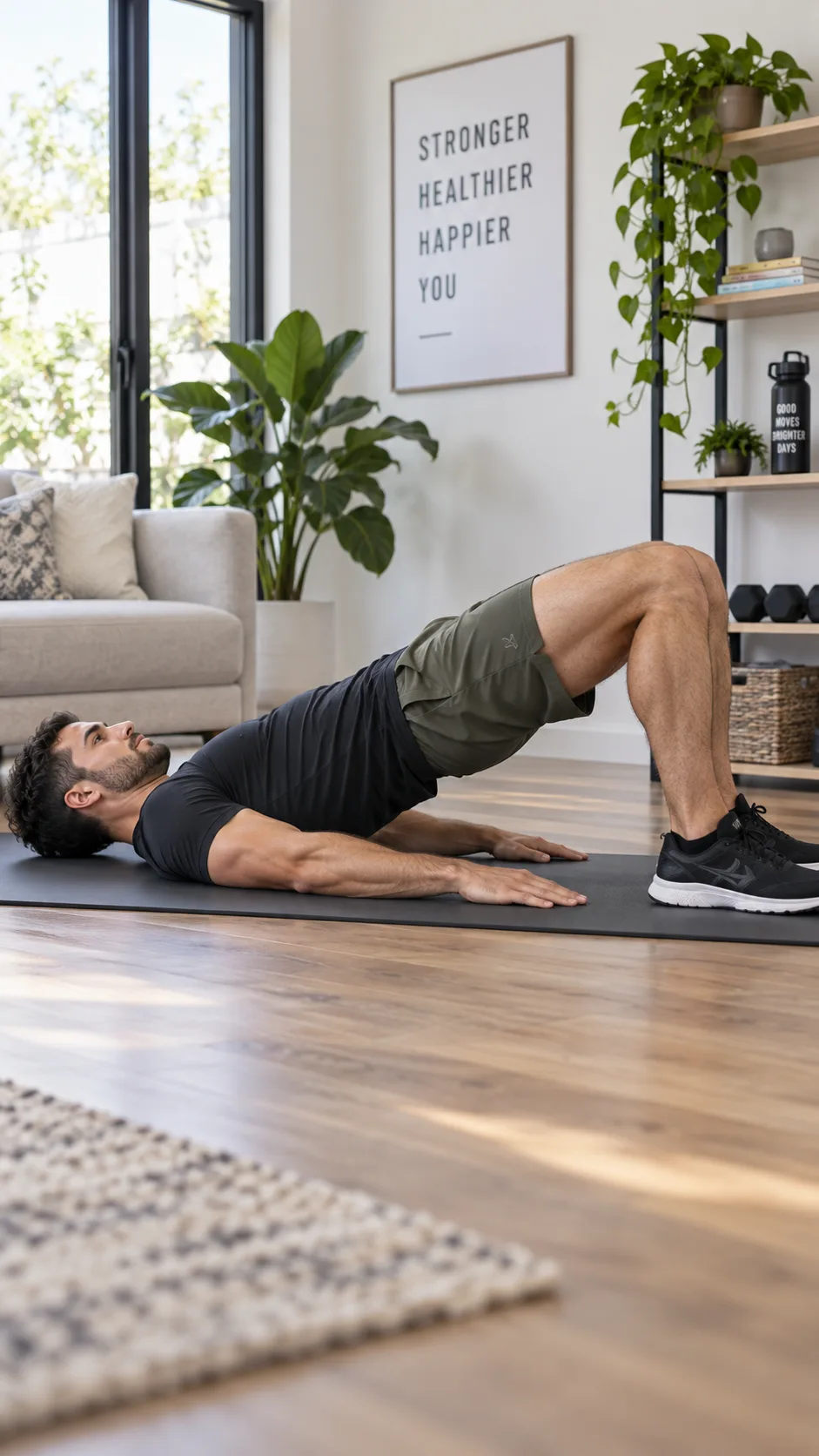
3. The Bridge With Pelvic Floor Engagement
Ever wondered how to combine pelvic floor work with actual visible exercises? The bridge is your answer — and it doubles as a fantastic glute builder.
- Lie on your back, knees bent, feet flat on the floor
- Engage your pelvic floor muscles first
- Then lift your hips toward the ceiling, squeezing your glutes at the top
- Hold for 5 seconds while maintaining the pelvic floor squeeze
- Lower slowly and release everything
- Repeat 10-12 times for 3 sets
This exercise connects your pelvic floor to your larger core stabilization system. If you enjoy this kind of no-equipment strength work, you might also appreciate our guide on body weight arm exercises you can do at home — same energy, different muscle group.
4. Squats With Pelvic Floor Activation
You’re probably already doing squats. Now make them count double.
- Stand with feet shoulder-width apart
- As you lower into your squat, relax your pelvic floor
- As you stand back up, squeeze and lift your pelvic floor
- Fully release at the bottom of each rep
- Perform 12-15 reps for 3 sets
The coordination between your squat movement and pelvic floor engagement teaches your body to activate these muscles during functional movement. This matters because real life doesn’t happen lying on a yoga mat — your pelvic floor needs to work while you’re moving, lifting, and being active.
5. The Dead Bug Pelvic Hold
This one looks ridiculous. You’ll resemble an upside-down beetle. But IMO, it’s the single best exercise for connecting your pelvic floor to your deep core muscles.
- Lie on your back with arms reaching toward the ceiling and knees bent at 90 degrees (shins parallel to the floor)
- Engage your pelvic floor and press your lower back firmly into the mat
- Slowly extend your right arm overhead and your left leg straight out — hovering just above the floor
- Return to starting position, then switch sides
- Do 8 reps per side for 3 sets
The moment your lower back arches off the mat, you’ve gone too far. Reduce the range of motion and focus on keeping that pelvic floor engaged. Quality absolutely crushes quantity here.
A Simple Weekly Routine That Actually Sticks
Here’s the thing about pelvic floor exercises — they only work if you actually do them consistently. A complicated 30-minute routine sounds impressive on paper but ends up abandoned by week two. Sound familiar? 🙂
Instead, try this realistic weekly schedule:
- Every day: 3 sets of 10 basic Kegels (takes under 5 minutes total)
- Monday/Wednesday/Friday: Add quick flick Kegels — 3 sets of 10
- Tuesday/Thursday/Saturday: Bridges + Dead Bugs + Pelvic Floor Squats (15-20 minutes)
- Sunday: Rest — your pelvic floor needs recovery just like any other muscle
Stack your daily Kegels onto existing habits. Do them while brushing your teeth, waiting for coffee to brew, or sitting at red lights. Habit stacking eliminates the need for willpower, and willpower is an unreliable friend at best.
If you’re building a broader fitness routine alongside this, our full body kettlebell workout guide pairs beautifully with pelvic floor training since kettlebell movements naturally demand core and pelvic stability.
Common Mistakes That Sabotage Your Progress
I’ll be honest — I spent my first two weeks of pelvic floor training basically just clenching my butt cheeks and wondering why nothing improved. Learn from my mistakes.
Mistake #1: Bearing Down Instead of Lifting Up
Many men push down when they should pull up. If you feel pressure pushing outward or downward, you’re doing the opposite of what you want. Think “elevator going up” — draw those muscles inward and upward.
Mistake #2: Holding Your Breath
Your pelvic floor and diaphragm work as a team. When you hold your breath, you create downward pressure that fights against the very muscles you’re trying to strengthen. Breathe normally through every rep. Exhale gently during the squeeze if you need a cue.
Mistake #3: Going Too Hard Too Fast
Your pelvic floor muscles fatigue just like your biceps. Overtraining them can lead to muscle tension, pelvic pain, and even worsened symptoms. Start conservatively and build up. Nobody ever regretted starting slow.
Mistake #4: Only Squeezing, Never Releasing
A pelvic floor that can’t fully relax is just as problematic as a weak one. The release phase matters as much as the contraction. Make sure you completely let go between each rep — don’t maintain a constant low-level squeeze throughout the day.
Mistake #5: Expecting Overnight Results
Research published in the British Journal of Urology International shows most men see meaningful improvement in 8-12 weeks of consistent training. Some notice changes sooner, but setting a 3-month mental benchmark keeps disappointment at bay.
Who Benefits Most From Male Pelvic Floor Training?
Short answer: virtually every man. But certain groups see especially dramatic results.
- Men recovering from prostate surgery — pelvic floor exercises significantly speed up the return of bladder control
- Men over 40 — natural muscle weakening accelerates around this age
- Heavy lifters — repeated intra-abdominal pressure from squats and deadlifts can strain the pelvic floor
- Desk workers — prolonged sitting weakens pelvic floor muscles over time
- Men experiencing erectile difficulties — a study in BJU International found that 40% of men with ED regained normal function through pelvic floor exercises alone
- Anyone dealing with urinary urgency or dribbling — common and fixable
FYI, if you’re combining pelvic floor work with a broader strength training program, that’s the ideal scenario. These muscles don’t operate in isolation — they’re part of your entire core system. Our GLP-1 strength training guide covers how to build muscle effectively if you’re also managing weight changes.
When to See a Professional (Don’t Skip This Section)
Self-guided pelvic floor training works brilliantly for most men. But certain situations call for professional help, and recognizing those situations matters.
See a pelvic floor physiotherapist if:
- You’ve been doing exercises consistently for 12 weeks with zero improvement
- You experience pain during pelvic floor exercises
- You have significant urinary or fecal incontinence
- You’re pre- or post-prostate surgery
- You notice pelvic pain that worsens with exercise
Pelvic floor physiotherapists exist specifically for this. They can use biofeedback tools to confirm you’re actually engaging the right muscles — which eliminates all the guesswork. It’s not awkward. It’s healthcare. And it works.
Tracking Your Progress: How to Know It’s Working
Unlike a bigger bench press or visible abs, pelvic floor gains are mostly invisible. So how do you measure progress?
Signs your pelvic floor is getting stronger:
- You can hold a Kegel contraction for longer than before (3 seconds → 5 → 8 → 10+)
- Fewer trips to the bathroom during the night
- Less dribbling after urination
- Better control during coughs, sneezes, and laughing
- Improved erectile firmness and ejaculatory control
- Your quick flick Kegels feel snappier and more responsive
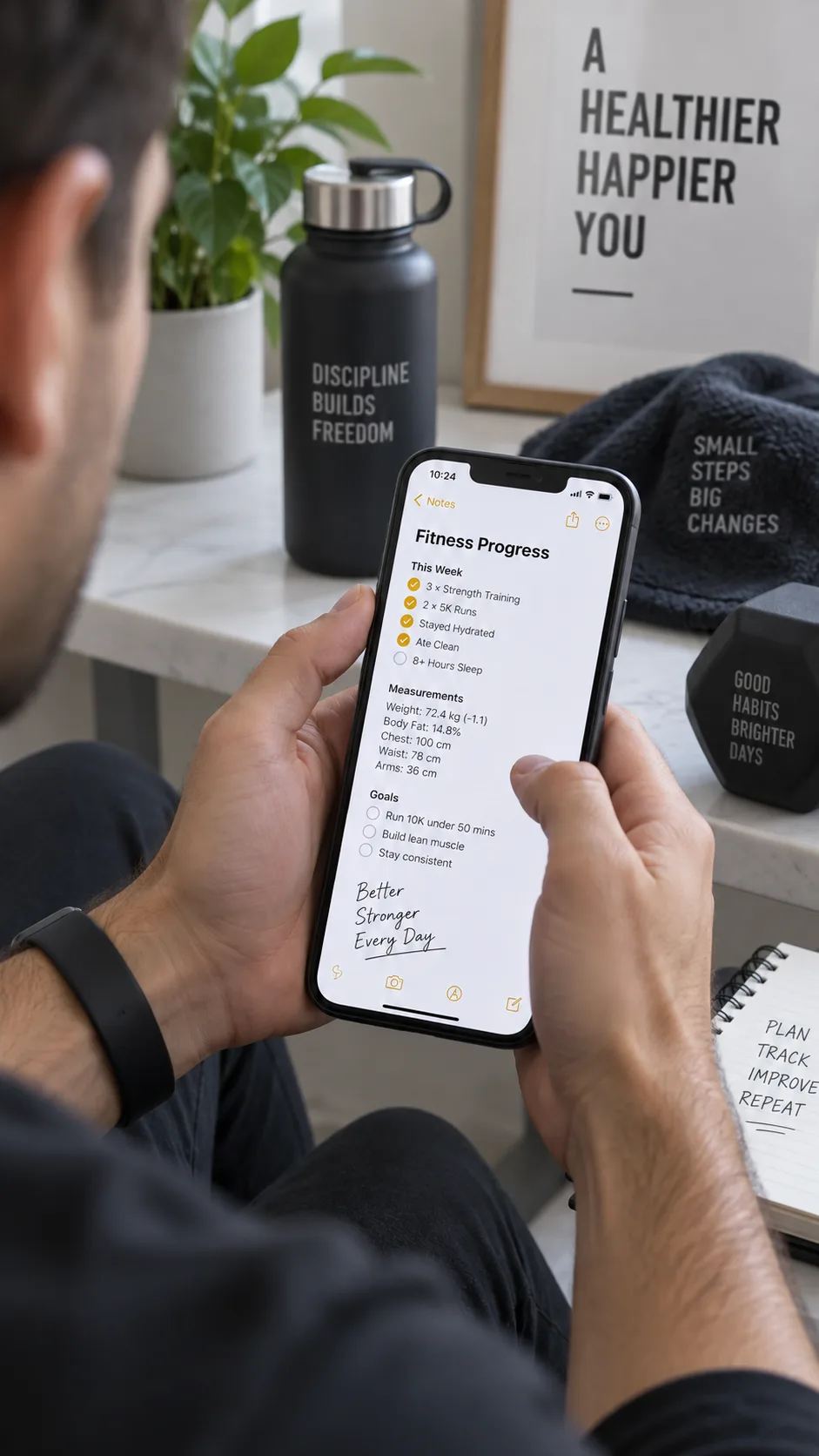
Keep a simple log — even just a notes app on your phone. Record your hold times and rep counts weekly. Seeing concrete numbers improve over time keeps motivation alive when the exercises feel monotonous. And let’s be real, they will feel monotonous sometimes.
The Bottom Line on Pelvic Floor Exercises for Men
Your pelvic floor muscles quietly handle some of the most important functions in your body. Bladder control, bowel support, sexual performance, core stability — all of it rides on muscles most men never train. That changes today.
You don’t need complicated routines. You don’t need equipment. You need 5 minutes of daily Kegels and 15-20 minutes of targeted exercises three times per week. That’s it. Commit for 12 weeks, track your progress, and you’ll feel the difference in ways that genuinely matter.
The best part? Nobody knows you’re training. You could be strengthening your pelvic floor right now while reading this final sentence — and honestly, you probably should be. Start squeezing. Start building. Your future self will thank you.
