
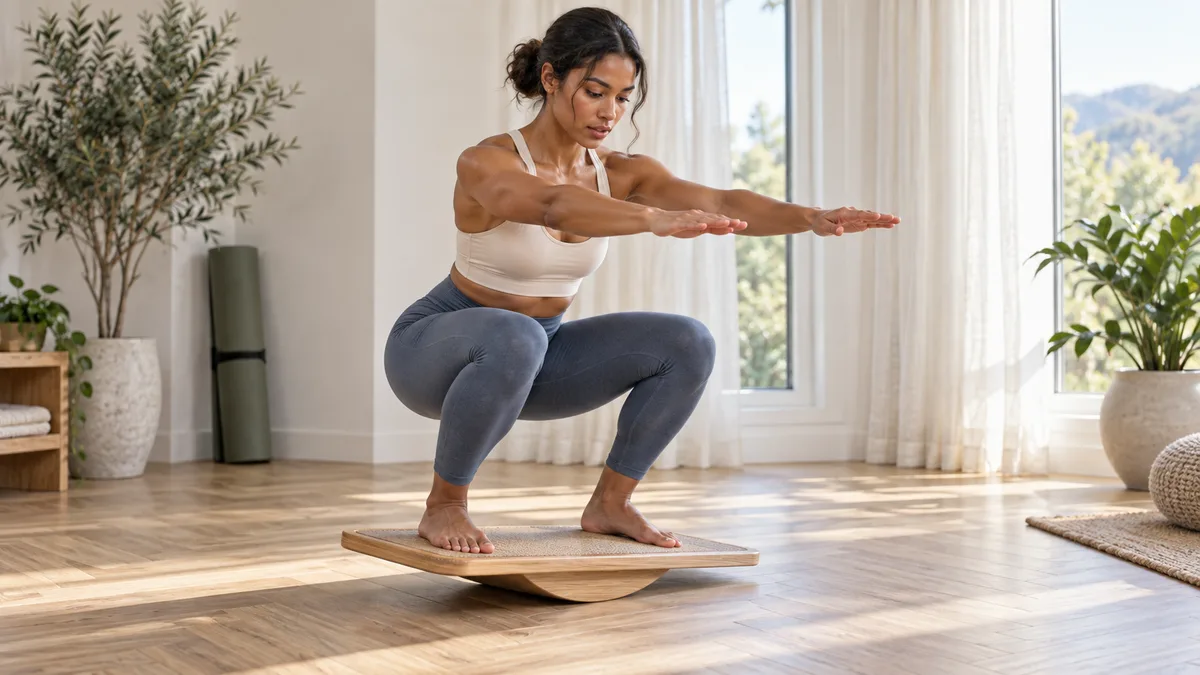
So you bought a Pilates board. Or maybe you’re eyeing one, wondering if it’s another piece of fitness equipment destined to become an expensive clothes hanger. Fair question. But here’s the thing: a Pilates board workout might be the most beginner-friendly, space-saving home training tool you haven’t tried yet.
I spent years convincing myself that Pilates was “too gentle” to count as a real workout. Then I stepped onto a Pilates board for the first time and my legs started shaking within 90 seconds. Humbling? Absolutely. Effective? Ridiculously so.
Whether you call it a Pilates board, a reformer board, or one of those “slidey things from TikTok,” this guide breaks down everything from what this equipment does to a complete beginner routine you can start today.
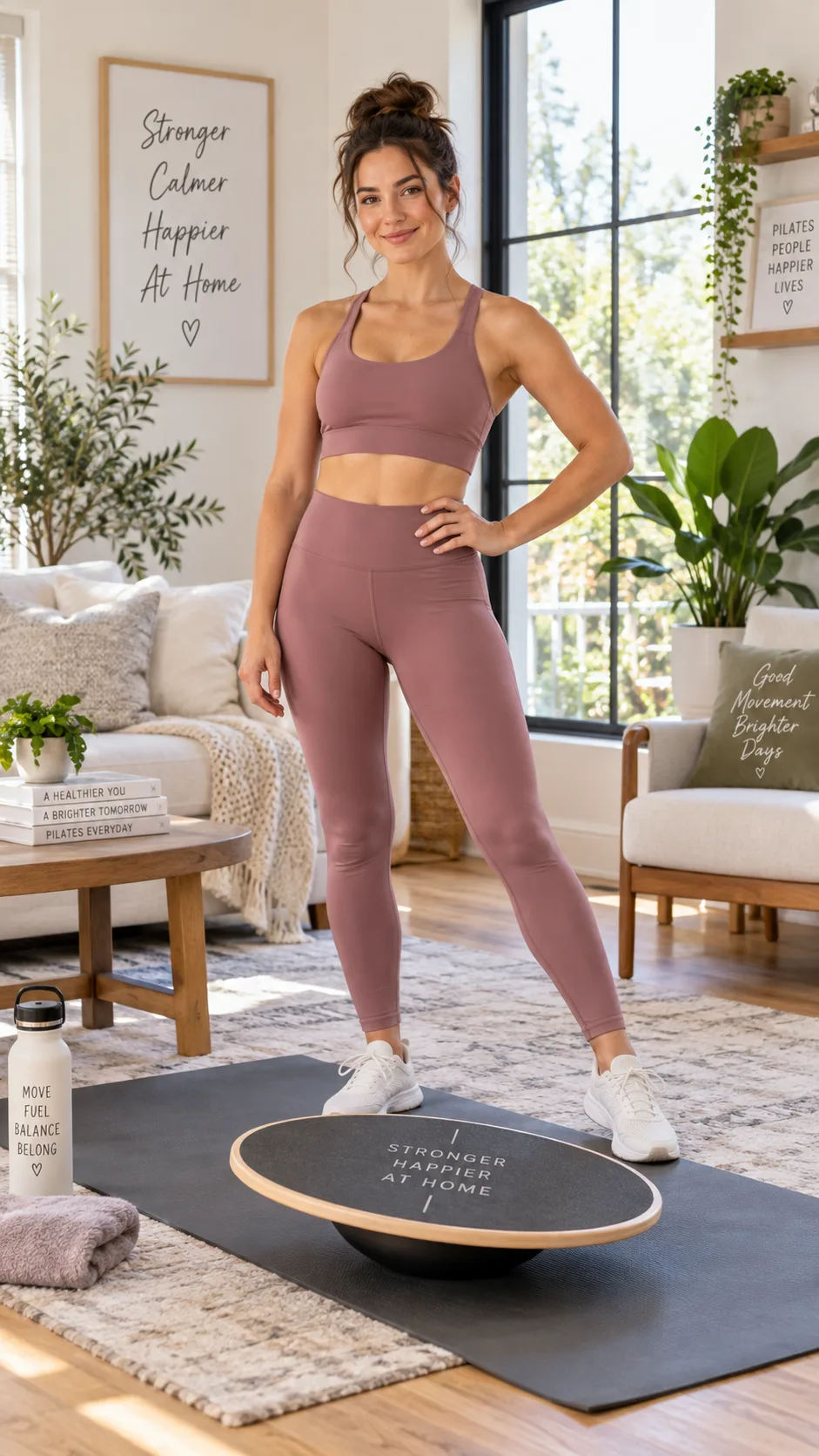
What exactly is a Pilates board?
The term “Pilates board” gets thrown around loosely, and it can refer to a few different things depending on who you ask. So let’s sort that out.
The main types you’ll encounter
- Pilates Balance Boards: Wooden or plastic boards placed on an unstable base (like a roller or half-sphere). They challenge your stability and engage your core with every movement.
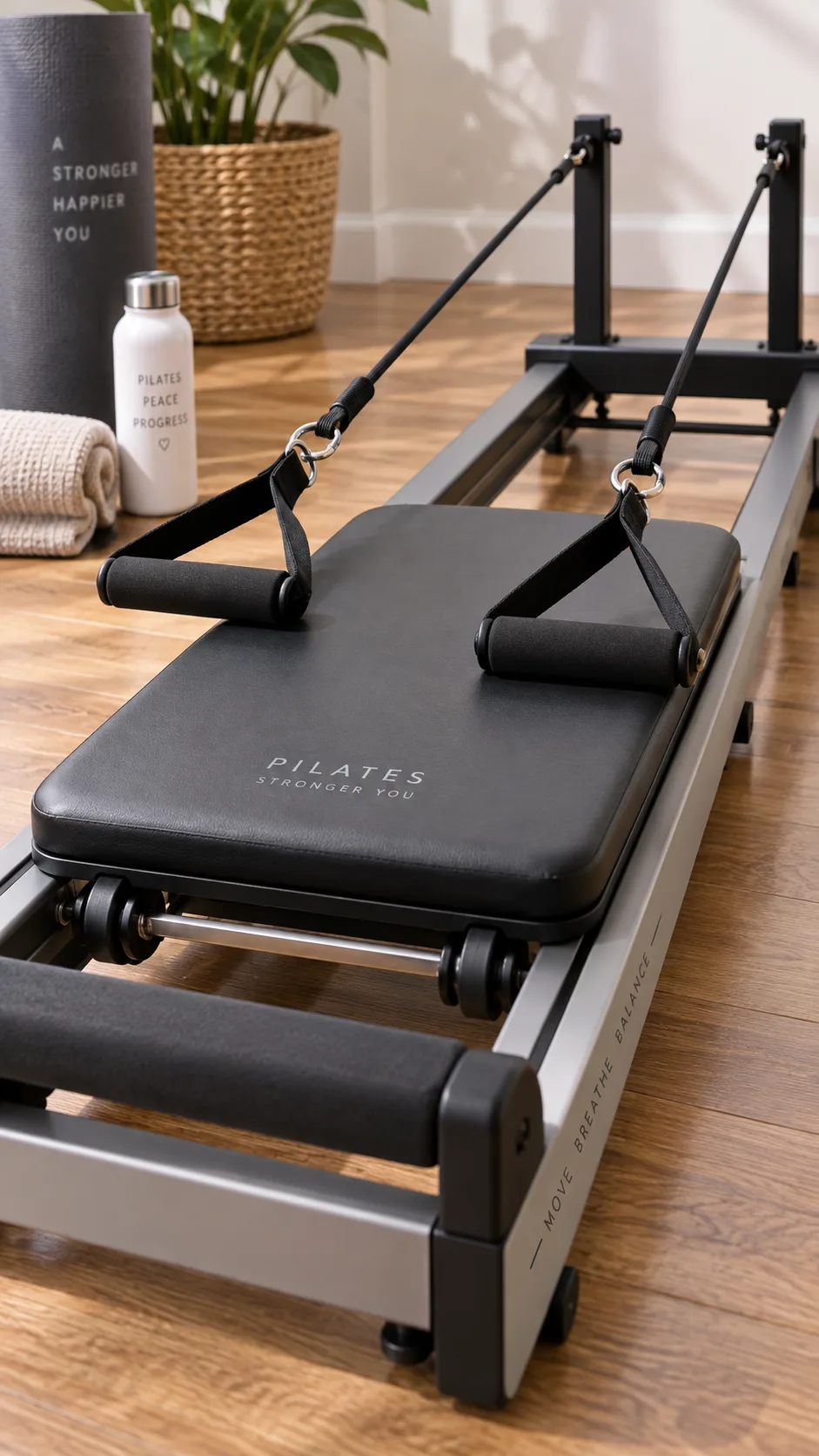
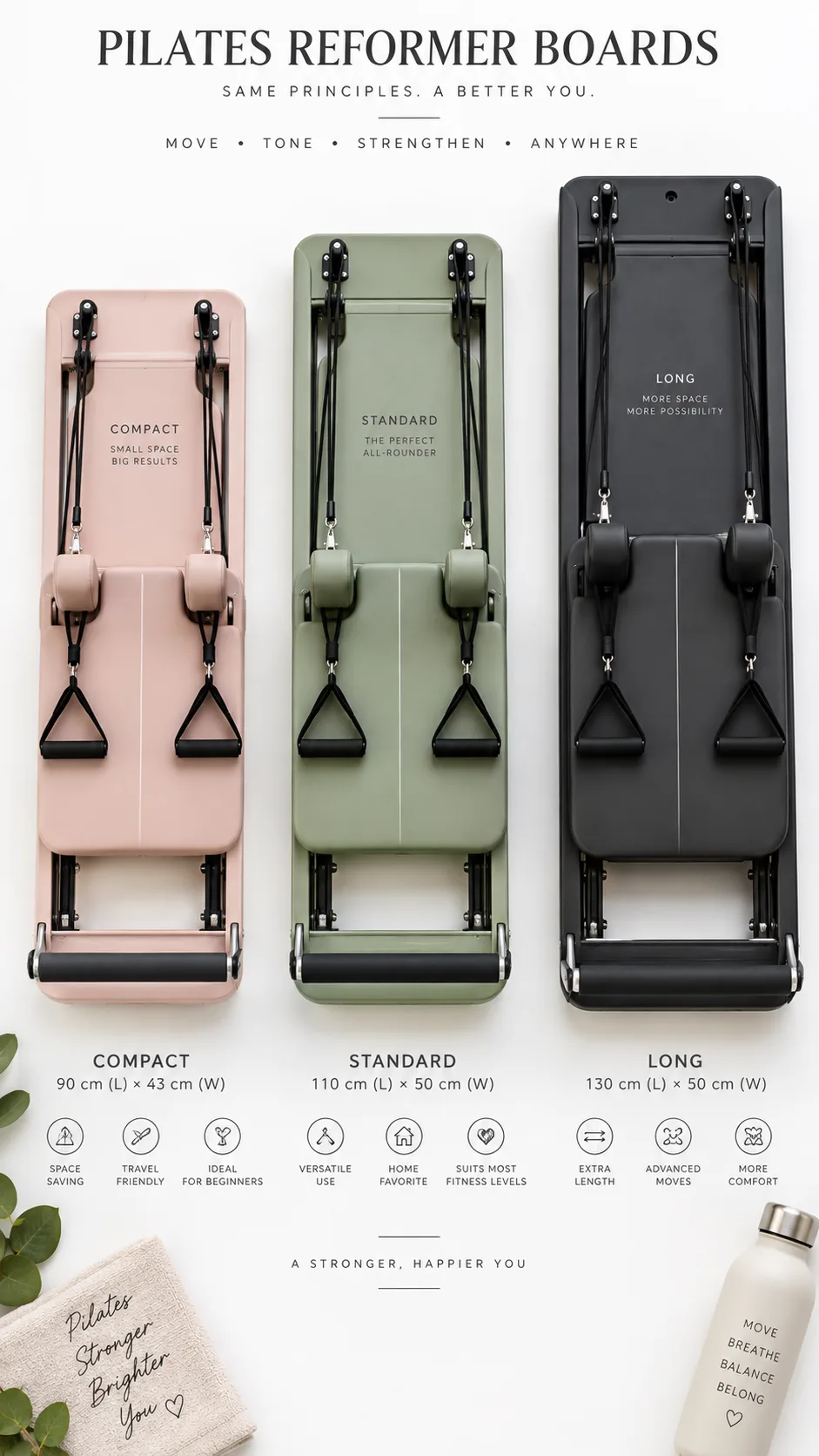
- Pilates Reformer Boards: Compact, portable versions of the traditional Pilates reformer machine. These have a sliding carriage with resistance bands attached. Think of them as a reformer that fits under your bed.
- Pilates Wobble Boards: Simpler balance discs that add instability to standard exercises like squats and planks.
For this article, I’m focusing primarily on the portable Pilates reformer board, the type with a sliding platform and resistance bands, because that’s what most beginners search for. It’s also the most versatile option for a complete home workout.
These boards typically cost between $30 and $150, weigh under 10 pounds, and fold flat for storage. Compared to a studio reformer that runs $2,000+, that’s a pretty compelling deal.
Why a Pilates board works so well for beginners
Ever wondered why Pilates instructors never seem to age? It’s because Pilates targets the deep stabilizer muscles that most traditional workouts completely ignore. And a Pilates board amplifies that effect.
Low impact, high reward
Your joints will thank you. Unlike running or jumping exercises, a Pilates board workout keeps your movements smooth and controlled. The sliding mechanism reduces impact stress while simultaneously forcing your muscles to work harder to maintain control. It’s sneaky like that.
Core engagement is non-negotiable
You literally cannot use a Pilates board without engaging your core. The unstable surface demands constant micro-adjustments from your abdominal muscles, obliques, and lower back. Even “simple” arm exercises become full-body challenges when you’re balancing on a moving platform.
Resistance bands add scalability
Most Pilates reformer boards come with attached resistance bands in varying strengths. This means you can progressively increase difficulty as you get stronger, a fundamental principle of effective training that the American Council on Exercise emphasizes for long-term results.
The combination of sliding resistance, band tension, and balance work means you’re training strength, flexibility, and stability all at once. That’s efficiency. And for busy people working out at home, efficiency is everything.
What you need before getting started
Before you start your Pilates board workout routine, make sure you’ve got the basics covered. Good news: the list is short.
- A Pilates reformer board with adjustable resistance bands, a smooth-gliding carriage, and non-slip feet. Popular brands include AeroPilates, Balanced Body, and various Amazon options that work perfectly fine for beginners.
- A yoga mat to place underneath your board for cushioning and to prevent it from sliding on hard floors.
- Comfortable workout clothes that aren’t baggy enough to catch on the board. Fitted leggings and a tank top work best.
- Grip socks (optional but recommended) to prevent your feet from slipping on the platform. Regular bare feet work too, but grip socks add security.
- A water bottle because you WILL sweat. Don’t let the smooth, controlled movements fool you.
That’s it. No fancy studio membership. No scheduling conflicts. No driving across town. Just you, your board, and about six square feet of floor space.
The complete beginner Pilates board workout routine
Alright, this is the part you came for. This beginner Pilates board workout plan targets your entire body and takes roughly 25-30 minutes. I designed it to be challenging enough to produce results but accessible enough that you won’t quit after day one.
Perform each exercise for the listed number of reps. Rest 30-45 seconds between exercises. Complete 2-3 rounds of the full circuit.
Warm-up (5 minutes)
Never skip the warm-up. Your muscles need a heads-up before you ask them to stabilize on an unstable surface.
- Standing March: March in place for 60 seconds, lifting knees to hip height. Swing your arms naturally.
- Hip Circles: Stand on the board (stationary position) and make slow circles with your hips, 10 each direction.
- Cat-Cow Stretches: On all fours beside the board, alternate between arching and rounding your spine. 10 reps.
- Shoulder Rolls: 10 forward, 10 backward. Release any tension you’re holding in your upper body.
Exercise 1: Sliding glute bridge
Lie on your back with your feet on the sliding carriage and your hips on the stable platform. Press through your heels to slide the carriage away while lifting your hips toward the ceiling. Slowly return to start. Perform 12-15 reps.
This exercise fires up your glutes, hamstrings, and core simultaneously. Keep your ribs from flaring. Think about pulling your belly button toward your spine throughout the movement.
Exercise 2: Kneeling arm pull
Kneel on the board’s stable section facing away from the resistance band anchors. Grab both band handles and pull them toward your hips in a rowing motion. Squeeze your shoulder blades together at the bottom. Perform 12 reps.
This targets your upper back, rear deltoids, and biceps. Keep your torso completely still. If you’re swaying, reduce the band resistance.
Exercise 3: Standing leg press slides
Stand with one foot on the stable platform and the other on the sliding carriage. Bend your standing leg into a half-squat while sliding the other leg out to the side. Control it back in. Perform 10 reps per side.
Your inner thighs will have strong opinions about this exercise. That burning sensation? That’s your adductors finally waking up from their desk-job hibernation.
Exercise 4: Seated chest press
Sit on the board facing away from the band anchors. Hold a handle in each hand at chest height. Press both arms forward until they’re fully extended, then slowly return. Perform 12 reps.
Focus on maintaining a tall spine throughout. The instability of the board forces your core to stabilize while your chest and triceps do the pushing work.
Exercise 5: Plank slides
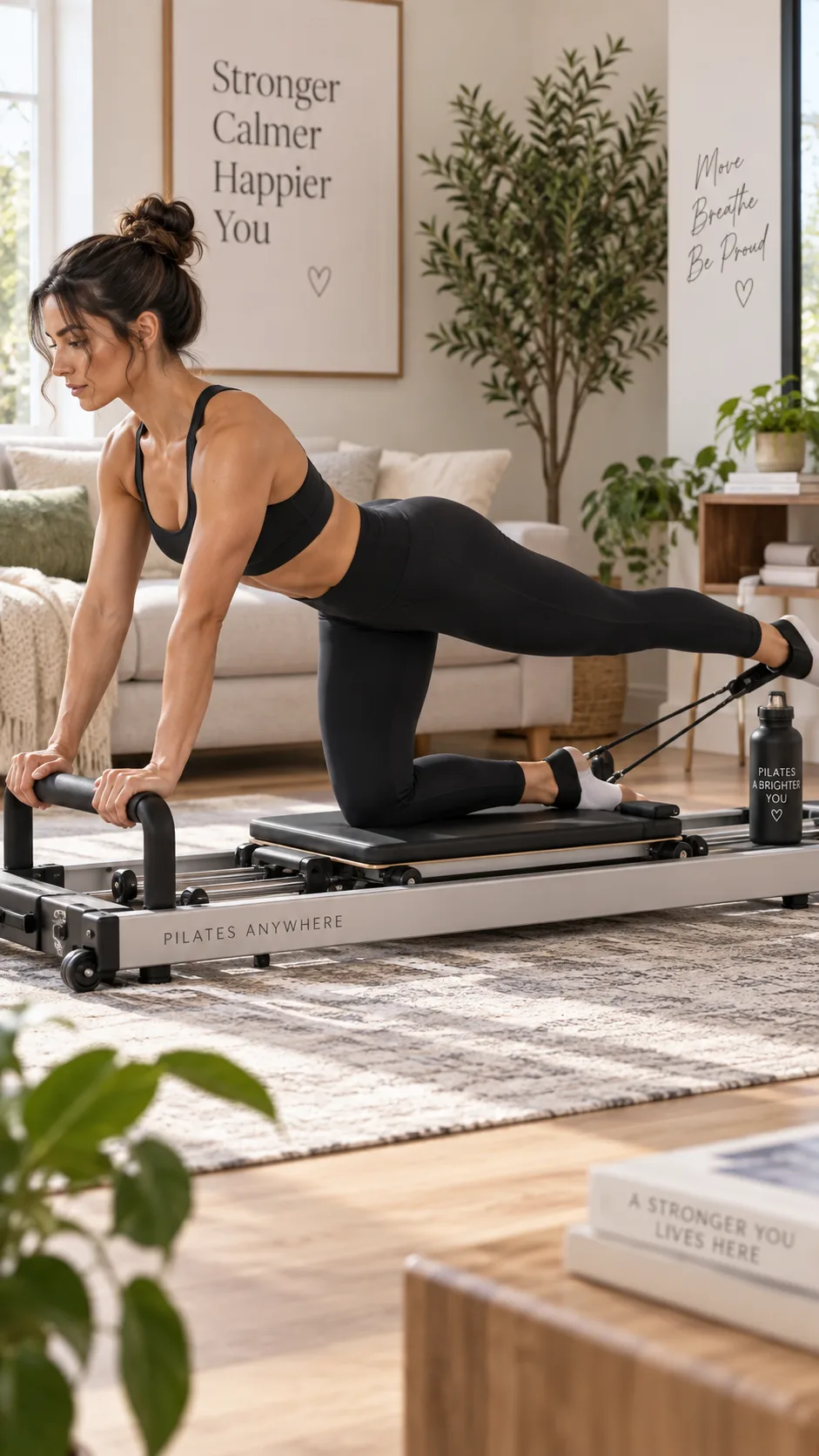
Place your hands on the stable section and your feet on the sliding carriage. Hold a plank position while slowly sliding the carriage back and forth in small, controlled movements. Hold and slide for 30 seconds.
If this feels too intense, drop to your knees on the stable section instead. No shame in modifying. Proper form always beats ego. For what it’s worth, even advanced practitioners find this one spicy.
Exercise 6: Supine leg circles
Lie on your back on the board. Loop a resistance band around one foot. Extend that leg toward the ceiling and draw slow circles in the air. Perform 8 circles each direction, per leg.
This classic Pilates move improves hip mobility while strengthening your deep core stabilizers. Keep your opposite hip pinned to the board. It’ll want to lift. Don’t let it.
Exercise 7: Resistance band bicep curls
Stand on the board’s stable platform facing the band anchors. Grab both handles with palms facing up and curl toward your shoulders. Perform 15 reps.
Simple? Yes. Easy on an unstable surface? Not even close. Your entire body works to keep you balanced while your biceps handle the curling. That’s real functional fitness in practice.
Cool down (5 minutes)
Spend five minutes stretching your major muscle groups. Focus on hip flexors, hamstrings, chest, and shoulders. Hold each stretch for 20-30 seconds and breathe deeply. Your body just worked hard. Show it some respect.
Your 4-week beginner Pilates board workout plan
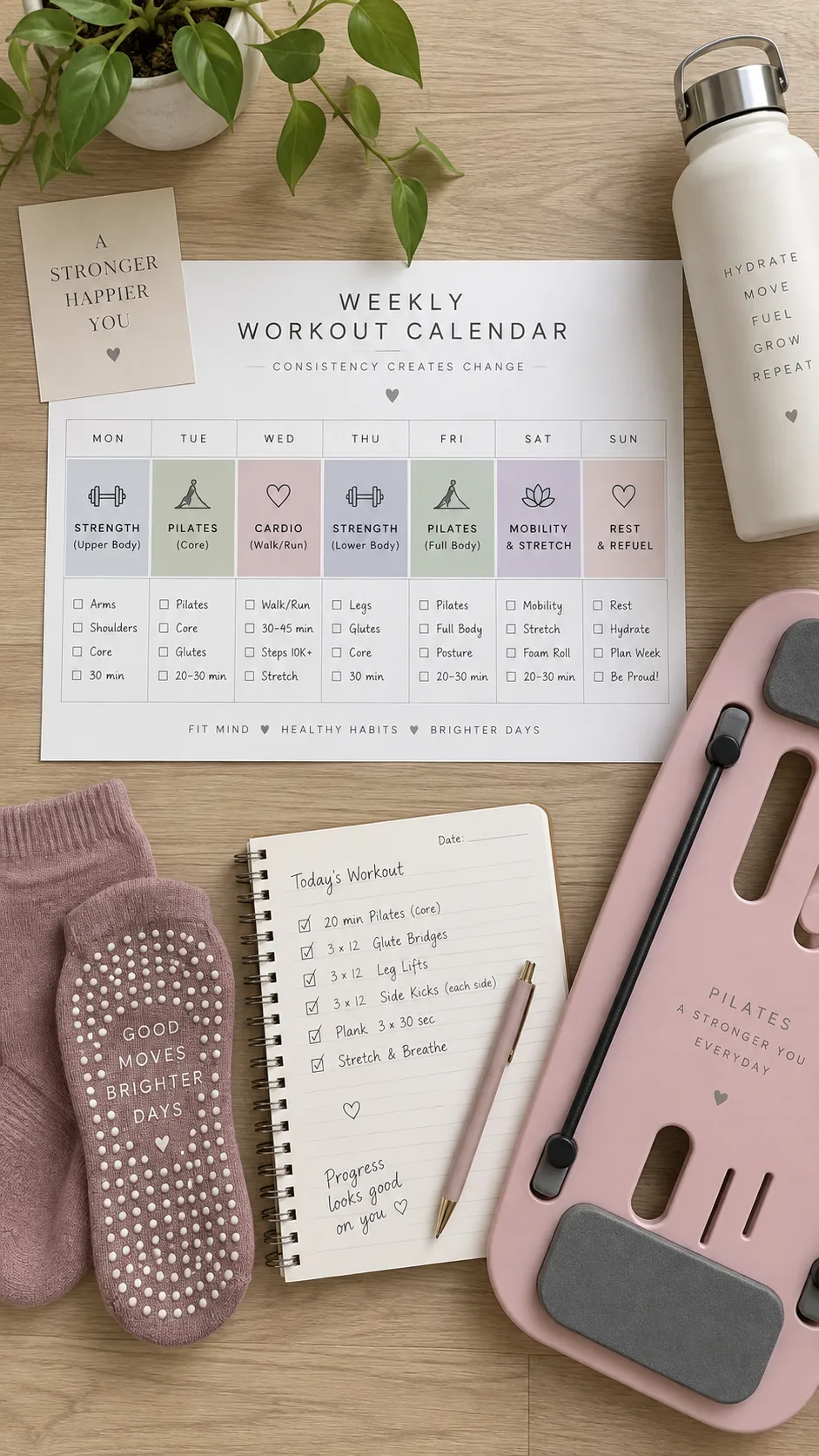
Consistency beats intensity every time. Below is a realistic 4-week plan that progresses gradually and won’t leave you too sore to function at work.
Week 1: Foundation
- Frequency: 3 sessions (e.g., Monday, Wednesday, Friday)
- Rounds: 2 rounds of the full circuit
- Resistance: Lightest band setting
- Focus: Learning proper form and getting comfortable with the board’s movement
Week 2: Building confidence
- Frequency: 3-4 sessions
- Rounds: 2-3 rounds
- Resistance: Light to medium bands
- Focus: Increasing range of motion and breath coordination
Week 3: Progression
- Frequency: 4 sessions
- Rounds: 3 rounds
- Resistance: Medium bands
- Focus: Adding 2-3 extra reps per exercise and holding planks for 45 seconds
Week 4: Challenge mode
- Frequency: 4-5 sessions
- Rounds: 3 rounds
- Resistance: Medium to heavy bands
- Focus: Slowing down tempo (3 seconds up, 3 seconds down) for maximum muscle engagement
By the end of week four, you’ll notice improved posture, stronger core stability, and better body awareness. Many beginners report feeling “taller,” which is really just their body finally stacking properly over their skeleton. Revolutionary concept, right? 🙂
Common mistakes to avoid on the Pilates board
I’ve made every single one of these mistakes. Learn from my humiliation.
- Going too fast. Pilates is about control, not speed. If you’re whipping through reps, you’re using momentum instead of muscles. Slow down. Dramatically.
- Holding your breath. Breathe. Seriously. Exhale during the effort phase, inhale during the return. Your muscles need oxygen to function, and your face doesn’t need to turn purple.
- Ignoring alignment. Keep your spine neutral unless the exercise specifically calls for flexion or extension. Poor alignment on an unstable surface is a fast track to back pain.
- Skipping the warm-up. Cold muscles on an unstable surface is a recipe for a pulled something. Take five minutes to warm up. Always.
- Using too much resistance too soon. Your ego isn’t doing the exercise. Your muscles are. Start lighter than you think you need and progress from there.
According to the Pilates Method Alliance, proper form is the single most important factor in getting results from Pilates training. More resistance with bad form will always produce worse results than lighter resistance with perfect form.
Nutrition matters too (yeah, I said it)
You can do Pilates board workouts five days a week, but if your nutrition is working against you, results will come frustratingly slow. You don’t need a complicated diet plan, just smart, consistent fueling.
Focus on adequate protein to support the muscle repair your workouts demand. Prioritize whole foods over processed ones. And please eat enough. Undereating while exercising is not a shortcut; it’s self-sabotage.
If you’re looking for practical meal ideas that support an active lifestyle, check out these light and healthy dinner recipes that keep things simple. And if post-workout nutrition feels confusing, this guide on recovery meal plan ideas breaks it down clearly.
Who should (and shouldn’t) use a Pilates board
Great for:
- Beginners who find gym environments intimidating
- People recovering from injuries (with doctor approval) who need low-impact exercise
- Anyone wanting to improve posture, core strength, and flexibility at the same time
- Home workout enthusiasts with limited space
- Older adults looking for joint-friendly strength training
Proceed with caution if:
- You have severe balance disorders. Consult your physician first.
- You’re dealing with acute back injuries or herniated discs
- You have significant joint instability in your ankles or knees
When in doubt, get clearance from a healthcare professional. A quick conversation with your doctor takes ten minutes and saves you from potentially weeks of setback.
Research published in the Journal of Medicine & Science in Sports & Exercise supports Pilates as an effective modality for improving core stability, flexibility, and muscular endurance across all fitness levels, including complete beginners.
How to choose the right Pilates board for your home
Not all Pilates boards are equal. Know what to look for before spending your money.
- Weight capacity: Make sure the board supports at least 20% more than your body weight for safety.
- Carriage smoothness: The sliding mechanism should glide without catching or jerking. Read reviews that specifically mention this.
- Band quality: Cheap bands snap. Look for boards with latex-free, reinforced resistance bands that include multiple tension levels.
- Non-slip surface: The platform where you stand or kneel should have texture or padding to prevent slipping.
- Portability: If storage space is limited, choose a board that folds flat and weighs under 15 pounds.
- Warranty: A manufacturer that stands behind their product with at least a one-year warranty signals confidence in quality.
You don’t need to spend a fortune. A solid beginner Pilates board in the $50-$80 range from a reputable brand on Amazon will serve you well for your first year of training, and likely beyond.
Making it stick: tips for long-term consistency
Starting a new workout routine is easy. Sticking with it past week three? That’s where most people bail. You can beat the odds, though.
- Set up a dedicated space. Even if it’s just a corner of your living room, having your board ready to go removes the friction of setup. Out of sight means out of mind.
- Schedule your sessions like appointments. Block them in your calendar. Treat them as non-negotiable meetings with yourself.
- Track your progress. Write down your reps, resistance level, and how you felt after each session. Seeing improvement on paper is wildly motivating.
- Pair your workouts with something enjoyable. A podcast, a playlist, an audiobook. Associate the Pilates board with something you look forward to.
- Celebrate small wins. Held that plank slide for 10 extra seconds? That’s growth. Acknowledge it.
The best workout program is the one you do consistently. A Pilates board workout sitting in your home, available whenever you have 25 minutes, removes nearly every barrier to regular exercise. No commute, no class times, no weird gym judgment. Just you putting in the work.
Final thoughts: your body will thank you
A Pilates board workout isn’t flashy. It won’t make you Instagram-famous overnight, and nobody’s going to high-five you for doing supine leg circles. But this quiet, controlled, incredibly effective training method builds the kind of strength that shows up in real life: better posture at your desk, easier movement getting out of your car, less back pain after a long day.
Start with the beginner routine above. Follow the 4-week plan. Focus on form over everything else. And give yourself grace during the learning curve. Every expert was once a beginner who felt ridiculous on a sliding board in their living room.
Your move: Pull the trigger on a Pilates board, clear a spot on the floor, and commit to four weeks. If you pair smart training with solid nutrition, like these high protein meal plan ideas for women, you’ll see and feel the difference faster than you expect. Now go slide around your living room with purpose.
