
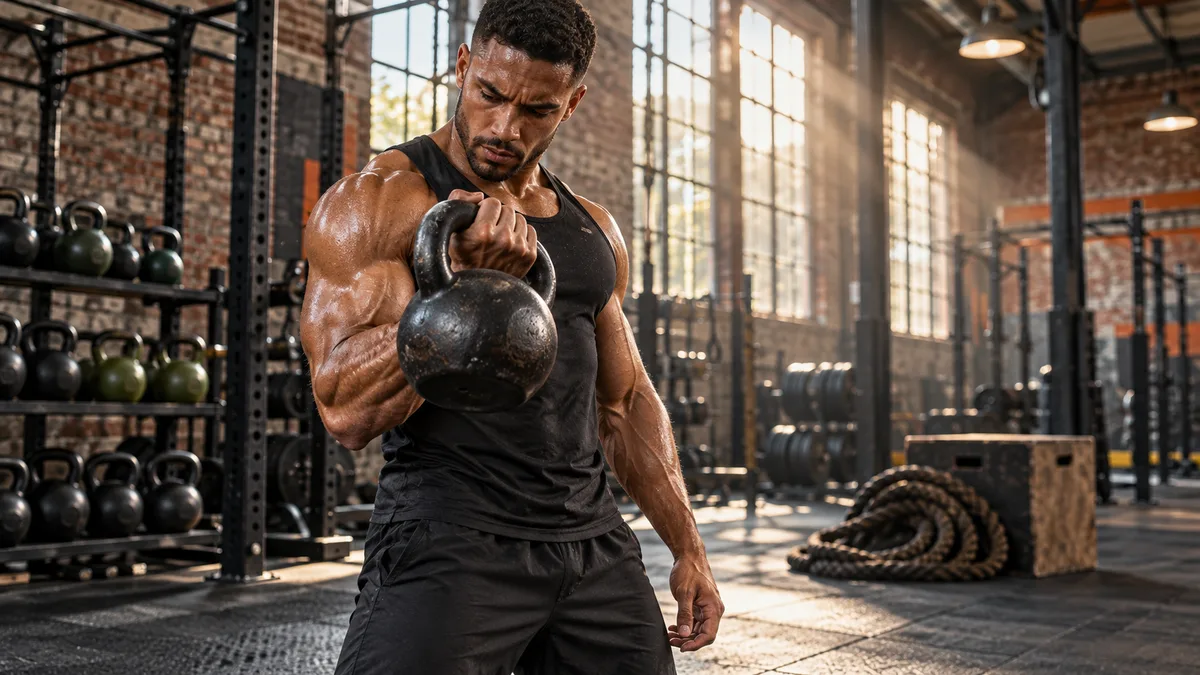
Your dumbbells are great. Your barbell is fine. But if you’ve been ignoring that kettlebell sitting in the corner of your gym like a forgotten houseplant, you’re leaving serious arm gains on the table. Kettlebells challenge your upper body differently than any other tool, and once you feel the difference, you won’t want to go back.
The offset center of gravity in a kettlebell forces your stabilizer muscles to work overtime on every single rep. That means more muscle activation, better grip strength, and arms that don’t just look strong but genuinely ARE strong. Sounds like a decent trade for swapping one piece of equipment, right?
I’m going to walk you through 8 upper body kettlebell exercises that target your biceps, triceps, shoulders, chest, and upper back. Whether you train at home or at the gym, this routine delivers results without needing a rack full of equipment.
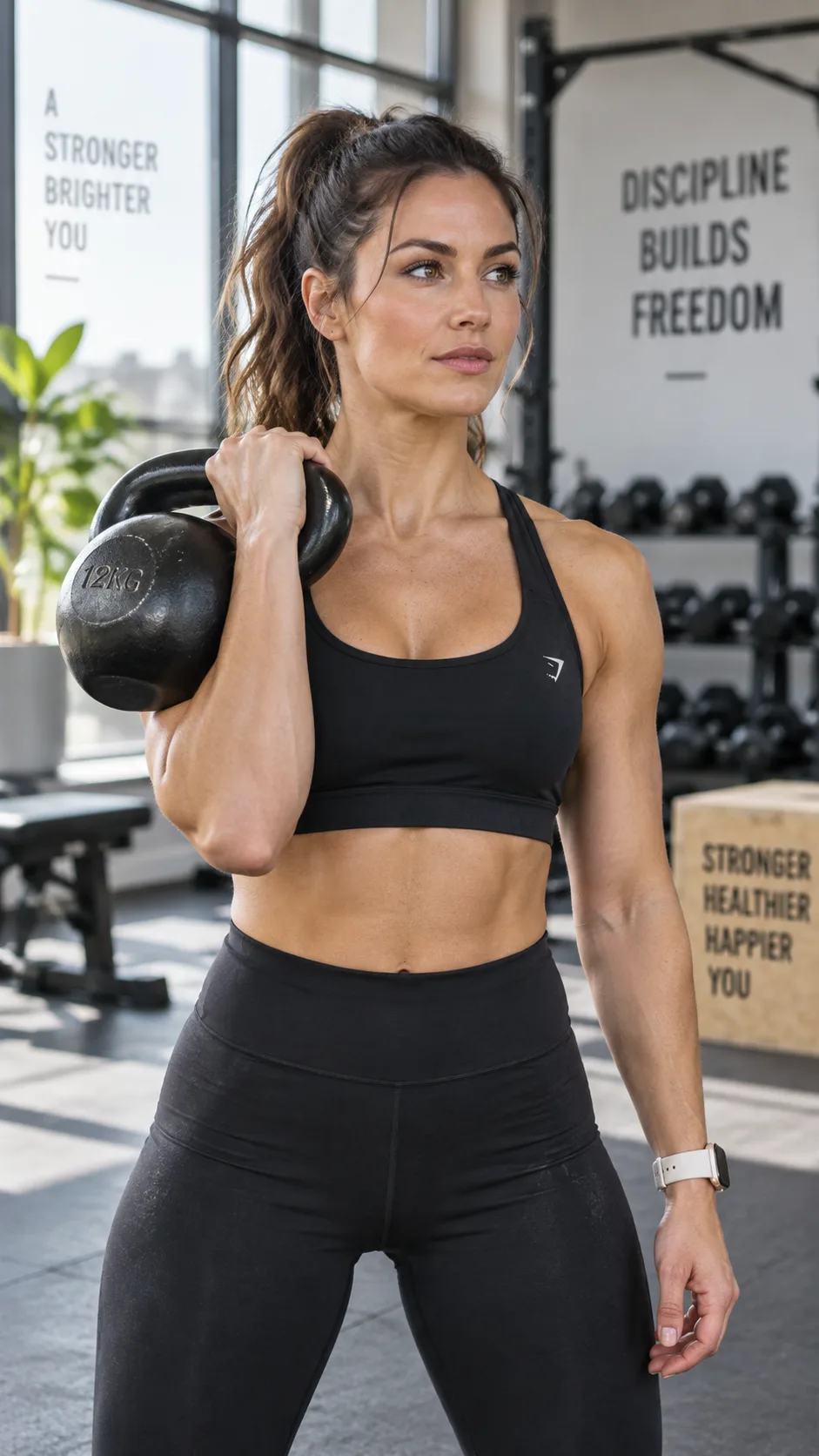
Why kettlebells are secretly amazing for upper body work
Most people associate kettlebells with swings and squats. Lower body stuff. And sure, kettlebells absolutely crush leg day. But they’re criminally underrated for building upper body strength and definition. Here’s why they deserve a permanent spot in your arm workouts.
The offset load advantage
Unlike a dumbbell where the weight sits evenly in your hand, a kettlebell’s mass hangs below the handle. This seemingly small design difference changes everything. Your forearms, wrists, and stabilizer muscles have to fight harder to control the weight through each movement.
Research published by the American Council on Exercise (ACE) found that kettlebell training can burn up to 20 calories per minute while simultaneously building strength. That’s not a typo. 20 calories per minute.
Grip strength you can’t fake
Ever noticed how your grip gives out before your arms do during certain exercises? Kettlebells fix that problem over time. The thick handle and shifting weight build forearm and grip strength that transfers to literally everything else you do in the gym.
If you’re also working on a broader upper body strength workout, adding kettlebells is one of the fastest ways to level up your performance across the board.
What you’ll need before starting
Good news: the equipment list is laughably short.
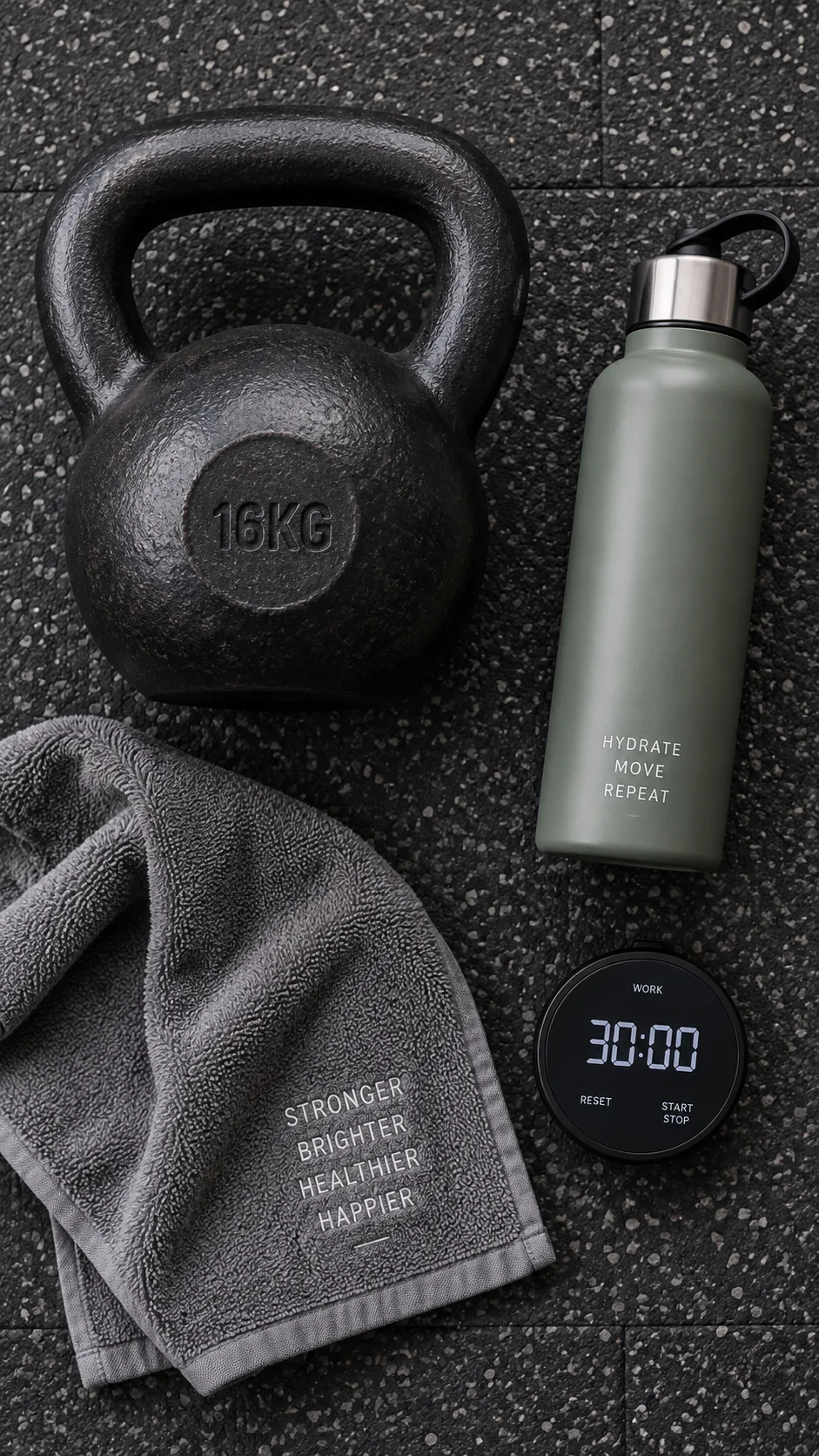
- One kettlebell (women: 8-12kg to start; men: 12-16kg to start)
- A mat or flat surface for floor-based exercises
- About 30-40 minutes of your time
That’s it. No bench required, no cable machine, no complicated setup. If you have a second, heavier kettlebell, even better. But you can absolutely complete this entire workout with just one.
The 8-move upper body kettlebell workout
Perform each exercise for 3 sets of 10-12 reps (per side where applicable). Rest 45-60 seconds between sets. If you’re short on time, circuit through all 8 exercises with 30 seconds of rest between moves, then repeat for 3 rounds.
1. Kettlebell single-arm overhead press
Primary targets: shoulders, triceps, core
Clean the kettlebell to the rack position at your shoulder, with the bell resting on the back of your forearm. Press it straight overhead, fully extending your arm. Lower it back to the rack position with control. That’s one rep.
The thing to focus on? Keep your core braced the entire time. Because you’re pressing weight on one side only, your obliques work overtime to keep you from leaning. It’s a shoulder press AND a core exercise in one. Efficiency at its finest.
2. Kettlebell bent-over row
Primary targets: lats, rhomboids, biceps, rear delts
Hinge at your hips until your torso reaches roughly 45 degrees. Let the kettlebell hang straight down from your shoulder. Pull it toward your hip, squeezing your shoulder blade back at the top. Lower under control.
This exercise builds that thick, defined look across your upper back and hits your biceps harder than you’d expect. Want a thicker, more detailed back? Rows are non-negotiable. If you’re looking for more back-focused movements, check out this upper back workout for women that pairs perfectly with today’s routine.
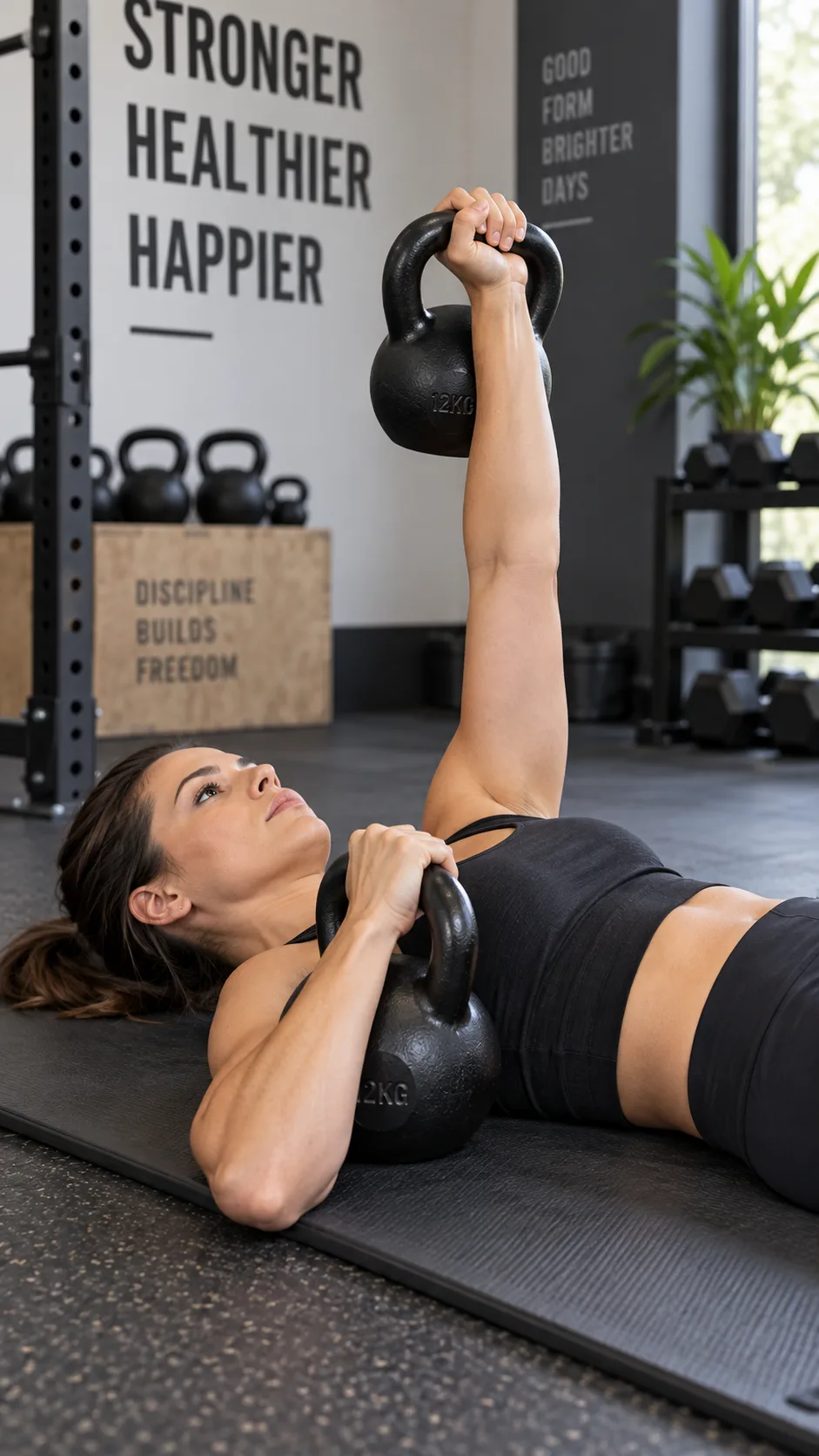
3. Kettlebell floor press
Primary targets: chest, triceps, anterior delts
Lie on your back with knees bent. Hold the kettlebell in one hand at chest level, elbow resting on the floor. Press the weight straight up toward the ceiling, then lower back down until your elbow gently touches the ground.
No bench? No problem. The floor press protects your shoulders by limiting the range of motion at the bottom, which makes it a fantastic option if you’ve had shoulder issues in the past. That brief pause at the bottom eliminates momentum, so your chest and triceps do ALL the work.
4. Kettlebell halo
Primary targets: shoulders, traps, core stability
Hold the kettlebell by the horns (the sides of the handle) at chest height. Circle it around your head in a smooth, controlled motion, passing behind your head and back to the front. Alternate directions each rep.
This one looks easy. It is NOT. Your shoulders will be screaming by rep 8, and your core has to stabilize against the moving weight the entire time. Halos are phenomenal for shoulder mobility AND strength at the same time, something most exercises can’t claim.
5. Kettlebell bicep curl (bottoms-up grip)
Primary targets: biceps, forearms, grip
Here’s where things get spicy. Hold the kettlebell by the handle with the bell facing UP toward the ceiling. Now curl it. Your forearms will fire like crazy to keep the bell from tipping over, and your biceps get an absolutely brutal contraction.
Can’t balance it? Start lighter. Even a 4kg kettlebell in the bottoms-up position humbles most people. IMO, this is one of the most underused bicep exercises in existence. Once you can do 12 clean reps, move up in weight and watch your arms transform.
6. Kettlebell tricep extension (overhead)
Primary targets: triceps (all three heads), shoulders
Hold the kettlebell by the horns behind your head, elbows pointing toward the ceiling. Extend your arms to press the weight overhead, then lower it back behind your head. Keep your elbows tight. Don’t let them flare out.
This exercise absolutely torches the long head of the tricep, the muscle responsible for that defined look on the back of your arm. If you’ve been chasing more arm definition, this move alone can make a noticeable difference within weeks. For more tricep-focused work, this bicep and tricep workout has options worth trying.
7. Kettlebell high pull
Primary targets: shoulders, traps, biceps, upper back
Start with the kettlebell between your feet. Hinge slightly, then explosively pull the bell upward, leading with your elbow, until the kettlebell reaches chest height. Your elbow should stay above the wrist at the top. Lower and repeat.
This is a power movement. You’ll build explosive upper body strength while hitting your shoulders and traps in a way that slow, controlled exercises simply can’t replicate. Keep the reps slightly lower here (8-10) and focus on snappy, powerful pulls.
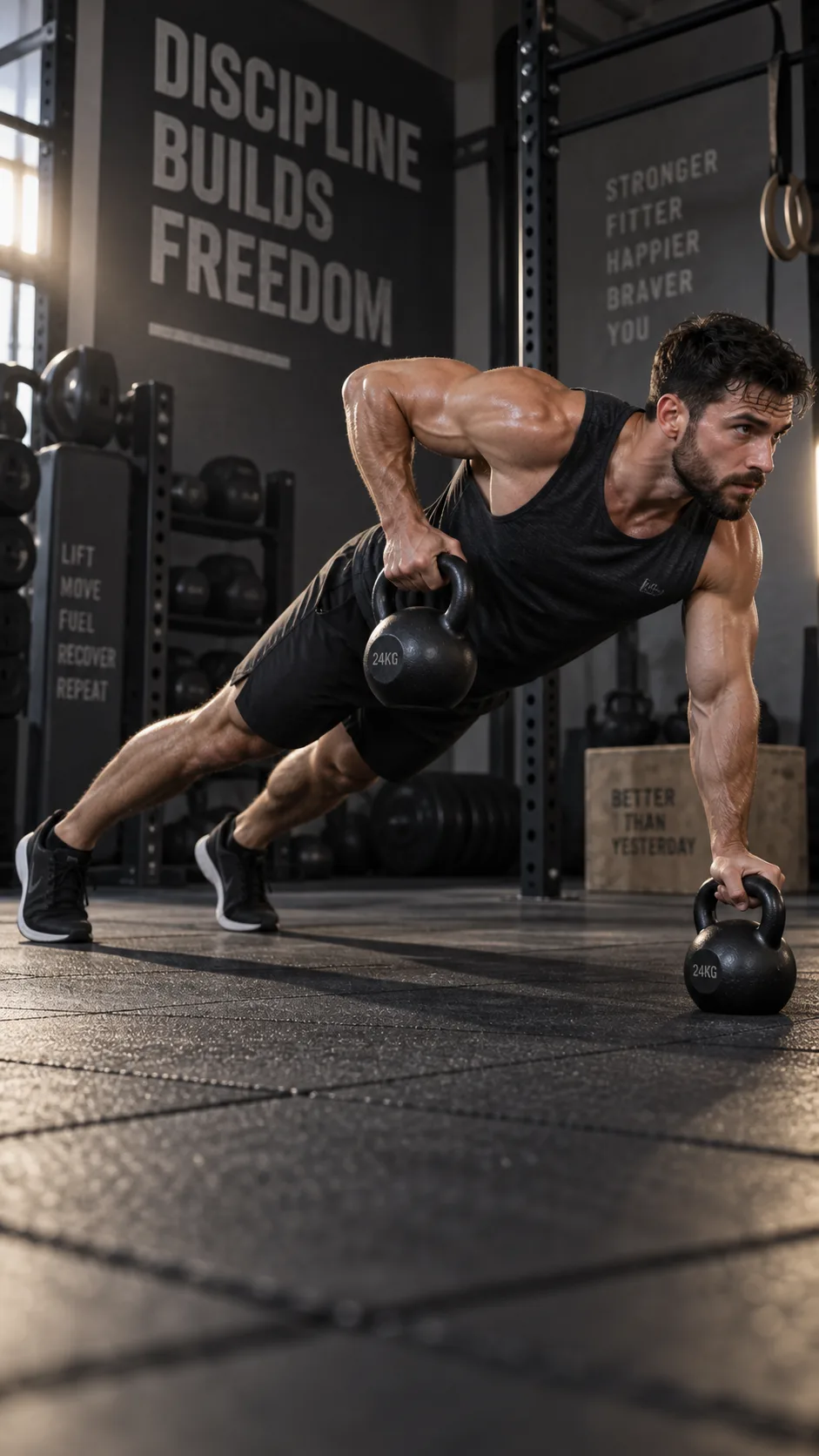
8. Kettlebell renegade row
Primary targets: lats, biceps, core, shoulders
Get into a push-up position with both hands gripping a kettlebell handle (or use two kettlebells). Keeping your hips square to the ground, row one kettlebell up toward your hip. Set it down, then row the other side. That’s one rep.
Fair warning: this exercise will humble you. Your entire core has to work to prevent rotation while your back and arms handle the rowing. It’s a full upper body exercise disguised as a row. Start with a lighter weight than you think you need. Trust me on this one 🙂
How to structure this workout for best results
You’ve got the exercises. Now let’s talk programming. How you organize these moves matters just as much as how you perform them.
Option A: Straight sets (best for strength)
- Complete all 3 sets of one exercise before moving to the next
- Rest 60 seconds between sets
- Total time: approximately 40-45 minutes
Option B: Circuit style (best for conditioning + definition)
- Perform one set of each exercise back-to-back
- Rest 30 seconds between exercises
- Rest 90 seconds after completing all 8 moves
- Repeat for 3 total rounds
- Total time: approximately 30-35 minutes
For most people chasing arm definition, Option B delivers faster visible results because you keep your heart rate elevated throughout. If raw strength is your priority, go with Option A and use a heavier kettlebell.
Common kettlebell mistakes that kill your progress
I see these mistakes constantly, and I’ve made every single one of them myself at some point. Learn from my embarrassment.
- Going too heavy too fast. Kettlebells feel different than dumbbells. A 12kg kettlebell can feel significantly harder than a 12kg dumbbell because of the offset load. Start lighter.
- Death-gripping the handle. A firm grip is necessary, but white-knuckling the handle creates unnecessary forearm fatigue and wrist pain. Grip firmly, not desperately.
- Rushing the eccentric (lowering) phase. The lowering portion of each rep builds just as much muscle as the lifting portion. Take 2-3 seconds to lower the weight on every exercise.
- Ignoring wrist position. Keep your wrist neutral and straight during presses and curls. A bent wrist under load is an injury waiting to happen.
The National Strength and Conditioning Association (NSCA) stresses that proper technique should always take priority over load, and that applies doubly to kettlebell training where the offset weight amplifies form errors.
How often should you do this upper body kettlebell workout?
Aim for 2-3 times per week with at least 48 hours between sessions targeting the same muscle groups. Your muscles grow during recovery, not during the workout itself, so give them time to rebuild.
A solid weekly split might look like this:
- Monday: Upper body kettlebell workout
- Wednesday: Lower body or full body kettlebell workout
- Friday: Upper body kettlebell workout (increase weight or reps from Monday)
Progressive overload matters here. If you performed 10 reps with 8kg last week, aim for 12 reps this week, or jump to 10kg for 10 reps. Your muscles need a reason to grow, and that reason is always “slightly more than last time.”
What results can you realistically expect?
Let’s set honest expectations because nobody benefits from hype. Here’s a realistic timeline based on consistent training 2-3 times per week:
- Weeks 1-2: You’ll feel stronger during daily tasks. Carrying groceries will feel noticeably easier.
- Weeks 3-4: Muscle tone starts becoming visible, especially in the shoulders and triceps.
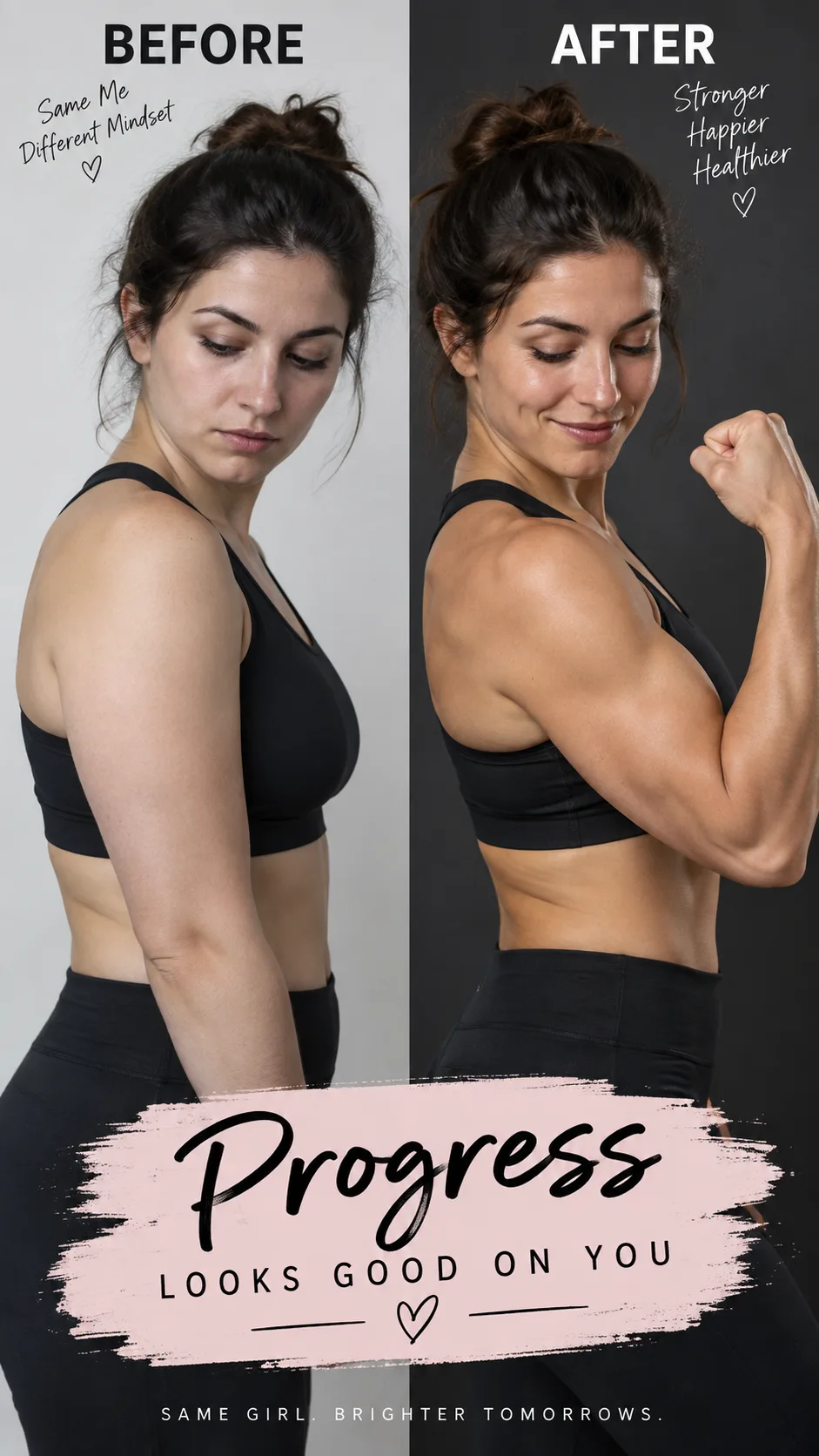
- Weeks 6-8: Noticeable definition in your arms, upper back, and shoulders. Other people start commenting.
- Weeks 8-12: Significant strength gains. You’ll likely need to move up a kettlebell size.
Of course, nutrition plays a massive role here. According to Harvard Health, adequate protein intake (roughly 0.7-1g per pound of bodyweight) supports muscle recovery and growth. You can’t out-train a poor diet. That’s just the truth, uncomfortable as it might be.
Who is this workout best for?
This upper body kettlebell routine works for a surprisingly wide range of people:
- Home gym warriors who want maximum results from minimal equipment
- Gym-goers looking to break out of their dumbbell-and-barbell comfort zone
- Beginners who want a straightforward, effective arm-building routine (just start with lighter weights)
- Intermediate lifters who’ve hit a plateau with traditional training and need a new stimulus
If you’re completely new to kettlebells, spend your first session just practicing each movement with the lightest weight available. Nail the form before chasing heavier loads. Your joints will thank you for years to come.
Final thoughts: one kettlebell, endless arm gains
Here’s the bottom line. You don’t need a gym membership, a full dumbbell rack, or a fancy cable machine to build stronger, more defined arms. A single kettlebell and these 8 exercises can genuinely transform your upper body, provided you show up consistently and push a little harder each week.
The offset load challenges your muscles in ways they’ve never been challenged before. The thick handle builds grip strength that carries over to every other lift. And the sheer versatility means you’ll never run out of ways to progress.
Pick up that kettlebell. Run through this workout twice this week. Come back in 8 weeks and tell me your arms don’t look completely different. I’ll wait.
