
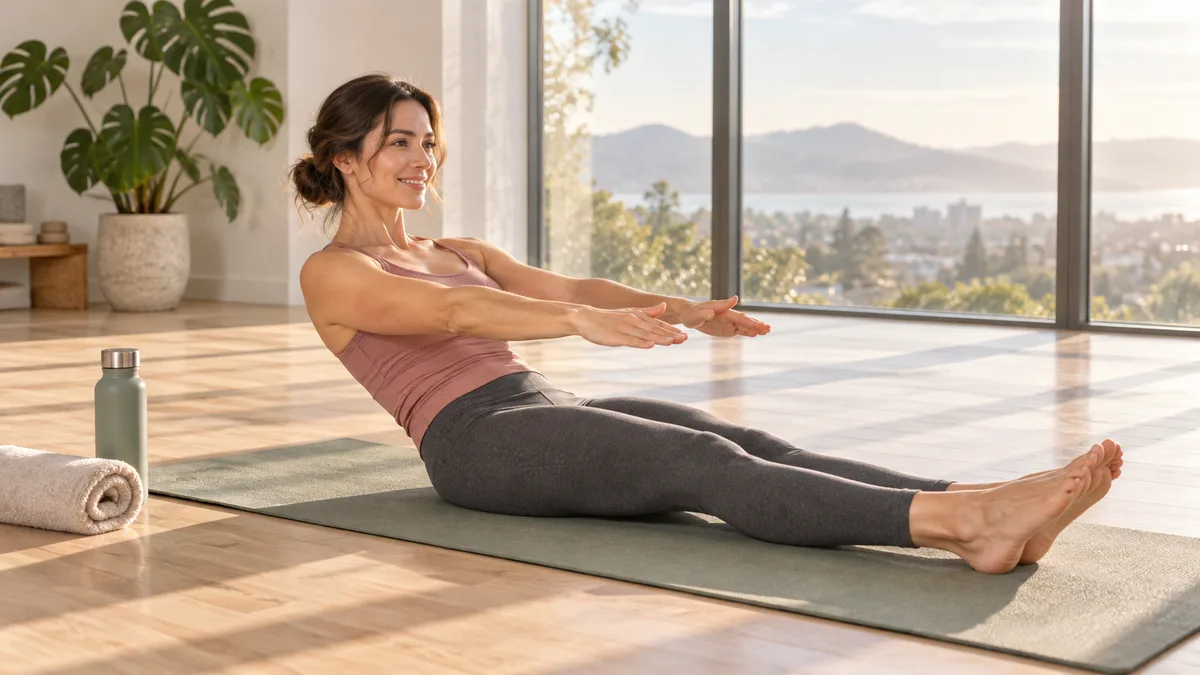
So you want to start Pilates but the whole thing feels intimidating. You’ve seen those Instagram videos of people folding themselves into pretzel shapes on fancy reformer machines, and you’re thinking, “Yeah, that’s not happening.” Good news: real Pilates for beginners looks nothing like that.
I remember my first Pilates session. I walked in expecting zen-like calm and walked out shaking like a baby deer learning to stand. But here’s the thing: I came back the next day. And the day after that. Because even though my core was screaming at me, everything else felt better. My back didn’t ache. My posture improved. I stood up straighter without even thinking about it.
This beginner Pilates workout routine will walk you through your entire first week. No confusion, no overwhelm, no pretzel shapes required. Just simple movements that build a rock-solid foundation.
Why Pilates is perfect for beginners (seriously, anyone can start)
Here’s what most people get wrong about Pilates: they think you need to already be flexible or fit to begin. That’s completely backwards. Joseph Pilates originally designed this method for injured soldiers and bedridden patients. If they could do it, so can you, even if touching your toes feels like a distant dream.
Pilates focuses on controlled, precise movements rather than speed or heavy resistance. You won’t find yourself gasping for air or collapsing in a heap (probably). Instead, you’ll concentrate on engaging your deep core muscles, improving your alignment, and building strength from the inside out.
According to the National Institutes of Health, Pilates has been shown to improve flexibility, core strength, and even reduce chronic low back pain. That’s not fitness fluff. That’s peer-reviewed science backing up what Pilates practitioners have known for decades.
What makes Pilates different from yoga or regular strength training?
People ask me this ALL the time. While yoga emphasizes holding poses and spiritual mindfulness, Pilates zeroes in on movement patterns, muscle control, and spinal alignment. And unlike traditional strength training, Pilates rarely uses heavy external weights. Your own body provides the resistance.
Think of it this way: yoga asks you to be still, strength training asks you to lift heavy, and Pilates asks you to move with surgical precision. Each one has real value, but for someone just starting their fitness journey, Pilates offers a remarkably gentle on-ramp. If you’re curious about combining this with other routines, check out this mat Pilates workout guide for more exercises to add later.
What you need before starting your first Pilates week
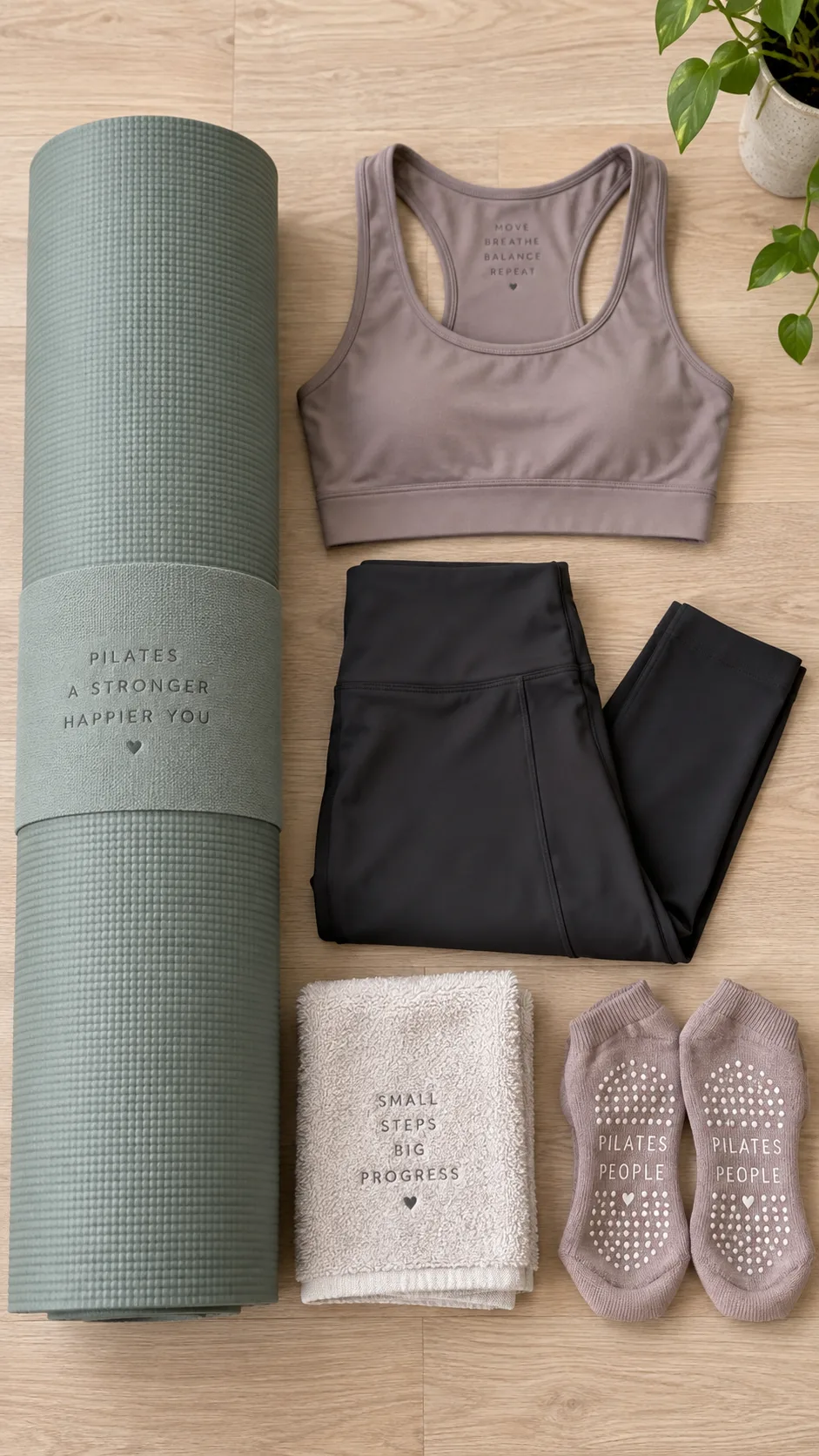
The beauty of a beginner Pilates workout routine? You need almost nothing to get started. Here’s your complete equipment list:
- A mat. A yoga mat works fine, though Pilates mats tend to be slightly thicker for extra cushioning on your spine. If your mat feels too thin, fold a towel underneath.
- Comfortable clothing. Something stretchy that lets you move freely. Skip anything baggy because you need to see your body alignment.
- A small towel. Useful for modifications and, let’s be honest, sweat.
- A quiet space. You don’t need much room. If you can lie down and stretch your arms overhead without hitting furniture, you’re golden.
That’s it. No reformer machine. No resistance bands (yet). No special shoes. In fact, Pilates is done barefoot or in grippy socks. Your wallet can breathe easy.
The 6 Pilates principles every beginner should know
Before you start moving, you need to understand the framework. Joseph Pilates built his method around six core principles, and understanding these will make every single exercise more effective.
- Concentration. Pay attention to every movement. This isn’t the time to mentally plan dinner. Your brain drives the workout as much as your muscles do.
- Control. Never fling, swing, or rush through a movement. Every inch of motion should feel intentional.
- Centering. All movement originates from your “powerhouse,” the deep core muscles including your abs, lower back, hips, and glutes.
- Flow. Movements transition smoothly from one to the next. Think of it as choreography, not a checklist.
- Precision. Quality over quantity, every single time. Five perfect reps beat twenty sloppy ones.
- Breath. You breathe laterally in Pilates, expanding your ribcage sideways rather than puffing your belly out. This keeps your core engaged throughout.
Will you master all six principles in week one? Not a chance. But keeping them in the back of your mind transforms even the simplest exercise into something meaningful. The Pilates Foundation offers a deeper breakdown if you want to geek out on the philosophy.
Your complete 7-day beginner Pilates workout routine
Here’s the plan I wish someone had handed me when I started. It introduces exercises gradually, gives your body time to recover, and builds confidence without burning you out. Each session takes just 15-25 minutes.
Ready? Here it is, day by day.
Day 1: Finding your foundation (15 minutes)
Your first day focuses entirely on learning proper alignment, breathing, and core activation. Don’t skip this. It’s the foundation everything else builds on.
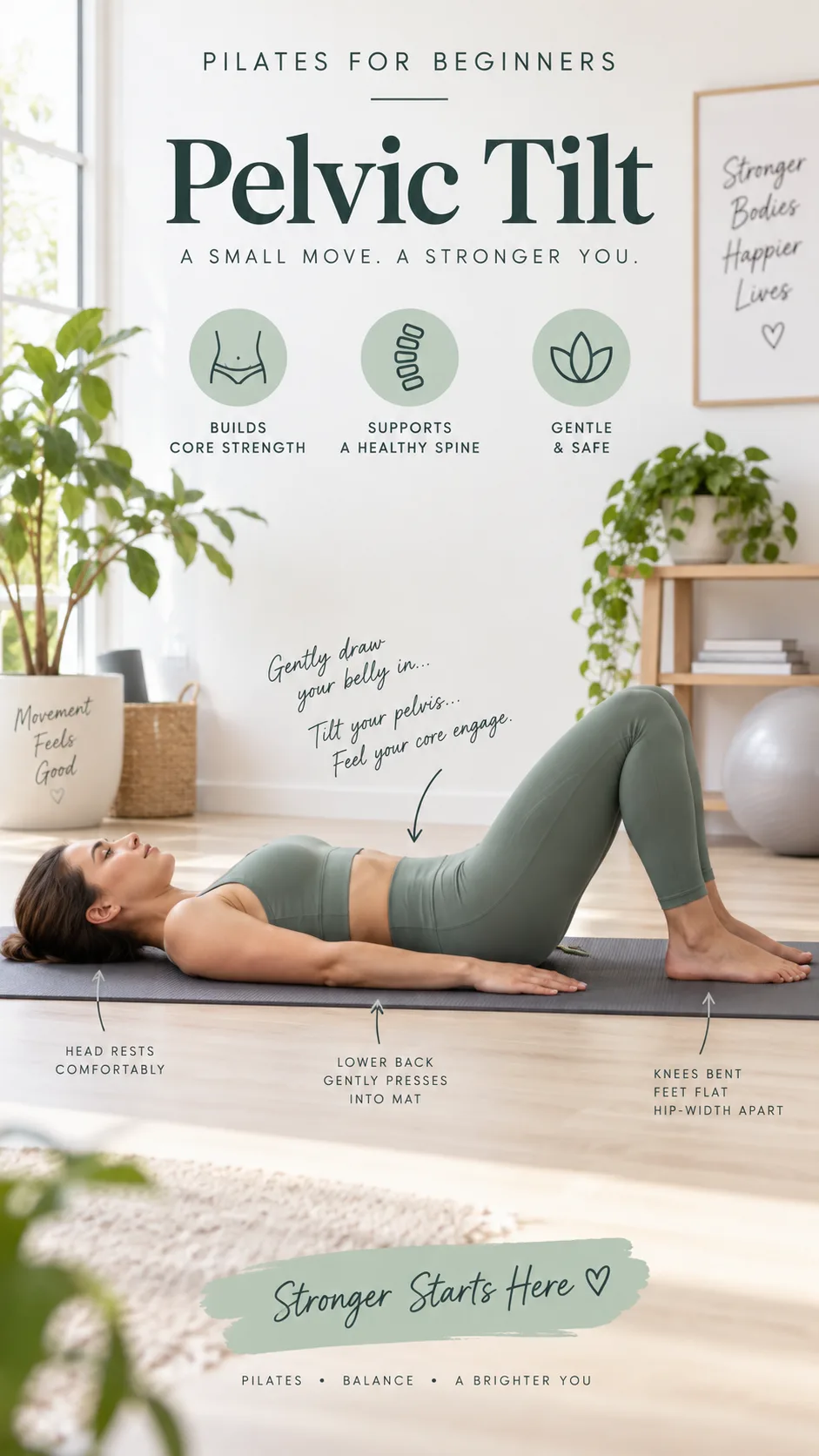
- Pelvic Tilts — Lie on your back, knees bent, feet flat. Gently tilt your pelvis to flatten your lower back against the mat, then release. 10 reps.
- Pilates Breathing Practice — Place your hands on your ribcage. Inhale through your nose, feeling your ribs expand sideways. Exhale through your mouth, drawing your navel toward your spine. 2 minutes.
- Supine Leg Lifts (Tabletop) — From your back, lift one leg at a time to a 90-degree angle (tabletop position) while keeping your core engaged and your back flat. 8 reps per leg.
- Chest Lifts — Hands behind your head, curl your upper body off the mat using your abs (NOT your neck). Hold for 2 seconds. Lower slowly. 8 reps.
- Spine Stretch Forward — Sit tall with legs extended, feet hip-width apart. Round forward through your spine as if draping over a beach ball. Roll back up. 6 reps.
Day 2: Core awakening (20 minutes)
Your core might feel a little tender from yesterday. Good. That means you actually engaged the right muscles. Today, you’ll build on that activation with slightly more challenging exercises.
- The Hundred (Modified) — Lie on your back, legs in tabletop. Lift your head and shoulders, pump your arms up and down while breathing in for 5 counts, out for 5 counts. Start with 50 pumps (5 breath cycles) and work toward 100.
- Single Leg Stretch — From chest lift position, extend one leg out while pulling the other knee toward your chest. Alternate smoothly. 8 reps per side.
- Pelvic Bridges — Feet flat, lift your hips by pressing through your heels. Squeeze your glutes at the top. Lower one vertebra at a time. 10 reps.
- Dead Bug — Arms reaching toward the ceiling, legs in tabletop. Extend opposite arm and leg simultaneously, keeping your back pressed into the mat. 8 reps per side.
- Cat-Cow Stretch — On all fours, alternate between arching and rounding your spine. 8 reps.
FYI, The Hundred is basically the Pilates initiation ritual. Everyone hates it at first, but it becomes strangely addictive once your core gets stronger. Trust the process.
Day 3: Active rest day
Take a break from structured Pilates today. Your muscles need time to repair and adapt. But “rest” doesn’t mean you plant yourself on the couch for 24 hours (though no judgment if you do).
Go for a 20-minute walk, do some gentle stretching, or practice the Pilates breathing exercises from Day 1. The goal is to keep your body moving lightly while giving those deep stabilizer muscles a chance to recover. If you want something gentle for your lower body, this leg workout for women has some great options you can mix in on rest days.
Day 4: Building strength (20 minutes)
- Roll-Up (Modified) — Lie flat, arms overhead. Use your core to peel your spine off the mat one vertebra at a time, reaching toward your toes. If you can’t come all the way up, use a towel looped around your feet for assistance. 6 reps.
- Shoulder Bridge with Leg Extension — From a bridge position, extend one leg toward the ceiling. Hold for 3 breaths, then switch. 5 reps per side.
- Side-Lying Leg Series — Lie on your side, legs stacked. Lift the top leg, lower it, kick it forward and back, then do small circles. 8 reps of each movement per side.
- Swimming (Modified) — Lie face down, arms extended. Lift opposite arm and leg slightly off the mat, alternating in a controlled flutter. 20 counts.
- Plank Hold — From forearms or hands, hold a straight plank position. Hold for 15-30 seconds. Repeat 3 times.
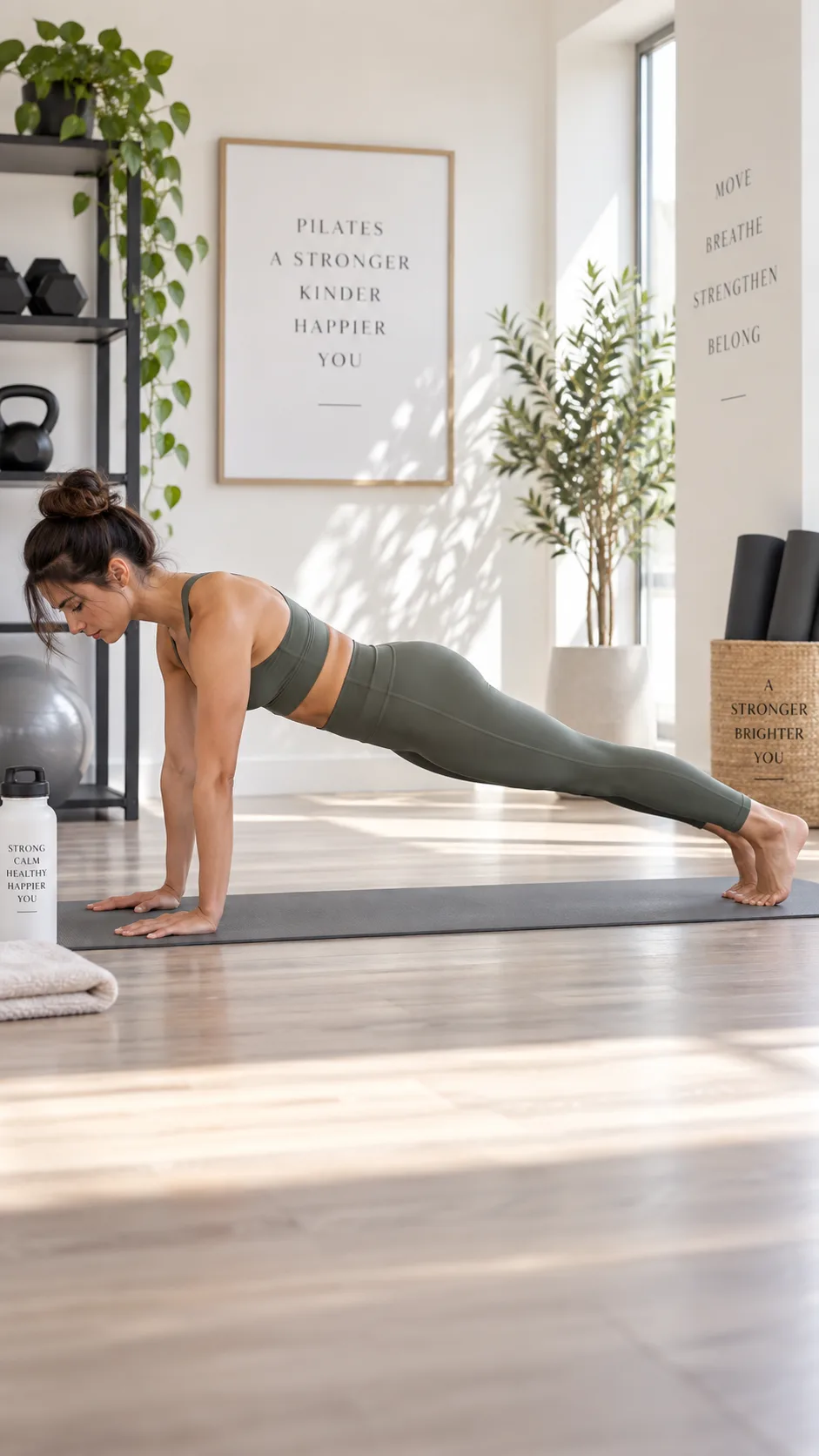
Day 5: Flexibility and flow (20 minutes)
By now, you’ve earned some feel-good movement. Today emphasizes spinal mobility and full-body stretching while still challenging your core.
- Spine Twist — Sit tall, arms extended to the sides. Rotate your torso to one side, pulse twice, return to center. 6 reps per side.
- Swan Prep — Lie face down, hands under shoulders. Press up gently to extend your upper back, keeping your hips on the mat. 8 reps.
- Mermaid Stretch — Sit with legs folded to one side. Reach one arm overhead, creating a long side stretch. Hold for 30 seconds per side.
- Single Leg Circle — Lie on your back, one leg extended toward the ceiling. Draw small circles with that leg while stabilizing your pelvis. 8 circles each direction per leg.
- Rolling Like a Ball — Sit in a tucked position, balance on your tailbone, then roll backward and forward. This one looks silly but builds incredible core control. 8 reps.
Ever noticed how kids move with total freedom and zero stiffness? That’s what consistent Pilates flexibility work brings back. Day 5 is where you start feeling that shift.
Day 6: Full practice (25 minutes)
This is your big day. You’ll combine elements from the entire week into one flowing session. Think of this as your Pilates graduation ceremony (minus the cap and gown).
- Pilates Breathing — 1 minute warm-up.
- Pelvic Tilts — 8 reps.
- The Hundred (Modified) — 50-100 pumps.
- Roll-Up (Modified) — 6 reps.
- Single Leg Stretch — 8 reps per side.
- Single Leg Circle — 6 circles each direction per leg.
- Rolling Like a Ball — 8 reps.
- Pelvic Bridge with Hold — 8 reps, hold 3 seconds at top.
- Side-Lying Leg Series — 8 reps each movement per side.
- Swimming (Modified) — 20 counts.
- Plank Hold — 20-30 seconds, 2 rounds.
- Mermaid Stretch — 30 seconds per side.
- Spine Stretch Forward — 6 reps to close.
Want a timer to keep your rest periods consistent? Use this handy workout timer so you stay on track without constantly checking your phone.
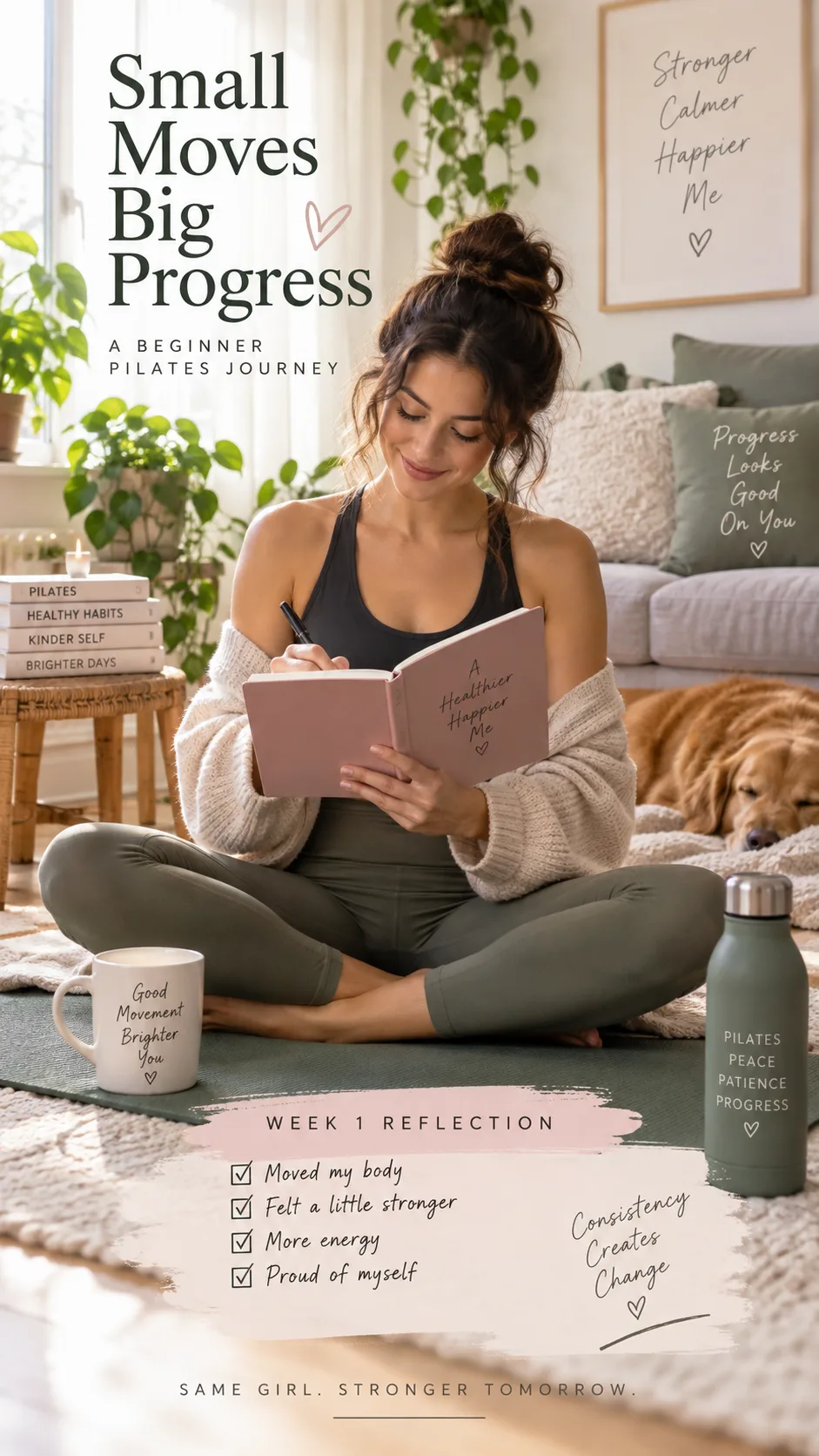
Day 7: Rest and reflect
You survived your first week of Pilates. That deserves recognition. Take today completely off, or do a gentle walk and some light stretching if your body craves movement.
Here’s what I want you to notice: how does your body feel compared to Day 1? Most beginners report better posture, reduced lower back tension, and a strange new awareness of their core muscles, like they suddenly discovered muscles they didn’t know existed. That’s the magic of this method.
A helpful video to guide your first Pilates session
Sometimes reading exercise descriptions just doesn’t cut it. Watching someone demonstrate proper form makes everything click. This beginner-friendly Pilates workout from a certified instructor covers many of the foundational moves in your week-one plan:
Common beginner mistakes (and how to avoid them)
I’ve made every single one of these mistakes, so consider this your cheat sheet for skipping the learning curve.
Holding your breath
This happens to EVERYONE. You concentrate so hard on the movement that you forget to breathe. The breath IS the movement in Pilates. If you catch yourself holding your breath, stop, reset, and start the rep over with a proper inhale-exhale pattern.
Using your neck instead of your core
During chest lifts and The Hundred, beginners constantly strain their neck muscles because their core isn’t strong enough yet. The fix? Imagine holding a tennis ball between your chin and chest. That cue alone will save your neck from days of soreness.
Going too fast
Pilates rewards slowness. If you’re breezing through reps, you’re probably using momentum instead of muscle control. Slow down until each movement feels deliberate and slightly challenging. The Mayo Clinic’s guide on core exercises makes this same point: controlled movement always beats fast repetitions.
Skipping rest days
I get it. You’re motivated and you want results yesterday. But your muscles grow during rest, not during the workout itself. Follow the schedule. Take your rest days. Your body will thank you with faster progress.
What to expect after your first week of Pilates
Let me set realistic expectations so you don’t get discouraged. After seven days of consistent beginner Pilates, here’s what you’ll likely notice:
- Better body awareness. You’ll catch yourself slouching and automatically correct it. This happens almost subconsciously.
- Core activation. Your abs will start “turning on” during everyday activities like walking, sitting, or standing in line at the grocery store.
- Reduced back discomfort. Many beginners experience noticeable relief from minor lower back tension.
- Muscle soreness in unexpected places. You’ll discover stabilizer muscles you’ve ignored your entire life. They’ll announce their presence loudly.
- Improved sleep. In my experience, this is the most underrated benefit. The combination of controlled breathing and physical work creates a powerful sleep-promoting effect.
What you WON’T see: six-pack abs, dramatic weight loss, or Instagram-worthy flexibility. Those come later with consistency. Week one is about building the foundation, and that foundation matters more than any visible result.
How to progress after week one
Finished your first week and hungry for more? Here’s how to keep the momentum going without jumping ahead too fast.
Repeat this same routine for weeks 2 and 3. Yes, really. Each time you repeat these exercises, you’ll execute them with better form, deeper core engagement, and more control. The movements don’t change. YOU change.
After three weeks, start adding these progressions:
- Extend your legs fully during The Hundred instead of keeping them in tabletop
- Add a resistance band to your leg series
- Increase your plank hold by 10 seconds each week
- Introduce Double Leg Stretch and Criss-Cross exercises
- Try full Roll-Ups without a towel assist
If you want to complement your Pilates routine with some pelvic floor strengthening exercises, that pairing works incredibly well. Both disciplines target deep core stabilizers and complement each other naturally.
Quick tips to make your beginner Pilates routine stick
Starting something new is easy. Sticking with it? That’s the real challenge. Here’s what helped me turn Pilates from a “thing I tried once” into a non-negotiable part of my week.
- Schedule it like an appointment. Put your 20-minute Pilates session in your calendar with a reminder. Treat it like a meeting you can’t cancel.
- Do it at the same time every day. Morning works best for most people because willpower is highest and distractions are lowest.
- Keep your mat out. If you have to dig it out of a closet every time, that’s one more barrier between you and your workout.
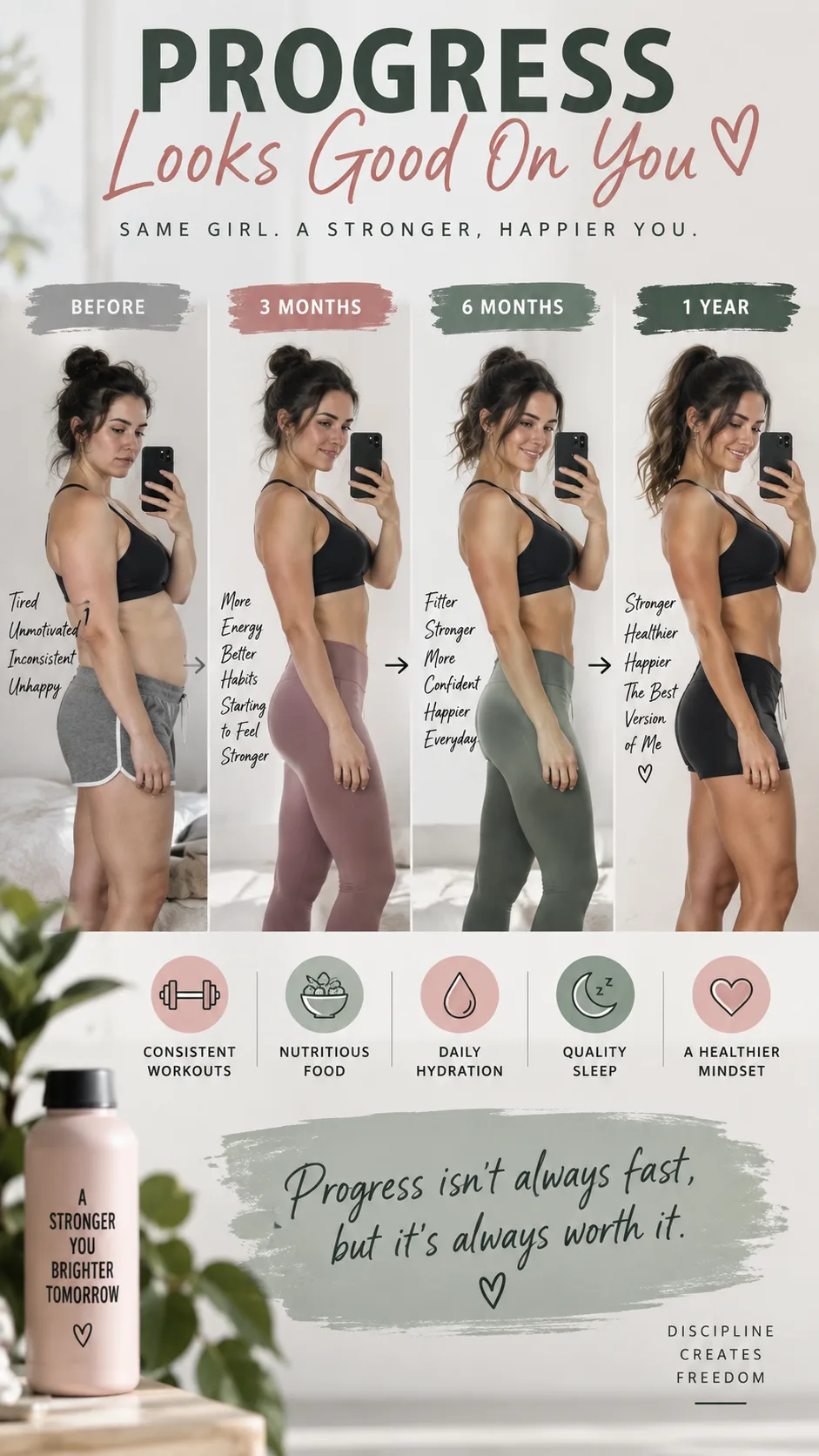
- Track your progress. Write down how many reps you did, how long you held your plank, and how you felt afterward. These notes become incredibly motivating in a few weeks.
- Find a buddy. Even a virtual one. Accountability makes everything easier, and sharing your “my abs are shaking” moments with someone who gets it makes the whole journey more fun.
The bottom line: your first week is just the beginning
Starting a Pilates workout routine as a beginner doesn’t require special equipment, previous fitness experience, or superhuman flexibility. It requires a mat, 15-25 minutes of your day, and a willingness to move slowly and intentionally. That’s it.
This seven-day plan gives you everything you need to build a strong foundation, from mastering your breath on Day 1 to flowing through a complete practice on Day 6. Every exercise targets your deep core muscles, improves your posture, and teaches your body to move with more control and awareness.
The hardest part? Showing up on Day 1. You’ve already done the research by reading this far, which means you’re already more prepared than 90% of people who “think about starting Pilates.” So roll out that mat, take a deep breath into those ribs, and give your first week the chance to surprise you. Your future self, the one standing taller, moving easier, and wondering why they didn’t start sooner, will thank you.
