
Your thighs deserve better than endless bodyweight squats and hoping for the best. If you’ve been chasing stronger, more defined legs and feeling like nothing’s clicking, you’re probably missing a few ingredients. Not effort.
Building muscular, sculpted thighs isn’t some genetic lottery reserved for fitness influencers. It comes down to the right exercises, proper intensity, and a plan that actually progresses over time. Whether you train at a commercial gym or a garage setup with a barbell and some plates, this workout will challenge your legs in ways that produce visible, lasting results.
Why most leg routines fall short for building muscle
Here’s the thing nobody wants to hear: light weights and high reps alone won’t build muscular thighs. They’ll improve endurance, sure. But if you want actual muscle definition, the kind where your quads have visible shape and your hamstrings pop, you need mechanical tension. That means heavier loads, progressive overload, and exercises that challenge your muscles through a full range of motion.
A lot of women stay stuck in the “toning” zone because outdated advice told them heavy weights would make them bulky. Spoiler: they won’t. Women produce roughly 15 to 20 times less testosterone than men, according to research published in the Journal of Strength and Conditioning Research. Building bulky muscle without pharmaceutical assistance is physiologically improbable. What you WILL get? Dense, defined, strong legs.
The other common mistake? Skipping compound movements in favor of machines only. Machines have their place (we’ll get to that), but multi-joint exercises like squats, lunges, and deadlift variations recruit more muscle fibers and trigger a bigger hormonal response. You want both in your routine.
The muscular legs workout: exercise breakdown
This workout targets your quadriceps, hamstrings, glutes, and adductors, every major muscle group that contributes to thick, defined thighs. Perform it once or twice per week with at least 48 hours between sessions for recovery.
1. Barbell back squat
Sets: 4 | Reps: 6 to 8 | Rest: 2 to 3 minutes
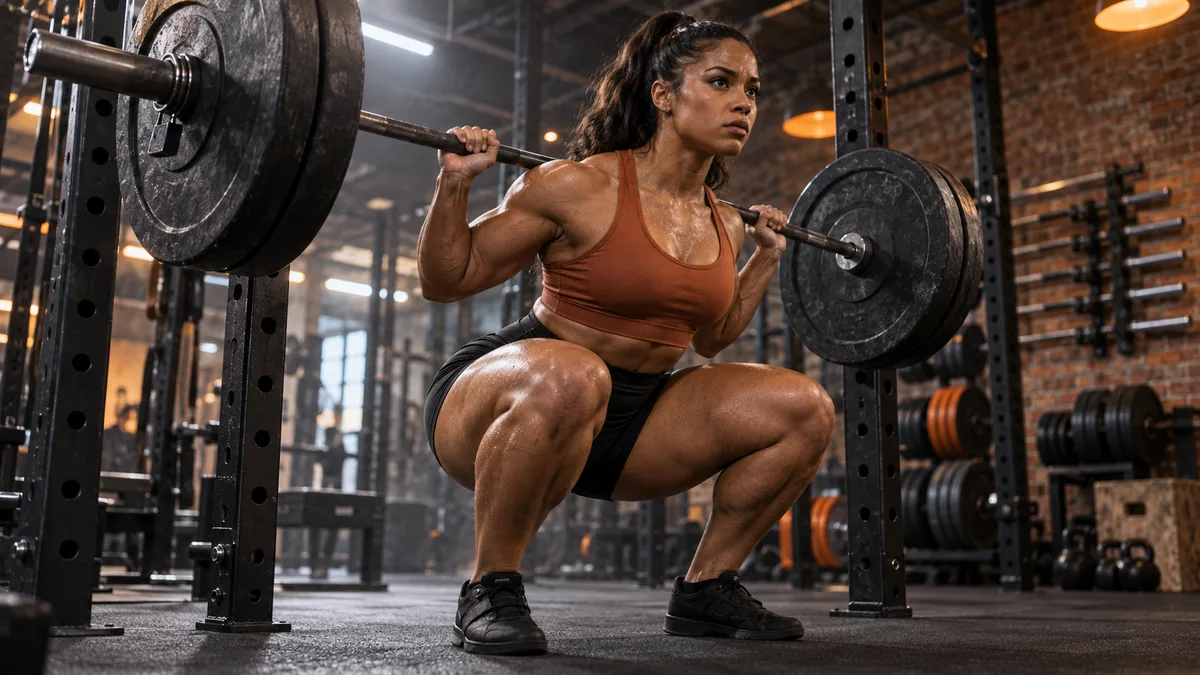
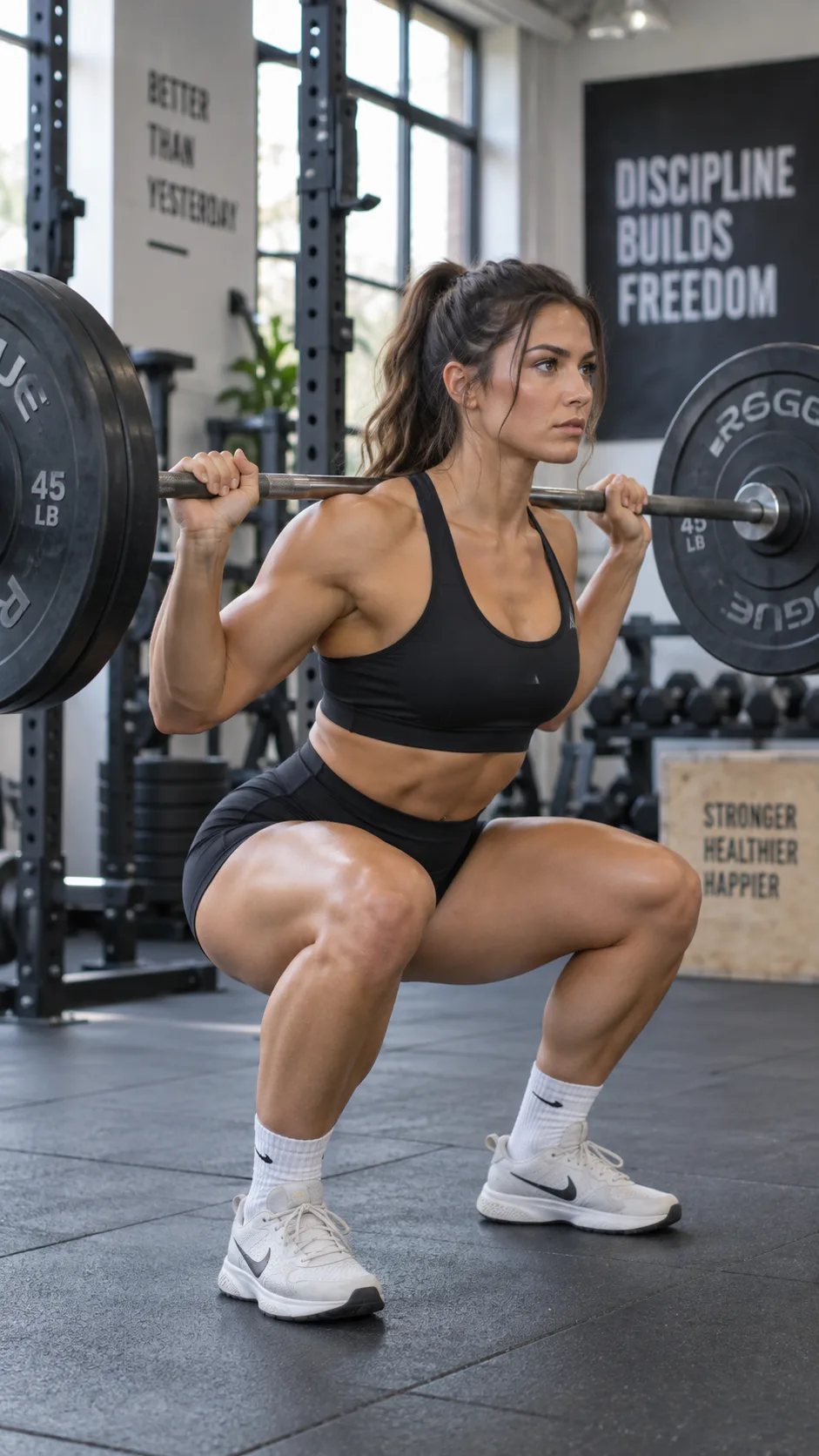
The queen of leg exercises, and yes, I’m calling it that on purpose. Nothing builds overall thigh mass quite like a properly executed back squat. Plant your feet shoulder-width apart, brace your core like someone’s about to poke you in the stomach, and sit your hips back and down until your thighs hit parallel or below.
Tip worth remembering: Drive through your full foot, not just your heels. Research from the National Strength and Conditioning Association shows that full-foot pressure improves force production and knee stability. If you can’t hit depth without your heels rising, elevate them on small plates until your ankle mobility improves.
2. Romanian deadlift (RDL)
Sets: 4 | Reps: 8 to 10 | Rest: 90 seconds
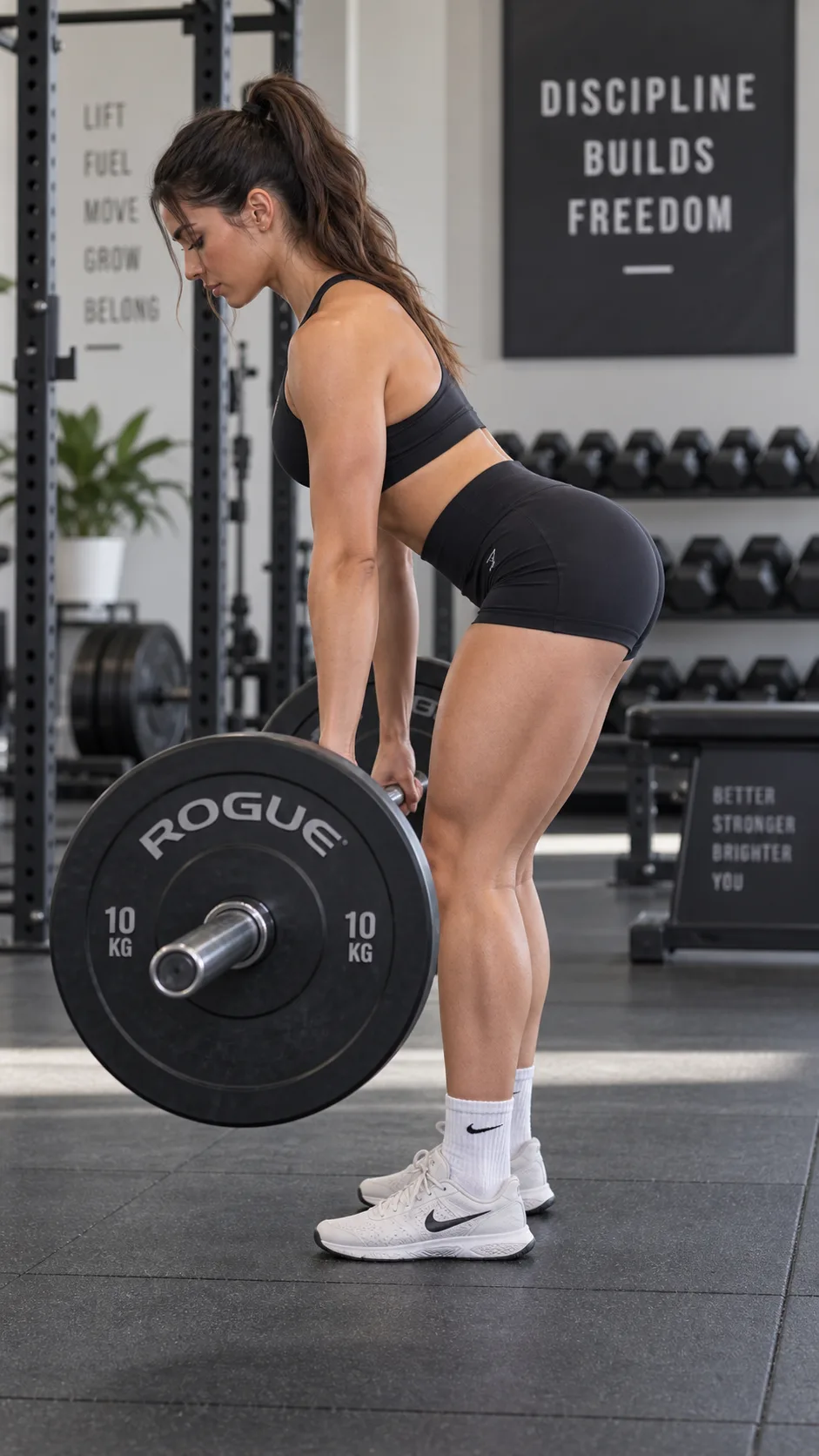
Want hamstrings that actually show up when you walk? The RDL is your best friend. Hold a barbell or dumbbells at hip height, push your hips back with a slight knee bend, and lower the weight along your legs until you feel a deep stretch in your hamstrings. Then squeeze your glutes to stand back up.
This exercise absolutely torches the posterior chain. IMO, it’s the single most underrated movement for building the back of your thighs. Keep the bar close to your body. If it drifts forward, your lower back takes over, and that’s not the goal here.
3. Walking lunges
Sets: 3 | Reps: 12 per leg | Rest: 90 seconds
Walking lunges are humbling. Even experienced lifters find these brutally effective because they combine single-leg strength, balance, and muscular endurance into one movement. Grab a pair of dumbbells, take a long stride forward, and lower your back knee toward the floor. Then drive through your front heel and step into the next rep.
Why walking instead of stationary? The forward momentum forces your quads and glutes to work harder to decelerate and re-accelerate your body. It’s a functional strength builder that also lights up your inner thighs. If you’re looking for a complete leg day routine at the gym, walking lunges should be a non-negotiable staple.
4. Leg press
Sets: 3 | Reps: 10 to 12 | Rest: 90 seconds
Now we bring in the machines. The leg press lets you load your quads and glutes heavily without worrying about balance or spinal loading. Place your feet shoulder-width apart in the middle of the platform. Lower the sled until your knees hit roughly 90 degrees, then press back up without locking out your knees at the top.
Foot placement matters here. Higher placement shifts more work to your glutes and hamstrings. Lower placement hammers your quads. For balanced thigh development, stick with the middle position and adjust based on what you feel needs more work.
5. Bulgarian split squat
Sets: 3 | Reps: 10 per leg | Rest: 90 seconds
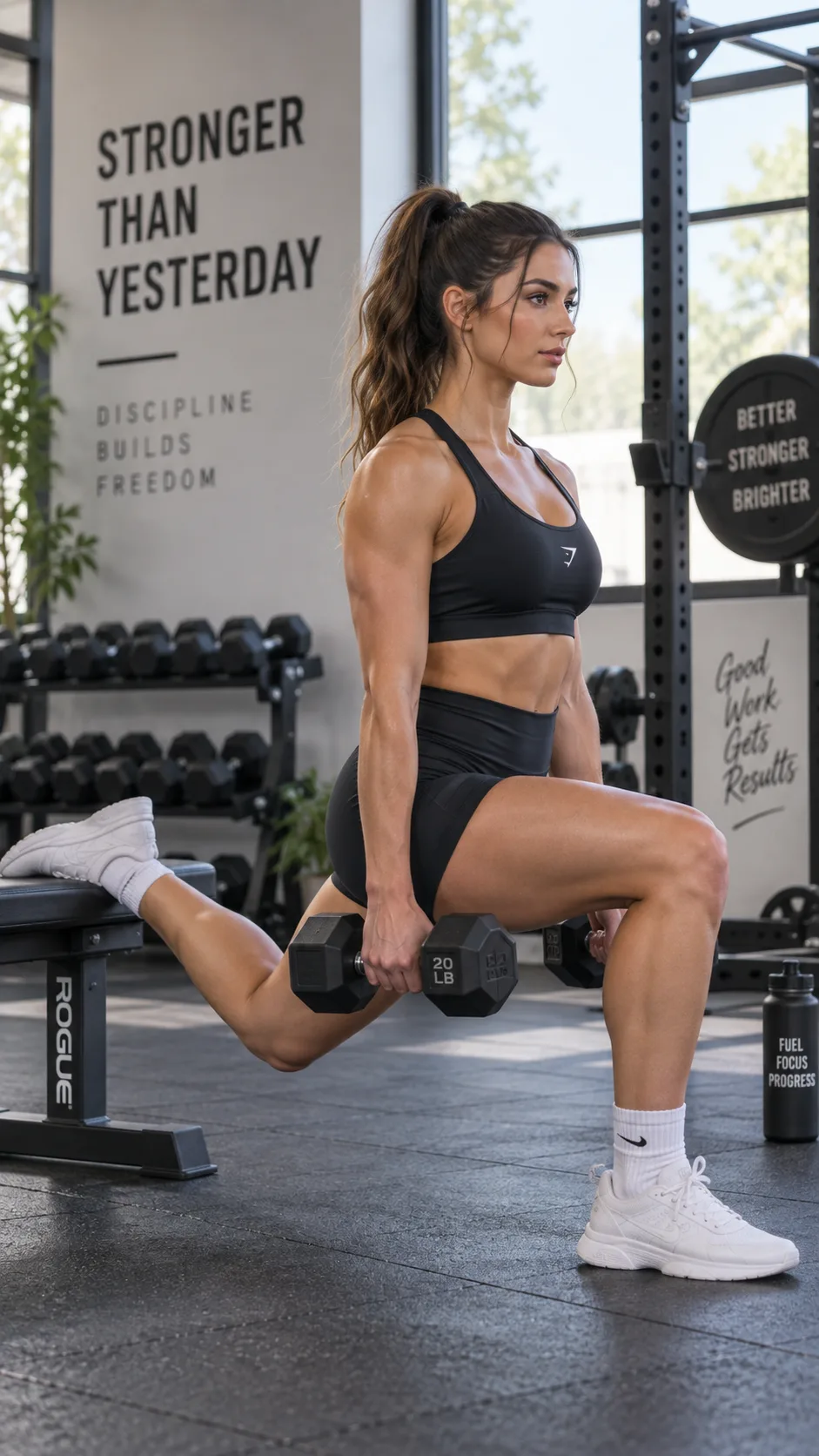
Ever tried these and questioned your life choices mid-set? Same. Bulgarian split squats are uncomfortable, wobbly, and incredibly effective. Place your back foot on a bench, hold dumbbells at your sides, and lower your front thigh until it’s parallel to the ground.
The single-leg nature of this exercise corrects strength imbalances between your left and right legs, something bilateral exercises like squats can mask. Your adductors also work overtime to stabilize your knee, which means more complete thigh development. Embrace the discomfort 🙂
6. Leg curl (lying or seated)
Sets: 3 | Reps: 12 to 15 | Rest: 60 seconds
Isolation work for your hamstrings to finish strong. The leg curl targets the hamstrings through knee flexion, a function that compound movements like RDLs don’t fully cover since they primarily work through hip extension. You need BOTH patterns for complete hamstring development.
Control the eccentric (lowering) phase for at least 2 to 3 seconds. This is where a huge chunk of muscle growth happens, and most people rush through it. Slow down, feel the stretch under tension, and watch your hamstrings respond.
7. Leg extension
Sets: 3 | Reps: 12 to 15 | Rest: 60 seconds
The leg extension isolates your quadriceps and creates that signature “teardrop” shape above the knee. Sit upright, lock your back against the pad, and extend your legs fully at the top. Squeeze hard at peak contraction for a full second.
Some trainers dismiss this exercise as dangerous for the knees. The current evidence from sports science doesn’t support that claim for healthy individuals using controlled form. A 2023 review in Sports Medicine found leg extensions to be both safe and effective for quadriceps hypertrophy when performed through a full range of motion.
The full workout at a glance
- Barbell Back Squat, 4 x 6 to 8
- Romanian Deadlift, 4 x 8 to 10
- Walking Lunges, 3 x 12/leg
- Leg Press, 3 x 10 to 12
- Bulgarian Split Squat, 3 x 10/leg
- Leg Curl, 3 x 12 to 15
- Leg Extension, 3 x 12 to 15
Total working sets: 23. That’s enough volume to stimulate growth without destroying your ability to recover. The session should take roughly 60 to 75 minutes including warm-up.
Progressive overload: the principle you can’t skip
This is where most leg routines silently fail. You can perform the perfect exercise selection, but if you’re lifting the same weight for the same reps week after week, your muscles have zero reason to grow. They’ve already adapted. Why would they change?
Progressive overload means systematically increasing the demand on your muscles over time. You can do this in several ways:
- Add weight. Even 2.5 lbs per side counts.
- Add reps. If you hit 8 reps on squats last week, aim for 9 this week at the same weight.
- Add sets. Go from 3 to 4 working sets on a stubborn exercise.
- Slow down the tempo. A 3-second eccentric makes the same weight significantly harder.
- Improve range of motion. Deeper squats recruit more muscle fibers.
Track your weights and reps in a notebook or app. Seriously. The women I’ve trained who see the fastest leg development are always the ones who know exactly what they lifted last session and show up determined to beat it.
Nutrition: you can’t out-train a bad diet
Building muscular thighs requires raw materials, specifically protein and adequate calories. If you’re eating in a severe calorie deficit, your body will prioritize survival over muscle growth. That’s just biology.
For muscle building, aim for:
- Protein: 0.7 to 1.0 grams per pound of bodyweight daily. A 140 lb woman should target roughly 100 to 140 grams per day.
- Calories: Maintenance or a slight surplus (100 to 300 calories above maintenance). You can’t build something from nothing.
- Carbohydrates: Don’t fear them. Carbs fuel your leg workouts and help shuttle nutrients into muscle cells post-training.
According to the American College of Sports Medicine, protein intake spread across 3 to 5 meals per day maximizes muscle protein synthesis better than cramming it all into one or two meals. If you’re curious about nutrition approaches that support your training, check out our guide on whole-food eating strategies for women.

Recovery: where the muscle actually grows
Your legs don’t grow during the workout. They grow while you rest. This concept trips up a lot of motivated women who want to train legs four or five times per week. More is not always better. More recovery with adequate stimulus IS better.
Here’s what effective recovery looks like:
- Sleep 7 to 9 hours per night. Growth hormone peaks during deep sleep, and that hormone directly supports muscle repair and growth.
- Space leg sessions 48 to 72 hours apart. If you train legs Monday, don’t hit them again until Wednesday at the earliest.
- Move on rest days. Light walking, stretching, or yoga promotes blood flow to sore muscles without adding training stress. A light resistance band session on off days can help with active recovery.
- Manage stress. Chronic stress elevates cortisol, which directly interferes with muscle growth and recovery. This isn’t woo-woo advice. It’s endocrinology.
Common mistakes that stall thigh development
Even with the right workout, certain habits can slam the brakes on your progress. Here are the ones I see most often.
Half-repping everything
Partial range of motion means partial results. A 2021 study in the Journal of Medicine & Science in Sports & Exercise confirmed that full range of motion training produces significantly more muscle growth than partial reps at the same load. Drop the ego weight and squat to depth.
Skipping hamstrings
Quad-dominant workouts create an imbalance that not only looks incomplete but also increases your risk of knee injuries. Your hamstrings act as a counterbalance to your quadriceps. Train them with equal intention. The RDLs and leg curls in this program handle that, so don’t skip them.
Cardio overload
Running 45 minutes before your leg workout and wondering why you can’t squat heavy? Excessive cardio before resistance training depletes glycogen stores and pre-fatigues the muscles you’re about to train. Do your cardio AFTER weights, or better yet, on separate days. FYI, 2 to 3 short cardio sessions per week won’t interfere with muscle growth. An hour of steady-state before every lift absolutely will.
Never changing the stimulus
Your body adapts to the same routine within 4 to 6 weeks. Swap exercise variations, change rep ranges, or adjust tempo every month or so. You don’t need to overhaul everything. Small tweaks keep the stimulus fresh and your muscles responding.
How long until you see results?
Let’s set honest expectations. With consistent training (2 leg days per week), proper nutrition, and adequate recovery, most women notice visible changes in their thigh definition within 8 to 12 weeks. Significant muscular development, the kind where people start asking what you’re doing differently, typically takes 6 to 12 months of dedicated work.
That timeline might sound long. But consider this: those months will pass whether you start this program or not. The only difference is whether you’ll spend them building something you’re proud of. Muscle is an investment, not an overnight purchase.
Your strength gains will come much faster than visible changes. You’ll likely add 20 to 30% to your squat within the first three months. Those strength increases ARE building muscle. It just takes time for the visual changes to catch up.

Putting it all together
Building strong, defined, muscular thighs comes down to a straightforward formula: compound and isolation exercises performed with progressive overload, supported by adequate protein and genuine recovery. No secret supplements. No magic rep scheme. Just consistent, intelligent training over time.
Start with the workout above. Track your numbers. Eat enough protein. Sleep like it matters (because it does). And give yourself grace during the weeks when progress feels invisible. It’s still happening beneath the surface.
Your legs carry you through every single day. They deserve a training program that matches their potential. Now stop reading and go squat something heavy. Your future thighs will thank you.
