
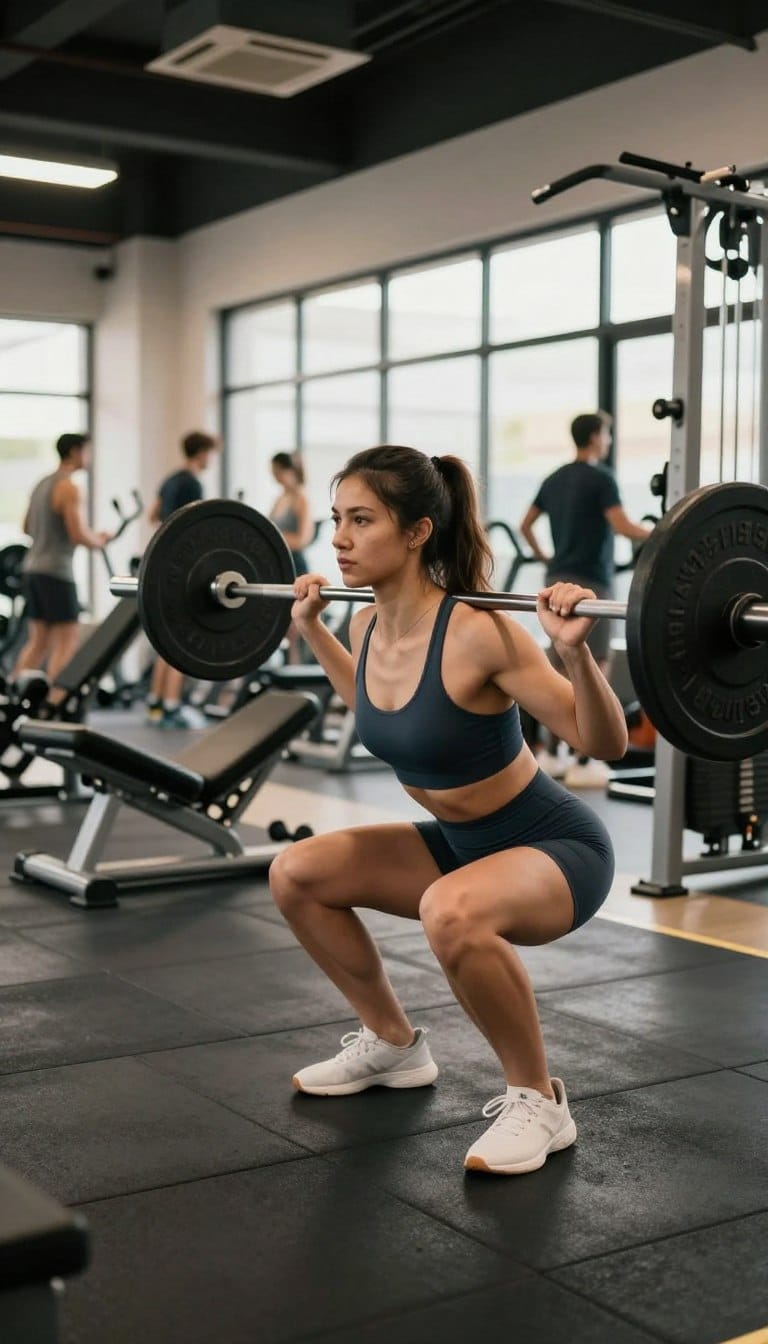
Curious whether one focused session can change your whole physique? You can build power, shape, and better movement with a clear plan. This guide shows a step-by-step approach so you move with confidence.
Start by learning essential leg exercises that target quads, hamstrings, glutes, and calves. Each move is chosen to maximize results and cut wasted time. You will get cues to perform them safely and effectively.
Follow this structured routine and you will push past plateaus, increase strength, and shape an athletic silhouette. Stay consistent, focus on form, and track your progress for steady gains.
Key Takeaways
- Master core leg exercises to hit all major muscles.
- Use a clear plan to save time and boost results.
- Prioritize form to avoid injury and improve gains.
- Consistency and progression lead to visible changes.
- This guide helps you train with purpose and confidence.
Why Leg Day is Essential for Your Fitness Journey
Strong lower-body training fuels whole-body progress by triggering growth hormones and supporting recovery. When you target large muscles, you boost metabolism and burn more calories even after you finish.
Consistency matters. Regular leg exercises improve balance, coordination, and flexibility. That cuts your risk of injury and makes daily tasks feel easier.
- Large muscles in your lower body raise metabolic rate and aid weight management.
- Focused training builds overall strength and creates a stable base for other lifts.
- These exercises stimulate hormone release that helps full-body growth, including upper-body gains.
- Strong legs enhance sports performance and make routine activities simpler.
Make legs a priority. Treat this session as a cornerstone of your fitness plan. It’s demanding, but the rewards for your strength, form, and endurance are worth it.
Understanding Your Lower Body Muscle Groups
Knowing how each lower-body muscle works helps you pick exercises that build balanced strength.
Your lower body is made of four main muscle groups that work together to move and stabilize you.
Quads and Hamstrings
The quads sit on the front of your thighs and extend your knee during many moves. This muscle group is key for power and control.
The hamstrings run along the back of your thighs. They flex the knee and help with hip extension during training.
Glutes and Calves
The glutes are the largest muscle in your body and drive hip extension. Strong glutes improve posture, running, and overall strength.
Calves support ankle stability and push-off. Small but vital, they round out balanced leg strength.
- Target each muscle to build symmetry and reduce weak links.
- Use varied leg exercises to challenge every muscle group.
- Focus on how these muscles interact for safer, smarter training.
| Muscle Group | Primary Function | Best Exercise |
|---|---|---|
| Quads | Knee extension, power | Back squat |
| Hamstrings | Knee flexion, hip drive | Romanian deadlift |
| Glutes | Hip extension, stability | Hip thrust |
| Calves | Ankle plantarflexion | Standing raise |
Preparing Your Body for a Leg Day Workout at the Gym
Begin every lower body session with a focused warm-up that wakes up your hips, knees, and ankles.
Spend 5 to 10 minutes on light cardio and dynamic stretches. This boosts blood flow to your legs and primes your muscles for heavy sets.
Target mobility for key muscle groups. Add bodyweight squats, controlled lunges, and ankle circles to mirror your main leg exercises and prime your nervous system.
Warm joints protect you. A proper routine helps lubricate the knee and lowers injury risk during compound lifts.
- Start with low-impact cardio to raise heart rate.
- Use dynamic stretches that match your planned leg exercise patterns.
- Consistent prep keeps your body alert and improves performance during every workout.
Take this step seriously: preparing your body builds longevity. You train smarter, lift safer, and get more from each session.
Mastering the Barbell Back Squat
Mastering a solid back squat will transform how you move and how much strength you can build in your lower body. Start with a clear stance and steady bar placement before you load heavier.
Perfecting Your Squat Depth
Setup: Place the barbell across your upper back and step into the squat rack. Set your feet hip-width apart with your feet flat on the floor for a firm base.
Movement cues: Push hips back and bend knees while keeping a neutral lower back. Keep your upper body tight so the bar stays secure across your upper back.
- Aim for thighs parallel to the floor to get full range motion and optimal muscle work.
- Drive through your heels and prevent knees from caving inward on the ascent.
- If you’re new, use a 10kg training bar to learn the feeling of weight on your back before adding more weight.
| Focus | Tip | Why it matters |
|---|---|---|
| Stance | Hip-width apart, feet flat | Provides balance and stable force transfer |
| Spine | Neutral lower back | Protects spine and keeps power efficient |
| Bar control | Tight upper body, secure grip on bar | Maintains posture and safe loading |
Developing Glute Strength with Hip Thrusts
Hip thrusts are a go-to move when you want direct glute activation and measurable posterior gains. This exercise isolates glutes to build focused strength in your posterior chain.
Setup: Sit with your upper back against a bench and roll a barbell over your hips. Use a pad for comfort so pressure on your pelvis feels manageable.
Drive through your heels and lift hips until you form a straight line from shoulders to knees. Squeeze glutes hard for 1–2 seconds at the top of the movement to maximize muscle activation.
- Load safely: Hip thrusts allow heavy weight while keeping spine stable.
- Maintain form: Keep ribs down, core tight, and avoid overextending your lower back.
- Adjust foot placement: Move feet on the floor to find the angle that hits glutes best without straining back.
Consistent practice of this exercise improves strength and transfers to better performance in squats and deadlifts. Add hip thrusts to your routine to sculpt a powerful lower body and notice real gains over time.
Building Quad Power with Front Squats
When you rack the bar in front, your torso must stay upright, making this lift a quad-focused powerhouse. The barbell sits on your front deltoids and forces a more vertical spine than a back squat.

Keep elbows high so the bar rests secure on your shoulders. This setup increases upper body demand and helps you maintain form through each rep.
Front squats are one of the best leg exercises for building quad strength with less compressive force on the knee joint than a back-loaded pattern. Keep your core tight and your back straight as you lower, letting your knees track over your toes.
- Use a crossed-arm grip if wrist mobility limits your hold.
- Focus on slow descent and an explosive drive to train this muscle group effectively.
- Consistent front squat practice improves posture and builds a stronger core for other exercises.
Improving Stability with Bulgarian Split Squats
Working one limb at a time with split squats sharpens stability and builds targeted strength. This move forces you to stabilize through a single stance while loading your glutes and quads.
Benefits of Unilateral Training
Unilateral training fixes muscle imbalances by isolating one leg per rep. That improves coordination and athletic performance.
Split squats also boost core engagement and help transfer strength to compound lifts like the hip thrust and squat.
Proper Foot Placement
Place one foot on a bench behind you and keep your front feet flat on the floor. Ensure your front foot sits far enough forward so your knee stays over your ankle.
Lean slightly forward to hit glutes more, or stay upright to target your quads. Start with light weight and increase load as stability improves.
- Train both sides evenly to correct asymmetry.
- Focus on controlled descent and a steady drive upward.
- Use pauses at the bottom to enhance balance work.
| Focus | Placement | Effect |
|---|---|---|
| Front foot | Feet flat, forward enough | Knee tracks over ankle; safer mechanics |
| Rear foot | On bench, toes relaxed | Supports single-leg balance |
| Load | Start light, increase weight | Builds strength without losing form |
Targeting Hamstrings with Romanian Deadlifts
The Romanian deadlift is the go-to move when you want strong, well-developed hamstrings and a resilient posterior chain. Stand with your feet hip-width apart and grip a barbell with an overhand hold so your arms act like hooks.
With a slight bend knees, hinge at your hips and lower the bar down the front of your legs toward the floor. Keep the bar close to your body and maintain a neutral lower back so tension stays on your hamstrings instead of shifting to your back.
You should feel a deep stretch through the hamstrings as you descend. Then drive your hips forward to return to standing, squeezing your glutes at the top. Focus on the hip hinge; this protects your lower back and forces the hamstrings to handle most of the weight.
- Start light to learn the pattern and prioritize form over heavy weight.
- Use the movement to build strength that transfers to cleans, snatches, and other compound exercises.
- Swap a barbell for dumbbells for variety while keeping the same hip-hinge mechanics.
| Focus | Key Cue | Benefit |
|---|---|---|
| Hip hinge | Push hips back first | Maximizes hamstrings engagement |
| Bar path | Keep bar close to shins | Reduces shear on lower back |
| Knee angle | Slight bend only | Protects joints, preserves tension |
Enhancing Calf Definition with Standing Raises
To carve defined calves, use a slow, full-range standing raise with mindful tension on every rep.

Setup: Stand with your feet hip-width apart on an elevated platform so heels can hang off the edge. Keep your feet flat on the platform before each rep for consistent range motion.
Keep a slight bend knees to target gastrocnemius. Push through the balls of your feet and lift heels as high as possible. Squeeze calves at the top and lower with control to feel a deep stretch.
- Perform 4 sets of 25–30 reps for high-volume stimulus.
- Use bodyweight first, then add dumbbells or extra weight as strength improves.
- Focus on a strong mind-muscle connection and full contraction each rep.
Why this works: High reps and controlled tempo increase time under tension for small lower-leg muscles. Consistent standing raises improve shape, stability, and carryover for compound lifts. Add this move to your routine and progress weight gradually for steady gains.
Incorporating Machine Exercises for Muscle Isolation
Machines remove stability guesswork so you can push targeted muscles safely and effectively. Use them to finish a session or to hit a weak spot with focused intensity.
Leg Press Benefits
The leg press lets you move heavy weight while your back stays supported. That makes it easier to overload quads and glutes without stressing your lower back.
Adjust foot placement to change which muscles take priority and preserve knee joint alignment.
Seated Leg Curls
Seated leg curls isolate hamstrings with a controlled range motion. They are ideal when you want focused growth or when fatigue limits free-weight options.
Adductor Machine Tips
The adductor machine targets inner thighs, a muscle group often missed in compound moves. Start light and feel the squeeze, then increase weight across sets.
- Machines are stable—great for beginners or when you are fatigued.
- Use them to safely push to failure for hypertrophy while keeping control.
- Pair machine work with compound moves like split squat and hip thrust for complete lower body balance.
| Machine | Main Target | Key Cue |
|---|---|---|
| Leg Press | Quads & glutes | Feet placement controls emphasis |
| Seated Curl | Hamstrings | Slow eccentric, full range motion |
| Adductor | Inner thighs | Controlled squeeze, avoid momentum |
Structuring Your Weekly Training Routine
Design your week to balance intensity, volume, and recovery so you keep improving.
A solid plan starts with frequency. Aim for one or two lower body sessions per week. That gives muscles enough stimulus while leaving time for repair and growth.
Keep most sessions built around compound moves. Include a squat, a hip thrust, and a split squat each week. Add accessory exercises like lunges or step-ups to hit different angles.
- Do 3 sets of 8–12 reps for most lifts to encourage size and strength.
- Track sets and reps so you can apply progressive overload week to week.
- Adjust volume based on recovery; more rest when fatigue piles up.
Stick with your plan for 4–6 weeks. Most people notice improved strength and muscle tone in that time. Consistency matters more than occasional intensity spikes.
| Session Type | Main Focus | Sample Structure |
|---|---|---|
| Heavy | Strength, squat emphasis | 3 sets x 6–8 reps, compound priority |
| Accessory | Hypertrophy, hip thrusts | 3 sets x 8–12 reps, add lunges |
| Unilateral | Balance, split squat work | 3 sets x 8–10 reps per side |
The Role of Progressive Overload in Leg Growth
Small, consistent increases in intensity drive real changes in strength and size. Progressive overload is the core rule of effective training. You must steadily raise the challenge in each session to force adaptation.

How to apply it: Add a bit more weight, squeeze out extra reps, or add another set. Improve form on a squat so each rep hits the target muscles harder and safer.
Track your progress in a simple log. Note weight, reps, and how each set felt. Over weeks, aim to beat one metric from your last workout.
- Add small weight increments when a movement feels doable.
- Increase sets or reps to raise total volume slowly.
- If a split squat or similar move gets easy, add load or extra sets to keep progress.
| Method | Key Cue | Benefit |
|---|---|---|
| Increase weight | 5% jumps or microplates | Builds maximal strength |
| More sets reps | Extra set or 1–2 reps | Raises volume for growth |
| Improve form | Slow tempo and full range | Targets muscle, reduces injury |
Essential Equipment for Your Leg Day Success
A small selection of reliable gear transforms how you lift and protects your body under load.
A sturdy squat rack is non-negotiable for safe back and front squats. It lets you add heavy sets with confidence and reduces risk when you fail a rep.
Use a padded barbell pad when you perform a hip thrust to protect your hips and stay focused on muscle drive. Resistance bands are ideal for warm-ups and for activating glutes before heavy sets.
Support items like a lifting belt and straps help you push past plateaus during your heaviest sessions. Flat-soled shoes give stable footing for all standing lifts.
Invest in quality gear and check condition before every session. Owning a belt or straps can boost confidence and let you lift heavier safely.
| Item | Purpose | Benefit |
|---|---|---|
| Squat rack | Safe heavy squats | Reduces risk, enables progressive overload |
| Barbell pad | Hip thrust comfort | Better focus, less pain |
| Resistance bands | Warm-up activation | Improves muscle firing, reduces injury |
Prioritizing Proper Form to Prevent Injury
Focusing on clean movement prevents injury and helps you hit targeted muscles every rep. Make form your first priority before you add weight or volume.
Keep a neutral lower back during squats and deadlifts. This protects your spine and moves stress into muscles, not joints.
If you can’t control an exercise, lower the load until you can. Slow, deliberate reps teach good mechanics faster than heavy, sloppy sets.
Never skip a warm-up. Rushing through sets leads to poor technique and higher injury risk during training.
- Listen to your body and pause if joint pain occurs.
- Record your training on video to spot form faults you miss while lifting.
- Ask a trainer for feedback when unsure—expert cues speed improvement.
| Focus | Action | Benefit |
|---|---|---|
| Neutral spine | Brace core, hinge at hips | Protects lower back |
| Controlled load | Reduce weight, perfect form | Better muscle targeting |
| Consistency | Repeat good reps each session | Long-term strength and health |
Cooling Down and Supporting Muscle Recovery
A calm, focused cooldown helps your muscles recover faster and keeps you ready for future training.
Begin with gentle movement. Spend 5 to 7 minutes on slow walking or easy cycling to drop heart rate and clear metabolic waste.
Stretching Techniques
Static stretches for your quads, glutes, and hamstrings improve range motion and cut tightness in major muscle groups.
Move slowly and hold each stretch for 20–30 seconds. Focus on breath and controlled tension to help a muscle group unwind.
- Use foam rolling to ease knots and boost circulation after sets reps.
- Hydrate well and grab a protein shake within 30 minutes to kick-start recovery.
- Include a light upper body stretch to keep overall balance after a heavy session.
Why this matters: Cooling down reduces soreness and helps your muscles repair so your next workout feels better. Take these final steps seriously to protect gains and stay consistent with training.
Conclusion
With these routines and cues, you can train more purposefully and watch consistent results appear.
You now have a complete plan to crush each workout and grow lasting strength. Stay consistent, prioritize form, and track progress so small wins add up into major change. Celebrate each milestone and adjust loads as you improve.
By following this guide you move forward in your fitness journey and build a stronger, more resilient foundation. Keep pushing, stay patient, and enjoy the process. Thank you for reading—good luck as you keep building strength and confidence.