

You’ve been hitting the gym for two weeks, eating your chicken and broccoli like a good little soldier, and you’re standing in front of the mirror wondering… why do I look exactly the same? Yeah, I’ve been there. We’ve all been there. And it’s the number one reason people quit before the magic happens.
Here’s the thing nobody tells you when you start working out: your body operates on its own timeline, and it doesn’t care about your impatience. But the good news? Real, measurable changes happen way sooner than most people think. You just need to know where to look and what to expect.
So let me break down exactly when workout results start showing, what happens inside your body at each stage, and why that mirror is a filthy liar for the first few weeks.

Week 1-2: The invisible revolution happening inside you
You won’t see a single visible change in the first two weeks. Let me just rip that band-aid off right now. But here’s what’s wild: your body is already transforming at a cellular level, and some pretty incredible stuff is going down beneath the surface.
What’s going on in there
Your nervous system is learning how to recruit muscle fibers more efficiently. That’s why you can suddenly lift a little more weight in week two even though your muscles haven’t physically grown yet. This is called neuromuscular adaptation, and it’s your brain literally getting better at telling your muscles what to do.
Your mitochondria (those tiny powerhouses inside your cells) start multiplying. Your blood volume increases. Your body begins producing more enzymes to process energy. According to research published in the Journal of Applied Physiology, these cellular adaptations can begin within just 2-3 exercise sessions.
What you WILL notice: Better sleep, improved mood, slightly more energy throughout the day, and that weird soreness that makes sitting on the toilet feel like an Olympic event. These are all legitimate signs of progress.
Week 3-4: The “Am I imagining things?” phase
Around week three, something subtle starts to shift. Your clothes might fit a tiny bit differently. You might catch a glimpse of yourself at a certain angle and think, “Wait… did something change?” You’re not imagining it.
This is when your muscles start developing real tone. Not massive size gains. We’re talking about the early stages of muscle hypertrophy where individual fibers begin to thicken. Your posture often improves too, which alone can make you look five pounds lighter.
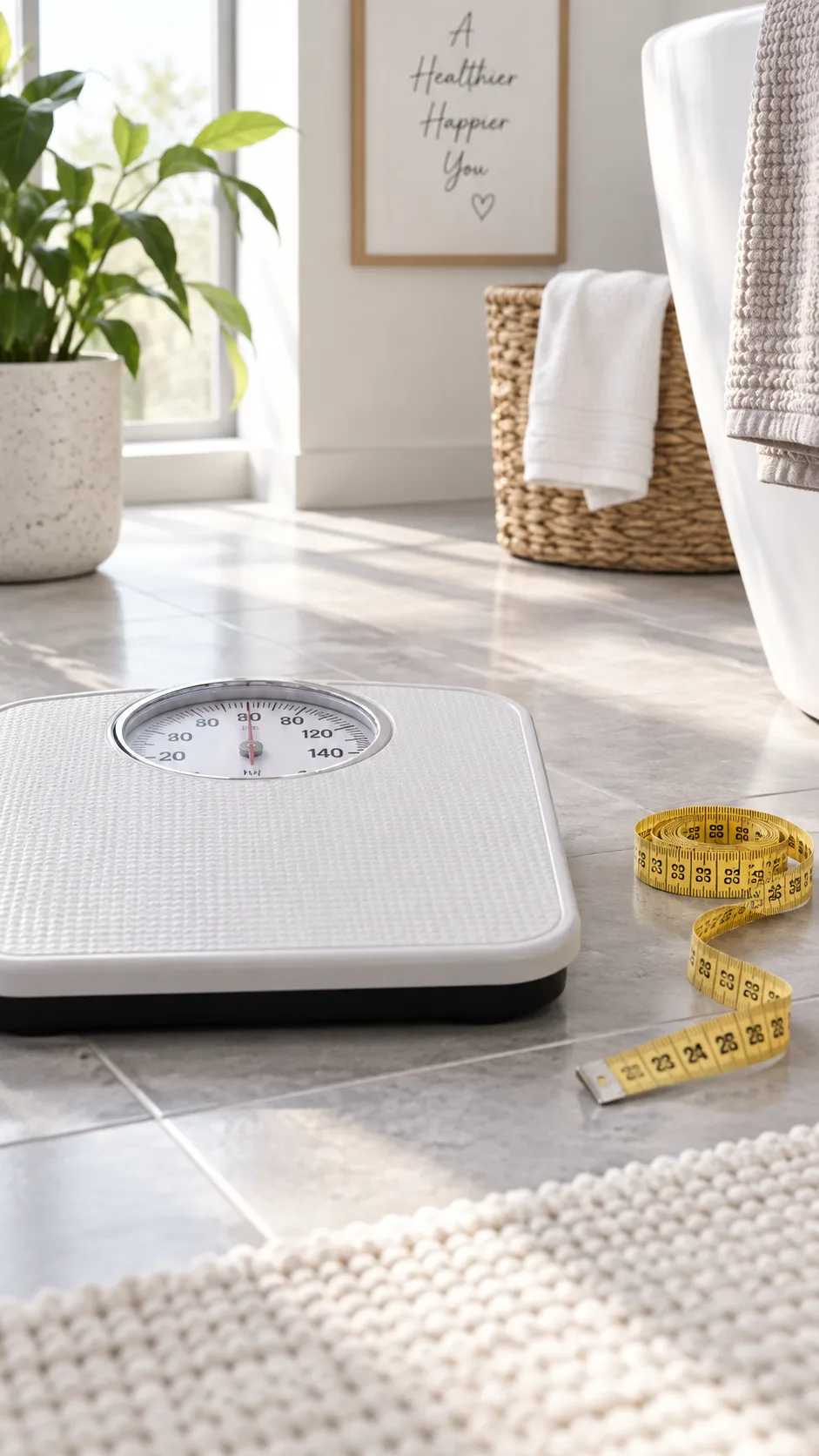
The scale might mess with your head
Here’s where people panic and quit. The scale might go UP during weeks 3-4, especially if you’re strength training. Why? Because your muscles are retaining more water and glycogen to fuel your workouts. This is a GOOD thing, but it freaks people out who are obsessed with that number.
If fat loss is your goal, you need to understand your calorie balance. Our calorie deficit calculator can help you figure out exactly where you need to be, because no amount of exercise outworks a chaotic diet.
Month 2: When YOU start noticing real changes
There’s a famous saying in fitness: “It takes 4 weeks for you to notice your body changing, 8 weeks for your friends, and 12 weeks for the rest of the world.” And it’s pretty accurate.
By week 5-8, the visible workout results start stacking up. Here’s what typically happens during this phase:
- Muscle definition becomes visible, especially in your arms, shoulders, and legs where you tend to carry less subcutaneous fat
- Body fat percentage drops noticeably, assuming your nutrition is on point (big asterisk there)
- Strength gains accelerate, and you’re lifting significantly more than when you started
- Endurance improves dramatically, so that workout that destroyed you in week one now feels manageable
- Your face looks different, and this is often the first place other people notice changes
This is the phase where consistency either makes or breaks you. The initial excitement has worn off, the novelty is gone, and you’re just… doing the work. The people who push through month two are the ones who get the results everyone else wishes they had.
Month 3: When the world finally notices
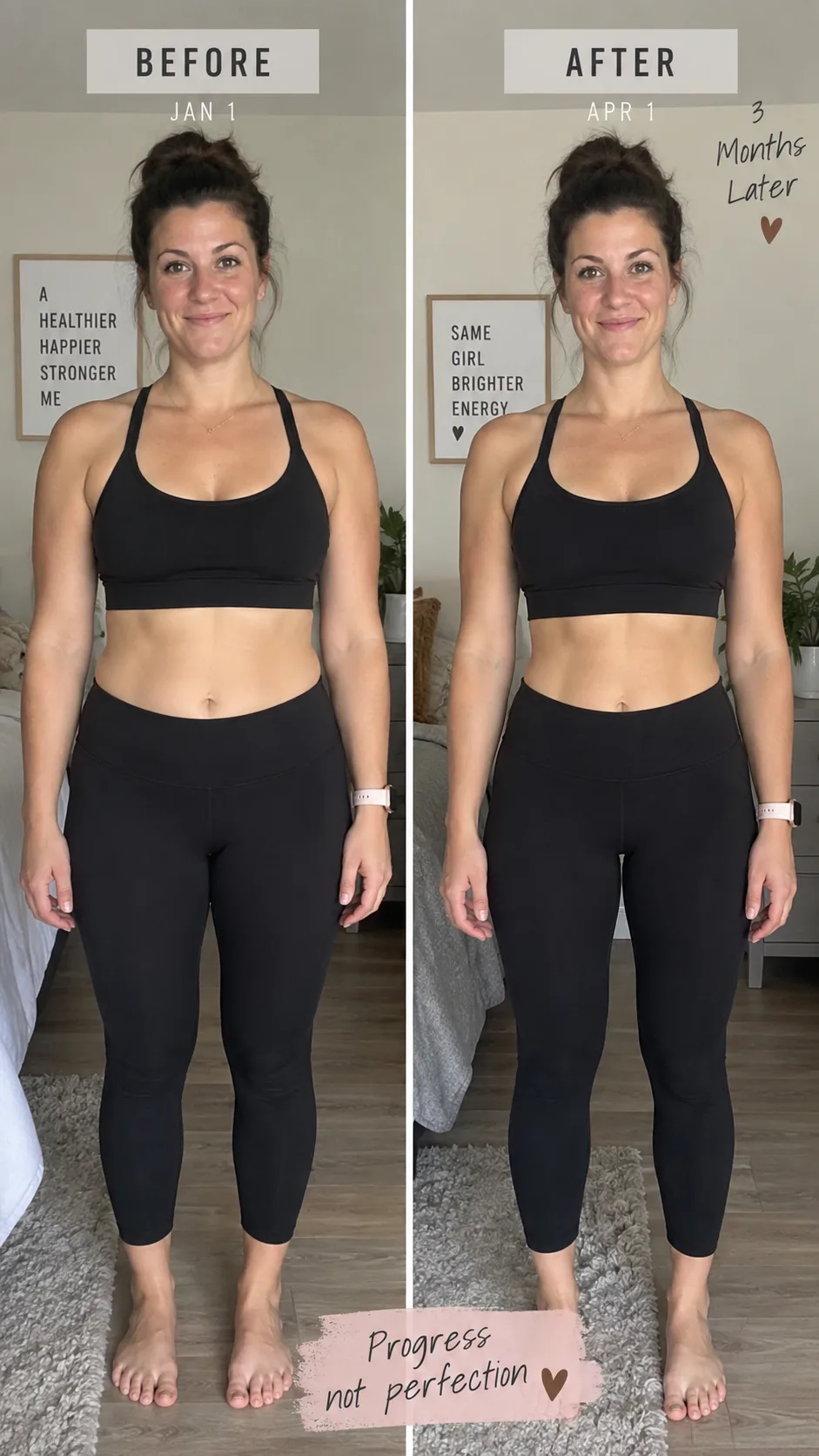
Welcome to the payoff zone. Twelve weeks of consistent training is the sweet spot where workout progress becomes undeniable. This is when coworkers start asking what you’ve been doing. When old friends do a double-take. When you ENJOY looking in that mirror.
A 2019 study from the American College of Sports Medicine confirmed that 12 weeks of consistent resistance training produces statistically significant changes in both muscle mass and body composition, regardless of age or starting fitness level. That’s not bro-science. That’s proper science.
What month 3 results look like by training type
- Strength training: Visible muscle definition, significant strength gains (often 25-50% increase from starting weights), improved posture and body composition
- Cardio-focused: Noticeable fat loss, dramatically improved endurance, lower resting heart rate, and better cardiovascular markers
- Combined approach: You get the benefits of both, which is what most fitness professionals recommend for overall body transformation
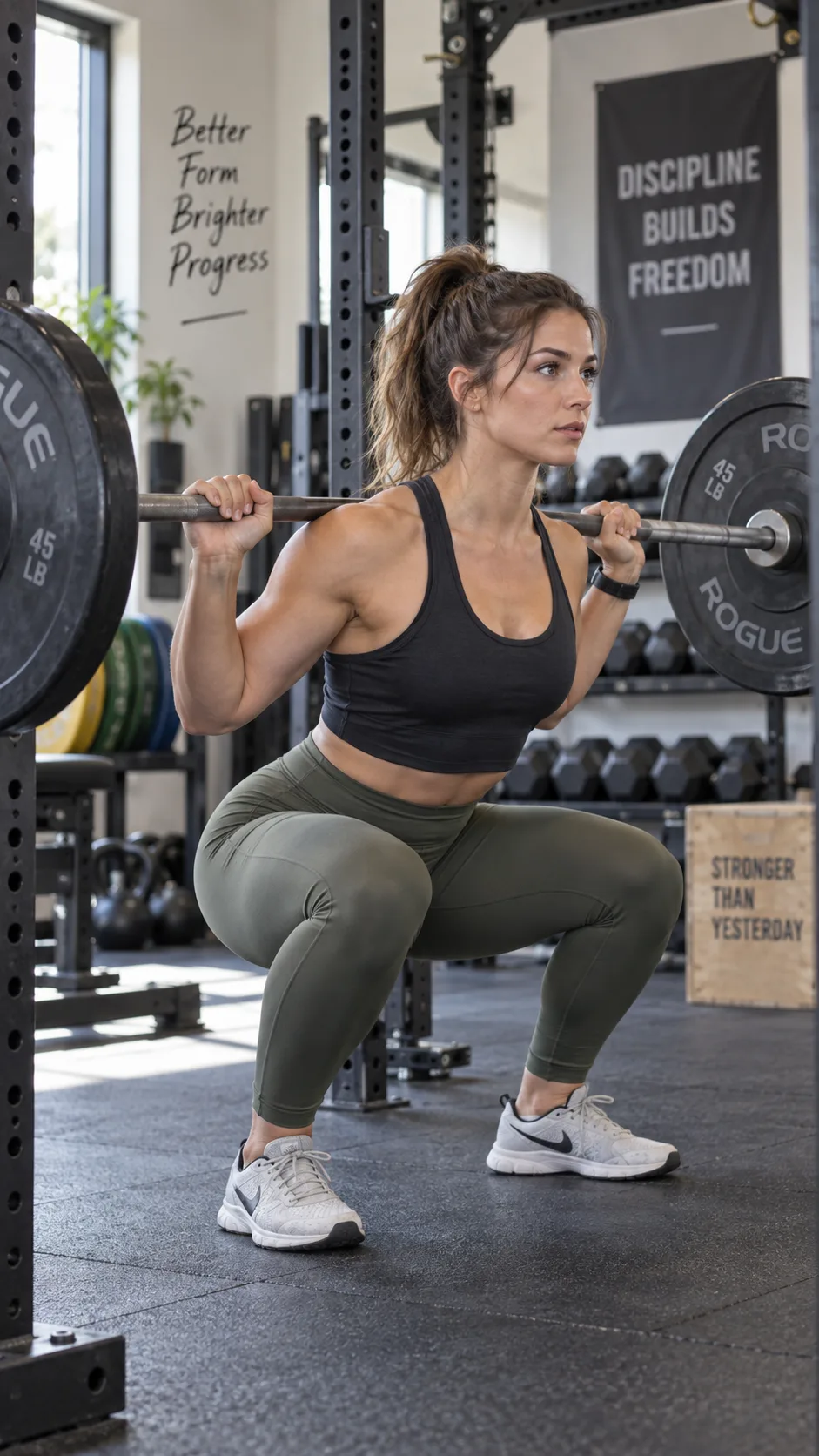
If you’ve been incorporating compound movements like squats, deadlifts, and presses, your results will typically be more dramatic than isolation exercises alone. A solid full body kettlebell workout can hit multiple muscle groups efficiently if you’re short on time.
The 5 factors that speed up (or slow down) your timeline
Not everyone’s timeline looks the same, and that’s not just genetic luck. Several controllable factors massively influence how fast you see workout results. Here are the big five.
1. Nutrition (the biggest factor, period)
I can’t stress this enough: you cannot out-train a bad diet. Ever tried filling a bucket with a hole in the bottom? That’s what training hard while eating garbage feels like. Your nutrition determines roughly 70-80% of your body composition results.
Whether you’re trying to build muscle or lose fat, a high protein meal plan makes a measurable difference in how quickly your body responds to training. Protein isn’t just for bodybuilders. It’s the raw material your body uses to repair and build every muscle fiber you stress during workouts.
2. Sleep quality
Your muscles don’t grow in the gym. They grow while you sleep. Growth hormone peaks during deep sleep, and skimping on rest is like working overtime but refusing to cash your paycheck. Aim for 7-9 hours. Non-negotiable.
3. Training intensity and progressive overload
Showing up is great, but doing the same easy workout for months won’t get you far. Progressive overload, meaning you gradually increase weight, reps, or volume over time, is the fundamental driver of physical adaptation. Your body only changes when you give it a reason to.
4. Stress levels
Chronic stress floods your body with cortisol, which promotes fat storage (especially around your midsection) and impairs muscle recovery. Ever noticed how you look puffy and bloated during stressful periods? That’s cortisol doing its thing. Managing stress isn’t just good for your mental health. It directly impacts how quickly you see physical results.
5. Starting point and genetics
Here’s something that works in beginners’ favor: “newbie gains” are real. If you’re new to resistance training, your body responds faster and more dramatically than someone who’s been training for years. The further you are from your genetic potential, the quicker the initial progress. So if you’re just starting out, you’re in the best position possible. Lucky you 🙂
The different timelines: Fat loss vs. muscle gain
These two goals operate on very different schedules, and understanding that distinction saves you a ton of frustration.
Fat loss timeline
Visible fat loss typically becomes noticeable within 4-6 weeks with a consistent calorie deficit and regular exercise. You’ll lose fat faster from some areas than others, and unfortunately, you don’t get to choose where. Your body has its own priority list, and stubborn belly fat is usually last on it. Sorry, I don’t make the rules.
A safe and sustainable rate of fat loss is 1-2 pounds per week. Anything faster than that usually means you’re losing muscle along with fat, which tanks your metabolism and sets you up for rebound weight gain. The tortoise wins this race every single time.
Muscle gain timeline
Building muscle is a slower process than losing fat. For most natural lifters, here’s what realistic muscle gain looks like:
- Beginners: 1.5-2.5 pounds of muscle per month (first year of training)
- Intermediate: 1-1.5 pounds of muscle per month (years 2-3)
- Advanced: 0.5-1 pound of muscle per month (years 4+)
These numbers come from research by sports scientist Lyle McDonald and have been widely validated across the fitness science community. Anyone promising you 10 pounds of muscle in a month (naturally) is selling you something. FYI.
How to track your progress (ditch the scale)
The bathroom scale is the worst tool for measuring workout results. I mean it. It tells you your gravitational relationship with the Earth, and nothing about your body composition, fitness level, or health. Here’s what to track instead:
- Progress photos – Take them every 2-4 weeks, same lighting, same time of day, same clothing. This is the most reliable visual tracking method
- Body measurements – Waist, hips, chest, arms, thighs. Use a tape measure weekly
- Strength benchmarks – Track your working weights. Getting stronger means your body is adapting
- How your clothes fit – Your favorite jeans don’t lie
- Performance metrics – Can you run further? Recover faster? Do more reps? That’s progress
- Body fat percentage – If accessible, use calipers or a DEXA scan every 8-12 weeks
I personally take progress photos every four weeks and compare them to my starting point, never to the previous month. Why? Because week-to-week changes are too subtle to see, and comparing to last month just leads to disappointment. But comparing month three to day one? That’s where you see the transformation that keeps you motivated.
Common mistakes that delay your results
Want to know why some people seem to get results twice as fast as others? It’s usually because they’re NOT making these mistakes:
- Program hopping: Switching routines every two weeks means you never give any program enough time to work. Stick with a solid program for at least 8-12 weeks
- Skipping rest days: More is not always more. Overtraining leads to chronic fatigue, injuries, and stalled progress. Your body needs recovery time to adapt
- Ignoring nutrition: Training hard and eating randomly is like building a house with no blueprint. It might sort of work, but it’ll take three times as long
- Comparing yourself to social media: Those transformation photos with perfect lighting, pump, tan, and possibly Photoshop? Not your benchmark. Compare yourself to yesterday’s version of you
- Only doing cardio: If you want to change how your body looks, resistance training is non-negotiable. Cardio alone rarely produces the body composition changes people want
And here’s one nobody talks about: inconsistency disguised as consistency. Training three times one week, zero the next, five the week after, then taking a week off. That’s not a routine, that’s chaos. Even two solid workouts per week, done consistently, will outperform sporadic five-day-a-week bursts every single time.
The 6-month mark: Where transformation becomes lifestyle
Something interesting happens around the six-month mark. Exercise stops feeling like a thing you “have to do” and starts becoming a thing you want to do. The results by this point are typically significant enough that other people comment regularly, and your relationship with your body has fundamentally shifted.
At six months of consistent training, most people have:
- Lost a significant amount of body fat (if that was the goal)
- Built visible muscle definition
- Doubled or tripled their starting strength levels
- Developed genuine exercise habits that feel automatic
- Improved bloodwork markers like cholesterol, blood pressure, and blood sugar
This is also around the time when fueling your body properly becomes second nature. Having a solid clean eating meal plan takes the guesswork out of nutrition and lets you focus your mental energy on enjoying the process.

Setting realistic expectations (without killing your motivation)
Here’s my honest take after years of training and watching hundreds of people start their fitness journeys: the timeline is longer than Instagram tells you and shorter than your anxiety whispers. That’s the truth, right in the middle.
You will NOT transform your body in 30 days. But you won’t need to wait a full year to see meaningful changes either. The sweet spot, where you look noticeably different and feel dramatically better, typically falls between 8 and 16 weeks of consistent effort.
The word doing all the heavy lifting in every sentence above is consistent. Not perfect. Consistent. You can miss a workout. You can have a slice of pizza. What you can’t do is disappear for two weeks and expect your body to care about your good intentions.
Your real workout results timeline: The quick summary
Here’s the bottom line, broken down as simply as possible:
- Week 1-2: Internal changes, better mood, sleep, and energy. Zero visible changes (and that’s normal)
- Week 3-4: Subtle shifts, clothes fit slightly different, early muscle tone developing, strength increasing noticeably
- Week 5-8: YOU notice changes, visible muscle definition, measurable fat loss, significant performance improvements
- Week 9-12: OTHERS notice changes, body composition shift becomes obvious, compliments start rolling in
- Month 4-6: Full transformation territory, dramatic before/after differences, exercise becomes a lifestyle, not a chore
The bottom line? Every single workout moves you forward, even when you can’t see it yet. The results are coming. They’re just stuck in traffic. Keep showing up, keep fueling your body right, keep sleeping enough, and give yourself the grace to trust a process that has worked for literally millions of people before you.
Your future self, the one standing in front of that mirror three months from now, quietly impressed, is going to thank you for not quitting today. So don’t.
