
Your knees creak like an old staircase. Your lower back protests every time you so much as glance at a barbell squat rack. And yet, you still want strong, capable legs that carry you through life without complaints. Sound familiar?
Here’s the good news: you absolutely do NOT need to jump, pound, or load up heavy barbells to build serious leg strength. Low impact leg workouts exist, they work incredibly well, and they won’t leave you limping to the couch afterward. I’ve spent years coaching people with cranky joints, and I can tell you firsthand that smart training beats hard training every single time.
Let me show you exactly how to train your legs with purpose, build real muscle, and keep your knees and back happy while you do it.
Why low impact absolutely does NOT mean low results
Let’s squash this myth right now. People hear “low impact” and immediately picture gentle stretching on a yoga mat while sipping herbal tea. That’s not what we’re doing here. Low impact simply means you reduce the stress on your joints, particularly the knees, hips, and spine, while still challenging your muscles enough to grow stronger.
Your muscles don’t actually care whether the load comes from a 300-pound barbell or a perfectly executed single-leg glute bridge with a pause at the top. They respond to tension, time under load, and progressive overload. That’s it. The joint-crushing part? Completely optional.
Research from the American College of Sports Medicine consistently shows that moderate-load resistance training produces significant strength and hypertrophy gains, especially when you control the tempo and increase volume strategically. Translation? You can build strong legs without destroying your body in the process.
Understanding why your knees and back complain in the first place
The knee problem
Most knee pain during leg workouts comes from excessive shearing forces on the joint, poor tracking of the kneecap, or weak stabilizer muscles that let the knee cave inward. Deep squats with heavy loads, box jumps, and lunges with sloppy form top the list of usual suspects.
The fix isn’t avoiding leg training altogether. That actually makes things worse over time. The fix involves choosing exercises that strengthen the muscles around the knee (quadriceps, hamstrings, calves) without forcing the joint into painful ranges of motion.
The back problem
Your lower back takes a beating during exercises that create excessive spinal compression or require you to hinge under heavy load with questionable form. Traditional deadlifts and barbell back squats demand serious core stability, and when that stability breaks down, hello back pain.
The solution? Remove or reduce spinal loading and use exercises that let your legs do the work without turning your spine into a stress ball. Machines, bodyweight variations, and band-resisted movements become your best friends here.
The best low impact leg exercises for bad knees
These exercises strengthen your quads, hamstrings, and glutes while keeping your knees in safe, comfortable ranges of motion. I’ve personally used every single one of these with clients who thought leg day was permanently off the table.
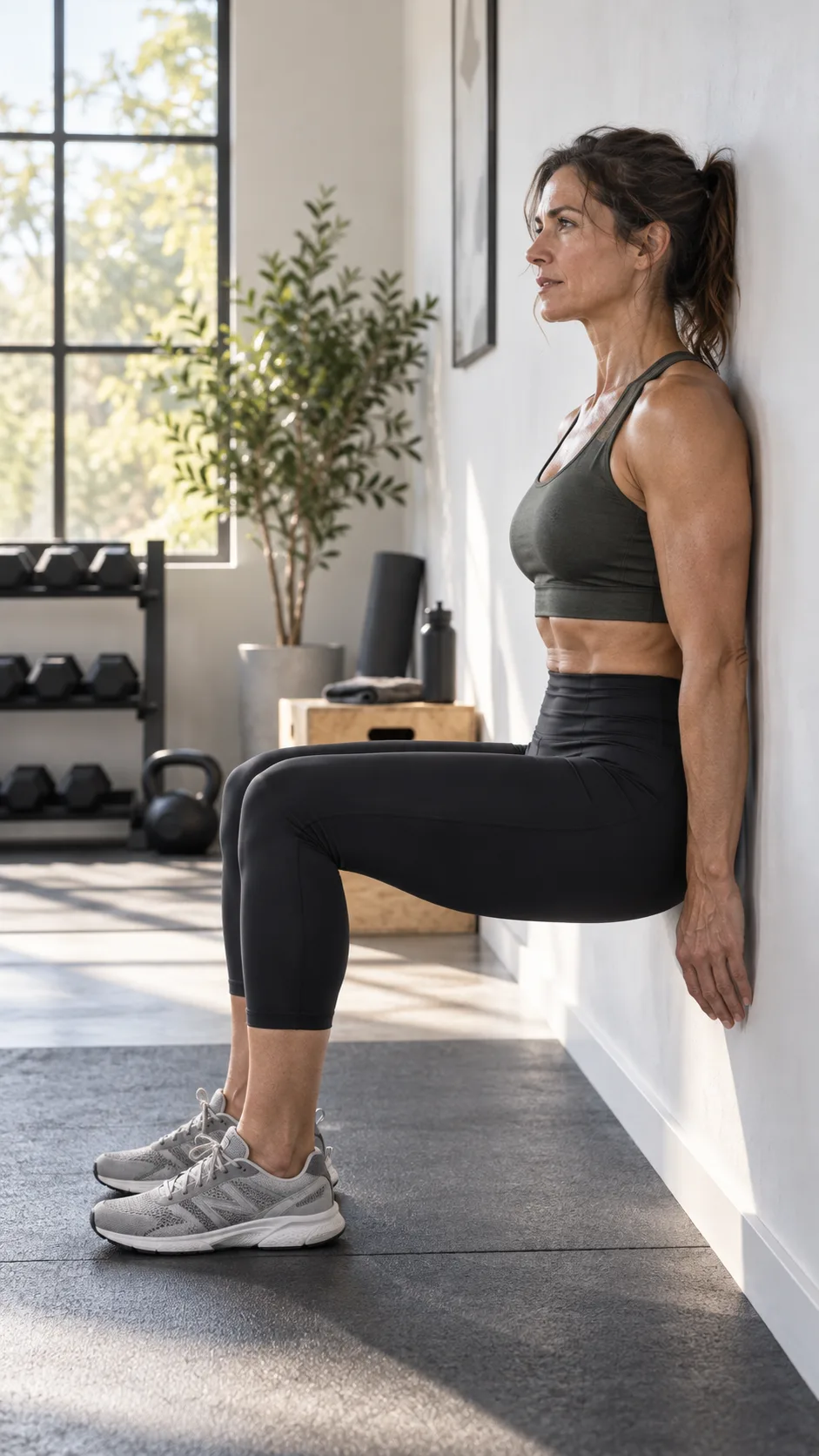
- Wall Sits (Partial Range): Stand with your back against a wall, slide down to a comfortable angle (you don’t need to hit 90 degrees), and hold. Start with 20-second holds and build up. Your quads will burn, trust me.
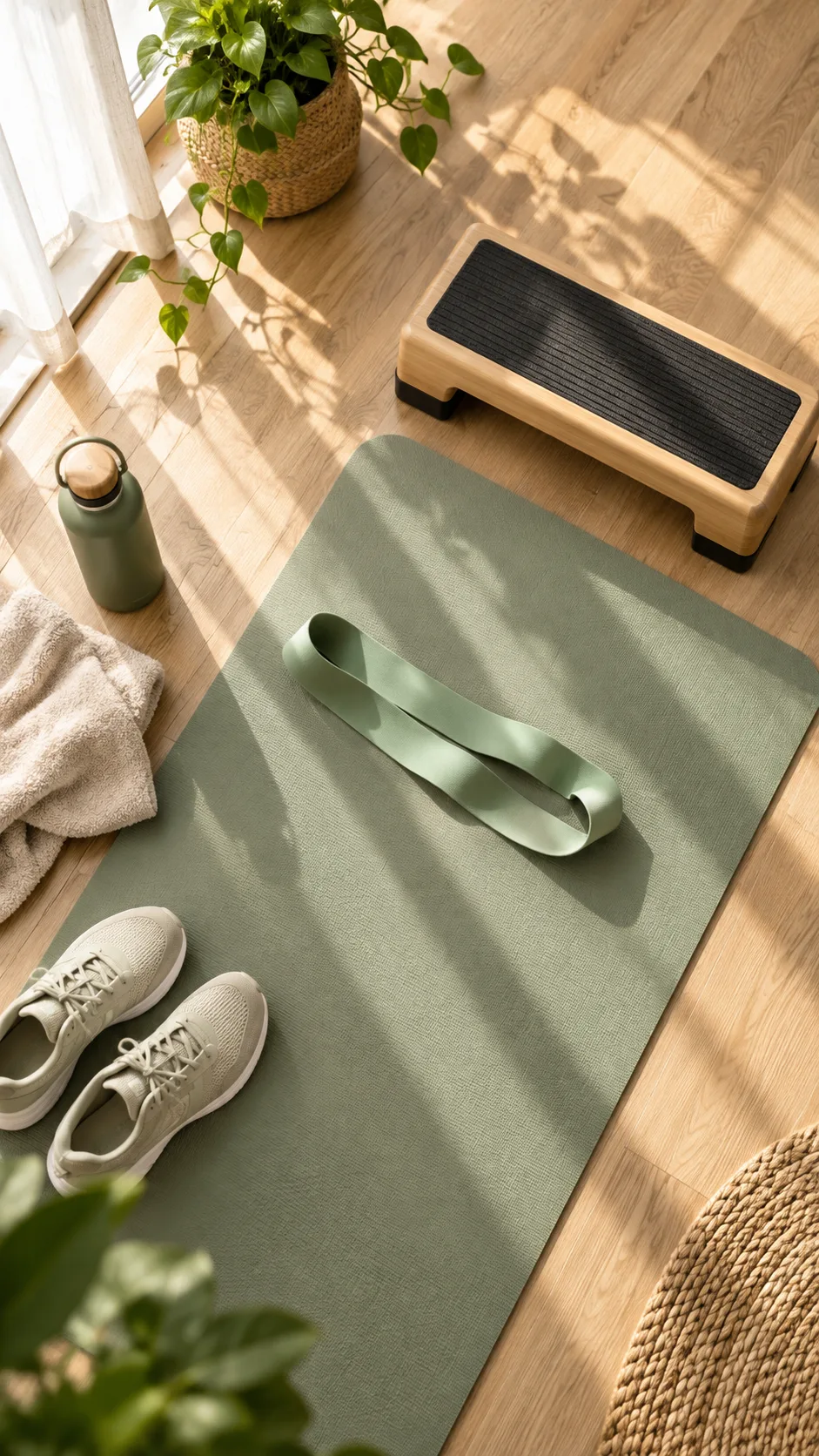
- Glute Bridges: Lie on your back, feet flat on the floor, and drive your hips toward the ceiling. This hammers your glutes and hamstrings with ZERO knee stress. Add a resistance band above your knees for extra fire.
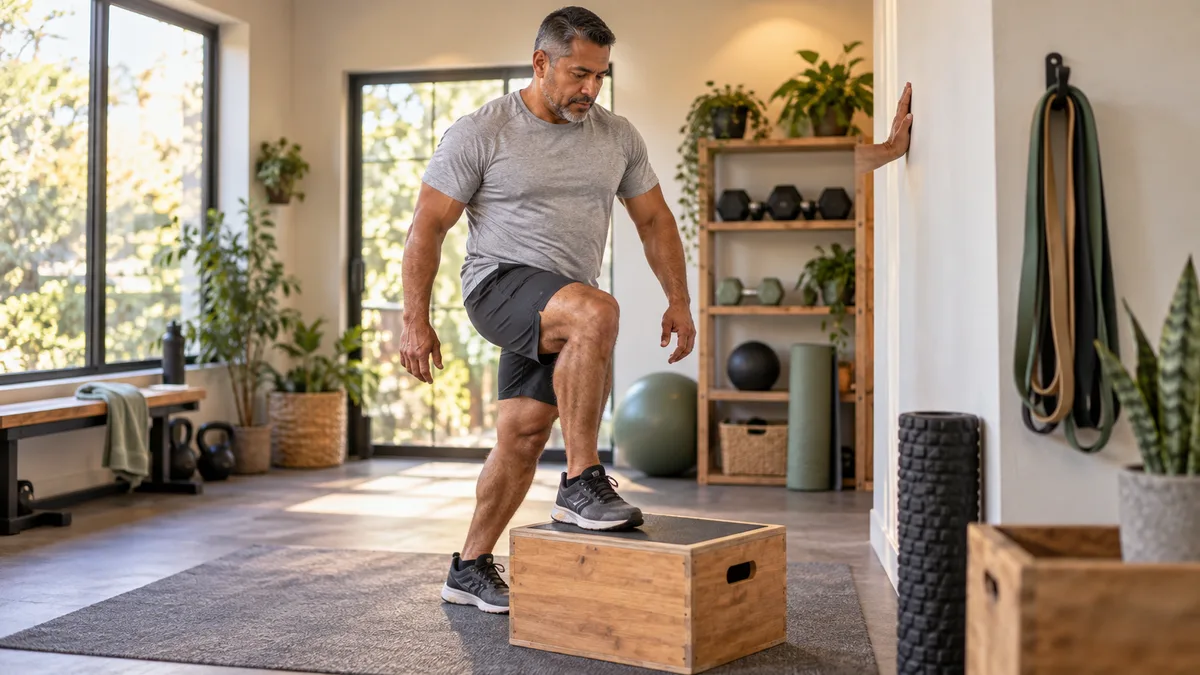
- Step-Ups (Low Box): Use a step that’s 6-8 inches high. This keeps the knee flexion minimal while still building single-leg strength. Control the movement, no bouncing.
- Leg Press (Limited Range): The leg press machine supports your back completely and lets you control exactly how deep you bend your knees. Stay in the pain-free range and focus on slow, controlled reps.
- Seated Leg Curls: Isolate your hamstrings without any knee compression. Strong hamstrings actually protect your knees, so this one pulls double duty.
- Terminal Knee Extensions (TKEs): Loop a resistance band around a pole at knee height, step back to create tension, and straighten your knee against the band. Physical therapists LOVE this exercise for good reason. It strengthens the VMO (that teardrop-shaped quad muscle) which stabilizes your kneecap.
If you want a structured gym routine that incorporates machines safely, check out this guide on beginner leg workout gym machines. It takes the guesswork out of your session.
Low impact leg exercises that protect your back
When your lower back is the issue, the goal shifts to eliminating spinal compression and reducing the need for heavy hip hinging. These exercises let your legs get strong while your spine stays neutral and unloaded.
- Leg Press Machine: Yes, it shows up again. The leg press removes your spine from the equation entirely. Your back rests against the pad while your legs push the weight. It’s the MVP of back-friendly leg training.
- Hip Thrusts (Barbell or Bodyweight): Your upper back rests on a bench, your spine stays neutral, and your glutes do all the heavy lifting. Literally. This exercise builds serious posterior chain strength without any spinal compression.
- Cable Pull-Throughs: A hip hinge pattern that uses the cable machine to load your glutes and hamstrings. The cable pulls you horizontally rather than compressing you vertically, which your spine greatly appreciates.
- Seated Leg Extensions: Isolate your quads while fully supported in a seated position. Keep the weight moderate and focus on squeezing at the top. Some people with knee issues need to limit the range of motion here, so listen to your body.
- Lying Leg Curls: Face down, hamstrings working, zero spinal load. Simple and effective.
- Banded Clamshells: Lie on your side with a band around your knees and open your top knee like a clamshell. This targets your glute medius, which stabilizes your pelvis and (surprise) helps protect your lower back during everyday movement.
A complete low impact leg workout routine you can use today
Enough theory. Here’s a full workout you can take straight to the gym (or do at home with minimal equipment). I designed this to hit every major muscle group in your legs while keeping both your knees and back safe.
Warm-Up (5 minutes):
- 2 minutes of stationary cycling or walking
- 10 bodyweight glute bridges
- 10 banded clamshells per side
- 10 ankle circles per foot
Main Workout:
- Leg Press: 3 sets of 12 reps (controlled tempo, 3 seconds down, 1 second up)
- Glute Bridges with Band: 3 sets of 15 reps (2-second hold at top)
- Seated Leg Curls: 3 sets of 12 reps
- Low Step-Ups: 3 sets of 10 per leg
- Cable Pull-Throughs: 3 sets of 12 reps
- Wall Sits: 3 holds of 30 seconds
- Standing Calf Raises: 3 sets of 15 reps (slow and controlled)
Rest 60-90 seconds between sets. The entire workout takes about 40-45 minutes. Do it twice per week, and you’ll see real changes within 4-6 weeks. That’s not a guess. That’s what I’ve watched happen with real people.
Want to complement this routine with a full body approach? This full body strength training workout pairs perfectly with a dedicated low impact leg day.
Smart strategies to make low impact training actually challenging
Here’s where people go wrong: they assume low impact means easy. Then they breeze through their sets, barely break a sweat, and wonder why nothing changes. Low impact training demands that you use OTHER intensity techniques to compensate for the lower joint stress. Here’s how.
Slow down your tempo
Instead of pumping out reps like you’re trying to catch a train, try a 4-second lowering phase on every rep. This technique, called eccentric emphasis, dramatically increases time under tension and forces your muscles to work harder with less weight. Your quads will have a strong opinion about this approach, and none of it will be positive 🙂
Add pauses
Hold the hardest position of each exercise for 2-3 seconds. Pause at the bottom of a leg press. Hold the top of a glute bridge. These isometric holds eliminate momentum and make lighter weights feel surprisingly heavy.
Use bands strategically
Resistance bands add accommodating resistance, meaning the exercise gets harder as the band stretches further. They also create constant tension throughout the entire range of motion, which free weights can’t always do. According to a 2019 study published in SAGE Open Medicine, elastic resistance training produces comparable strength gains to conventional resistance training. That’s science giving you permission to use bands without guilt.
Progressive overload still matters
Even with low impact exercises, you need to gradually increase the challenge over time. Add a rep. Add a set. Add a band. Slow down the tempo even more. Your body adapts to whatever you throw at it, so you need to keep raising the bar (figuratively, if not literally).
Common mistakes that sabotage your low impact leg workouts
I’ve seen these mistakes dozens of times. Every single one of them slows progress or causes the exact pain you’re trying to avoid. Don’t be that person.
- Skipping the warm-up. Your joints need preparation, especially if they’re already temperamental. Five minutes of light movement and activation work makes a measurable difference. Non-negotiable.
- Going too heavy too soon. Your ego isn’t a muscle group. Start lighter than you think you need to, nail the form, THEN add resistance.
- Ignoring pain signals. There’s a massive difference between muscle burn (good) and joint pain (bad). If something creates sharp, stabbing, or grinding sensations in your knee or back, stop immediately. Adjust the exercise or swap it out.
- Only training quads. Your hamstrings and glutes deserve equal attention. Muscle imbalances around the knee and hip create the joint problems you’re trying to escape. Balance your programming.
- Forgetting about calves. They stabilize your ankle, which affects your knee alignment, which affects your hip, which affects your back. The whole chain matters.
One more thing: if you’re recovering from an injury or dealing with chronic joint issues, get clearance from a physical therapist or sports medicine doctor before starting any new exercise program. That’s not being cautious for caution’s sake. It’s being smart. The Arthritis Foundation strongly recommends strength training for joint health but emphasizes working within appropriate limits.
Who benefits most from low impact leg training?
Almost everyone can benefit from incorporating low impact leg exercises into their routine. But certain groups see the biggest payoffs:
- People with osteoarthritis in their knees or hips. Strengthening muscles around affected joints reduces pain and improves function.
- Anyone recovering from knee surgery (ACL, meniscus, replacement). Controlled, progressive loading helps rebuild strength safely.
- People with herniated or bulging discs. Eliminating spinal compression while maintaining leg strength prevents deconditioning.
- Older adults. Building leg strength reduces fall risk and maintains independence (this one matters MORE than aesthetics, IMO).
- Beginners who want to build a solid foundation before advancing to higher impact exercises.
- Anyone on a weight loss medication who needs to preserve muscle. Our GLP-1 strength training guide covers this in detail.
Ever noticed how the strongest, most experienced lifters in any gym tend to train the smartest, not just the hardest? There’s a lesson in that for all of us.
How often should you train legs with low impact exercises?
Two to three sessions per week works best for most people. This gives your muscles enough stimulus to grow while allowing adequate recovery time, which becomes even more important when you’re managing joint issues.
Space your sessions at least 48 hours apart. Monday and Thursday, or Tuesday and Friday, whatever fits your schedule. Consistency beats perfection every single week. The person who trains twice a week for six months will always outperform the person who trains six times a week for two weeks before burning out.
On your off days, light walking, swimming, or gentle stretching keeps blood flowing to your muscles and joints without adding training stress. The Hospital for Special Surgery recommends staying active on rest days to promote joint lubrication and recovery. Just keep the intensity low.
Building strong legs is a long game, so play it smart
Here’s what I want you to walk away with: building strong legs doesn’t require you to punish your joints. It never did. The fitness industry spent decades convincing us that effective leg training means heavy squats and explosive jumps, but that’s only ONE path to strong legs, and it’s not the only one that works.
Low impact leg workouts let you train consistently, recover properly, and show up again next session feeling good instead of broken. And consistency? That’s the actual secret ingredient behind every strong pair of legs you’ve ever admired.
Start with the routine above. Master the movements. Add progressive overload week by week. Be patient with your body, especially if your knees or back have been giving you trouble for a while. Strength builds gradually, but it builds permanently when you train smart.
Your knees and your back will thank you. And in six months, your legs will too. Now stop reading and go train: gently, wisely, and with intention.
