
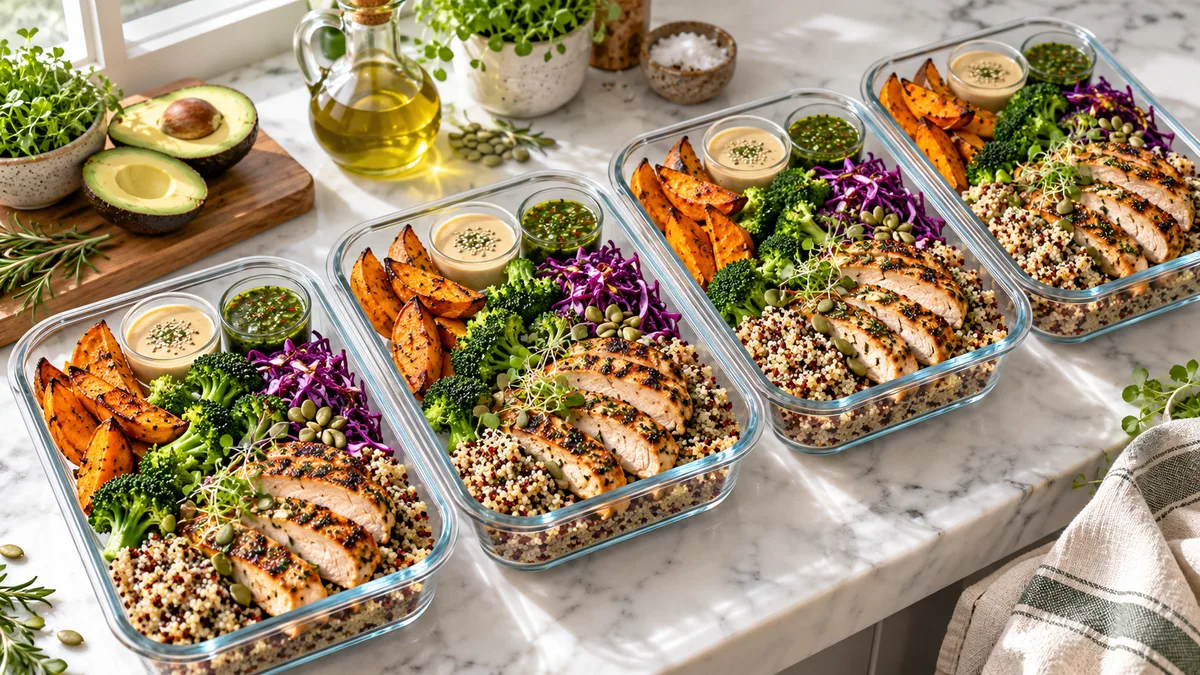
You packed a “healthy” lunch, ate it at noon, and started digging for snacks by 2:30. We have all done it, and the vending machine often wins.
Healthy lunch meal prep should keep you full, focused, and happy until dinner. It should not leave you eyeing a coworker’s leftover fries as if they contain the meaning of life. You do not need tiny salads, bland chicken, or six exhausting hours in the kitchen on Sunday.
You need a simple formula: enough protein, enough fiber, satisfying carbs, flavorful fats, and food you want to eat. Most disappointing desk lunches miss at least two of those parts.
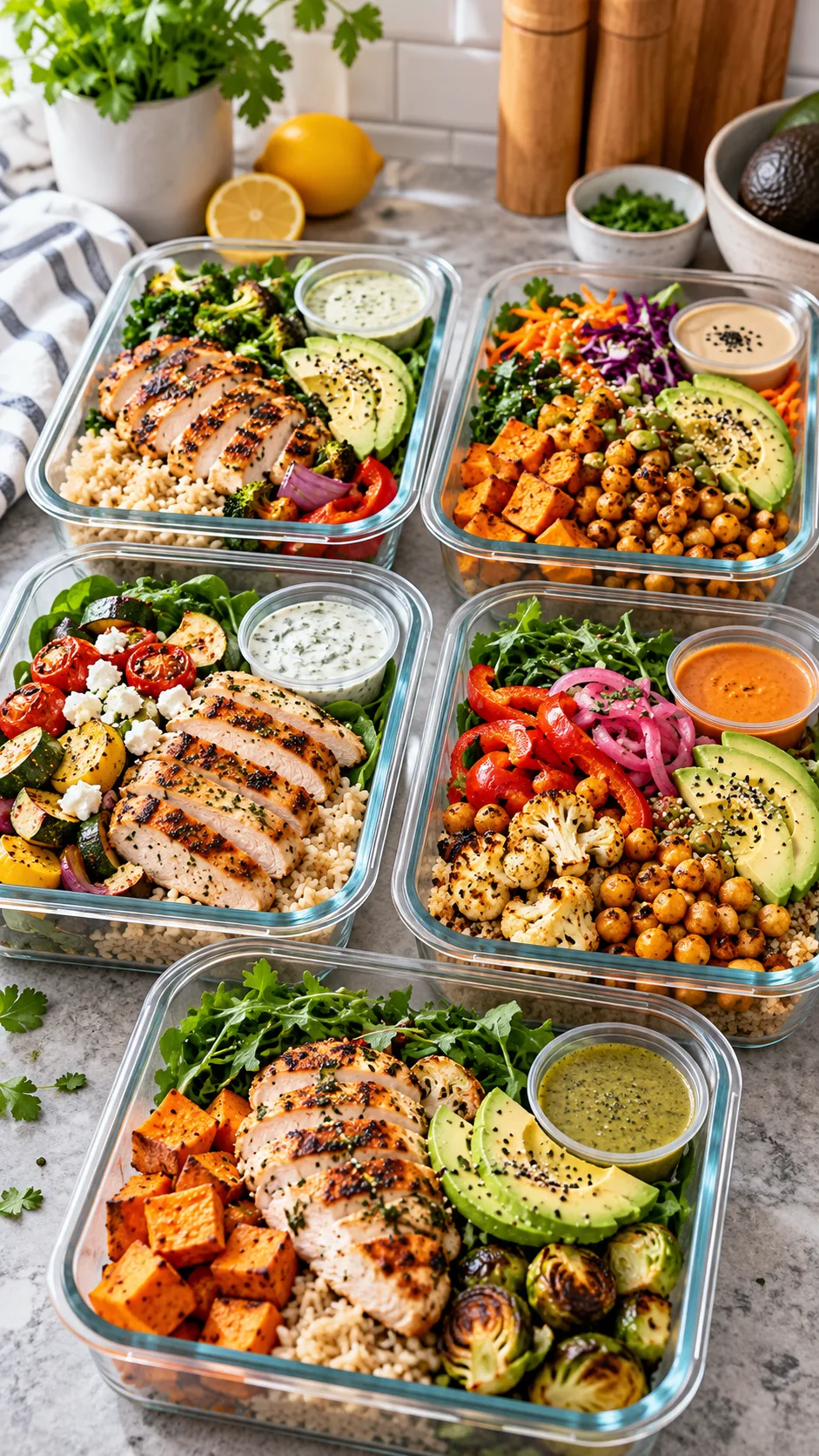
Why your healthy lunch never keeps you full
Most lunches fall short because they look healthy without giving you enough food. A pile of greens, cucumber, a few cherry tomatoes, and three sad strips of chicken may look virtuous, but your stomach does not hand out medals for virtue.
Your body needs enough fuel for meetings, errands, workouts, school pickup, and the strangely draining job of answering emails. When lunch skimps on protein, fiber, and fat, hunger returns fast.
Protein controls the “I need a snack” panic
Protein helps you stay satisfied for longer because your body digests it more slowly than refined carbs on their own. It also supports muscle maintenance, recovery, and general health. The Harvard T.H. Chan School of Public Health explains protein sources and their place in a balanced eating pattern in its Nutrition Source protein guide.
Aim for roughly 25 to 40 grams of protein in a filling lunch, then adjust for your appetite, activity level, and goals. You do not need to track every gram. You need a portion that looks like lunch, not a garnish.
Fiber gives lunch real stamina
Fiber rich foods add bulk, slow digestion, and make meals feel more substantial. Beans, lentils, whole grains, vegetables, fruit, chia seeds, and potatoes all help.
Work toward the daily fiber amount that suits your needs, but begin with an easy target: include one fiber-rich carb and two vegetables in every meal prep lunch. Your gut and your afternoon energy may notice the difference.
Healthy fats fix that “something feels missing” feeling
A lunch can include plenty of protein and still leave you unsatisfied when it lacks fat. Add avocado, olive oil, tahini, nuts, seeds, cheese, pesto, or a yogurt based sauce.
You only need a moderate amount, so do not fear it. A teaspoon of dressing over a huge salad does not turn lunch into a Roman feast.
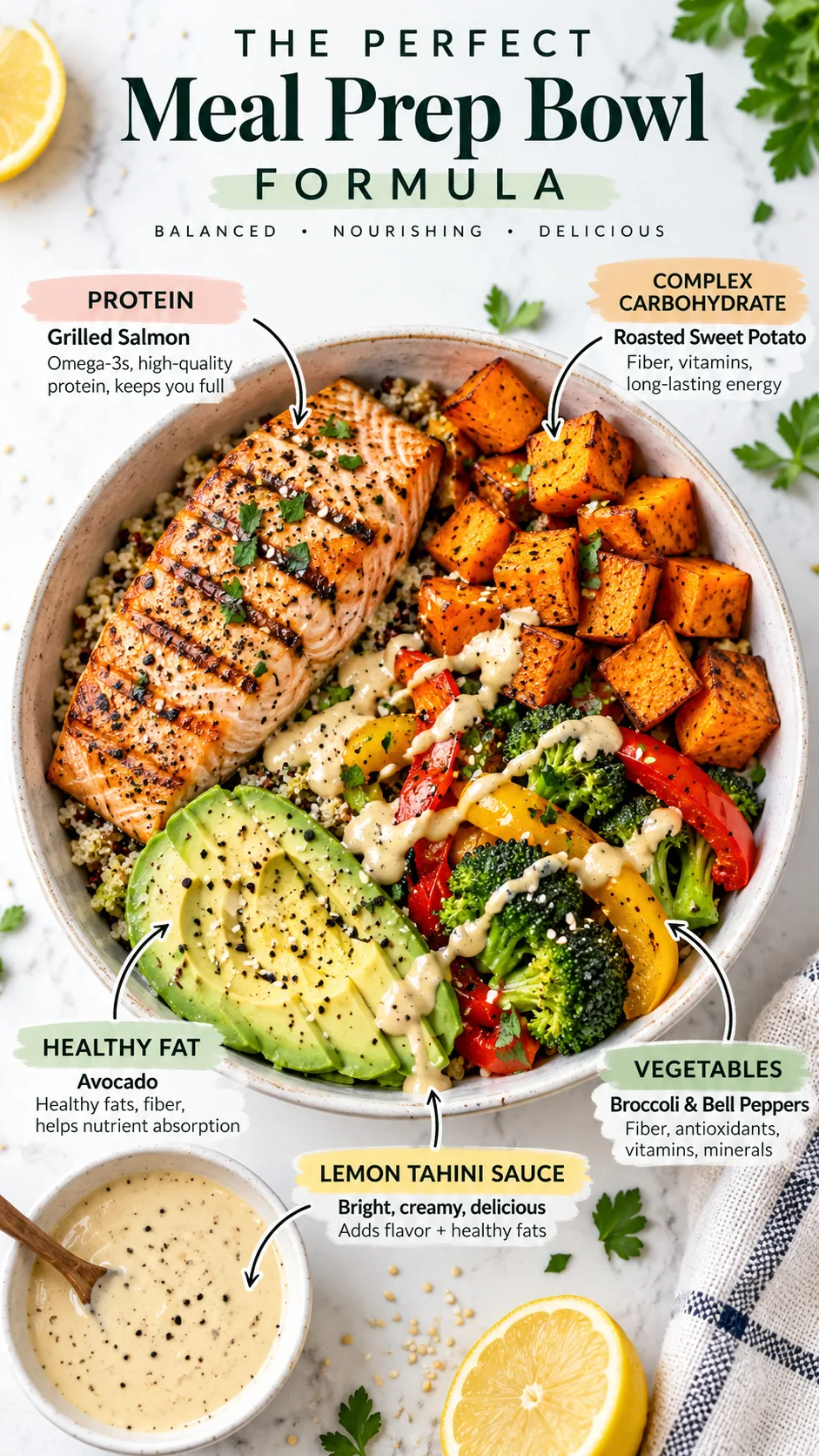
The easy formula for a filling healthy lunch meal prep
Set complicated recipes aside for a minute. Use this mix and match formula to build healthy lunch meal prep ideas from food you already have.
- Choose a protein: chicken, turkey, salmon, tuna, eggs, Greek yogurt, tofu, tempeh, beans, lentils, edamame, cottage cheese, or lean beef.
- Add a satisfying carb: brown rice, quinoa, farro, oats, whole grain pasta, potatoes, sweet potatoes, corn, beans, or whole grain pita.
- Load up vegetables: use roasted vegetables, raw crunchy vegetables, leafy greens, slaw, or a mix of all four.
- Add a fat or sauce: avocado, olive oil dressing, hummus, pesto, tahini, nuts, seeds, cheese, or guacamole.
- Finish with flavor: lemon, herbs, chili crisp, salsa, pickled onions, hot sauce, spices, or a punchy vinaigrette.
Each part does a different job. Protein helps you stay full, carbs give you usable energy, fiber adds staying power, and fats plus flavor make you happy to eat the meal again on Thursday.
The U.S. Department of Agriculture encourages people to build balanced plates with vegetables, fruits, grains, protein foods, and dairy or fortified alternatives. Look at the simple portion visuals on MyPlate when you want an easy reference.
5 healthy lunch meal prep ideas that keep you full
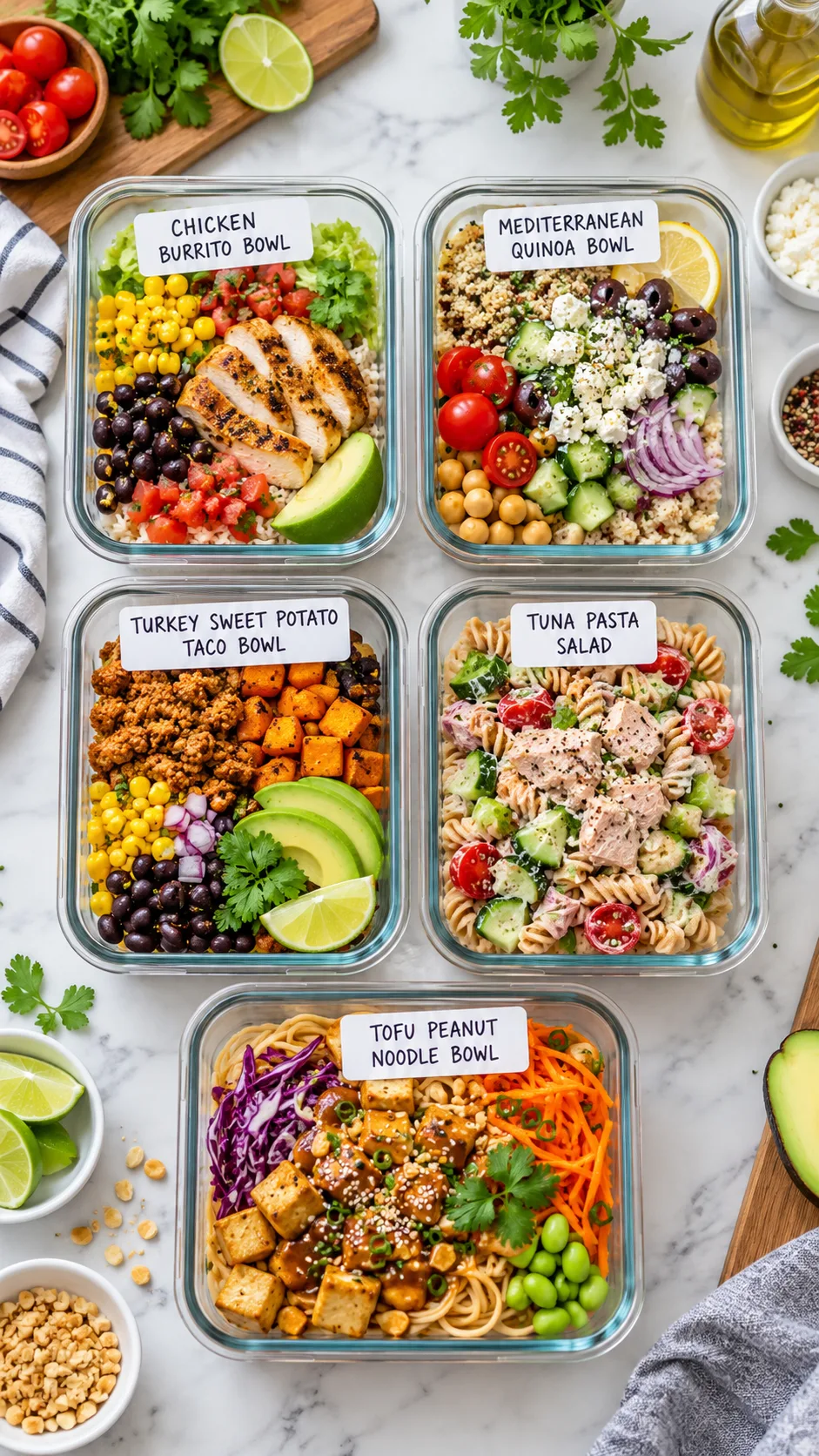
These recipes avoid one of meal prep’s biggest traps: eating the same bland lunch five days in a row. Prep each option for four lunches, then freeze extra portions or switch up the components to keep things interesting.
1. Chicken burrito bowls with black beans and avocado
Chicken burrito bowls pack in protein, fiber, carbs, crunch, and plenty of flavor without much work. They travel well too, which helps when your lunch bag gets knocked around like a tiny suitcase.
- Cooked chicken thighs or chicken breast
- Brown rice, cilantro lime rice, or roasted sweet potato
- Black beans and corn
- Roasted peppers and onions
- Salsa, avocado, Greek yogurt, and lime
Use chicken thighs if dry chicken makes you question your decisions. They stay juicy through the week, while salsa and lime keep the bowl fresh tasting. Add shredded lettuce after reheating for a cool, crisp contrast.
2. Mediterranean chickpea and chicken grain bowls
This bowl still tastes fresh on day four, which puts it in rare meal prep territory. Combine chicken or chickpeas with quinoa, cucumber, tomatoes, roasted zucchini, olives, feta, and lemon herb dressing.
Chickpeas add fiber and plant protein, while feta and olive oil give the bowl enough richness to feel like a full meal. For a vegetarian version, skip the chicken and add more chickpeas, lentils, or crisp baked tofu.
If you enjoy plant forward lunches, save these vegetarian meal prep ideas that will not make you sad. Vegetables can have plenty of personality. They just need more than a reluctant pinch of salt.
3. Turkey taco sweet potato boxes
Brown ground turkey with taco seasoning, onions, garlic, and a spoonful of tomato paste. Pair it with roasted sweet potatoes, black beans, shredded cabbage, corn, and a lime Greek yogurt sauce.
Sweet potatoes bring satisfying carbs and fiber, while cabbage keeps its crunch for days. This lunch gives you taco night comfort without sending you toward a midafternoon nap.
Want more ways to make lean meat taste good? Try this ground turkey meal prep guide for practical flavor combinations.
4. High-protein pasta salad with tuna or white beans
Cold pasta salad handles the “I do not have a microwave” problem well. Use whole wheat or chickpea pasta, tuna or white beans, chopped spinach, tomatoes, cucumber, red onion, olives, and a lemony olive oil dressing.
Add fruit and a small handful of nuts if you need more energy. Tuna offers quick protein, but white beans make a filling vegetarian choice too.
Choose canned tuna that fits your preferences, and rotate seafood choices throughout the week. The Food and Drug Administration shares consumer guidance on seafood and mercury on its fish and seafood advice page.
5. Peanut tofu noodle bowls with crunchy vegetables
Press and bake tofu until crisp, then toss it with whole grain noodles or soba, shredded carrots, edamame, cabbage, cucumber, and peanut lime sauce. This lunch brings chew, crunch, creaminess, and enough flavor to save you from another dull sandwich.
Edamame and tofu give you plenty of plant protein, while peanut butter adds fat and richness. Keep the sauce in a separate container if you want extra crisp vegetables.
How to prep a week of lunches without losing your Sunday
Meal prep works better when you stop treating it like a competitive cooking show. You do not need twelve recipes, matching glass containers, or an emotional support label maker.
Choose two proteins, two vegetables, one carb, and two sauces. Cook them in batches, then combine them differently through the week. You get variety without turning your kitchen into a meal prep factory.
A realistic 90-minute lunch meal prep plan
- Heat your oven to 425°F and start a pot of grains or potatoes.
- Season two sheet pans of vegetables with olive oil, salt, pepper, and spices.
- Cook your protein while the vegetables roast.
- Whisk or blend two sauces, such as salsa yogurt and lemon tahini.
- Cool cooked food before you pack containers.
- Portion four lunches, then refrigerate or freeze the extras.
Start with foods that cook at similar temperatures. Roast broccoli, peppers, carrots, cauliflower, and sweet potatoes together. Cook chicken, turkey, tofu, or salmon beside them when the timing works.
Keep delicate ingredients separate. Add avocado, herbs, salad greens, crunchy toppings, and dressing right before you eat when you can. Nobody wants a cucumber that spent four days turning translucent.
Make your lunches safe, fresh, and worth eating
Food safety matters because nobody plans a productive week around mystery leftovers. Refrigerate cooked food quickly, use shallow containers so food cools faster, and keep your fridge at 40°F or below.
The U.S. Department of Agriculture recommends that you eat refrigerated cooked leftovers within three to four days. Read its straightforward leftovers and food safety guidance for storage details.
- Prep Sunday for Monday through Wednesday if you want the freshest meals.
- Freeze Thursday and Friday portions on prep day, then thaw them in the fridge overnight.
- Use an insulated lunch bag and ice pack when your workplace does not have a refrigerator.
- Reheat hot meals until steaming, then stir halfway through so the food heats evenly.
- Trust your senses, but do not rely on them alone. Time and temperature still matter when food looks fine.
Freeze meals that handle it well, including burrito bowls, chili, turkey and rice bowls, cooked grains, soups, and saucy chicken dishes. Eat delicate salads, cucumber heavy bowls, and avocado earlier in the week.
Portion your meal prep lunch for your actual hunger
Healthy does not mean tiny. If hunger hits every afternoon, your lunch probably needs more protein, carbs, fat, or total food.
Start with a palm sized or larger serving of protein, a fist sized serving of carbs, two fists of vegetables, and a thumb sized serving of fats. Then notice how you feel three or four hours later.
Signs your lunch needs an upgrade
- You feel hungry less than two hours after eating.
- You crave sweets or chips every afternoon.
- You struggle to focus before dinner.
- You eat a huge dinner because lunch barely reduced your hunger.
- You skip your prepped lunch and buy something that feels more filling instead.
Add fruit, a cup of Greek yogurt, roasted edamame, a cheese stick, or nuts if your workday runs long. A planned snack works better than a frantic snack run.
If you follow a calorie target, do not cut lunch down to nothing. Check out this calorie deficit meal prep guide for filling meal ideas that support your goals without making you miserable.
Flavor tricks that keep healthy meal prep interesting
Meal prep boredom usually starts with flavor boredom. Chicken, rice, and broccoli can make a good lunch, but they need help after their third appearance in a row.
Use bold sauces, acidic ingredients, fresh herbs, crunchy toppings, and different spice blends. One base recipe can taste completely different with another sauce.
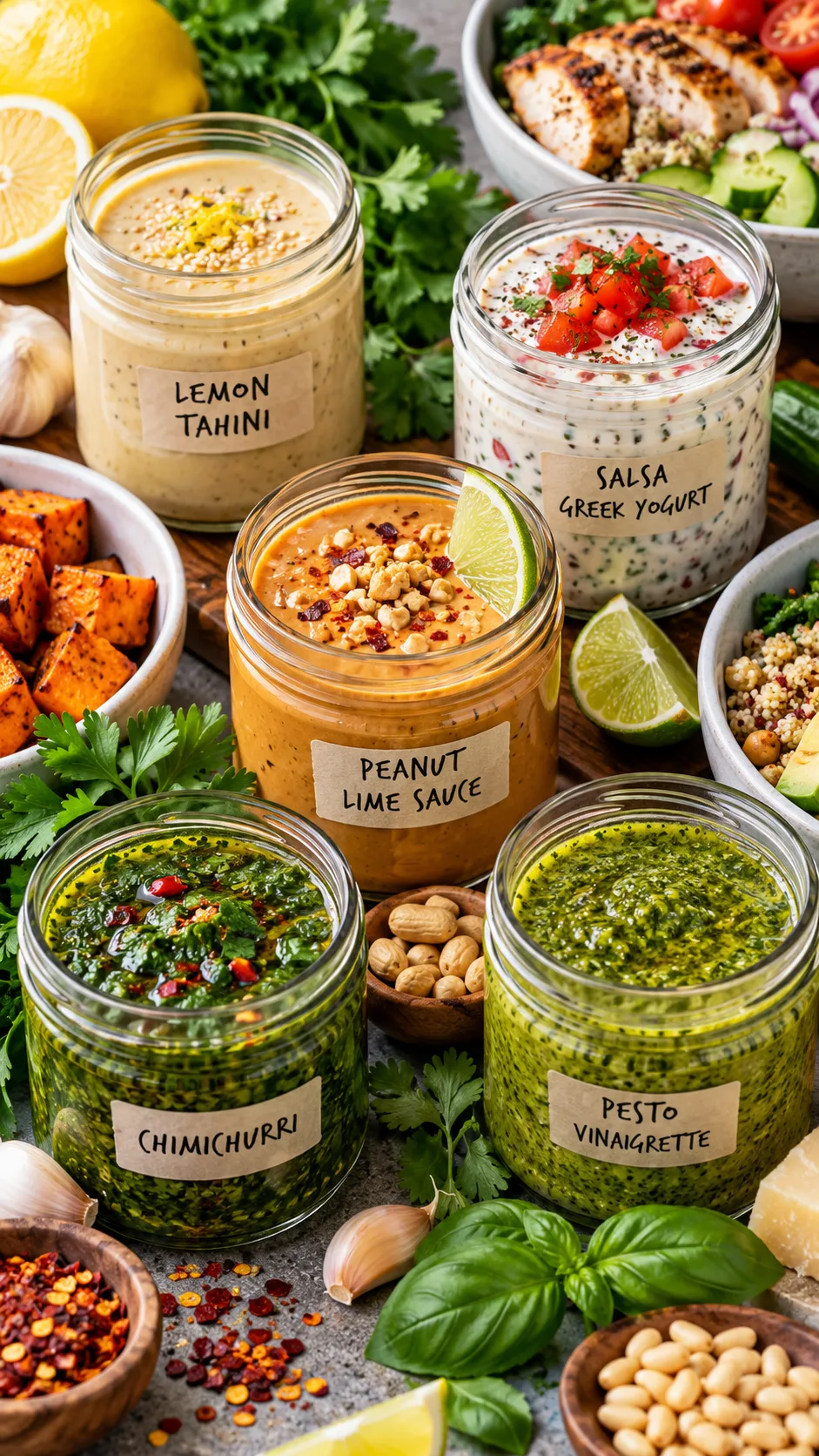
Easy sauce rotation for the week
- Lemon tahini: tahini, lemon juice, garlic, water, salt, and pepper.
- Salsa yogurt: Greek yogurt, salsa, lime juice, and cumin.
- Peanut lime: peanut butter, lime juice, soy sauce, ginger, and warm water.
- Pesto vinaigrette: pesto, olive oil, lemon juice, and a splash of vinegar.
- Chimichurri: parsley, garlic, vinegar, olive oil, chili flakes, and oregano.
Acid revives leftovers better than almost anything. A squeeze of lemon, a splash of vinegar, or a spoonful of pickled onions can turn a flat meal into one you want to eat.
Season every layer too. Season vegetables before roasting, season grains while they cook, and season protein before it reaches the pan. If you only salt at the end, the meal tastes like someone lost interest halfway through.
Common healthy lunch meal prep mistakes
Good intentions can still leave you with a fridge full of lunches you avoid. Catch these mistakes early, and meal prep gets much easier.
You prep only salads
Salads can fill you up, but they need substance. Add protein, beans or grains, fat, and a generous amount of dressing. Lettuce cannot carry an eight hour workday on its tiny leafy shoulders.
You avoid carbs because you fear the afternoon crash
Refined carbs without enough protein or fiber can cause a quick energy dip. Potatoes, oats, rice, quinoa, beans, and whole grain pasta can support steady energy when you pair them with protein and vegetables.
You make five identical meals
Repetition saves time, but too much of it creates lunch resentment. Prep shared ingredients, then change the sauce, toppings, or format. Turn chicken and rice into a burrito bowl on Monday, a Mediterranean bowl on Wednesday, and a wrap on Friday.
You ignore texture
Texture makes food more satisfying. Pair creamy avocado or sauce with crunchy cabbage, toasted seeds, crisp vegetables, or roasted chickpeas. Your mouth likes contrast, and future you will appreciate a lunch that does not feel like beige mush.
A simple healthy lunch meal prep shopping list
Use this flexible list for a week of filling lunches. Pick one or two options from each category, and keep your cart realistic.
- Proteins: chicken thighs, ground turkey, eggs, salmon, canned tuna, tofu, tempeh, Greek yogurt, chickpeas, lentils, edamame.
- Carbs: brown rice, quinoa, whole grain pasta, sweet potatoes, baby potatoes, whole grain wraps, beans, corn.
- Vegetables: broccoli, peppers, onions, carrots, cabbage, spinach, cucumbers, tomatoes, zucchini, greens.
- Fats and extras: avocado, olive oil, feta, hummus, nuts, seeds, peanut butter, olives, tahini.
- Flavor boosters: lemons, limes, salsa, hot sauce, garlic, fresh herbs, vinegar, spice blends, pickled onions.
Buy frozen vegetables when fresh produce feels expensive or inconvenient. Frozen broccoli, peppers, edamame, spinach, and cauliflower rice work well in healthy lunch meal prep, and they will not glare at you from the crisper drawer.
Final thoughts: Make lunch the easiest win of your week
The best healthy lunch meal prep puts protein, fiber, satisfying carbs, healthy fats, and flavor in every container. It keeps you full until dinner, saves money, and stops the daily “what can I eat right now?” spiral.
Start with one formula, prep four lunches, and choose meals you already enjoy. You do not need perfection. You need food tasty enough to beat takeout on a busy Tuesday.
Open your fridge, choose a protein, add a carb, pile on vegetables, and make a sauce with some attitude. Your afternoon self will thank you and spend less time thinking about that vending machine.
