
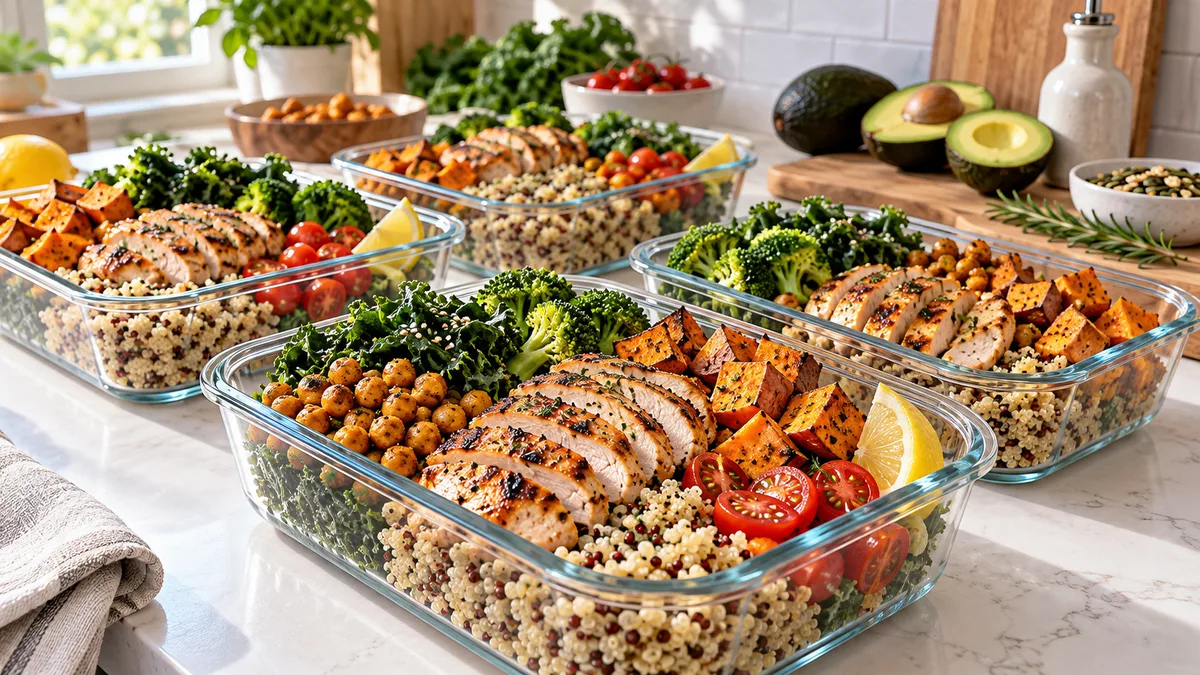
You can eat in a calorie deficit without spending every afternoon thinking about a family size bag of chips. You need more than small salads and a pep talk.
Thoughtful calorie deficit meal prep gives you protein, fiber, volume, and flavor so you can lose fat without feeling miserable. Make meals that settle your hunger, hold up through a busy Wednesday, and still taste good after three minutes in the microwave.
Some meal plans leave you starving by 3 p.m. because they cut calories and leave out the foods that help you feel full. Change that part.
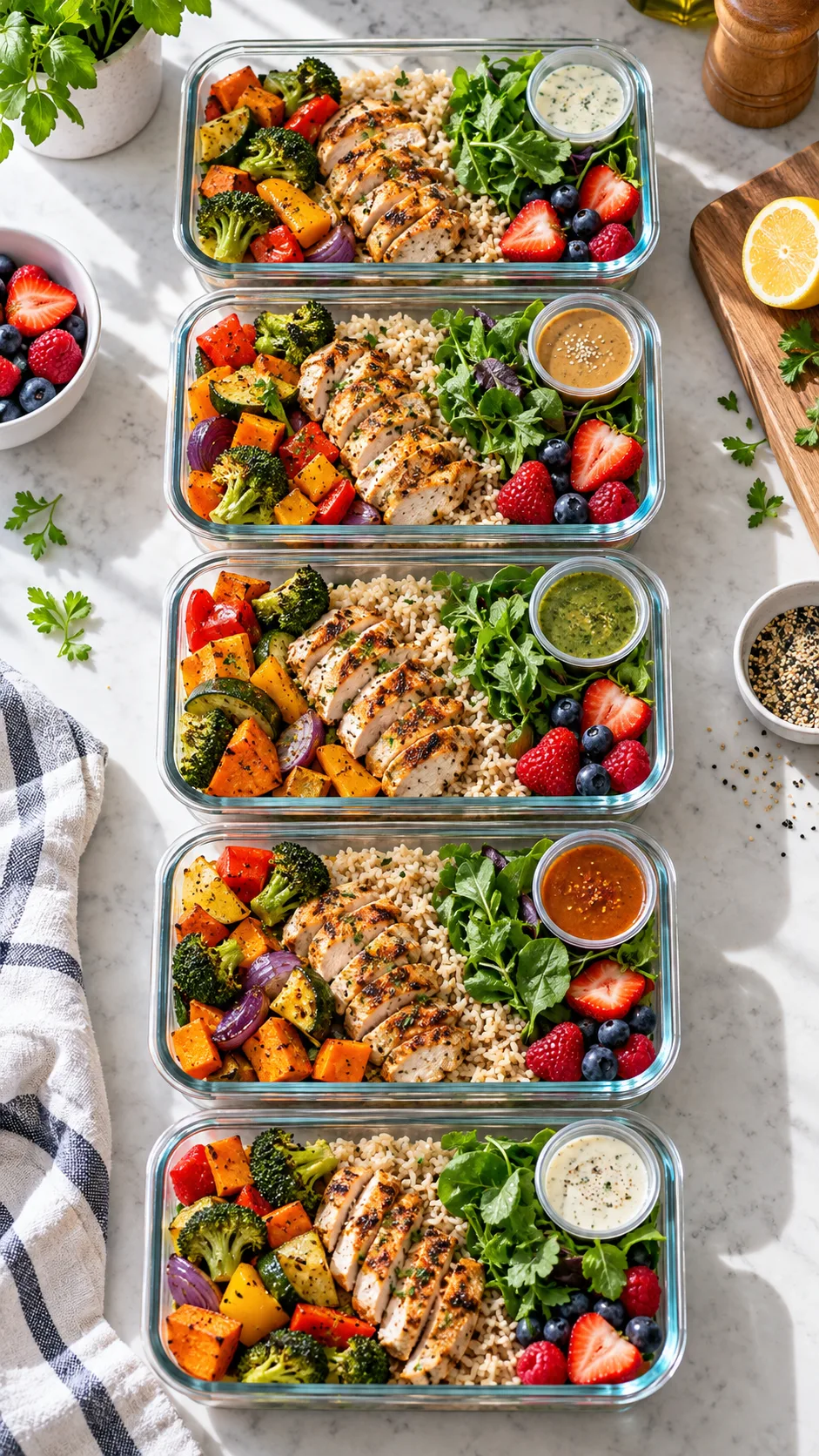
Why most calorie deficit meal prep fails
Many people begin a calorie deficit by shrinking every portion, skipping snacks, and buying food they do not like. That approach may last a few days, then hunger hits hard.
Your body sends stronger appetite signals when you eat too little. You cannot force your way through a plan that leaves you physically hungry and thinking about toast all day.
A sustainable calorie deficit creates a modest energy gap instead of a punishment routine. The Centers for Disease Control and Prevention recommends gradual, steady weight loss instead of crash dieting.
The fullness equation that matters
Calories alone do not determine fullness. You can eat a 500 calorie pastry in four bites. A 500 calorie bowl of chicken, potatoes, beans, and vegetables may keep you satisfied for hours.
Build meals around protein, fiber, high volume produce, and some fat. You do not need all four in perfect amounts at every meal, but this framework makes prep easier.
- Protein helps you feel full and maintain muscle while you lose weight.
- Fiber slows digestion and gives meals more bulk.
- High volume foods such as vegetables, fruit, potatoes, and broth based soups take up space without using up your calorie budget.
- Fats bring flavor and help meals satisfy you, though portions matter because calories add up fast.
Think of each container as a small team. Protein tackles hunger, vegetables add volume, carbs fuel your day, and fats keep the food from tasting depressing.
Set a calorie deficit you can maintain
You do not need the lowest calorie intake you can tolerate. You need an intake that fits your goals, training, workday, sleep, and ability to skip the Friday night “I give up” pizza order.
Most people do well with a moderate calorie deficit. Many start by eating roughly 300 to 500 fewer calories than they need to maintain their weight, then watch their progress for a few weeks.
Your body size, age, activity, medical history, and goals affect your needs. Use the National Institute of Diabetes and Digestive and Kidney Diseases Body Weight Planner for a science based estimate, then adjust based on what happens in your own life.
Start with data, not guesswork
Track your usual food intake for three to seven days before you change everything. You may notice simple places to cut back, such as oversized coffee additions, evening grazing, or restaurant lunches loaded with enough oil for three meals.
Then weigh yourself under similar conditions a few times each week. Watch the trend over two to four weeks instead of reacting to one weigh in after salty takeout.
- Choose a modest calorie target that you can manage.
- Include a protein source whenever you eat.
- Keep your food choices fairly consistent for two weeks.
- Make changes only when your weight trend and hunger point to a need for them.
- Talk with a registered dietitian or clinician if you have a health condition, take medications, or have a history of disordered eating.
Do not treat intense hunger, dizziness, fatigue, or constant thoughts about food as proof that your plan works. Those symptoms tell you to review your intake, food choices, training load, or a combination of them.
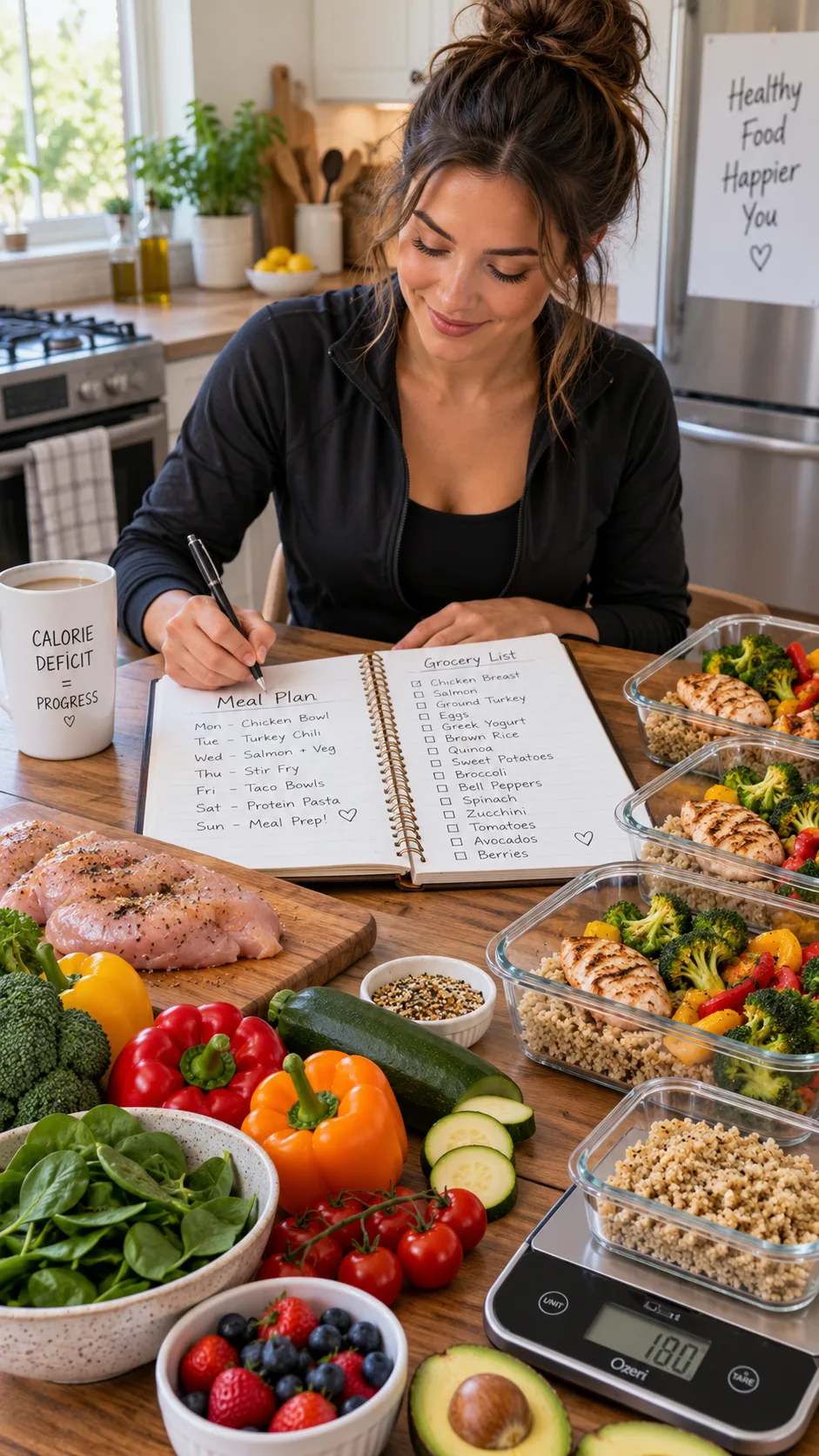
Build filling meal prep bowls without blowing your calories
An easy calorie deficit meal prep routine uses a template you can repeat. Choose a protein, a filling carb, two vegetables, a flavor boost, and a measured amount of fat or sauce.
This method saves time at the store and avoids the familiar meal prep problem: ten containers of dry chicken that make you question every choice you have made.
Use protein as your starting point
Start lunch and dinner with 25 to 40 grams of protein, based on your size, needs, and usual meal pattern. Protein rich foods often curb hunger better than meals made mostly of refined carbs or snack foods.
The Dietary Guidelines for Americans encourages nutrient dense foods from every food group, and protein rich foods fit well within that advice. You do not need pricey powders or social media “protein hacks” to reach your target.
- Chicken breast or chicken thighs with the skin removed
- Turkey mince or extra lean beef mince
- Eggs plus egg whites
- Tinned tuna, salmon, or sardines
- Greek yogurt, cottage cheese, or skyr
- Tofu, tempeh, edamame, lentils, and beans
Switch up your proteins each week. Your taste buds enjoy the change, and your grocery budget may appreciate it too.
Choose carbs that help you stay full
Carbs do not ruin a calorie deficit. Your portions and food choices determine whether they help with hunger or send you back to the cupboard 45 minutes later.
Choose high fiber, minimally processed carbs most of the time. Potatoes, oats, beans, lentils, rice, quinoa, whole grain pasta, and fruit all fit into a fat loss plan.
Potatoes deserve a mention. Baking, boiling, air frying, or roasting them with a sensible amount of oil gives you a filling food for relatively few calories. A plain potato does not have the same energy density as a mountain of fries. The preparation matters.
Let vegetables carry the volume
Fill one third to one half of each lunch and dinner container with vegetables. They add volume, crunch, color, and nutrients without loading every meal with calories.
Pick vegetables you will eat. If you hate steamed zucchini, do not prep five pounds of it and then wonder why it becomes fridge decor.
- Roast broccoli, cauliflower, carrots, peppers, onions, and green beans.
- Stir fry cabbage, mushrooms, snap peas, and frozen vegetable blends.
- Add spinach or kale to soups, egg bakes, and pasta sauces.
- Eat crunchy raw vegetables with yogurt based dips for easy snacks.
- Keep frozen vegetables for backup meals.
The best macro balance for a filling calorie deficit
You do not need perfect macros to lose weight, but you do need enough protein and fiber to live with your plan. Start there before worrying about whether your rice has 42 or 47 grams of carbohydrate.
Many active adults benefit from eating more protein during fat loss. Research reviews from the International Society of Sports Nutrition support adequate protein intake for body composition and lean mass goals, especially when you do resistance training.
A practical meal prep target
Use these ranges as a starting point, not a strict rulebook. Your hunger, food preferences, activity level, and medical needs matter too.
- Protein: Aim for 25 to 40 grams at each main meal.
- Fiber: Gradually work toward roughly 25 to 38 grams over the day.
- Vegetables: Eat one or two generous portions at lunch and dinner.
- Fats: Measure calorie dense foods such as oil, cheese, nuts, pesto, tahini, and avocado.
- Carbs: Adjust portions for your activity, training, preferences, and hunger.
Increase fiber slowly and drink enough fluids. If you go from almost no fiber to a huge amount overnight, your stomach may object.
Salt, spices, lemon juice, vinegar, fresh herbs, salsa, mustard, hot sauce, and low calorie sauces make meal prep easier to enjoy. Flavor will not derail your goals. Bland food often will.
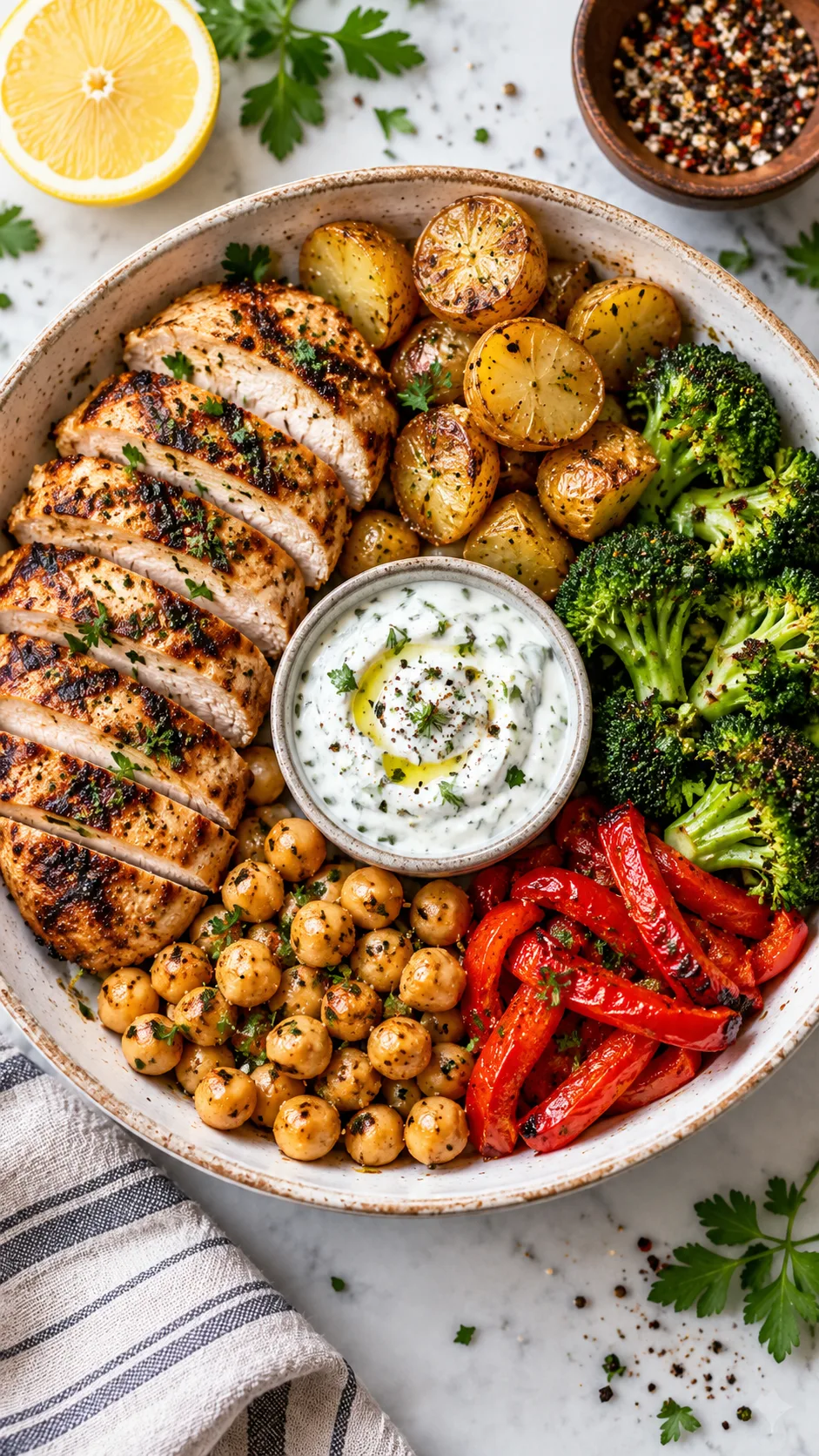
A simple Sunday meal prep plan for five filling days
You do not need to cook seven different recipes every Sunday. You probably should not. Choose two main meals, one breakfast option, two snacks, and a few ingredients that work in more than one dish.
This five day plan offers a flexible structure for a calorie deficit. Adjust portions for your own calorie target, and eat more if your activity requires it.
Breakfast: protein oats with berries
Make overnight oats with rolled oats, Greek yogurt, your choice of milk, chia seeds, cinnamon, and frozen berries. Add protein powder if you like it, or eat two boiled eggs alongside it.
This breakfast gives you protein, fiber, and enough carbohydrate to start the day without a sugar crash. Make three jars at once, then use eggs or yogurt bowls for the other mornings.
Lunch: chicken, potato, and roasted vegetable bowls
Roast cubed potatoes, broccoli, peppers, and onions on a tray. Season chicken with paprika, garlic, black pepper, lemon, and a small amount of olive oil, then cook it alongside the vegetables.
Fill each bowl with chicken, potatoes, a large portion of vegetables, and one or two tablespoons of yogurt based ranch, salsa, or chimichurri. You get a generous meal because you packed a generous amount of food.
Dinner: turkey bean chili
Brown lean turkey mince with onions, garlic, peppers, tinned tomatoes, beans, chili powder, cumin, and smoked paprika. Simmer it until the flavors come together and your kitchen smells like you have your week under control.
Eat the chili with a side salad, baked potato, cauliflower rice, or a measured scoop of rice. Add Greek yogurt, cilantro, jalapeños, or shredded cheese if they fit your calories.
Snack options that stop the snack spiral
Plan snacks before hunger gets loud. A planned snack can keep you on track. An unplanned “just one handful” of trail mix can turn into a mysterious 700 calorie event.
- Greek yogurt with berries and cinnamon
- Apple slices with measured peanut butter
- Cottage cheese with pineapple or tomatoes and pepper
- Edamame with sea salt and chili flakes
- Turkey slices, baby carrots, and hummus
- A protein shake with fruit after a workout
Want ideas that feel like food instead of diet punishment? Check out these high protein snacks that keep you full for options that also work in a calorie deficit.
Your calorie deficit grocery list
A useful grocery list makes better choices easier when you feel tired, busy, or one inconvenience away from ordering noodles. Buy ingredients you can repeat so you use them before they go questionable in the produce drawer.
Protein
- Chicken breast, turkey mince, eggs, tinned fish, Greek yogurt
- Tofu, tempeh, lentils, beans, cottage cheese, edamame
Carbs and fiber
- Potatoes, oats, brown or white rice, whole grain wraps
- Beans, lentils, fruit, whole grain bread, popcorn
Produce and flavor
- Broccoli, spinach, cabbage, peppers, onions, mushrooms, carrots
- Frozen vegetables, frozen berries, salad greens, tomatoes, cucumbers
- Lemons, garlic, herbs, salsa, mustard, vinegar, spices, hot sauce
Fats and extras
- Olive oil, avocado, nuts, seeds, light cheese, hummus
- Plain yogurt for sauces, pickles, low sugar marinades, stock cubes
If money feels tight, frozen produce, dried lentils, beans, oats, eggs, and chicken thighs can stretch your budget. Our frugal meal planning guide can help you make a small grocery budget go further without relying on instant noodles.
Meal prep food safety and storage rules
Meal prep only helps if you can eat it safely later. Cool cooked food quickly, use shallow containers, and put meals in the refrigerator within two hours of cooking.
The USDA food safety guidance recommends eating refrigerated leftovers within three to four days. Freeze extra portions when you cook for five workdays, then thaw one serving overnight in the fridge when you need it.
- Keep sauces separate when you can to preserve texture.
- Label containers with the meal name and prep date.
- Heat leftovers until they steam all the way through.
- Use an ice pack to keep cold lunches cold at work.
- Freeze meals with cooked grains, chili, soups, curries, and shredded meats.
Do not take chances with food that smells strange, looks wrong, or sat at room temperature too long. Your calorie deficit does not need a food poisoning subplot.

How to beat hunger without quitting your plan
You may feel hungry at times during fat loss, especially before meals. Constant hunger that distracts you all day means something in your routine needs attention.
Check the basics first: protein, fiber, sleep, hydration, meal timing, and your calorie target. A larger lunch and an earlier bedtime can solve plenty of so called willpower problems.
Try these fixes first
- Add vegetables or broth based soup to lunch and dinner for more volume.
- Increase protein by 10 to 15 grams at the meal that leaves you hungry.
- Move calories later if you overeat most often in the evening.
- Choose solid food more often than liquid calories, since chewing can help you feel satisfied.
- Plan treats instead of banning them and thinking about them all day.
- Take a diet break at maintenance calories if you have dieted hard for a long time and feel worn down.
Keep resistance training in your routine when you can. Strength workouts help you hold on to muscle during weight loss, and muscle helps you stay capable, strong, and confident beyond the number on the scale.
You can pair this eating plan with a simple full body workout at home with no equipment when gym sessions do not fit your schedule. Consistency beats a perfect plan that you quit after nine days.
Common calorie deficit meal prep mistakes
Healthy meals can still miss the mark when you ignore portions, flavor, or your own schedule. Watch for these traps before Sunday prep turns into a fridge full of regret.
- You skip protein at breakfast. A pastry and coffee may feel convenient, but many people feel hungry again soon after.
- You pour oils without measuring. Olive oil has health benefits, but a small amount contains a lot of calories.
- You prep food you dislike. Pick meals you want to eat, not meals that look virtuous online.
- You rely on tiny portions. Add vegetables, lean protein, potatoes, beans, and fruit before you remove more food.
- You forget weekend planning. Keep flexible meals or freezer portions ready for social plans and tired nights.
- You expect the scale to drop every day. Water, sodium, hormones, digestion, and workouts can all change your scale weight.
The best fat loss meal prep may look a little boring on paper, but it should feel easy in daily life. Repetition helps you get results, while different flavors keep the routine from feeling like culinary captivity.
Make your meal prep last beyond one week
You do not need a brand new plan every Monday. Keep the structure and change the flavors.
Make Mexican inspired bowls one week, Mediterranean chicken bowls the next, then curry lentil bowls, burger bowls, or stir fries after that. You can swap sauces and seasonings without rebuilding your grocery list every time.
Use a simple rotation: two proteins, two vegetables, one starch, and two sauces. You can make several meals from the same ingredients and waste less food.
Want more recipe ideas when your routine feels stale? Browse these healthy meal prep ideas and use the combinations that appeal to you.
Final takeaway: Eat enough to stay consistent
The best calorie deficit meal prep keeps you full enough to make it again next week. Build meals around protein, fiber, high volume produce, satisfying carbs, and measured fats.
Prep food you enjoy, use a moderate calorie deficit, and adjust based on your hunger and progress. You do not need to suffer for results. You need a plan that holds up when life gets busy.
Start this week with one filling breakfast, one reliable lunch, and one dinner you can freeze. Future you will open the fridge, see a plan, and feel smug about it.
