
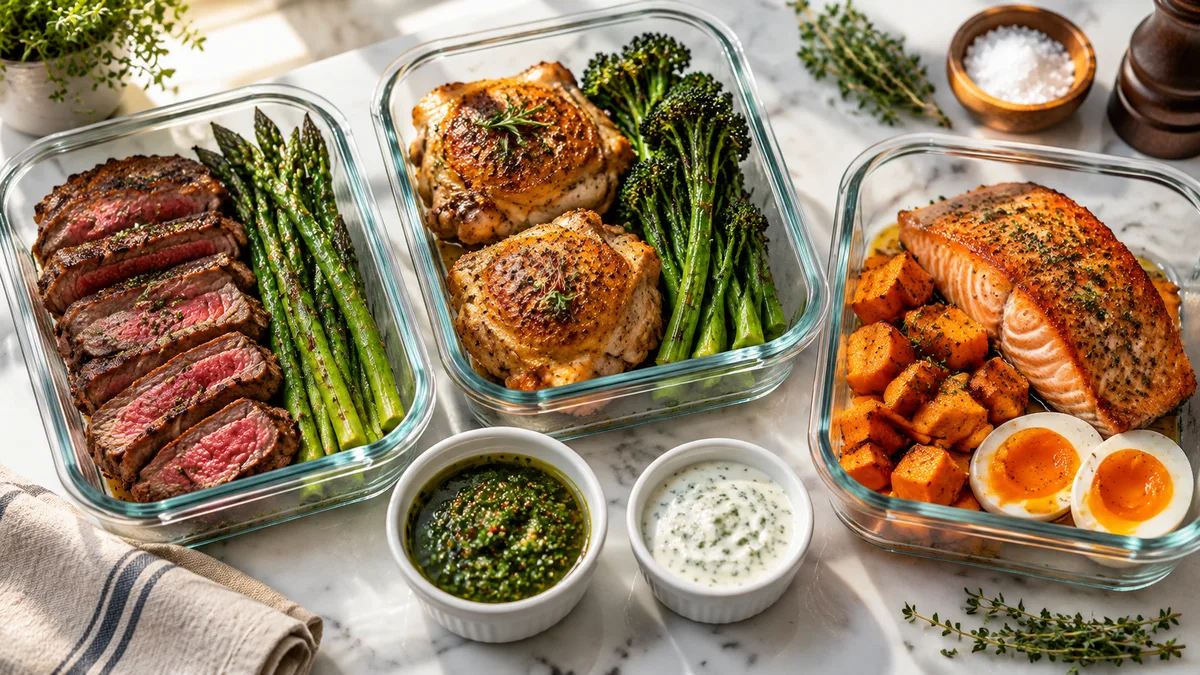
By Wednesday, nobody wants to face another container of dry chicken, plain rice, and regret. Animal based meal prep can save time, keep you satisfied, and give you food you still want to eat.
Variety, sensible portions, and good sauces make the difference. Without them, your fridge can turn into a sad little museum of identical lunches. Why do some meal prep plans last all week while the enthusiasm disappears by Tuesday?
Build meals around filling animal foods, add plants for fibre and crunch, then switch up the flavours instead of making five separate dinners. Your hungry future self will appreciate the effort.
What counts as animal based meal prep?
Animal based meal prep puts animal foods in the middle of your meals. That can include meat, fish, eggs, dairy, and bone broth, plus fruit, vegetables, herbs, potatoes, rice, or other foods that suit your preferences and goals.
Some people follow a strict animal based approach and eat very few plant foods. You do not need to go that far. IMO, most people get more variety, texture, and fibre when they eat produce and simple starches alongside protein.
Animal foods provide protein, vitamin B12, iron, zinc, choline, calcium from dairy, and omega-3 fats from oily fish. Each food brings something different to the table, so rotate your choices instead of treating one ingredient like the answer to every lunch.
Why this style keeps you full
Protein can help you stay full because your body digests it more slowly than refined carbs, and it helps you maintain muscle while losing weight. Fat can also help meals stick with you and taste better. Nobody daydreams about a plain rice cake at 3 p.m., and nobody needs to.
Fibre-rich produce, beans if you eat them, potatoes, oats, and whole grains can add more volume to a meal. Protein, fibre, and fat create a practical formula for meal prep that keeps you full all week.
The Dietary Guidelines for Americans recommend nutrient-dense choices across food groups, including lean proteins, seafood, eggs, dairy, fruits, and vegetables. Let that broad framework guide you instead of following restrictive rules from someone shouting into a ring light.
The no boredom formula for animal based meal prep
You can make a week’s worth of meals feel different without running a restaurant out of your kitchen. Start with a basic formula, then switch the seasonings, toppings, and sauces.
For most lunches and dinners, fill each container with one protein, one satisfying carb, two produce options, and one flavour booster. This approach keeps shopping simple and lets you combine meals without spending your life measuring ingredients.
- Choose two proteins: Pick one poultry or red meat option, plus one fish, egg, or dairy option.
- Cook two carb bases: Roast potatoes and make rice, quinoa, couscous, or another staple you like.
- Prep three vegetables: Choose a roasted vegetable, a crunchy raw vegetable, and a quick green.
- Make two sauces: Prepare a creamy sauce and an acidic sauce for different flavours.
- Use flexible toppings: Add cheese, pickles, fruit, nuts, herbs, avocado, or crispy onions just before you eat.
This plan gives you options without filling half the fridge with ingredients you cannot use again. Eat steak with chimichurri on Monday, then pair that same steak with taco salsa on Thursday. The protein stays the same, but the meal changes.
A simple portion starting point
Start with 4 to 6 ounces of cooked protein for many adult meals, then adjust for your hunger, body size, training, and goals. Add a fist-sized serving of potatoes, rice, or another carb when workouts or long days demand more energy.
Fill the rest of the container with vegetables, fruit, or both. If you use lean protein, add a thumb-sized portion of fat from cheese, olive oil, avocado, full-fat yogurt sauce, or nuts.
You do not need to weigh every blueberry unless tracking helps you. Your hunger, energy, gym performance, and fullness after meals can tell you plenty too.
Best animal based foods for weekly meal prep
Some proteins handle five days in the fridge better than others. Pick foods that reheat well, taste good cold, and do not become rubbery after 90 seconds in the microwave.
Proteins that hold up well
- Chicken thighs: They stay juicier than chicken breast and work with almost any seasoning.
- Lean ground beef or turkey: Use them in bowls, egg scrambles, lettuce wraps, and skillet meals.
- Steak strips: Cook them to medium rare, slice them thinly, and reheat them gently so they do not turn into shoe leather.
- Meatballs: They freeze well and make portioning easy.
- Hard-boiled eggs: They make a quick breakfast or snack without any pan drama.
- Salmon: It provides omega-3 fats and works best during the first two or three days.
- Canned tuna, salmon, or sardines: These shelf-stable backups can rescue a busy week.
- Greek yogurt and cottage cheese: They make easy protein-rich breakfasts, dips, and snack bowls.
Give seafood a regular place in your rotation. The FDA’s seafood guidance can help you choose fish, especially if you are pregnant, breastfeeding, or feeding children.
Carbs and produce that make meals more filling
Animal based does not need to mean carb free. Potatoes, sweet potatoes, rice, fruit, squash, and oats can fuel training, support recovery, and make meals more enjoyable.
Roasted potatoes work especially well with beef, eggs, chicken, and salmon. They also taste great cold in a mustardy potato salad, which gives them more range than people often admit.
For produce, choose foods that keep their texture: broccoli, carrots, green beans, peppers, cabbage, cucumbers, berries, apples, oranges, and grapes. Delicate salad greens work too, but keep them dry and add dressing when you eat.
Five animal based meal prep ideas that stay interesting
Treat these ideas like templates, not strict recipes. Swap ingredients based on your budget, preferences, and whatever looks good at the store.
1. Lemon herb chicken thigh bowls
Roast boneless chicken thighs with lemon zest, garlic, oregano, salt, pepper, and olive oil. Serve them with crispy baby potatoes, roasted zucchini, cucumber, feta, and a spoonful of tzatziki.
Lemon and cucumber keep this bowl fresh, while chicken and potatoes make it filling. Pack the tzatziki separately if you want everything to stay crisp.
2. Burger bowls with pickle sauce
Brown lean ground beef with salt, pepper, onion powder, and smoked paprika. Add roasted potato wedges, shredded lettuce, tomatoes, pickles, cheddar, and a quick sauce of Greek yogurt, mustard, ketchup, and chopped pickles.
This meal handles a burger craving without asking you to build a sandwich at your desk like a lunch break engineer. For more mix-and-match versions, try these loaded burger bowl meal prep recipes.
3. Salmon, rice, and crunchy veggie boxes
Season salmon with soy sauce or coconut aminos, ginger, garlic, and a little honey. Add rice, edamame if you eat it, shredded carrots, cucumber, and spicy mayo or sesame lime sauce.
Eat salmon meals earlier in the week for the best quality. Keep a pouch of tuna or canned salmon for later lunches after you finish your cooked fish.
4. Steak fajita meal prep
Sear flank steak or sirloin quickly, then slice it against the grain. Toss peppers and onions with cumin, chili powder, garlic, and lime, then roast them until they take on a little char.
Pack the steak and vegetables with rice, potatoes, or tortillas on the side. Add salsa, guacamole, cheese, or Greek yogurt when you eat. Tuesday may feel a little less personal after that.
5. Egg, sausage, and cottage cheese breakfast boxes
Bake egg muffins with turkey sausage, spinach, peppers, and shredded cheese. Pair them with cottage cheese, berries, and roasted sweet potato cubes for a protein-rich breakfast that does not feel like punishment.
Want more morning options? These protein-rich breakfast meal prep ideas can help you reach 30 grams of protein without eating the same scrambled eggs forever.
Make one grocery trip work harder
A good grocery list can prevent waste before it starts. Buy ingredients that work across several meals, then change the flavour with sauces and seasoning blends.
For a four to five day plan, buy two main proteins and one backup protein. Freeze extra cooked meat in single portions so you do not order pricey takeout because the fridge suddenly looks “empty.”
Sample animal based meal prep grocery list
- 2 pounds chicken thighs
- 1 to 1.5 pounds lean ground beef or turkey
- 4 salmon fillets or canned fish
- 12 eggs
- Greek yogurt or cottage cheese
- Potatoes or sweet potatoes
- Rice or another preferred grain
- Broccoli, peppers, cucumbers, carrots, spinach, onions, and salad greens
- Berries, apples, oranges, or grapes
- Cheddar or feta cheese
- Lemons, limes, garlic, fresh herbs, salsa, mustard, hot sauce, and pickles
Buy frozen vegetables when fresh produce feels like too much work. Frozen broccoli, peppers, cauliflower rice, and green beans save time, cost less, and never glare at you from the produce drawer after three forgotten days.
How to prep it all in about 90 minutes
You do not need a seven hour Sunday kitchen marathon, twelve pans, and a sink full of despair. You need an order of operations that keeps the oven, stovetop, and cutting board working at once.
- Heat the oven: Set it to 425°F and line two sheet pans.
- Start your carbs: Cook rice, roast potatoes, or prepare another base first.
- Season proteins: Give chicken an herb blend, beef a smoky blend, and salmon a ginger lime or lemon pepper treatment.
- Roast vegetables: Put sturdy vegetables in the oven with oil, salt, and spices.
- Cook proteins: Use the stovetop for ground meat or steak while the oven cooks chicken and vegetables.
- Mix sauces: Stir together yogurt sauces, salsa mixes, or vinaigrettes while the food cools.
- Portion strategically: Pack three days of fridge meals and freeze later portions when needed.
Let hot food cool briefly before refrigeration, but do not leave it on the counter for ages while you scroll. The USDA leftovers guidance recommends refrigerating perishable food within two hours and eating most cooked leftovers within three to four days.
Use shallow containers so food cools faster and stacks neatly. Label frozen portions with the date, because “I think this is beef?” should never become a dinner plan.
Food safety rules that matter
Good meal prep should make life easier, not turn lunch into a science experiment. Follow a few food safety habits and keep the week boring in the best way.
- Cook poultry to 165°F and cook ground meats to the safe temperature for that meat.
- Use a food thermometer instead of judging doneness by color alone.
- Keep raw meat away from ready-to-eat foods on cutting boards, counters, and fridge shelves.
- Store cooked meals in airtight containers and refrigerate them promptly.
- Reheat leftovers until piping hot, then avoid reheating the same container over and over.
- Freeze meals you will not eat within three to four days.
The FoodSafety.gov temperature chart lists safe minimum cooking temperatures for meat, poultry, seafood, and eggs. Keep an inexpensive instant-read thermometer in your kitchen drawer. You will use it more than you expect.
How to avoid animal based meal prep burnout
Repetition usually causes boredom, not meal prep itself. Eat chicken, broccoli, and rice five times with the same seasoning, and your taste buds will eventually file a formal complaint.
Change the sauce, change the meal
Use the same cooked protein with different sauces during the week. Chicken can taste Mediterranean with tzatziki, smoky with barbecue sauce, spicy with salsa verde, or fresh with lemon herb yogurt.
Keep sauces in small containers until you eat. That small habit protects texture and gives you more control over calories, sodium, and heat.
Rotate temperature and texture
Eat some meals hot and others cold. Turn leftover steak into a cold chopped salad with pickles and mustard vinaigrette, or stir shredded chicken into warm soup with bone broth and vegetables.
Add crunchy ingredients just before eating: cucumbers, cabbage, nuts, seeds, crispy chickpeas if they suit your plan, or crushed pork rinds for a lower carb option. Texture can make a Sunday meal feel new again.
Keep an emergency protein stash
Keep canned fish, jerky with a short ingredient list, boiled eggs, cottage cheese, Greek yogurt, and frozen meatballs on hand. They can save dinner when you miss prep day, burn a meal, or cannot face another pan. Everyone has those days.
For a lower effort backup plan, check out this guide to lazy meal prep that keeps you fed. Regular meals matter more than culinary theatre.
Can animal based meal prep fit different goals?
Yes, but portions and food choices should match the goal. Someone training hard, someone aiming for fat loss, and someone managing a medical condition each needs a different plan.
For fat loss
Choose leaner proteins often, such as chicken breast, turkey, lean beef, shrimp, white fish, egg whites, and low-fat Greek yogurt. Keep potatoes, fruit, vegetables, and measured fats in your plan so hunger does not wreck your calorie target later.
Build larger meals with plenty of vegetables and enough protein. You can also use our calorie deficit meal prep formula for portion ideas that do not leave you ravenous.
For muscle gain or busy training weeks
Add more carbs around demanding workouts, especially rice, potatoes, oats, fruit, and dairy. Eat protein with each meal and snack, then eat enough total food to support your training.
The National Institutes of Health notes that protein needs can change with age, health, activity, and goals. Talk with a registered dietitian if you want a personal target, especially if you follow a restrictive eating style.
For general health
Rotate protein sources instead of relying only on bacon, butter, and ribeye. Eat fish, eggs, poultry, lean meats, fermented dairy if you tolerate it, fruit, vegetables, and fibre-rich plant foods that work for you.
If you manage kidney disease, high cholesterol, gout, diabetes, food allergies, or another health condition, ask your clinician or registered dietitian for personal advice. Your meal plan should support your health needs, not help you win an argument online.
Final takeaway: Prep protein, then give it personality
Animal based meal prep works when it gives you protein, satisfying fats, sensible carbs, and enough variety to keep meals interesting. Cook two proteins, prep flexible sides, make two sauces, and freeze food you will not eat within a few days.
Start with one week, not a whole new identity. Make food that fills you up, still tastes good on Thursday, and keeps you out of the drive-thru when hunger gets loud.
Your meal prep does not need to impress social media. It needs to make your week easier. That counts as a win.
