
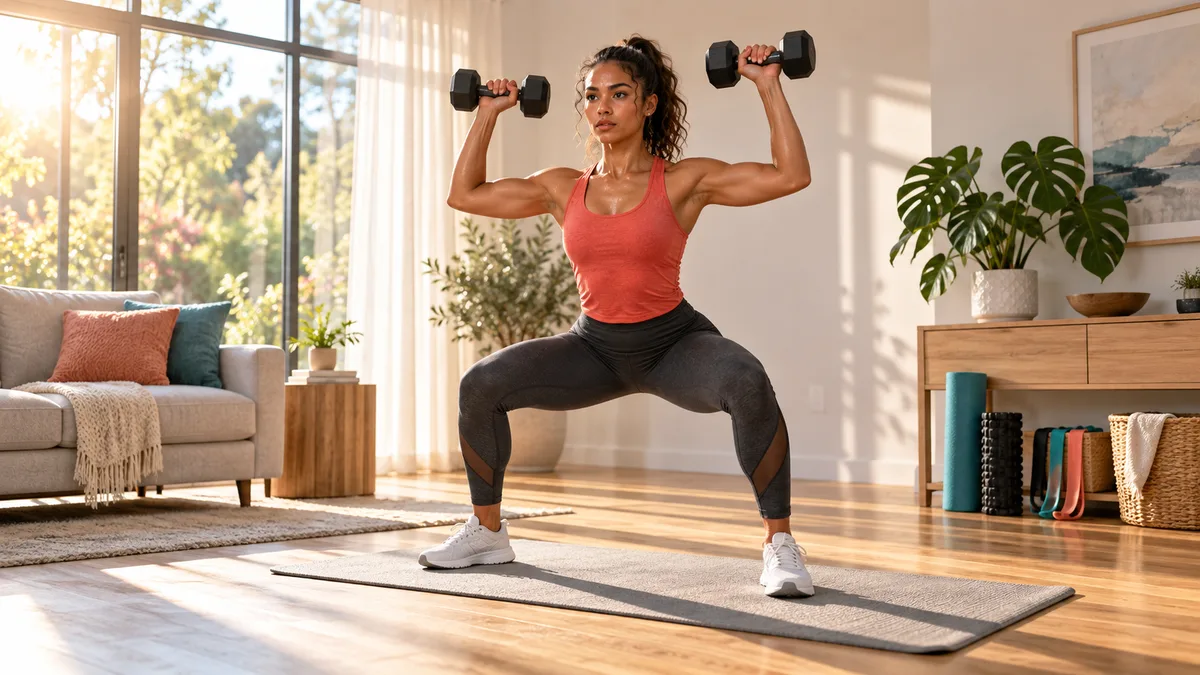
You want a toned body, but you don’t want to spend three hours researching exercises, watching 47 YouTube videos, and still walking away confused. Sound about right? Good. You landed in the exact right spot.
This guide hands you a complete full body toning workout plan whether you train at home, hit the gym, or haven’t touched a weight since high school PE class. No fluff, no confusing jargon, no exercises that require equipment from a NASA training facility. Just a clear plan you can start today.
What does “toning” actually mean?

Here’s a truth most fitness influencers skip over: “toning” isn’t a scientific term. What people really mean when they say they want to “tone up” comes down to two things. Building lean muscle and reducing body fat so that muscle becomes visible. That’s it. No magic cream. No special “toning” rep range.
The American Council on Exercise confirms this: toning comes down to strength training combined with proper nutrition. So when someone tells you to use tiny pink dumbbells and do 100 reps to “tone without getting bulky,” feel free to smile and walk away.
Women don’t accidentally get bulky. You produce roughly 15-20 times less testosterone than men. Building visible, defined muscle takes intentional effort, progressive overload, and consistency. What you WILL get from proper strength training is a leaner, stronger, more confident body. That’s the deal.
Why full body workouts beat everything else for toning
Why not just do “arm day” and “leg day” like the gym bros? Because full body toning workouts give women, especially beginners, a massive advantage. You hit every muscle group in a single session, which means you burn more calories, build balanced strength, and need fewer gym days per week.
Research published in the Journal of Strength and Conditioning Research shows that training each muscle group 2-3 times per week produces better hypertrophy results than once-a-week splits. Full body routines make hitting that frequency effortless, even with just three sessions per week.
Benefits at a glance

- Higher calorie burn per session (more muscles working = more energy spent)
- Faster recovery since you spread the volume across your whole body
- Flexibility if you miss a session, you haven’t skipped an entire muscle group
- Time-efficient because 3 workouts per week covers everything
- Beginner-friendly since you learn movement patterns faster with frequent repetition
If you want a more structured split approach later, check out this 3-day split workout designed for women gym beginners. But for now, full body training gives you the best bang for your buck.
The at-home full body toning workout (no equipment needed)
No gym membership? No dumbbells? No problem. Your bodyweight provides more than enough resistance to build visible muscle definition, especially if you’re just getting started. I trained exclusively at home for my first six months and saw noticeable changes in my arms, glutes, and core by week eight.
Perform this circuit 3 times per week with at least one rest day between sessions. Complete 3 rounds of the entire circuit.
- Bodyweight Squats, 15 reps. Push your hips back like you’re sitting in a chair. Keep your chest up and drive through your heels.
- Push-Ups (knees or toes), 10-12 reps. No shame in the knee modification. Proper form beats ego reps every single time.
- Reverse Lunges, 12 reps per leg. Step back, drop the knee, and squeeze your glute on the way up.
- Plank Hold, 30-45 seconds. Squeeze everything: abs, glutes, quads. You should be shaking slightly. That’s the good stuff.
- Glute Bridges, 15 reps. Pause at the top for 2 seconds. Your glutes will thank you (eventually).
- Tricep Dips (using a chair), 10-12 reps. Keep your back close to the chair and lower slowly.
- Superman Holds, 12 reps (2-second hold each). This targets your posterior chain, the muscles running along your back and glutes.
Rest 60 seconds between rounds. The whole workout takes roughly 25-30 minutes. Short, effective, and you can do it in your pajamas if you want. Nobody’s judging.
Want to complement this with some core and flexibility work? A mat Pilates routine pairs perfectly with this plan on your rest days.

The gym full body toning workout (with weights)
Ready to level up? The gym gives you access to dumbbells, barbells, cables, and machines that let you progressively overload your muscles, the single most important principle for changing your physique. Progressive overload simply means gradually increasing the weight, reps, or sets over time.
Perform this workout 3 times per week (Monday/Wednesday/Friday works great). Use a weight that feels challenging on the last 2-3 reps of each set.
Workout A (Monday)
- Goblet Squats, 4 sets x 12 reps
- Dumbbell Bench Press, 3 sets x 10 reps
- Romanian Deadlifts (dumbbells or barbell), 3 sets x 12 reps
- Seated Cable Rows, 3 sets x 12 reps
- Lateral Raises, 3 sets x 15 reps
- Plank, 3 sets x 45 seconds
Workout B (Wednesday)
- Barbell Hip Thrusts, 4 sets x 10 reps
- Overhead Dumbbell Press, 3 sets x 10 reps
- Walking Lunges (dumbbells), 3 sets x 10 per leg
- Lat Pulldowns, 3 sets x 12 reps
- Cable Tricep Pushdowns, 3 sets x 12 reps
- Bicycle Crunches, 3 sets x 20 reps
Workout C (Friday)
- Sumo Deadlifts, 4 sets x 8 reps
- Incline Dumbbell Press, 3 sets x 10 reps
- Bulgarian Split Squats, 3 sets x 10 per leg
- Face Pulls, 3 sets x 15 reps
- Dumbbell Bicep Curls, 3 sets x 12 reps
- Dead Bugs, 3 sets x 10 per side
Pro tip: Track your weights in a notebook or phone app. If you hit all your reps comfortably, increase the weight by 2.5-5 lbs next session. This simple strategy drives results faster than any fancy program ever could.
The beginner-friendly version (for those starting from zero)
Ever felt so overwhelmed by workout options that you just… did nothing instead? Yeah, that’s incredibly common, and you’re not alone. The trick for complete beginners is to start stupidly simple. Seriously. Your only goal during weeks 1-4 is learning proper form and building the habit of showing up.
Here’s your stripped-down starter plan. Perform it 2-3 times per week:
- Wall Sit, 3 sets x 20-30 seconds
- Incline Push-Ups (hands on a counter or wall), 3 sets x 8-10 reps
- Assisted Bodyweight Squats (holding a door frame), 3 sets x 10 reps
- Standing Calf Raises, 3 sets x 15 reps
- Dead Bug (slow and controlled), 3 sets x 6 per side
- Glute Bridges, 3 sets x 12 reps
This looks easy on paper. And the first session might feel easy. But by the end of week two, you’ll notice your muscles engaging differently. You’ll start feeling muscles you forgot existed. That’s progress, and it compounds quickly.
After 3-4 weeks, graduate to the bodyweight circuit above. Then move to the gym plan when you feel ready. No rush. Consistency always beats intensity.
Nutrition: the part nobody wants to hear about
I’ll keep this blunt. You cannot out-train a bad diet. I’ve tried. Many times. It doesn’t work. Your workout handles the “build muscle” part. Your nutrition handles the “reveal the muscle” part. You need both.
For toning specifically, focus on these three nutritional priorities:
- Eat enough protein. Aim for 0.7-1 gram per pound of body weight daily. Protein builds and repairs muscle tissue. Without it, your workouts accomplish very little.
- Eat at maintenance or a slight deficit. A modest calorie deficit of 200-300 calories helps reduce body fat while preserving muscle. Crash diets destroy muscle. Avoid them.
- Stay hydrated. Dehydrated muscles perform terribly and recover even worse. Drink at least half your body weight in ounces of water daily.
Not sure where to start with meal planning? A macro meal plan for beginners takes the guesswork out of hitting your protein and calorie targets. In my experience, tracking macros for even just two weeks completely transforms how you view food.
Common mistakes that sabotage your toning goals
Let’s talk about the traps that catch almost every woman who starts a full body toning workout program. I’ve fallen into most of these myself, so consider this your shortcut past the frustrating stuff.
1. Using weights that are too light
If you can easily complete every rep without any struggle, the weight does nothing for you. Your muscles need a genuine challenge to adapt and grow. Pick a weight where the last 2-3 reps feel HARD but your form stays solid.
2. Skipping lower body work
Your legs and glutes contain the largest muscles in your body. Training them burns the most calories and produces the biggest metabolic impact. Skipping leg day doesn’t just give you chicken legs. It slows down your entire fat loss process.
3. Doing too much cardio
Spending 60 minutes on the elliptical every day while avoiding the weight room? That’s a recipe for a “skinny fat” physique, meaning low weight but no muscle definition. Prioritize strength training and treat cardio as a supplement, not the main course. Two to three 20-minute cardio sessions per week works perfectly alongside your toning workouts.
4. Not resting enough
Your muscles grow during rest, NOT during the workout itself. The workout creates the stimulus. Sleep and recovery days create the actual change. Aim for 7-9 hours of sleep and take at least 1-2 full rest days per week. More is not always more.
5. Program hopping
Following one plan for a week, switching to another, trying a TikTok routine, then going back to random exercises… this kills progress. Stick with one program for a minimum of 8-12 weeks before evaluating results. Consistency with a mediocre plan beats inconsistency with a “perfect” one every time.
How to track your progress (beyond the scale)
The scale lies. Or at least, it tells a very incomplete story. You can gain 3 pounds of muscle and lose 3 pounds of fat and the scale reads EXACTLY the same, yet you look completely different. Here’s how to actually measure your toning progress:
- Progress photos. Take front, side, and back photos every 2 weeks. Same lighting, same time of day, same clothing. This becomes your most powerful motivational tool.
- Measurements. Use a tape measure on your waist, hips, thighs, and arms. Inches tell a more accurate story than pounds.
- Strength numbers. Track the weights you lift. Getting stronger means you’re building muscle. Period.
- How clothes fit. Your jeans becoming looser in the waist but tighter around the glutes? That’s the toning effect in action.
Give yourself at least 6-8 weeks before expecting visible changes in the mirror. Internal changes (better energy, improved sleep, increased strength) show up within the first 2-3 weeks. The visual transformation follows. Patience isn’t optional here; it’s mandatory.
Sample weekly schedule (putting it all together)
How does a full week actually look when you combine everything? Here’s my recommended layout for someone following the gym plan:
- Monday: Workout A (full body, strength focus)
- Tuesday: 20-minute walk or light yoga
- Wednesday: Workout B (full body, strength focus)
- Thursday: Rest day or gentle mobility work
- Friday: Workout C (full body, strength focus)
- Saturday: 20-30 minutes of cardio you actually enjoy (hiking, cycling, dancing, whatever)
- Sunday: Complete rest
This schedule gives you three strength sessions, two light active recovery days, and two rest days. It’s sustainable, effective, and doesn’t require you to live at the gym. You have a life. This plan respects that.
Equipment worth investing in (if you train at home)
You can start with zero equipment, but a small investment dramatically expands your exercise options. Here’s the short list, ranked by priority:
- A set of resistance bands ($15-25). Incredibly versatile and travel-friendly. They add tension to every bodyweight movement.
- Adjustable dumbbells or a set of 3 pairs (10lb, 15lb, 20lb). This covers you for months of progressive overload at home.
- A yoga/exercise mat ($20-30). Protects your knees and provides grip for floor exercises.
- A pull-up bar (doorframe style) ($25-35). Opens up back training options you simply can’t replicate otherwise.
Total investment? Under $150 for a home gym setup that handles everything in these workout plans. That’s less than two months of most gym memberships. You don’t need a Peloton or a rack of chrome dumbbells to transform your body.
When to level up your workouts
How do you know when your current plan stops working? Watch for these signs:
- You complete every set without the last reps feeling difficult
- Your strength numbers haven’t increased in 3+ weeks
- You feel bored and mentally checked out during workouts
- You’ve followed the same program for 12+ weeks
When these signs appear, increase the difficulty. Add weight. Add a rep or two per set. Slow down your tempo. Reduce rest periods. Or graduate to a more advanced program entirely. Your body adapts to whatever you throw at it, so your job is to always give it something slightly harder than last time.
If you’re at that point and training from home, consider trying a wall Pilates workout on active recovery days to challenge your muscles in a completely different way.
Final thoughts: your toning transformation starts now
Here’s the unsexy truth about full body toning workouts for women: the “best” program doesn’t exist. The best program is the one you actually DO. Consistently. Week after week. For months, not days.
You now have three complete plans: bodyweight at home, gym with weights, and a true beginner version. You have a nutrition framework, a weekly schedule, and a list of mistakes to avoid. The guesswork is gone. The only variable left is you showing up.
Pick the plan that fits your current situation. Start this week. Not Monday, not “when things calm down,” not after you buy new leggings. This week. Your future self will look back at this moment as the one where everything changed. Now go make it happen.
