

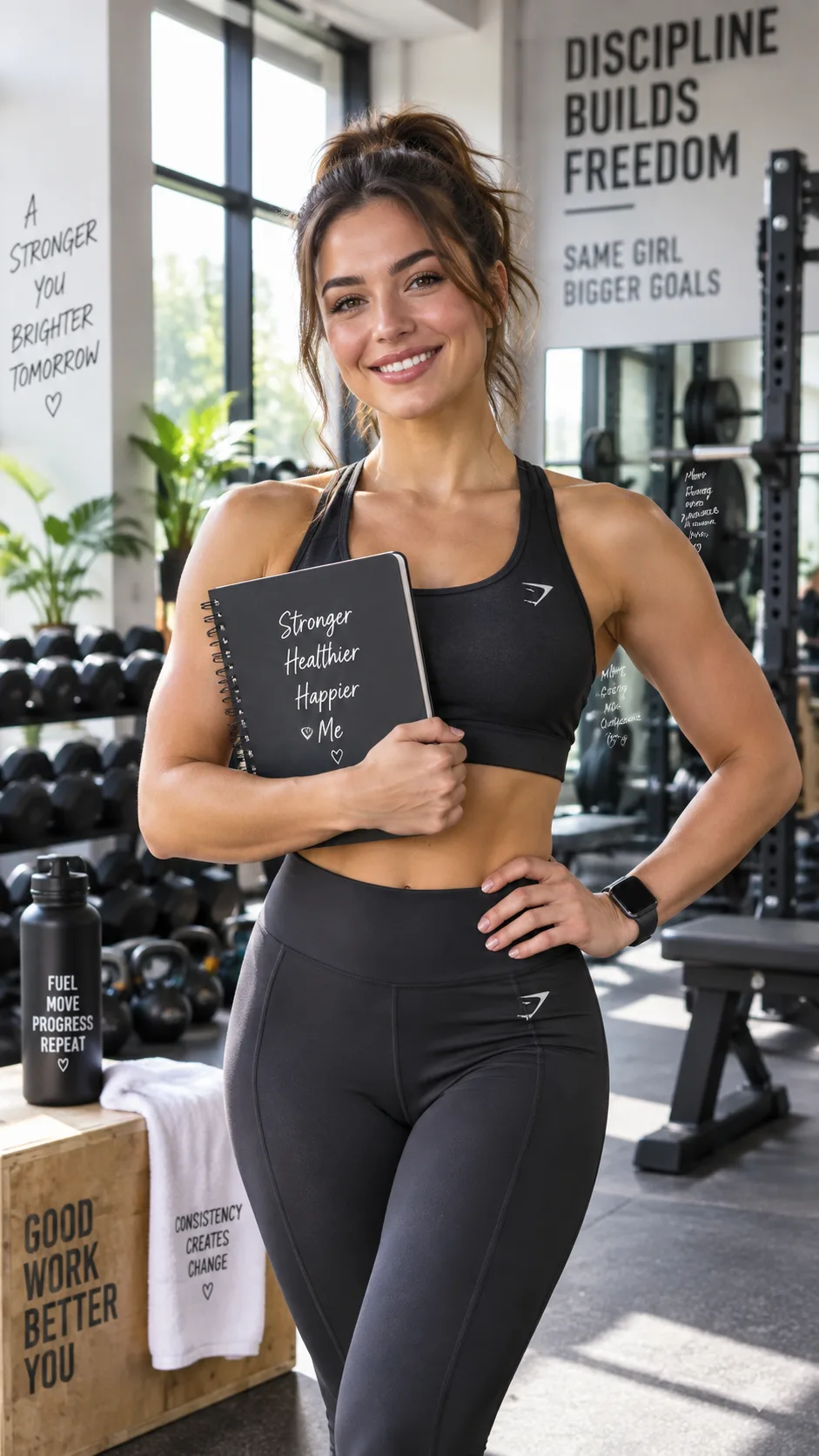
You walk into the gym, look around at all the machines, and immediately pull out your phone to scroll Instagram while sitting on a bench. Sound familiar? Yeah, I’ve been there too. The problem isn’t motivation. It’s not knowing what the heck to do once you actually show up.
That ends right now. I’m laying out a complete full week workout plan for the gym designed specifically for women who want structure, results, and zero confusion. No more wandering aimlessly between the leg press and the water fountain. No more Googling “best arm exercises” mid-set while someone waits for your machine.
This 7-day schedule balances strength training, cardio, active recovery, and rest so your body actually has time to build muscle AND recover. Whether you’re a beginner or you’ve been lifting for a while and just need a fresh framework, this plan works.
Why you need a structured weekly gym plan
Here’s what happens without a plan: you do whatever feels fun that day, which usually means legs on Monday, legs on Wednesday, and… more legs on Friday. Meanwhile your upper body files a missing persons report. A structured weekly workout schedule prevents muscle imbalances and makes sure you’re hitting every major muscle group with enough volume and recovery time.
Research from the American College of Sports Medicine recommends strength training each major muscle group at least twice per week for optimal results. This plan follows that principle while keeping things realistic for someone with a busy life, because let’s be honest, you probably have one.
A good plan also removes decision fatigue. You already decide what to eat, what to wear, and whether to reply to that text. Your workout shouldn’t be another decision. It should be a done deal before you lace up your sneakers.
How this 7-day women’s gym schedule works
This plan uses a push/pull/legs split combined with a full body day, dedicated cardio, and active recovery. I designed it so you train hard four days, move moderately two days, and fully rest one day. Here’s the weekly overview:
- Monday: Lower Body Strength
- Tuesday: Upper Body Push
- Wednesday: Active Recovery + Light Cardio
- Thursday: Upper Body Pull
- Friday: Glutes & Legs (Round Two)
- Saturday: Full Body + HIIT
- Sunday: Complete Rest
Each session takes roughly 45-60 minutes. You don’t need to live at the gym to see progress. You need to be consistent, train with intention, and actually challenge yourself with the weights you choose. That 5-pound dumbbell you’ve been curling since 2019? It’s time to level up.
Day 1, Monday: Lower body strength
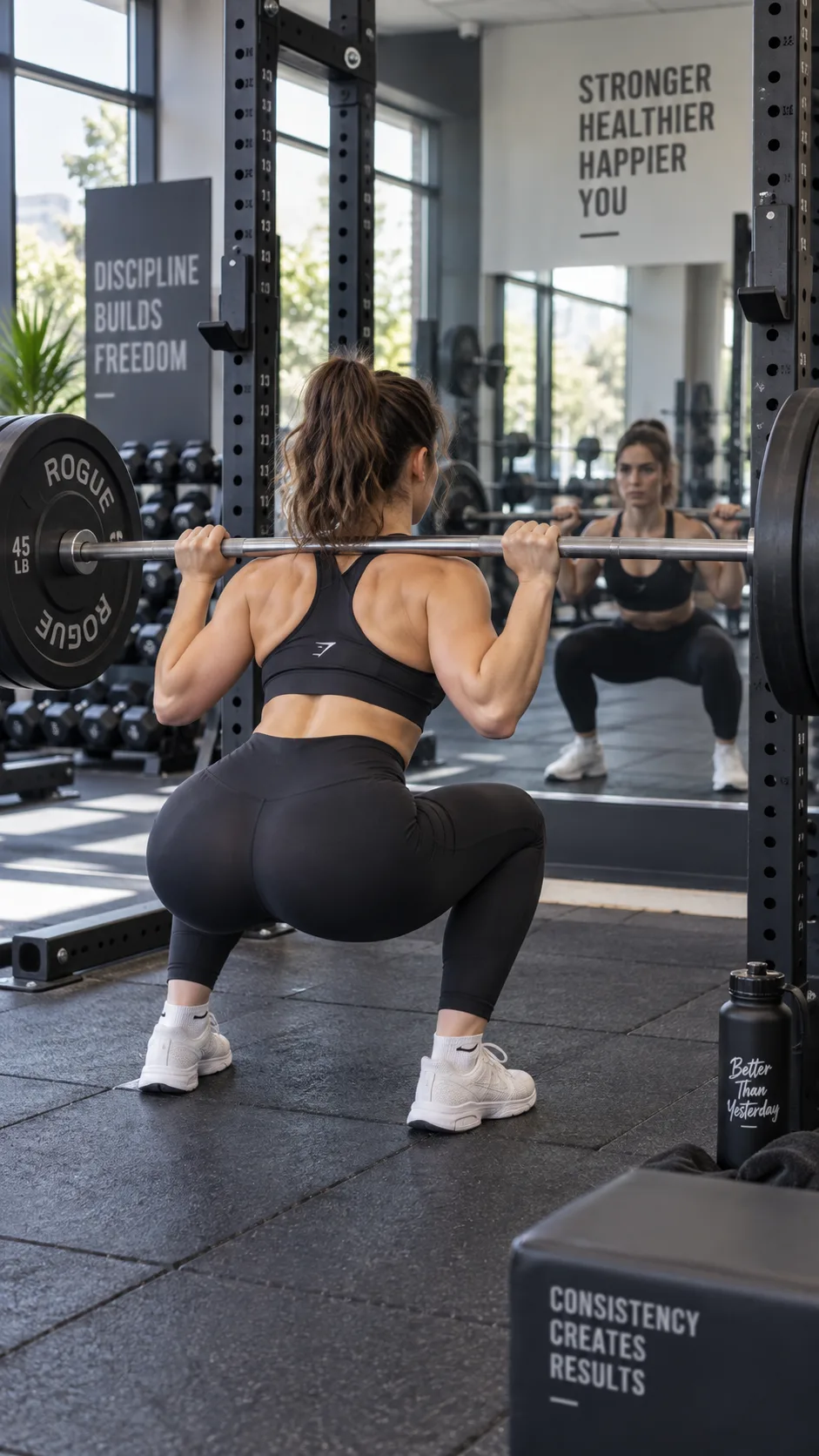
Starting the week with legs makes sense because you’re fresh, energized, and your willpower hasn’t been crushed by the workweek yet. This session targets your quads, hamstrings, glutes, and calves with compound movements that recruit multiple muscles at once.
The workout
- Barbell Back Squats: 4 sets x 8-10 reps
- Romanian Deadlifts (RDLs): 3 sets x 10-12 reps
- Bulgarian Split Squats: 3 sets x 10 each leg
- Leg Press: 3 sets x 12 reps
- Seated Calf Raises: 3 sets x 15 reps
- Walking Lunges: 2 sets x 12 each leg
Pro tip: Focus on controlling the lowering (eccentric) phase of each rep. That’s where a huge portion of muscle growth happens. If you’re swinging the weight around like you’re trying to launch it into orbit, it’s too heavy.
If you’re also working on sculpting longer, leaner-looking legs, you might want to check out this Korean-inspired model leg exercise routine for complementary bodyweight moves you can add on recovery days.
Day 2, Tuesday: Upper body push
Push day focuses on your chest, shoulders, and triceps, the muscles responsible for any pressing motion. A lot of women skip upper body work because they’re afraid of “getting bulky.” Let me be blunt: that’s not how it works. Building upper body strength creates beautiful definition and makes everyday tasks (carrying groceries, opening stubborn jars, asserting dominance in arm wrestling) way easier.
The workout
- Dumbbell Bench Press: 4 sets x 8-10 reps
- Seated Overhead Shoulder Press: 3 sets x 10 reps
- Incline Dumbbell Press: 3 sets x 10-12 reps
- Lateral Raises: 3 sets x 12-15 reps
- Tricep Dips (assisted or bodyweight): 3 sets x 10 reps
- Cable Tricep Pushdowns: 3 sets x 12 reps
Ever wondered why your shoulders burn during lateral raises even with light weight? It’s because the lateral deltoid is a small muscle performing an isolation movement against gravity at its weakest leverage point. Translation: even 8-10 pound dumbbells can be humbling here. No shame in that game.
Day 3, Wednesday: Active recovery + light cardio
This is NOT a Netflix-and-couch day (that’s Sunday). Active recovery means you’re moving your body at low intensity to promote blood flow, reduce soreness, and keep your joints mobile. Consider it your body’s maintenance day.
Options for active recovery
- 20-30 minutes on the elliptical at conversational pace
- A brisk incline treadmill walk (12-3-30 style)
- A light yoga or stretching session
- Swimming laps at an easy pace
- A Pilates board workout at home if you’d rather skip the gym entirely
Spend at least 10 minutes foam rolling your quads, hamstrings, and upper back. Your muscles from Monday and Tuesday will thank you. If foam rolling feels like someone is stabbing you with a pool noodle full of rocks, that’s a sign you really need it.
Day 4, Thursday: Upper body pull
Pull day targets your back, biceps, and rear delts. These muscles counterbalance your push day work and go a long way toward fixing your posture, especially if you spend 8+ hours hunched over a desk like most of us.
The workout
- Lat Pulldowns: 4 sets x 10 reps
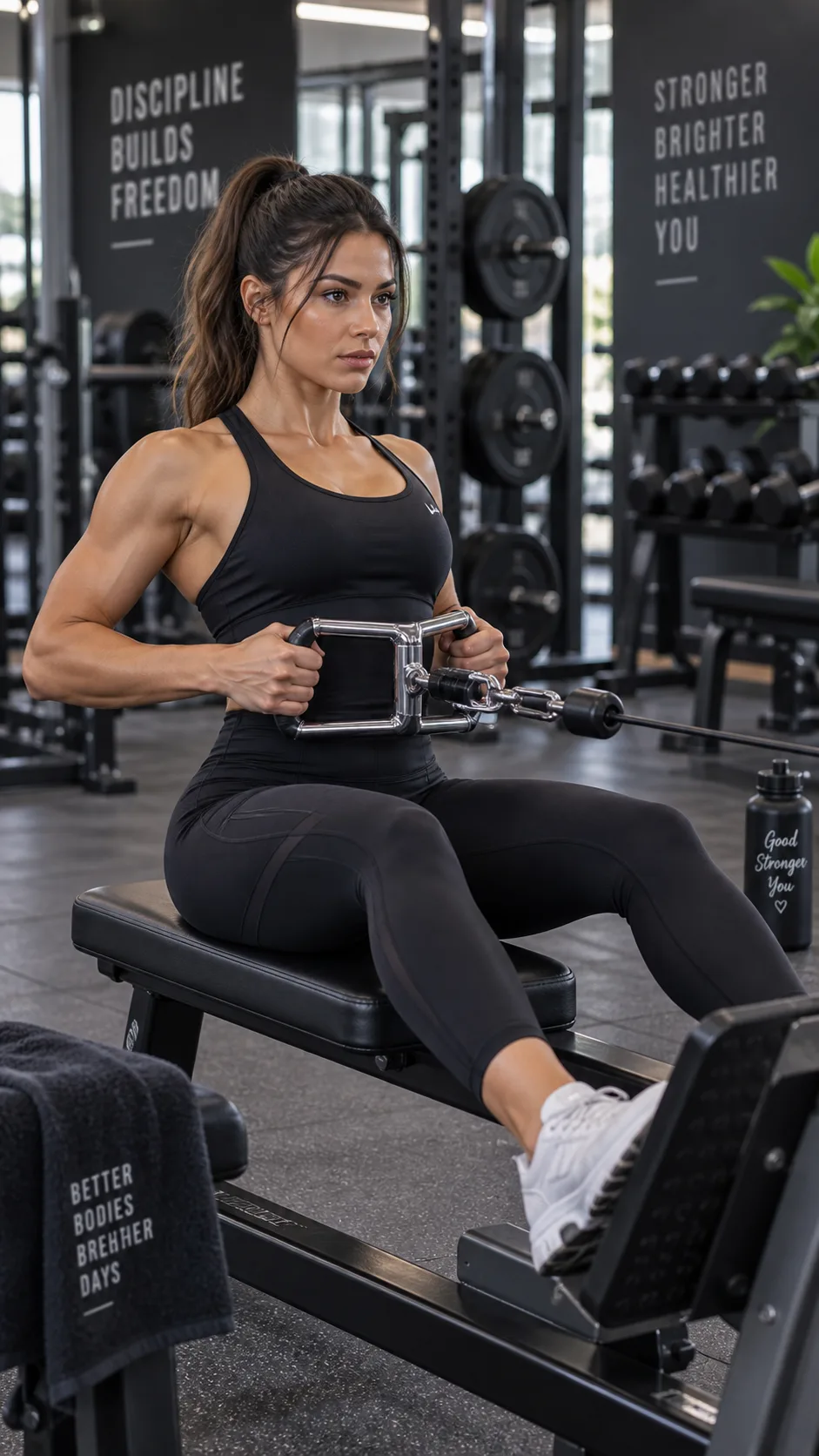
- Seated Cable Rows: 3 sets x 10-12 reps
- Single-Arm Dumbbell Rows: 3 sets x 10 each arm
- Face Pulls: 3 sets x 15 reps
- Barbell or EZ-Bar Bicep Curls: 3 sets x 10-12 reps
- Hammer Curls: 2 sets x 12 reps
Face pulls are criminally underrated. They strengthen your rear delts and rotator cuff muscles, which protects your shoulders during every other upper body exercise you do. If you’re only doing one accessory movement for shoulder health, make it face pulls. IMO, they belong in every single upper body session.
Day 5, Friday: Glutes & legs (round two)
Yes, we’re hitting legs again. But this session shifts the emphasis toward your glutes and hamstrings with different movement patterns than Monday. Training legs twice per week is the sweet spot for building strength and definition without overtraining.
The workout
- Hip Thrusts: 4 sets x 10-12 reps
- Sumo Deadlifts: 3 sets x 8-10 reps
- Cable Kickbacks: 3 sets x 12 each leg
- Leg Curls (lying or seated): 3 sets x 12 reps
- Goblet Squats: 3 sets x 12 reps
- Abductor Machine: 3 sets x 15 reps
Hip thrusts are the undisputed queen of glute exercises. Research published in the Journal of Sports Science & Medicine confirms that hip thrusts activate the gluteus maximus significantly more than squats. So if glute development is a priority for you, this movement is non-negotiable.
Here’s a solid video walkthrough of proper hip thrust form to make sure you’re getting maximum glute activation:
Day 6, Saturday: Full body + HIIT
Saturday brings everything together. This session uses compound movements at moderate weight combined with a short HIIT finisher to boost your cardiovascular fitness and burn some serious calories. It’s basically a greatest hits compilation of the week.
Strength circuit (3 rounds)
- Dumbbell Thrusters: 10 reps
- Bent-Over Rows: 10 reps
- Alternating Reverse Lunges: 10 each leg
- Push-Ups: 10-15 reps
- Plank Hold: 30-45 seconds
HIIT finisher (4 rounds)
- 30 seconds battle ropes (or jumping jacks)
- 30 seconds rest
- 30 seconds kettlebell swings
- 30 seconds rest
The entire session, warmup included, takes about 45 minutes. You’ll leave drenched and slightly questioning your life choices, but in the best possible way. This is the session that builds mental toughness just as much as physical strength.

Day 7, Sunday: Complete rest
Rest day. Actual rest. Not “maybe I’ll just do a quick ab workout” rest. Your muscles grow during recovery, not during the workout itself. Training breaks down muscle fibers; rest rebuilds them stronger. Skip recovery and you’re basically undoing your own hard work.
Use this day to sleep in, meal prep for the week ahead, go for a casual walk outside, or stretch while watching your favorite show. If you need help planning what to eat during your rest day (or any day, really), browse these 19 healthy food ideas for easy inspiration.
Nutrition: The part nobody wants to hear about
You can follow the most perfectly designed workout plan on the planet, but if your nutrition is a disaster, your results will be… well, also a disaster. You don’t need to obsess over every macro, but you DO need to eat enough protein, fuel your workouts properly, and stay hydrated.
General guidelines for women following a strength training program:
- Aim for 0.7-1 gram of protein per pound of bodyweight daily
- Eat a meal or snack with protein and carbs 1-2 hours before training
- Drink at least half your bodyweight (in pounds) in ounces of water daily
- Don’t fear carbs. They literally fuel your workouts.
- If you’re unsure about your caloric needs, use a TDEE calculator to get a baseline
The Academy of Nutrition and Dietetics notes that nutrient timing around workouts can improve performance and recovery. You don’t need to be obsessive about it, but eating something with protein within a couple hours post-workout is a smart move.
How to progress week over week
Doing the same weight and reps for months is a one-way ticket to Plateau City. Progressive overload (gradually increasing the demand on your muscles) is the single most important principle for getting stronger and changing your physique.
Here’s how to apply it without overcomplicating things:
- Add reps first. If the plan says 3×10 and you can do 3×12 with good form, you’ve earned more weight.
- Then add weight. Increase by the smallest increment available (usually 2.5-5 lbs).
- Slow down the tempo. A 3-second lowering phase makes any weight feel heavier.
- Reduce rest periods. Going from 90 seconds rest to 60 seconds increases intensity without touching the weight.
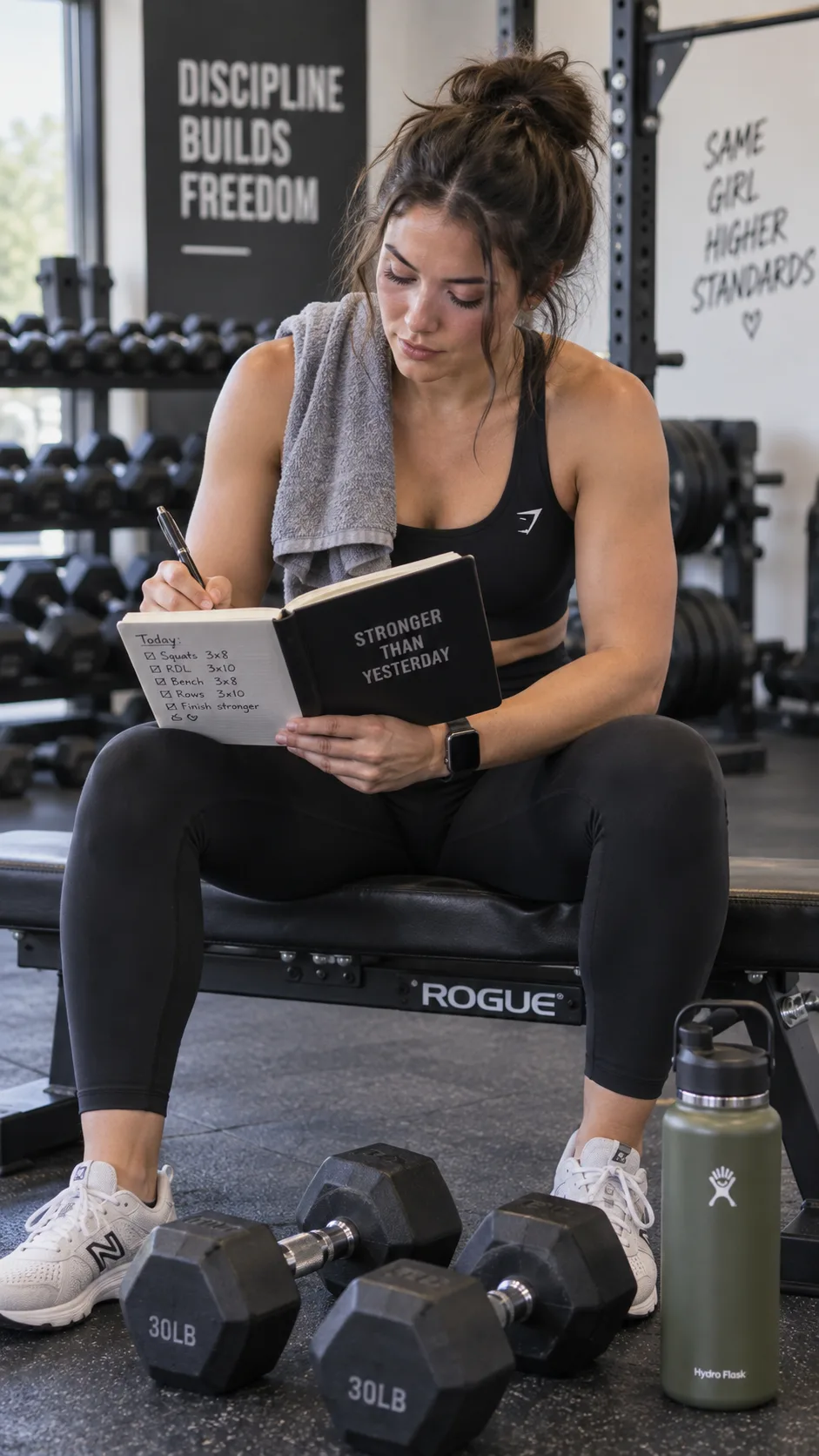
Track your workouts in a notebook or an app like Strong. If you’re not tracking, you’re guessing. And guessing in the gym produces about as much progress as guessing on an exam :/
Common mistakes that sabotage your results
I’ve made every single one of these mistakes. Learn from my pain so you don’t have to repeat it.
- Going too heavy too soon. Ego lifting leads to bad form, which leads to injury, which leads to zero gym time. Not worth it.
- Skipping the warm-up. Five minutes of light cardio and dynamic stretching protects your joints and actually improves performance. Just do it.
- Only doing cardio. Cardio is great for heart health, but strength training builds the lean muscle that shapes your body and boosts your metabolism long term.
- Neglecting sleep. Aiming for 7-9 hours isn’t optional. That’s when your body produces the growth hormone that repairs muscle tissue.
- Comparing your Day 1 to someone else’s Year 5. Everyone started somewhere. Focus on YOUR progress.
Can beginners follow this plan?
Absolutely, with a few adjustments. If you’re brand new to strength training, reduce the volume by one set per exercise for the first two weeks. Use lighter weights to master the movement patterns before loading up. There’s nothing impressive about squatting heavy with your knees caving in.
FYI, most gyms offer a free introductory session with a trainer when you sign up. Take advantage of that. Have them walk you through the squat, deadlift, and bench press at minimum. Those three lifts form the foundation of this entire plan, and learning proper form early saves you from headaches (and backaches) later.
If four strength days per week feels like too much initially, swap Saturday’s full body session for another active recovery day and build up to it over 3-4 weeks. Consistency beats intensity every single time.
Putting it all together
This full week workout plan for the gym gives you everything you need to walk in with confidence and walk out knowing you crushed it. You hit lower body twice, upper body twice (push and pull), get a full body conditioning day, recover actively mid-week, and rest fully on Sunday. It’s balanced, effective, and (most importantly) sustainable.
The best workout plan is the one you actually follow. Print this out, save it on your phone, tattoo it on your forearm if you must. Just stop winging it. Your future self, the one with better posture, more energy, and actual visible muscle definition, will be so glad you did.
Now go pick up something heavy.
