
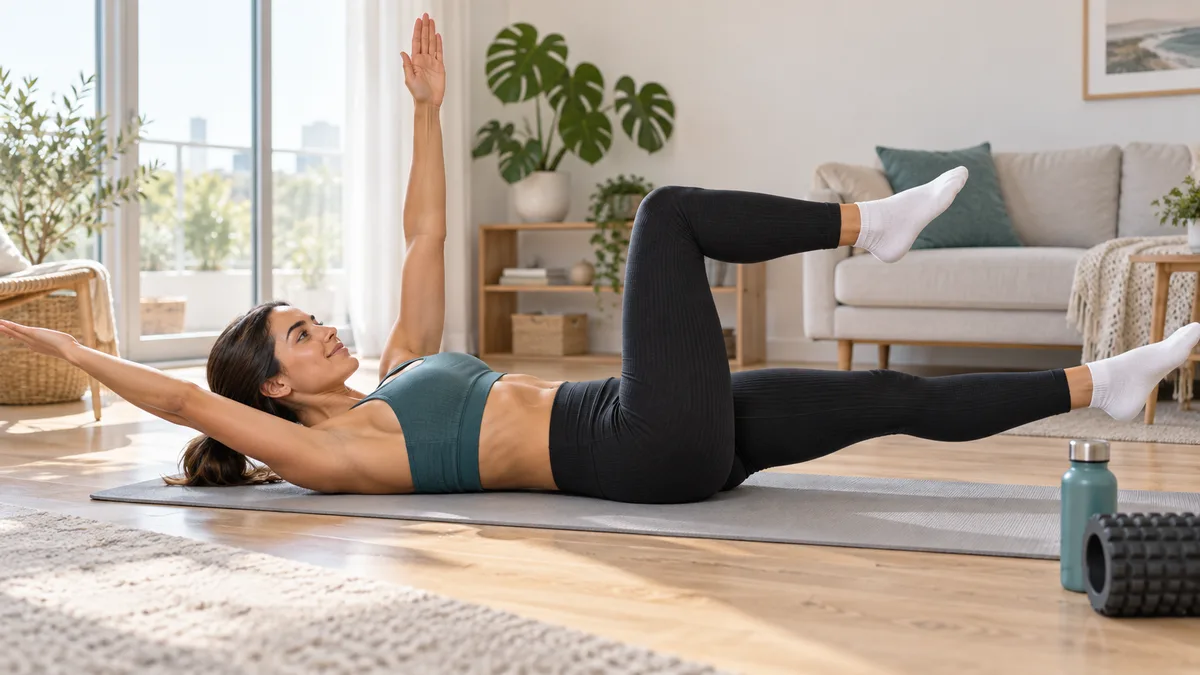
You don’t need to do 200 crunches a day to build a strong core. If that’s your current plan, your neck is probably already filing a formal complaint. Building core strength as a beginner is way simpler than the internet makes it look, and it definitely shouldn’t leave you curled up on the floor questioning your life choices.
I spent years thinking “more = better” when it came to ab workouts. Spoiler alert: it wasn’t. What actually worked was stripping things back to a handful of effective moves, doing them consistently, and respecting my body’s limits. That’s exactly what this guide gives you: five beginner-friendly ab exercises that build real core strength without the drama.
Why most beginner ab workouts fail (and how yours won’t)
Here’s the uncomfortable truth: most people quit their abs workout routines not because they’re lazy, but because the routines are terrible. They start with advanced moves, pile on too many reps, and wonder why their lower back screams after two sessions. Sound familiar?
The number one reason beginners burn out is volume overload. Your core muscles (the rectus abdominis, obliques, and transverse abdominis) need time to adapt to new stress. The American College of Sports Medicine (ACSM) recommends that beginners stick with moderate-intensity exercises performed 2-3 times per week with adequate rest between sessions.
The second issue? Boredom. Doing the same crunch variation for 15 minutes straight is about as exciting as watching paint dry. The routine below mixes movement patterns to keep things interesting and hit your core from multiple angles.
What “core strength” actually means
Your core isn’t just your six-pack muscles. It’s a complex system of muscles wrapping around your entire midsection: front, sides, and back. Think of it as your body’s natural weight belt. A strong core improves posture, reduces back pain, and makes every other exercise you do more effective.
When we talk about beginner abs workout routines, we’re really talking about training this entire system. That means you need more than just crunches. You need anti-rotation, stabilization, and controlled flexion movements. Don’t worry. The five exercises below cover all of that without requiring a PhD in kinesiology.
Before you start: quick setup tips
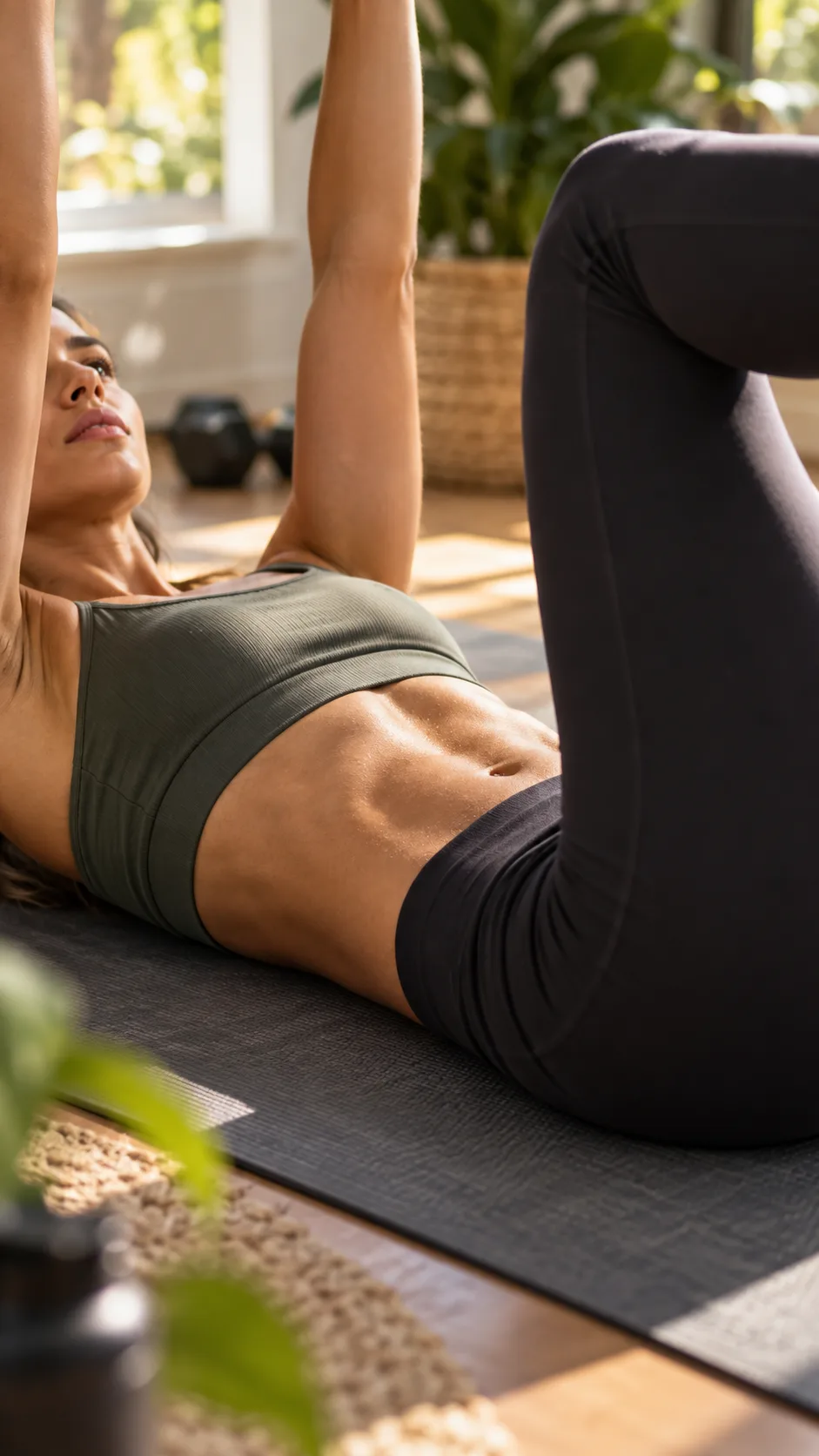
You need almost nothing to get started. Here’s your bare-minimum checklist:
- A yoga mat or soft surface (your tailbone will thank you)
- Comfortable clothing with nothing restrictive around your waist
- 5-10 minutes, which is genuinely all you need per session
- A timer or phone for timed holds
Pro tip: Do these exercises on an empty stomach or at least 60-90 minutes after eating. Nobody wants to learn that lesson the hard way. Trust me on this one.
If you’re also building a broader fitness routine, pairing this core work with something like a beginner full body workout gym routine creates a solid foundation you can build on for months.
The 5 best beginner ab exercises (no burnout required)
Alright, here’s the main event. These five moves progress from easiest to slightly more challenging, though ALL of them stay firmly in beginner territory. Quality over quantity is your mantra here. Every single rep should feel controlled and intentional.
Move #1: Dead Bug
The dead bug looks ridiculous. You literally look like an upside-down beetle. But it’s one of the most effective core exercises for beginners. Physical therapists LOVE this move, and for good reason: it teaches your core to stabilize while your limbs move independently.
How to do it:
- Lie on your back with your arms extended straight toward the ceiling
- Lift your knees to a 90-degree angle (shins parallel to the floor)
- Slowly lower your RIGHT arm overhead while extending your LEFT leg straight out, hovering both just above the floor
- Return to start and repeat on the opposite side
- Do 8 reps per side (16 total), 2 sets
The most important detail: Press your lower back firmly into the mat throughout the entire movement. If your back arches off the floor, you’ve gone too far. Shorten the range of motion and build up gradually. This single cue protects your spine more than anything else.
Move #2: Modified Plank (Knee Plank)
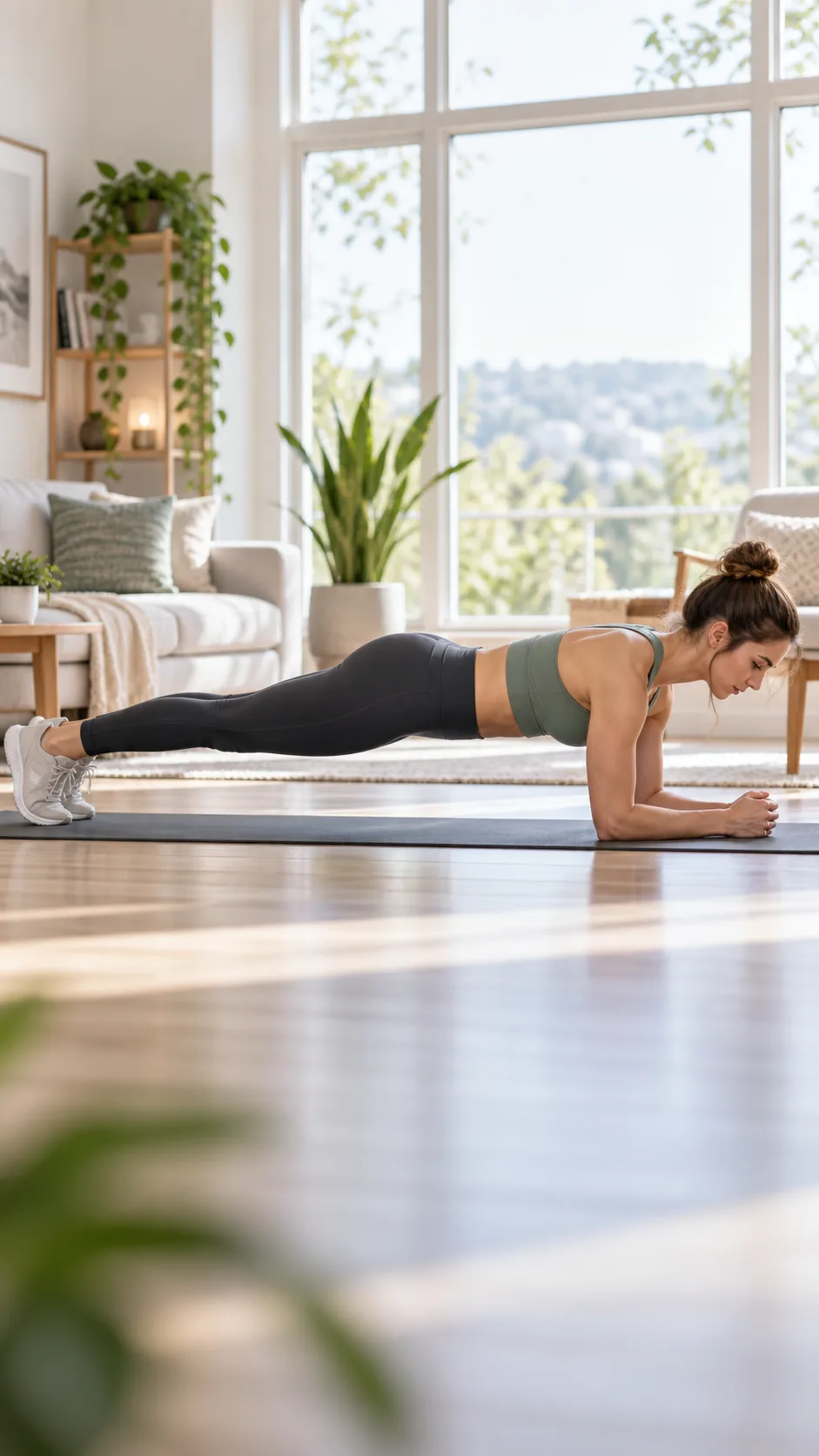
Ever wondered why the plank shows up in literally every core routine ever created? Because it works. But a full plank can overwhelm beginners, so we’re starting with the knee variation. No shame in that. A properly executed knee plank beats a sloppy full plank every single time.
How to do it:
- Start face-down, then prop yourself up on your forearms and knees
- Keep your body in a straight line from your head to your knees, with no sagging hips and no piking up
- Squeeze your abs like someone’s about to poke your stomach
- Hold for 20-30 seconds, 3 sets
Once you can comfortably hold 3 sets of 30 seconds, progress to a full plank on your toes. The Journal of Physical Therapy Science has published research showing that plank variations effectively activate both superficial and deep core muscles, making them ideal for building foundational strength.
Move #3: Bird Dog
The bird dog is the dead bug’s cool cousin. Same concept (opposite arm and leg moving while your core stays stable) but this time you’re on all fours. It targets your deep stabilizers and even works your glutes and lower back.
How to do it:
- Start on your hands and knees, wrists under shoulders, knees under hips
- Simultaneously extend your RIGHT arm forward and LEFT leg backward
- Hold for 2-3 seconds at the top, keeping your hips level (imagine balancing a cup of coffee on your lower back)
- Return slowly and switch sides
- Do 8 reps per side, 2 sets
Common mistake: Rotating your hips when you extend the leg. Your pelvis should stay perfectly square to the floor. If you’re wobbling all over the place, slow WAY down. Speed is not your friend here.
Move #4: Heel Taps (Lying Oblique Reach)
Time to show your obliques some love. Heel taps are gentle, beginner-friendly, and they give you that satisfying “I can feel it working” sensation without destroying your neck the way side crunches tend to do.
How to do it:
- Lie on your back with your knees bent, feet flat on the floor hip-width apart
- Lift your head and shoulders slightly off the mat (think: just enough to clear your shoulder blades)
- Reach your RIGHT hand down toward your RIGHT heel by side-bending through your waist
- Return to center and reach LEFT
- Do 12 reps per side (24 total), 2 sets
Keep your chin slightly tucked and resist the urge to yank on your neck. Your abs do the work, not your neck muscles. If your neck starts barking at you, drop your head back down, rest 10 seconds, and resume. This move also pairs beautifully with the wall Pilates exercises in this wall Pilates workout for beginners guide.
Move #5: Glute Bridge with Core Engagement
“Wait, a glute bridge in an abs workout?” Yes, and here’s why. When you actively brace your core during a glute bridge, you train your abs to fire while your hips extend. This mimics real-life movement patterns and builds functional core strength that actually transfers to daily activities.
How to do it:
- Lie on your back, knees bent, feet flat on the floor, arms by your sides
- Squeeze your abs tight and flatten that lower back into the mat
- Drive through your heels to lift your hips until your body forms a straight line from shoulders to knees
- Hold the top position for 3 seconds while actively bracing your core
- Lower slowly
- Do 12 reps, 2 sets
The secret sauce here is the intentional core brace at the top. Don’t just squeeze your glutes and coast. Actively think about tightening your abs as if someone’s about to drop a medicine ball on your stomach. That mental cue makes ALL the difference.
Your complete beginner abs workout routine (put it all together)
Here’s how to combine these five exercises into one clean, efficient routine. The whole thing takes about 10-12 minutes. That’s shorter than most episodes of whatever you’re binge-watching right now.
- Dead Bug — 2 sets x 8 reps per side
- Modified Plank — 3 sets x 20-30 second holds
- Bird Dog — 2 sets x 8 reps per side
- Heel Taps — 2 sets x 12 reps per side
- Glute Bridge with Core Engagement — 2 sets x 12 reps
Rest 30-45 seconds between sets. Perform this routine 3 times per week with at least one rest day between sessions. That’s it. No marathon sessions, no complicated periodization. Just consistent, smart training.
How to progress without overdoing it
Your body adapts fast, especially in the first few weeks. Here’s a simple 4-week progression plan that keeps you challenged without pushing into burnout territory:
Week 1-2: Follow the routine exactly as written above. Focus entirely on form. If something feels too easy, slow each rep down rather than adding reps.
Week 3: Add one extra set to each exercise. Increase plank hold time to 30-40 seconds. This bumps your total workout time to roughly 15 minutes.
Week 4: Progress the modified plank to a full plank (or alternate sets). Add a 1-2 second pause at the most challenging point of each rep. Consider adding a light ankle weight for the dead bug if you’re feeling confident.
After 4 weeks, you’ll have a genuinely stronger core and the body awareness to tackle intermediate routines. Patience is the cheat code that nobody wants to hear about.
Common mistakes that sabotage beginner core training
I’ve watched people make these mistakes for years, and I’ve made most of them myself. Save yourself the trouble and avoid these traps:
- Holding your breath: Breathe! Exhale during the effort phase, inhale during the return. Holding your breath spikes your blood pressure and reduces core activation. The Mayo Clinic’s core exercise guide emphasizes proper breathing as essential for safe, effective training.
- Training abs every single day: Your core muscles need recovery time just like any other muscle group. Three sessions per week is plenty for beginners.
- Ignoring pain signals: Sharp pain (especially in your lower back or neck) means STOP. Discomfort and pain are different things. Learn to tell them apart early.
- Chasing visible abs instead of functional strength: Visible abs depend mostly on body fat percentage, which comes down to nutrition. These exercises build the strength underneath. If you want to pair this with a solid eating plan, something like an easy keto meal plan for beginners could complement your training goals.
- Skipping warm-up: Even 2 minutes of light movement (marching in place, gentle torso twists) prepares your muscles and reduces injury risk.
The role of nutrition in core development
I’d be doing you a disservice if I didn’t mention this: you cannot out-exercise a poor diet. Your abs workout routine builds muscle and strength, but what you eat determines how that progress shows up on your body.
You don’t need to follow any extreme diet. Focus on adequate protein (roughly 0.7-1g per pound of bodyweight), plenty of vegetables, and staying hydrated. The biggest game-changer for most beginners is simply eating enough protein and cutting back on ultra-processed foods.
If you’re someone who does better with structure, Harvard’s Healthy Eating Plate model provides a straightforward, evidence-based framework that works for basically everyone. No gimmicks, no elimination, just balanced eating.
When should you level up?
How do you know when you’ve outgrown this beginner abs routine? Look for these signs:
- You can complete all sets and reps with perfect form and minimal fatigue
- You can hold a full plank for 45+ seconds without your form breaking down
- The exercises no longer create any noticeable muscle engagement or challenge
- You’ve been consistent for at least 4-6 weeks
When all four boxes check out, you’re ready for intermediate territory. That might mean adding resistance (like a light dumbbell or resistance band), introducing exercises like bicycle crunches or Pallof presses, or bumping training frequency to 4 days per week.
Don’t rush this transition. Rushing is how people go from “I’m getting strong” to “my back hurts and I hate exercise” in about two weeks flat.
Quick FAQ: beginner abs workout questions
Can I do abs exercises every day?
You can, but you shouldn’t. Your muscles grow during rest, not during the workout itself. Stick to 3 sessions per week and let recovery do its thing.
Will these exercises give me a six-pack?
They’ll build the muscle underneath. Visible abs require core training AND a body fat percentage low enough to reveal them. That’s primarily a nutrition game.
What if I feel this in my lower back instead of my abs?
Stop immediately and check your form. Lower back engagement during ab exercises usually means your core isn’t bracing properly or you’ve progressed too fast. Drop back to an easier variation and rebuild.
How long until I see results?
Most people notice improved posture and core stability within 2-3 weeks. Visible muscle definition depends heavily on your starting point and nutrition, but functional improvements come surprisingly fast.
The bottom line
Building core strength as a beginner doesn’t require complicated routines, fancy equipment, or superhuman discipline. It requires five solid exercises, 10 minutes three times a week, and the patience to prioritize form over ego. That’s the whole secret.
Start with the dead bug, modified plank, bird dog, heel taps, and glute bridge routine laid out above. Follow the 4-week progression. Eat reasonably well. And most importantly, actually enjoy the process. Fitness should add to your life, not drain it.
Your core is the foundation for literally everything your body does. Give it 10 minutes, three days a week, and watch what happens. Now go grab your mat and get started.
