
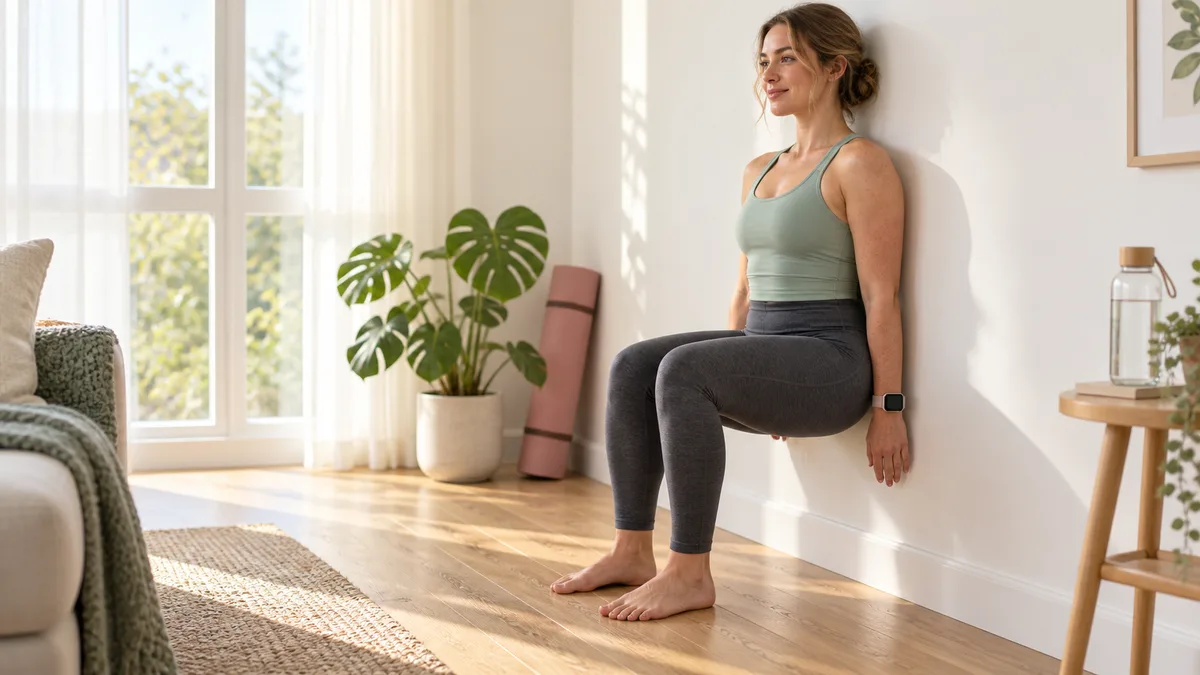
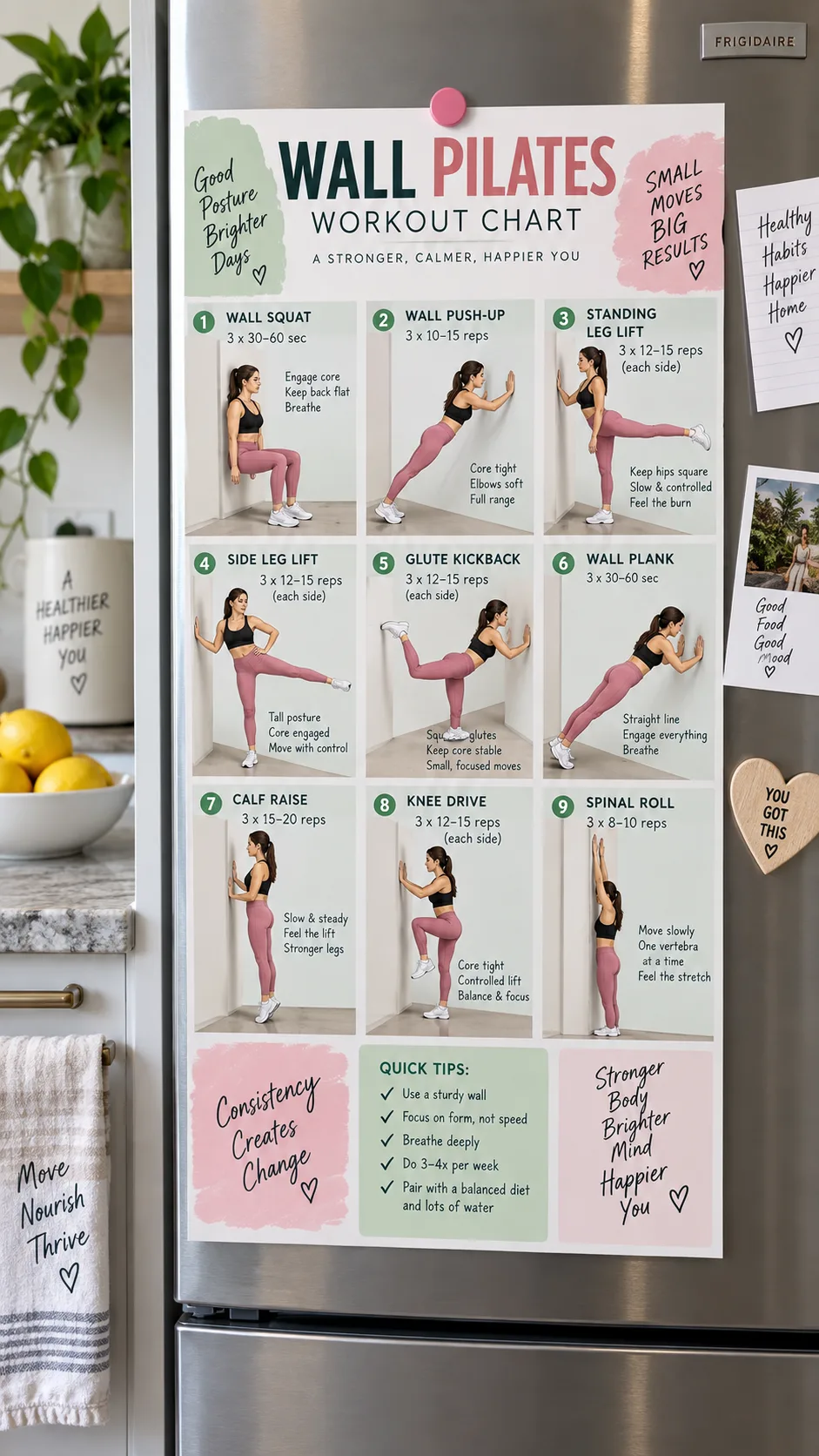
You want to start working out, but the thought of jumping around your living room like a caffeinated kangaroo sounds absolutely terrible. Fair enough. Wall Pilates gives you a low-impact, joint-friendly workout that uses (you guessed it) a wall. And you can follow a simple printable chart that tells you exactly what to do, so your brain doesn’t have to work overtime while your body catches up.
I’ve put together a complete, free wall Pilates workout chart below that you can print, stick on your fridge, and use. No expensive studio memberships. No confusing equipment. Just you, a wall, and about 25 minutes of your time.
What exactly is wall Pilates?
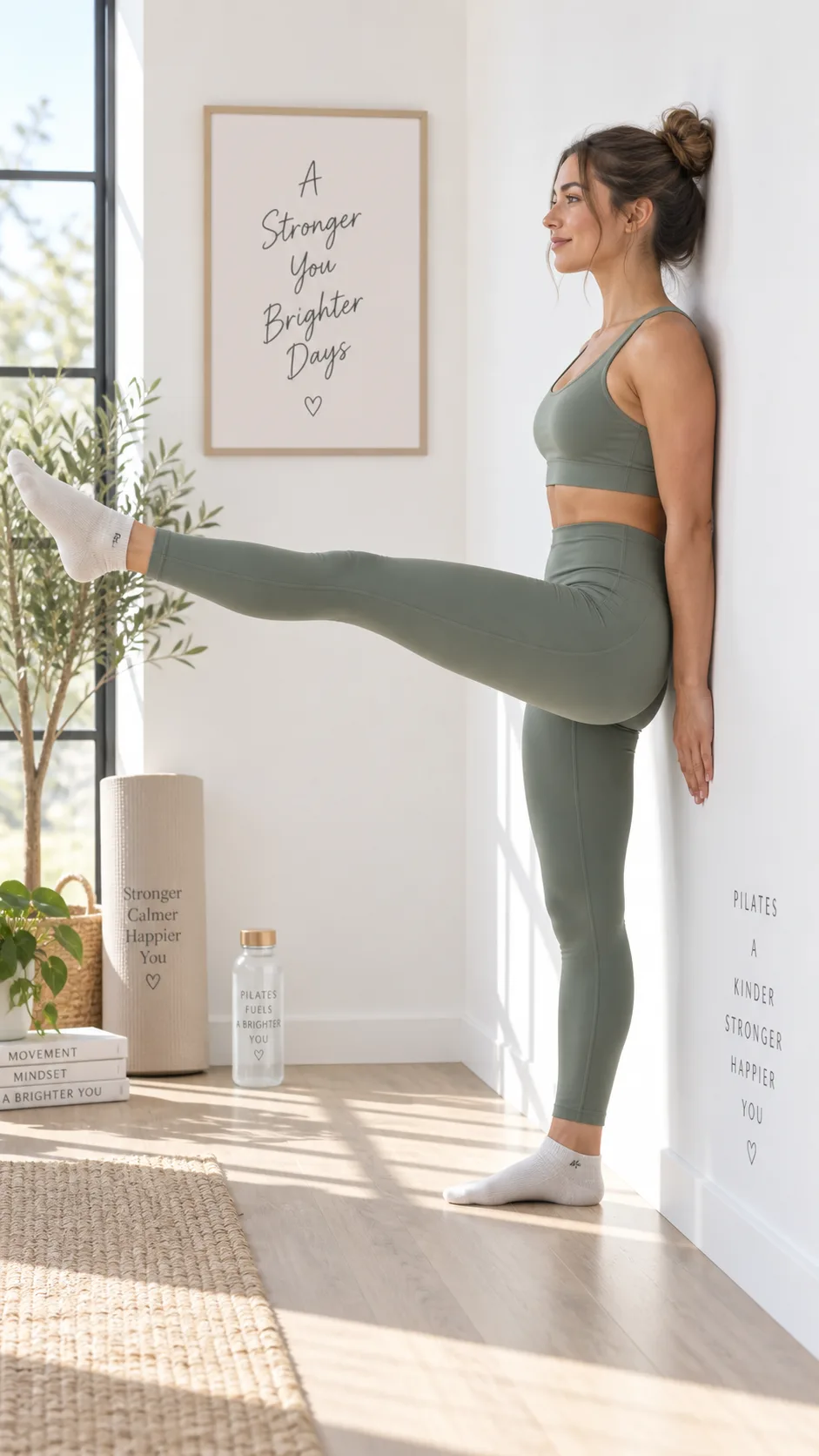
Wall Pilates takes traditional Pilates movements and adds a wall as your main prop. The wall provides support, resistance, and feedback that helps you maintain proper alignment, something beginners struggle with constantly on a mat alone.
Think of the wall as your silent personal trainer. It keeps your back straight when you want to slouch, gives your feet something to press against for extra resistance, and makes balance exercises way less terrifying. Ever tried a single-leg glute bridge without wobbling like a baby deer? The wall fixes that.
Traditional Pilates already focuses on core strength, flexibility, and controlled movement. Wall Pilates simply makes those principles more accessible for people who are just starting out, recovering from injuries, or dealing with limited mobility. According to the National Institutes of Health, Pilates-based exercises significantly improve balance, flexibility, and muscular endurance, even in populations with limited prior exercise experience.
Why a printable wall Pilates workout chart works so well
Workout plans that live only on your phone get forgotten. They get buried under notifications, group chat messages, and that food delivery app you swore you’d stop using. A printable wall Pilates chart lives in the physical world, right where you can see it.
A visual, step-by-step chart eliminates decision fatigue. You don’t waste ten minutes scrolling through videos trying to figure out what exercise comes next. You look at the chart, do the move, and keep going. Beautifully simple.
A printable chart helps you because:
- Zero screen time needed: your phone can stay across the room (revolutionary concept, I know)
- Visual cues make it easier to remember proper form between sessions
- Progress tracking becomes tangible when you can physically check off completed workouts
- Consistency goes up when the plan stares at you from your wall every single day
If you’re the kind of person who thrives with structure, this approach removes every excuse. We all need fewer excuses and more action.
Your free wall Pilates workout chart: the complete breakdown
Below is the full workout plan, broken into warm-up, main exercises, and cool-down. Print this entire section and you’ve got your chart. Each exercise includes the target area, reps or hold time, and a quick form reminder.
Warm-up (5 minutes)
Never skip this part. Your muscles and joints need a heads-up before you ask them to do anything interesting.
- Wall Standing Cat-Cow (1 minute): Stand with your back flat against the wall. Slowly arch your lower back away from the wall, then press it firmly back. Focus on spinal articulation. Keep your head and hips touching the wall throughout.
- Wall Arm Circles (1 minute): Stand with your back against the wall, arms extended to the sides. Make small circles, gradually increasing size. Keep your shoulders down and away from your ears.
- Wall March (1 minute): Press your back into the wall and march in place, lifting knees to hip height. Engage your core to keep your lower back pressed flat.
- Wall Calf Raises (1 minute): Face the wall with palms flat against it for balance. Rise onto your toes slowly, hold for two seconds, lower with control. Don’t bounce.
- Wall Hip Circles (1 minute): Stand sideways to the wall, one hand for support. Circle each hip 10 times in each direction. Keep movements slow and controlled.
Main workout (15 to 20 minutes)
This is where the real work happens. Each exercise targets specific muscle groups while keeping things beginner-friendly. Rest 15 to 30 seconds between exercises.
- Wall Sit (30 to 45 seconds, 2 sets): Targets: Quads, glutes, core. Slide your back down the wall until your thighs reach parallel to the floor. Keep your knees directly above your ankles. Press your entire back into the wall. If 30 seconds feels easy, you’re not low enough 🙂
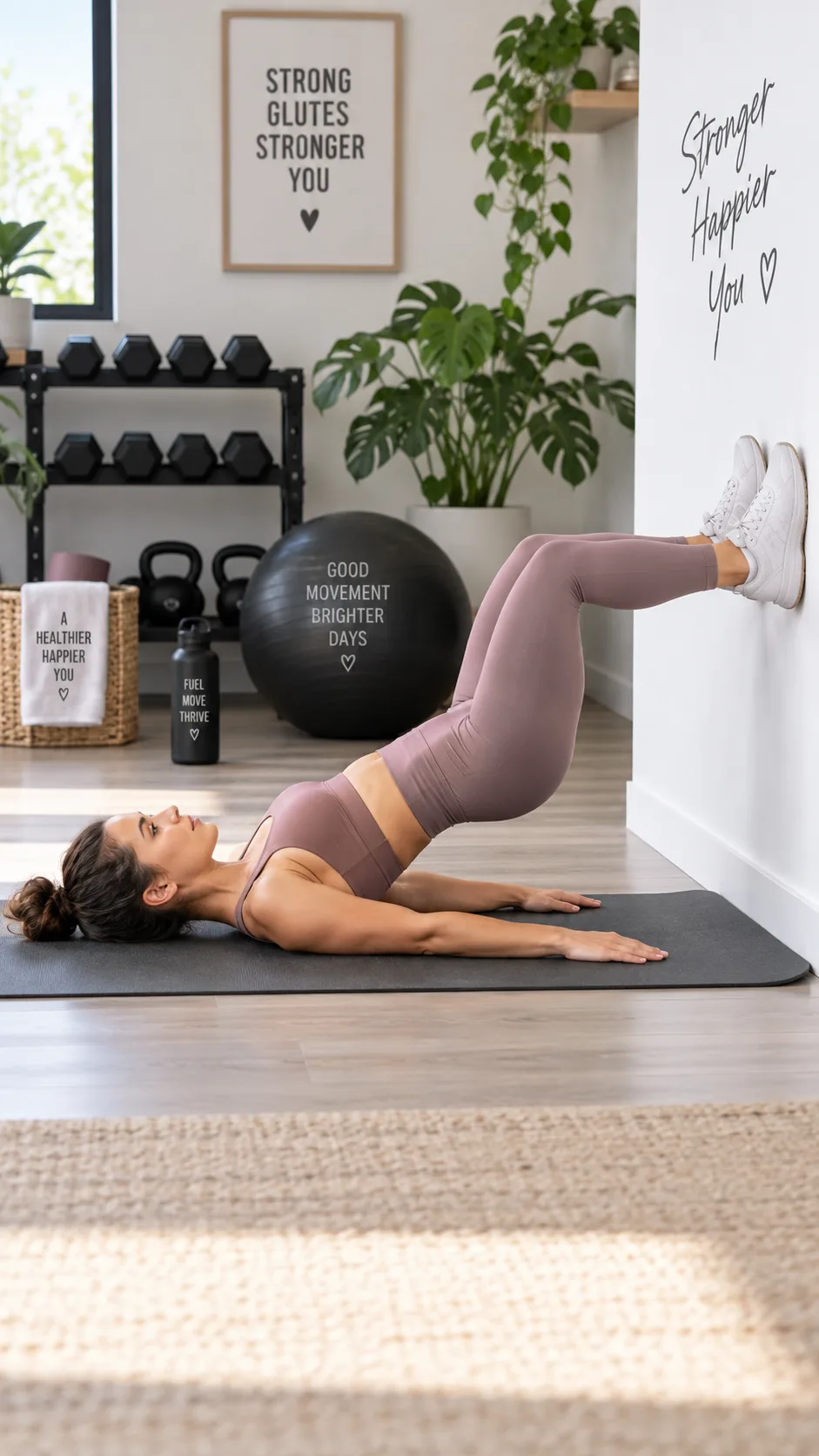
- Wall Glute Bridge (12 reps, 2 sets): Targets: Glutes, hamstrings, lower back. Lie on your back with feet flat against the wall, knees bent at 90 degrees. Press your feet into the wall and lift your hips toward the ceiling. Squeeze at the top for two seconds.
- Wall Push-Up (10 to 12 reps, 2 sets): Targets: Chest, shoulders, triceps, core. Place your hands on the wall at shoulder height, slightly wider than shoulder-width. Lower your chest toward the wall, then push back. Keep your body in a straight line from head to heels.
- Wall Leg Lift, Front (10 each leg, 2 sets): Targets: Hip flexors, lower abs, quads. Stand with your back against the wall. Lift one leg straight in front of you to hip height, hold for one second, lower slowly. Keep your standing leg slightly bent.
- Wall Leg Lift, Side (10 each leg, 2 sets): Targets: Outer thighs, hip abductors, glutes. Stand sideways to the wall for support. Lift the outer leg to the side, pause, lower with control. Don’t lean into the wall. Stand tall.
- Wall Plank Hold (20 to 30 seconds, 2 sets): Targets: Core, shoulders, full body stability. Place your forearms on the wall at chest height, walk your feet back until your body forms a diagonal line. Hold. This sounds easy until you try it with proper form.
- Wall Single-Leg Deadlift (8 each leg, 2 sets): Targets: Hamstrings, glutes, balance. Stand facing away from the wall. Hinge at the hips while extending one leg back until your foot touches the wall. Return to standing. Keep your hips square to the floor.
- Wall Toe Taps (12 each leg, 2 sets): Targets: Lower abs, hip flexors. Lie on your back, feet against the wall with knees at 90 degrees. Alternately lower one foot toward the floor, then return it to the wall. Your lower back stays GLUED to the floor.
- Wall Pilates Hundred (50 to 100 pumps, 1 set): Targets: Deep core muscles. Lie on your back with feet flat on the wall, knees bent. Curl your head and shoulders up, extend arms along your sides, and pump arms up and down. Breathe in for 5 pumps, out for 5 pumps.
Cool-down (5 minutes)
Your muscles just worked hard. Reward them with stretches so you don’t walk around tomorrow like a rusty robot.
- Wall Chest Stretch (30 seconds each side): Place one forearm vertically against the wall, step forward, and rotate your chest away until you feel a stretch across your chest and shoulder.
- Wall Hamstring Stretch (30 seconds each leg): Lie on your back in a doorway or near the wall. Extend one leg up the wall, keeping it as straight as possible. Relax and breathe.
- Wall Calf Stretch (30 seconds each leg): Face the wall, place one foot behind you with the heel pressed into the floor. Lean into the wall gently.
- Wall Supported Child’s Pose (1 minute): Kneel facing the wall, extend your arms up the wall surface, and sink your hips back toward your heels. Let gravity do the work.
- Standing Wall Spinal Twist (30 seconds each side): Stand sideways to the wall, place both hands on it, and gently rotate your torso toward the wall. Hold and breathe deeply.
For a more detailed visual walkthrough of these exercises, check out our full guide on wall Pilates workouts for beginners, which includes video demonstrations and a 30-day challenge.
How to use your printable wall Pilates chart effectively
Printing the chart covers step one. But using it consistently? That requires a bit of strategy. Here’s how to get maximum results from this free plan.
Start with 3 sessions per week. Monday, Wednesday, Friday works perfectly. Your muscles need recovery time between sessions, especially in the first two weeks when everything feels sore and slightly unfair.
Track your progress directly on the chart. Write the date next to each completed session. Add a star when an exercise starts feeling easier. Increase reps or hold times by 10 to 20% every two weeks. This simple tracking method keeps motivation alive way better than any fitness app notification.
Focus on form over speed. Wall Pilates rewards controlled, intentional movement. Rushing through the exercises defeats the entire purpose. If you can’t maintain proper form, reduce reps or take a longer rest. Nobody hands out medals for sloppy wall sits.
Who should try this wall Pilates workout plan?
This chart works for a wide range of people. You don’t need to be flexible, fit, or coordinated to start. The less experience you have, the more noticeable your progress will feel.
- Complete beginners who have never done Pilates or any structured exercise program
- Older adults looking for a safe, low-impact way to build strength and improve balance
- People recovering from injuries (with doctor clearance) who need gentler movements
- Anyone intimidated by gyms: this workout requires literally just a wall in your home
- Desk workers battling stiffness, poor posture, and weak core muscles from sitting all day
The Pilates Foundation notes that Pilates exercises can be modified for virtually any fitness level, making wall-supported versions an ideal entry point.
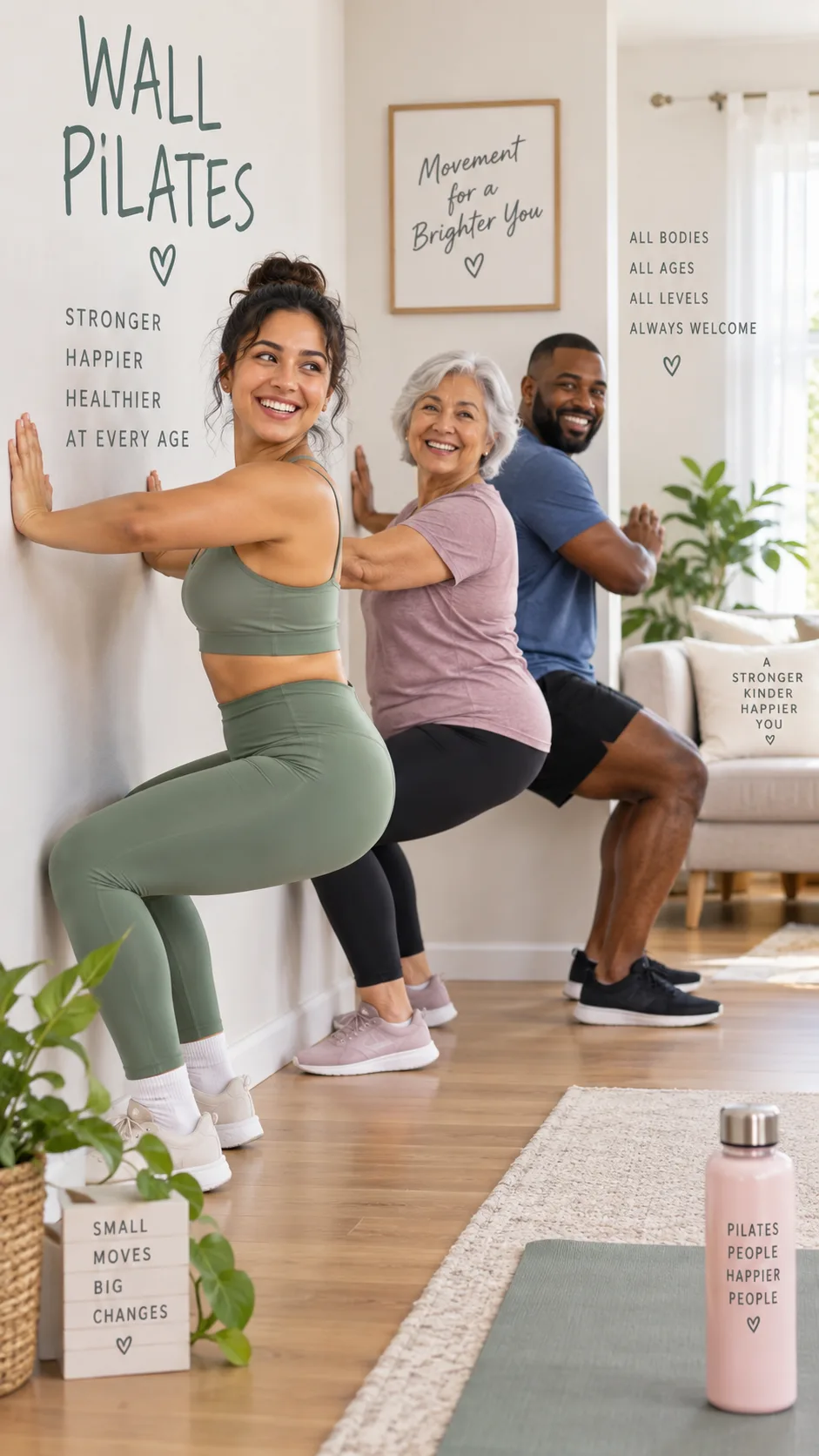
The real benefits of wall Pilates (beyond the obvious)
Sure, wall Pilates strengthens your core, tones your legs, and improves flexibility. You already knew that. But here are the benefits that people rarely talk about.
Posture correction that sticks
The wall acts as a constant alignment check. When your back presses against a flat surface during exercises, your body learns what neutral spine feels like. After a few weeks, you catch yourself standing taller without even thinking about it. Research from the American College of Sports Medicine supports Pilates-based training for meaningful improvements in postural awareness.
Stress reduction you can feel
The slow, breath-focused nature of wall Pilates activates your parasympathetic nervous system, the “rest and digest” mode your body desperately craves. Most people hold tension in their shoulders and hips without realizing it. This workout systematically releases both areas.
Joint health without joint pain
Unlike high-impact workouts, wall Pilates puts minimal stress on your knees, ankles, and wrists. The wall absorbs some of the load, making it a great option for people who need to protect their joints while still building real strength.
Common mistakes beginners make (and how to avoid them)
I’ve seen people make these errors over and over. Avoiding them from day one saves you frustration and potential injury.
- Holding your breath. This happens constantly. Breathe OUT during the effort phase of each exercise, and IN during the release. Your muscles need oxygen to work properly.
- Choosing the wrong wall surface. Slippery painted walls make foot-on-wall exercises dangerous. Use a wall with some texture, or wear grippy socks. A yoga mat against the wall works in a pinch too.
- Arching the lower back during floor exercises. If your lower back lifts off the mat during moves like toe taps or the Hundred, you’ve lost core engagement. Reduce your range of motion until you can keep that back flat.
- Skipping the warm-up. “I’ll just jump straight to the wall sits” is how you end up with cranky hip flexors. Always warm up.
- Progressing too fast. Your ego wants to double the reps after week one. Your tendons and ligaments need 4 to 6 weeks to adapt. Listen to your body, not your pride.
How to progress beyond the beginner chart
After 4 to 6 weeks of consistent practice, this beginner chart will start feeling comfortable. That’s your signal to level up. Here’s your progression roadmap.
Increase hold times on static exercises like wall sits and planks by 10 to 15 seconds. Add a third set to each exercise. Slow down the tempo: taking 4 seconds on the lowering phase of any exercise dramatically increases difficulty without adding complexity.
When you’re ready for a broader challenge, explore a complete Pilates workout routine that builds on these foundational wall exercises. You can also complement your Pilates practice with a full body workout at home with no equipment for well-rounded fitness.
Pairing wall Pilates with smart nutrition
Exercise alone gets you halfway there. What you eat fills in the rest. You don’t need a complicated meal plan, just adequate protein for muscle recovery, plenty of water, and whole foods that give your body real fuel.
If you’re exploring nutrition alongside your new workout habit, the USDA’s MyPlate guidelines offer a solid starting framework. For something more structured, a clean eating meal plan for beginners pairs well with a wall Pilates routine.
In my experience, the best approach combines movement you enjoy with food that makes you feel good. Anything overly restrictive alongside a new exercise habit usually leads to burnout within a month.
Making this a habit that sticks
The biggest challenge with any workout plan isn’t the exercises themselves. It’s showing up consistently. Here are strategies that work in the real world.
- Attach it to an existing habit. Do your wall Pilates right after your morning coffee or right before your evening shower. Habit stacking works because your brain already has the trigger built in.
- Set the bar absurdly low. On days when motivation disappears, commit to just the 5-minute warm-up. Nine times out of ten, you’ll finish the whole workout once you’ve started.
- Put the chart where you can’t ignore it. Bathroom mirror, bedroom door, refrigerator. Somewhere your eyes land daily.
- Celebrate small wins. Finished week one? That’s genuinely impressive. Most people quit before they even print the chart.
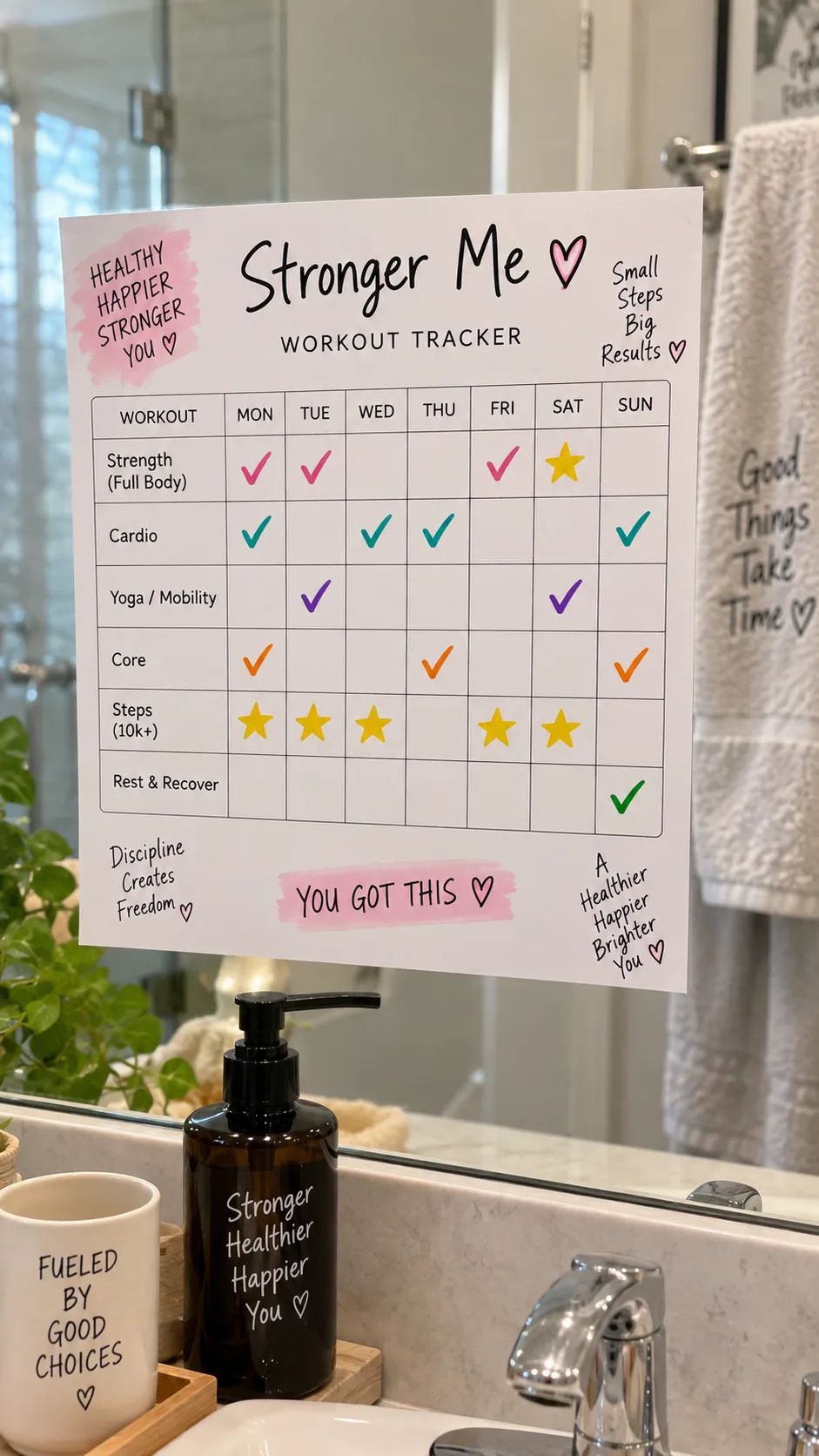
Your free wall Pilates chart: quick reference summary
Here’s your at-a-glance version for quick reference once you’ve learned the movements.
- Warm-Up (5 min): Cat-Cow, Arm Circles, March, Calf Raises, Hip Circles
- Workout (15 to 20 min): Wall Sit, Glute Bridge, Push-Up, Front Leg Lift, Side Leg Lift, Plank Hold, Single-Leg Deadlift, Toe Taps, Hundred
- Cool-Down (5 min): Chest Stretch, Hamstring Stretch, Calf Stretch, Child’s Pose, Spinal Twist
- Frequency: 3x per week with rest days between
- Progression: Increase reps/hold time by 10 to 20% every two weeks
Start today. Seriously, right now.
You’ve read the chart. You understand the exercises. You know the benefits. The only thing standing between you and real progress is printing this plan and pressing your back against a wall.
Wall Pilates works because it removes every barrier beginners face. No equipment costs. No gym anxiety. No complex choreography. No impact on aching joints. Just simple, effective movements that build genuine strength, flexibility, and body awareness over time.
Print the chart. Pick your wall. Set a timer. And show up three times this week. That’s the whole plan. Your future self, the one standing taller, moving easier, and feeling stronger, will be very glad you did.
