
Nobody told you this, but your pelvic floor can be TOO tight. Everyone talks about strengthening those muscles. Kegels this, Kegels that. But what if your real problem is tension, not weakness? What if all that clenching you do (yes, you’re probably doing it right now) is making things worse?
If you deal with pelvic pain, discomfort during intimacy, urinary urgency, or a constant feeling of tightness “down there,” you might not need more squeezing. You might need to learn how to let go. And that, as it turns out, is surprisingly harder than it sounds.
This guide walks you through the best pelvic floor relaxation exercises that gently release tight muscles, calm overactive nerves, and help you feel comfortable in your own body again. No complicated equipment. No awkward gym moments. Just you, your breath, and a little patience.
Why your pelvic floor might be too tight (not too weak)
Most people assume pelvic floor problems always mean weakness. Magazines, wellness influencers, and even some healthcare providers default to “just do more Kegels!” But here’s the thing: a hypertonic (overly tight) pelvic floor causes many of the SAME symptoms as a weak one. Leaking? Could be tightness. Pain? Definitely could be tightness. Feeling like you can never fully empty your bladder? Yep, tightness again.
Think of it like making a fist and holding it clenched for hours. Eventually, that hand won’t be strong. It’ll be exhausted, shaky, and unable to grip anything properly. Your pelvic floor works the same way. Chronic tension robs muscles of their ability to contract and relax effectively.
Several things contribute to a tight pelvic floor:
- Stress and anxiety, because your pelvic floor is a stress container that tightens every time you clench your jaw or hold your breath
- Poor posture, since sitting hunched over a desk for 8+ hours daily shortens everything
- Overdoing core exercise with too many crunches, planks, and high-impact workouts without proper release work
- Trauma or surgery, because the body guards injured areas by tensing surrounding muscles
- Habitual holding patterns like constantly “sucking in” your stomach or bracing your core
The National Institute of Diabetes and Digestive and Kidney Diseases (NIDDK) recognizes that pelvic floor dysfunction includes both weakness and excessive tightness, and the treatment approaches differ significantly. Knowing which category you fall into matters enormously.
Signs you might have a tight pelvic floor
How do you know if your pelvic floor muscles need relaxation rather than strengthening? Fair question. Here are the most common red flags:
- Pain during intercourse, especially upon penetration or deep pressure
- Difficulty starting urination, where your stream hesitates, stops and starts, or feels incomplete
- Chronic pelvic pain, a dull ache in your pelvis, lower back, or hips that doesn’t go away
- Constipation or straining, because tight pelvic floor muscles literally resist the passage of stool
- Urinary frequency or urgency, feeling like you need to go ALL the time even when your bladder isn’t full
- Tailbone pain (coccydynia), where sitting becomes uncomfortable, especially on hard surfaces
- Hip and lower back tightness, since your pelvic floor connects to everything around it
Sound familiar? If you checked off more than two of those, doing standard Kegels could make your symptoms worse. Instead, you want to focus on pelvic floor relaxation exercises that teach those muscles how to release and lengthen.
If you’re also dealing with prolapse symptoms alongside tightness, check out our guide on pelvic floor exercises for prolapse. It covers gentle routines that avoid common mistakes while supporting your bladder.
The best pelvic floor relaxation exercises for releasing tension
Alright, let’s get practical. These exercises focus specifically on lengthening and calming your pelvic floor muscles. None of them involve squeezing. Every single one prioritizes the “let go” phase. Start slow, breathe deeply, and resist the urge to power through anything that hurts.
1. Diaphragmatic breathing (the foundation of everything)
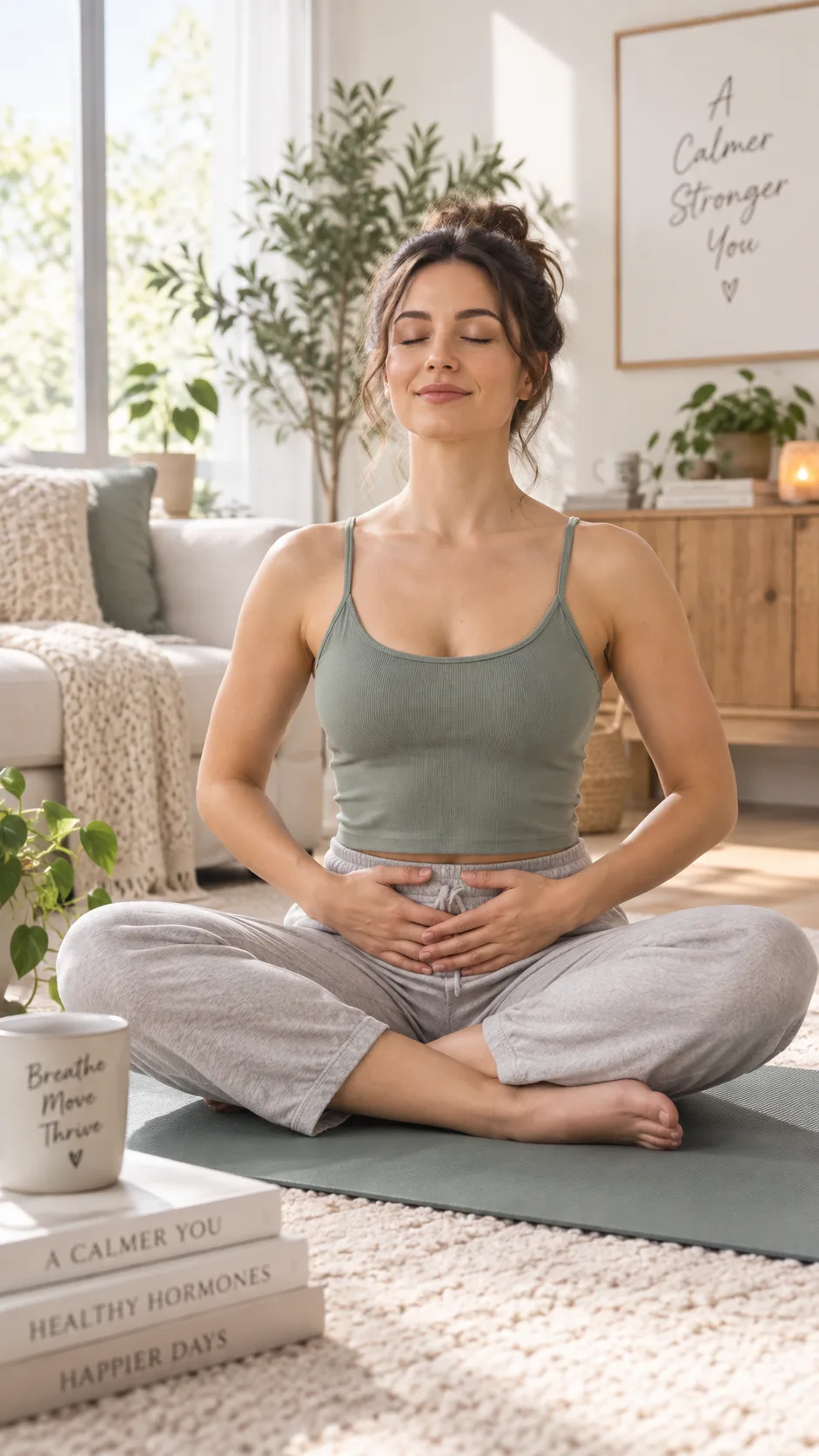
This one sounds almost insultingly simple, but diaphragmatic breathing is hands down the most effective pelvic floor relaxation technique you can learn. Your diaphragm and pelvic floor move together like a piston. When you inhale deeply, your diaphragm drops and your pelvic floor naturally relaxes and lengthens downward.
How to do it:
- Lie on your back with your knees bent and feet flat on the floor
- Place one hand on your chest and one on your belly
- Inhale slowly through your nose for 4 counts. Feel your belly and ribcage expand (not your chest)
- As you inhale, consciously visualize your pelvic floor dropping and opening like a flower blooming (cheesy, but it genuinely works)
- Exhale slowly through your mouth for 6 counts, letting everything soften
- Repeat for 5 to 10 minutes
One tip worth remembering: the exhale should feel longer than the inhale. This activates your parasympathetic nervous system, your body’s built-in relaxation switch. Do this exercise daily, and you’ll notice a difference within a week or two.
2. Happy baby pose
Ever watched a baby grab their toes and roll around looking blissful? They’re onto something. Happy Baby Pose directly opens and stretches the pelvic floor muscles while gently releasing the inner thighs and hip flexors.
How to do it:
- Lie on your back and bring your knees toward your armpits
- Grab the outsides of your feet (or your shins if that’s more comfortable)
- Gently pull your knees down toward the floor on either side of your torso
- Keep your lower back pressed into the mat
- Hold for 30 to 60 seconds while practicing your diaphragmatic breathing
- Rock gently side to side if that feels good
This pose creates a gentle stretch through the entire pelvic basin. Combine it with deep breathing, and you have a seriously effective pelvic floor release exercise you can do before bed every night.
3. Child’s pose with wide knees
Child’s Pose doesn’t just feel amazing for your back. It also places your pelvic floor in a beautifully lengthened position. Spreading your knees wide amplifies the stretch even more.
- Kneel on the floor and spread your knees wide apart
- Bring your big toes together behind you
- Walk your hands forward and lower your chest toward the ground
- Rest your forehead on the mat (or a pillow) and let your hips sink back
- Breathe deeply into your belly and back body for 1 to 2 minutes
This pose also decompresses your lower back. If you sit at a desk all day (and who doesn’t?), your pelvic floor and lower back will thank you for this one.
4. Deep squat hold (Malasana)
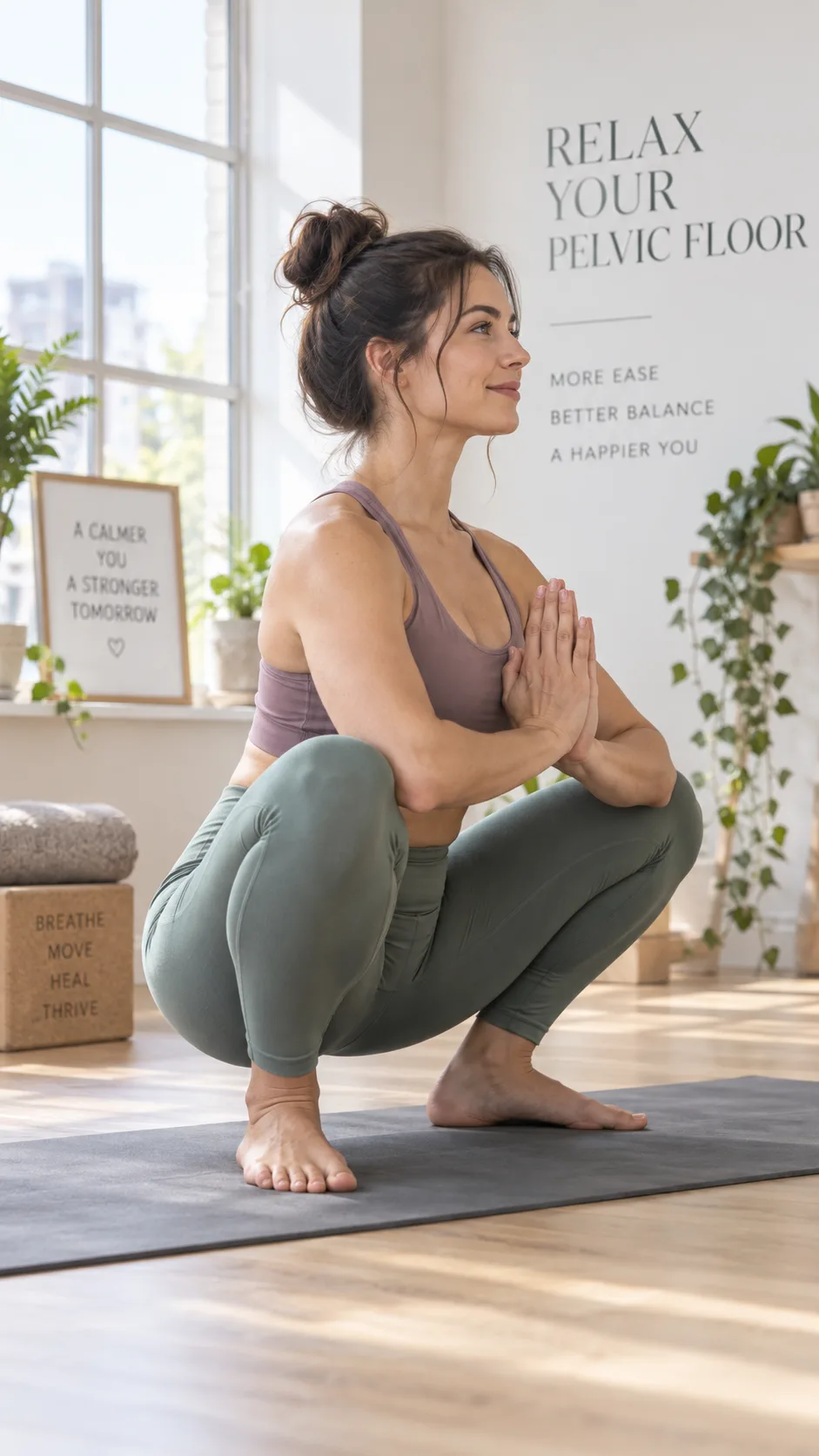
The deep squat is one of the most natural human positions, yet most of us can barely hold one anymore. Sad, right? A deep squat lengthens the pelvic floor muscles beautifully and counteracts all that sitting-induced tightness.
- Stand with your feet slightly wider than hip-width apart, toes turned out about 30 degrees
- Lower yourself into a deep squat, hips below knees
- Bring your palms together at your chest and use your elbows to gently press your knees open
- Keep your spine as upright as possible
- Breathe deeply and hold for 30 to 90 seconds
Can’t get all the way down? No shame in that. Place a rolled towel under your heels or hold onto a doorframe for support. You’ll gain depth over time. The goal isn’t perfection. The goal is creating space in your pelvis.
5. Butterfly stretch (reclined version)
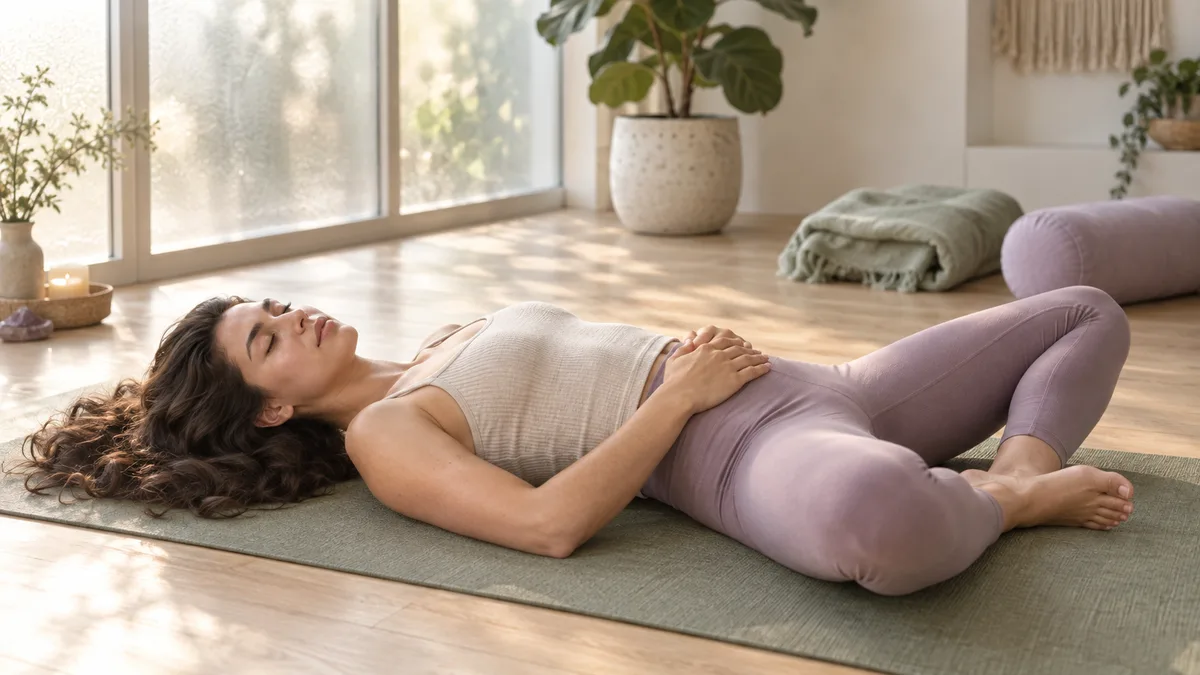
The reclined butterfly stretch opens your inner thighs and takes pressure completely off your pelvic floor. Gravity does the work here. You literally just lie there and breathe. In my opinion, this is one of the most underrated pelvic floor relaxation exercises out there.
- Lie on your back and bring the soles of your feet together
- Let your knees fall open to the sides
- Place pillows or yoga blocks under each knee for support (this matters, don’t skip it)
- Rest your arms by your sides or on your belly
- Stay here for 2 to 5 minutes, breathing slowly and deeply
The props are non-negotiable here. Without support under your knees, your inner thigh muscles will engage to hold the position, which defeats the entire purpose. You want ZERO muscular effort in this pose. Just soft, supported, total release.
6. Legs up the wall
This restorative pose reduces pelvic congestion, calms your nervous system, and creates a gentle inversion that helps tight pelvic floor muscles soften. It’s also ridiculously easy.
- Sit sideways next to a wall, then swing your legs up as you lower your back to the floor
- Scoot your hips as close to the wall as feels comfortable
- Let your arms rest by your sides, palms facing up
- Close your eyes and breathe diaphragmatically for 5 to 10 minutes
Research published through the National Library of Medicine (PubMed Central) supports that restorative yoga postures like this one effectively reduce chronic pelvic pain and muscle tension when people practice them consistently. So science backs this up, not just your yoga teacher.
7. Pelvic floor drops (reverse Kegels)
Here’s where things get interesting. A reverse Kegel is the exact opposite of a regular Kegel. Instead of squeezing and lifting, you gently bulge and release downward. Think of it as training your pelvic floor to LET GO.
- Sit comfortably or lie on your back
- Take a deep diaphragmatic breath in
- As you inhale, gently bear down as if you’re trying to release gas (sorry, but that’s the most accurate cue)
- You should feel a gentle dropping or opening sensation in your pelvic floor
- On your exhale, simply relax. Don’t squeeze
- Repeat 10 times, 2 to 3 times per day
Warning: This should feel GENTLE. You should never strain or push hard. The movement is subtle, almost imperceptible to anyone watching. If you’re bearing down like you’re in a weightlifting competition, you’ve gone way too far.
Building a daily pelvic floor relaxation routine
Knowing the exercises is one thing. Doing them consistently? That’s where the real change happens. Here’s a simple daily routine you can follow. It takes about 15 to 20 minutes and works well as a morning or evening practice.
Morning routine (choose 2 or 3):
- 5 minutes of diaphragmatic breathing in bed before getting up
- Child’s Pose with wide knees for 1 to 2 minutes
- Deep squat hold for 30 to 60 seconds, repeated twice
Evening routine (choose 2 or 3):
- Reclined butterfly stretch for 3 to 5 minutes
- Happy Baby Pose for 1 minute
- Legs Up the Wall for 5 to 10 minutes
- Pelvic floor drops, 10 repetitions
You don’t need to do every single exercise every single day. Consistency matters more than volume. Pick what feels good, rotate through the options, and make it a habit you enjoy rather than another chore on your to-do list.
For those who also want to gently rebuild strength alongside relaxation work, our article on deep core pelvic floor exercises shows you how to reconnect with your inner core without overdoing it with crunches.

Common mistakes people make when trying to relax their pelvic floor
Even with the best intentions, people trip up on these exercises all the time. Let me save you some frustration by calling out the biggest pitfalls.
Mistake #1: Still doing Kegels alongside relaxation work. If your pelvic floor is genuinely hypertonic, adding Kegels into the mix is like stretching a pulled hamstring and then immediately sprinting. You need to achieve relaxation FIRST before reintroducing any strengthening exercises. Talk to a pelvic floor physiotherapist before combining the two.
Mistake #2: Holding your breath during exercises. Your breath IS the exercise. The moment you hold your breath, your pelvic floor tenses up reflexively. Every stretch, every hold, every release should happen on a slow, controlled breath cycle.
Mistake #3: Expecting overnight results. Your pelvic floor didn’t get tight in a week, and it won’t release in one either. Most people notice meaningful changes after 4 to 6 weeks of consistent practice. Stay patient. Stay consistent. The results compound.
Mistake #4: Pushing through pain. These exercises should feel like a gentle stretch or release, NEVER sharp pain. If something hurts, back off, adjust your position, or skip that particular exercise entirely. Pain is your body’s way of saying “not this, not now.”
When to see a pelvic floor physiotherapist
Self-care exercises work well for mild to moderate tension. But some situations require professional, hands-on help. See a pelvic floor physiotherapist if:
- Your symptoms haven’t improved after 6 to 8 weeks of consistent relaxation exercises
- You experience significant pain during intercourse, urination, or bowel movements
- You can’t seem to distinguish between contracting and relaxing your pelvic floor
- You have a history of pelvic surgery, trauma, or endometriosis
- Your symptoms interfere with daily life, work, or relationships
A qualified pelvic floor physio can perform an internal assessment (with your consent, obviously) to determine exactly what’s going on. They’ll identify which specific muscles carry the most tension and create a targeted treatment plan. The Academy of Pelvic Health Physical Therapy maintains a directory of certified specialists if you need help finding one near you.
Worth noting: pelvic floor physiotherapy isn’t just for women. Men deal with hypertonic pelvic floors too, and our guide on pelvic floor exercises for men covers routines specifically designed for male anatomy.
The mind-body connection: why stress makes everything tighter
Ever notice how your shoulders creep up toward your ears when you’re stressed? Your pelvic floor does the same thing. It clenches, grips, and holds tension without you even realizing it. Chronic stress is one of the biggest drivers of pelvic floor tightness, and no amount of stretching will fully resolve the issue if your nervous system stays stuck in fight-or-flight mode.
That’s why the breathing exercises in this guide aren’t optional extras. They’re the foundation. Your nervous system directly controls your pelvic floor muscle tone. When you activate the parasympathetic (rest-and-digest) branch through slow, deep breathing, your pelvic floor muscles physically soften and release.
Consider adding these nervous system calming practices to your routine:
- Body scan meditation where you systematically relax each body part from head to toes, paying extra attention to your pelvis
- Progressive muscle relaxation where you tense and release muscle groups throughout your body to teach your brain the difference between tension and relaxation
- Warm baths because heat relaxes smooth muscle tissue and increases blood flow to the pelvis (add Epsom salts for a bonus)
- Gentle yoga or tai chi with slow, mindful movement patterns that emphasize breath and release
Research from Harvard Medical School confirms that controlled breathing techniques directly reduce the body’s stress response and lower muscle tension throughout the entire body, pelvic floor included. So yes, learning to breathe properly genuinely counts as therapy here.
Quick reference: your pelvic floor relaxation cheat sheet
Need a quick summary you can screenshot and reference later? Here you go:
- Diaphragmatic Breathing for 5 to 10 minutes daily; belly expands on inhale, pelvic floor drops
- Happy Baby Pose for 30 to 60 seconds; knees toward armpits, breathe deeply
- Child’s Pose (wide knees) for 1 to 2 minutes; forehead down, hips sink back
- Deep Squat Hold for 30 to 90 seconds; elbows press knees open, spine tall
- Reclined Butterfly for 2 to 5 minutes; ALWAYS use props under knees
- Legs Up the Wall for 5 to 10 minutes; close eyes, full nervous system reset
- Reverse Kegels for 10 reps, 2 to 3 times daily; gentle bulging sensation on inhale
Golden rule: If you only have 5 minutes, spend them on diaphragmatic breathing. It impacts everything else.
Final thoughts: learning to let go is a skill worth mastering
We live in a culture that glorifies tightness, bracing, and “engaging your core.” And strength does matter. But a healthy pelvic floor needs to contract AND relax with equal skill. If yours has been stuck in overdrive, these relaxation exercises offer a path back to balance.
Start with one or two exercises from this guide. Practice them daily for a few weeks. Pay attention to how your body responds. You might notice less urgency running to the bathroom, less tension in your hips, less discomfort in situations that used to feel painful. Those small wins add up to something genuinely life-changing.
Your pelvic floor carried you through every stressful meeting, every workout, every emotional moment of your life. It’s time to return the favor and give it permission to rest. Start tonight. Your body already knows how to relax. You just need to remind it.
