

You just got a gym membership. You’re motivated. You’re ready. And then you walk onto the weight floor, see seventeen different machines you’ve never touched, and immediately retreat to the treadmill. Sound familiar?
Here’s the thing: you don’t need to spend five or six days a week in the gym to get strong. That’s a lie the fitness industry loves to sell. Three days a week is genuinely enough to build real strength, change your body composition, and enjoy the process without wanting to cry every Monday morning.
This guide lays out a complete 3 day split workout for women gym beginners that prioritizes smart programming over grinding yourself into the ground. You’ll know exactly what to do on each day, how to progress, and why this approach works so well for building a sustainable habit.
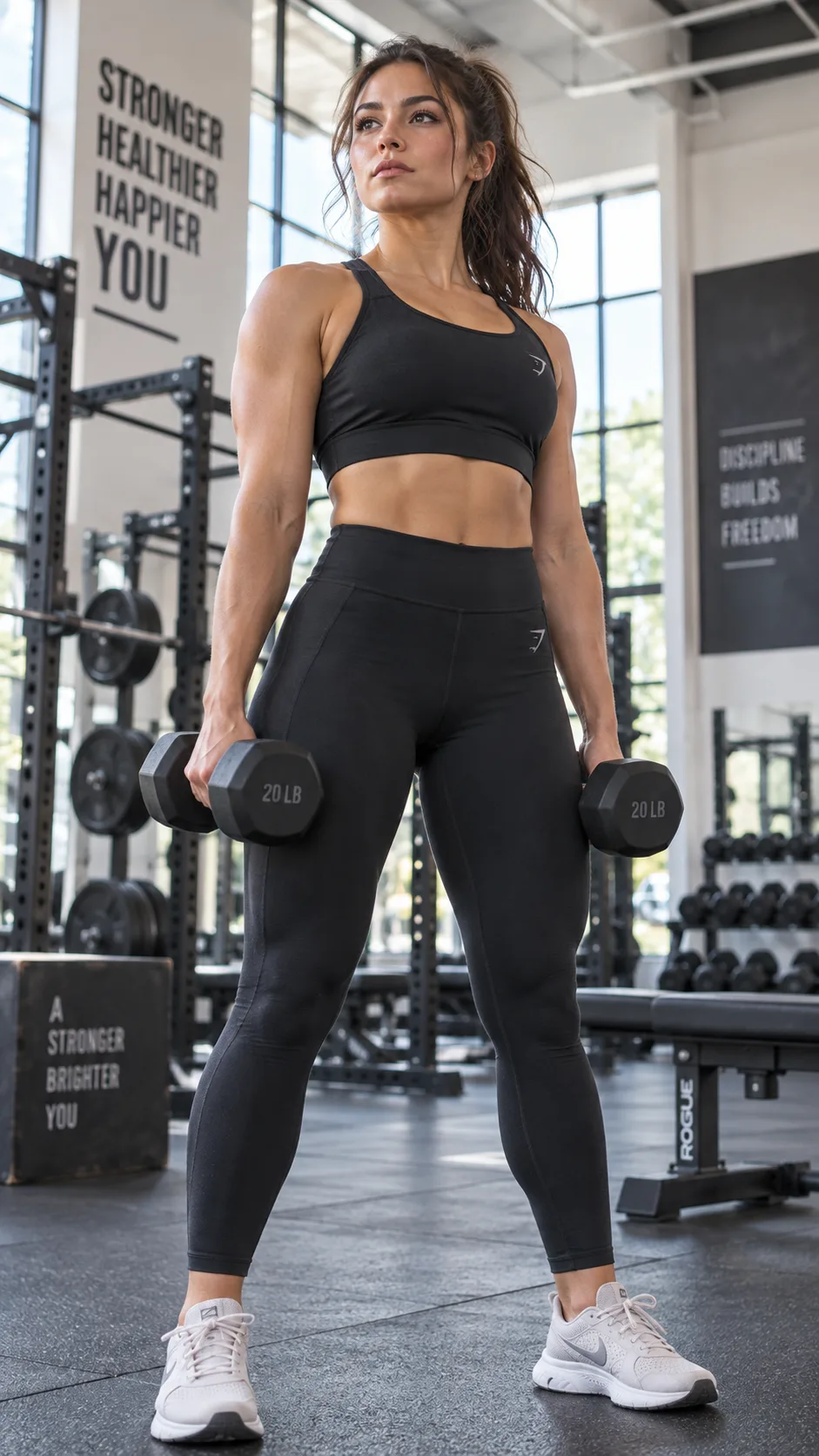
Why a 3 day split is perfect for women starting out
Let’s kill a myth right now: more gym days don’t equal faster results. Recovery is where your muscles grow and get stronger, not during the workout itself. When you train three days per week with rest days in between, you give your body the time it needs to repair, adapt, and come back stronger.
A 3 day split also fits into real life. You have a job, maybe kids, definitely a social life (hopefully). Committing to three sessions per week feels manageable. And when something feels manageable, you stick with it, which is the ONLY thing that matters long-term.
Research published by the Journal of Strength and Conditioning Research has consistently shown that training each muscle group twice per week produces optimal strength gains for beginners. A well-designed 3 day split hits that sweet spot perfectly.
What does “split” actually mean?
A “split” just means you divide your training across different days based on muscle groups or movement patterns. Instead of doing everything every session, you focus on specific areas each day. This lets you train with more intensity and volume per muscle group without turning each workout into a two-hour marathon.
For this program, we’re using an upper body / lower body / full body split. It’s beginner-friendly, balanced, and hits every major muscle group with enough frequency to drive progress. If you’ve been following a full body strength training workout and want to level up slightly, this is the perfect next step.
The ideal weekly schedule
Here’s how to structure your week. The goal is placing rest days between training days so your muscles recover properly.
- Monday: Day 1, Upper Body Push & Pull
- Tuesday: Rest or light walking
- Wednesday: Day 2, Lower Body Strength
- Thursday: Rest or light walking
- Friday: Day 3, Full Body Power
- Saturday & Sunday: Rest, stretch, live your life
Can you shift these days around? Absolutely. The only rule is don’t train two days back-to-back when you’re starting out. Your body needs that recovery window.
Day 1: Upper body push & pull
This session targets your chest, shoulders, back, and arms. You’ll perform both pushing movements (pressing weight away from you) and pulling movements (bringing weight toward you). This balance prevents the postural issues that come from only training one side of your body. Because nobody wants to look like a question mark from the side.
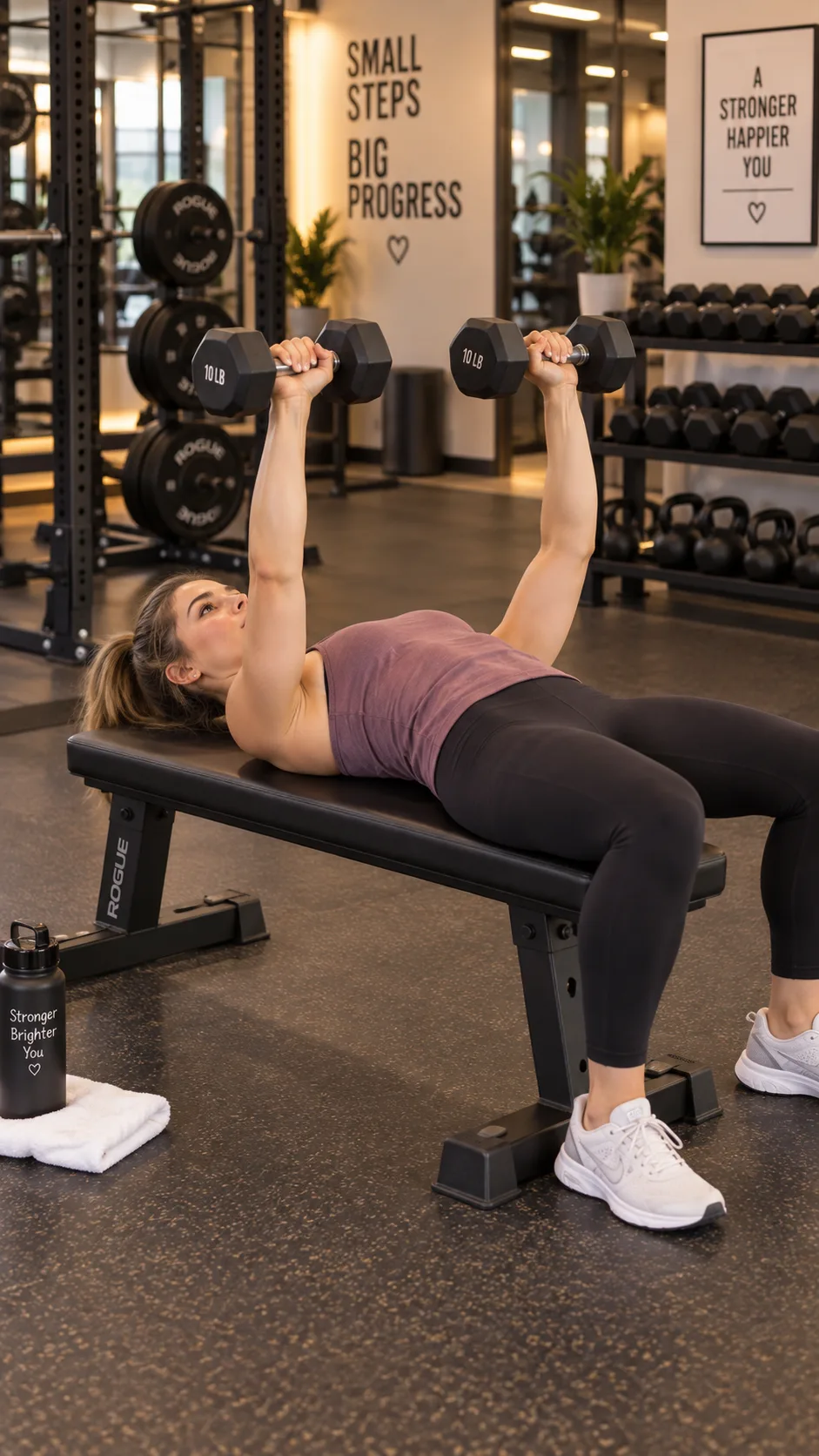
The exercises
- Dumbbell Bench Press — 3 sets of 10 reps
- Seated Cable Row — 3 sets of 12 reps
- Overhead Dumbbell Press — 3 sets of 10 reps
- Lat Pulldown — 3 sets of 12 reps
- Dumbbell Bicep Curls — 2 sets of 12 reps
- Tricep Rope Pushdowns — 2 sets of 12 reps
Notes for Day 1
Start lighter than you think you should. Seriously. Your ego will survive, and your joints will thank you. Pick a weight where the last 2-3 reps of each set feel challenging but your form stays clean.
Rest 60-90 seconds between sets. Use this time to catch your breath, not scroll through Instagram for five minutes. (We’ve all been there, no judgment, but it does kill your workout momentum.)
The bench press might feel awkward at first, and that’s completely normal. If the flat bench feels intimidating, start with an incline dumbbell press instead. Same muscle recruitment, slightly easier to control.
Day 2: Lower body strength
Leg day. The day everyone loves to complain about but secretly appreciates when they notice their jeans fitting differently. Your lower body contains the largest muscle groups in your body (glutes, quads, hamstrings) and training them burns serious calories while building functional strength you’ll use every single day.
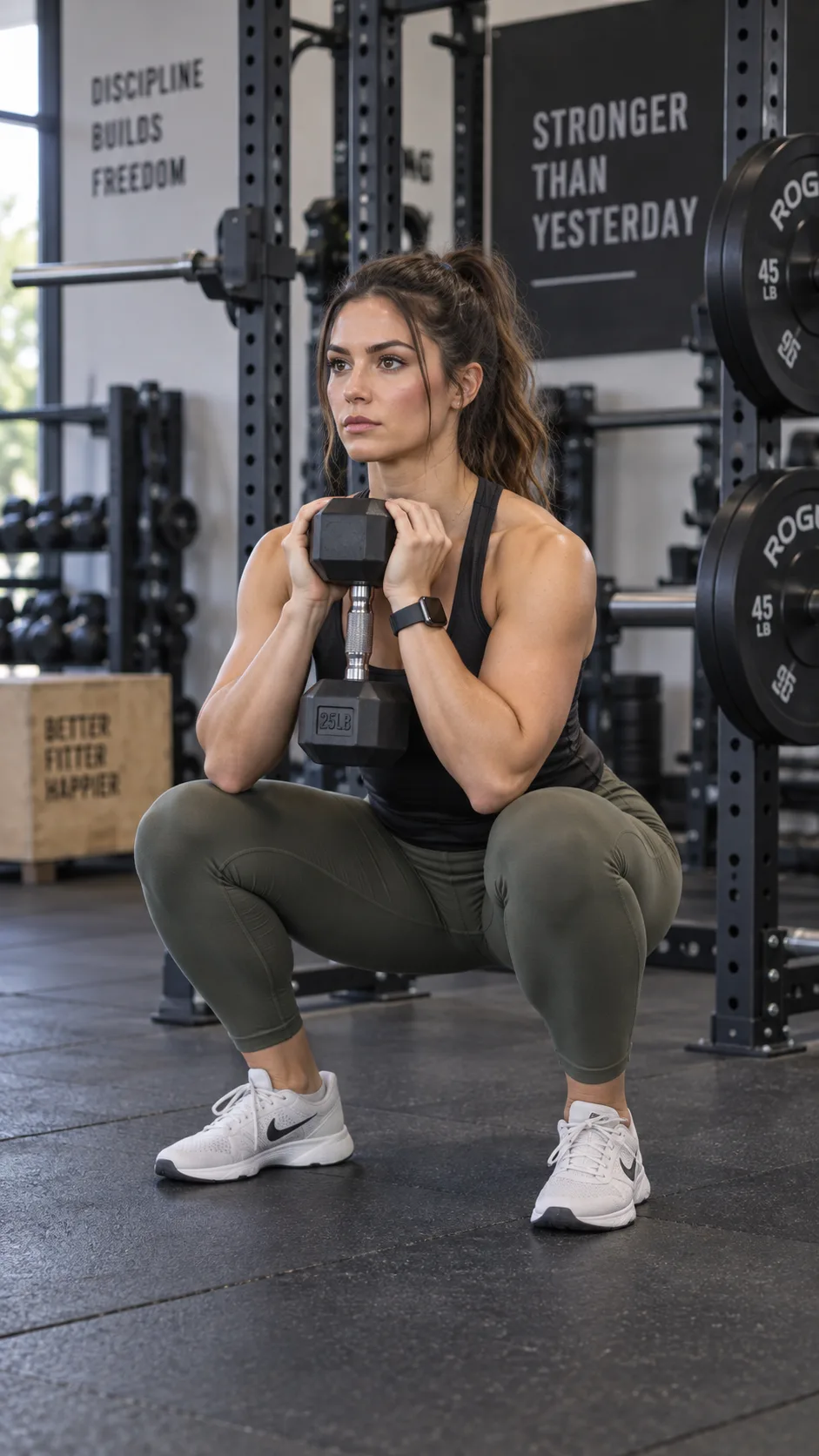
The exercises
- Goblet Squat — 3 sets of 10 reps
- Romanian Deadlift (Dumbbells) — 3 sets of 10 reps
- Walking Lunges — 3 sets of 10 reps per leg
- Leg Press — 3 sets of 12 reps
- Glute Bridge (Barbell or Bodyweight) — 3 sets of 15 reps
- Standing Calf Raises — 3 sets of 15 reps
Notes for Day 2
The Romanian deadlift is your best friend for building hamstrings and glutes. But form matters here more than anywhere else. Keep the dumbbells close to your legs, push your hips back like you’re closing a car door with your butt, and feel the stretch in the back of your thighs. If you don’t feel it there, you’re doing it wrong.
Goblet squats are a far better starting point than barbell back squats for beginners. They teach you proper squat mechanics, force you to stay upright, and feel way less intimidating. You can graduate to barbell squats after a few weeks when the movement pattern feels natural.
Ever wondered why your legs feel like jelly after leg day but your upper body recovers faster? It’s because your lower body muscles are simply bigger and require more energy and recovery time. This is exactly why we put a rest day after this session.
Day 3: Full body power
This is where everything comes together. Day 3 hits your entire body with compound movements, exercises that work multiple muscle groups at once. Think of it as the “greatest hits” session of your week. It reinforces everything you trained on Days 1 and 2 while adding some core work into the mix.
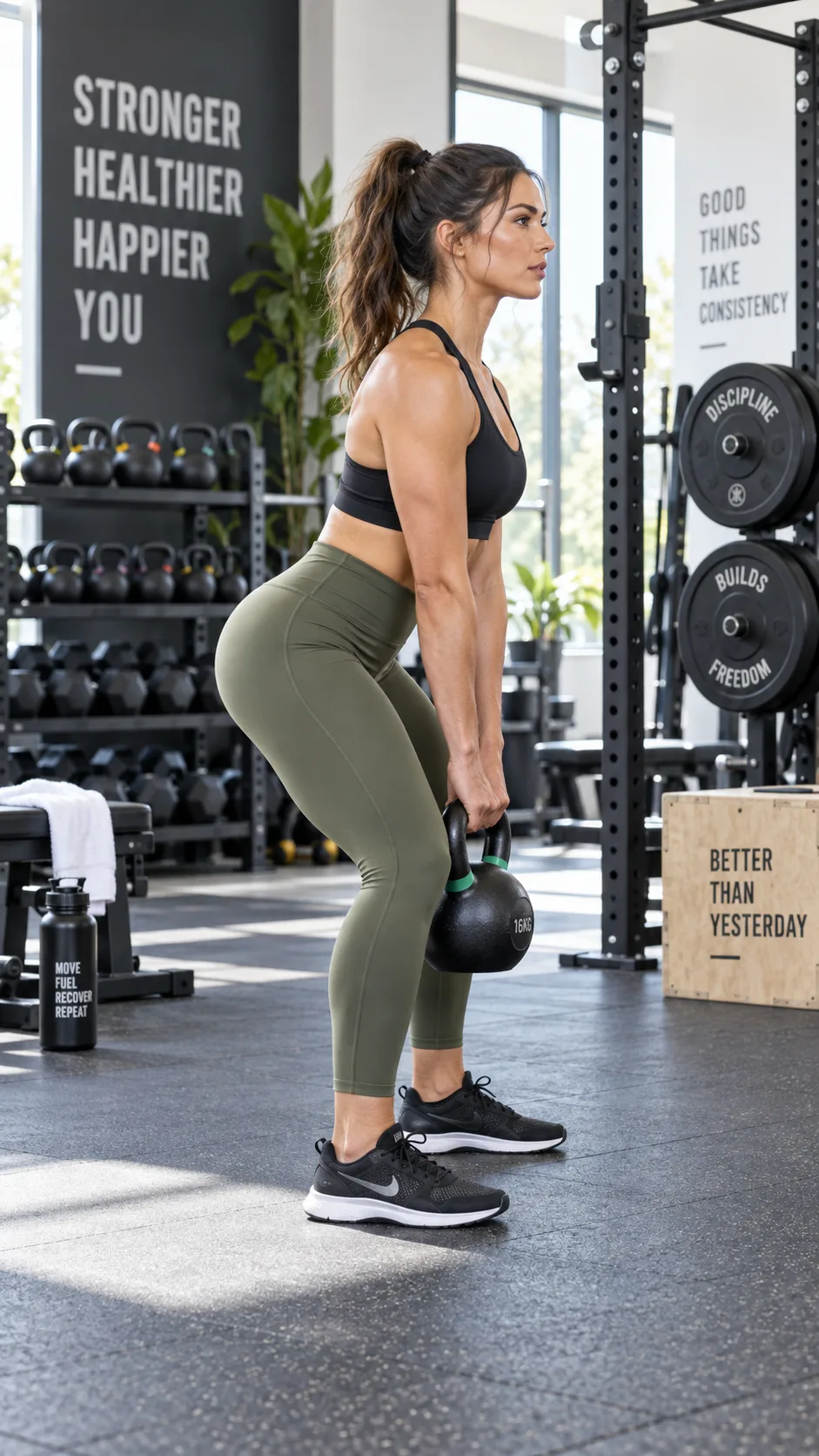
The exercises
- Kettlebell Deadlift — 3 sets of 10 reps
- Dumbbell Push-Up to Row (Renegade Row) — 3 sets of 8 reps per side
- Dumbbell Step-Ups — 3 sets of 10 reps per leg
- Landmine Press or Arnold Press — 3 sets of 10 reps
- Pallof Press (Cable Anti-Rotation) — 3 sets of 10 reps per side
- Dead Bug — 3 sets of 10 reps per side
Notes for Day 3
If renegade rows feel impossible right now (and they might, they’re sneaky hard), just do a regular push-up followed by a separate bent-over dumbbell row. No shame in that. Modify exercises to match YOUR current level, not some influencer’s highlight reel.
The Pallof press and dead bug are core exercises that train your abs to resist movement rather than create it. This is how your core functions in real life: stabilizing your spine while everything else moves around it. Way more effective than 200 crunches, and your neck won’t hate you afterward.
This video from a certified trainer walks through many of these compound movements with proper form cues, which is incredibly helpful when you’re learning:
How to warm up properly (don’t skip this)
I know warming up feels about as exciting as watching paint dry. But spending 5-7 minutes preparing your body cuts your injury risk significantly and improves your performance during the workout itself. Here’s a quick routine to do before every session:
- 5 minutes of light cardio — brisk walking on incline treadmill, stationary bike, or rowing machine
- Leg swings — 10 per leg, front-to-back and side-to-side
- Arm circles — 10 forward, 10 backward
- Bodyweight squats — 10 reps
- Cat-cow stretches — 8 reps
Then do 1-2 warm-up sets with lighter weight before your first exercise of the day. Your muscles and joints will perform significantly better when they’re warm. And a note: static stretching (holding stretches for 30+ seconds) belongs AFTER your workout, not before it.
Progressive overload: the real secret
Here’s where most beginners go wrong. They do the same weight, same reps, same everything for months and wonder why nothing changes. Progressive overload means gradually increasing the demands on your muscles over time. Without it, your body has zero reason to get stronger.
You don’t need to add weight every single session. That’s a fast track to injury. Instead, use this simple progression framework:
- Week 1-2: Learn the movements with a comfortable weight. Focus entirely on form.
- Week 3-4: Add 1-2 reps per set OR add 2-5 lbs to each exercise.
- Week 5-6: Increase weight slightly and reset to the original rep count.
- Repeat the cycle.
The American Council on Exercise recommends increasing training volume by no more than 10% per week for safe, sustainable progress. Slow and steady genuinely wins this race.
If you’re managing weight loss alongside strength building, especially on a program like a GLP-1 medication, progressive overload becomes even more important for preserving muscle mass. Check out this guide on building muscle while losing weight for a deeper look at that balance.
Nutrition basics that support your training
You can follow the best workout program ever written, but if your nutrition is garbage, your results will be… well, garbage. You don’t need a complicated meal plan or to weigh every grain of rice. Just nail these fundamentals:
- Protein: Aim for 0.7-1 gram per pound of bodyweight daily. This fuels muscle repair and growth. Chicken, fish, eggs, Greek yogurt, tofu, protein powder: pick your favorites and eat them consistently.
- Carbs: They’re not the enemy. They’re your workout fuel. Oats, rice, potatoes, fruits, and whole grains give you the energy to lift with intensity.
- Fats: Avocado, nuts, olive oil, fatty fish. All essential for hormone production and overall health. Don’t fear them.
- Water: Drink at least half your bodyweight in ounces daily. Dehydration tanks your performance faster than anything else.
According to the International Society of Sports Nutrition, consuming protein within a few hours before or after your workout supports muscle protein synthesis. But don’t stress about exact timing. Total daily intake matters far more than the “anabolic window.”
Common mistakes beginners make (and how to avoid them)
I made every single one of these mistakes when I started lifting. Save yourself the frustration and learn from the collective pain of everyone who came before you 🙂
Going too heavy too fast
Your muscles will adapt faster than your tendons, ligaments, and connective tissue. Jumping to heavy weights in the first few weeks is practically begging for an injury. Spend your first two weeks mastering form with lighter loads. The heavy stuff will come, I promise.
Skipping rest days
More is not more. If you feel guilty about resting, go for a walk, do some yoga, or foam roll. But don’t add extra lifting sessions because you’re “feeling good.” Your muscles grow during rest, not during the workout. Respect the process.
Ignoring compound movements
Spending 45 minutes on bicep curls and lateral raises while skipping squats and deadlifts is like painting the walls of a house with no foundation. Compound movements should make up 80% of your program. They work more muscle, burn more calories, and build functional strength faster than isolation exercises ever will.
Comparing yourself to others
That woman deadlifting 225 pounds? She probably started exactly where you are right now. Everyone’s timeline is different. Focus on being better than YOU were last week. That’s the only comparison worth making.
When to level up your program
This 3 day split will serve you well for 8-12 weeks. After that, you’ll likely need to change things up to keep progressing. Signs it’s time to evolve your program:
- The weights that used to challenge you now feel easy, even after adding more
- You’ve stopped seeing strength improvements for 2+ weeks in a row
- You feel mentally bored with the routine (this matters more than people admit)
- You want to train more frequently and your body feels ready
When that time comes, you might move to a 4-day upper/lower split or a push/pull/legs program. But don’t rush it. Many women train incredibly well on a 3-day split for months. If you’re brand new and looking for a structured starting point, a beginner workout plan can help you build the foundation before jumping into this split.
Quick FAQ for beginners
Will lifting weights make me bulky?
No. Women produce roughly 15-20 times less testosterone than men. Building significant muscle mass requires years of dedicated heavy training, a caloric surplus, and often pharmaceutical assistance. What lifting WILL do is make you look lean, toned, and athletic. That “toned” look everyone wants? That IS muscle.
How long should each workout take?
Including warm-up, each session should take 45-60 minutes. If you’re going much longer, you’re probably resting too long between sets or doing too much extra work. Keep it focused and efficient.
What if I miss a day?
Life happens. If you miss a session, just pick up where you left off on your next gym day. Don’t try to cram two workouts into one to “make up for it.” Consistency over weeks and months matters infinitely more than one missed session.
Should I do cardio on rest days?
Light cardio like walking, swimming, or easy cycling is perfectly fine and promotes recovery by increasing blood flow to your muscles. Just keep it low intensity. A 20-30 minute walk is the perfect rest day activity.

The bottom line
A 3 day split workout gives women gym beginners everything they need to build real strength without the burnout that comes from overtraining. You train hard three days a week, recover properly in between, and progressively challenge yourself over time. That’s the entire formula.
Stop overthinking which program is “optimal.” Stop watching seventeen more YouTube videos before starting. The best program is the one you follow consistently. Print this workout, walk into the gym, and start with Day 1 this week.
Your future self, the one repping out deadlifts with confidence and never struggling with grocery bags again, will be seriously grateful you did.
