
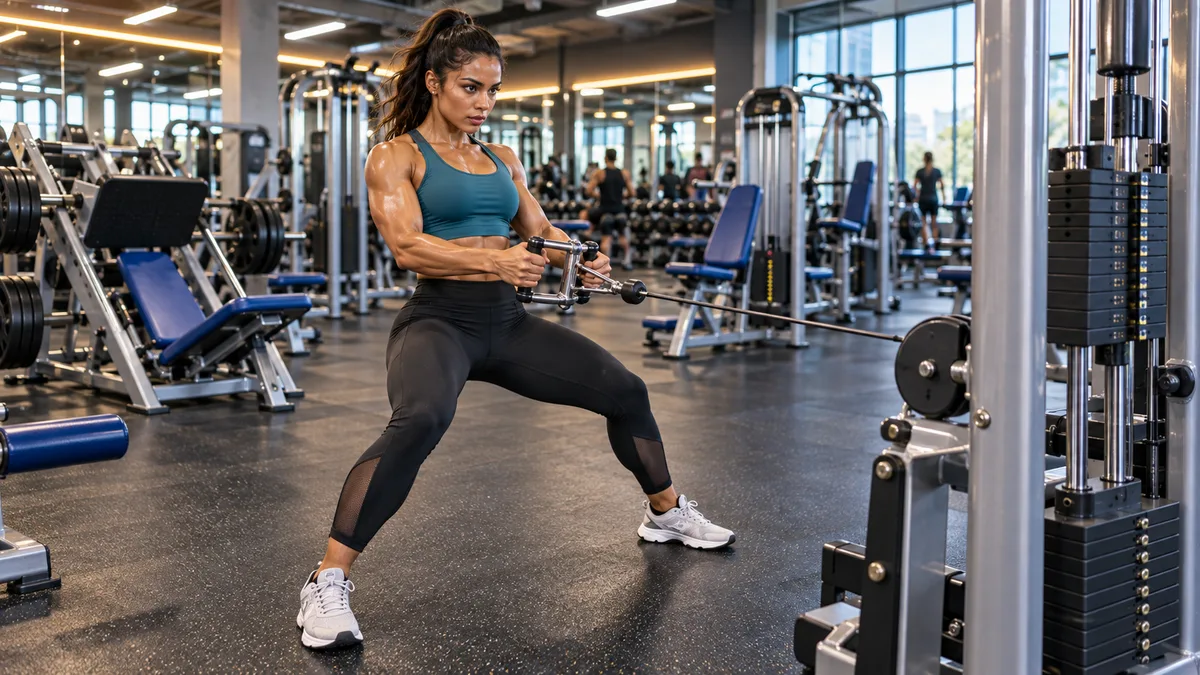
You walked into the gym. You looked at 47 different machines. You sat on the one that looked least intimidating, did a few reps, and then wandered around pretending to stretch while secretly Googling what everything does. Sound familiar? Yeah, we’ve all been there.
Here’s the thing: gym machines get a bad rap, and it’s not deserved. Free weights have their place, sure. But machines offer guided movement paths, adjustable resistance, and the beautiful gift of not needing a spotter when you’re training solo at 6 AM with sleep still in your eyes.
This article lays out a complete full body workout at the gym with machines. No guesswork, no awkward wandering, no existential crisis between the cable crossover and the smith machine. Just a clear plan that hits every major muscle group efficiently.
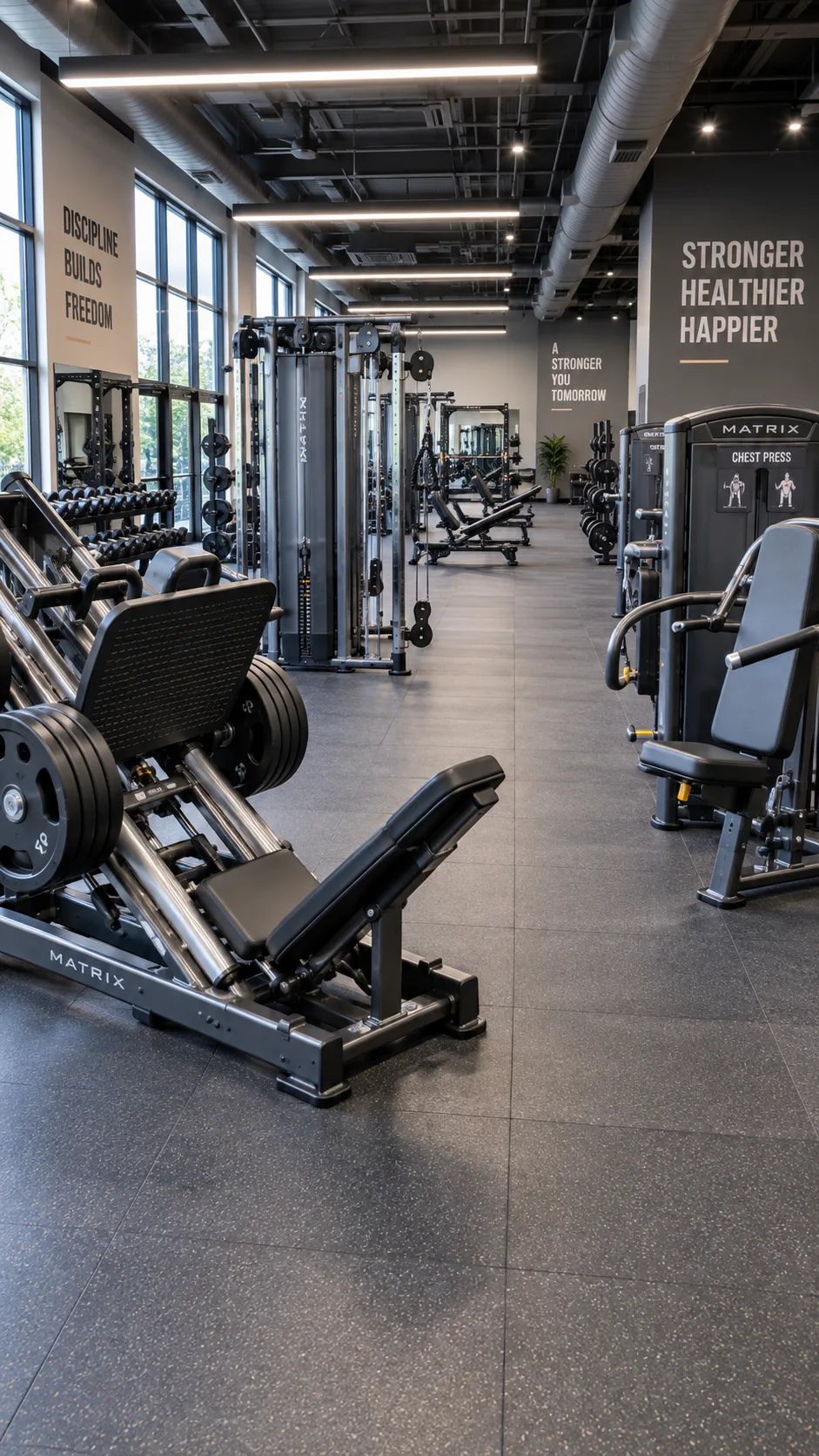
Why machine-based workouts work really well
There’s a persistent myth in fitness culture that machines are somehow “inferior” to free weights. That’s an oversimplification that needs to retire. Research published in the Journal of Strength and Conditioning Research has repeatedly shown that machines and free weights produce comparable muscle growth when training volume and effort are equalized.
What machines do exceptionally well is isolate specific muscles through a fixed range of motion. You spend less time worrying about stabilization and more time loading the target muscle. For beginners, this is gold. For experienced lifters, it’s a strategic tool.
The safety factor nobody talks about enough
Ever tried failing on a barbell bench press alone? It’s terrifying. Machines have built-in safety mechanisms. You can push to actual failure without the risk of a barbell pinning you to the bench like a panini press. This means you can train harder and closer to true muscular failure, which is a primary driver of muscle growth.
Machines also cut the learning curve dramatically. Instead of spending weeks perfecting your hip hinge for a Romanian deadlift, you can hop on a lying leg curl and start building those hamstrings today. If you’re just starting out, you might also want to check out this beginner full body workout guide for foundational principles.
The complete full body machine workout routine
Alright, here’s the actual routine. I’ve organized it by muscle group so you can follow this in order, top to bottom. Aim for 3 sets of 10-12 reps per exercise unless otherwise noted. Rest 60-90 seconds between sets.
This workout should take roughly 55-70 minutes depending on how much you’re chatting between sets (no judgment, but also… maybe a little judgment).

Chest: Machine chest press
Sit down, grab the handles at chest height, and push forward until your arms are almost fully extended. Don’t lock out your elbows. Your joints will thank you in 20 years. Focus on squeezing your chest muscles at the top of each rep.
The machine chest press is probably the most beginner-friendly chest exercise in existence. It mimics the bench press motion without requiring you to balance a barbell. Adjust the seat so the handles align with your mid-chest, not your shoulders.
- Sets: 3
- Reps: 10-12
- Tip: Keep your shoulder blades squeezed together against the pad throughout the movement
Back: Lat pulldown machine
This one targets your lats, those big wing-shaped muscles that give your back width. Grab the bar with a grip slightly wider than shoulder-width, pull it down to your upper chest, and control it back up. That “control it back up” part? Extremely important. Don’t let the weight stack yank your arms overhead like you’re on a roller coaster.
The lat pulldown is basically a pull-up with training wheels, and I mean that as a compliment. It lets you adjust the load precisely, which a pull-up bar simply can’t do unless you invest in a set of resistance bands.
- Sets: 3
- Reps: 10-12
- Tip: Initiate the pull by driving your elbows down, not by yanking with your hands
Back: Seated cable row
While the lat pulldown gives you back width, the seated cable row builds back thickness. Sit with your feet on the foot plate, grab the close-grip handle, and row it toward your lower ribcage. Imagine you’re trying to pinch a pencil between your shoulder blades at the end of each rep.
- Sets: 3
- Reps: 10-12
- Tip: Keep your torso upright. Don’t swing back and forth like a metronome.
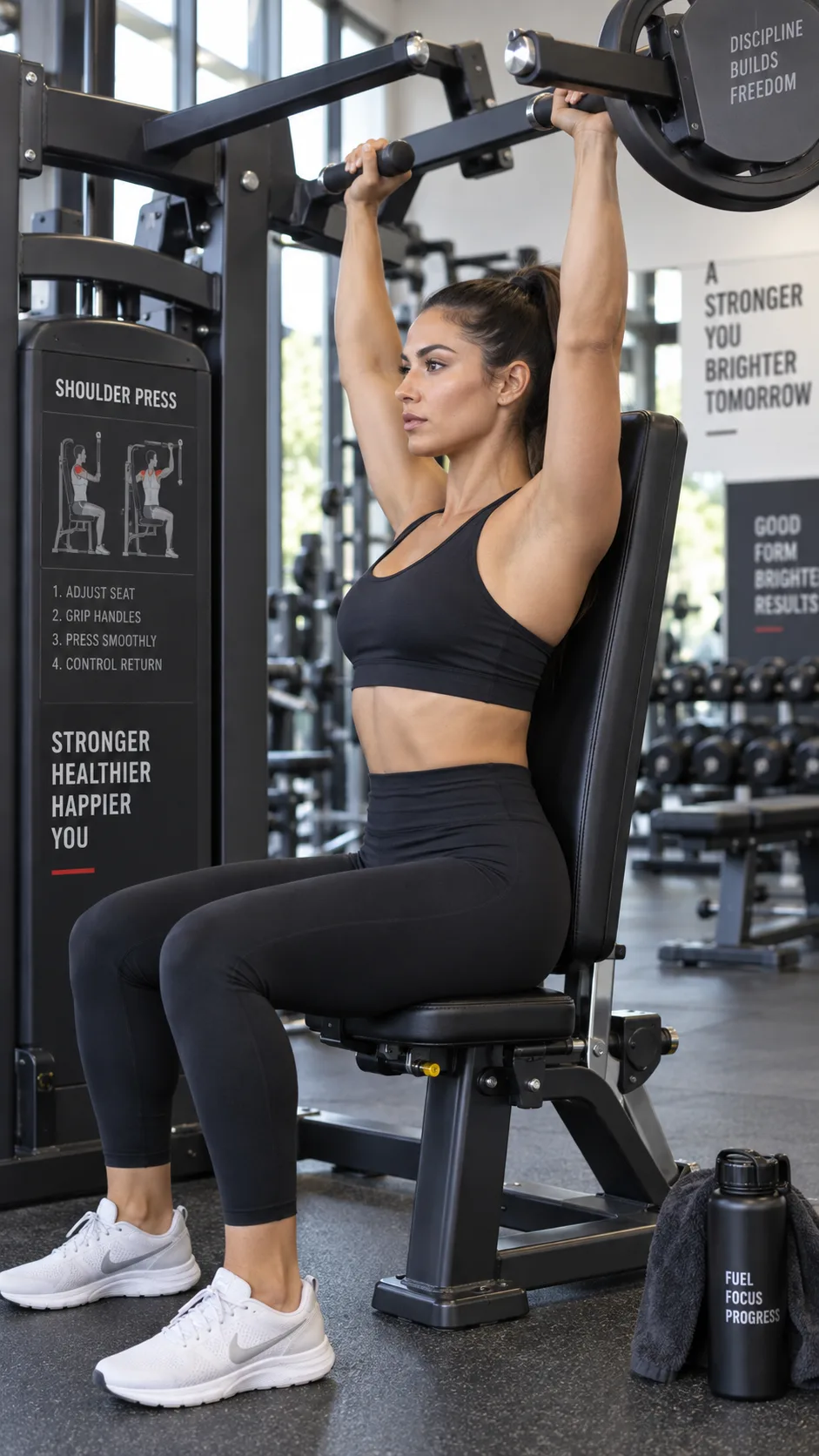
Shoulders: Machine shoulder press
This one builds your deltoids and gives your upper body that “I definitely work out” shape. Sit with the handles at ear level and press straight overhead. Lower under control until your upper arms are roughly parallel with the floor.
A common mistake here is setting the seat too low, which forces your arms into an exaggerated starting position and puts unnecessary stress on your shoulder joints. If it feels like you’re doing a behind-the-neck press, raise that seat.
- Sets: 3
- Reps: 10-12
- Tip: Exhale as you press up, inhale as you lower. Seems basic, but you’d be surprised how many people hold their breath and turn purple.
Legs: Leg press machine
The leg press is a POWERHOUSE exercise. It hits your quads, glutes, and hamstrings all at once, making it the king of machine-based leg exercises. Place your feet shoulder-width apart on the platform, lower the weight until your knees form roughly a 90-degree angle, then push back up through your heels.
Want to emphasize your glutes more? Place your feet higher on the platform. Want to target your quads? Move them lower. This versatility is what makes the leg press such a staple in any full body workout routine.
- Sets: 3-4
- Reps: 10-15
- Tip: NEVER lock out your knees at the top. Seriously. YouTube has enough “leg press gone wrong” videos to scar you for life.
Legs: Leg extension machine
This isolates your quadriceps like nothing else. Sit in the machine, hook your ankles behind the pad, and extend your legs until they’re straight. Squeeze your quads hard at the top for a one-second hold before lowering.
- Sets: 3
- Reps: 12-15
- Tip: Use a weight you can control. This isn’t the exercise for ego lifting.
Legs: Lying leg curl machine
Your hamstrings need love too. Lie face down, position the ankle pad just above your heels, and curl the weight toward your glutes. Lower the weight slowly. The eccentric (lowering) phase is where a huge amount of muscle growth stimulus happens.
If you’re building a beginner leg workout with gym machines, the combination of leg press, leg extension, and leg curl covers your entire lower body comprehensively.
- Sets: 3
- Reps: 10-12
- Tip: Don’t let your hips lift off the pad. If they do, the weight is too heavy.
Arms: Cable bicep curl
Attach a straight bar or EZ-bar attachment to a low cable pulley. Stand facing the machine and curl the bar toward your shoulders. The cable provides constant tension throughout the entire range of motion, something dumbbells can’t fully replicate due to gravity’s directional limitations.
- Sets: 3
- Reps: 12-15
- Tip: Pin your elbows to your sides and keep them there
Arms: Cable tricep pushdown
Attach a rope or straight bar to a high cable pulley. Push it down until your arms are fully extended, squeezing your triceps at the bottom. Your triceps make up roughly two-thirds of your upper arm mass, so if you want bigger arms, this exercise deserves your attention more than curls do. Most people don’t know that.
- Sets: 3
- Reps: 12-15
- Tip: Keep your upper arms stationary. Only your forearms should move.
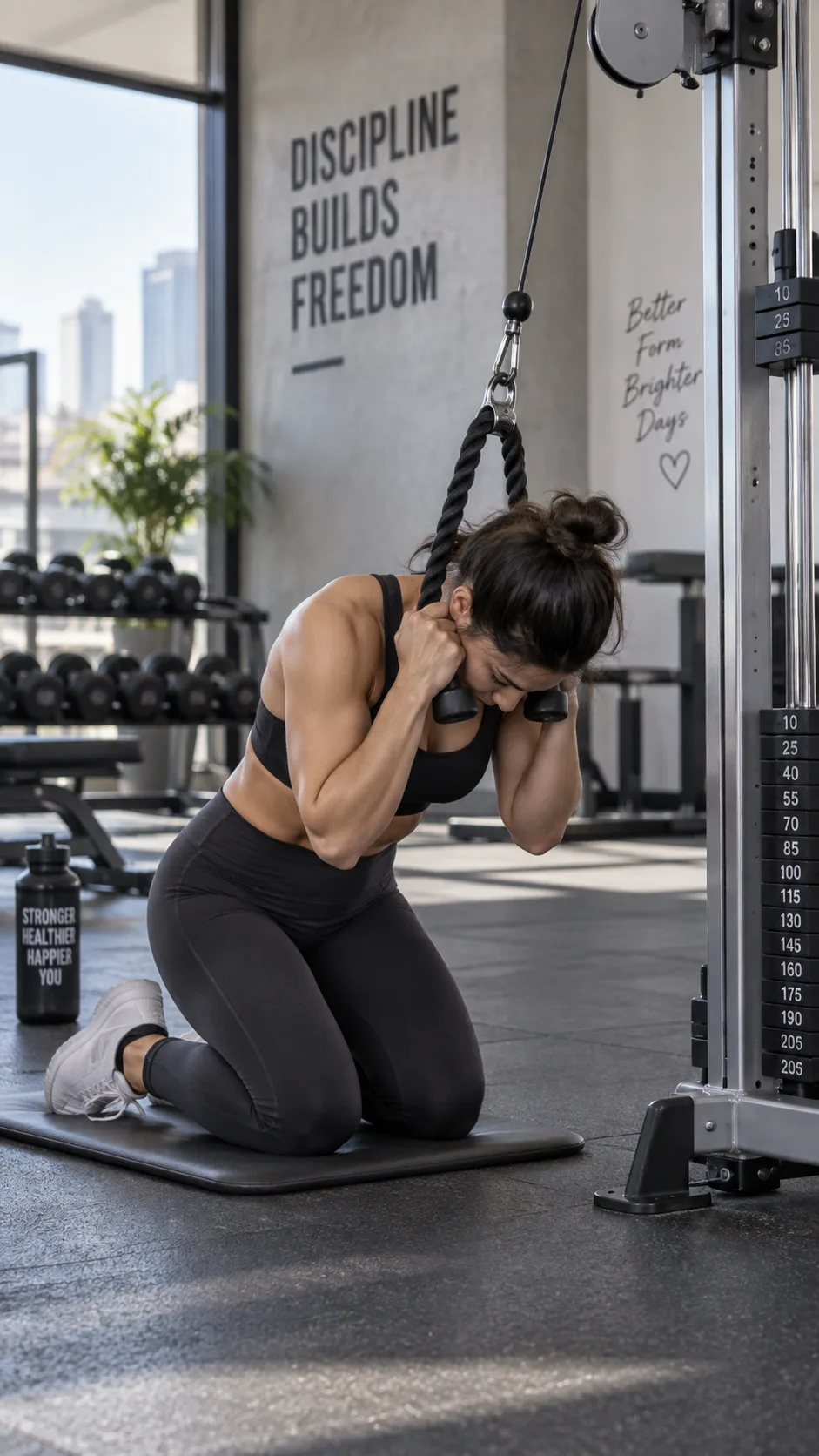
Core: Cable crunch
Kneel facing a high cable, hold the rope attachment behind your head, and crunch downward by flexing your spine. This is infinitely more effective than floor crunches because you can progressively overload with actual weight. For more core-focused machine exercises, check out this guide to core workouts using gym machines.
- Sets: 3
- Reps: 15-20
- Tip: Think about bringing your ribcage toward your pelvis. Don’t just bow forward at the hips.
The workout at a glance
Here’s your complete routine summarized in one clean list. Print it, screenshot it, tattoo it on your forearm, whatever works for you:
- Machine Chest Press : 3 x 10-12
- Lat Pulldown : 3 x 10-12
- Seated Cable Row : 3 x 10-12
- Machine Shoulder Press : 3 x 10-12
- Leg Press : 3-4 x 10-15
- Leg Extension : 3 x 12-15
- Lying Leg Curl : 3 x 10-12
- Cable Bicep Curl : 3 x 12-15
- Cable Tricep Pushdown : 3 x 12-15
- Cable Crunch : 3 x 15-20
How often should you do this workout?
For most people, performing this full body machine workout 2-3 times per week with at least one rest day between sessions hits the sweet spot. This frequency aligns with recommendations from the American College of Sports Medicine, which suggests training each major muscle group 2-3 times weekly for optimal results.
If you train three times per week, a Monday-Wednesday-Friday schedule works beautifully. Your muscles need 48-72 hours to recover and grow, and this schedule respects that biological reality.
Can you do it more often? Technically, yes. But recovery is where muscles actually GROW. Training is the stimulus; rest is the response. Skip recovery and you’re writing checks your body can’t cash.
Progressive overload: the secret sauce
Doing the same weight for the same reps week after week is a recipe for exactly zero progress. Progressive overload means gradually increasing the demands you place on your muscles over time. It’s the single most important principle in strength training, and it’s non-negotiable.
Here’s a simple framework that works:
- Start with a weight where you can complete all prescribed reps with good form
- When you can hit the top of the rep range on all sets (say, 12 reps on every set), bump the weight up by the smallest increment available
- With the new weight, you’ll probably drop back to the lower end of the rep range (maybe 8-9 reps). That’s perfectly normal.
- Build back up to the top of the range and repeat
Track your weights and reps in a notebook or app. I personally use a simple notes app on my phone. Nothing fancy, but it keeps me honest and prevents the classic “wait, what did I lift last time?” moment.
Common mistakes that sabotage your results
Even with a solid routine, a few common errors can undermine your progress. Let me save you the months of frustration I experienced learning these the hard way.
Going too heavy too soon
Your ego is not your amigo in the gym. Loading up the leg press with every plate in the building and then moving it two inches isn’t a rep. It’s a cry for help. Use a full range of motion with a weight you can actually control. Partial reps build partial muscles.
Ignoring the eccentric phase
If the weight crashes down after every rep, you’re leaving gains on the table. The eccentric (lowering) portion of each rep should take 2-3 seconds. Research from PubMed consistently shows that eccentric training is a potent stimulus for muscle hypertrophy. Slow it down.
Skipping the warm-up
I know. Warming up is boring. Nobody has ever posted an Instagram story of their warm-up and gotten excited comments. But 5-10 minutes on a treadmill or bike plus 1-2 light sets of your first exercise prepares your joints, increases blood flow to your muscles, and dramatically reduces injury risk. Do it anyway.
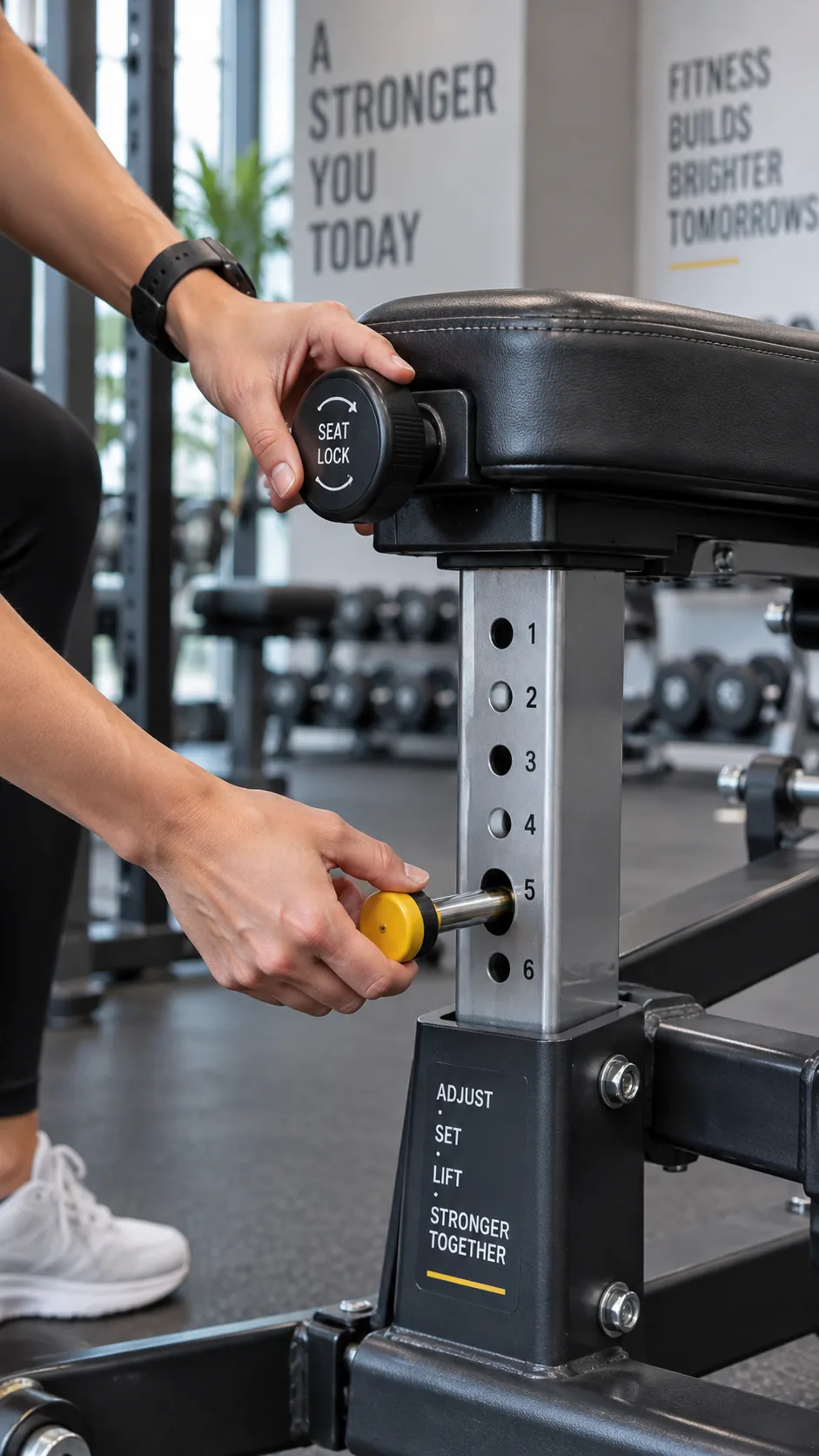
Not adjusting the machine to your body
Every machine has adjustable seats, pads, and handles for a reason. Ever wondered why an exercise feels awkward even though you’ve seen other people do it effortlessly? Nine times out of ten, the machine isn’t set up for YOUR body. Take 30 seconds to adjust it properly before each exercise. Your joints will thank you.
Nutrition: the other half of the equation
You can follow the perfect machine workout and still see disappointing results if your nutrition is an afterthought. Muscle growth requires adequate protein. Aim for roughly 0.7-1 gram of protein per pound of body weight daily. That’s the range supported by the majority of sports nutrition research.
You also need enough total calories to support recovery. Training in a severe caloric deficit while trying to build muscle is like trying to build a house while someone keeps stealing your bricks. It doesn’t work well.
Eat whole foods, prioritize protein at every meal, stay hydrated, and get 7-9 hours of sleep. These aren’t sexy recommendations, but they’re the ones that actually move the needle. The National Strength and Conditioning Association consistently stresses that recovery practices matter just as much as the training itself.
Who is this workout best for?
This full body machine workout is ideal for several groups of people:
- Beginners who want a structured, safe introduction to resistance training
- Intermediate lifters looking for a time-efficient full body session
- Anyone training solo without a spotter
- People returning from injury who need controlled movement patterns
- Busy professionals who want maximum results in minimum time
If you’re a woman looking for a program specifically designed around female training considerations, you might find this full body workout plan for women useful too.
When should you switch things up?
Stick with this routine for at least 8-12 weeks before making major changes. Program hopping every two weeks is one of the biggest reasons people don’t see results. Your body needs consistent stimulus to adapt, and adaptation IS the result.
After 8-12 weeks, you can modify the routine by swapping exercises (say, replace the machine chest press with a pec deck fly), changing rep ranges, or adjusting volume. But the core structure, hitting every major muscle group with progressive overload, should stay constant.
The best program isn’t the most complicated one. It’s the one you actually follow consistently 🙂
Wrapping it up
A full body workout at the gym with machines is one of the most practical, effective, and underrated approaches to building strength and muscle. Machines provide safety, consistency, and the ability to train close to failure without a spotter. Those are advantages that free weights simply can’t match in every scenario.
Here’s your action plan: walk into the gym with this routine, adjust every machine to fit YOUR body, track your weights, progressively overload, eat enough protein, and stay consistent for at least 8-12 weeks. That’s it. No secret formula, no magic exercise, no overpriced supplement required.
The gym floor doesn’t have to feel like a maze of confusing equipment anymore. You have a plan now. Go use it.
