

Your upper body is doing more work than you think. Every time you carry groceries, push open a heavy door, or hoist a suitcase into an overhead bin while the line grows increasingly impatient behind you, your arms, back, and core are doing that work together. So why do so many people neglect training them properly?
You don’t need a complicated 17-exercise routine with fancy equipment to build real upper body strength. You need a smart, focused plan that hits the right muscles in the right order. That’s what this routine is built around.
Whether you’re a beginner who’s never touched a dumbbell or someone who’s been lifting for a while and wants a cleaner structure, this upper body strength workout gives you a straightforward path to stronger arms, a more defined back, and a core that actually does its job.
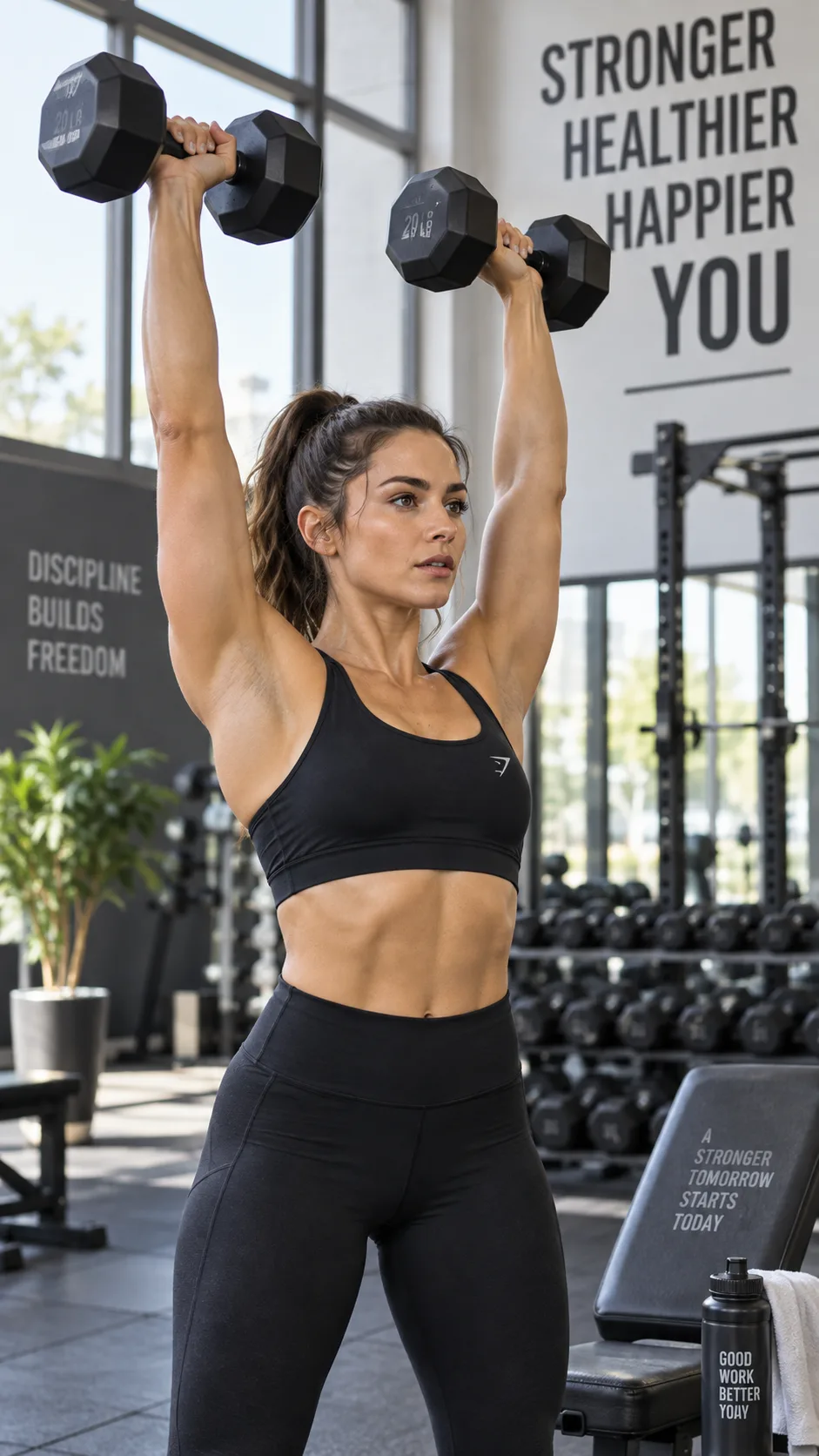
Why Upper Body Training Matters More Than You Think
Training your upper body isn’t just about aesthetics, though looking good in a t-shirt is a perfectly valid reason. Upper body strength directly affects your daily life, posture, and injury prevention. Weak shoulders and a neglected back are practically an open invitation for chronic pain.
According to the American College of Sports Medicine, adults should perform resistance training for all major muscle groups at least two days per week. Your upper body contains some of the largest and most functional muscle groups in your body (your lats, traps, deltoids, pectorals, and the entire posterior chain). Ignoring them is like only changing the oil on half your engine.
Upper body strength also builds a foundation for virtually every other exercise you do. Want a stronger deadlift? You need grip strength and a solid back. Want better stability during lunges? Your core has to hold everything together. It’s all connected.
The Muscles You’ll Target
Before we jump into the routine, here’s a quick breakdown of the primary muscle groups this workout hits:
- Shoulders (Deltoids): front, lateral, and rear, responsible for overhead movements and arm rotation
- Back (Lats, Traps, Rhomboids): the powerhouse behind pulling movements and posture
- Chest (Pectorals): pushing movements, from bench press to pushups
- Arms (Biceps & Triceps): the muscles everyone wants to see, handling flexion and extension
- Core (Rectus Abdominis, Obliques, Transverse Abdominis): stabilization, rotation, and bracing for literally everything
The Warm-Up: Don’t Skip This (Seriously)
I know, I know. Warming up feels like the broccoli of your workout. Nobody’s excited about it, but your body absolutely needs it. Jumping straight into heavy presses with cold shoulders is a recipe for a rotator cuff injury, and trust me, those are zero fun.
Spend 5-7 minutes on a dynamic warm-up before touching any weights. Here’s what I recommend:
- Arm circles: 15 forward, 15 backward
- Band pull-aparts: 15 reps (use a light resistance band)
- Cat-cow stretches: 10 reps to mobilize your thoracic spine
- Scapular pushups: 10 reps to activate your serratus anterior
- Inchworms: 5 reps to warm up your hamstrings, core, and shoulders simultaneously
This isn’t busywork. You’re priming your joints, increasing blood flow to the muscles you’re about to load, and activating stabilizers that protect you under weight. Think of it as turning the key in the ignition before you floor it.
The Complete Upper Body Strength Workout Routine
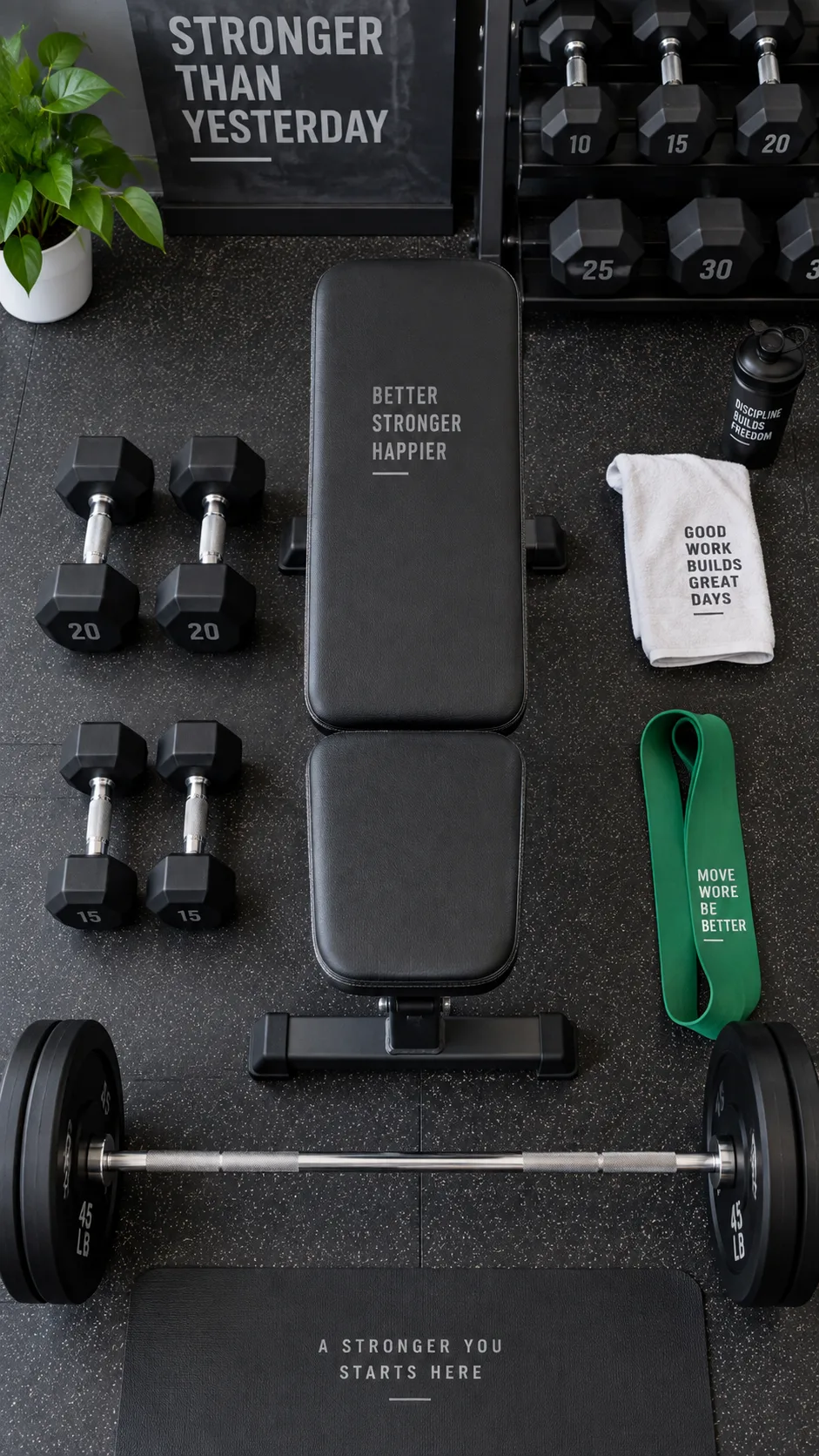
Here’s the full routine. It uses a combination of compound and isolation exercises, ordered so you hit the big movements first (when you’re freshest) and finish with targeted work. You’ll need dumbbells, a barbell or cable machine, and a bench. Total time: roughly 45-55 minutes.
Exercise 1: Barbell Overhead Press, 4 Sets x 6-8 Reps
The overhead press is the king of shoulder exercises, and I will fight anyone who says otherwise. It builds your anterior and lateral deltoids, engages your triceps, and demands serious core stability. Stand with your feet shoulder-width apart, brace your core like someone’s about to poke you in the stomach, and press the bar straight overhead.
Control the descent. Don’t let gravity do the work on the way down. Lower the bar to your collarbone with a 2-3 second negative, then drive it back up explosively. If you can’t maintain a neutral spine, drop the weight. Your ego will recover faster than a herniated disc.
Exercise 2: Dumbbell Bench Press, 4 Sets x 8-10 Reps
Why dumbbells instead of a barbell? Because dumbbells force each arm to work independently, which exposes and corrects imbalances. The increased range of motion also means more chest activation.
Set your bench to flat, retract your shoulder blades (squeeze them together like you’re holding a pencil between them), and press the dumbbells up in an arc. Keep your feet firmly planted and maintain that arch in your lower back. It’s natural and protective, not “cheating.”
Exercise 3: Bent-Over Barbell Rows, 4 Sets x 8-10 Reps
If you want a thick, strong back, bent-over rows are non-negotiable. This compound movement hammers your lats, rhomboids, rear delts, and even your biceps as secondary movers. Hinge at the hips until your torso is roughly 45 degrees to the floor, and pull the bar toward your lower ribcage.
The most common mistake? Using momentum. If you’re swinging the weight up like you’re trying to start a lawnmower, you’ve gone too heavy. Slow it down, squeeze at the top for a full second, and feel your shoulder blades pinch together. That’s where the work actually happens.
Exercise 4: Pull-Ups or Lat Pulldowns, 3 Sets x 8-12 Reps
Can you do pull-ups? Great, do them. Can’t do them yet? No shame at all. Lat pulldowns give you the same movement pattern with adjustable resistance. Both variations target your lats, biceps, and forearms while building the vertical pulling strength that most people desperately lack.
For pull-ups, grip the bar slightly wider than shoulder width, initiate the pull by driving your elbows down (not just yanking with your hands), and get your chin over the bar. For lat pulldowns, avoid leaning way back. A slight lean is fine, but turning it into a rowing motion defeats the purpose.
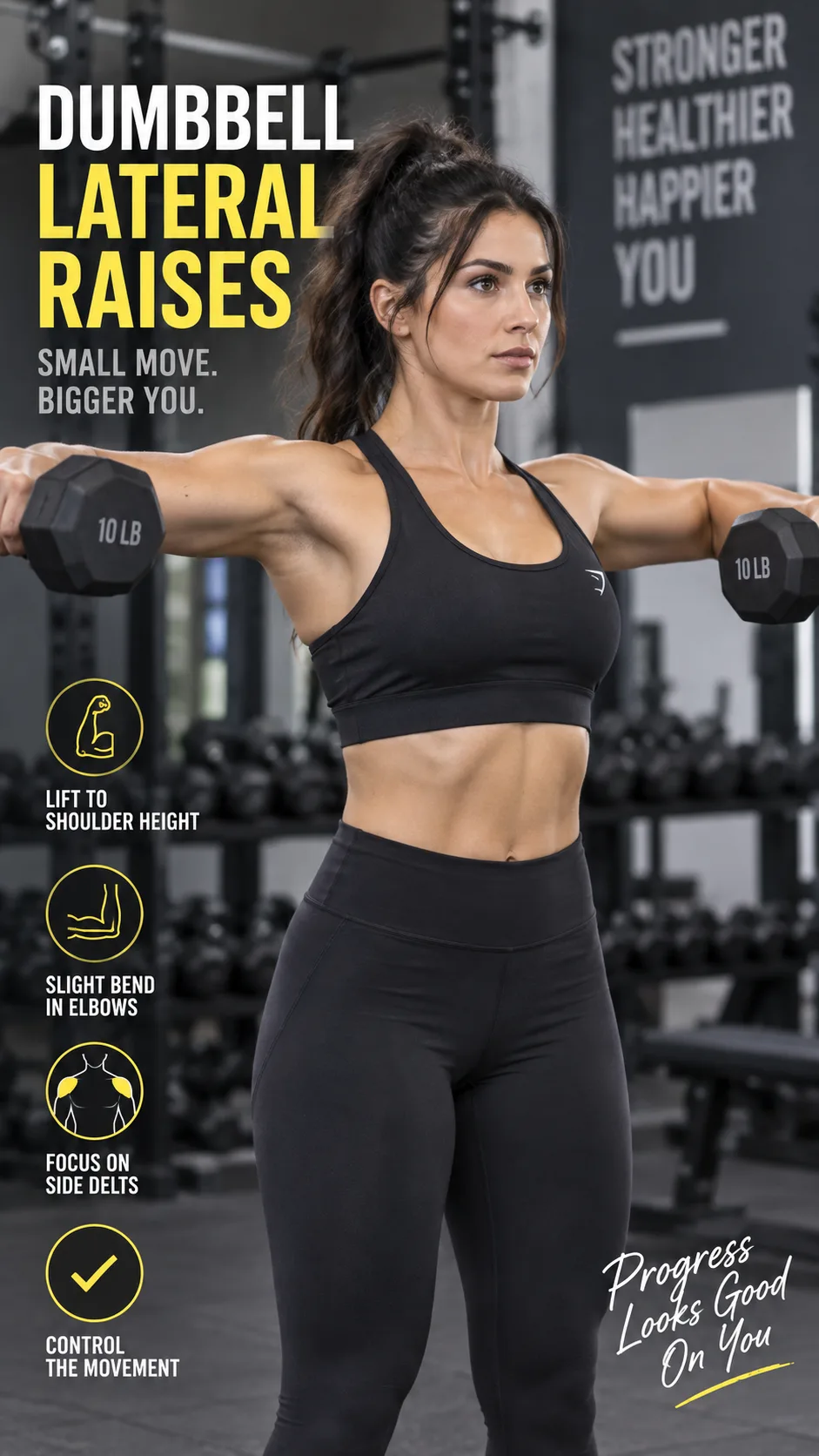
Exercise 5: Dumbbell Lateral Raises, 3 Sets x 12-15 Reps
Ever wondered what gives shoulders that rounded, “capped” look? It’s the lateral deltoid, and lateral raises isolate it perfectly. Use lighter weight than you think you need. This is the exercise where ego-lifting looks the most ridiculous.
Stand with a slight bend in your elbows, raise the dumbbells to shoulder height (not higher), and lower them under control. A helpful cue: imagine pouring water out of two pitchers as you lift. That slight rotation at the top increases lateral delt engagement.
Exercise 6: Face Pulls, 3 Sets x 15 Reps
This is the most underrated exercise in existence, IMO. Face pulls strengthen your rear delts, external rotators, and lower traps — the muscles that keep your shoulders healthy and your posture upright. According to the National Strength and Conditioning Association, posterior shoulder strengthening significantly reduces injury risk in overhead athletes.
Set a cable machine to face height, grab a rope attachment with an overhand grip, and pull it toward your face while externally rotating your hands. At the end position, your hands should be beside your ears with your upper arms parallel to the floor. Hold for a beat, squeeze, and return slowly.
Exercise 7: Bicep Curls, 3 Sets x 10-12 Reps
Yes, curls get a spot in this routine. No, I won’t apologize. Compound movements hit the biceps indirectly, but a few sets of dedicated curls make sure you’re maximizing arm development. Use dumbbells, an EZ-bar, or a cable. Just pick one and stick with it for the training cycle.
Keep your elbows pinned to your sides, curl the weight up without swinging your torso, and squeeze at the top. The eccentric (lowering phase) matters just as much as the lift. Take a full 2-3 seconds to lower the weight. Your biceps will thank you. Eventually.
Exercise 8: Tricep Dips or Overhead Tricep Extension, 3 Sets x 10-12 Reps
Your triceps make up roughly two-thirds of your upper arm. If you want bigger arms, you should actually spend more time on triceps than biceps. Wild concept, right?
Bench dips work well for beginners. For intermediate lifters, grab a dumbbell and perform overhead extensions. Hold it behind your head with both hands and extend straight up. Keep your elbows close to your ears and avoid flaring them out. If you want a strong lockout on any pressing movement, strong triceps are the answer.
Exercise 9: Dead Bugs, 3 Sets x 10 Reps Per Side
We’re finishing with core work, and no, I’m not prescribing crunches. Dead bugs train your core the way it actually functions in real life, through anti-extension and stabilization. If you want more core training ideas, check out these 9 core moves that build strength without endless crunches.
Lie on your back with your arms extended toward the ceiling and your knees bent at 90 degrees. Slowly extend your right arm overhead while extending your left leg straight, keeping your lower back pressed firmly into the floor. Return and repeat on the opposite side. If your lower back lifts off the ground, you’ve lost the battle. Reset and try again.
Sets, Reps, and Rest Periods: A Quick Reference
Here’s the entire routine in a clean, scannable format:
- Barbell Overhead Press: 4 x 6-8 reps, 90 seconds rest
- Dumbbell Bench Press: 4 x 8-10 reps, 90 seconds rest
- Bent-Over Barbell Rows: 4 x 8-10 reps, 90 seconds rest
- Pull-Ups or Lat Pulldowns: 3 x 8-12 reps, 60-90 seconds rest
- Dumbbell Lateral Raises: 3 x 12-15 reps, 60 seconds rest
- Face Pulls: 3 x 15 reps, 60 seconds rest
- Bicep Curls: 3 x 10-12 reps, 60 seconds rest
- Tricep Dips or Overhead Extension: 3 x 10-12 reps, 60 seconds rest
- Dead Bugs: 3 x 10 per side, 45 seconds rest
Total working sets: 30. That’s a substantial session that covers every major upper body muscle group without keeping you in the gym for two hours.
How Often Should You Train Upper Body?
For most people, training your upper body twice per week hits the sweet spot for both stimulus and recovery. This aligns with research published in the Journal of Strength and Conditioning Research, which found that training each muscle group twice weekly produces better hypertrophy than once-per-week training.
You can run this exact routine on Monday and Thursday, for example, leaving room for a dedicated leg day and a full body session on the remaining training days. On the second day, swap a few exercises if you want a fresh stimulus. Replace barbell bench with incline dumbbell press, or swap barbell rows for single-arm dumbbell rows. Same muscles, different angle.
Make sure you’re resting at least 48 hours between upper body sessions. Muscles grow during recovery, not during the workout itself. Training the same muscles day after day without rest doesn’t make you dedicated. It makes you overtrained :/
Progressive Overload: The Secret Ingredient
Here’s something people miss all the time: doing the same weight for the same reps week after week won’t build more strength. Your body adapts. It gets comfortable. And comfortable muscles don’t grow.
You need to progressively overload, meaning you systematically increase the demand on your muscles over time. There are several ways to do this:
- Add weight: Even 2.5 lbs per side counts. Small jumps add up fast.
- Add reps: If you hit 8 reps last week, aim for 9 this week with the same weight.
- Add sets: Go from 3 to 4 working sets on a main exercise.
- Slow the tempo: Use a 3-second eccentric to increase time under tension.
- Reduce rest periods: Compressing rest from 90 to 75 seconds increases metabolic stress.
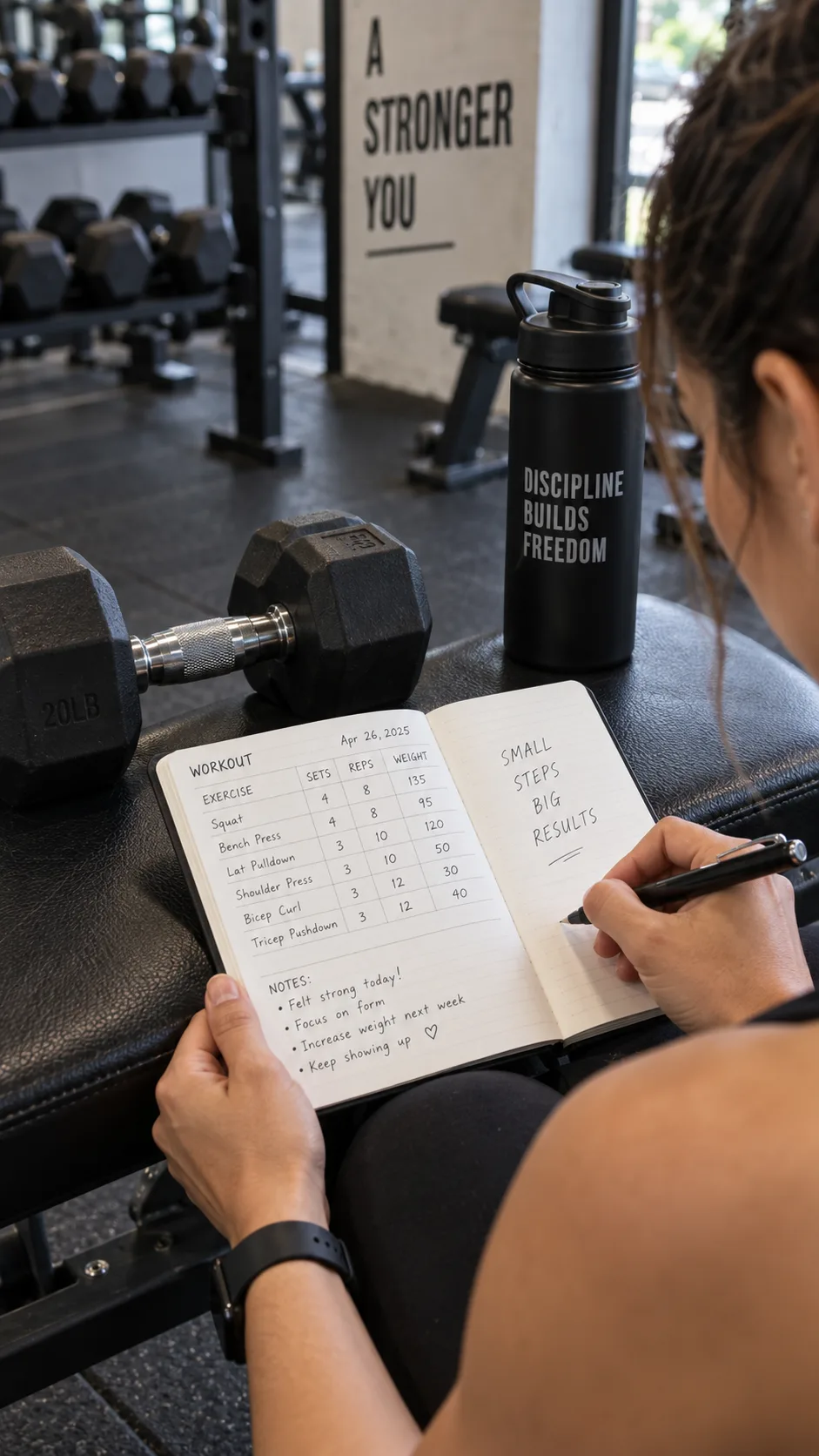
Track your workouts. Write down every set, every rep, every weight. If you don’t measure it, you can’t improve it. A simple notebook or a free app like Strong works perfectly.
Common Mistakes That Kill Your Progress
I’ve seen these errors hundreds of times in gyms, and I’ve made most of them myself. Save yourself the wasted months and avoid these:
Going Too Heavy Too Soon
Your form breaks down, you recruit the wrong muscles, and you set yourself up for injury. Master the movement with a moderate weight before you chase numbers. Nobody at the gym is judging you for using 20-pound dumbbells, and if they are, their opinion is worth exactly nothing.
Neglecting Your Back
The classic “mirror muscle” trap. People love training chest and biceps because they can see them. But your back contains some of the largest muscles in your upper body. Skipping back work creates muscle imbalances that roll your shoulders forward and wreck your posture. Match your pulling volume to your pushing volume, at minimum.
Ignoring Core Stability
Your core isn’t just about visible abs. It’s the foundation that transfers force between your upper and lower body. A weak core limits how much weight you can safely press, pull, and carry. Treat core training as essential infrastructure, not an optional add-on.
Skipping the Boring Stuff
Face pulls, rotator cuff work, scapular exercises. These aren’t glamorous. They don’t get likes on social media. But they keep your shoulders functional for decades. Injury prevention IS performance enhancement.
Nutrition Tips for Upper Body Strength
Training hard with poor nutrition is like building a house with no foundation. You need the raw materials to support muscle repair and growth. Here are the nutrition basics that actually matter:
- Protein: Aim for 0.7-1 gram per pound of body weight daily. The International Society of Sports Nutrition recommends this range for anyone engaged in regular resistance training.
- Calories: You need to eat enough to support your training. A slight caloric surplus (200-300 calories above maintenance) optimizes muscle building. Trying to build muscle in a severe deficit is like trying to fill a pool with a garden hose while someone drains it.
- Carbohydrates: Carbs fuel your workouts. Don’t fear them. Eat complex carbs like oats, rice, and potatoes around your training sessions.
- Hydration: Even mild dehydration reduces strength output by up to 20%. Drink water throughout the day, not just during your workout.
How to Modify This Workout for Beginners
If you’re just starting out, this routine might look intimidating. You can absolutely scale it down without losing effectiveness. FYI, every experienced lifter started somewhere, and most of them started with lighter weights than they’d probably admit 🙂
Here’s how to modify:
- Replace barbell overhead press with seated dumbbell press (more stability)
- Replace pull-ups with assisted pull-ups or lat pulldowns
- Drop the total sets from 30 to 20. Do 3 sets instead of 4 on compound lifts.
- Use the RPE scale: aim for a 7 out of 10 effort (you could do 3 more reps if you had to)
- Focus on form over weight for the first 4-6 weeks
If you’re completely new to strength training, a beginner Pilates routine can also help you build foundational core stability and body awareness before you start loading heavier weights.
Putting It All Together
This upper body strength workout isn’t revolutionary. It doesn’t have a catchy name or a celebrity endorsement. But it works, and it works because it’s built on fundamentals that have produced results for decades.
Your action plan: run this routine twice per week for 8 weeks. Track every session. Progressively overload. Eat enough protein. Sleep 7-8 hours a night. Do those four things consistently, and you’ll build noticeably stronger arms, a thicker back, and a core that performs when you actually need it.
The best workout program in the world means nothing if you don’t show up and do the work. So bookmark this page, screenshot the exercise list, and get after it. Your future self, the one carrying all the groceries in one trip without breaking a sweat, will be grateful.
