
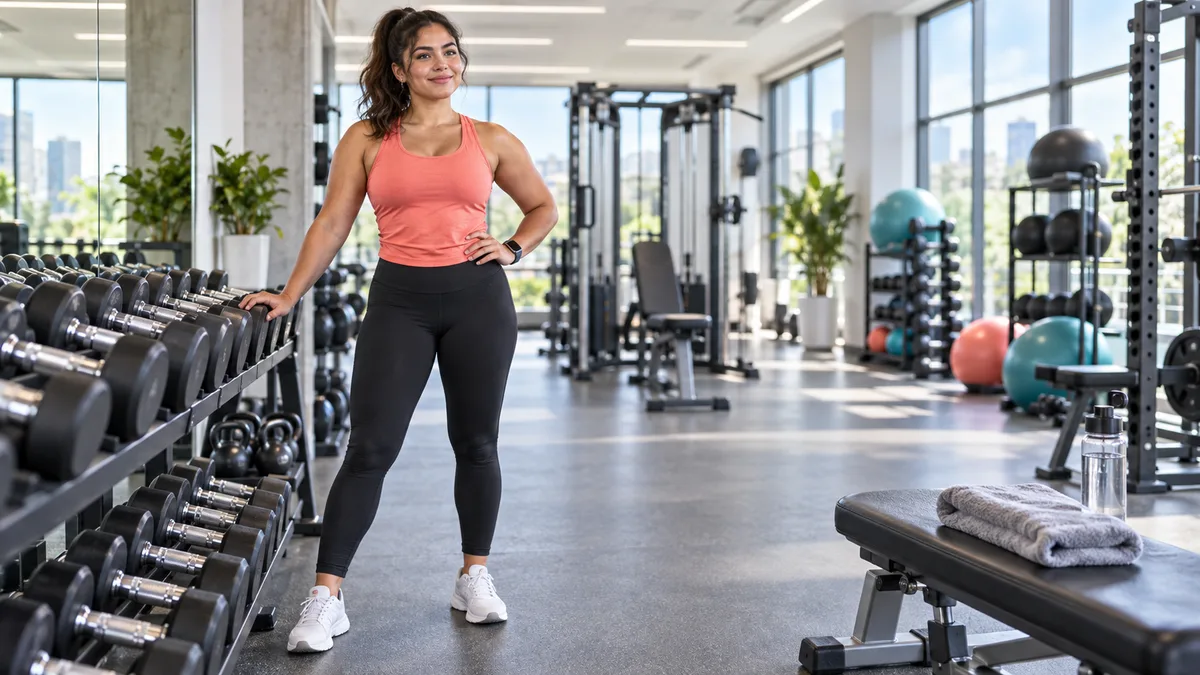
You signed up for the gym. Maybe you even bought new leggings. And now you’re standing in your kitchen wondering, “Okay, but what do I DO when I get there?” That question alone stops more women from starting than anything else. So let’s fix that right now, with a complete first-week plan you can screenshot and bring with you.
This isn’t a vague “just start light and listen to your body” pep talk. This is a day-by-day gym routine for beginners that tells you exactly which exercises to do, how many reps, and when to rest. No guesswork. No wandering around pretending to stretch while you figure out which machine does what.
Why your first week at the gym matters so much
Here’s the truth nobody tells you: your first week isn’t about results. It’s about building a habit loop. You won’t lose ten pounds. You won’t sculpt visible abs. But you WILL teach your brain that showing up at the gym is something you just… do now.
Research from the European Journal of Social Psychology suggests it takes an average of 66 days to form a new habit. Your first week lays the foundation for all 66 of those days. Mess it up with an overly ambitious plan, and you’ll be too sore to return by Wednesday.
That’s exactly why this beginner workout plan keeps things simple, structured, and (most importantly) repeatable. You should walk out of every session thinking “I could do that again tomorrow” rather than “I need a stretcher.”
What you need before day one
You don’t need fancy equipment, a personal trainer on speed dial, or a pre-workout supplement that tastes like battery acid. Here’s your real checklist:
- Comfortable workout clothes, nothing restrictive. If you need ideas, check out our guide on workout outfits for women at the gym.
- A water bottle, because dehydration makes everything harder and crankier.
- Supportive shoes. Running shoes work fine for week one. Skip the Converse.
- This plan on your phone. Screenshot it, bookmark it, whatever works.
- A towel, because nobody wants to be that person leaving sweat puddles on the bench.
That’s it. Seriously. You don’t need lifting gloves, a belt, or a gym bag that costs more than your rent. Keep it simple and just show up.
Your no-guesswork first week gym routine for beginners
This plan follows a 3-day workout schedule with rest days built in. Three days is the sweet spot for beginners, enough to build momentum without burning out. You’ll train Monday, Wednesday, and Friday (or any three non-consecutive days that work for your life).
Every workout starts with a 5-minute warm-up on the treadmill or stationary bike. Not a sprint. Not a hill climb. Just easy movement to get blood flowing and joints loosened up.
Day 1: Full body introduction (Monday)
Your very first session covers all the basics. Think of it as a handshake with every major muscle group. Go light. If you’re not sure about the weight, start with just the bar or the lightest dumbbells available. Your ego will survive.
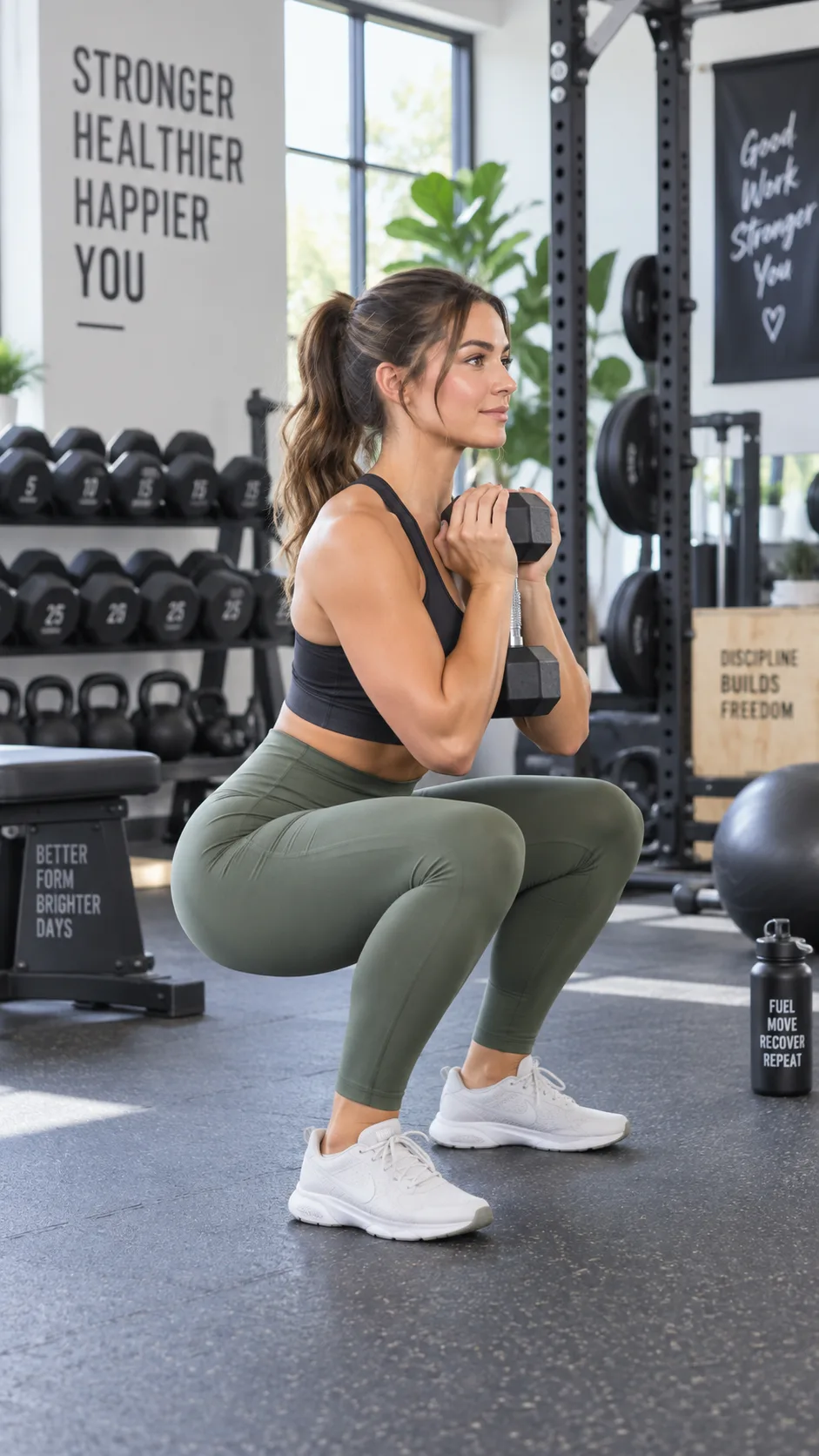
- Goblet Squats — 3 sets of 10 reps (hold a light dumbbell at your chest)
- Dumbbell Bench Press — 3 sets of 10 reps (flat bench, moderate weight)
- Lat Pulldown Machine — 3 sets of 10 reps (wide grip)
- Dumbbell Romanian Deadlifts — 3 sets of 10 reps (focus on feeling your hamstrings)
- Overhead Dumbbell Press — 3 sets of 10 reps (seated or standing)
- Plank Hold — 3 holds of 20 to 30 seconds
Rest 60 to 90 seconds between sets. The entire workout should take about 35 to 45 minutes. If it takes longer, you’re resting too much between scrolling Instagram stories. Put the phone down. 🙂
Day 2: Rest (Tuesday)
Rest doesn’t mean “lie on the couch and stare at the ceiling,” although that’s also fine. Light walking, gentle stretching, or a casual yoga video all count as active recovery. The goal is to let your muscles repair without going completely sedentary.
You might feel some soreness today. That’s called DOMS (Delayed Onset Muscle Soreness), and it’s completely normal after your first workout. It’ll ease up as your body adapts over the coming weeks.
Day 3: Upper body focus (Wednesday)
Today you give your upper body a bit more attention. Why? Because most women skip upper body training, and that’s a mistake. Strong arms, shoulders, and back muscles make EVERYTHING in daily life easier. Carrying groceries, opening jars, picking up kids, holding your ground in an argument (kidding… mostly).
- Seated Cable Row — 3 sets of 12 reps
- Dumbbell Chest Press (Incline) — 3 sets of 10 reps
- Lateral Raises — 3 sets of 12 reps (light dumbbells, these are humbling)
- Bicep Curls — 3 sets of 12 reps
- Tricep Rope Pushdowns — 3 sets of 12 reps
- Dead Bug — 3 sets of 10 reps (core stability exercise)
If you want to go deeper on chest and tricep training after this first week, our chest day workout plan for women breaks everything down in detail.
Day 4: Rest (Thursday)
Same deal as Tuesday. Move gently, hydrate, eat enough protein, and get solid sleep. Recovery is where your muscles grow and adapt. Skipping rest days doesn’t make you tougher. It just makes you tired and cranky.
Day 5: Lower body focus (Friday)
Friday is for legs and glutes. And before you ask, no, squats alone won’t give you the results you want. You need variety. This session hits your quads, hamstrings, glutes, and calves from multiple angles.
- Barbell or Bodyweight Squats — 3 sets of 12 reps
- Leg Press Machine — 3 sets of 10 reps
- Walking Lunges — 3 sets of 10 reps per leg
- Leg Curl Machine — 3 sets of 12 reps
- Glute Bridges — 3 sets of 15 reps (bodyweight or with a dumbbell on your hips)
- Standing Calf Raises — 3 sets of 15 reps
This session will probably leave your legs feeling like jelly on Saturday morning. That means you did it right. Walk it off, eat well, and enjoy the weekend.
Days 6 and 7: Weekend rest and recovery
Take both days off from the gym. Go for a walk, do some foam rolling, or try a gentle mobility routine on YouTube. Your body needs this time to rebuild, especially during your first week when everything is brand new to your muscles.
The weekend is also a great time to meal prep for the week ahead. Good nutrition fuels good workouts, and you can’t out-train a bad diet no matter how hard you try.
How to use gym machines without feeling lost
Every single person who looks comfortable on gym equipment was once a confused beginner staring at a cable machine like it was an alien artifact. You are not alone in this. Here’s how to handle it:
- Read the diagrams. Almost every machine has a little picture showing proper form. Use it shamelessly.
- Ask the staff. Gym employees literally get paid to help you. That’s their job.
- Watch one rep before you sit down. If someone else is using the machine, observe casually. Not in a creepy way, obviously.
- Start with the lowest weight setting. Figure out the movement pattern first, then add resistance.
This video from Sydney Cummings walks through common beginner gym exercises with excellent form cues. Definitely worth a watch before your first session:
Common beginner mistakes (and how to dodge every single one)
I’ve made every one of these mistakes personally. Learn from my embarrassing history so you don’t have to repeat it.
1. Going too heavy too fast
Your first week is about learning movement patterns, NOT about setting personal records. Lift lighter than you think you should. If the weight feels easy, great. That means your form is probably clean. You’ll add weight progressively over the coming weeks.
2. Skipping the warm-up
Five minutes on the treadmill isn’t optional. It’s insurance against injury. Cold muscles don’t stretch well, don’t perform well, and don’t recover well. Ever tried sprinting first thing in the morning without even walking first? Exactly. Don’t do that with weights either.
3. Copying random Instagram workouts
That influencer doing single-leg cable kickbacks on a Bosu ball while holding a kettlebell? She’s been training for years. That exercise is NOT for your first week. Stick to the fundamentals. Compound movements like squats, presses, and rows build the strongest foundation.
4. Not eating enough
A shocking number of women start exercising and simultaneously slash their calories. That’s a recipe for fatigue, weakness, and quitting by week three. You need adequate fuel, especially protein, to recover and build lean muscle. The American Council on Exercise recommends 0.54 to 0.91 grams of protein per pound of body weight for active individuals.
5. Comparing yourself to everyone else
The woman deadlifting 200 pounds in the corner started exactly where you are right now. Everyone has a Day 1. Your only competition is yesterday’s version of yourself. Put your headphones in, focus on your plan, and tune everything else out.
Nutrition tips to power your first week
You can’t talk about a gym routine for beginners without talking about food. Training breaks your muscles down. Nutrition builds them back up stronger. Here’s what to prioritize:
- Protein at every meal. Chicken, fish, eggs, Greek yogurt, tofu, or protein shakes all work perfectly.
- Complex carbs before training. Oatmeal, rice, whole grain bread, or a banana gives you sustained energy.
- Stay hydrated. Aim for at least 2 liters of water daily, more on workout days.
- Don’t fear fats. Avocados, nuts, olive oil, and fatty fish support hormones and recovery.
- Eat ENOUGH. A moderate calorie deficit is fine if fat loss is your goal, but extreme restriction sabotages gym performance.
If you’re looking for a structured eating approach to pair with this workout plan, our guide on heart-healthy diets for women covers balanced nutrition that supports both fitness and overall health.
And here’s a little secret: what you eat in the 1 to 2 hours after training matters more than most people realize. A combo of protein and carbs post-workout (like a protein shake with a banana) kickstarts recovery fast. The International Society of Sports Nutrition backs this up with years of research.
How to track your progress without obsessing
Stepping on the scale every morning is a fast track to frustration. Your weight fluctuates daily based on water retention, hormones, sleep quality, and what you ate last night. It tells you almost nothing useful in week one.
Better ways to track progress:
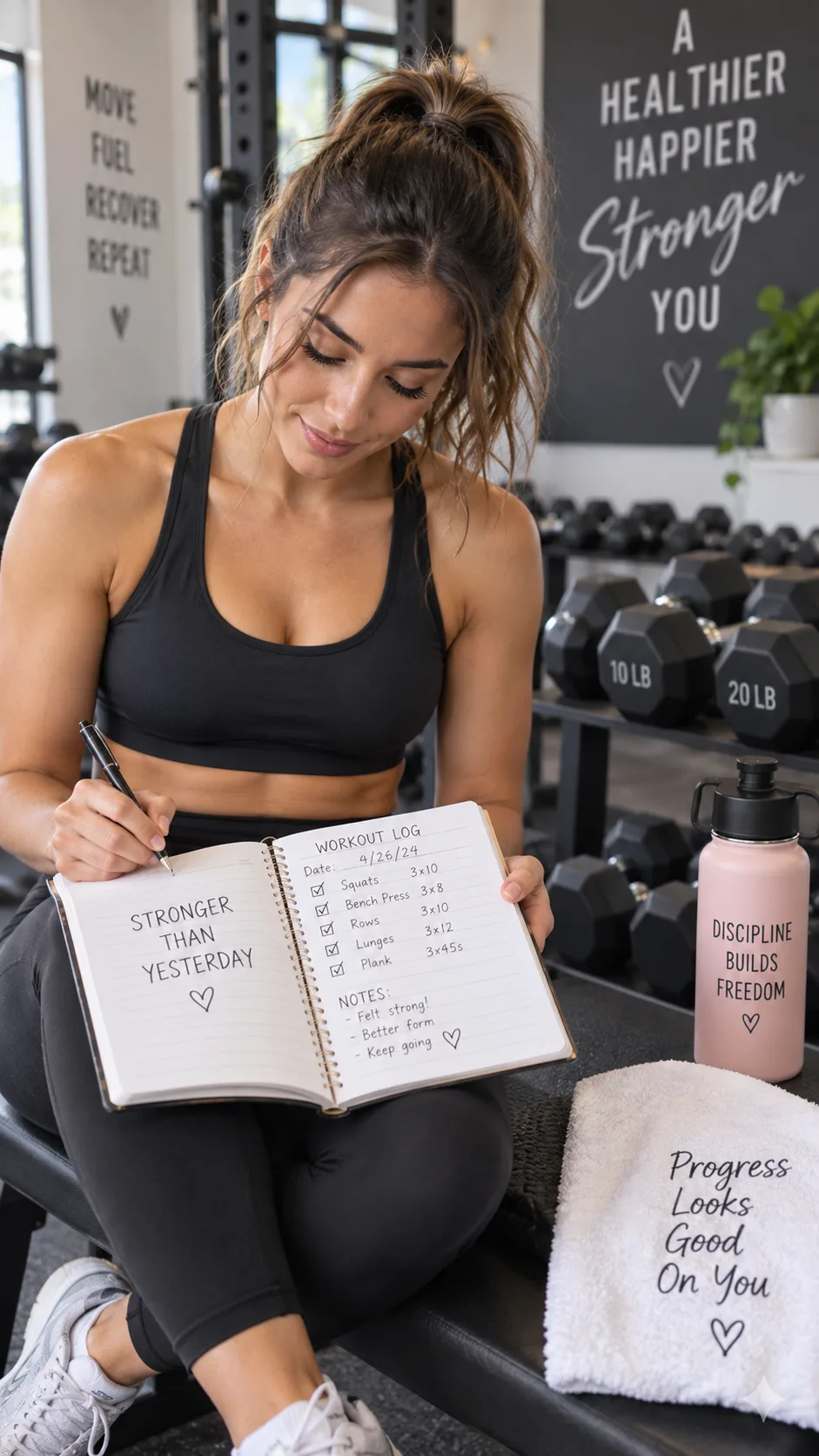
- Write down your weights and reps. Use your phone’s notes app or a simple notebook. When you can do 12 reps comfortably, bump the weight up slightly next session.
- Take progress photos once every two weeks, same lighting, same angle. You’ll notice changes the mirror misses.
- Track how you feel. Energy levels, sleep quality, mood, and confidence all improve with consistent training. These matter more than a number on a scale.
- Celebrate showing up. Completed all three workouts this week? That’s a genuine win. Acknowledge it.
What happens after week one?
Great question. You survived the first week, so now what? Here’s the game plan for weeks 2 through 4:
Week 2: Repeat the same workout structure but try to increase the weight slightly on 2 to 3 exercises. Even adding 2.5 pounds counts. This concept is called progressive overload, and it’s the single most important principle in strength training.
Week 3: Add one extra set to your compound movements (squats, bench press, rows). So instead of 3 sets, you’ll do 4. Keep the reps the same.
Week 4: Reassess. How do you feel? Are you recovering well? Do you want to add a fourth training day? At this point, you might enjoy splitting into a proper full body gym workout routine for women that introduces more exercise variety.
The principle here: change ONE variable at a time. More weight, OR more sets, OR more days. Never all three at once. Your body needs time to adapt, and patience pays off massively in the long run.
A quick word on gym anxiety
It’s real, it’s valid, and almost every beginner feels it. Walking into a gym full of people who seem to know exactly what they’re doing can feel incredibly intimidating. But here’s what I wish someone had told me on my first day: nobody is watching you. Genuinely. Everyone in that gym is focused on their own workout, their own playlist, and their own reflection.
If the main floor feels overwhelming, start in a quieter corner with dumbbells. Most gyms also have women-only areas or off-peak hours (early afternoon is usually the quietest). Pick the environment where you’ll show up consistently. That matters more than any perfect training plan.
And if all else fails? Headphones in, hat on, world off. Works every time.
Quick reference: Your week-one cheat sheet
Here’s your entire first week at a glance. Save this section for easy reference:
- Monday: Full Body (6 exercises, 3 sets each, 10 to 12 reps)
- Tuesday: Rest / Light walking
- Wednesday: Upper Body (6 exercises, 3 sets each, 10 to 12 reps)
- Thursday: Rest / Stretching
- Friday: Lower Body (6 exercises, 3 sets each, 10 to 15 reps)
- Saturday and Sunday: Full rest / Active recovery
Total gym time per week: roughly 2 hours. That’s less time than most people spend scrolling TikTok on a single Saturday. You can absolutely make this work.
The bottom line
Starting a gym routine as a beginner doesn’t require a complicated 6-day split, a $200 coaching app, or the entire supplement aisle at GNC. It requires a clear plan, realistic expectations, and the willingness to show up three times in one week.
This first-week workout plan for women gives you everything you need to walk into the gym with confidence, complete a structured session, and leave feeling accomplished rather than destroyed. Follow the exercises, respect the rest days, eat enough protein, and trust the process.
A week from now, you’ll look back and wonder why you ever felt nervous about starting. Your strongest self is on the other side of that gym door. So grab your water bottle, queue up your favorite playlist, and go claim your first Monday workout. You’ve got this, and now you’ve got the plan to prove it.
