
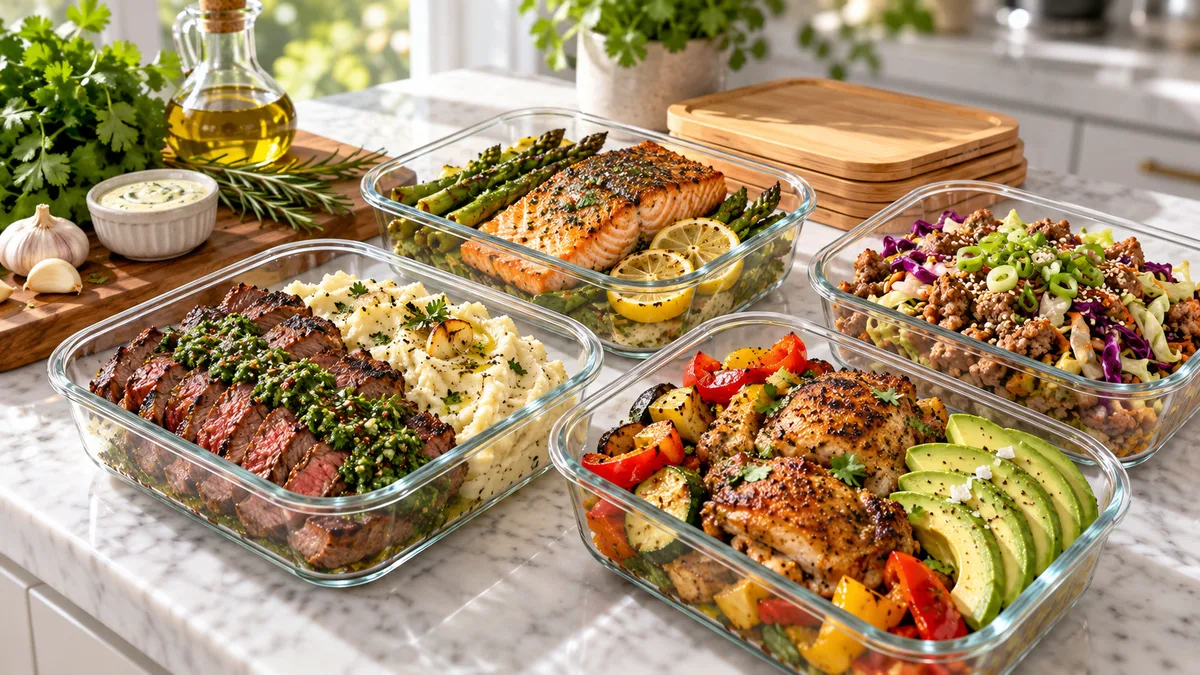
Picture Wednesday at 12:45 PM. You open the breakroom fridge, pull out your container, and stare at dry chicken breast resting on rubbery steamed broccoli. Again.
Your stomach rumbles with disappointment. By 3:00 PM, you dig through office vending machines for potato chips because lunch left you starved. It happens all the time.
Most people fail at low carb meal prep because they treat it like punishment. They cut carbs, forget to add ingredients that create real fullness, and cook the exact same dry meal five days in a row. You never need to suffer through chalky chicken to hit your fitness goals.
You can cook flavorful, satisfying food on Sunday that stabilizes your energy and keeps you full until dinner. Here is how you rebuild your weekly routine.
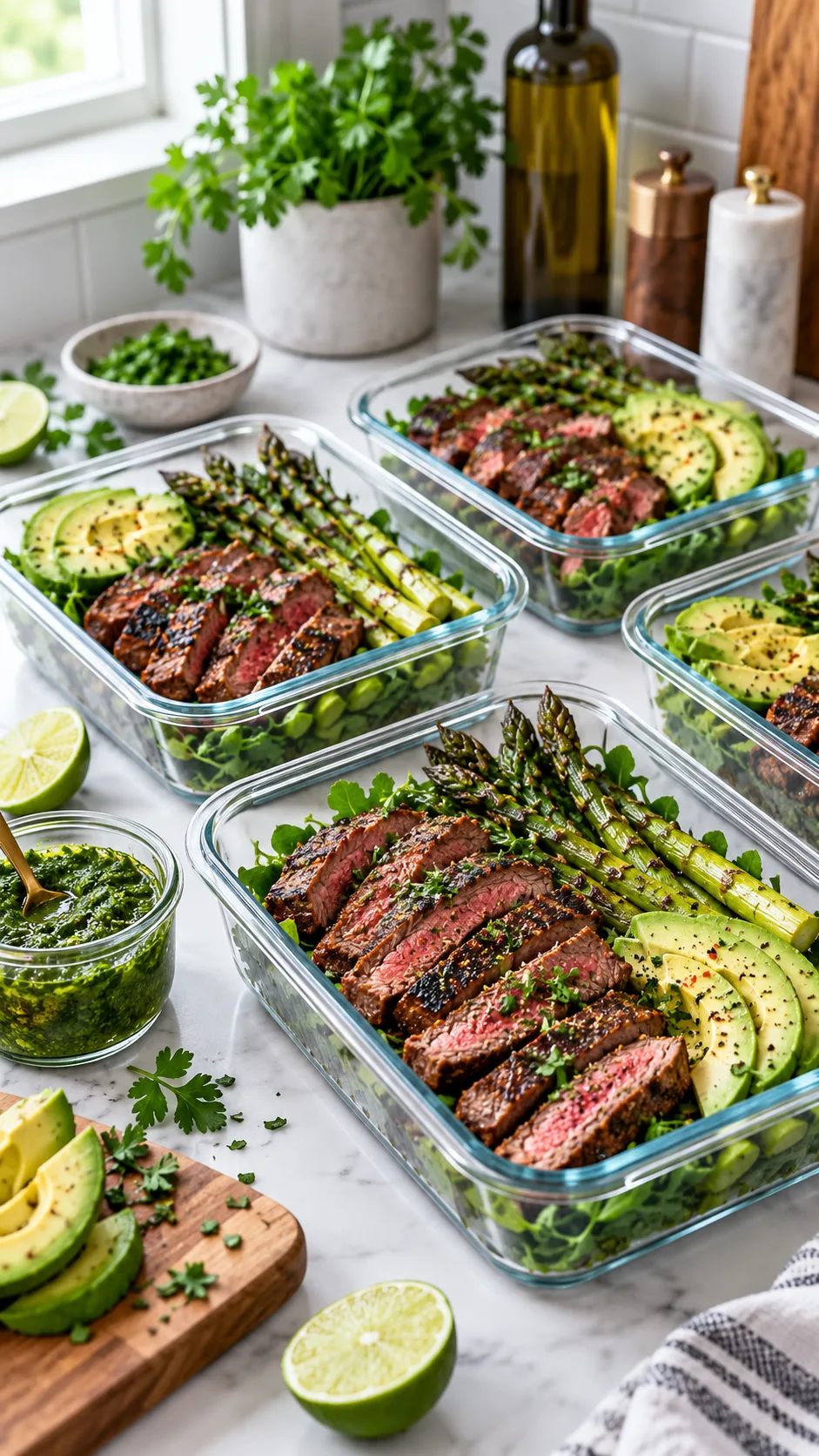
The Satiety Code: Why Most Low-Carb Meal Preppers Starve
A giant bowl of raw greens often leaves you hunting for pastries an hour later. Real fullness requires specific biology. Your digestive tract relies on distinct physical triggers to release satiety hormones like peptide YY and GLP-1: gut stretch from bulk fiber, prolonged breakdown from dietary fats, and concentrated amino acid signals from protein.
When people cut carbohydrates, they often drop total calories too low. They eat plain poultry and plain cucumbers, removing dietary fat (the exact fuel that delays stomach emptying). Dietary fat tells your brain that you have plenty of energy, keeping the hunger hormone ghrelin silent for hours.
Research from the Harvard T.H. Chan School of Public Health shows that protein triggers the highest thermic and fullness response of any macronutrient. When your lunch lacks protein, your appetite stays active.
To maintain steady fullness throughout the afternoon, pack each container with this formula:
- 35 to 50 grams of quality protein to protect muscle mass and curb sudden hunger spikes.
- 12 to 20 grams of dietary fat to slow digestion and carry fat-soluble nutrients.
- 8 to 12 grams of viscous fiber to expand the stomach wall and nourish beneficial gut bacteria.
Skip any part of this balance, and your willpower disappears around mid-afternoon. Include all of them, and you will work straight through to dinner without thinking about snacks.
The “Flavor Matrix” Rule: How to Beat the Tuesday Snooze-Fest
Five identical containers of ground beef and green beans guarantee meal fatigue by Tuesday night. People crave sensory contrast. Food scientists call this response sensory-specific satiety. When you expose your tongue to the same flavor and texture day after day, your brain rejects the meal, even when your muscles need fuel.
Retire the old batch-cooking model. Instead, build your routine around component prep. Cook versatile bases separately, store them in individual containers, and assemble them with different sauces each morning.
If you want a detailed plan that applies this concept, read The No-Nonsense High Protein Low Carb Meal Plan for Real Results to see how daily flavor changes support consistent habits.
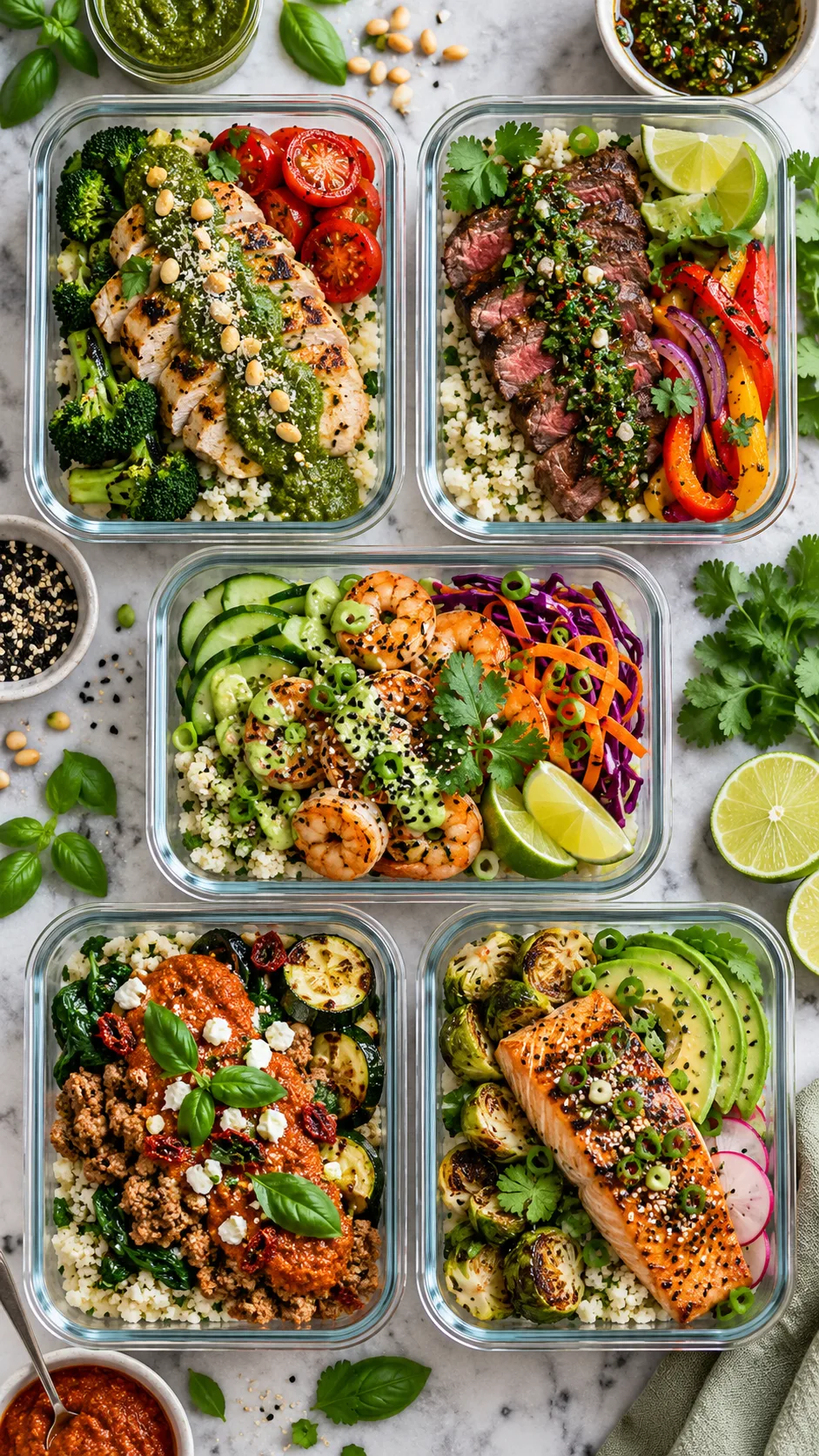
Component prep takes about 90 minutes on Sunday and produces five distinct meals. On Monday, you assemble a Mexican spiced bowl. On Tuesday, you eat a Mediterranean herb plate. On Wednesday, you mix a rich Thai coconut bowl. You use the same cooked meats while eating completely different dishes throughout the week.
Essential Building Blocks: High-Satiety, Low-Carb Staples
Food must withstand four days in cold storage without breaking down or losing its bite. Certain ingredients taste wonderful right off the stove but degrade quickly in the refrigerator.
1. Proteins That Retain Moisture
Never prep plain, boneless chicken breasts unless you shred them into rich broth. Choose cuts with natural moisture instead:
- Skinless chicken thighs: Natural intramuscular fat prevents that dry, stringy texture when you reheat lunch on Wednesday.
- 85/15 ground beef or bison: Ground meats hold seasoning deeply and stay juicy in glass containers for five days.
- Slow cooked pork shoulder: Shred the cooked meat, coat it in cooking juices, and portion it across your dishes.
- Boiled eggs and canned wild salmon: Keep these no-cook protein sources ready for late-week meals.
2. Low-Carb Veggies That Never Go Soggy
Zucchini noodles taste fine right off the stove, but by Tuesday afternoon, they release water and turn your container into soup. Skip watery produce. Pick firm, fibrous plants that stay crisp in the fridge:
- Shredded Brussels sprouts: Sauté them in olive oil until golden brown. They hold their texture throughout the work week.
- Shredded cabbage slaw: Raw red and green cabbage stays crisp for six days, even after you toss it in vinaigrette.
- Roasted broccolini: The firm stalks provide good bite, whereas small cauliflower florets break down into mush.
- Quick-blanched asparagus: Boil the spears for two minutes, plunge them into ice water, and drain them thoroughly. They stay firm until Thursday.
Clinical trials published by the National Center for Biotechnology Information (NCBI) show that viscous plant fibers strengthen gut fullness hormones while flattening blood sugar spikes after meals.
3. Satiety Fats That Carry Massive Flavor
Do not rely entirely on cooking fats in the pan. Add real whole-food fats that turn simple meals into rich, satisfying lunches:
- Crumbled sheep milk feta or cotija: Tangy, salty cheeses cut through heavy meats and provide conjugated linoleic acid.
- Cold-pressed extra virgin olive oil: Drizzle rich olive oil over your food after reheating to protect the delicate polyphenols.
- Toasted pumpkin seeds or walnuts: Sprinkle these nuts or seeds over your bowl before eating to add crunch.
- Whole avocados: Never slice an avocado during Sunday prep. Pack the whole fruit in your lunch bag and open it at work.
Read the Cleveland Clinic Guide on Healthy Fats if you still hesitate to eat natural fats. Monounsaturated fats give you stable fuel when you reduce dietary starch.
The 5-Day “Never-Boring” Low Carb Action Plan
This practical menu uses one 90-minute prep block on Sunday to feed you all week. You prepare two protein sources and two sturdy vegetables, then rotate spices and toppings to create five distinct meals.
Sunday prep work (90 minutes total)
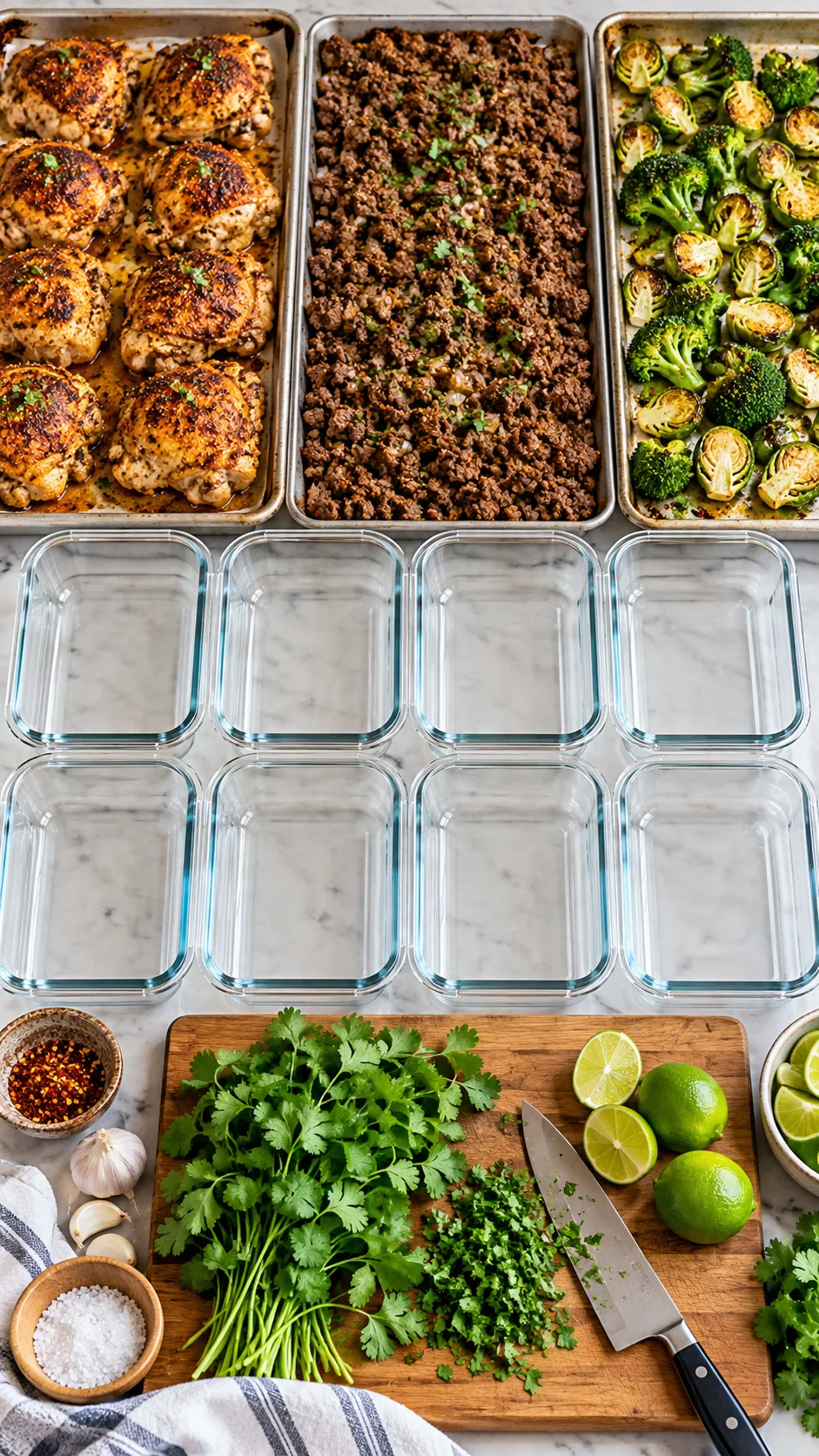
Preheat your oven to 400°F (200°C). Lay two pounds of boneless chicken thighs across one baking sheet and season them with garlic powder, sea salt, and smoked paprika. Brown two pounds of ground beef on the stove with cumin, ground coriander, and black pepper. Toss a pound of trimmed asparagus and a pound of shredded Brussels sprouts with olive oil on another baking sheet. Roast the chicken and greens for 25 minutes. Let everything cool completely, then place each item into its own glass container.
For more ideas on building systems that hold up over time, read these Meal Prep Recipes That Actually Last All Week Without Getting Boring.
Monday: The Chimichurri Carnitas Bowl
Spread a cup of shredded red cabbage across the bottom of your container. Add six ounces of spiced ground beef and a half cup of roasted Brussels sprouts. Spoon two tablespoons of chimichurri (blended parsley, garlic, red wine vinegar, and olive oil) over the meat. Warm the dish for 90 seconds. The acidity balances the seasoned beef, and the fresh cabbage keeps its crunch.
Tuesday: Mediterranean Chicken Feta Toss
Slice six ounces of your roasted chicken thighs. Place them beside four blanched asparagus spears, six Kalamata olives, and an ounce of crumbled Greek feta over fresh baby arugula. Pour lemon juice and olive oil into a small dressing cup. Heat the chicken and asparagus for 60 seconds, then tip them over the salad. You create a warm bistro salad in less than two minutes.
Wednesday: Smoky Chipotle Taco Salad
Warm six ounces of seasoned ground beef with two tablespoons of roasted tomato salsa. Toss the warm beef with crisp romaine lettuce, two tablespoons of sour cream, grated cheddar cheese, and diced fresh avocado. Top the bowl with roasted pumpkin seeds. This gives you the taste of a classic taco plate while keeping total net carbs below seven grams.
Thursday: Ginger-Sesame Chicken “Noodle” Bowl
Shred six ounces of cold chicken thighs and combine them with thin cucumber slices, shaved radishes, and crisp green cabbage. Pour the spicy almond satay sauce (recipe below) over the meat and vegetables. Garnish the dish with toasted sesame seeds and sliced scallions. Eat this dish chilled. You skip the breakroom microwave line entirely.
Friday: The “Clean Out the Fridge” Frittata Bake
Use whatever roasted chicken, spiced beef, and leftover vegetables remain in your fridge on Friday. Whisk six eggs with two tablespoons of heavy cream, sea salt, and black pepper. Add the leftover meats and greens into a buttered cast-iron pan, pour the whisked eggs across the ingredients, and bake at 375°F (190°C) for 18 minutes. Slice the bake into thick wedges. You avoid food waste and finish the week with a hot meal.
Watch: Low Carb Meal Prep in Real Time
Watch this practical walkthrough to see how component batching simplifies your Sunday kitchen workflow:
The 3 “Magic” Sauces That Rescue Any Meal
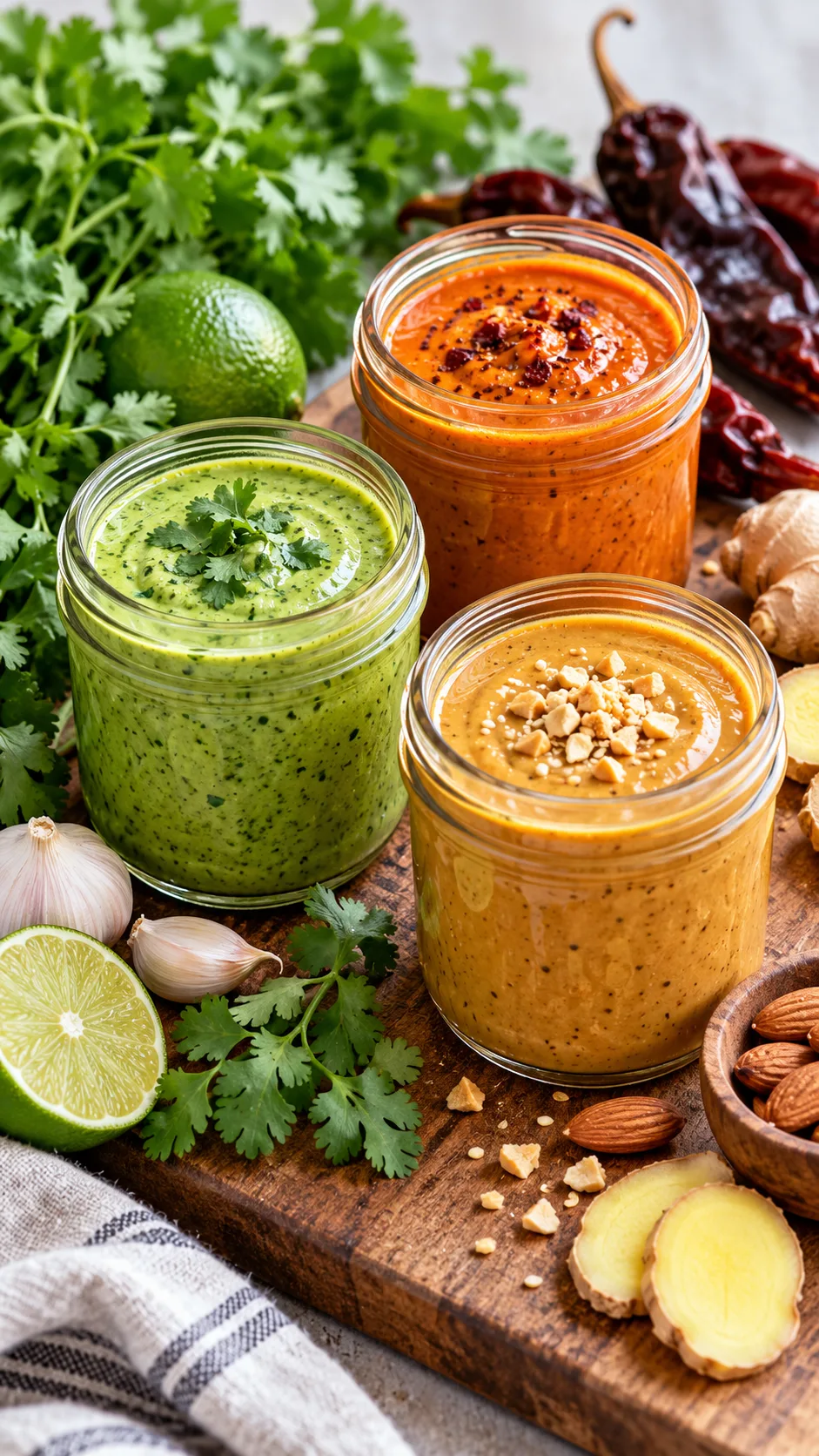
Dry meat ruins consistency. When low carb meals feel bland, you probably need a good dressing. Bottled sauces often contain corn syrup, seed oils, and artificial additives. Blend these three sauces at home instead. They stay fresh for seven days in glass jars and provide deep flavor with almost zero sugar.
To manage grocery costs when buying whole ingredients, review these tactics in Cheap High Protein Meal Prep That Keeps You Full All Week (Under $5 Per Meal).
1. Creamy cilantro lime avocado crema
Blend one ripe avocado, a cup of cilantro leaves, one peeled garlic clove, the juice of two limes, a half cup of full-fat Greek yogurt, and a teaspoon of fine salt until smooth. This sauce coats seasoned beef, grilled poultry, and morning eggs in rich flavor. Net carbs: 2g per serving.
2. Spicy smoky chipotle tahini
Whisk one-third cup of sesame tahini with two tablespoons of warm water, two teaspoons of chipotle paste, a tablespoon of fresh lemon juice, and a pinch of ground cumin. Tahini adds roasted nutty notes and minerals, while chipotle adds gentle heat. Pour this over roasted greens and chicken thighs. Net carbs: 1.5g per serving.
3. Garlic ginger almond satay
Whisk three tablespoons of unsweetened almond butter, one tablespoon of tamari, a teaspoon of grated fresh ginger, one minced garlic clove, a teaspoon of chili sauce, and two tablespoons of warm water to loosen the texture. This sauce turns cold shredded chicken into a savory satay bowl. Net carbs: 2g per serving.
Storage, Reheating, and Food Safety Secrets
Poor storage methods destroy great cooking. Common storage mistakes ruin texture, dry out meat, and let moisture spoil roasted produce. Follow these storage guidelines:
- Use airtight glass containers with snap lids: Porous plastic containers retain old odors, warp in the microwave, and let air spoil your meals. Glass containers lock out oxygen and keep vegetables firm for several days longer.
- Cool food before covering it: Never clamp lids onto steaming hot food. Steam condenses on the underside of the lid, dripping moisture back onto roasted meats and vegetables until they turn soggy. Let cooked ingredients sit for 20 minutes to reach room temperature before sealing.
- Add an ice cube when reheating: Place an ice cube directly on top of your chicken or beef, then cover the bowl loosely with a paper towel before microwaving. The ice cube produces gentle steam without melting entirely, which keeps the meat tender. Discard the leftover ice before eating.
- Follow the four-day poultry rule: Cooked chicken keeps safe texture and taste for four days in a standard refrigerator. When you prep on Sunday, freeze Friday’s lunch in a freezer-safe dish right away. Move that container to the fridge on Thursday morning so it thaws in time for lunch.
Troubleshooting: What to Do When Hunger Strikes
If you stick to your lunch box but still crave bakery treats by mid-afternoon, examine two physical factors.
First, drink sixteen ounces of water mixed with a pinch of sea salt. When you reduce carbohydrates, your kidneys excrete sodium and water rapidly. Low sodium levels often feel identical to intense sugar cravings. Replenish your electrolytes, and your body calms down within twenty minutes.
Second, count your dietary fat. If you removed starches while eating skinless poultry and plain greens, you left your body without adequate fuel. Add an extra tablespoon of olive oil, two hard-boiled eggs, or an ounce of walnuts right away. Your digestive system needs adequate calories to trigger steady fullness signals.
Low carb cooking does not require deprivation. It simply means cooking real, hearty food that keeps your focus sharp without afternoon crashes.
Stock your pantry, spend 90 minutes in the kitchen this Sunday, and see how easy sustained energy and daily fullness can feel.
