
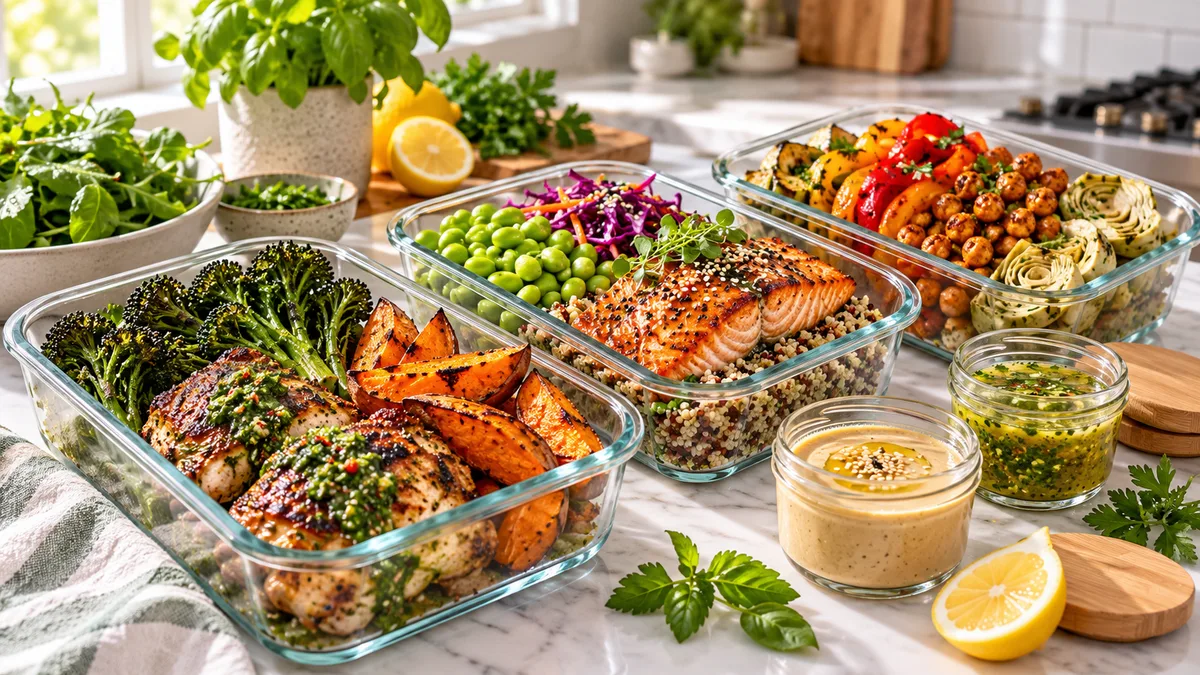
You spend three hours on Sunday chopping vegetables, roasting chicken breasts, and boiling huge pots of brown rice. By Monday afternoon, you feel like an organized meal planner. By Wednesday night, you stare down at that identical plastic container with dread.
The chicken tastes like rubber, the broccoli smells sulfurous, and the dry rice crackles between your teeth. You shove the container aside and order takeout instead. Most people abandon batch cooking because conventional prep advice produces depressing food by midweek, not because they lack discipline.
You do not need to eat monotonous meals for five straight days to save money. Once you understand how moisture, acid, and modular cooking interact, you can fill your fridge with food that tastes fresh on Friday evening. A few fundamental kitchen adjustments make all the difference.
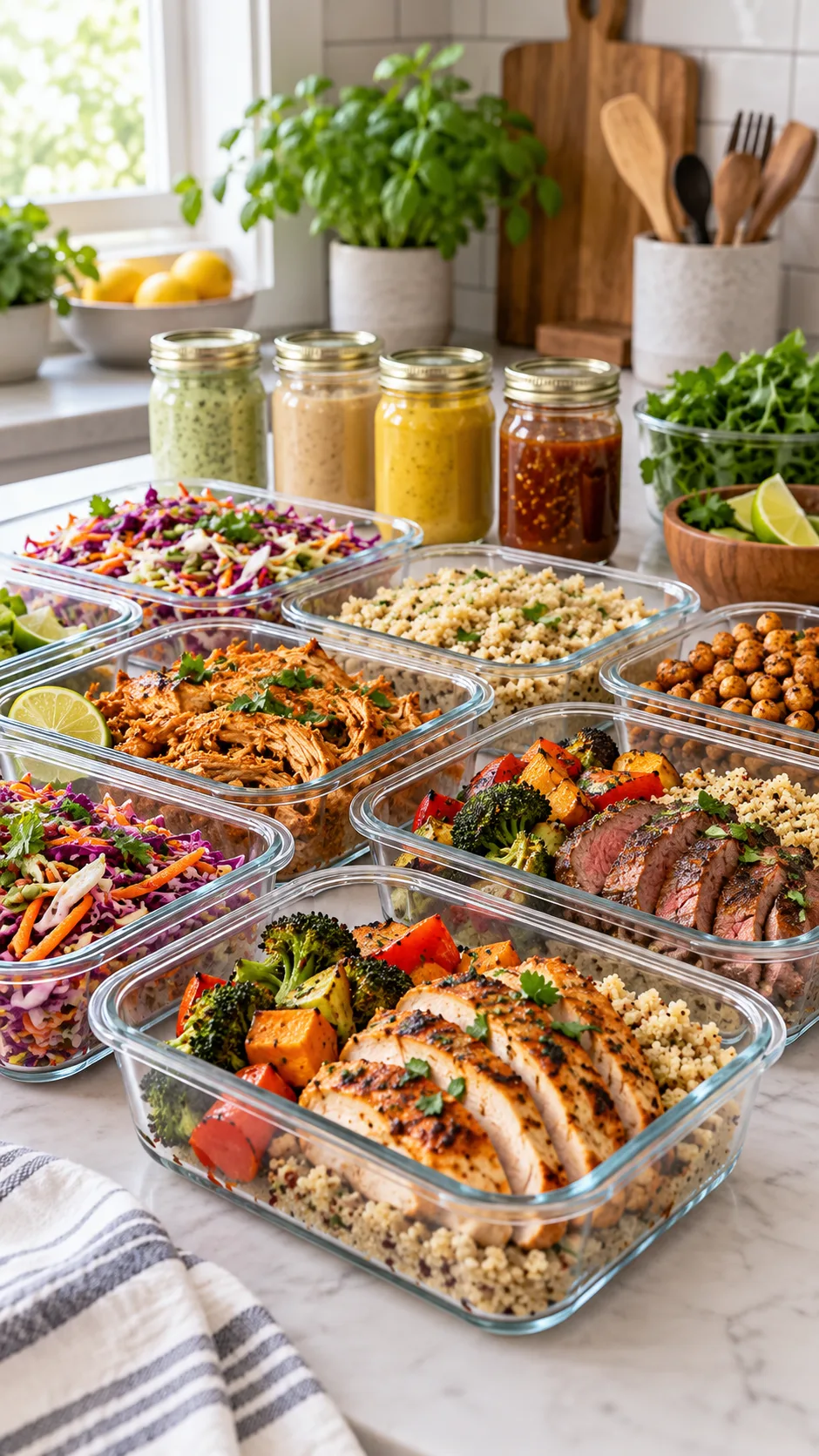
Why most meal prep fails by Wednesday (the science of food decay)
Why does Monday’s dinner turn stale by Thursday? Moisture migration, lipid oxidation, and enzymatic breakdown cause the decline. When you assemble a meal and seal it in a container, wet ingredients surrender moisture to dry ingredients, while spices lose their punch into cold starches.
Warmed-over flavor ruins cooked meat within days. Food scientists use that term for the cardboard taste that develops when cooked meat reacts with oxygen in the refrigerator. Chicken breast contains high amounts of polyunsaturated fatty acids. Once oven heat ruptures the cell walls, those fats oxidize quickly in cold air.
The USDA Food Safety and Inspection Service states that cooked meat and poultry remain safe in a home refrigerator for three to four days. If you plan to eat Sunday dinner on Friday, you test the limits of safety and taste. Smarter recipe design and proper storage sidestep that trap, as our guide to easy healthy meal prep ideas that will change your week forever explains.
Stop cooking fragile ingredients that spoil within two days. Throw away the idea of prepping delicate salad greens, lean skinless chicken breasts, or plain boiled pasta for the whole week. Choose sturdy ingredients that keep their texture and flavor under refrigeration.
The “component prep” method: the secret to endless variety
Leave the pre-portioned single-box routine behind. When you fill five identical containers with the exact same chicken, rice, and broccoli, dinner feels like a chore by Tuesday night. Component prep solves this problem immediately.
Cook versatile base components instead of finished meals. Store each food item in its own dedicated container. Throughout the week, assemble them in different ways using bold sauces, crunchy toppings, and simple pan-searing. Fast-casual restaurants serve thousands of distinct bowls from eight warming wells because they rely on component assembly. You can use that exact system at home.
A reliable component system relies on three distinct elements:
- Two resilient proteins: Braised meats or marinated legumes retain their juices when you reheat them.
- Two sturdy grains: Ancient grains keep their firm bite without turning into soggy mush.
- Two durable vegetable bases: Slaws and roasted root vegetables stay crisp for days in the fridge.
Combine these bases with two or three sharp, acidic dressings. That setup yields over a dozen distinct meal combinations from two hours of cooking on Sunday, keeping your lunches and dinners interesting every day.
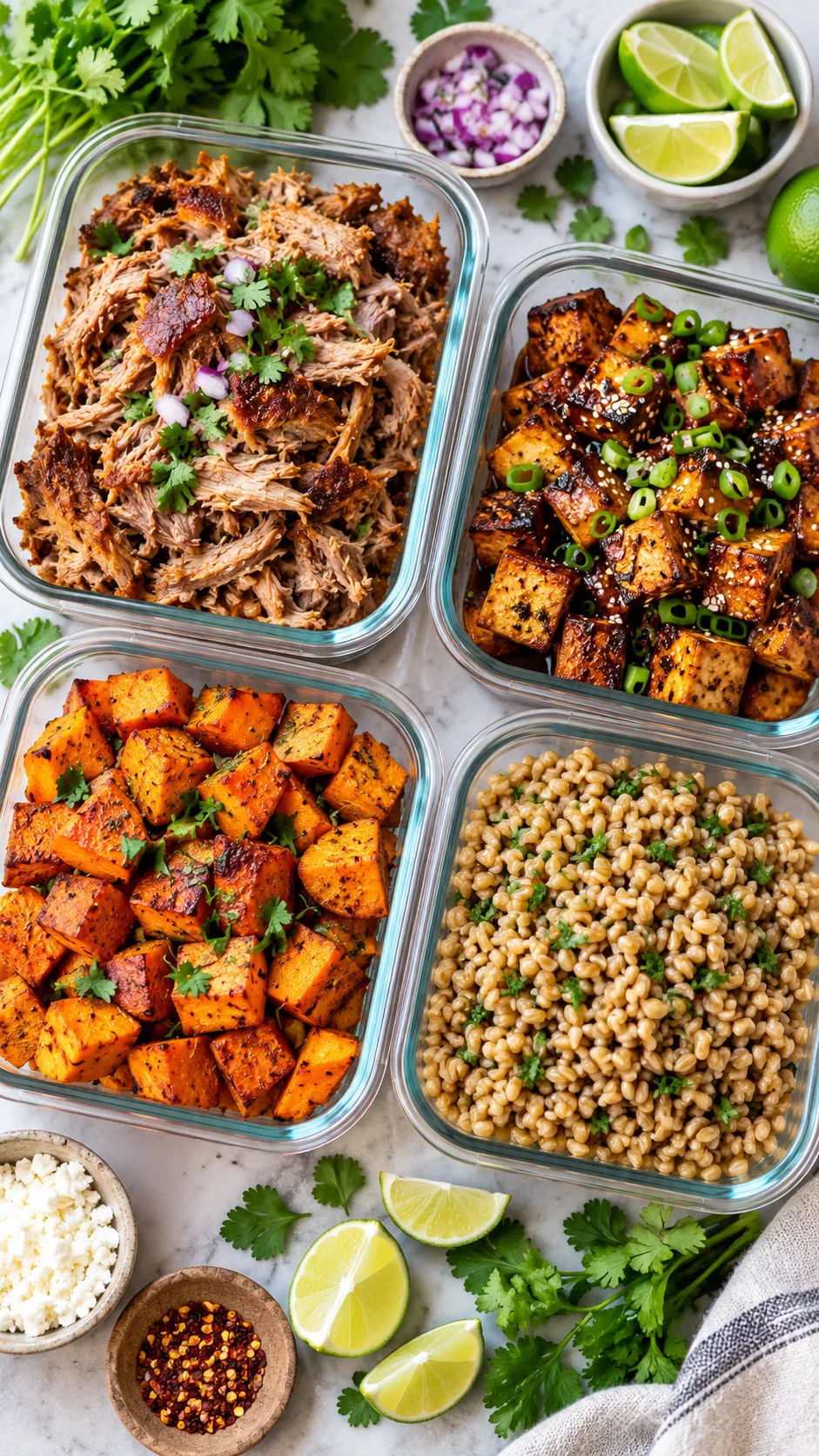
5 workhorse recipes built to survive 5 full days
These recipes rely on ingredients that improve after a night in the fridge. Marinades penetrate deeper into protein fibers, firm vegetables pickle lightly in dressing, and whole grains absorb aromatic spices without softening into mush.
1. Slow-cooker citrus mojo shredded pork shoulder
Pork shoulder carries plenty of connective tissue and intramuscular fat. Slow cooking breaks that collagen down into gelatin, keeping the meat moist all week. Unlike lean cuts that dry out on day two, braised pork keeps its juicy texture even when you sear it in a hot skillet on Thursday.
Ingredients:
- 3.5 pounds boneless pork shoulder, trimmed of excess outer fat
- 1 cup fresh orange juice
- 1/2 cup fresh lime juice
- 8 garlic cloves, minced
- 1 tablespoon ground cumin
- 1 tablespoon dried oregano
- 1.5 tablespoons kosher salt
- 1 teaspoon freshly cracked black pepper
Method:
- Cut the pork shoulder into four uniform chunks so the braising liquid coats more surface area.
- Whisk the orange juice, lime juice, minced garlic, cumin, oregano, salt, and black pepper directly in the slow cooker.
- Submerge the pork chunks in the liquid, coating each piece thoroughly.
- Cover the cooker and set it on low for 8 hours (or high for 5 hours) until a fork slides through the meat easily.
- Transfer the pork to a rimmed baking sheet and shred it with two forks.
- Ladle one cup of the warm braising juices over the shredded meat before you store it in glass containers.
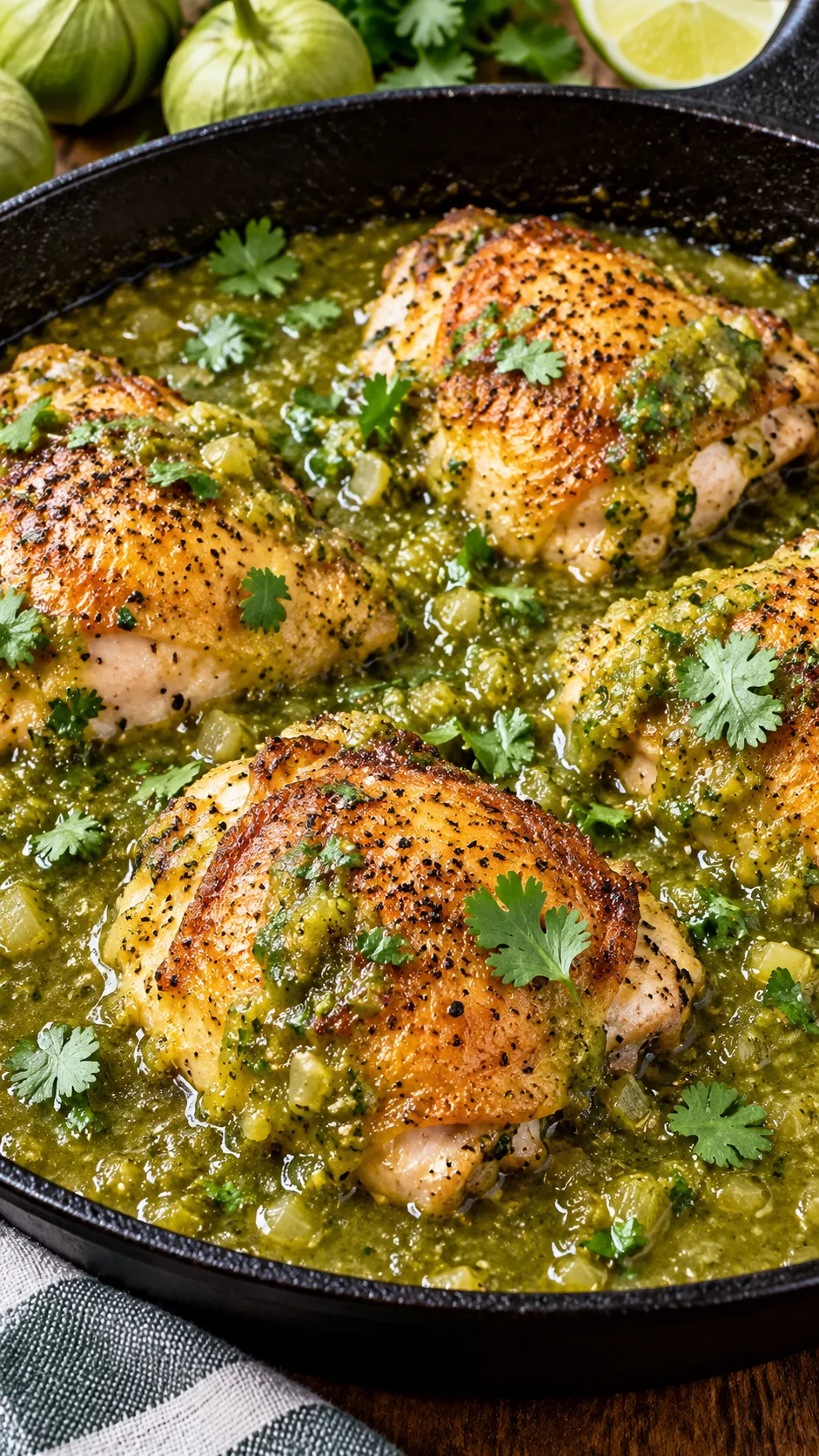
2. Fire-roasted salsa verde chicken thighs
Skip boneless chicken breasts unless you enjoy chewing dry sawdust by Thursday afternoon. Chicken thighs contain far more fat and collagen, which prevents that stale, warmed-over flavor from developing. The acidity in tomatillo salsa verde breaks down muscle fibers and keeps the meat tender all week.
Ingredients:
- 2.5 pounds boneless, skinless chicken thighs
- 1 jar (16 ounces) fire-roasted tomatillo salsa verde
- 1 bunch fresh cilantro, stems minced, leaves reserved for plating
- 1 tablespoon ground coriander
- 1 tablespoon avocado oil
- 1 teaspoon sea salt
Method:
- Preheat your oven to 400°F (200°C).
- Pat the chicken thighs dry with paper towels so the seasonings stick.
- Toss the chicken with the avocado oil, coriander, and sea salt directly in a baking dish.
- Pour the jar of salsa verde and the minced cilantro stems over the thighs, coating every piece.
- Bake uncovered for 32 to 35 minutes until a digital meat thermometer registers 165°F (74°C).
- Let the meat rest for 10 minutes, slice it into strips, and submerge the chicken in the cooking juices before storing.
3. Garlic and soy-glazed crispy baked tofu
Tofu absorbs marinades like a sponge, which makes it an ideal meal-prep protein. Soy protein never develops the oxidized off-flavors common to reheated meat. Instead, tofu draws seasonings deeper into its core while resting in the fridge. If you want more plant-focused ideas, check out our favorite clean-eating recipes.
Ingredients:
- 2 blocks (14 ounces each) extra-firm tofu
- 2 tablespoons cornstarch
- 2 tablespoons low-sodium tamari or soy sauce
- 1 tablespoon toasted sesame oil
- 1 tablespoon maple syrup
- 2 teaspoons fresh ginger, finely grated
- 2 cloves garlic, finely minced
Method:
- Drain the tofu blocks and press them under a heavy skillet for 20 minutes to remove water.
- Preheat your oven to 425°F (220°C) and line a rimmed baking sheet with parchment paper.
- Slice the pressed tofu into three-quarter-inch cubes.
- Toss the cubes in a bowl with cornstarch and sesame oil until a light, powdery coating covers every side.
- Spread the cubes across the baking sheet and bake for 25 minutes, flipping once halfway through, until crisp.
- Simmer the soy sauce, maple syrup, ginger, and garlic in a small saucepan over medium heat for 2 minutes until glossy.
- Coat the warm tofu cubes in the glaze, let them cool to room temperature, and pack them into containers.
4. The indestructible cabbage-kale crunch slaw
Delicate butter lettuce and baby spinach turn into slimy mush within hours of touching salad dressing. Skip the limp salad greens entirely. Raw cabbage and lacinato kale have dense cellular walls that handle vinaigrette without wilting. This slaw stays crisp in your fridge for six straight days.
Ingredients:
- 1/2 small head red cabbage, thinly shaved
- 1/2 small head green cabbage, thinly shaved
- 1 bunch lacinato (dino) kale, stems removed and leaves shredded fine
- 1 large carrot, ribboned or grated
- 1/4 cup olive oil
- 3 tablespoons apple cider vinegar
- 1 tablespoon Dijon mustard
- 1 teaspoon coarse kosher salt
Method:
- Toss the shaved red cabbage, green cabbage, kale, and grated carrots together in a large bowl.
- Shake the olive oil, cider vinegar, mustard, and salt in a small jar until well blended.
- Pour the dressing over the vegetables.
- Massage the dressing into the greens with your hands for one minute to break down the tough plant fibers.
- Store the slaw in an airtight container. The vinegar preserves the crunch and prevents the cabbage from getting soggy.
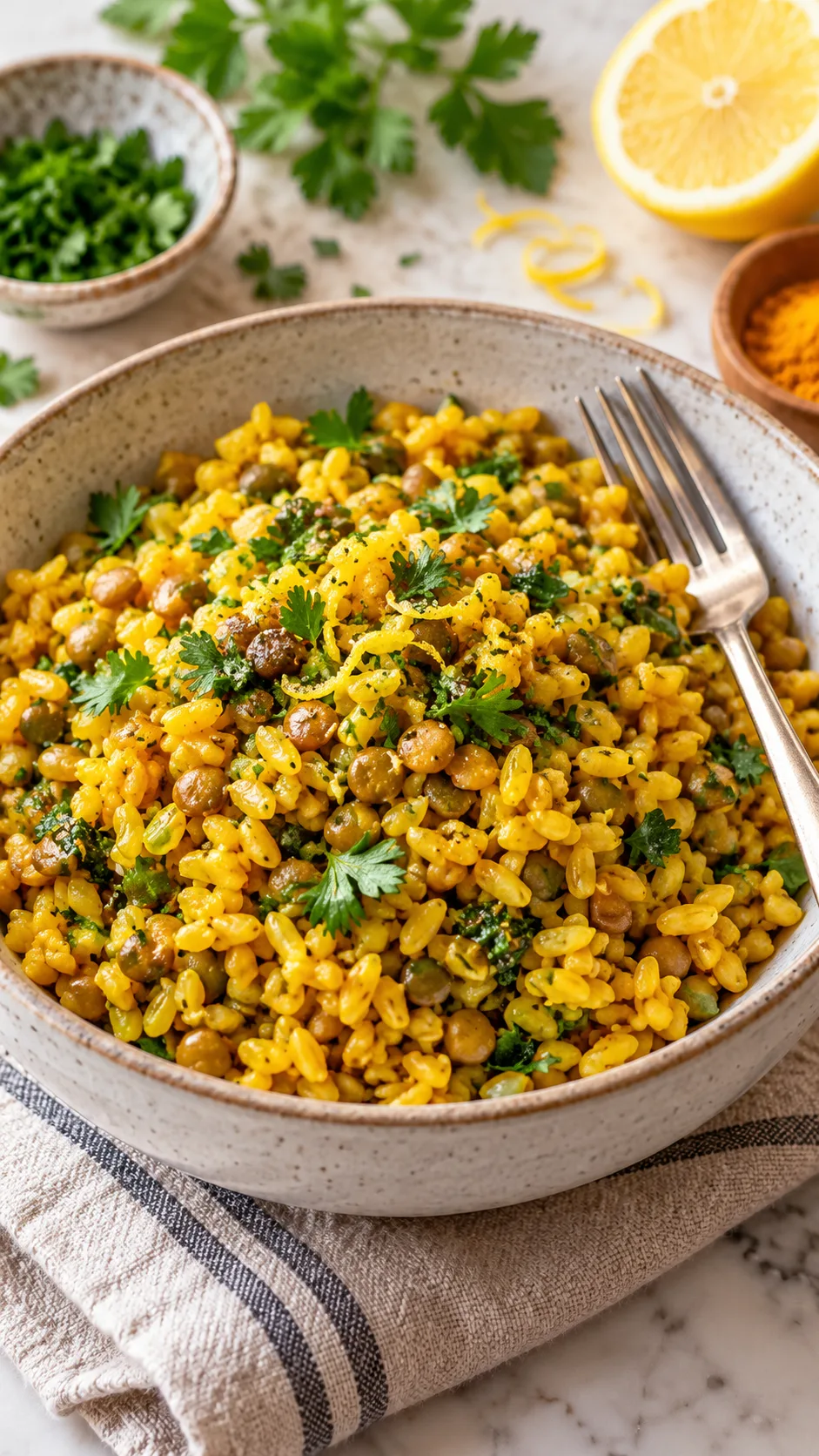
5. Golden turmeric-infused farro and lentil pilaf
Cold temperatures turn white rice into chalky pebbles because the starches undergo rapid retrogradation. Whole grains like farro, barley, and wheat berries have outer hulls that hold moisture and keep a pleasant chew for days. Brown lentils add earthy flavor, plant protein, and dietary fiber, matching recommendations from the Harvard T.H. Chan School of Public Health protein research.
Ingredients:
- 1.5 cups pearled farro, rinsed
- 3/4 cup brown or French green lentils, sorted and rinsed
- 4.5 cups low-sodium vegetable broth
- 1 teaspoon ground turmeric
- 1/2 teaspoon ground cumin
- 2 bay leaves
- 1 teaspoon kosher salt
- 2 tablespoons extra-virgin olive oil
Method:
- Warm the olive oil in a saucepan over medium heat and toast the farro and turmeric for 2 minutes.
- Add the broth, lentils, cumin, bay leaves, and salt.
- Bring the pot to a boil, reduce the heat to low, and cover with a tight lid.
- Simmer for 28 to 30 minutes until the farro absorbs the broth and softens to an al dente bite.
- Take the pan off the heat, discard the bay leaves, and fluff the mixture with a fork. Spread the grains onto a sheet pan to cool quickly before refrigerating.
Sauce alchemy: turning one protein into five completely different dinners
Follow one central rule for long-lasting prep: Season your protein with a simple base, and let sauces change the flavor profile each night. If you pour tomato marinara over three pounds of chicken on Sunday, you lock yourself into Italian food through Thursday. That routine kills your appetite fast.
Keep these sauces in small jars. Spoon them over your prepped bowls right before serving:
Creamy spicy Thai-style peanut sauce
Whisk 1/3 cup smooth peanut butter, 2 tablespoons warm water, 1 tablespoon lime juice, 1 tablespoon soy sauce, 1 tablespoon honey, and 1 teaspoon sriracha. This sauce pairs naturally with the crispy tofu or shredded chicken over warm farro.
Herby chimichurri dressing
Finely mince 1 cup fresh Italian parsley, 4 garlic cloves, and 1 red chili. Whisk them with 1/2 cup extra virgin olive oil, 3 tablespoons red wine vinegar, 1 teaspoon dried oregano, and 1 teaspoon salt. The sharp vinegar and raw garlic cut clean through rich cuts like pork shoulder.
Smoky chipotle-lime crema
Blend 1/2 cup Greek yogurt, 1 canned chipotle pepper in adobo, 1 tablespoon lime juice, and a pinch of smoked paprika until smooth. This dressing gives you rich, smoky creaminess with far less saturated fat than sour cream dressings.
Smart storage rules that keep meals tasting fresh on day 5
If you pack hot food directly into plastic tubs and shut the fridge door, you build a steam chamber. Moisture gathers on the underside of warm lids, drips onto your food, and turns your meals soggy long before Friday.
Follow these four storage rules to keep texture and flavor intact:
- Use borosilicate glass containers: Plastic containers have pores that trap old oils and dish soap scents. Glass provides an odor-free, non-reactive seal that shields food from refrigerator smells.
- Add a dry paper towel to slaws: Place a folded paper towel right under the lid of your vegetable containers. The paper absorbs rising moisture and stops greens from rotting.
- Cool food on baking sheets: Avoid spooning steaming food straight into deep containers. Spread cooked grains and shredded meat across flat sheet pans for 15 minutes so steam escapes before you refrigerate them.
- Freeze Thursday and Friday portions early: Place your late-week meals in the freezer on Sunday night. Move them to the fridge on Wednesday morning to thaw. That pause halts the decay clock for three whole days.
If you want to see how efficient planners organize their week without wasting entire weekends in the kitchen, read our guide to lunch meal prep for the week.
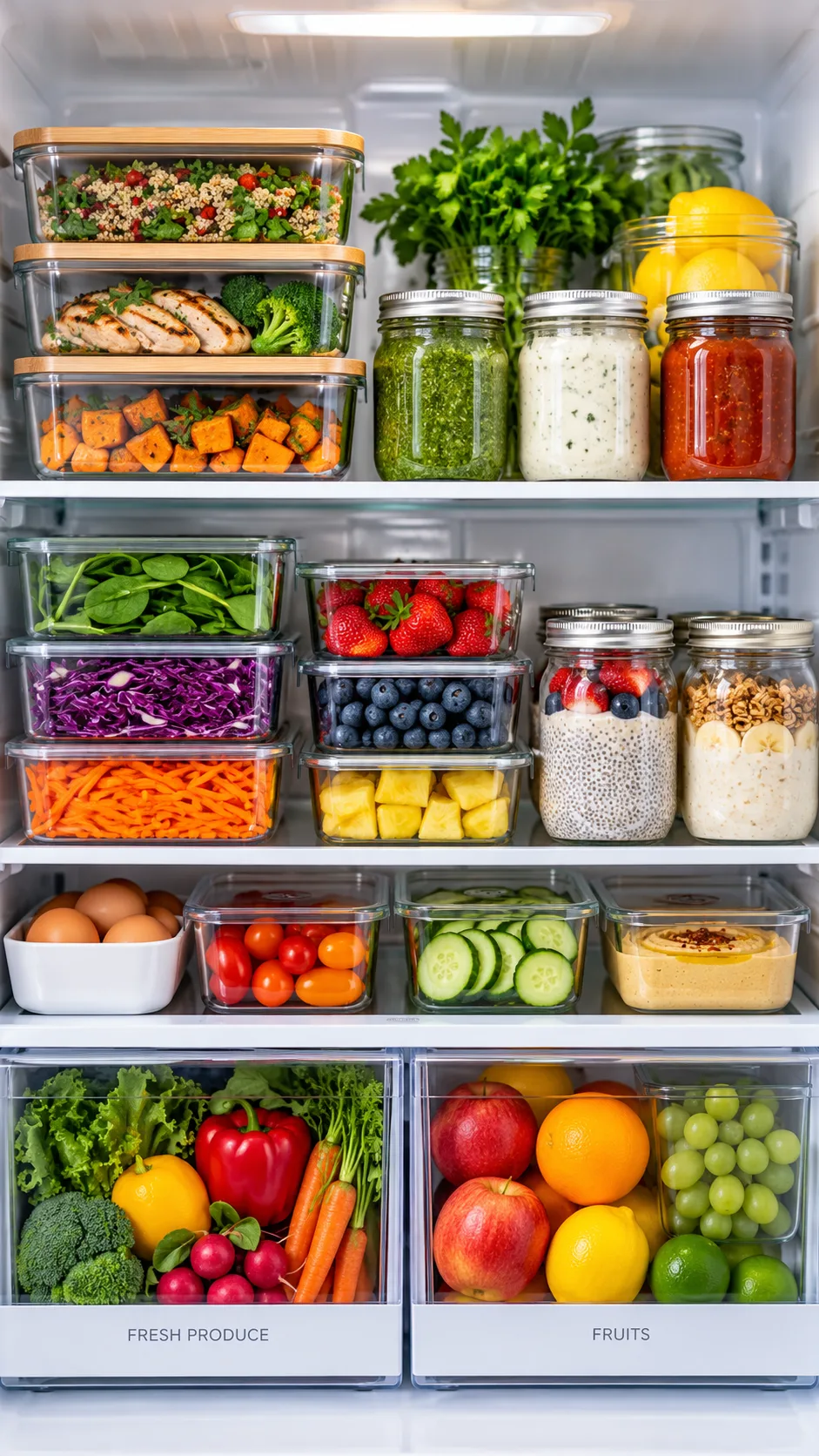
Watch: how chefs prep for maximum freshness
Watching a chef organize batch cooking clarifies the entire process. Professional cooks store their prep items in separate containers until service, keeping ingredients crisp, colorful, and distinct.
Step-by-step 5-day weekly menu (no repeats in flavor)
Here is how the plan plays out from Monday through Friday. You cook zero raw meat during the workweek, yet you never eat the same meal combination twice.
Monday: the bright Cuban mojo plate
Sear one cup of the citrus mojo pork in a hot skillet for 90 seconds to crisp the edges. Spoon the warm pork next to a serving of the turmeric farro pilaf and a helping of the cabbage-kale slaw. Drizzle chimichurri dressing directly over the meat. Total assembly time takes four minutes.
Tuesday: spicy verde chicken rice bowl
Warm one cup of the salsa verde chicken thighs in the microwave with two tablespoons of the pan juices. Spoon the chicken over the farro and lentil base. Top the bowl with two tablespoons of cold chipotle crema and a handful of roasted pepitas. The contrast between hot chicken and cool crema makes the bowl taste fresh.
Wednesday: Thai crunch tofu salad
Eat this bowl cold or at room temperature. Fill your plate with the crisp cabbage-kale slaw, then add the glazed tofu cubes. Spoon warm peanut sauce over the top and scatter crushed roasted peanuts over the vegetables. You assemble this lunch in two minutes flat.
Thursday: the Latin pork street taco melt
Grab your thawed pork from the fridge. Warm the shredded meat in a pan, then divide it between two toasted corn tortillas with salsa verde, diced white onion, and a spoonful of chipotle crema. Serve the tacos with a side of cold farro pilaf dressed with fresh lime juice. This plate easily beats standard takeout.
Friday: Mediterranean tofu and grain power bowl
Use the remaining prep containers for a clean finish. Warm the last scoop of farro pilaf and glazed tofu in a skillet. Fold in sliced cucumbers and cherry tomatoes, then finish the bowl with chimichurri and a spoonful of Greek yogurt. You get through five days of home cooking without buying greasy takeout once.
Stop cooking rigid meals and reclaim your week
Batch cooking should never force you to eat rubbery chicken and limp greens for five days straight. When you trade rigid single-dish containers for flexible, durable components, you take full control of your kitchen.
Rely on resilient proteins with good fat content, hearty grains that hold their bite, and crunchy greens that absorb sharp vinaigrettes. Blend two or three bold sauces on Sunday, then use them to reshape the personality of your dinner in seconds.
Select two proteins, one grain, and one slaw from the guide above. Set aside ninety minutes this weekend to cook the base items. You will thank yourself every evening when you sit down to an appetizing, fresh dinner within five minutes of walking into the kitchen.
