

Your chest isn’t growing. Your triceps look the same as they did six months ago. And that push day you’ve been running? It’s basically a bench press followed by whatever machine happens to be empty. Sound familiar?
I’ve been there. I spent an embarrassingly long time doing the same flat bench and tricep pushdown combo, wondering why my upper body looked exactly the same in every progress photo. The problem wasn’t effort. It was programming.
This article lays out a complete chest and tricep workout for men that actually builds mass. Not a random collection of exercises you found on some forum in 2014, but a structured push day routine built on principles that work.
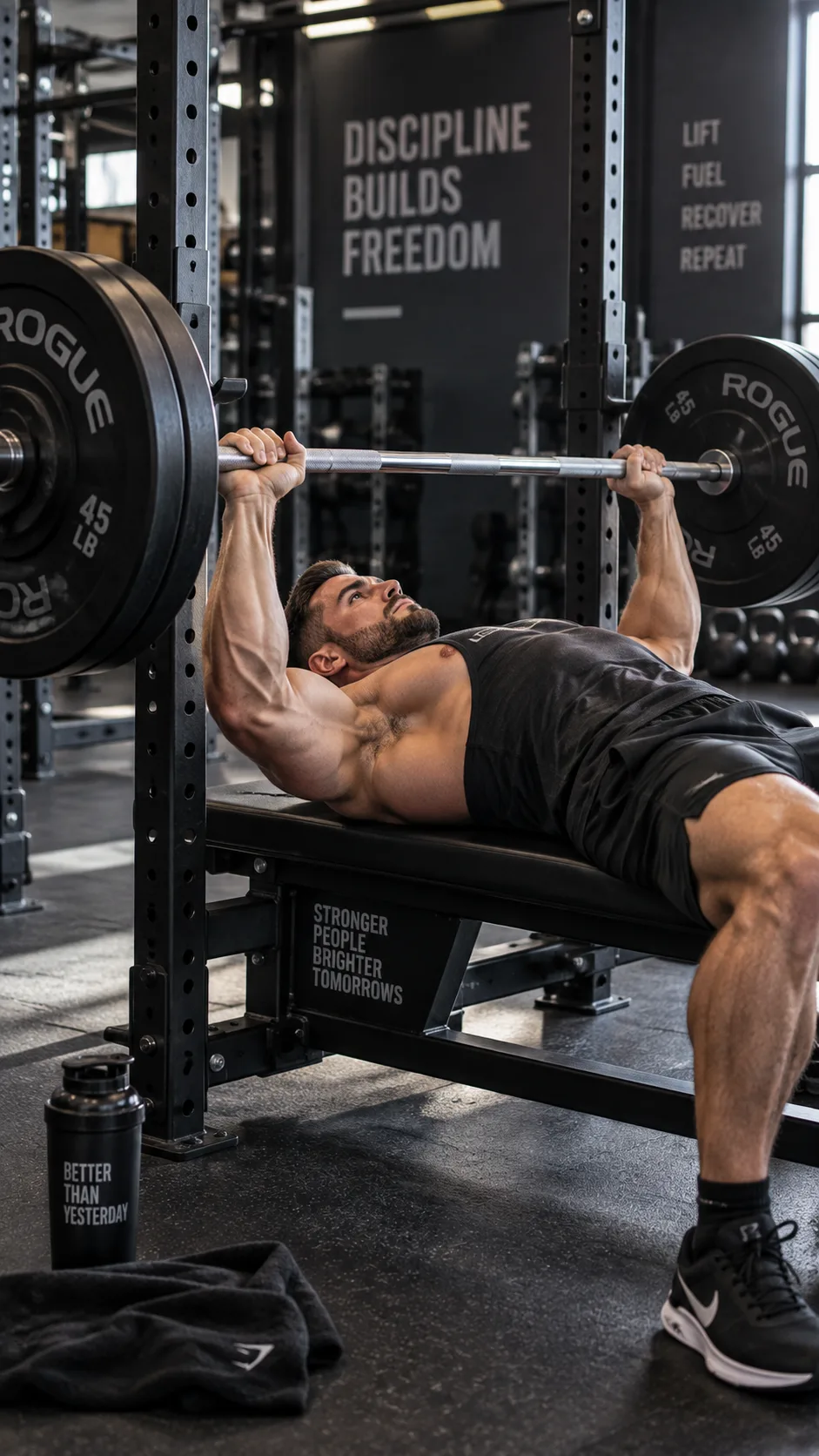
Why Chest and Triceps Belong Together on Push Day
Every time you press a barbell off your chest, your triceps fire. Every time you push dumbbells overhead, your triceps assist. These two muscle groups already work as a team, so training them together on the same day just makes biomechanical sense.
This pairing follows the classic push/pull/legs (PPL) split, which the National Strength and Conditioning Association recognizes as one of the most effective training splits for hypertrophy. You hit your chest with compound movements first, and your triceps, already pre-fatigued from all that pressing, get finished off with isolation work.
The result? Maximum mechanical tension and metabolic stress across both muscle groups in a single session. Your triceps don’t need a separate “arm day” because they’ve already done serious work. And your chest gets the heavy compound attention it craves.
The Warm-Up: Five Minutes That Save Your Shoulders
I know, I know. Warming up isn’t sexy. But neither is a rotator cuff tear that sidelines you for four months. Trust me on this one.
Spend five minutes on these before you touch a barbell:
- Band pull-aparts: 2 sets of 15 reps to wake up your rear delts and stabilize your shoulder joint
- Arm circles: 30 seconds each direction, increasing range gradually
- Light dumbbell press: 1 set of 15 reps with a weight that feels almost too easy
- Push-ups: 10-15 slow, controlled reps to prime your chest and get blood flowing
This takes barely any time and dramatically reduces your injury risk. Your shoulders will thank you when you’re still benching heavy at 40.
The Complete Chest and Tricep Workout for Mass
Here’s the full push day routine. I’ve structured it to hit the chest from multiple angles before transitioning to focused tricep work. Every exercise earns its spot for a specific reason.
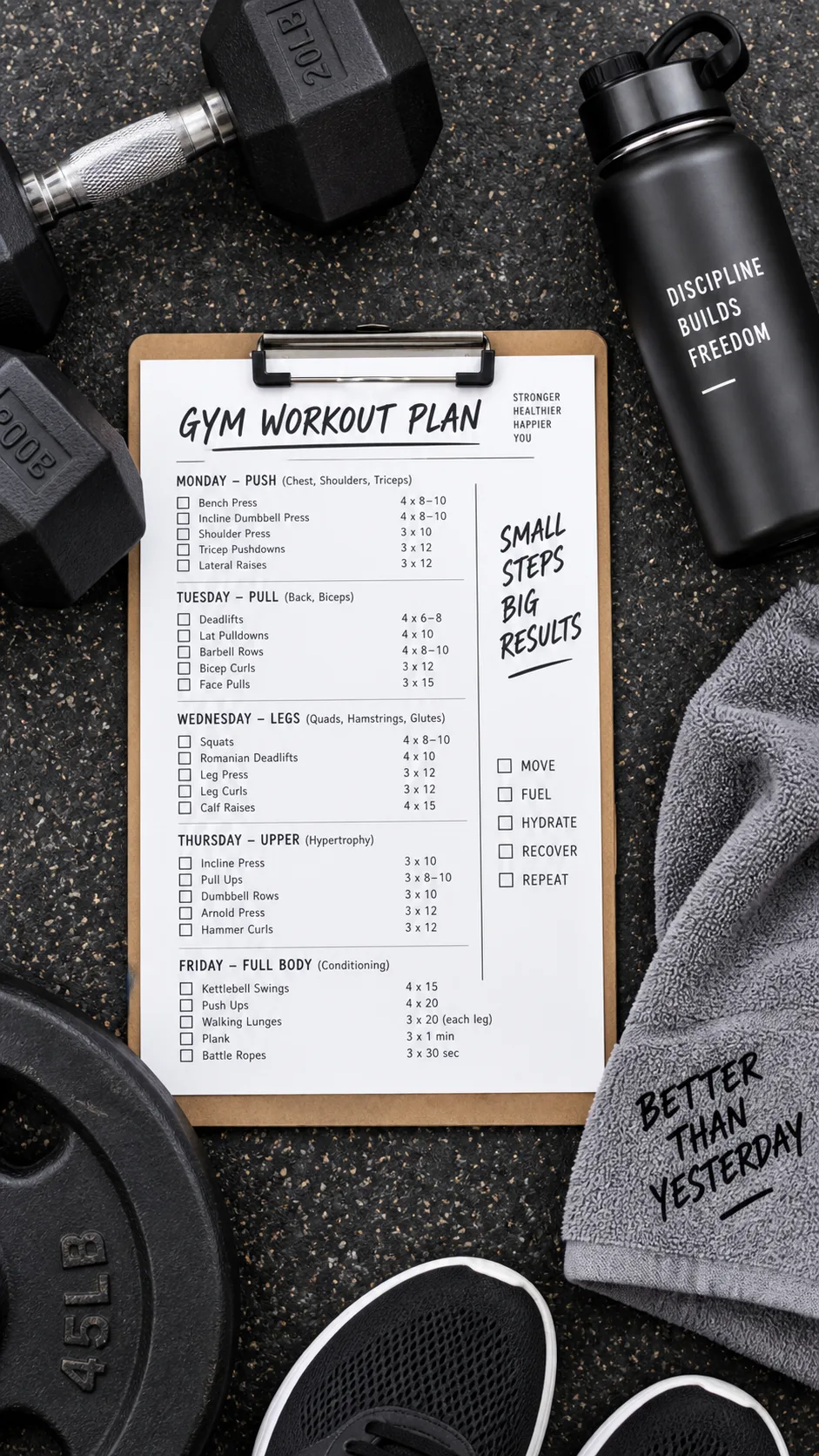
Exercise 1: Flat Barbell Bench Press
Sets: 4 | Reps: 6-8 | Rest: 2-3 minutes
The king of chest exercises. No surprises here. The flat barbell bench press lets you move the most weight through the greatest range of motion, and it recruits your entire pec major along with your anterior delts and triceps. Start your push day with this while you’re fresh and your nervous system can handle heavy loads.
Form cues: Retract your shoulder blades, arch your upper back slightly, plant your feet firmly, and lower the bar to your lower chest. Drive through your feet as you press. If your butt leaves the bench, the weight is too heavy. Period.
Exercise 2: Incline Dumbbell Press
Sets: 3 | Reps: 8-10 | Rest: 90 seconds
Ever wondered why your upper chest looks flat even though you bench every week? It’s because the flat bench barely touches your clavicular head, the upper portion of your pec. The incline dumbbell press fixes that.
Set your bench to about 30-45 degrees. Anything steeper shifts too much work onto your front delts. Dumbbells beat a barbell here because they allow a deeper stretch at the bottom and force each side to work independently, eliminating strength imbalances.
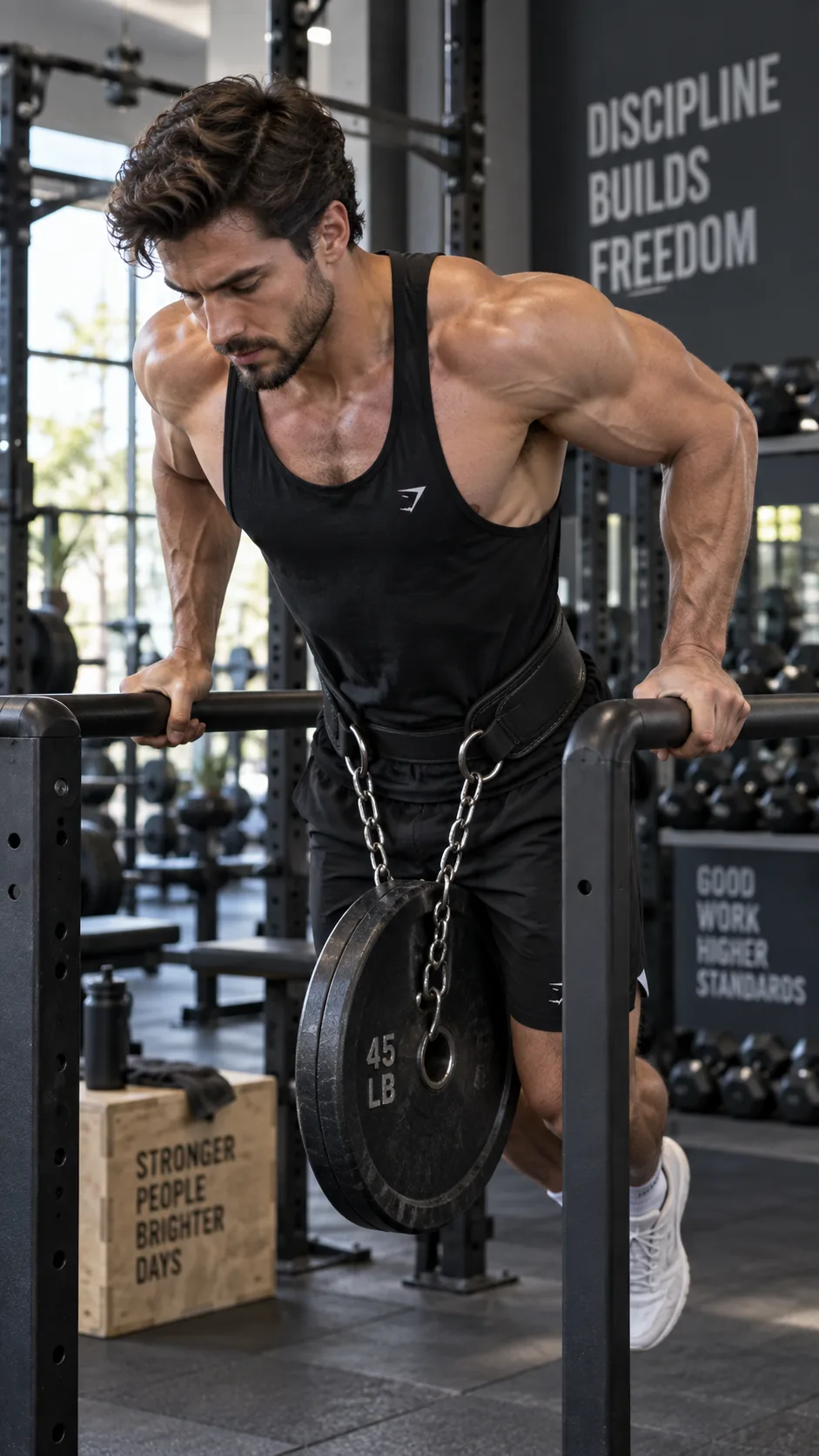
Exercise 3: Chest Dips (Weighted if Possible)
Sets: 3 | Reps: 8-12 | Rest: 90 seconds
Dips are criminally underrated for chest development. Lean your torso forward about 30 degrees, keep your elbows slightly flared, and lower yourself until you feel a deep stretch across your pecs. This targets the lower and outer chest in a way no machine can replicate.
Once bodyweight dips feel easy for 12 reps, strap on a dip belt and add weight progressively. Research published in the Journal of Strength and Conditioning Research confirms that weighted dips generate significant chest and tricep activation, sometimes rivaling the bench press itself.
Exercise 4: Cable Flyes (Low-to-High)
Sets: 3 | Reps: 12-15 | Rest: 60 seconds
Here’s where you shift from heavy pressing to isolation work that really targets the inner chest and creates that full, rounded look. Cable flyes maintain constant tension throughout the entire range of motion, something dumbbells simply can’t do at the top of a fly.
Set the pulleys low and bring your hands together at about chin height in a scooping motion. Squeeze HARD at the top for a full second. You’ll feel the burn across your upper-inner pecs immediately. Keep the weight moderate and focus entirely on the contraction.
Exercise 5: Close-Grip Bench Press
Sets: 3 | Reps: 8-10 | Rest: 90 seconds
Now we transition to tricep-focused work, and we start with the best compound movement for tricep mass. The close-grip bench press hits all three heads of the tricep while still giving your chest some residual work. It’s the perfect bridge between your chest and tricep blocks.
Grip the bar about shoulder-width apart, not super narrow. Going too close puts unnecessary stress on your wrists. Tuck your elbows closer to your body than you would on a regular bench press and focus on locking out explosively at the top. That lockout is where your triceps do the most work.
Exercise 6: Overhead Dumbbell Tricep Extension
Sets: 3 | Reps: 10-12 | Rest: 60 seconds
Most guys neglect the long head of the tricep, and that’s a huge mistake. The long head accounts for roughly 50% of your total tricep mass. It only gets fully stretched when your arms are overhead, which makes this exercise essential for complete tricep development.
Grab a single dumbbell with both hands, press it overhead, and lower it behind your head while keeping your elbows pointed at the ceiling. Feel that deep stretch at the bottom before driving back up. Control the eccentric. No swinging, no ego lifting.
Exercise 7: Tricep Rope Pushdowns
Sets: 3 | Reps: 12-15 | Rest: 60 seconds
We finish with the classic cable pushdown to absolutely torch whatever’s left in your triceps. The rope attachment lets you spread the ends apart at the bottom, creating a stronger peak contraction in the lateral head of the tricep.
Stand tall, pin your elbows to your sides, and push down. At the bottom, pull the rope ends apart and squeeze for a beat. If your elbows drift forward, you’ve gone too heavy. Drop the ego, drop the weight, and feel the muscle working. FYI, this is the one exercise where chasing the pump actually matters for growth.

The Full Workout at a Glance
- Flat Barbell Bench Press: 4 × 6-8
- Incline Dumbbell Press: 3 × 8-10
- Chest Dips (Weighted): 3 × 8-12
- Cable Flyes (Low-to-High): 3 × 12-15
- Close-Grip Bench Press: 3 × 8-10
- Overhead Dumbbell Tricep Extension: 3 × 10-12
- Tricep Rope Pushdowns: 3 × 12-15
Total working sets: 22 | Estimated session time: 55-70 minutes
That volume sits right in the sweet spot recommended by hypertrophy researchers like Dr. Mike Israetel: enough to stimulate growth without crushing your recovery capacity. If you’re newer to serious training, drop one set from each exercise and build up over 4-6 weeks.
Progressive Overload: The Non-Negotiable Rule
You can follow the best chest and tricep workout ever designed, but if you’re pressing the same weight for the same reps every week, you will not grow. Your muscles adapt. They need a reason to get bigger, and that reason is progressive overload.
Here’s how to apply it practically:
- Add weight: Even 2.5 lbs per side every week or two adds up fast over months
- Add reps: If you hit 8 reps last week, aim for 9 this week at the same weight
- Add a set: Gradually increase volume from the minimum effective dose toward the maximum recoverable volume
- Improve tempo: Slow down your eccentric (lowering phase) to increase time under tension
Track everything in a workout log. I use a simple notes app on my phone. If you can’t tell me exactly what you lifted last Tuesday, you’re leaving gains on the table.
Common Mistakes That Kill Your Chest and Tricep Gains
I’ve made every single one of these mistakes. Learn from my wasted years so you don’t repeat them 🙂
Bouncing the Bar Off Your Chest
This isn’t a trampoline drill. Every time you bounce the barbell off your sternum, you rob your pecs of the eccentric loading that drives muscle growth. You also risk cracking a rib. Lower the bar with control, pause briefly, then press.
Flaring Your Elbows to 90 Degrees
On bench press variations, your elbows should sit at roughly 45-75 degrees from your torso, not straight out to the sides. Excessive flaring grinds your shoulder joint and shifts stress away from your chest. A study from the National Library of Medicine database confirms that moderate elbow tuck optimizes pec activation while protecting the shoulder capsule.
Skipping the Stretch on Tricep Movements
Recent research shows that training muscles at long muscle lengths (the stretched position) matters more than most lifters realize. For triceps, that means going deep on overhead extensions and not cutting the range short. A full range of motion beats heavier weight every single time.
Neglecting the Mind-Muscle Connection
I used to think “mind-muscle connection” was bro-science nonsense. I was wrong. Actively thinking about squeezing your chest during presses genuinely increases muscle activation. It sounds weird, but it works. Focus on the muscle, not just moving the weight from point A to point B.

Nutrition: You Can’t Out-Train a Bad Diet
This push day routine creates the stimulus for muscle growth. But your body builds that muscle during recovery, and recovery depends heavily on what you eat. No amount of clever programming overcomes a caloric deficit when your goal is mass.
The basics you need to nail:
- Caloric surplus: Eat roughly 250-500 calories above your maintenance level. More than that and you’re just adding unnecessary fat.
- Protein intake: Aim for 0.7-1 gram per pound of bodyweight daily. Spread it across 3-5 meals for optimal muscle protein synthesis.
- Carbohydrates: Don’t fear carbs. They fuel your workouts and drive recovery. Eat plenty of them around your training window.
- Sleep: 7-9 hours per night. Growth hormone peaks during deep sleep. Skimping on rest is like leaving money on the table. IMO, sleep matters more than any supplement you could buy.
If you want a complementary routine that pairs well with this push day, check out our chest day workout guide that covers machine-based and tricep training. The programming principles apply universally regardless of gender.
How to Program This Into Your Weekly Split
This chest and tricep workout fits perfectly into a push/pull/legs rotation. Here’s what a typical training week looks like:
- Monday: Push (this workout)
- Tuesday: Pull (back and biceps)
- Wednesday: Legs
- Thursday: Rest or active recovery
- Friday: Push (vary exercise selection slightly)
- Saturday: Pull
- Sunday: Legs
Running the PPL split twice per week means you hit each muscle group twice, which the American Council on Exercise and most hypertrophy researchers agree is the optimal training frequency for muscle growth. On your second push day, swap in variations: dumbbell bench instead of barbell, dips instead of incline press, skull crushers instead of overhead extensions.
This variation prevents staleness, addresses weak points from different angles, and keeps your joints healthy by distributing stress across different movement patterns. If you’re pressed for time and can only train four days, run push/pull/legs/upper and still get excellent results.
When to Change This Routine
Don’t hop to a new program every three weeks because some influencer posted a “SHOCKING new chest routine.” Consistency beats novelty. Run this workout for a minimum of 8-12 weeks before making major changes.
Signs you should modify things:
- You’ve stopped making progress despite proper nutrition and recovery
- You’re experiencing joint pain (not just muscle soreness) in the same spots repeatedly
- You’ve hit the top of every rep range for two consecutive weeks, and it’s time to increase weight
- You’re genuinely bored and dreading workouts (motivation matters more than people admit)
When you do switch things up, change individual exercises rather than scrapping the entire program. The machine-based chest and tricep plan we’ve outlined elsewhere offers great exercise alternatives you can rotate in.
The Bottom Line
Building a bigger chest and thicker triceps doesn’t require complicated science or a PhD in exercise physiology. It requires a smart push day routine, consistent progressive overload, adequate nutrition, and enough patience to let the process work.
Here’s your action plan: Take this chest and tricep workout to the gym this week. Log every set, every rep, every weight. Come back next week and beat those numbers by even a small margin. Repeat for 12 weeks. Then compare your before and after photos.
The guys who actually build impressive physiques aren’t the ones chasing the “perfect” program. They’re the ones who pick a solid routine, like this one, and execute it with relentless consistency. Now stop reading and go press something heavy.
