
You’ve been doing floor crunches for months and your abs still look exactly the same. Sound familiar? The gym floor crunch is the participation trophy of core training. It feels like effort, but it barely scratches the surface of what your core can do.
The good news: your gym is packed with machines specifically designed to target your core with better resistance, better range of motion, and better results. You just need to know which ones to use and how to use them properly.
Here are 7 abs machine workout gym moves that actually build a strong, defined core. No endless reps on a yoga mat required.
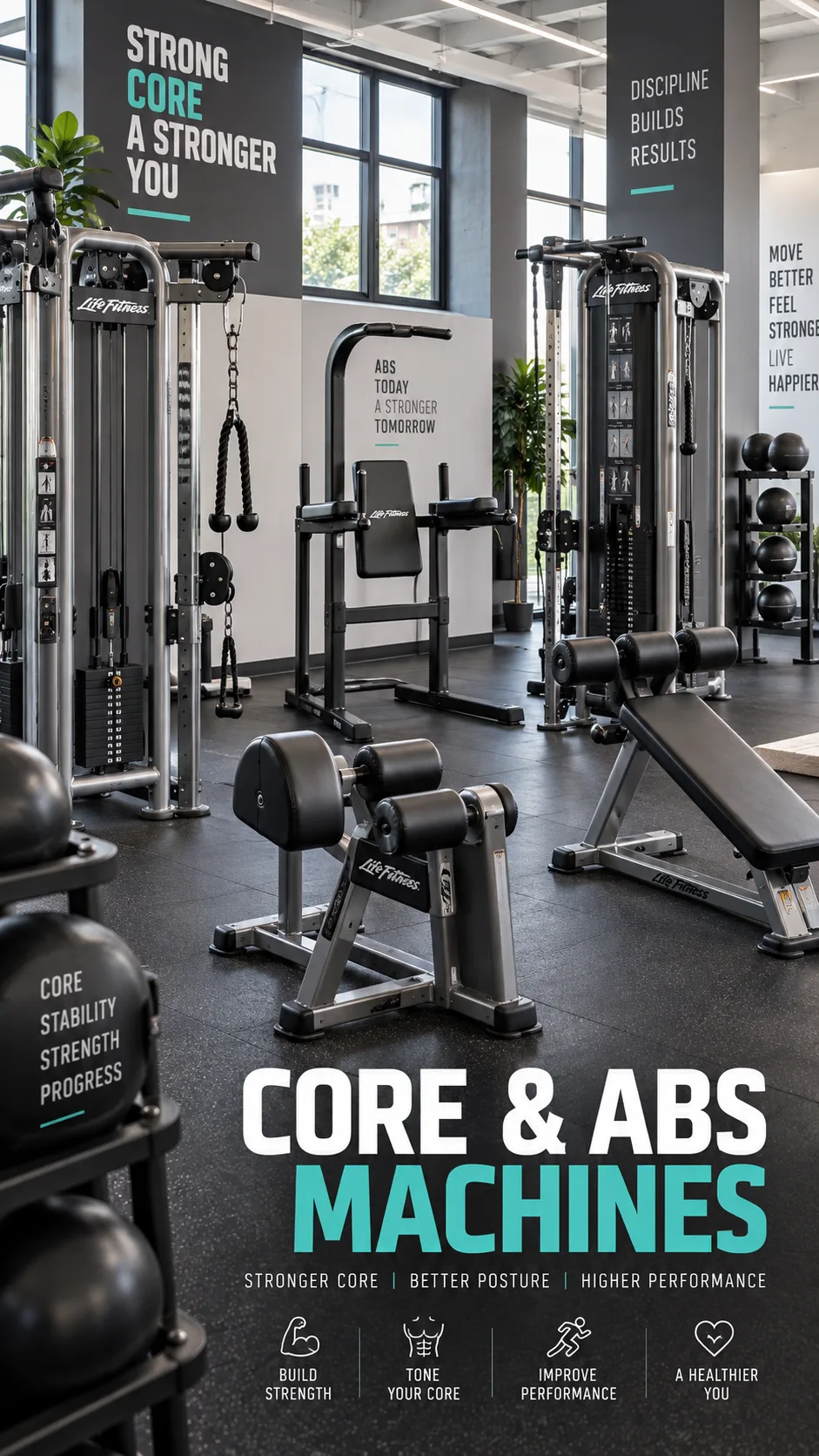
Why abs machines actually work better than you think
Here’s the thing about machines that most people get wrong: they’re not the lazy option. For core training specifically, machines let you add progressive overload, which is the number one driver of muscle growth. You can’t really add weight to a floor crunch. You absolutely can on a cable machine.
Machines also help you maintain proper form under load, which reduces the risk of lower back strain. When you work your abs against resistance rather than just bodyweight, you recruit more muscle fibers per rep. That means fewer wasted sets and faster visible progress.
According to the American Council on Exercise (ACE), core training should include both stability and dynamic movement patterns, and gym machines cover both well when you program them right.
The 7 core moves: your abs machine workout gym blueprint
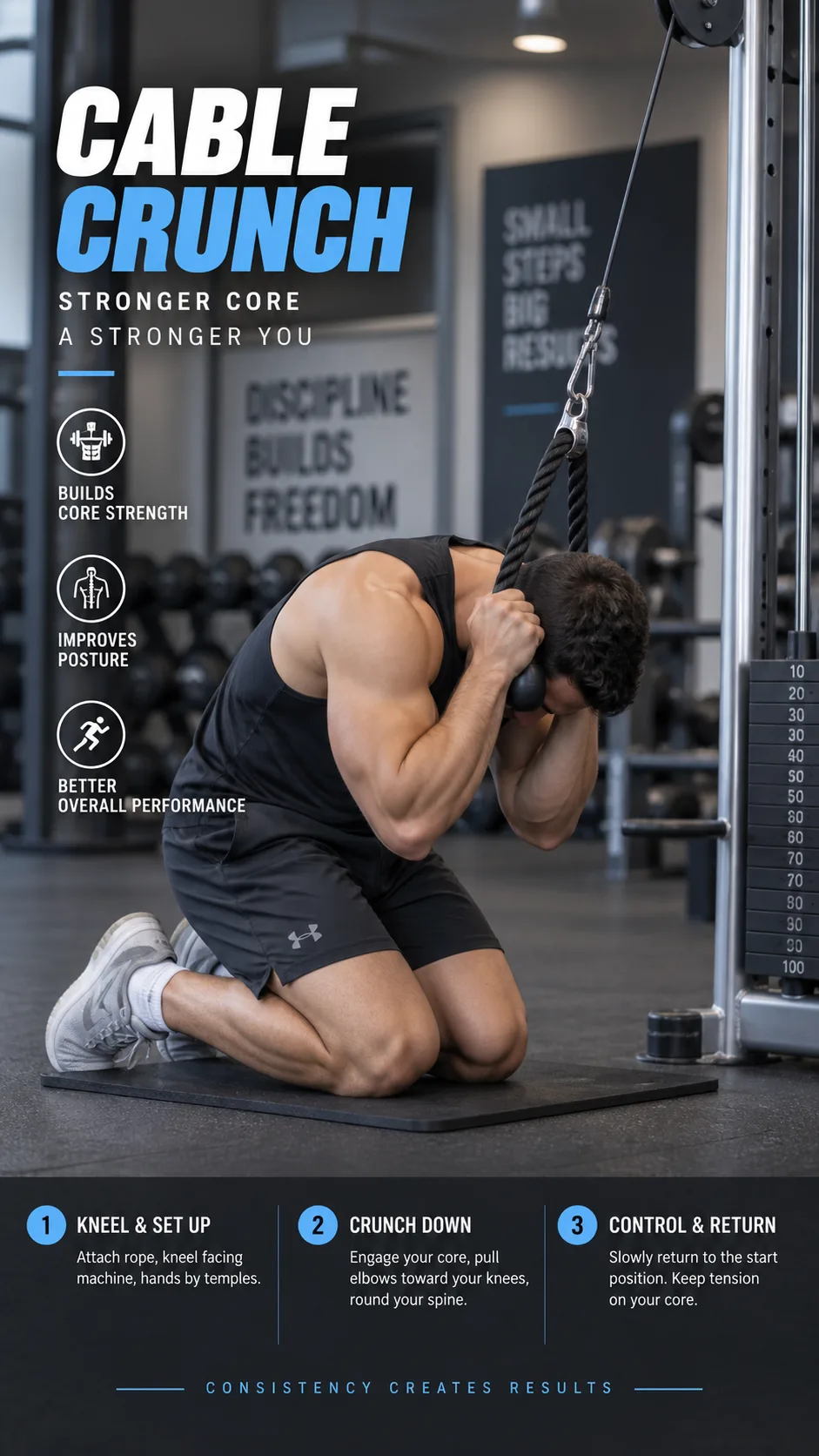
1. Cable Crunch
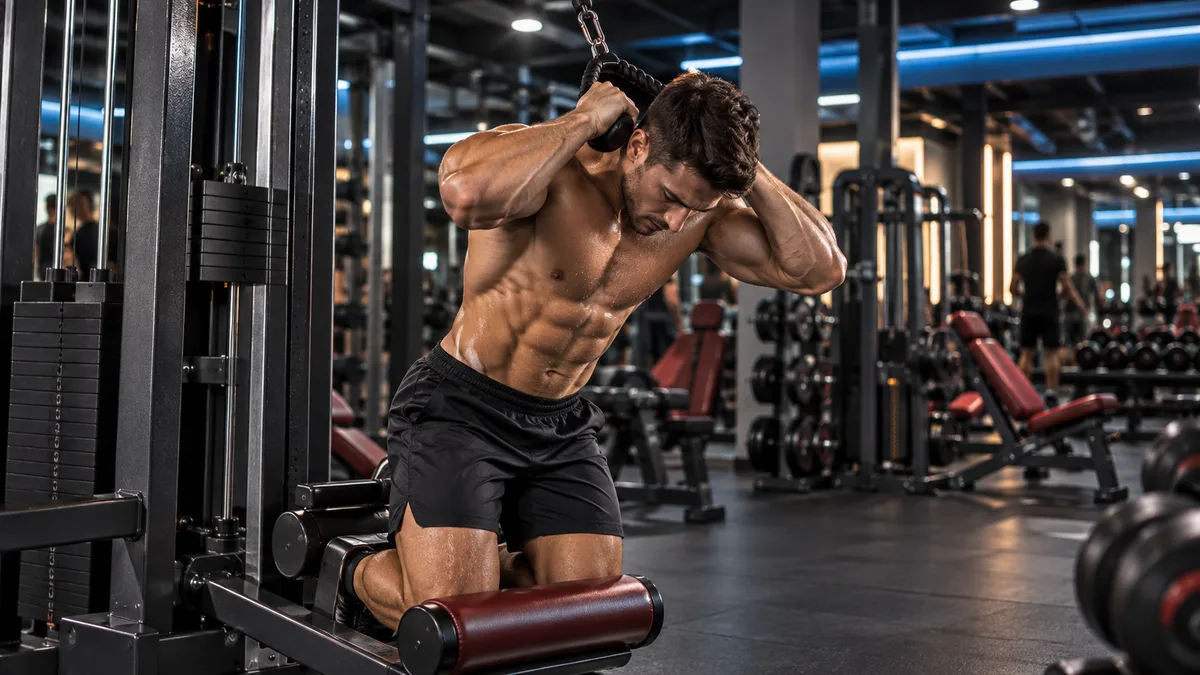
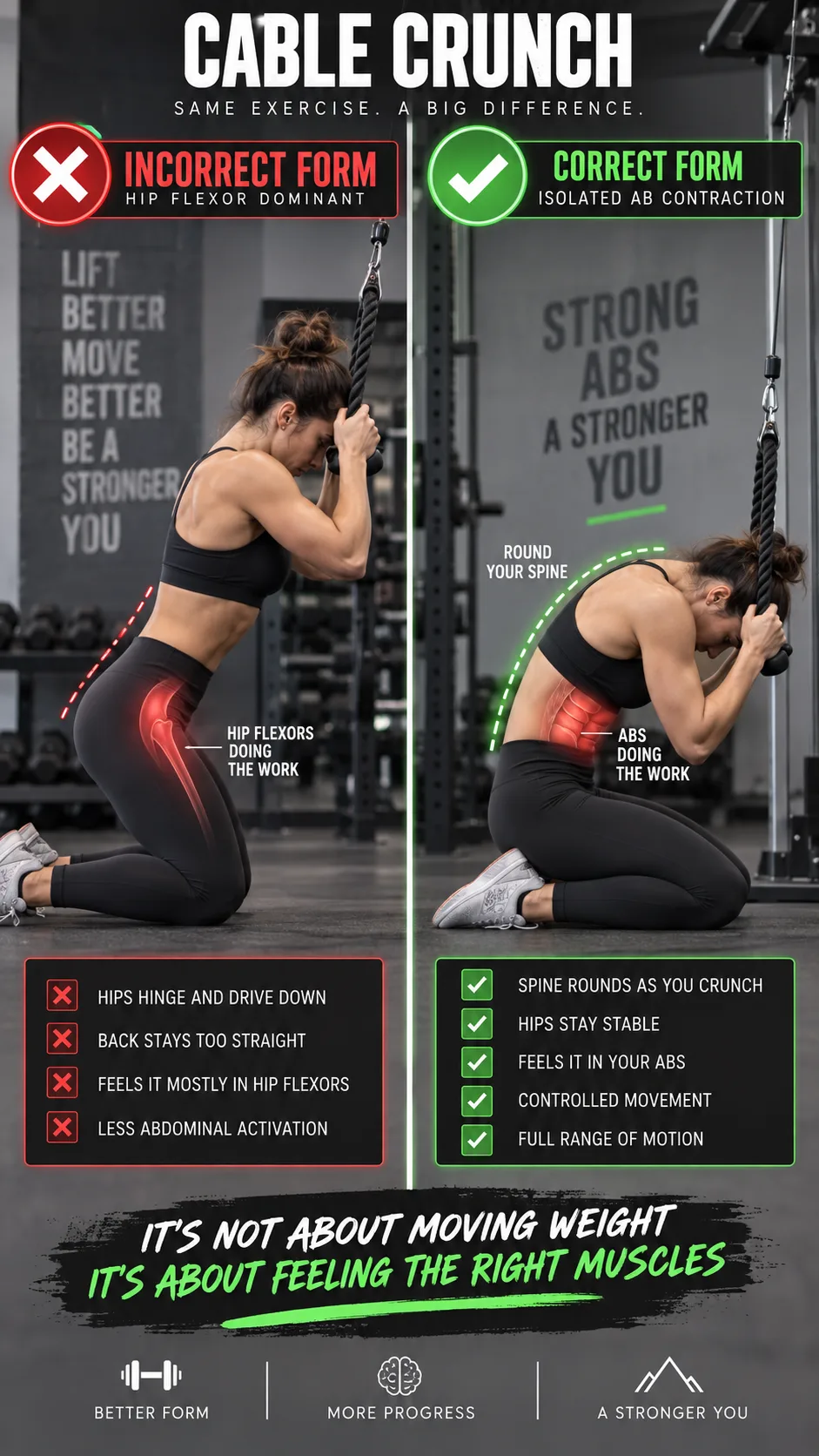
The cable crunch is the gold standard of abs machine gym exercises. You attach a rope to the cable pulley, kneel on the floor, and crunch your elbows down toward your knees. The cable maintains constant tension throughout the entire range of motion, something a floor crunch physically cannot do.
Keep your hips stationary. The movement comes entirely from your abs pulling your ribcage down, not your hip flexors pulling your torso. That distinction matters more than anything else. Mess it up and you’re just doing a weird hip hinge, not an ab exercise.
- Sets: 3-4
- Reps: 12-15
- Rest: 60 seconds
- Tip: Start light. You’ll feel it more than you expect
2. Seated ab crunch machine
Most gyms have a seated crunch machine that looks like a padded chair with arm handles. This is one of the most underused pieces of core equipment in any gym. You sit upright, grip the handles above your head, and crunch your upper body forward against the resistance pad.
The seated position isolates your abs almost completely, removing the lower back compensation that creeps into standing or floor-based moves. It’s especially effective for beginners who haven’t yet developed the mind-muscle connection with their core.
- Sets: 3
- Reps: 15-20
- Rest: 45-60 seconds
- Tip: Pause at the bottom of each rep for a 1-second squeeze
3. Captain’s chair leg raise
The captain’s chair, that vertical rack with padded armrests, targets your lower abs and hip flexors in a way that very few exercises can match. You brace your upper body on the pads and raise your knees (or straight legs, if you’re feeling ambitious) toward your chest.
Ever wondered why this one burns so much? Your lower abs have to work against gravity and the full weight of your legs, plus stabilize your pelvis throughout the movement. It’s genuinely hard work, which is exactly why so many people avoid it. Don’t avoid it.
- Sets: 3
- Reps: 10-15 (knees bent) or 8-12 (straight legs)
- Rest: 60 seconds
- Tip: Control the lowering phase. Don’t just drop your legs

4. Cable wood chop
Your core isn’t just the front of your torso. It wraps all the way around, and the obliques (those side muscles that create the V-taper look) respond brilliantly to rotational work. The cable wood chop is the best rotational abs machine gym exercise you can do.
Set the cable at a high anchor point. Stand side-on to the machine, grab the handle with both hands, and pull it diagonally down across your body in a chopping motion. The cable resists your rotation the entire way, which is exactly the stimulus your obliques need to grow and strengthen.
- Sets: 3 per side
- Reps: 12-15
- Rest: 45 seconds between sides
- Tip: Pivot your back foot and let your hips rotate. This is a full rotational movement, not just an arm pull
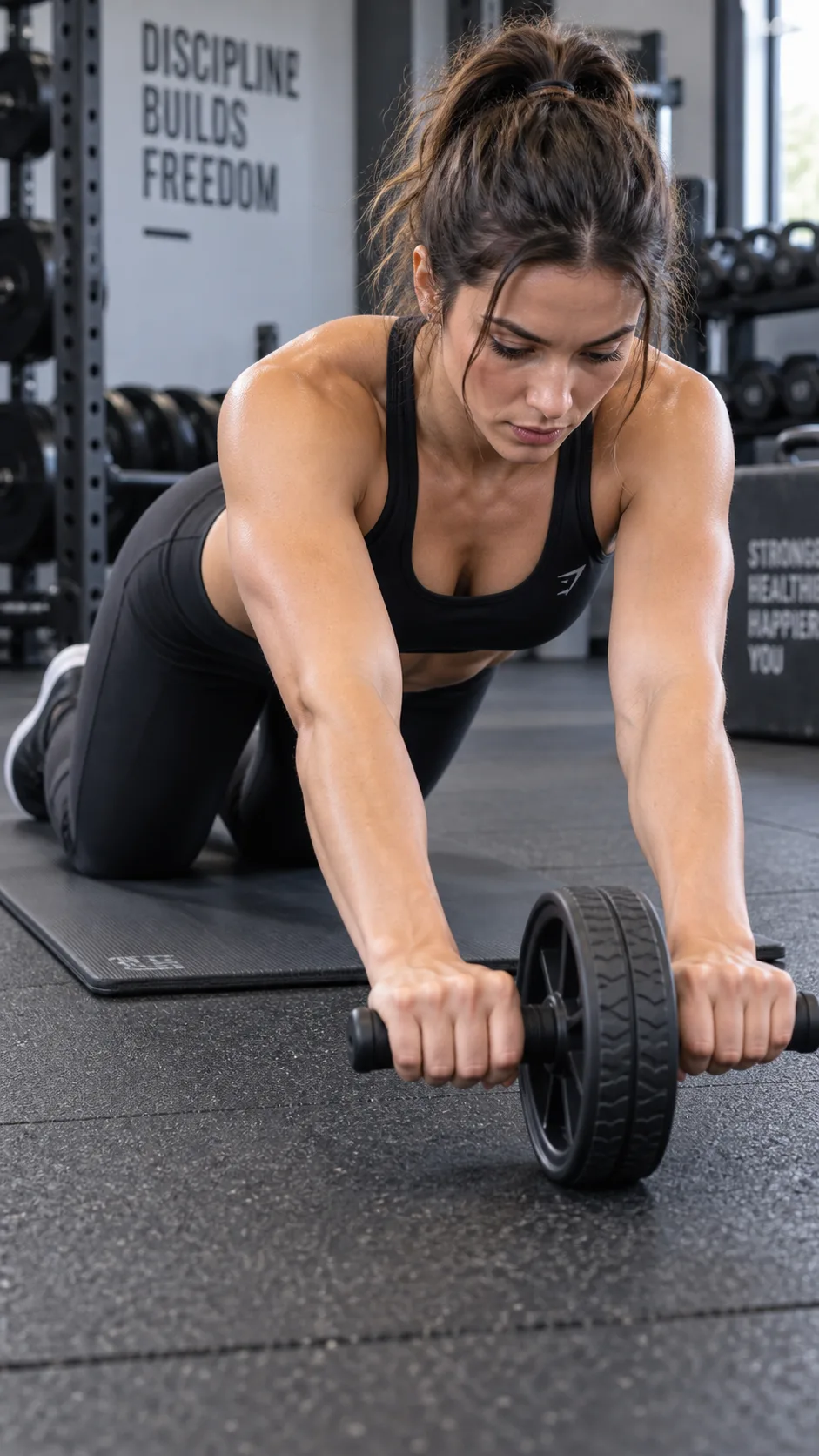
5. Ab wheel / rollout machine
If you want one exercise that makes every other core move feel easier, it’s the ab rollout. Whether you use a dedicated ab wheel machine or the classic ab roller on a mat, the rollout forces your entire anterior core (abs, obliques, hip flexors, serratus) to fire simultaneously to stop your spine from collapsing.
Research published by Healthline and backed by EMG studies shows the ab rollout activates the rectus abdominis significantly more than a standard crunch. The anti-extension demand is what makes it such an effective core exercise.
- Sets: 3
- Reps: 6-10 (quality over quantity here)
- Rest: 90 seconds
- Tip: Start on your knees until you can maintain a neutral spine throughout the full rep
6. Hanging knee raise (pull-up bar or machine assisted)
The hanging knee raise is technically bodyweight, but using an assisted pull-up machine or a specialized hanging ab station makes it accessible at any strength level and keeps the form tight. You hang from a bar, brace your core, and pull your knees up until your thighs are parallel to the floor, or higher if you’re strong enough.
The real focus here is posterior pelvic tilt at the top of the movement. Most people just swing their legs up using momentum. Instead, deliberately curl your pelvis under as your knees come up. That posterior tilt is what actually contracts your lower abs rather than just your hip flexors.
- Sets: 3-4
- Reps: 12-15
- Rest: 60 seconds
- Tip: Slow, controlled reps beat fast, swingy reps every single time
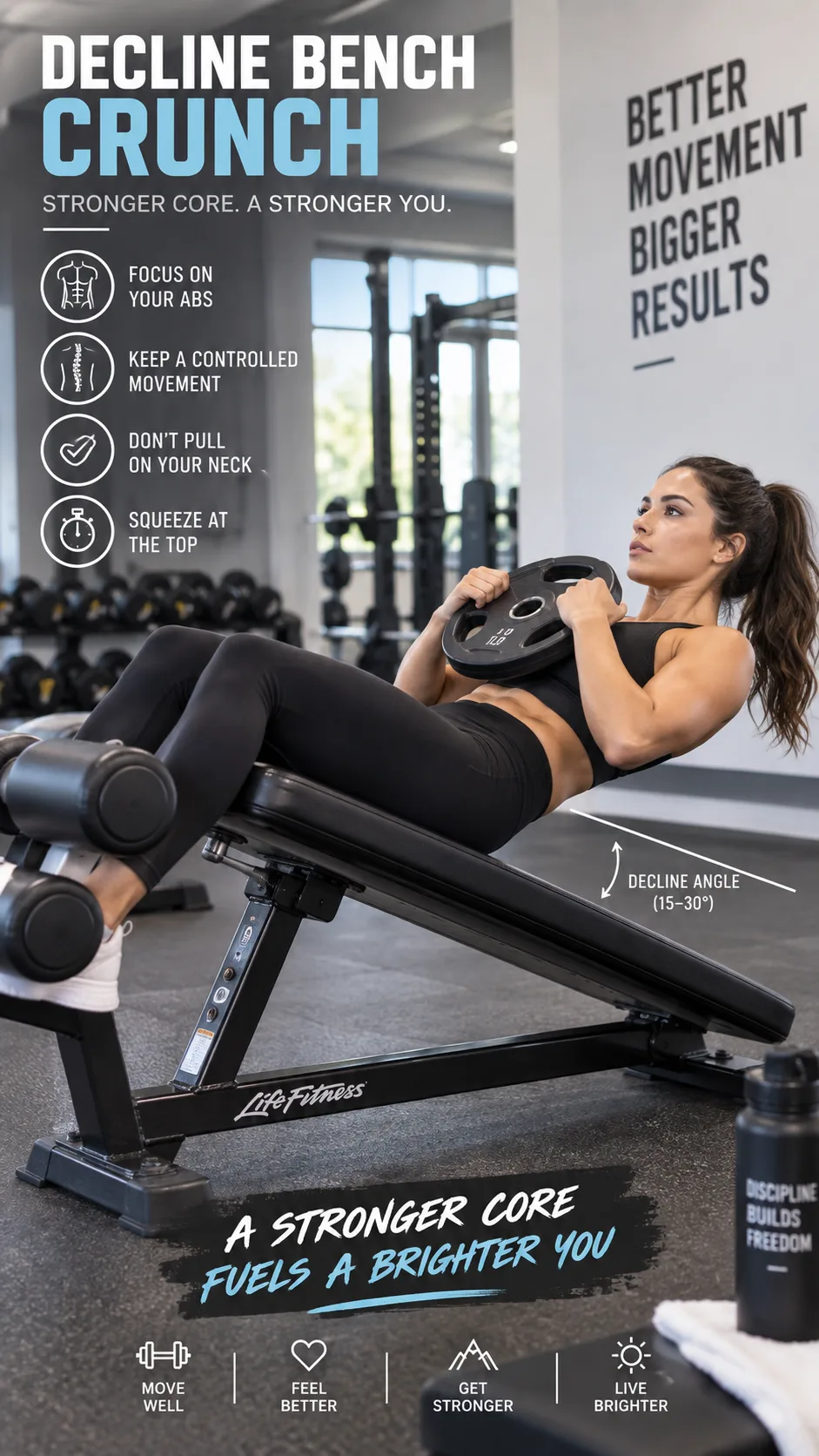
7. Decline bench crunch with weight plate
The decline crunch takes a familiar movement and makes it dramatically more effective by adding a stretch at the top. Your abs work through a full range of motion, lengthening at the top, contracting hard at the bottom, which is exactly how you build muscle. Add a weight plate to your chest and you’ve got a loaded eccentric abs exercise that most gym-goers have never tried. This one hits different after a few weeks of consistency.
The National Strength and Conditioning Association (NSCA) stresses that full range of motion under load is a core principle for muscular hypertrophy, and the decline bench crunch delivers exactly that for the rectus abdominis.
- Sets: 3
- Reps: 10-12
- Rest: 60-90 seconds
- Tip: Start with no weight. Master the movement first, then add a plate
How to structure your abs machine gym workout
Randomizing your core work is one of the most common mistakes people make. You need a plan that hits all areas (upper abs, lower abs, obliques, and deep stabilizers) without overloading any one pattern. Here’s a simple structure that works.
Option A: Dedicated core day (20-25 minutes)
- Cable Crunch — 4 sets x 12-15 reps
- Captain’s Chair Leg Raise — 3 sets x 12 reps
- Cable Wood Chop — 3 sets x 12 reps each side
- Ab Wheel Rollout — 3 sets x 8 reps
- Decline Bench Crunch — 3 sets x 12 reps
Option B: Core finisher (10-12 minutes, added after a main workout)
- Seated Ab Crunch Machine — 3 sets x 15 reps
- Hanging Knee Raise — 3 sets x 12 reps
- Cable Wood Chop — 2 sets x 12 reps each side
If you want to see how this fits into a broader training schedule, check out this gym workout days schedule that maps out a weekly split without leading to burnout. And if you’re building a more comprehensive abs approach beyond machines, the abs workout routines at the gym guide covers 9 core moves that mix machine and bodyweight work effectively.
How often should you train abs at the gym?
Your abs are muscles. That seems obvious, but most people train them like they’re made of something different, doing 100 reps every single day and wondering why nothing changes. Treat your core training like any other muscle group: 2-4 sessions per week with adequate recovery between them.
According to Mayo Clinic, core strengthening sessions 2-3 times per week are sufficient to see meaningful improvements in strength and stability for most people. More is not always better, especially when you’re also doing compound lifts like squats and deadlifts that already tax your core significantly.
Two dedicated core sessions per week plus one finisher is the sweet spot for most gym-goers. It’s enough volume to drive progress without turning your core training into a second job.
Common mistakes that tank your abs machine results
You can do all 7 exercises and still get mediocre results if you fall into these traps. Avoid them:
- Going too heavy too fast — your form breaks down and your hip flexors take over. Start lighter than you think you need to.
- Skipping the eccentric phase — letting the weight stack crash back up between reps eliminates half the stimulus. Control the return.
- Holding your breath — exhale on the contraction, inhale on the release. Bracing doesn’t mean holding your breath forever.
- Only training the front — if you never do rotational work or oblique-focused moves, you’re leaving real core strength on the table.
- Ignoring progressive overload — if you’ve been doing the same cable crunch weight for 6 months, you stopped getting results months ago. Add weight consistently.
Core training doesn’t happen in isolation
Strong abs show up better when the rest of your body is trained well too. Compound lifts build foundational core strength, and a solid full-body program makes your abs machine work more effective, not less. If you want to see how core training fits into a bigger picture, the total body workout at the gym guide maps out a complete full-body plan that pairs perfectly with dedicated core sessions.
Nutrition plays a role too, of course. You can build the strongest core in the gym and still not see it if body fat sits on top of it. That’s a diet conversation, but it’s worth acknowledging. The machine work builds the muscle. The nutrition reveals it.
Putting it all together
Seven exercises, one clear goal: a core that’s genuinely strong, not just something that gets a lot of floor time. The abs machine workout gym approach works because it applies progressive overload, trains all planes of movement, and gives your abs a real reason to adapt and grow.
Pick two to three of these moves for your next gym session. Focus on form before weight. Stay consistent for 6-8 weeks and track your progress. That’s the whole playbook, and it’s simpler than most people want to believe.
Your core is the foundation of every other movement you do in the gym. Build it properly, and everything else gets easier. Start with the cable crunch, master the form, and build from there. The machines are waiting.
