
Your legs make up the biggest muscle group in your body, and you do not need a squat rack, a leg press machine, or a gym membership to absolutely torch them. All you need is floor space, your own bodyweight, and the willingness to feel the burn.
Whether you travel constantly, hate crowded gyms, or just want a solid leg day at home, this guide has you covered. These 10 moves hit your quads, hamstrings, glutes, and calves. When you do them with proper form and real intention, every single rep counts.
Why no-equipment leg training works
A lot of people assume bodyweight training is just a warm-up act for the real stuff. That is genuinely not true. Research shows that bodyweight exercises can build muscle and strength effectively, especially when you dial up the volume, control the tempo, and reduce rest time. The American Council on Exercise consistently backs bodyweight training as a legitimate method for muscular endurance and hypertrophy.
The secret? Your muscles do not know whether resistance comes from a barbell or your own bodyweight. They just know tension, time under tension, and fatigue. Give them all three and they respond. Simple as that.
If you want to eventually add weights into the mix, check out The Best Full Leg Workout Routine for Stronger, More Sculpted Legs once you have built a solid base with these moves.
What you need for this workout
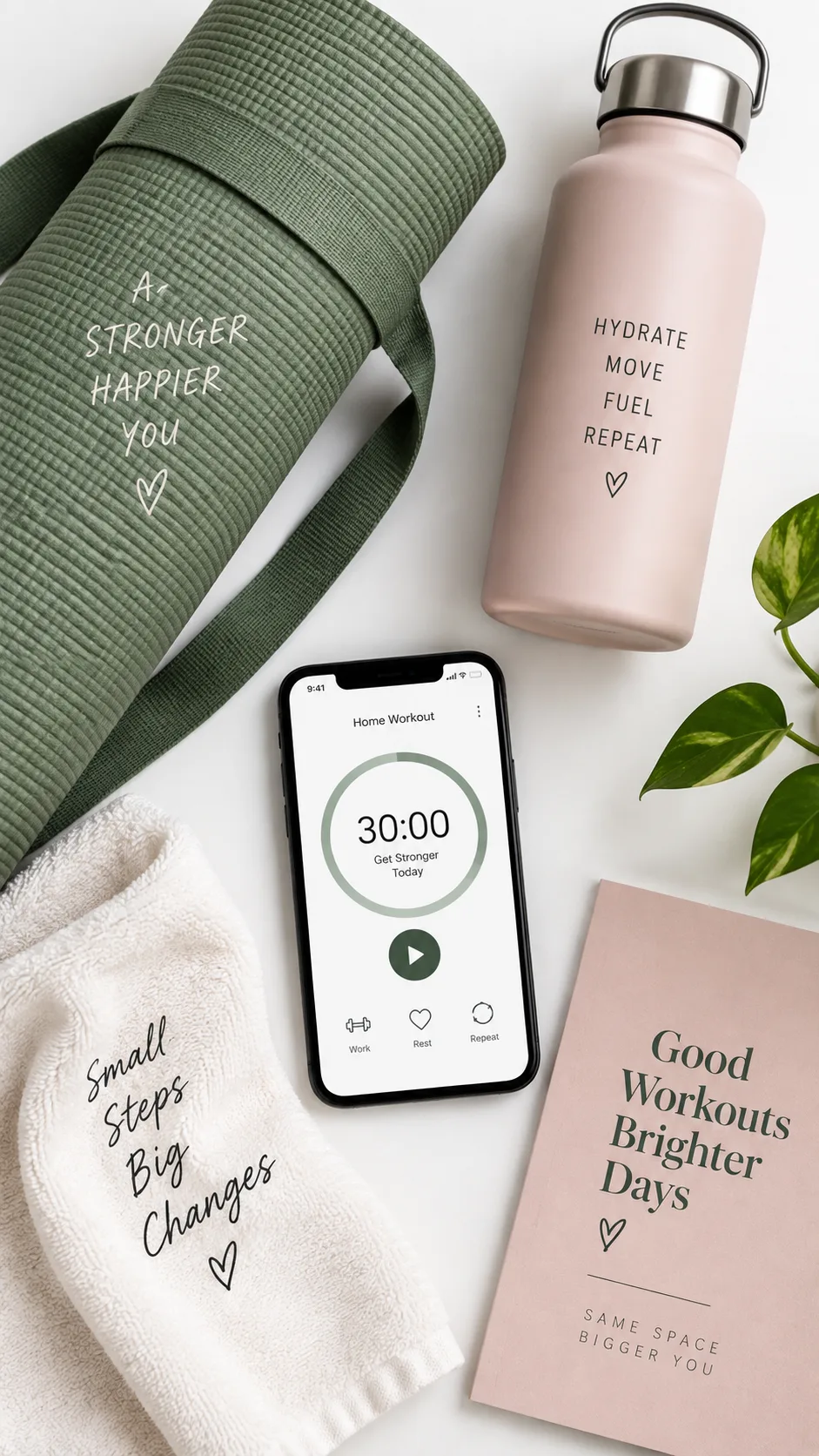
- A clear space of about 6 feet by 6 feet
- A yoga mat or carpet (optional, but your knees will thank you)
- Water nearby
- A timer on your phone
- That is genuinely it
No dumbbells, resistance bands, or equipment of any kind. Just you. Wearing supportive sneakers helps during the jumping and standing moves, so do not skip that part.
The 10 no-equipment leg moves
Each move below targets a specific part of your lower body. Work through them as a circuit, or pick your favorites and program them into a structured routine. Both approaches work.
1. Bodyweight squat
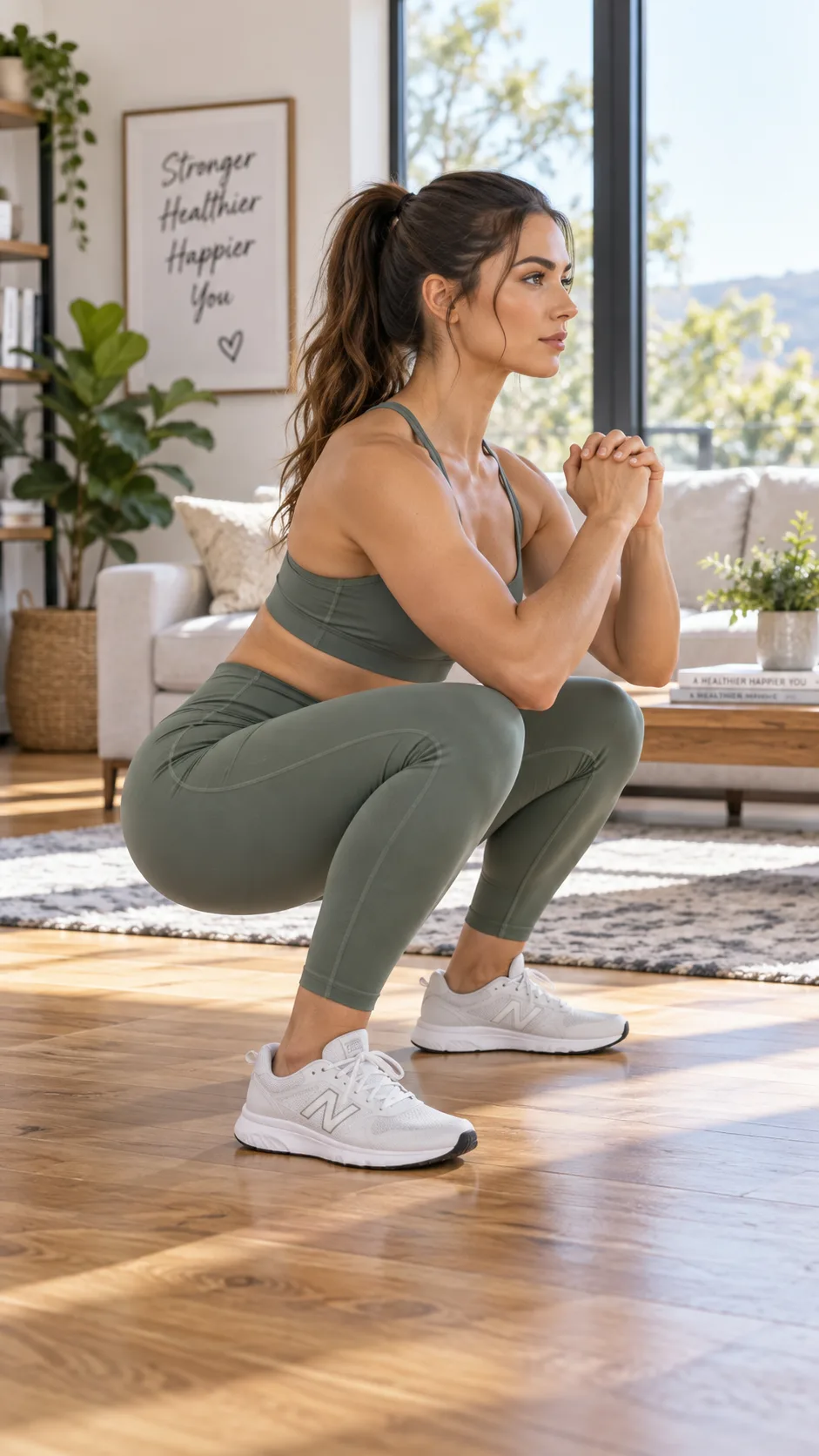
The squat is the foundation of every leg day, gym or no gym. Stand with feet shoulder-width apart, toes slightly out, and sit your hips back and down until your thighs are parallel to the floor. Drive through your heels to stand back up. Keep your chest tall the whole way through.
Most people rush their squats and only half-rep their way through a set. Slow the descent down to 3 seconds, pause at the bottom, and drive back up. That alone transforms a basic squat into something you will feel tomorrow.
- Muscles worked: Quads, glutes, hamstrings, core
- Reps: 3 sets of 15 to 20
- Tip: If your heels lift, widen your stance slightly
2. Sumo squat
Take your stance wider than shoulder-width and point your toes out to about 45 degrees. This wider position shifts emphasis to your inner thighs and glutes, areas that standard squats often miss. Lower down slowly, keep your knees tracking over your toes, and squeeze hard at the top.
- Muscles worked: Inner thighs (adductors), glutes, quads
- Reps: 3 sets of 12 to 15
- Tip: Add a pulse at the bottom of each rep for extra burn
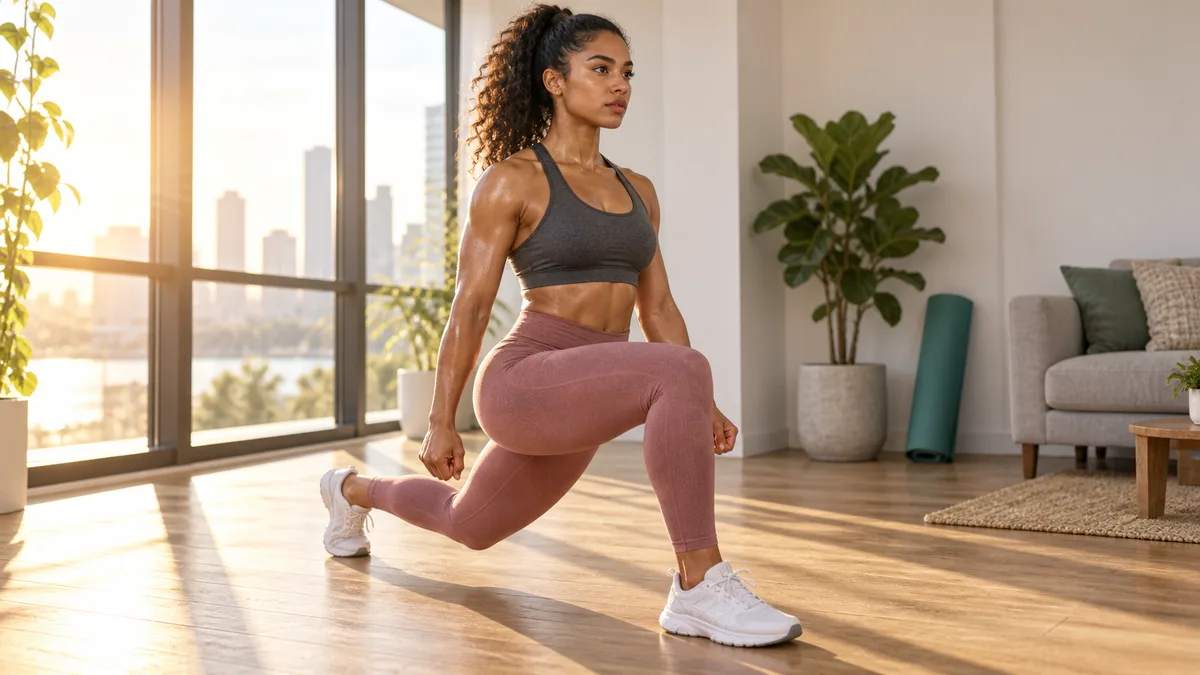
3. Forward lunge
Step one foot forward, lower your back knee toward the floor, and push through your front heel to return to standing. Lunges force each leg to work independently, which means they also correct imbalances between your left and right side. Bilateral movements like squats can hide those imbalances for months.
- Muscles worked: Quads, glutes, hamstrings
- Reps: 3 sets of 10 to 12 per leg
- Tip: Keep your front shin vertical. Do not let your knee cave inward
4. Reverse lunge
Same idea as a forward lunge, but you step backward instead. The reverse lunge puts more load on your glutes and hamstrings and tends to be gentler on your knees, which makes it a smart choice if forward lunges feel uncomfortable. Step back, lower, and drive through the front heel to return.
- Muscles worked: Glutes, hamstrings, quads
- Reps: 3 sets of 10 to 12 per leg
- Tip: Alternate legs or complete one side fully before switching
5. Glute bridge
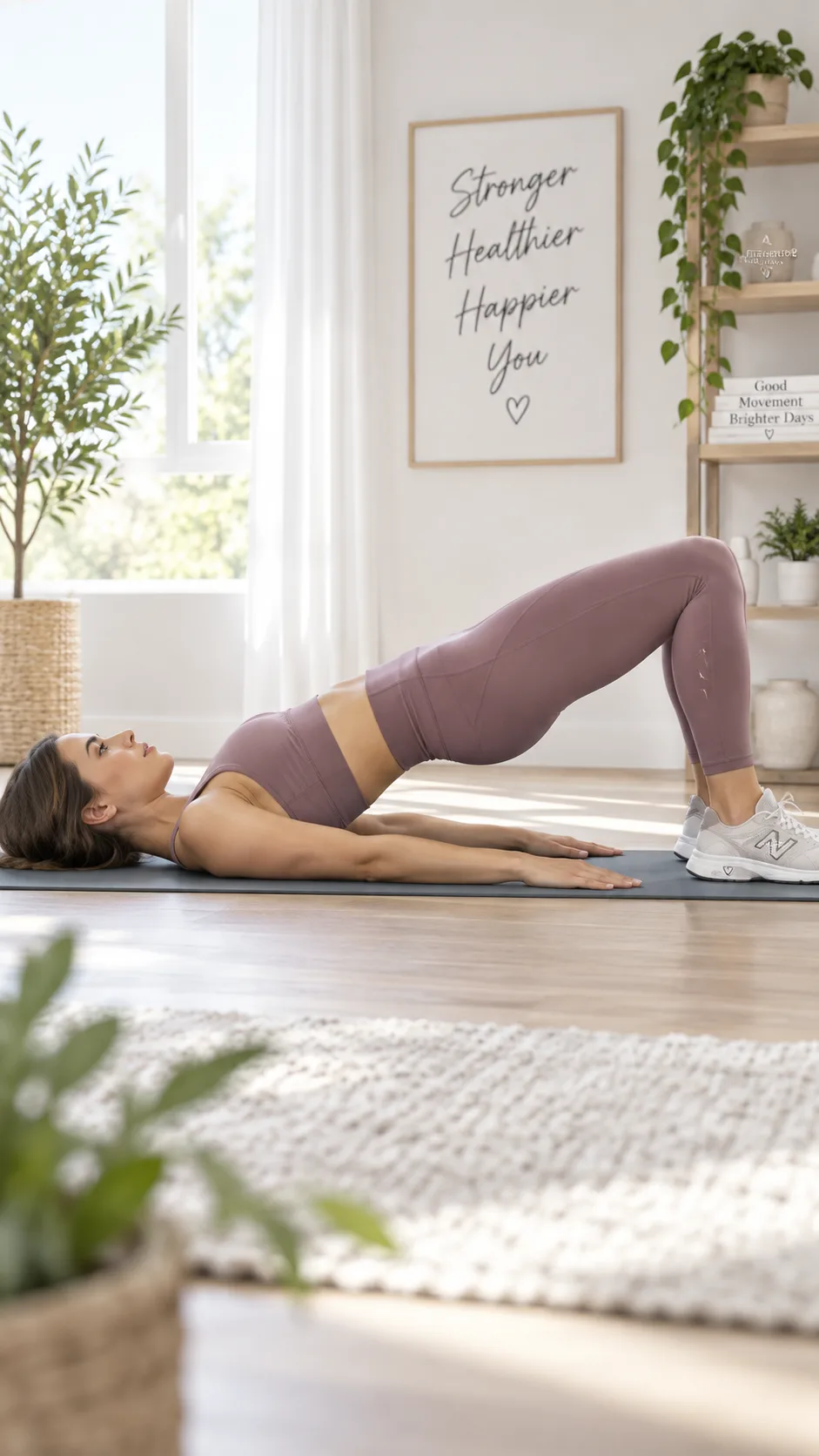
Lie on your back with knees bent and feet flat on the floor, hip-width apart. Drive your hips toward the ceiling by squeezing your glutes hard, hold for 2 seconds at the top, and lower back down slowly. This is one of the best glute activation moves you can do, and it requires zero equipment and zero floor space beyond a mat.
Ever wondered why so many trainers program glute bridges into every leg session? Because most women are quad-dominant and under-use their glutes. Bridges fix that fast.
- Muscles worked: Glutes, hamstrings, core
- Reps: 3 sets of 15 to 20
- Tip: Place a pillow under your head for comfort on hard floors
6. Single-leg glute bridge
Start in the same position as the glute bridge, then extend one leg straight out. Now your standing leg has to do all the work, and that means significantly more demand on your glute and hamstring on that side. Control is everything here. Do not let your hips drop or rotate.
- Muscles worked: Glutes, hamstrings (unilaterally)
- Reps: 3 sets of 10 to 12 per leg
- Tip: Progress from a standard bridge before jumping to this variation
7. Side-lying leg raise
Lie on your side with your legs stacked and your body in a straight line. Lift your top leg to about 45 degrees, hold briefly, and lower it with control. This move targets your abductors (the outer hip muscles) which play a major role in knee stability and that coveted outer thigh shape.
- Muscles worked: Outer thighs (abductors), glutes medius
- Reps: 3 sets of 15 to 20 per side
- Tip: Keep your foot flexed throughout. Do not let your toe point toward the ceiling
8. Standing calf raise
Stand near a wall for balance, rise up onto the balls of your feet, hold for a moment at the top, then lower slowly. Slow and controlled beats fast and sloppy here. A 3-second lowering phase makes this simple move genuinely challenging. Your calves respond well to higher rep ranges, so do not be shy about pushing the volume.
- Muscles worked: Gastrocnemius, soleus (calves)
- Reps: 3 sets of 20 to 25
- Tip: Stand on a step for a greater range of motion if available
9. Wall sit
Slide your back down a wall until your thighs are parallel to the floor and hold. The wall sit is an isometric exercise, meaning your muscles fire hard without any movement. The longer you hold, the more your quads scream. Aim for 30 to 60 seconds per set and build from there.
- Muscles worked: Quads, glutes, calves
- Duration: 3 sets of 30 to 60 seconds
- Tip: Keep your knees directly above your ankles, not pushed forward over your toes
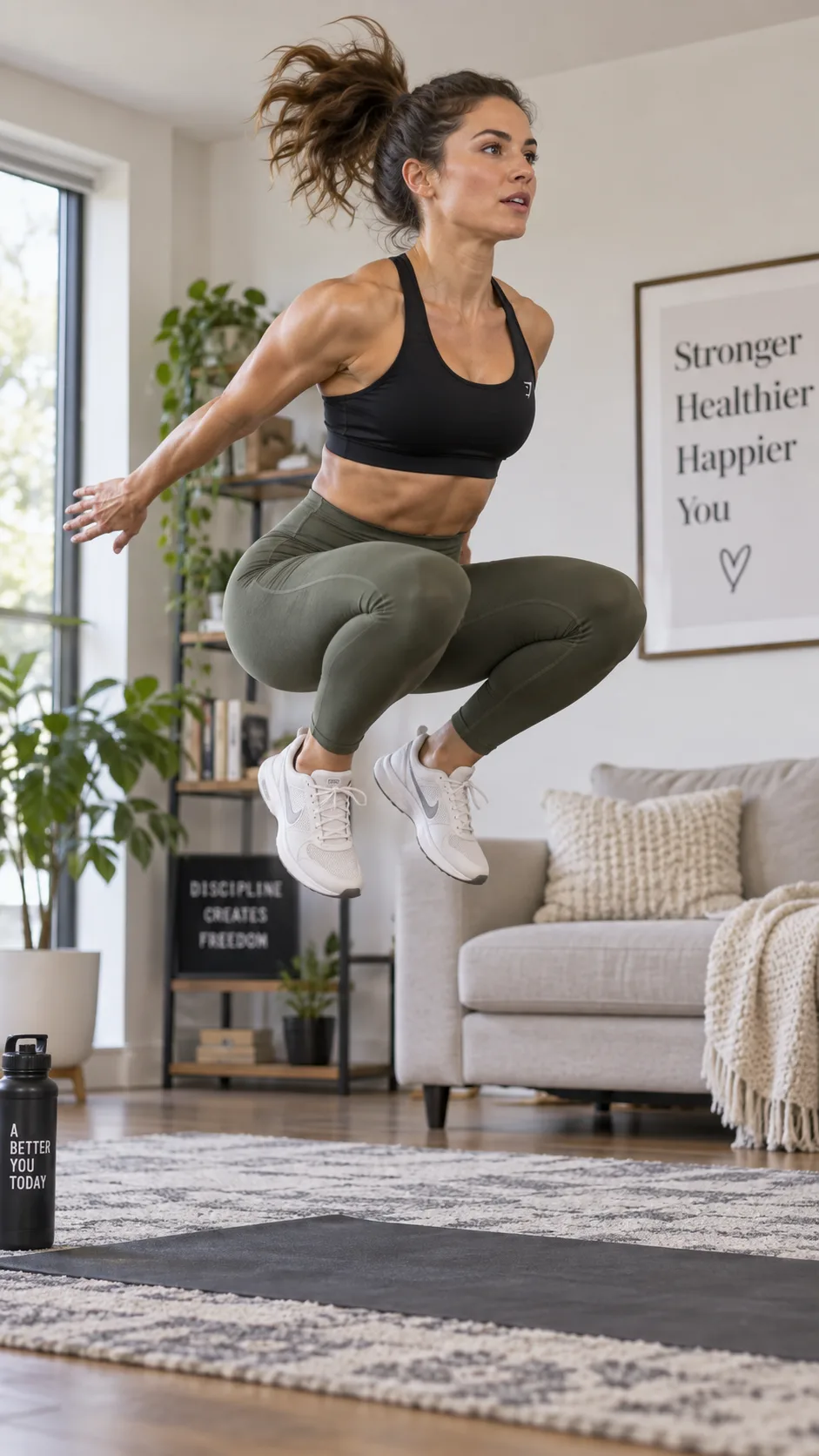
10. Jump squat
Perform a standard squat and then explode up off the floor, landing softly back into the squat position. Jump squats add a plyometric element that spikes your heart rate and recruits fast-twitch muscle fibers, the ones responsible for power and athletic-looking legs. Land toe-to-heel to absorb impact and protect your joints.
- Muscles worked: Quads, glutes, hamstrings, calves
- Reps: 3 sets of 10 to 15
- Tip: Skip this one if you have knee pain. Reverse lunges give similar intensity without the impact
Sample 30-minute workout structure
Here is how to put all 10 moves together into a workout that flows well. Warm up for 5 minutes first with leg swings, hip circles, and bodyweight squats.
- Bodyweight Squat — 3 x 15 reps
- Sumo Squat — 3 x 12 reps
- Reverse Lunge (alternating) — 3 x 10 per leg
- Forward Lunge — 3 x 10 per leg
- Glute Bridge — 3 x 20 reps
- Single-Leg Glute Bridge — 3 x 10 per leg
- Side-Lying Leg Raise — 3 x 15 per side
- Wall Sit — 3 x 45 seconds
- Calf Raise — 3 x 20 reps
- Jump Squat — 3 x 12 reps
Rest 30 to 45 seconds between sets. Finish with a 5-minute cool-down including quad and hamstring stretches. The whole session lands around 30 to 35 minutes.
How to make every rep count
Technique makes or breaks a bodyweight leg workout. Without external load to challenge you, your mindset and muscle connection become the variable. Here is what moves the needle:
- Slow the eccentric (lowering) phase — 2 to 3 seconds down creates more time under tension and more muscle damage (the good kind)
- Squeeze at the top — especially on glute bridges and squats, a deliberate contraction at the peak of each rep adds up
- Think about the muscle working — the mind-muscle connection is real; Healthline covers the research on this well
- Reduce rest time progressively — as the moves get easier, cut rest from 60 seconds to 30 to increase intensity without adding reps
- Add pauses at the hardest point — a 2-second pause at the bottom of a squat or lunge amplifies difficulty significantly
According to the National Academy of Sports Medicine (NASM), progressive overload is the driving principle behind muscle development, and you can absolutely apply it to bodyweight training through these technique tweaks.
How often should you train legs at home?
Two to three dedicated leg sessions per week works well for most women. Your muscles need 48 hours to recover between sessions, so space them out across the week rather than stacking them back to back.
A simple split: train legs Monday and Thursday, add an upper body or full body day in between, and keep at least one full rest day. If you want to build structure around this, the Full Body Workout Women: A Weekly Gym Plan That Builds Strength Without Overtraining gives you a solid framework to work from.
Three leg days is the sweet spot once you have been training consistently for 4 to 6 weeks. Before that, two sessions with adequate recovery works better and reduces the risk of overuse soreness.
Feed your legs after training
Training breaks muscle down. Eating builds it back up stronger. Protein is the non-negotiable here. Aim for 0.7 to 1 gram of protein per pound of bodyweight daily to support muscle repair and growth, particularly if you are training legs multiple times per week.
Carbohydrates also matter more than most people realise. Your muscles store glycogen (from carbs) as fuel, and when you train with volume and intensity, you burn through it. Refueling with quality carbs post-workout supports recovery and performance in your next session.
If you want a practical eating plan that complements your training, the High Protein Meal Plan for Women: Easy Recipes to Build Lean Muscle and Lose Weight maps it all out in a way that is doable day to day.

Common mistakes to skip from day one
Most people make the same few mistakes with bodyweight leg training. Knowing them upfront saves you weeks of spinning your wheels.
- Going too fast — speed is the enemy of tension; slow down
- Skipping the glute work — bridges and single-leg work feel less exciting than squats but your glutes drive everything
- Ignoring calf raises — calves are chronically undertrained and the calf raise is not glamorous, but your lower legs will thank you
- Not warming up — cold muscles and explosive moves are a bad combination; always warm up first
- Staying at the same rep range forever — progressive overload means something has to change over time, even if it is just tempo or rest time
The ACE Exercise Library has video demonstrations for all the fundamental moves above if you want a visual reference for form.
When you are ready to level up
Bodyweight leg training has a ceiling, and that is okay. Once you can hit 20 clean reps of every move with full control and minimal rest, you are ready to add load. That might look like resistance bands, dumbbells, or a gym program.
When that time comes, Good Leg Workouts at the Gym: The Best Leg Exercises for Women to Try gives you a smart path forward using gym equipment without overcomplicating things. The strength base you built at home will carry over directly, and you will notice the difference immediately. Hello, DOMS.
The bottom line
You do not need a gym to build strong, capable legs. Ten moves, your own bodyweight, and 30 minutes three times a week is all it takes to build real strength and see genuine change over time.
The moves in this article hit every major muscle in your lower body. The programming structure gives you a ready-to-run session. The technique tips make sure you get results instead of just going through the motions. Everything you need is here. The only variable is showing up.
Start with two sessions this week. Focus on form over reps. And remember: the burn you feel in every rep is the work happening. That is exactly what you came for.
