
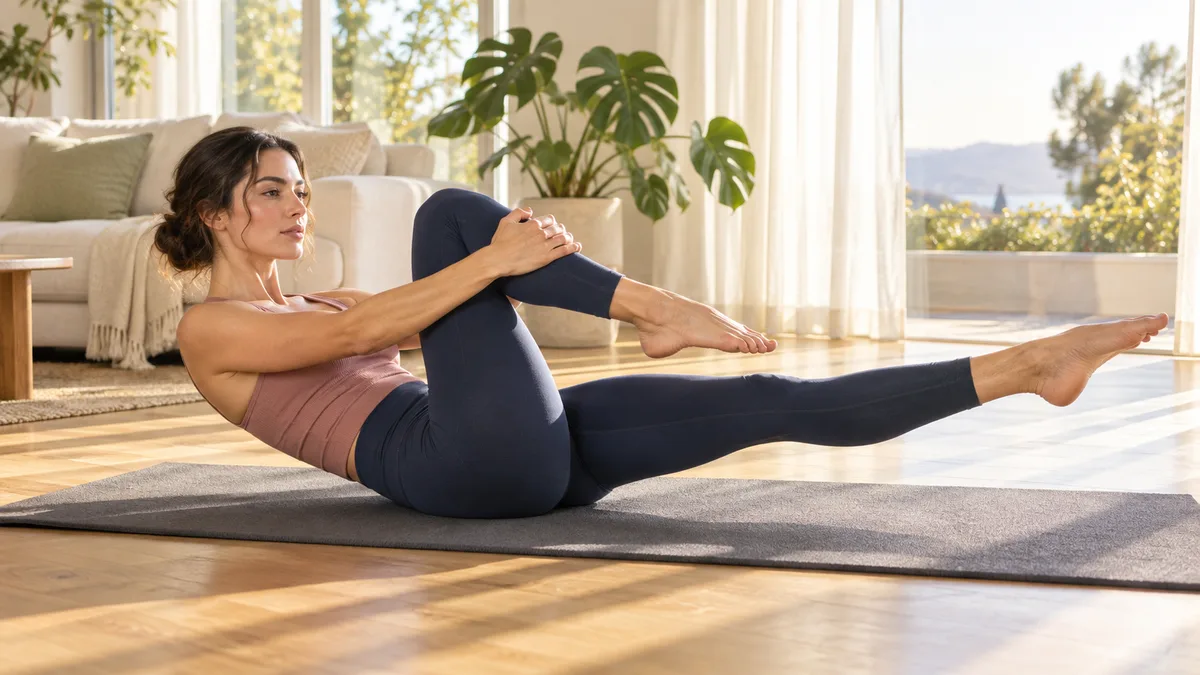
You don’t need a reformer, a studio membership, or a miracle to build a stronger, leaner body. A well-structured full body Pilates workout plan you can do at home will get you there. And it’ll keep you there, without wrecking your joints or your motivation in the process.
I started doing Pilates at home after years of bouncing between HIIT classes and lifting programs that left me either exhausted or bored. Pilates stuck because it delivers real results without that “I might actually be dying” feeling. Sound familiar?
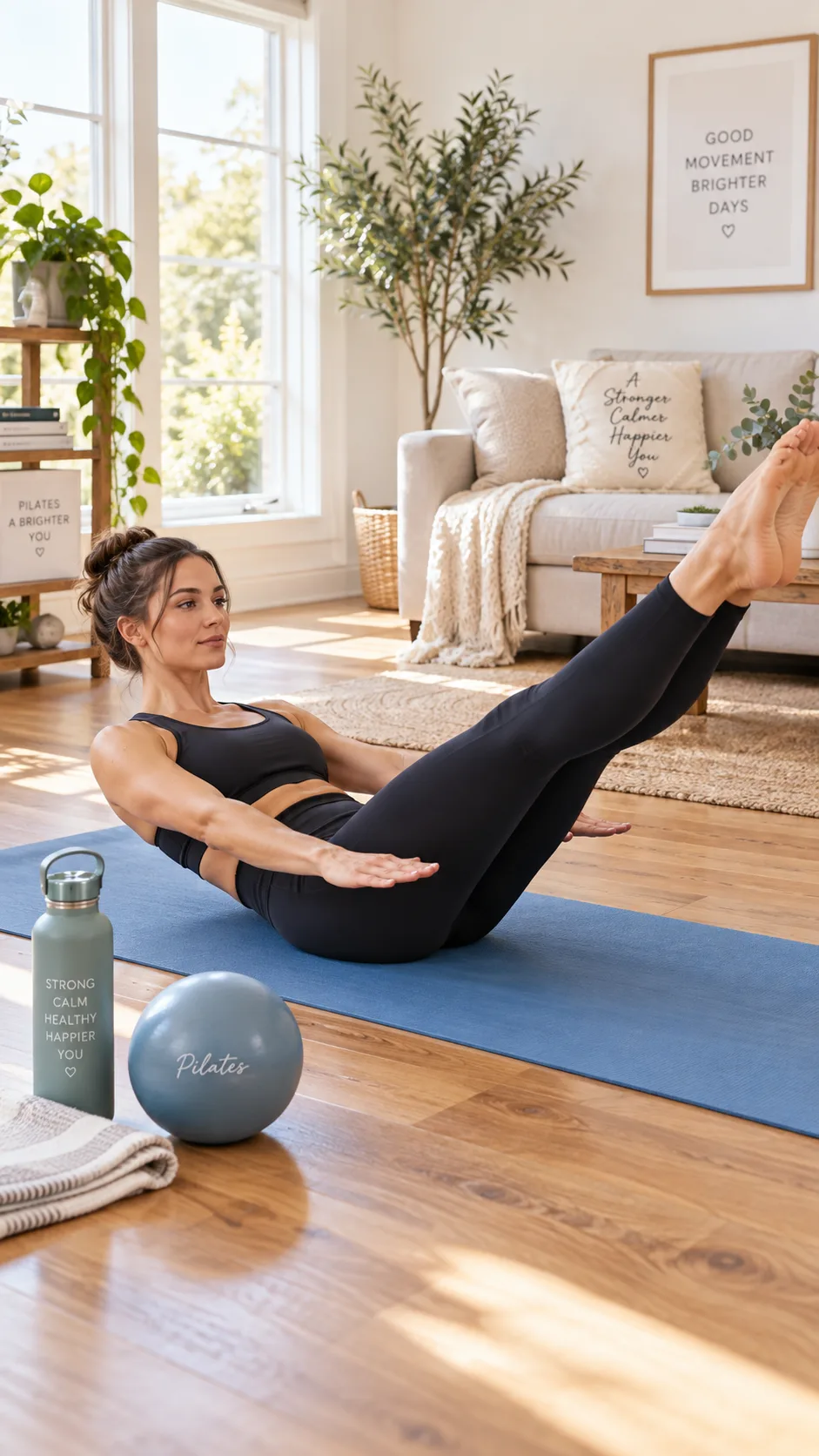
Why Pilates works so well for full-body toning
Pilates targets deep stabilizing muscles, the ones most workout plans completely ignore. Every movement activates your core, hips, and spine at the same time, which builds the kind of functional strength you actually use in real life.
Unlike heavy weightlifting, Pilates keeps tension on the muscle through the full range of motion. This approach, known as time under tension, drives muscle definition without requiring heavy loads. That’s exactly why so many people notice visible changes in their posture and shape within just a few weeks.
According to research published by the American Council on Exercise, regular mat Pilates significantly improves core endurance, flexibility, and muscular balance. Those aren’t fitness buzzwords. Those are the building blocks of a body that moves well and looks great.
What you actually need to get started
Good news: the barrier to entry is low. You don’t need expensive equipment to run an effective at-home Pilates workout. Here’s what helps:
- A quality mat: At least 6mm thick to protect your spine and knees. A non-slip surface is non-negotiable.
- Comfortable, fitted clothing: Loose clothes get in the way of form. If you need outfit inspo, check out these Pilates workout outfit ideas that make getting dressed effortless.
- A Pilates ball (optional): A small 9-inch ball adds resistance and deepens core activation on many exercises.
- Resistance band (optional): Great for adding challenge to leg and hip work.
- Clear floor space: About 6 feet by 3 feet is all you need.
That’s genuinely it. No gym, no reformer, no fancy setup required.
How to structure your weekly Pilates plan
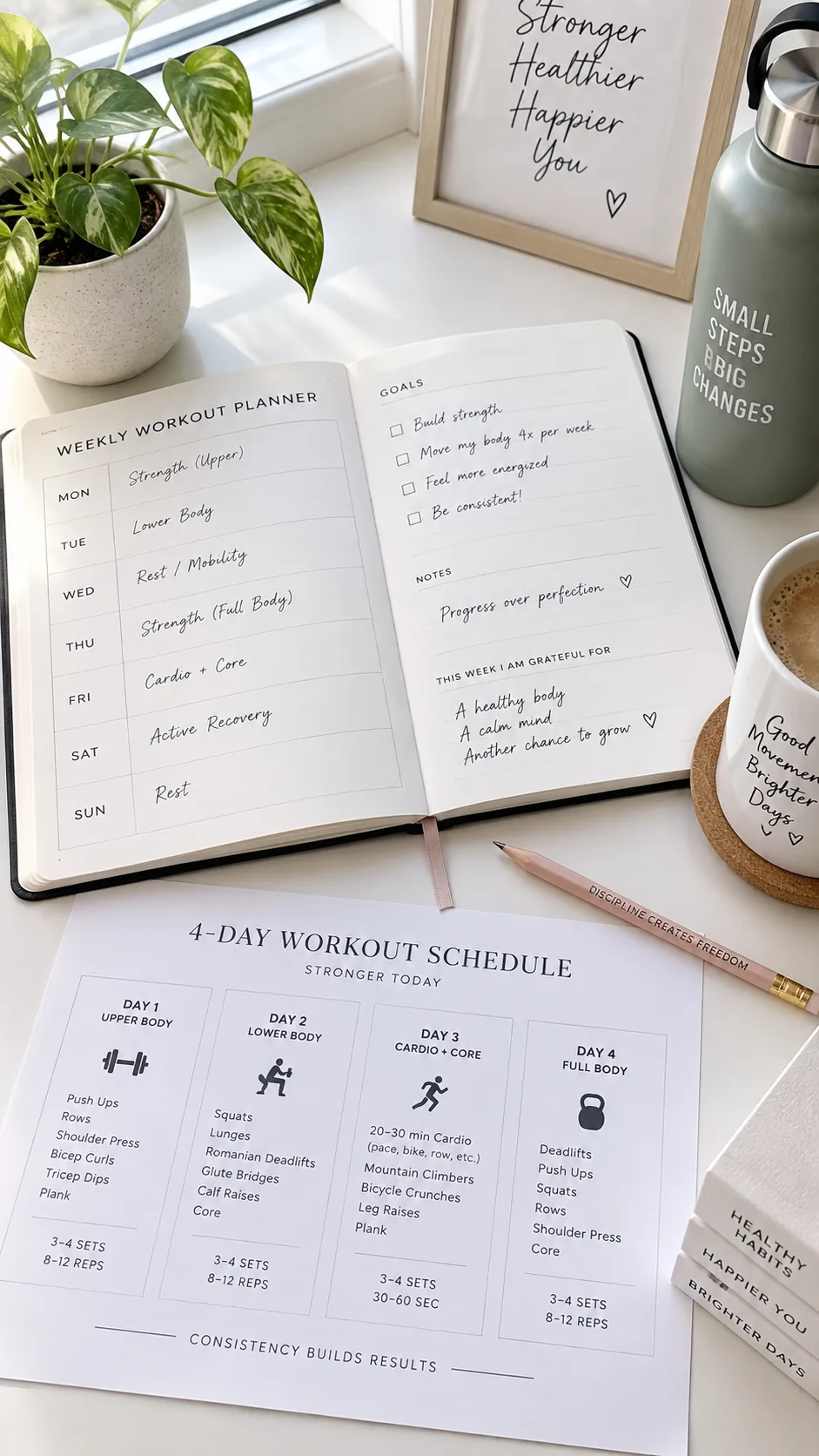
Consistency beats intensity every time. A 4-day weekly Pilates schedule gives your muscles enough work to adapt and enough rest to recover. This is the sweet spot that prevents burnout.
Sample weekly schedule
- Day 1, Full Body Strength Focus: Core, glutes, arms, and back. 30 to 40 minutes.
- Day 2, Rest or Light Stretching: A 15-minute mobility session works perfectly here.
- Day 3, Lower Body and Core: Legs, hips, glutes, and deep abdominals. 30 to 40 minutes.
- Day 4, Rest or Walking: Active recovery keeps blood flow up without adding stress.
- Day 5, Upper Body and Core: Arms, shoulders, back, and core integration. 30 to 40 minutes.
- Day 6, Full Body Flow: Longer, slower session combining everything. 45 to 50 minutes.
- Day 7, Full Rest: Your body builds muscle when it rests, not when it works.
If four days feels like too much right now, start with three. A sustainable three-day plan you stick to beats a perfect seven-day plan you abandon by week two.
New to Pilates entirely? The beginner Pilates workout routine here lays out your first week in a really manageable way before you jump into this full plan.
The full body Pilates workout routine
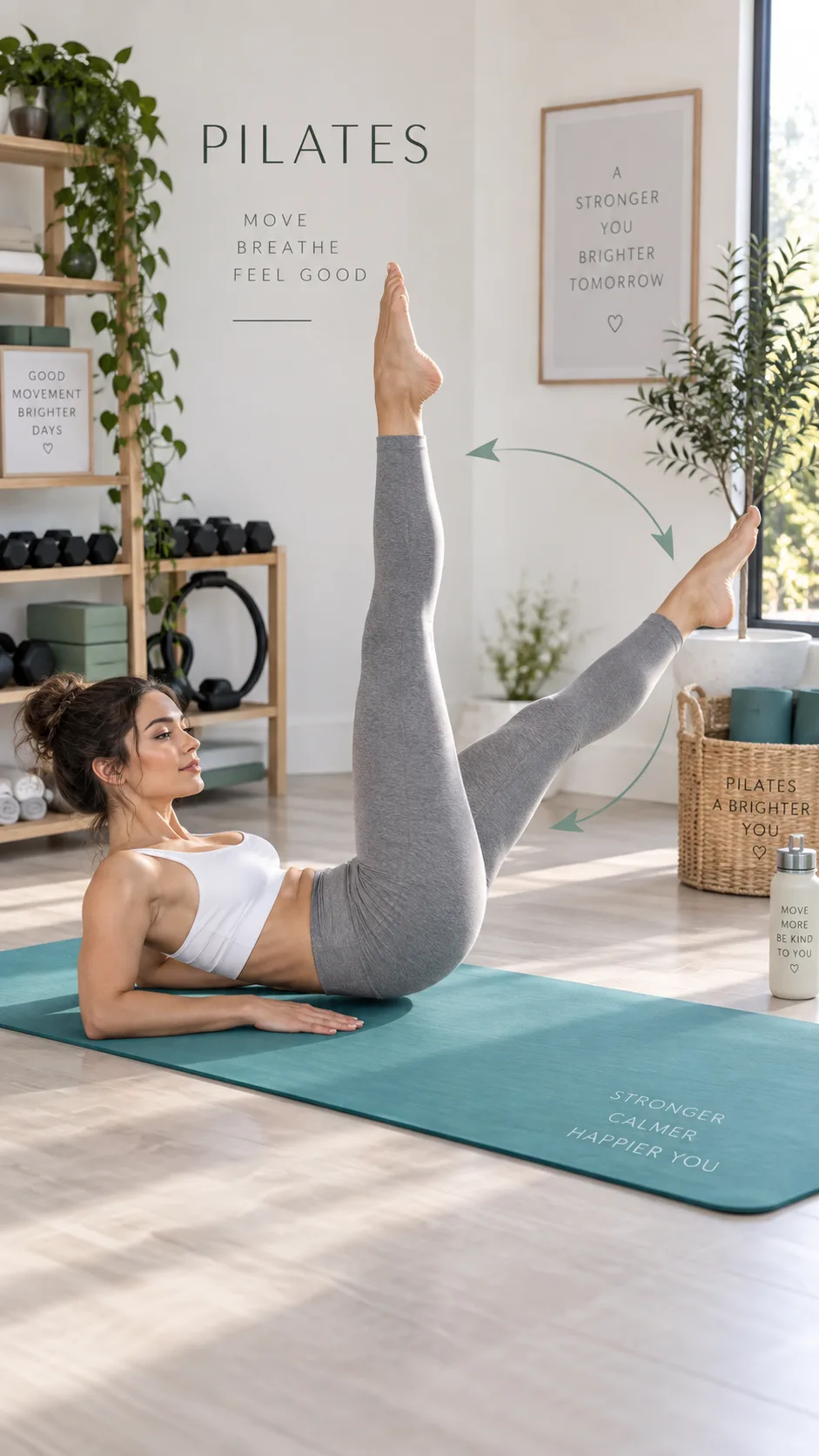
This is the core routine you’ll cycle through. It covers every major muscle group and takes about 35 to 40 minutes to complete. Perform each move with control. Slow is more effective than fast here.
Warm-up (5 minutes)
- Cat-Cow stretches, 10 reps, slow and controlled
- Spine roll-down, 6 reps, articulating each vertebra
- Hip circles, 8 each direction
- Shoulder rolls and chest opener, 10 reps each
Core and abdominals
- The Hundred: Pump your arms while holding a curl-up position. Start with 50 pumps and build to 100. This warm-up classic builds core endurance fast.
- Roll-Up: 8 to 10 reps. Articulate your spine off the mat one vertebra at a time. Way harder than a crunch, way more effective.
- Double Leg Stretch: 10 to 12 reps. Extend arms and legs away from center, then pull them back in. This fires up your deep transverse abdominis like nothing else.
- Criss-Cross (Pilates Bicycle): 10 reps each side. Slow rotation. Don’t rush it. You want the obliques working, not momentum.
- Plank Hold: 3 rounds of 30 to 45 seconds. Stay actively engaged throughout, no sagging hips.
Glutes and legs
- Bridge with Leg Lift: 12 reps each side. Hold at the top, squeeze the glute, then lower with control.
- Clam Shell: 15 reps each side. Keep your pelvis still. Only your top knee moves. Incredible for hip abductors and glute med.
- Side-Lying Leg Circles: 8 circles each direction, each leg. Deceptively tiring on the outer thigh and hip.
- Donkey Kicks: 15 reps each side. Drive through the heel, keep the core braced, don’t let your back arch.
- Pilates Squat Pulse: 20 to 25 pulses. Stay low, keep heels together and toes turned out, pulse through the burn.
If you want to build on this with a more targeted lower body session, the mat Pilates workout guide for all levels goes deeper into leg and glute sequencing.
Upper body and back
- Swan Dive Prep: 10 reps. Lift your chest off the mat using your back extensors. This counters all that forward slouching we’re all guilty of.
- Tricep Push-Up (Pilates style): 8 to 10 reps. Elbows track back along the ribs, not out to the sides. Way more targeted than a standard push-up.
- Arm Series with Resistance Band: Bicep curls, rows, and overhead press, 12 reps each. Keep your shoulder blades pulled down throughout.
- Threading the Needle: 8 reps each side. Opens the thoracic spine and releases tension in the upper back and shoulders.
Cool-down (5 minutes)
- Child’s Pose: 60 seconds, breathe into the lower back
- Seated forward fold: 45 seconds
- Supine spinal twist: 45 seconds each side
- Chest opener with clasped hands behind back: 30 seconds
The burnout problem, and how this plan avoids it
Here’s the thing most fitness plans get wrong: they design for peak motivation, not sustainable behavior. They front-load intensity, skip recovery, and then act surprised when people quit by week three. That’s not a willpower problem. It’s a programming problem.
This plan avoids burnout through a few non-negotiable principles:
- Progressive overload without progressive misery: You increase challenge by slowing reps, adding holds, or adding resistance. You don’t double the session length.
- Built-in recovery days: Muscle repair happens on rest days. Skipping them doesn’t speed results. It stalls them.
- Variety within structure: The framework stays consistent, but you rotate exercises so your brain and body both stay engaged.
The research on Pilates published by Healthline consistently shows that its low-impact nature makes it sustainable long-term, something high-intensity formats simply can’t claim for most people. That sustainability is the actual secret to body transformation.
Core Pilates principles you need to understand
You’ll get more from every session when you understand what you’re actually trying to do. Joseph Pilates built his method on six core principles, and they still hold up:
- Concentration: Every rep gets your full mental attention. Mindless repetition is just cardio with extra steps.
- Control: You control the movement. The movement never controls you. Gravity and momentum are not your training partners.
- Centering: All movement originates from your core, which Pilates called the “powerhouse.” Activate it before every rep.
- Precision: One perfect rep beats five sloppy ones. Every time.
- Breath: Exhale on exertion, inhale on return. Breath drives movement and deepens muscle activation.
- Flow: Movements connect smoothly rather than stopping and starting. Think of it as choreography, not calisthenics.
The Mayo Clinic notes that these mind-body principles are what distinguish Pilates from generic stretching or light exercise. They’re why it produces results even at low load.
