
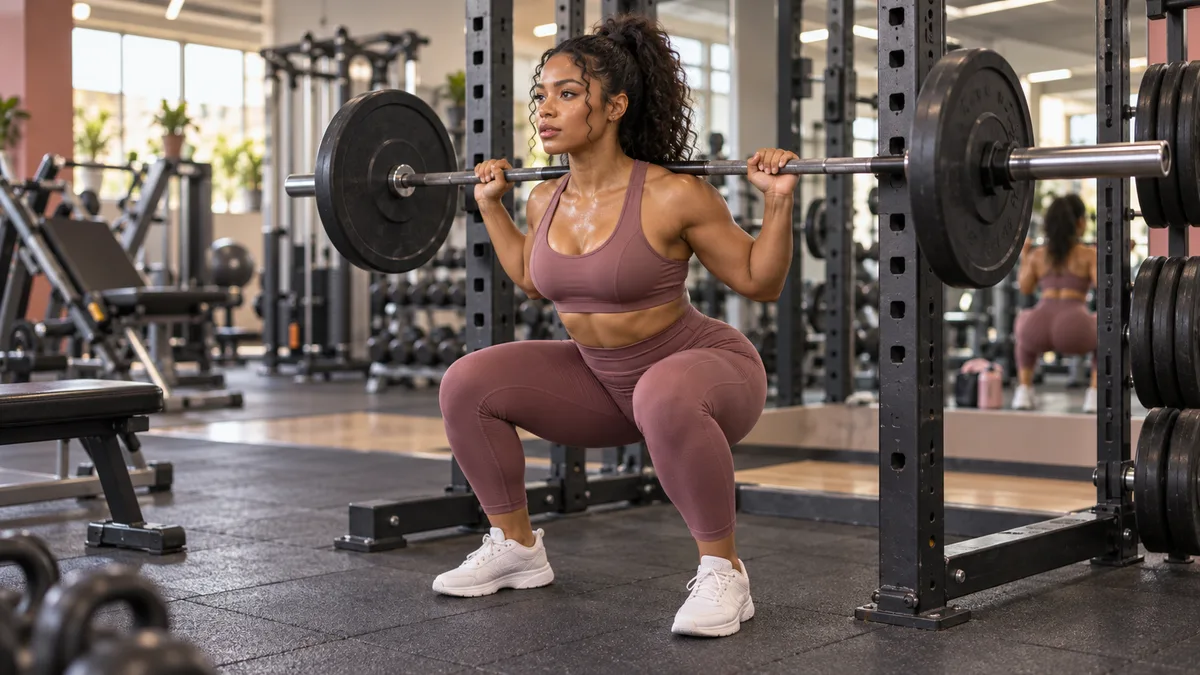
You’ve been staring at the leg press machine for three weeks now, pretending to tie your shoe while someone else finishes their set. I get it. The gym’s lower body section can feel like an intimidating jungle of cables, plates, and people who seem to know exactly what they’re doing. But here’s the thing — they were all beginners once, and most of them started with the exact same exercises I’m about to walk you through.
This guide breaks down a complete leg and glute workout for the gym that’s designed specifically for women who want to build stronger curves without feeling lost on the gym floor. No complicated programming. No exercise science degree required. Just a straightforward routine that actually works.
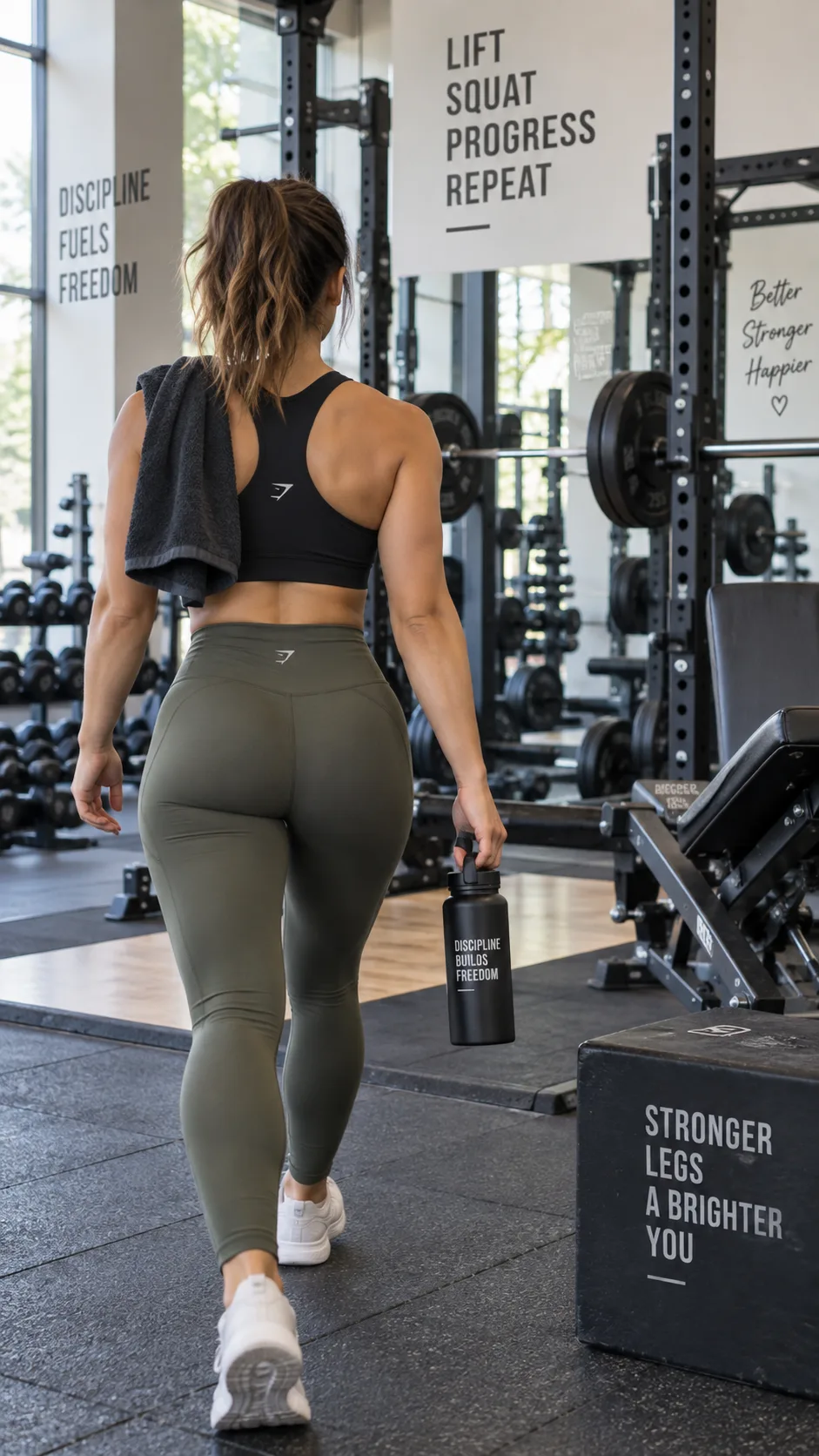
Why Leg and Glute Workouts Deserve Your Full Attention
Let’s address the elephant in the room: your lower body contains the largest muscle groups in your entire body. Your glutes, quads, and hamstrings make up a massive percentage of your total muscle mass. Training them doesn’t just build curves — it torches calories, improves your posture, and makes everyday life easier. Ever carried six bags of groceries up three flights of stairs? Thank your legs for that.
According to the American College of Sports Medicine, resistance training your lower body 2-3 times per week produces significant strength gains in beginners within just 8-12 weeks. That’s not a lifetime commitment before seeing results — that’s roughly two and a half months. You’ve binged longer TV series than that.
The “I Don’t Want to Get Bulky” Myth
I need to say this because someone’s thinking it: lifting heavy for your legs and glutes will NOT make you bulky. Women produce roughly 15-20 times less testosterone than men, which means building massive muscle requires years of extremely dedicated training, specific nutrition protocols, and often supplementation. What you WILL get? Tighter, more defined legs and a rounder, lifted backside. That’s the “toned” look everyone chases.
So please, stop doing 50 bodyweight squats and wondering why nothing’s changing. Your muscles need progressive resistance to grow and shape themselves. The gym gives you the tools to make that happen efficiently.
Essential Equipment You’ll Use (And How Not to Fear It)
Before we jump into the routine, let’s get familiar with the equipment. Knowledge kills intimidation, and knowing your way around these machines will make you feel like you own the place.
- Barbell & Squat Rack: Your best friend for squats, hip thrusts, and Romanian deadlifts. The rack has safety bars — use them.
- Dumbbells: Perfect for lunges, goblet squats, and single-leg work. Start with 10-20 lbs and adjust from there.
- Leg Press Machine: A guided machine where you push a weighted sled with your feet. Easier to learn than barbell squats and fantastic for quad and glute development.
- Cable Machine: Amazing for kickbacks, pull-throughs, and other glute isolation exercises.
- Hip Thrust Station or Bench: You’ll lean your upper back against this while driving your hips upward. If your gym has a dedicated hip thrust machine, even better.
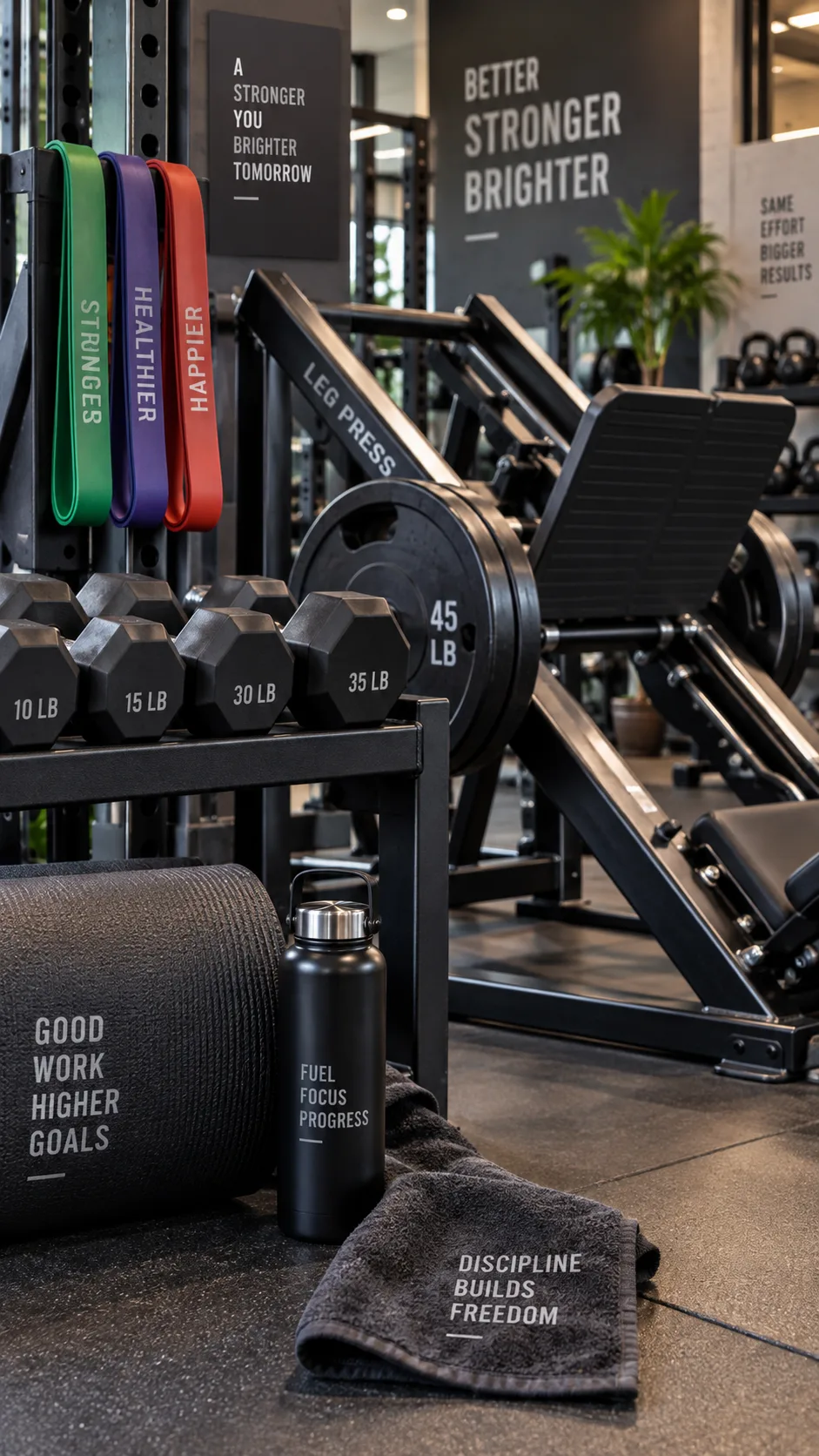
- Resistance Bands: Loop these above your knees during warm-ups and certain exercises to activate your glutes before heavy lifting.
The Warm-Up: 5 Minutes That Make Everything Better
Skipping your warm-up is like trying to stretch a cold rubber band — something’s going to snap, and it won’t be pretty. A proper warm-up activates your glutes, increases blood flow to your muscles, and primes your nervous system for heavy work.
Spend 5 minutes on this before every leg and glute session:
- Banded Glute Bridges — 2 sets of 15 reps. Place a resistance band just above your knees and squeeze at the top.
- Bodyweight Squats — 2 sets of 12 reps. Focus on depth and control, not speed.
- Lateral Band Walks — 2 sets of 10 steps each direction. Keep tension in the band the entire time.
- Leg Swings — 10 forward/backward swings per leg, then 10 side-to-side swings per leg.
This takes about five minutes and dramatically reduces your injury risk. Your future self will thank you — trust me on this one.
The Complete Beginner Leg and Glute Workout Routine
Here’s the workout you came for. This routine hits your glutes, quads, hamstrings, and calves in a balanced way that builds curves in all the right places. Perform this workout 2-3 times per week with at least one rest day between sessions.
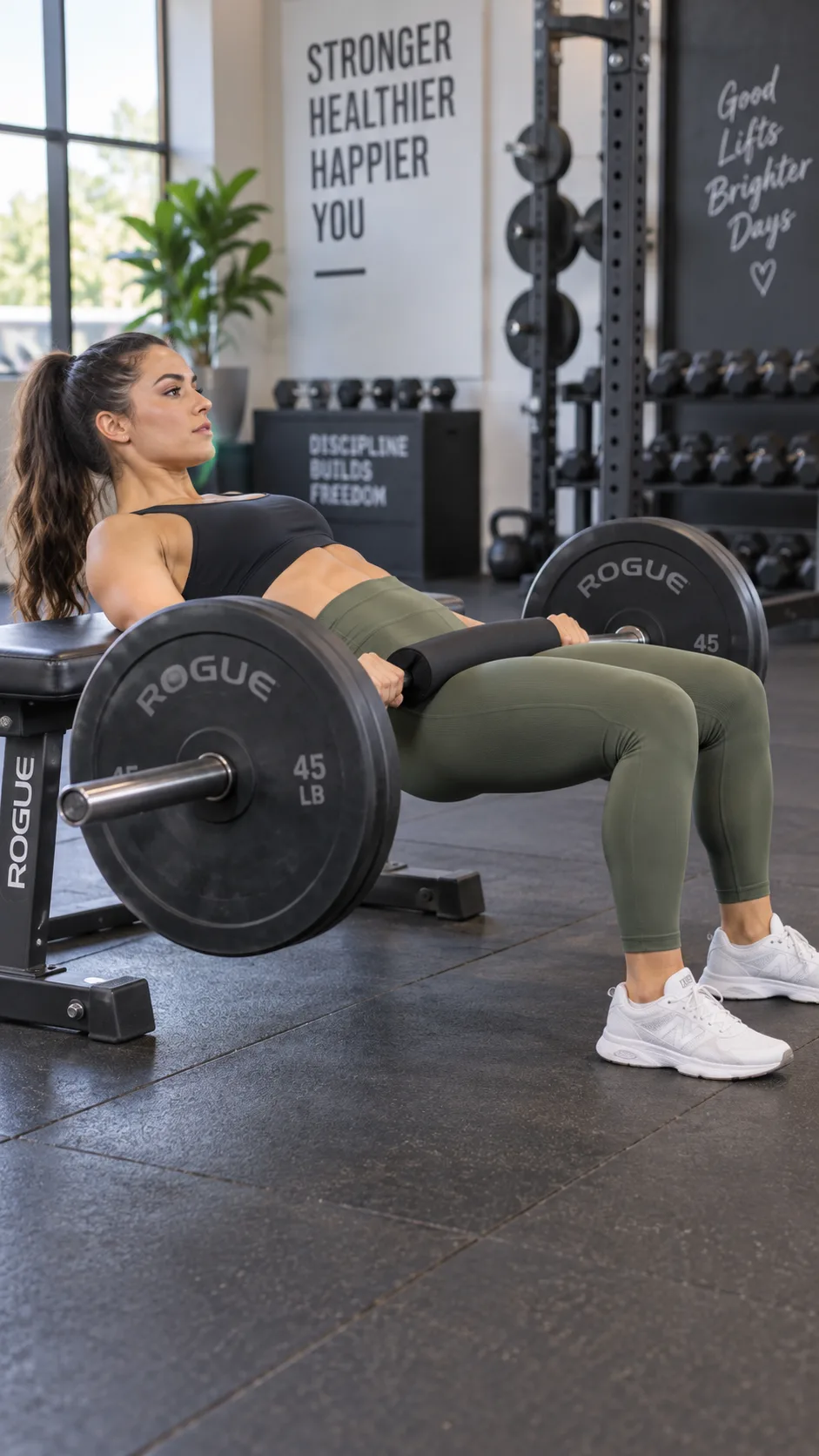
Exercise 1: Barbell Hip Thrusts (The Glute Builder)
If you only do ONE exercise for your glutes, make it this one. Research from the National Institutes of Health consistently shows that the hip thrust activates the glutes more than almost any other exercise. It’s the undisputed king — or queen — of glute training.
How to do it: Sit on the floor with your upper back against a bench. Roll a loaded barbell over your hips (use a pad for comfort). Plant your feet flat on the floor, hip-width apart. Drive your hips upward by squeezing your glutes until your body forms a straight line from knees to shoulders. Pause at the top for one second, then lower with control.
Sets & Reps: 3 sets of 10-12 reps. Start with just the bar (45 lbs) or even lighter if needed.
Exercise 2: Goblet Squats (The Foundation Builder)
Why goblet squats before barbell back squats? Because they teach you perfect squat mechanics without the intimidation factor of a loaded bar on your back. Hold a single dumbbell at your chest, and the weight naturally helps you maintain an upright torso. It’s like having a built-in form coach.
How to do it: Hold a dumbbell vertically against your chest with both hands. Stand with feet slightly wider than shoulder-width, toes pointed slightly outward. Squat down by pushing your hips back and bending your knees. Go as deep as your mobility allows — ideally until your thighs break parallel. Drive through your heels to stand back up.
Sets & Reps: 3 sets of 12 reps. Use a 15-25 lb dumbbell to start.
Exercise 3: Romanian Deadlifts (The Hamstring & Glute Sculptor)
Ever wondered why your backside looks flat from the side? It’s probably because you’re neglecting your hamstrings and the underside of your glutes. Romanian deadlifts target the posterior chain like nothing else, giving you that rounded, lifted look from every angle.
How to do it: Stand tall holding dumbbells (or a barbell) in front of your thighs. With a slight bend in your knees, hinge at your hips and push your butt backward. Lower the weights along your legs until you feel a strong stretch in your hamstrings. Squeeze your glutes to return to standing. Keep your back flat throughout — imagine balancing a glass of water on your lower back.
Sets & Reps: 3 sets of 10 reps. Start with 15-20 lb dumbbells.
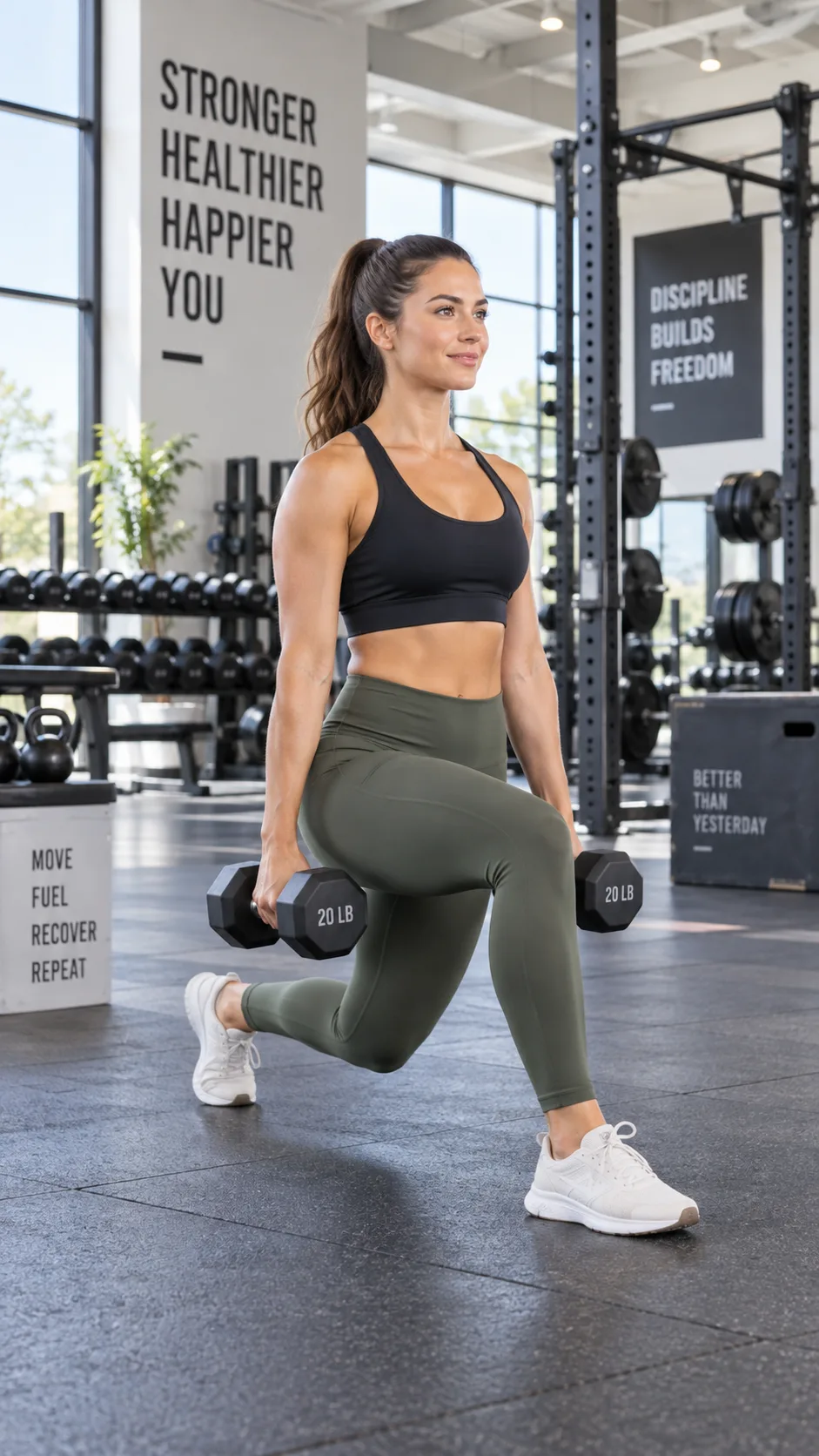
Exercise 4: Walking Lunges (The Functional Curve Builder)
Lunges work everything — quads, glutes, hamstrings, and even your core for balance. Walking lunges specifically demand more glute activation than stationary lunges because you’re propelling yourself forward with each step. Plus, they improve your single-leg stability, which helps with literally every other exercise you do.
How to do it: Hold a dumbbell in each hand at your sides. Step forward with one leg and lower your back knee toward the floor (don’t let it slam down). Push through your front heel to step forward into the next lunge. Keep your torso upright and your core engaged.
Sets & Reps: 3 sets of 10 steps per leg (20 total steps per set).
Exercise 5: Leg Press (The Confidence Booster)
The leg press machine lets you move HEAVY weight safely, and there’s something incredibly empowering about watching the plates stack up week after week. It’s also fantastic for targeting your quads and glutes depending on your foot placement. Higher foot placement = more glute emphasis. Lower placement = more quads.
How to do it: Sit in the machine with your back flat against the pad. Place your feet shoulder-width apart on the platform, slightly higher than center. Release the safety handles. Lower the sled by bending your knees toward your chest until your legs reach about 90 degrees. Press through your heels to extend your legs (don’t lock your knees at the top).
Sets & Reps: 3 sets of 12 reps. Start conservatively and add weight each set if it feels manageable.
For more ideas on how to structure your leg training, check out our guide on good leg workouts at the gym specifically designed for women.
Exercise 6: Cable Kickbacks (The Glute Isolator)
This is your finisher — the exercise that targets your glutes when they’re already fatigued from the compound movements. Cable kickbacks isolate each glute individually, helping you build symmetry and that coveted “shelf” look. FYI, this one burns in the best way possible.
How to do it: Attach an ankle cuff to a low cable pulley. Face the machine and hold onto it for balance. Keeping your standing leg slightly bent, drive your working leg straight back by squeezing your glute. Don’t arch your lower back — the movement should come entirely from your hip. Return slowly to the starting position.
Sets & Reps: 3 sets of 15 reps per leg.
Watch This Routine in Action
Sometimes reading about proper form isn’t enough — you need to SEE it. This video demonstrates several of the key exercises in this routine with excellent form cues for beginners:
Progressive Overload: The Secret Sauce Nobody Tells You About
Here’s where most beginners go wrong — they do the exact same weight, same reps, same everything for months and wonder why their body stops changing. Your muscles only grow when you consistently challenge them beyond what they’re used to. This principle is called progressive overload, and it’s non-negotiable if you want results.
Each week, aim to increase ONE of these variables:
- Weight: Add 2.5-5 lbs to an exercise when you can comfortably complete all your prescribed reps.
- Reps: If you did 10 reps last week, try 11-12 this week with the same weight.
- Sets: Add one extra set to an exercise that feels too easy.
- Tempo: Slow down the lowering phase to 3-4 seconds. This increases time under tension without adding weight.
Track everything in a notebook or phone app. I personally use the Notes app on my phone — nothing fancy, just exercise name, weight, sets, and reps. You can’t improve what you don’t measure. The Strong app is another fantastic option for logging workouts if you want something more structured.
Nutrition Tips That Support Your Leg and Glute Goals
I’m going to keep this simple because nutrition overwhelm kills more fitness journeys than bad workouts ever will. You cannot build curves without adequate fuel. Period. Your muscles need protein to repair and grow, carbohydrates for energy during training, and healthy fats for hormone function.
The Non-Negotiables
- Eat enough protein: Aim for 0.7-1 gram per pound of bodyweight daily. If you weigh 140 lbs, that’s roughly 100-140 grams of protein per day. Chicken, fish, eggs, Greek yogurt, and protein shakes all count.
- Don’t starve yourself: Building muscle requires a caloric surplus or at minimum eating at maintenance. Severe calorie restriction and glute growth cannot coexist. Pick one.
- Time your carbs: Eat a carb-containing meal 1-2 hours before your workout for energy and within an hour after for recovery. Rice, oats, fruit, and potatoes are all excellent choices.
- Stay hydrated: Dehydrated muscles perform terribly. Drink at least half your bodyweight in ounces of water daily.
Recovery: Where the Magic Actually Happens
Your muscles don’t grow IN the gym — they grow while you recover. Every time you train your legs and glutes, you’re creating microscopic tears in the muscle fibers. Rest, sleep, and nutrition repair those fibers and build them back stronger and larger. Skip recovery, and you’re basically tearing down a house without ever rebuilding it.
Here’s what smart recovery looks like:
- Sleep 7-9 hours per night. Growth hormone peaks during deep sleep. This isn’t optional — it’s biological fact.
- Rest 48-72 hours between leg sessions. Training legs Monday and Wednesday gives your muscles adequate recovery time.
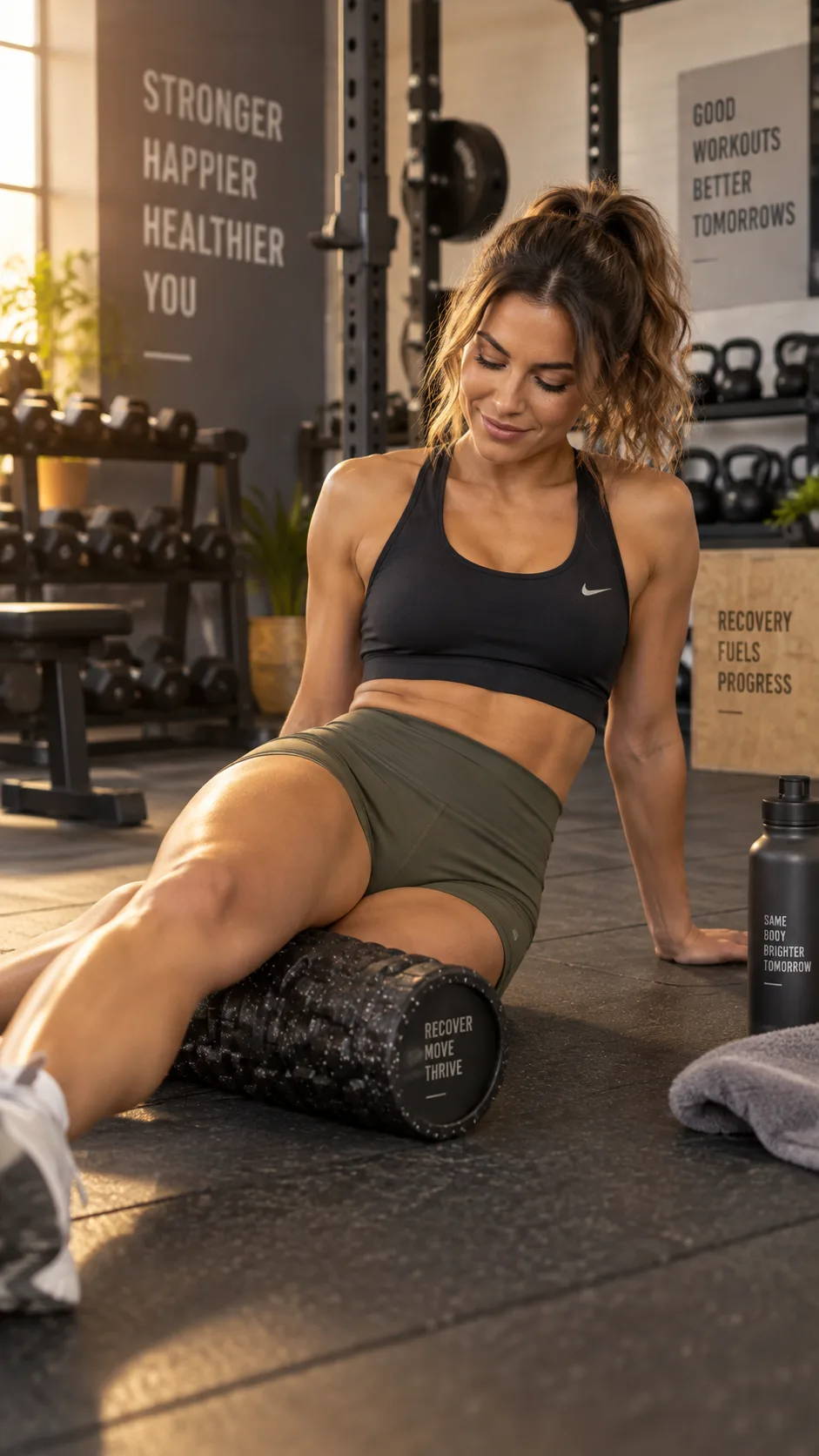
- Foam roll and stretch. Spend 10 minutes after each workout rolling your quads, hamstrings, and glutes. It reduces soreness and improves mobility for your next session.
- Consider active recovery. Light walking, yoga, or a beginner Pilates board workout on rest days keeps blood flowing to your muscles without adding training stress.
Common Mistakes Beginners Make (And How to Avoid Them)
I’ve made every single one of these mistakes, so consider this a shortcut past my years of trial and error 🙂
- Skipping glute activation warm-ups: Cold glutes don’t fire properly. Your quads end up doing all the work, and your butt gets zero benefit. Always warm up with banded exercises.
- Going too heavy too fast: Your ego is not your friend in the gym. Master form with lighter weights first. Poor form with heavy weights = injury, not gains.
- Only training what you can see in the mirror: Quads get all the attention because they’re right there when you look down. But hamstrings and glutes create the curves you see from the side and back. Train EVERYTHING.
- Neglecting mind-muscle connection: Actively think about squeezing your glutes during every rep. This sounds woo-woo, but research published in PubMed confirms that focusing on a specific muscle during exercise increases its activation significantly.
- Comparing your week 1 to someone else’s year 3: That woman doing 225 lb hip thrusts started exactly where you are. Focus on YOUR progress.
Sample Weekly Schedule for Beginners
Wondering how to fit this routine into your week? Here’s a simple framework that balances training and recovery:
- Monday: Leg & Glute Workout (this routine)
- Tuesday: Upper body or rest
- Wednesday: Active recovery — walking, stretching, light Pilates
- Thursday: Leg & Glute Workout (this routine)
- Friday: Upper body or full-body circuit
- Saturday: Optional third leg session OR active recovery
- Sunday: Full rest day
Two leg days per week is the sweet spot for beginners. Once you’ve been training consistently for 3-4 months, you can consider adding a third session focused on glute isolation if you want extra emphasis on your backside.
How Long Before You See Results?
Let’s set realistic expectations because Instagram timelines are absolute fiction. Most women notice visible changes in their legs and glutes within 8-12 weeks of consistent training. You’ll likely FEEL stronger within 2-3 weeks — heavier weights will feel manageable, stairs will feel easier, and your posture will improve noticeably.
The timeline depends on your consistency, nutrition, sleep, and genetics. Some women see glute growth quickly; others build quads faster. IMO, the best approach is to take progress photos every 4 weeks, compare them side by side, and let the visual evidence speak for itself. The mirror lies on bad days. Photos don’t.
Your Stronger Curves Start Today
You now have everything you need — a complete leg and glute workout routine, warm-up protocol, progressive overload strategy, nutrition basics, and recovery guidelines. The only thing left is showing up and doing the work. No more lurking near the squat rack pretending to stretch.
Start with lighter weights. Focus on form. Track your progress. Eat enough protein. Sleep like it’s your job. And most importantly, be patient with yourself. Building stronger curves is a marathon, not a sprint — but it’s a marathon where every single mile makes you look and feel better than the last.
Now go claim that hip thrust bench. It’s yours.
