
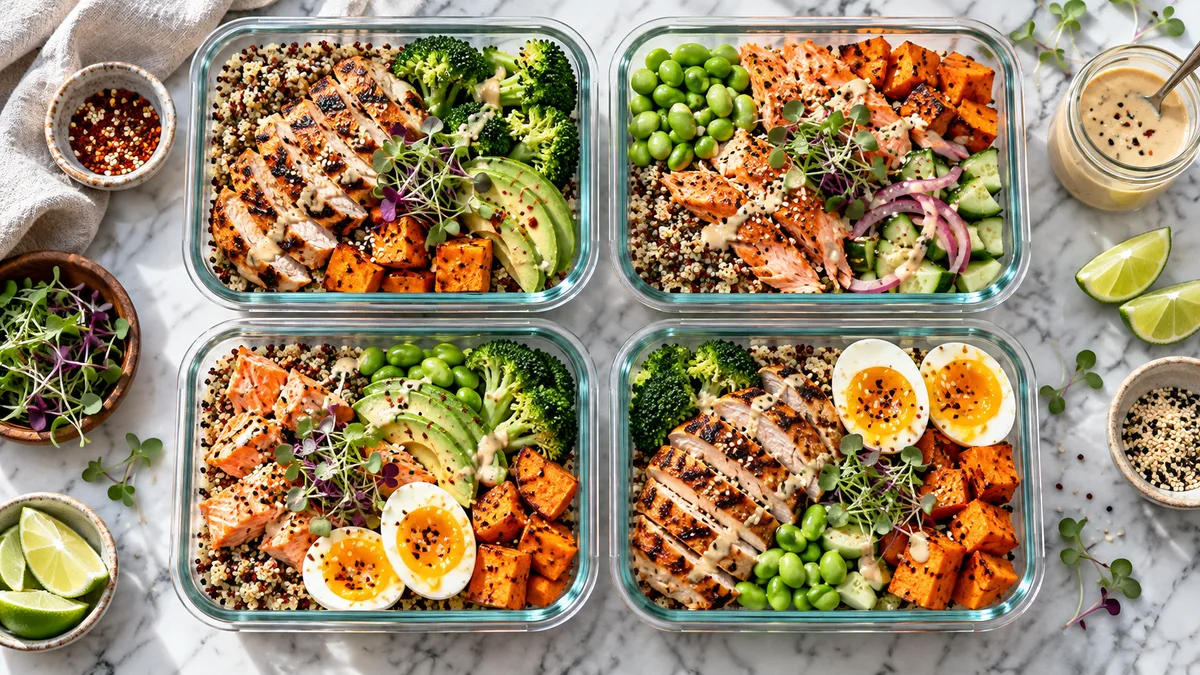
You probably know the 2:30 PM slump. Your stomach starts growling, your focus drops, and you find yourself staring blankly at the office vending machine. I spent years packing weak salads that left me starving twenty minutes after lunch.
Switching to high-protein meal prep bowls fixed that problem. Each container holds 35 to 50 grams of protein, keeps energy steady through the afternoon, and tastes good after four days in the fridge. Some lunches carry you through a long workday, while others send you straight into a food coma.
Satiety explains the difference. When you build meals around solid protein, complex carbs, and high-fiber produce, you calm your hunger hormones and stay full for hours. Below, you will find storage techniques that keep vegetables crisp, along with 10 recipes you can prep in under two hours.
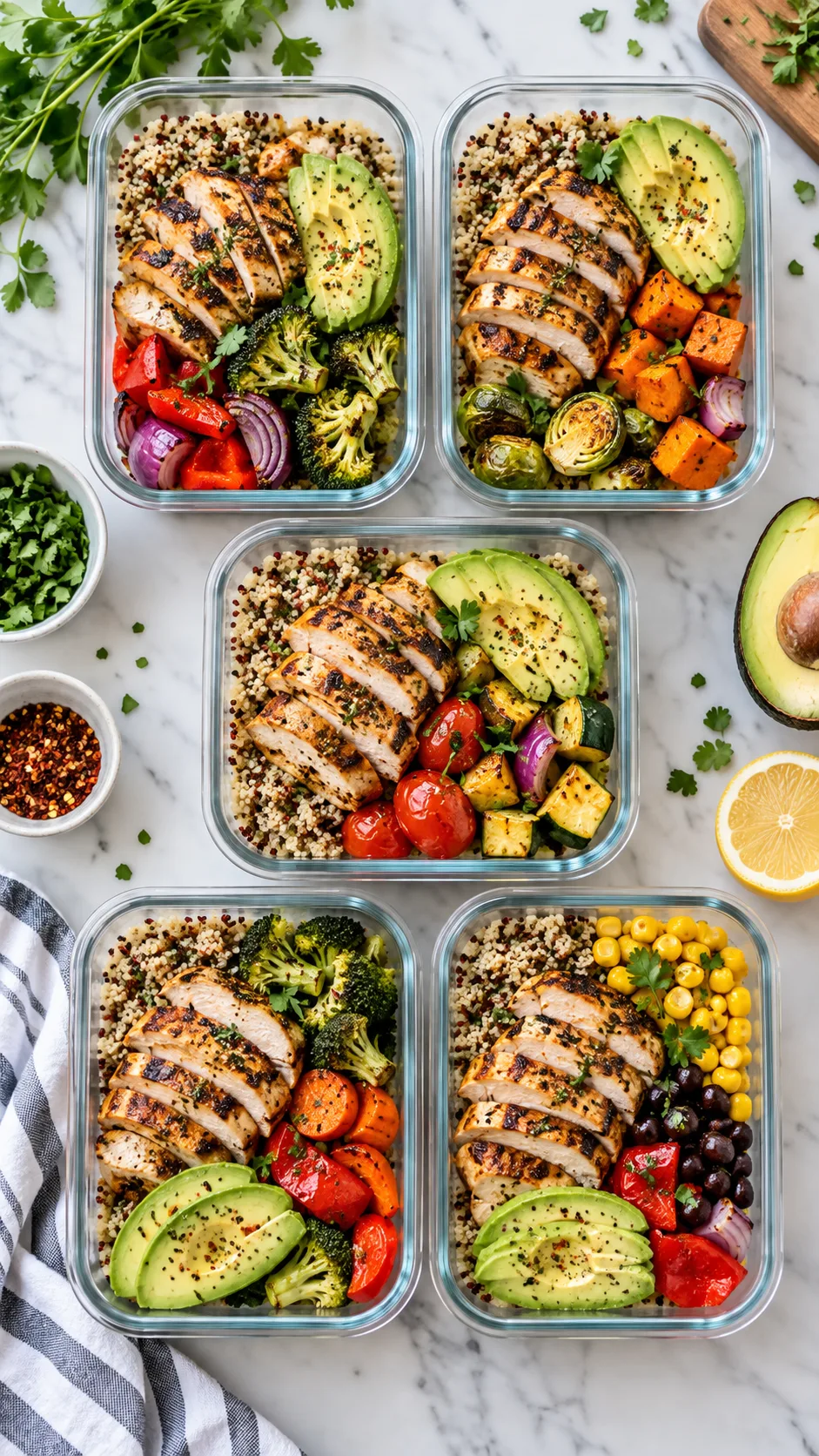
The anatomy of high-protein bowls that work
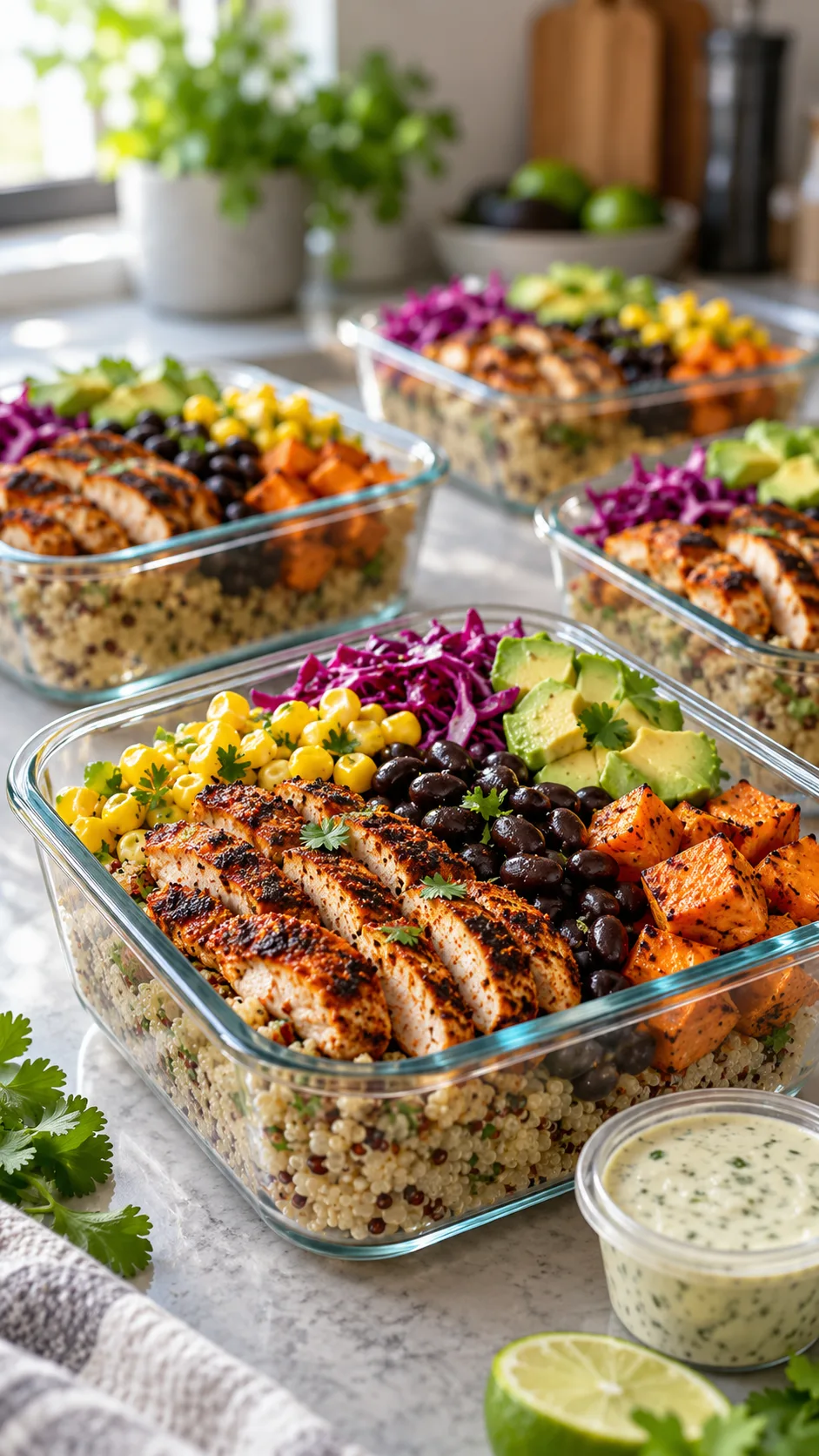
Building a solid meal prep bowl does not require culinary school, but tossing random leftovers into plastic containers rarely turns into an enjoyable lunch. You want a straightforward formula that balances macros, offers good texture contrast, and lasts through the workweek without getting mushy.
Clinical research shows that dietary protein suppresses ghrelin (the primary hunger hormone) while lifting peptide YY and GLP-1, two hormones that tell your brain you have had enough to eat. Data from the National Center for Biotechnology Information shows that higher protein intake raises daily metabolic burn and cuts unplanned snacking. If your goal involves fat loss or maintaining muscle mass, prioritizing protein gives you the best return on effort.
Every successful bowl relies on five basic layers:
- The complex carb base (1 to 1.5 cups): Quinoa, brown jasmine rice, farro, roasted sweet potatoes, or riced cauliflower. These carbs provide steady fuel without crashing your blood sugar.
- The protein anchor (6 to 8 ounces): Grilled flank steak, shredded chicken breast, salmon, extra-firm tofu, or shrimp. Aim for at least 35 grams of clean protein here.
- The fiber layer (1 to 2 cups): Roasted broccoli, charred peppers, sugar snap peas, shredded purple cabbage, or massaged kale. Crunchy vegetables keep meals satisfying to chew.
- The fat accent (1 to 2 tablespoons): Diced avocado, pumpkin seeds, tahini, crumbled feta, or sesame oil. Healthy fats help your body absorb fat-soluble vitamins and slow digestion.
- The sauce (2 to 3 tablespoons): Chimichurri, Greek yogurt ranch, peanut sauce, or gochujang glaze. Pack dressings in small separate containers so your greens and grains stay firm.
If you track daily macros to stay in a caloric deficit, read our guide to calorie deficit meal prep that keeps you full. The principles align directly with these high-volume recipes.
10 high-protein bowl recipes you look forward to eating
Forget dry, rubbery chicken breasts. These ten recipes use straightforward spice blends, varied textures, and rich sauces to keep lunch interesting all week.
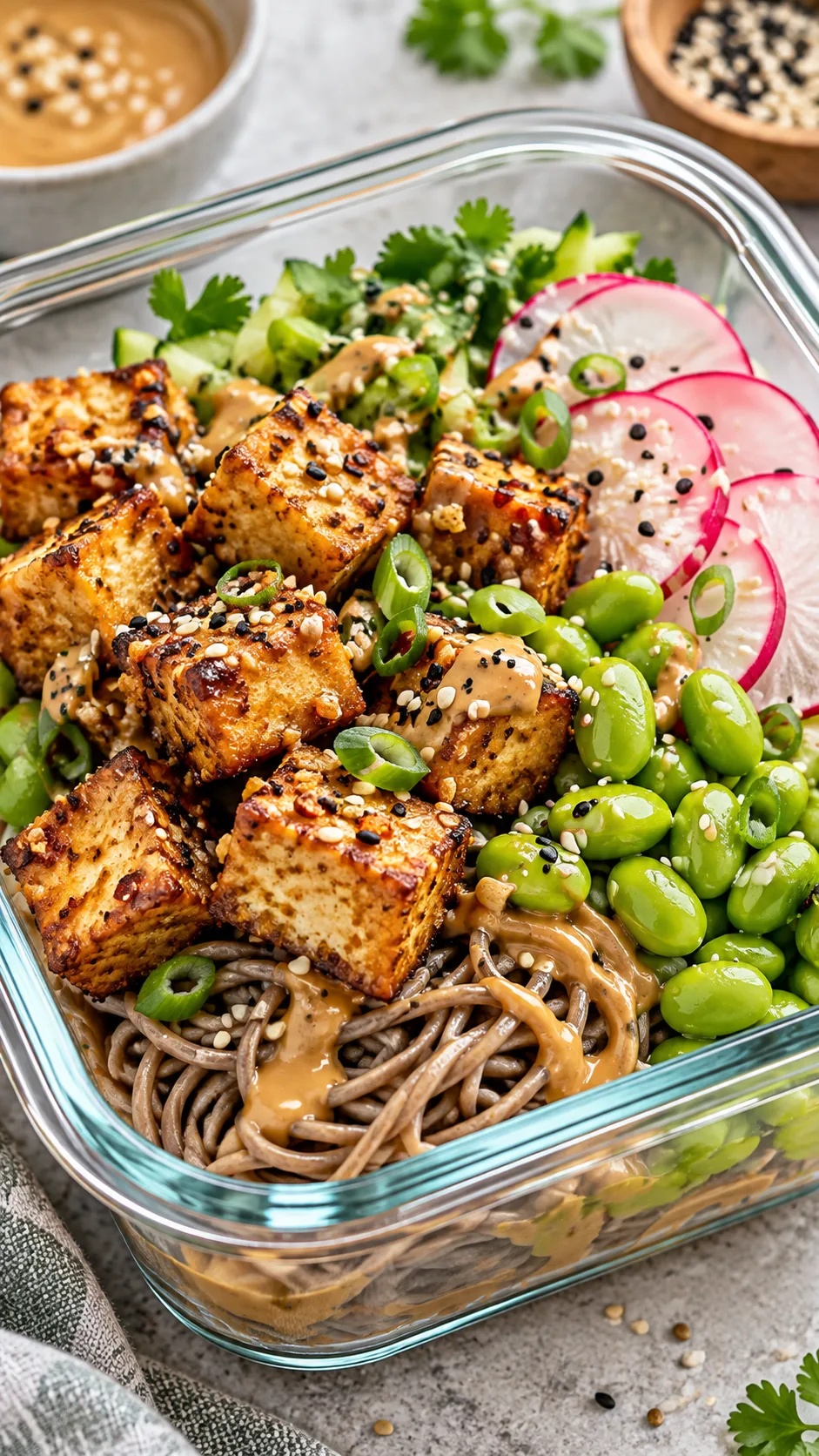
Spicy chipotle chicken fiesta bowl (46g protein) This recipe outshines standard burrito bowls from fast-casual spots and costs a fraction of the price. Charred corn, black beans, and spiced chicken thighs create deep flavor that improves after two days in the fridge. Protein base: Marinate 1.5 pounds of boneless skinless chicken thighs in chipotle peppers in adobo, fresh lime juice, ground cumin, and garlic powder. Cook them in a hot cast-iron skillet for 6 minutes per side. Carb and veggie layer: 2 cups cooked cilantro-lime quinoa, 1 can rinsed black beans, 1 cup charred sweet corn, and 2 sliced bell peppers cooked until blistered. The dressing: Blend 1 cup plain Greek yogurt with 1 chipotle pepper, fresh cilantro, lime juice, and sea salt. Prep tip: Pour the yogurt sauce into small separate condiment cups so you can microwave the bowl without warming the dressing. Korean gochujang ground turkey bowl (42g protein) Lean turkey often turns out dry, but this spicy-sweet glaze keeps the meat juicy. Quick-pickled cucumbers bring a crisp, tart bite that cuts through the rich sauce.
Protein base: Brown 1.5 pounds of 93/7 ground turkey with minced ginger, garlic, and scallions. Stir in 2 tablespoons gochujang, 1 tablespoon tamari, and 1 teaspoon honey. Carb and veggie layer: 2 cups steamed short-grain brown rice, 2 cups steamed edamame, and 2 cups shredded carrots tossed with rice vinegar. The pickled crunch: Thinly slice Persian cucumbers, toss them with rice vinegar and salt, and store them in a small silicone pouch inside each container. The dressing: Whisk 1 tablespoon toasted sesame oil with 2 tablespoons reduced-sodium soy sauce and chili crisp. Spoon it over the bowl right before eating. Greek lemon-herb salmon and orzo bowl (40g protein) Fish works well for meal prep if you cook it gently and store it in an airtight container for up to three days. The omega-3 fats in salmon support heart health and joint recovery, as outlined by the Harvard T.H. Chan School of Public Health. Protein base: Cut 1.5 pounds of wild salmon into 4 fillets. Season with dried oregano, minced garlic, lemon zest, and olive oil. Roast at 400°F (200°C) for 12 minutes. Carb and veggie layer: 2 cups cooked chickpea orzo (which adds extra protein), 1 cup halved cherry tomatoes, 1 cup diced English cucumber, and 1/2 cup Kalamata olives. The crunch: Sprinkle 1/4 cup crumbled feta cheese and fresh dill over the bowl before sealing. The dressing: Whisk extra virgin olive oil, fresh lemon juice, Dijon mustard, and black pepper. Crispy garlic tofu and edamame soba bowl (36g protein) Plant proteins can easily match meat-based numbers when you combine ingredients smartly. Pressing the moisture out of the tofu gives you firm, golden cubes instead of a soggy sponge. Protein base: Press 1 block of extra-firm tofu, cut it into cubes, toss with 1 tablespoon cornstarch and garlic powder, and air-fry at 390°F (200°C) for 15 minutes. Mix with 1.5 cups shelled edamame. Carb and veggie layer: 2 cups cooked buckwheat soba noodles, 2 cups shredded red cabbage, and 1 cup blanched sugar snap peas. The dressing: Whisk 3 tablespoons smooth peanut butter, 1 tablespoon warm water, 1 tablespoon soy sauce, 1 teaspoon maple syrup, and fresh lime juice. Prep tip: Rinse boiled soba noodles in cold running water right away so they do not clump together in the fridge. Mediterranean flank steak and hummus bowl (48g protein) Flank steak provides bioavailable iron, zinc, and dense protein with relatively little fat. Paired with fiber-heavy lentils and hummus, this bowl keeps you satisfied until dinner. Protein base: Season 1.5 pounds of flank steak with smoked paprika, cumin, garlic powder, and coarse salt. Grill over high heat for 4 minutes on each side for medium-rare. Let the meat rest for 10 minutes, then slice thinly across the grain. Carb and veggie layer: 2 cups cooked brown lentils, 2 cups baby arugula, and 1 can of drained artichoke hearts. The toppings: 4 tablespoons roasted red pepper hummus, 2 tablespoons pickled red onions, and 2 tablespoons toasted pine seeds. The dressing: Whisk 2 tablespoons tahini paste with lemon juice, minced garlic, and cold water until smooth. Sweet chili ground chicken and broccoli bowl (44g protein) This recipe matches the sweet, savory appeal of Chinese takeout without excessive sugar and oil. Protein base: Brown 1.5 pounds of ground chicken breast in a skillet with 1 tablespoon avocado oil, freshly grated ginger, and chopped scallions. Stir in 3 tablespoons low-sugar sweet chili sauce and 1 tablespoon coconut aminos. Carb and veggie layer: 2 cups cooked brown jasmine rice and 3 cups fresh broccoli florets roasted at 425°F (220°C) until the edges brown. The finish: Scatter toasted sesame seeds and thin red chili slices over the top. Microwave tip: This bowl reheats cleanly without strong odors. For more lunch solutions, check out our guide to easy healthy meal prep lunches for work. Buffalo tempeh and chickpea ranch bowl (35g protein) Tempeh packs whole fermented soybeans into a dense patty that drinks up sauces quickly. Pair it with hot sauce and high-protein ranch for a hearty lunch. Protein base: Steam 8 ounces of cubed tempeh for 10 minutes to soften its bitter edge. Toss with 1/3 cup cayenne hot sauce and bake at 400°F (200°C) for 20 minutes until crisp. Combine with 1 can of roasted chickpeas. Carb and veggie layer: 2 cups cooked farro, 2 cups shredded romaine, and 1 cup diced celery for crunch. The dressing: Blend 3/4 cup low-fat cottage cheese with dried dill, garlic powder, onion powder, lemon juice, and a splash of milk until completely smooth. Storage note: Keep the romaine in a separate container if you plan to heat the farro and tempeh. Chimichurri pork tenderloin and black bean bowl (46g protein) Pork tenderloin is lean, inexpensive, and matches skinless chicken breast gram-for-gram in protein content according to the USDA FoodData Central database. Fresh parsley chimichurri pulls the whole bowl together. Protein base: Season 1.5 pounds of pork tenderloin with salt, pepper, and ground coriander. Sear all sides in an oven-safe skillet, then roast at 400°F (200°C) until the internal temperature reaches 145°F (63°C). Rest and slice into medallions. Carb and veggie layer: 2 cups cooked wild rice blend, 1 can black beans warmed with cumin, and 2 sliced zucchini roasted on a sheet pan. The sauce: Finely chop 1 bunch of flat-leaf parsley, 4 garlic cloves, and 1 shallot. Mix with 2 tablespoons red wine vinegar and 1/4 cup extra virgin olive oil, then spoon over the sliced meat. Sesame-crusted ahi tuna and mango poke bowl (43g protein) This recipe serves cold, making it convenient if you lack access to a microwave at work. Buy sashimi-grade or frozen ahi tuna to ensure safe raw or rare consumption. Protein base: Thaw 1.25 pounds of sashimi-grade ahi tuna. Pat the fish dry, coat the edges in sesame seeds, and sear in a hot skillet for 45 seconds per side. Slice into clean cubes. Carb and veggie layer: 2 cups cold brown sushi rice seasoned with rice vinegar, 1 cup diced mango, 1 cup shredded purple cabbage, and 1 cup shredded carrots. The crunch: Add crumbled roasted nori sheets and 1/4 cup shelled edamame to each container. The dressing: Whisk 2 tablespoons reduced-sodium soy sauce, 1 teaspoon sesame oil, grated ginger, and lime juice. Mexican street corn shrimp bowl (38g protein) Shrimp cooks faster than almost any other protein. You can sear seasoned shrimp in six minutes flat. Protein base: Peel and devein 1.5 pounds of large shrimp. Toss with chili powder, cumin, garlic, and lime juice. Sauté in a hot pan with avocado oil for 2 to 3 minutes until pink. Carb and veggie layer: 2 cups cooked cauliflower rice mixed evenly with white basmati rice, 1.5 cups charred sweet corn, and 1 diced red bell pepper. The elote sauce: Mix 1/2 cup non-fat Greek yogurt, 1 tablespoon light mayo, smoked paprika, lime juice, and 2 tablespoons crumbled cotija cheese. Reheating note: Warm shrimp at 50 percent microwave power for 60 seconds so the shellfish remains tender.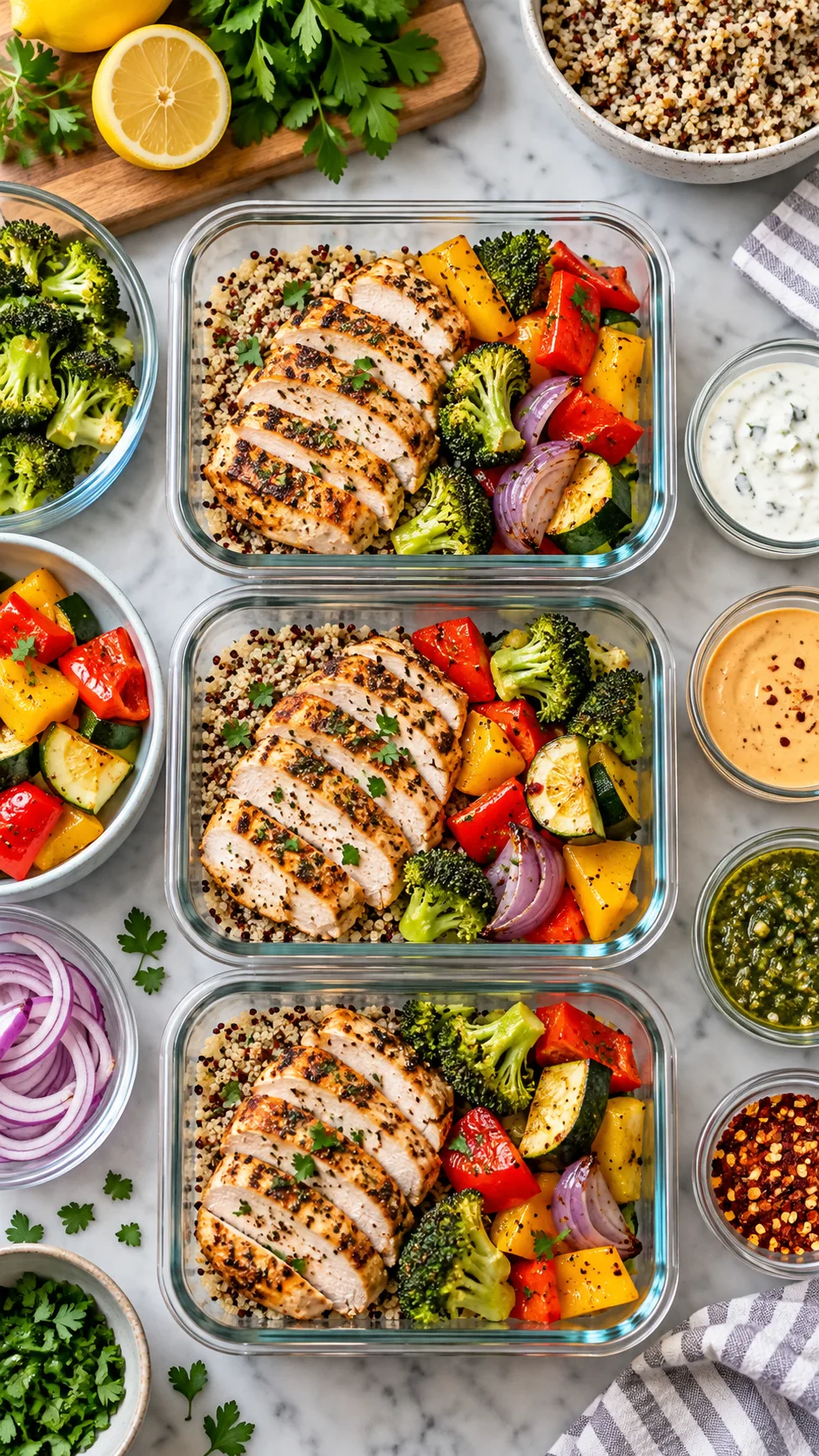
How to batch-cook high-protein meals fast
Cooking videos online make batch prep look fast, but real cooking can turn into a sink filled with dirty cookware if you do not plan your steps. This walkthrough demonstrates an efficient workflow that saves time and keeps dishes manageable:
The 90-minute Sunday meal prep workflow
You do not need to spend your entire Sunday in the kitchen. You can prepare four days of food in 90 minutes if you run appliances at the same time instead of cooking one component after another.
Follow this step-by-step timeline:
- Minutes 0 to 15 (Oven and grains): Preheat your oven to 425°F (220°C). Start your rice cooker or pot with quinoa, farro, or brown rice. Chop vegetables like bell peppers, broccoli, and zucchini, then toss them with olive oil, salt, and spices.
- Minutes 15 to 35 (Roasting and prep): Put your vegetable sheet pan in the oven. While the vegetables roast, trim and season your meat, fish, or tofu.
- Minutes 35 to 60 (Cooking proteins): Remove the vegetables from the oven. Heat a skillet on your stove and cook your protein in two quick batches. Dice any fresh toppings, such as cucumbers or cabbage, while the pans heat.
- Minutes 60 to 75 (Sauce blending): Blend or whisk your dressings. Divide them into individual sauce cups.
- Minutes 75 to 90 (Packing): Set out four or five glass meal containers. Add the grains, pile on the roasted vegetables, place the cooked protein on top, and seal the lids.
If you are new to batch cooking, review our guide to meal prep recipes for beginners before tackling multi-course recipes.
How to prevent soggy meal prep bowls
Few things spoil lunch plans like opening a container on Wednesday to find soggy greens and watery grains. A few food-prep habits will preserve texture all week.
Cool all hot food before snapping on the lid. Hot rice and warm roasted meat release steam. In an airtight box, that steam condenses on the lid and drips back down, turning grains mushy and promoting bacterial growth. Spread cooked grains and meats on a rimmed baking sheet for 10 minutes to release excess heat before packing.
Second, keep sauces separate. Pouring dressing over the bowl on Sunday guarantees soggy ingredients by midweek. Use small two-ounce condiment cups and add the dressing right before you sit down to eat.
Third, pack raw produce in separate pouches. Keep cold items like diced tomatoes, fresh greens, or sliced cucumbers in small reusable bags inside the main container. Take the bag out before microwaving your grains and meat, then toss the cold toppings over the warm food. This step keeps textures distinct and mimics a freshly made plate.
Frequently asked questions
How long do high-protein prep bowls stay fresh?
Most cooked proteins, grains, and firm vegetables keep well for four to five days in an airtight container below 40°F (4°C). If you prepare seafood like salmon or shrimp, eat those meals within three days, or freeze the remaining portions right after cooking.
Can you freeze high-protein prep bowls?
Yes, as long as you choose ingredients that freeze well. Cooked chicken breast, ground turkey, quinoa, brown rice, and roasted root vegetables hold up in the freezer for up to three months. Avoid freezing watery vegetables like fresh cucumbers or greens, along with dairy-based sauces, because ice crystals break their structure and turn them watery during thawing.
What glass containers work best for meal prep?
Select containers made from borosilicate glass with locking lids and silicone gaskets. Borosilicate glass handles rapid temperature swings, so you can transfer containers safely from the freezer to the microwave or oven without risk of breakage. Glass also prevents the staining and odors common with plastic.
How can you reach 40 grams of protein without chicken breast every day?
Combine two or three protein sources in a single bowl. For instance, combine 4 ounces of lean flank steak (30 grams of protein) with 1/2 cup of cooked lentils (9 grams) and 2 tablespoons of hemp seeds (6 grams) to hit 45 grams of protein.
Take control of your week
Eating well does not require boring meals. Spending 90 minutes on the weekend to prepare hearty, protein-rich bowls saves money, steadies your afternoon energy, and takes the stress out of lunchtime.
Choose two recipes from this list, buy the groceries, and prep your containers this weekend. Your future self will appreciate every single lunch.
